
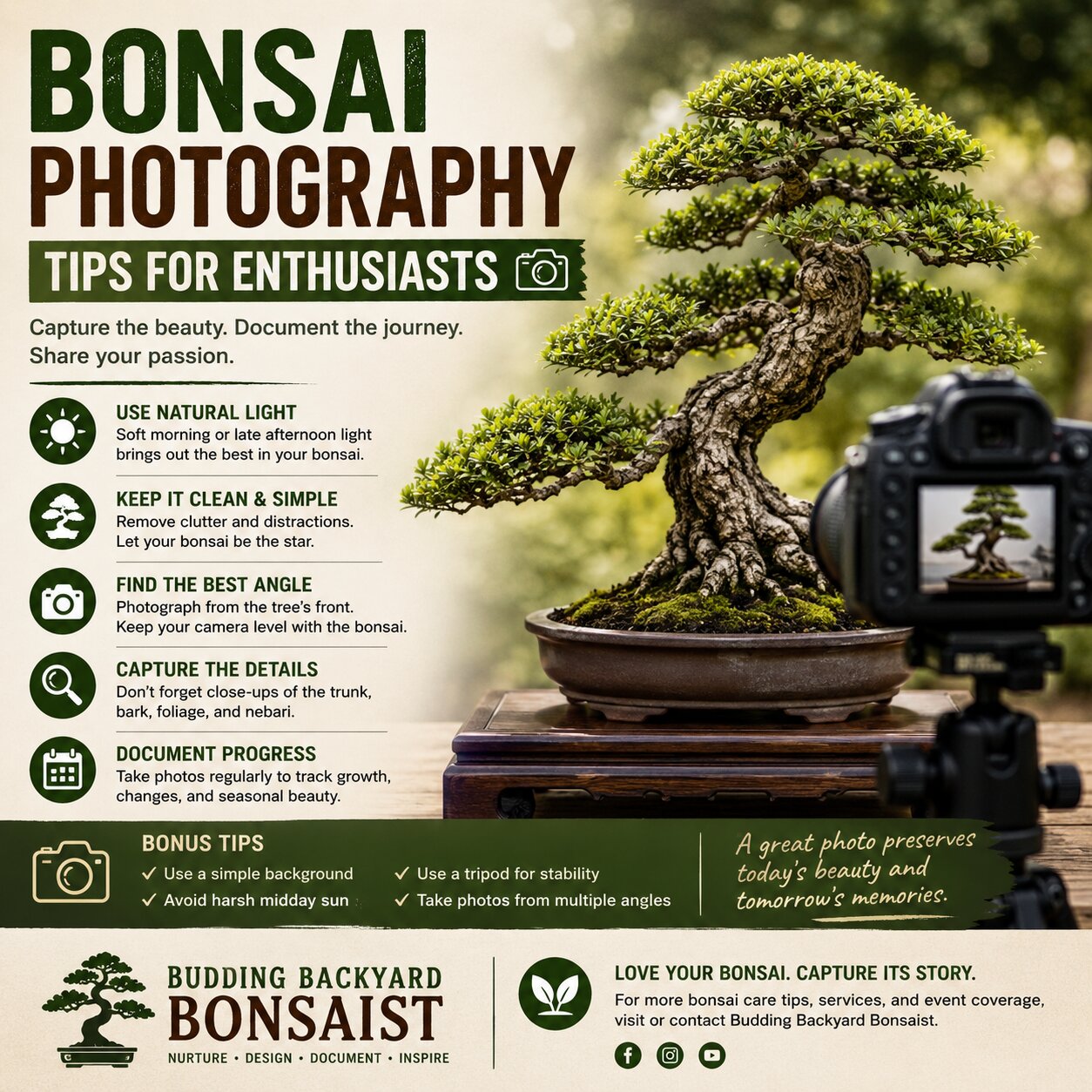
Bonsai trees are living works of art, and photography provides an excellent way to document their development, share them with fellow enthusiasts, and celebrate the effort invested in their care. A well-photographed bonsai can reveal details that are often overlooked during daily maintenance while also showcasing the beauty of the tree to a wider audience.
Many bonsai enthusiasts spend years refining a tree’s structure, branch placement, and overall design. Capturing that progress through photography creates a valuable visual record that can help track development over time.
The good news is that you do not need expensive equipment to take impressive bonsai photographs. Understanding a few basic principles can dramatically improve the quality of your images.
Whether you are photographing a tree for social media, competitions, personal records, or a bonsai website, these tips can help you present your bonsai at its best.
Start with a Clean Presentation
Before taking any photographs, spend a few minutes preparing the bonsai. Remove dead leaves, clear away weeds, and tidy the soil surface. Small imperfections often become more noticeable in photographs than they do in person.
Clean pots can also make a significant difference. Dust, water stains, and soil marks may distract viewers from the tree itself. A quick wipe-down can improve the overall presentation.
Pay attention to the surrounding area as well. Unnecessary objects, tools, and clutter can draw attention away from the bonsai.
A clean and organised setup allows the tree to remain the focal point of the image.
Make Use of Natural Light
Natural lighting is one of the most effective tools available to bonsai photographers. Soft morning or late afternoon sunlight often produces the most pleasing results by reducing harsh shadows and creating balanced illumination.
Avoid direct midday sunlight whenever possible. Strong overhead light can create excessive contrast and hide important details within the canopy and branch structure.
Positioning the bonsai near a shaded outdoor area or close to a large window can provide excellent lighting conditions.
Experiment with different angles and lighting directions to discover how they affect the appearance of the tree.
Essential Bonsai Photography Techniques
When photographing bonsai trees, remember these key principles:
- Use a simple, uncluttered background
- Photograph at the tree’s front viewing angle
- Keep the camera level with the bonsai
- Use natural lighting whenever possible
- Avoid excessive digital filters
- Capture both full-tree and detail shots
- Document seasonal changes throughout the year
- Take photos from multiple angles for reference
These techniques help create images that accurately represent the tree while highlighting its best features.
Documenting Progress Over Time
One of the most valuable reasons to photograph bonsai is to track development. Trees change gradually, making it difficult to notice progress without visual records.
By photographing your bonsai regularly, you can compare branch growth, ramification, trunk development, and overall styling improvements across months and years.
Consistent documentation also helps identify issues before they become serious. Changes in foliage density, colour, or vigour may become more obvious when reviewing older photographs.
Many experienced bonsai practitioners maintain extensive photographic archives that serve as both learning tools and treasured records of their trees.
Sharing the Beauty of Bonsai
Photography allows enthusiasts to share their passion with the wider bonsai community. Whether posting online, entering competitions, or contributing to bonsai publications, quality images help communicate the artistry and dedication behind each tree.
At Budding Backyard Bonsaist, we are passionate about showcasing beautiful bonsai trees and helping enthusiasts document their collections. Good photography not only celebrates the present state of a bonsai but also preserves its story for years to come.
Take the time to experiment, learn, and refine your photography skills. Your bonsai deserves to be seen in the best possible light.