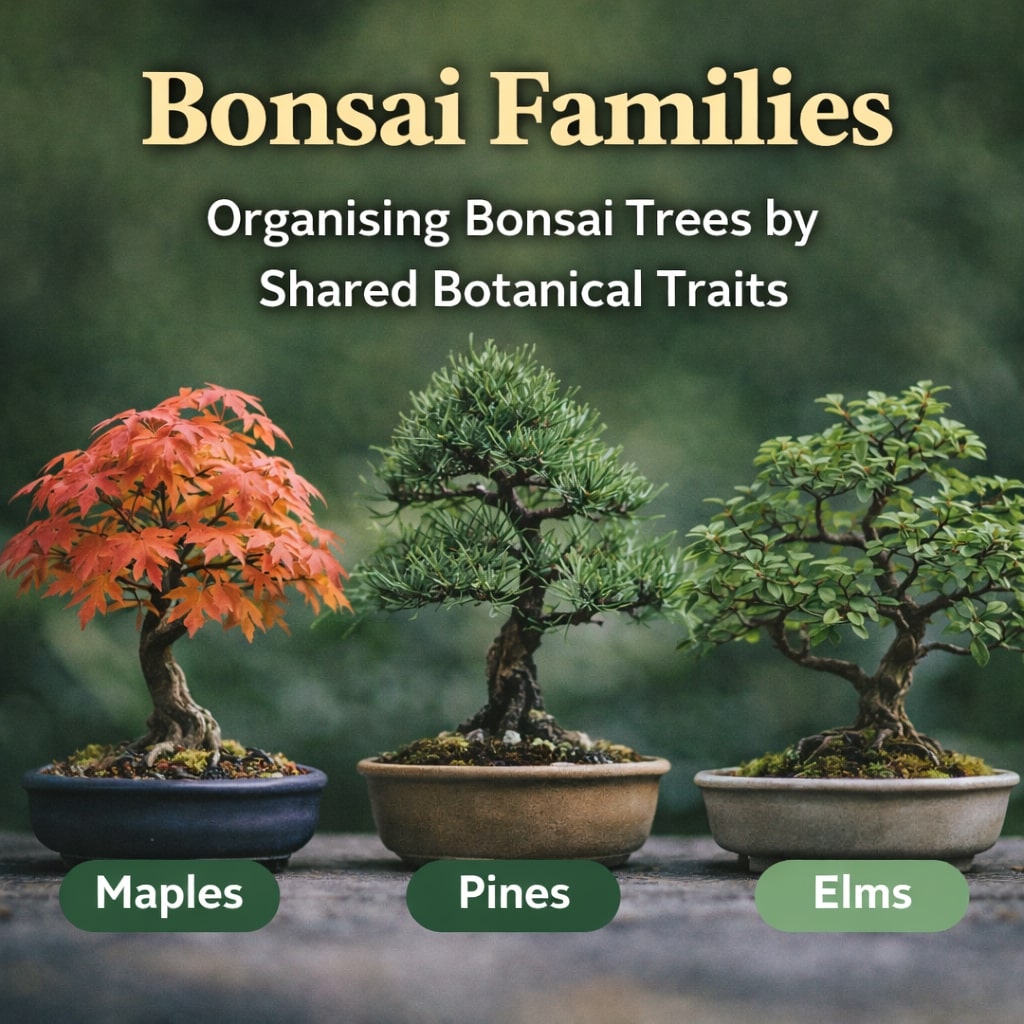
Bonsai families represent the next level of classification below bonsai groups, bringing trees together based on closer botanical relationships. While groups describe broad evolutionary similarities, families focus on trees that share more specific structural, reproductive, and growth characteristics.
Understanding bonsai families helps growers move beyond general behaviour and begin recognising patterns in leaf shape, bark texture, flowering habits, and growth response. This level of classification is especially useful for developing more refined care techniques and identifying similarities between different bonsai trees.
What are bonsai families?
In botanical taxonomy, a family is a formal rank that sits below broader groupings such as clades or divisions. Bonsai families include trees that are closely related through shared anatomical and genetic traits, even if they later branch into multiple genera and species.
Examples of commonly recognised bonsai families include those that contain maples, pines, elms, figs, and cypresses. While trees within the same family may look different at first glance, they often share underlying traits such as leaf arrangement, flowering structure, or growth rhythm.
For bonsai practitioners, families provide a meaningful way to organise trees that behave similarly under pruning, wiring, and seasonal care.
Why bonsai families matter in cultivation
At the family level, patterns in tree behaviour become far more predictable. Trees within the same family often respond similarly to environmental conditions, allowing growers to apply lessons learned from one tree to another with confidence.
Understanding bonsai families helps growers:
- Anticipate leaf size and reduction potential
- Recognise seasonal growth cycles
- Predict how trees respond to pruning and wiring
- Understand similarities in root structure and vigour
This knowledge is particularly valuable when working with unfamiliar species, as family traits often provide reliable guidance.
Common examples of bonsai families
Many bonsai tree families are instantly recognisable once growers become familiar with their defining traits. Some families are dominated by evergreen trees, while others include deciduous or flowering varieties.
Examples include families known for:
- Needle or scale foliage
- Broadleaf deciduous trees
- Flowering and fruiting species
- Strong apical growth or fine ramification
Within each family, trees may later be divided into genera and species, but the family level offers a balance between broad understanding and practical specificity.
How bonsai families connect groups and species
Bonsai families act as the bridge between high-level groups and individual species. They narrow classification enough to provide practical insight while still allowing for diversity within the group.
This middle layer of taxonomy helps growers progress logically. By starting with groups, refining understanding through families, and then moving into genera and species, bonsai classification becomes structured rather than overwhelming.
Families give context to why certain species behave the way they do and how they relate to other trees within the bonsai world.
Exploring bonsai families further
Bonsai families provide a powerful framework for understanding how different trees relate to one another and why their care requirements often overlap. They form an essential step in mastering bonsai taxonomy and developing intuition as a grower.
To explore bonsai families in more detail, use the category blocks below to navigate into specific families. From there, you can continue deeper into genera and individual species to build a complete, connected understanding of bonsai trees.

GYMNOSPERMS
Cypress
Order

Family
Subfamily
ANGIOSPERMS
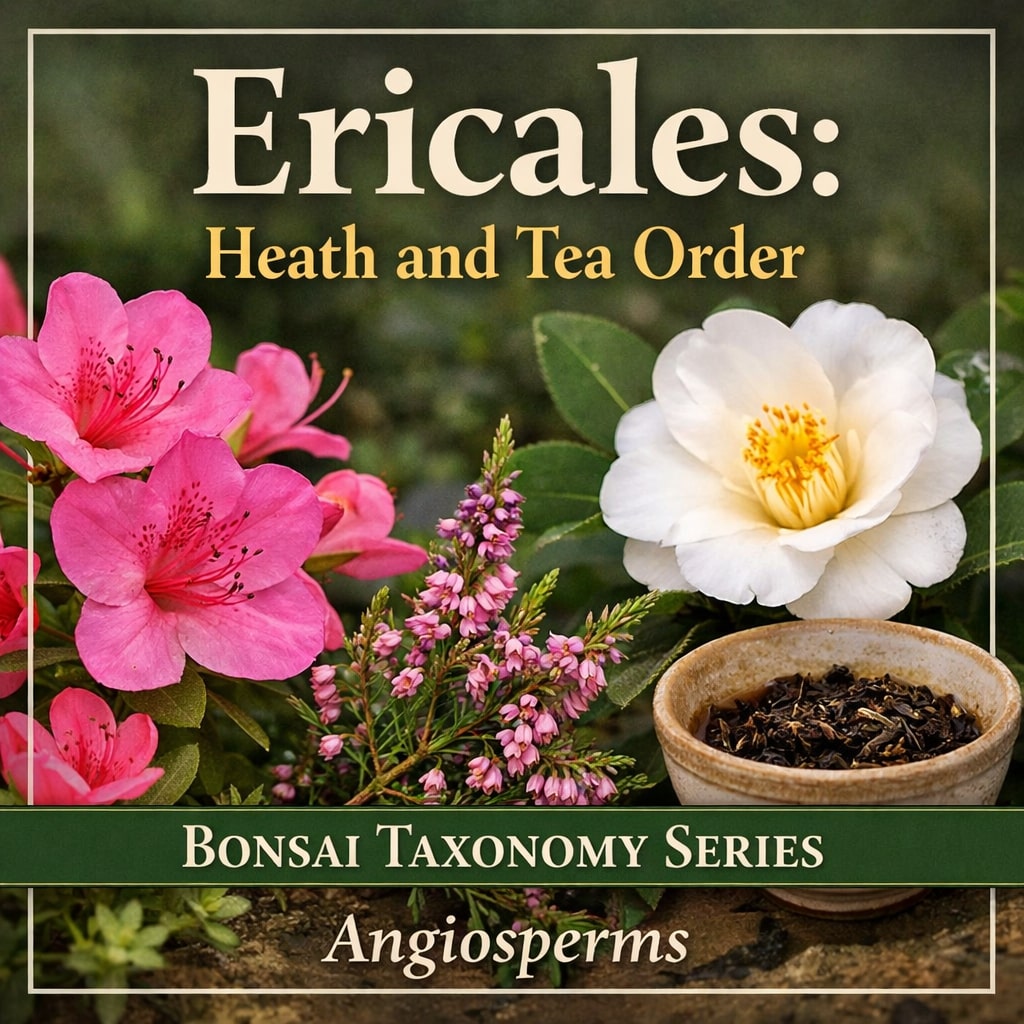
Heath and Tea
Order
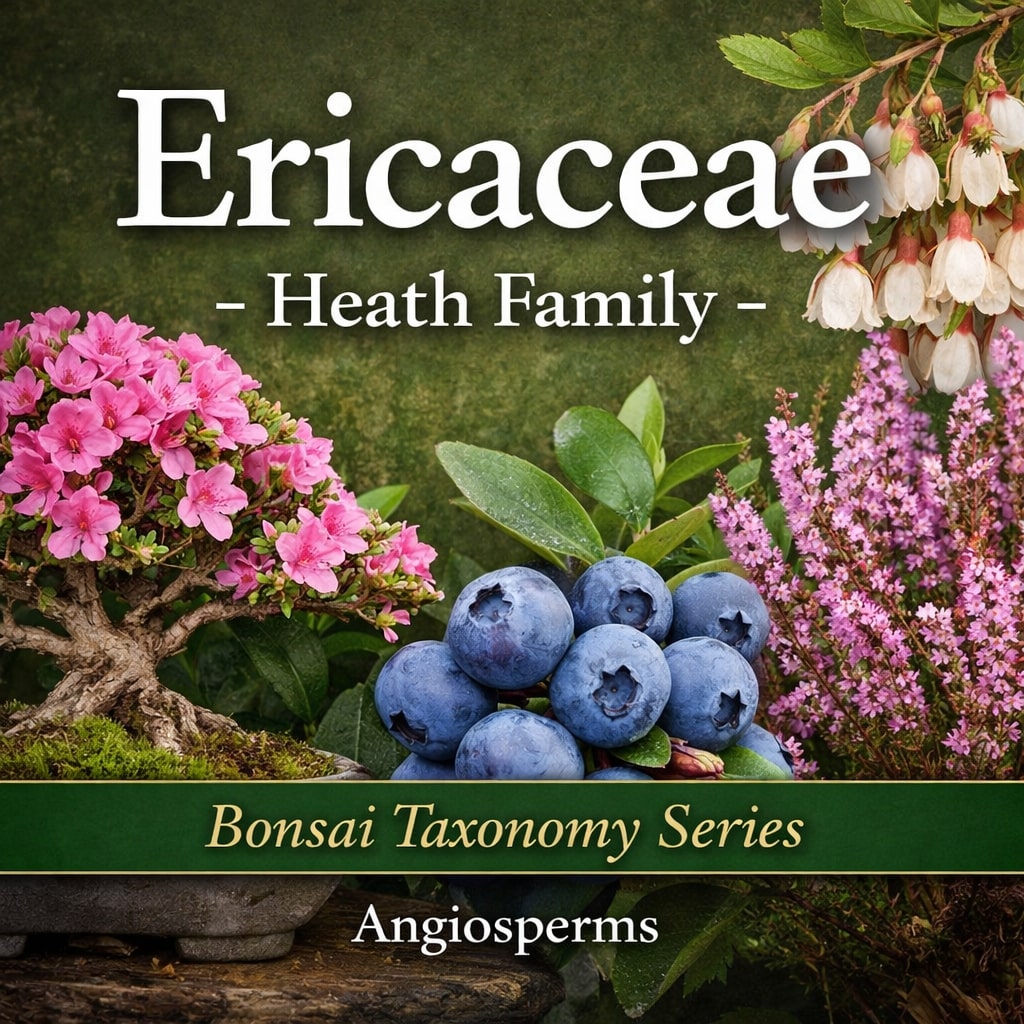
Family
Subfamily

Tribe