Bonsai groups represent the broadest level of classification used when organising trees suitable for bonsai cultivation. These groups sit above families in botanical taxonomy and are based on shared evolutionary traits, growth characteristics, and reproductive structures.
Rather than focusing on individual species, bonsai groups help growers understand trees in a more holistic way. By learning how major plant groups behave, bonsai practitioners can better anticipate growth habits, seasonal responses, and long-term care needs before narrowing their focus to specific families, genera, or species.
What are bonsai groups?
Bonsai groups are high-level botanical groupings that include clades, divisions, or tribes above the family rank. These groupings are not created specifically for bonsai but are drawn from broader plant taxonomy and applied to bonsai cultivation for clarity and organisation.
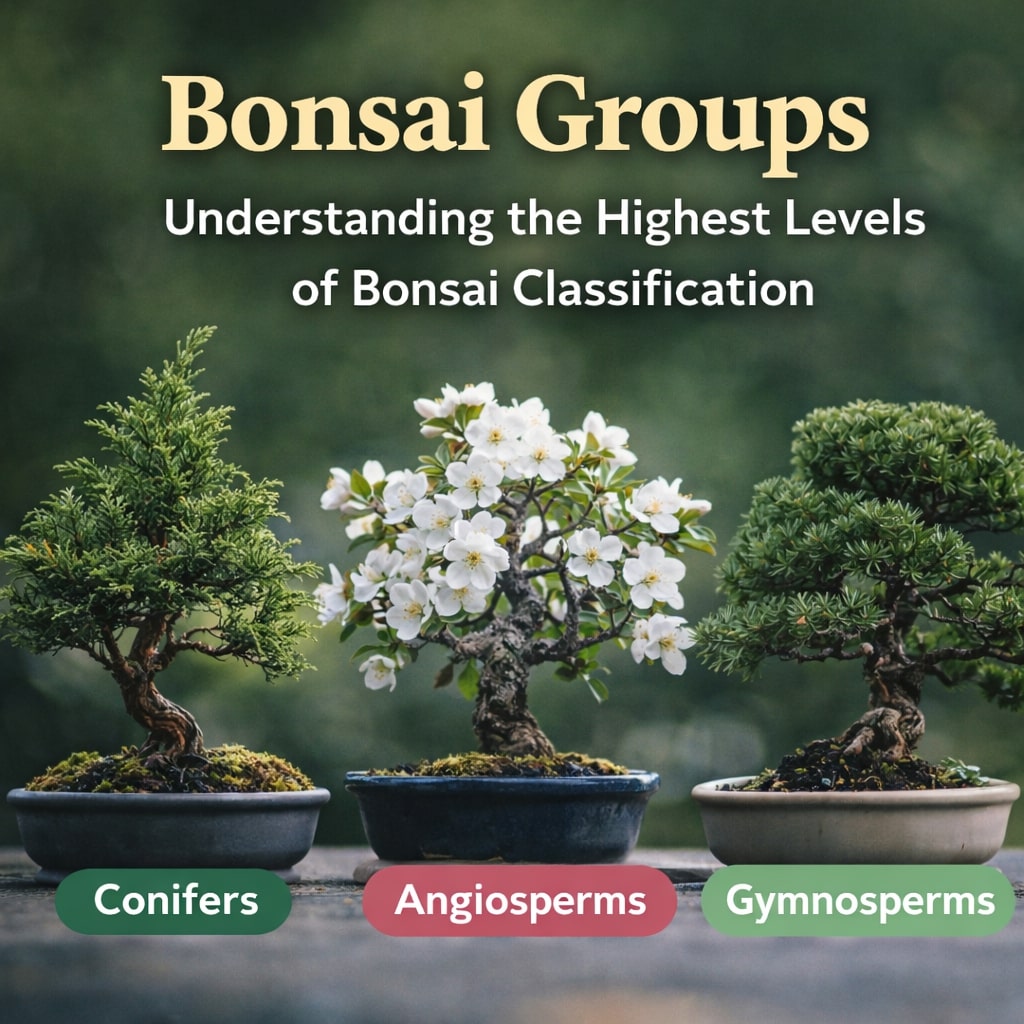
Examples of bonsai tree groups include conifers, angiosperms, gymnosperms, and more recognisable horticultural groupings such as cypresses or pines. These groups bring together trees that share fundamental biological traits, even if they later diverge into many families and species.
Understanding bonsai groups allows growers to see connections between different trees. A juniper and a cypress, for example, may belong to different genera but still share similar structural and growth tendencies because they sit within the same broader group.
Why bonsai groups matter in cultivation
At the group level, trees often share core behaviours that influence how they respond to pruning, wiring, watering, and seasonal changes. These shared traits make bonsai groups a valuable starting point for learning and comparison.
By studying bonsai groups, growers can:
- Predict general growth patterns
- Understand evergreen versus deciduous behaviour
- Anticipate root structure tendencies
- Recognise similarities in foliage and branching
This knowledge reduces guesswork and helps beginners avoid treating all trees as if they behave the same way.
Common examples of bonsai groups
Some bonsai groups are defined by evolutionary biology, while others are commonly used horticultural groupings that bonsai practitioners recognise instinctively.
Broad examples include:
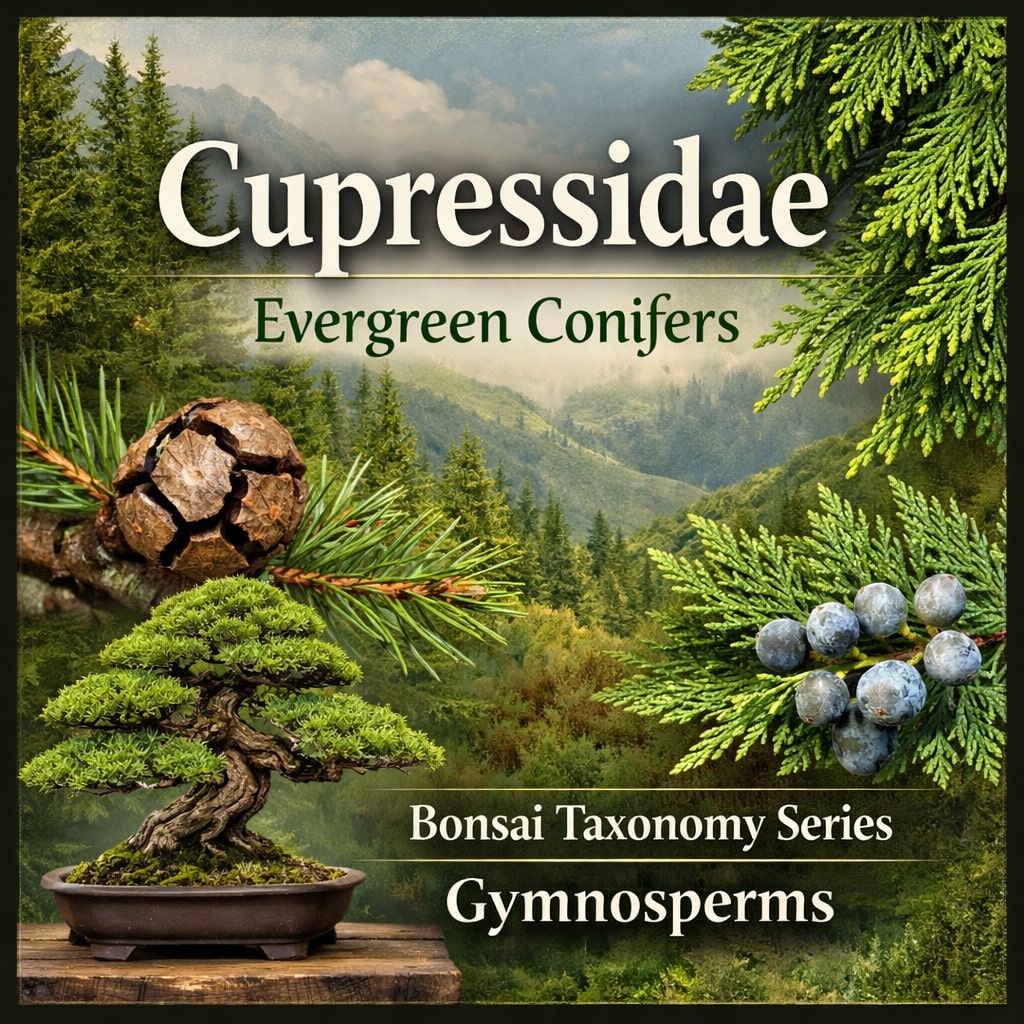
- Conifers, which include many needle- and scale-leaved evergreens
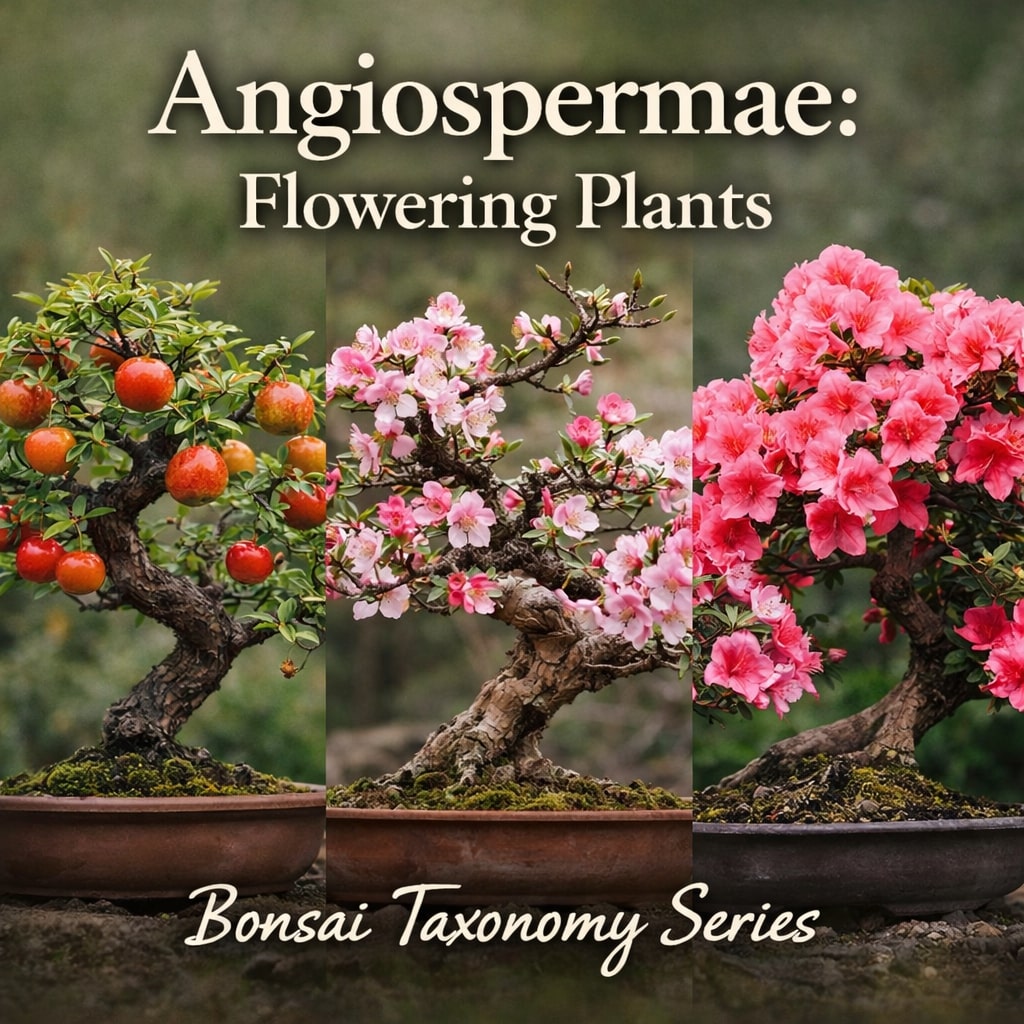
- Angiosperms, which include flowering and fruiting trees
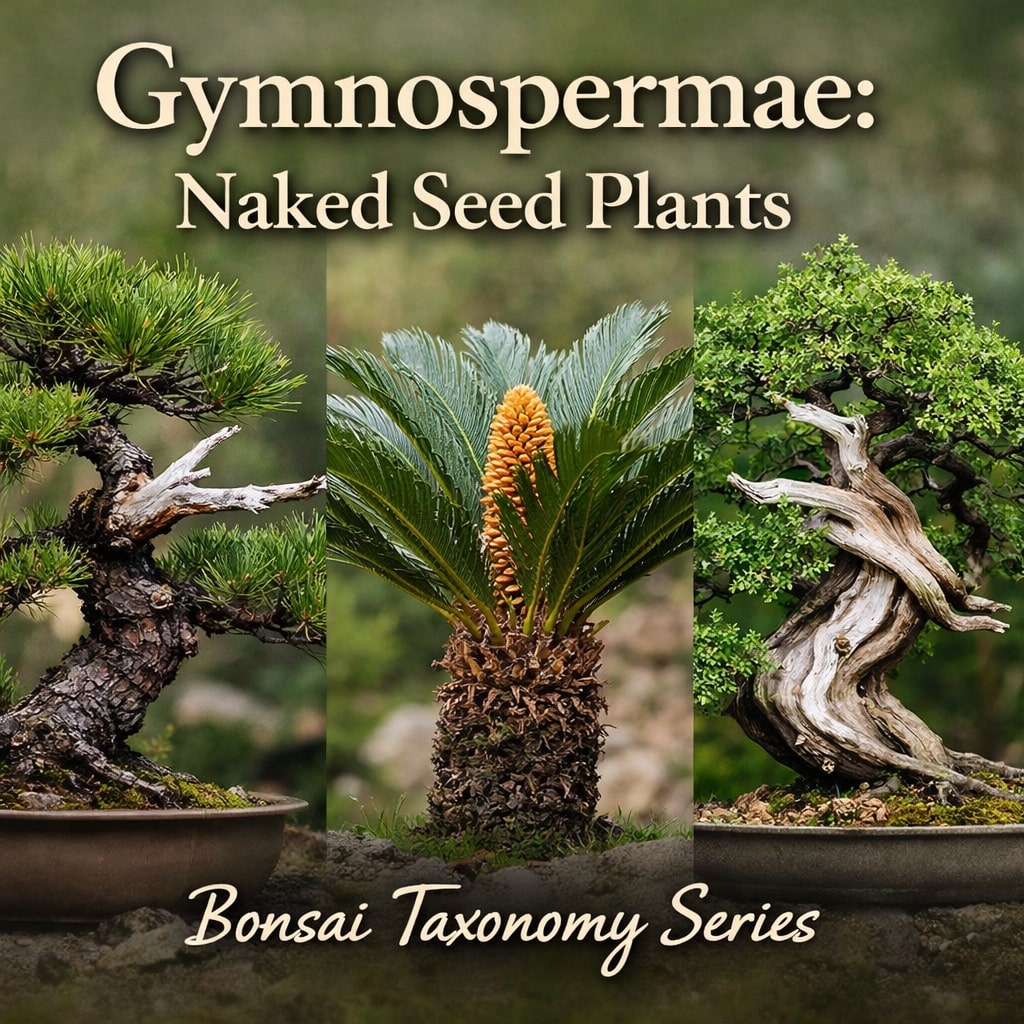
- Gymnosperms, which reproduce without flowers or fruit
Within these groups, trees may later be divided into families, genera, and species, but the group level provides the first layer of understanding when approaching bonsai taxonomy.
How bonsai groups guide deeper classification
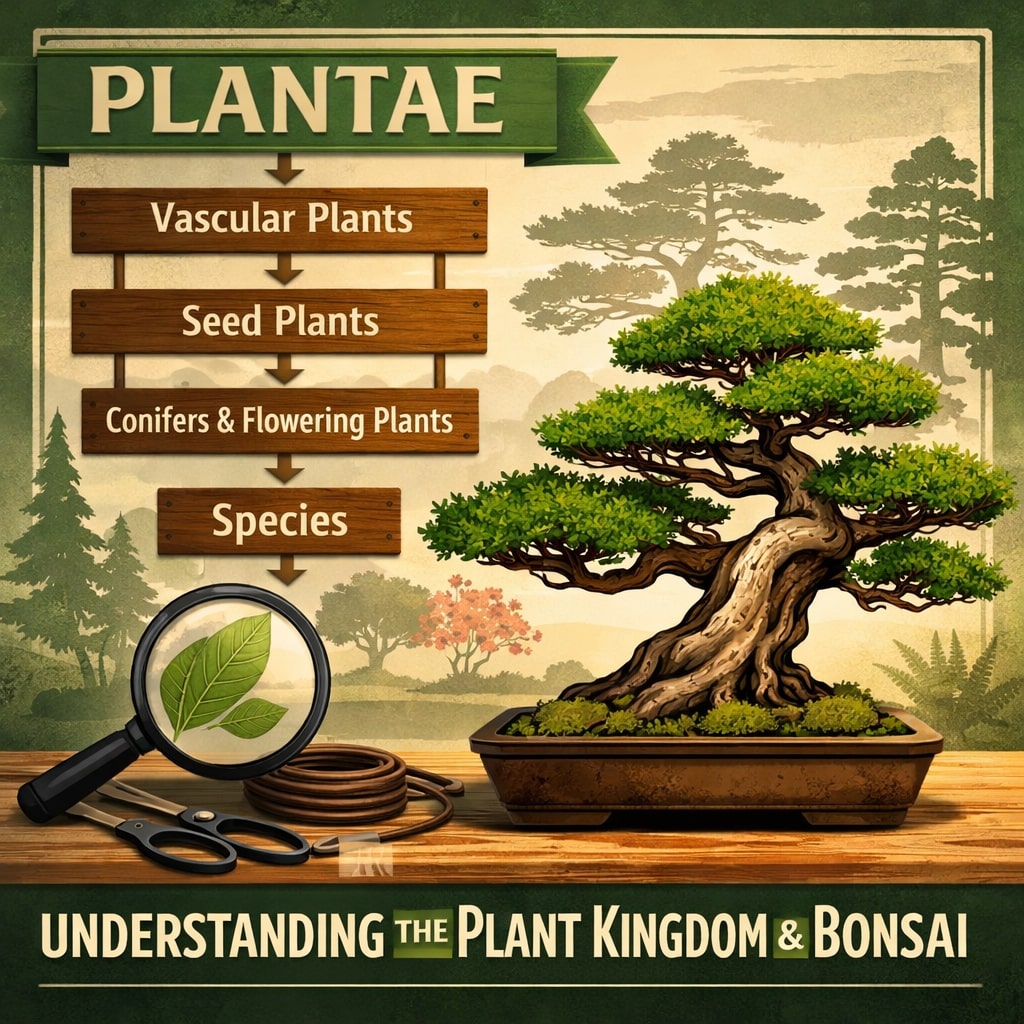
Bonsai tree groups act as the entry point into more detailed classification. Once a tree is placed within a group, it becomes easier to explore its family, genus, and species with context.
This top-down approach mirrors how experienced growers think. Instead of memorising individual care sheets, they recognise patterns shared across a group and then refine their care techniques as they move into narrower classifications.
As you move deeper into bonsai taxonomy, groups provide the framework that keeps everything organised and connected.
Exploring bonsai groups further
Bonsai groups offer a big-picture view of how trees relate to one another and why they behave the way they do. They are the starting point for understanding bonsai taxonomy and an essential reference for growers who want to move beyond surface-level care.
To explore bonsai tree groups in more detail, use the category blocks below to navigate into specific groupings. From there, you can continue down through families, genera, and individual species to build a complete understanding of each tree type.
Kingdom
Clade 1

Clade 2

Clade 3

Superdivision
Clade 4
Division
Gymnosperms

Angiosperms

Subdivision
Gymnosperms
Angiosperms

Clade 5
Gymnosperms
Angiosperms

Class
Gymnosperms

Angiosperms
Subclass
Gymnosperms
Angiosperms