Winter can be one of the most challenging seasons for bonsai care, especially for outdoor species exposed to cold temperatures, frost, and drying winds. As temperatures drop, many bonsai enthusiasts begin looking for ways to protect their trees and root systems from harsh winter conditions. One method often discussed is the use of mulch around bonsai pots during winter.
Mulch is commonly used in gardening to regulate soil temperatures, retain moisture, and protect roots from extreme weather. While bonsai trees differ from regular garden plants due to their small containers and specialised growing environments, mulch can still play a useful role when applied correctly.
However, mulch is not always necessary for every bonsai species or climate. Understanding when and how to use mulch can help protect your trees during winter without causing problems such as excessive moisture retention or pest issues.
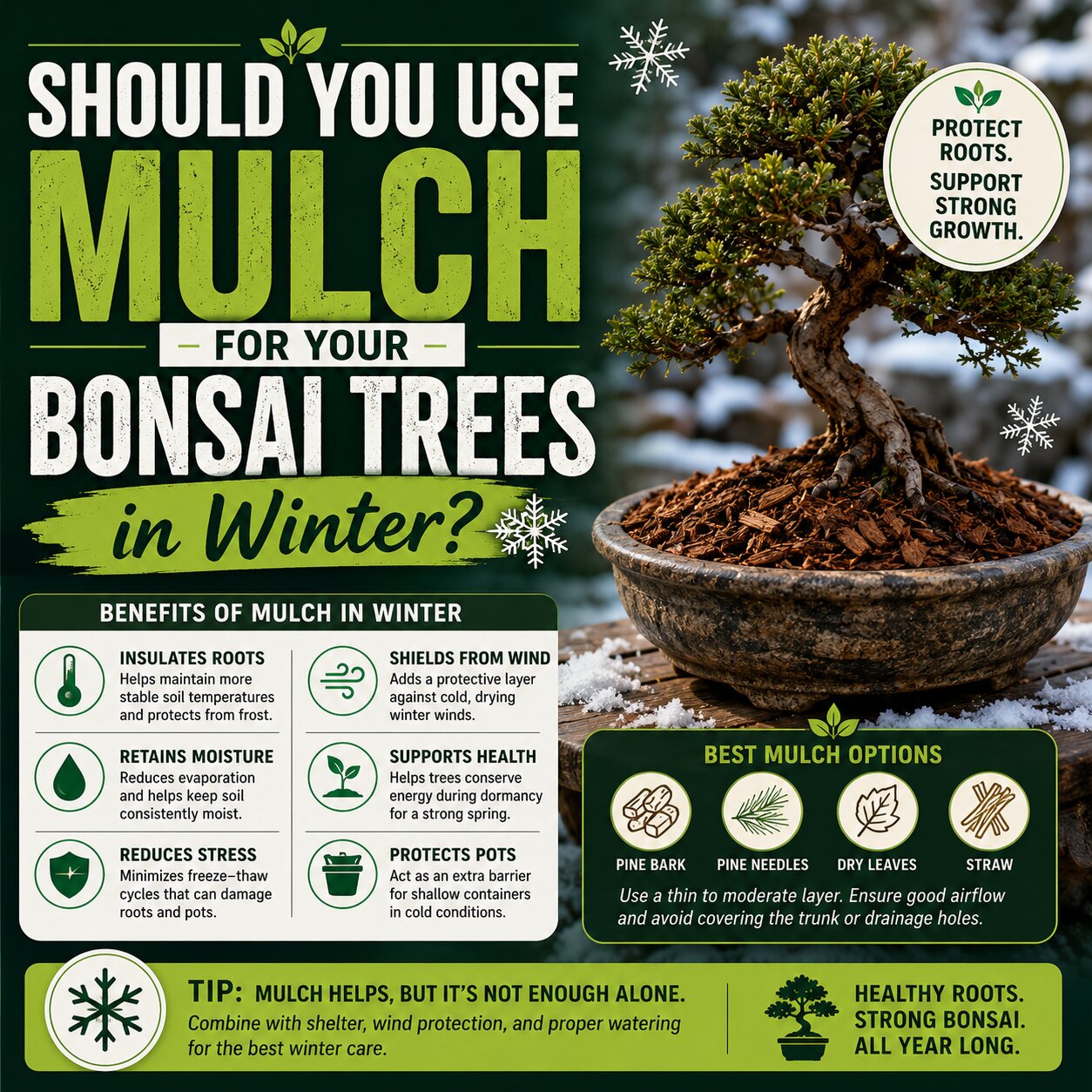
Why mulch can help bonsai trees in winter
One of the main benefits of mulch is insulation. Bonsai roots are far more exposed to temperature fluctuations than trees planted directly in the ground because they grow in shallow containers. During freezing conditions, roots can become vulnerable to frost damage if the pot loses heat too quickly.
Applying mulch around bonsai pots helps stabilise soil temperatures by reducing sudden temperature changes. This is especially useful for outdoor bonsai species that require winter dormancy but still need root protection during severe cold spells.
Mulch also helps retain moisture during winter. Although bonsai trees generally require less water during dormancy, winter winds and dry conditions can still cause soil to dry out faster than many people expect. A layer of mulch can slow evaporation and help maintain more stable moisture levels.
Another advantage is protection from repeated freeze-thaw cycles. Constant freezing and thawing can stress roots and even crack certain bonsai pots. Mulch provides an additional barrier that reduces these temperature swings around the container.
Best types of mulch for bonsai trees

Not all mulch materials work equally well for bonsai trees. Organic mulches are usually the preferred choice because they provide insulation while still allowing airflow and drainage around the pot.
Pine bark mulch is one of the most popular options. It offers good insulation, drains relatively well, and suits many bonsai environments. Pine needles can also work effectively, especially for species that prefer slightly acidic conditions.
Straw and dried leaves are lightweight alternatives that provide decent winter insulation. However, they may need occasional replacement if they become overly wet or compacted. Coconut coir mulch is another option that retains moisture while remaining relatively breathable.
Avoid heavy mulches that trap excessive water around the bonsai pot. Thick layers of wet compost or dense garden mulch can create overly damp conditions that increase the risk of root rot during winter.
When mulch may not be necessary
Mulch is not required for every bonsai tree or climate. In mild winter regions where freezing temperatures are rare, many outdoor bonsai trees can survive comfortably without additional insulation.
Indoor bonsai species also generally do not require mulch. Tropical and subtropical bonsai kept indoors during winter are protected from harsh weather conditions, making mulch largely unnecessary in most situations.
Some cold-hardy species naturally tolerate winter temperatures extremely well. Trees such as junipers, pines, and certain maples may only require mulch during unusually severe cold periods rather than throughout the entire season.
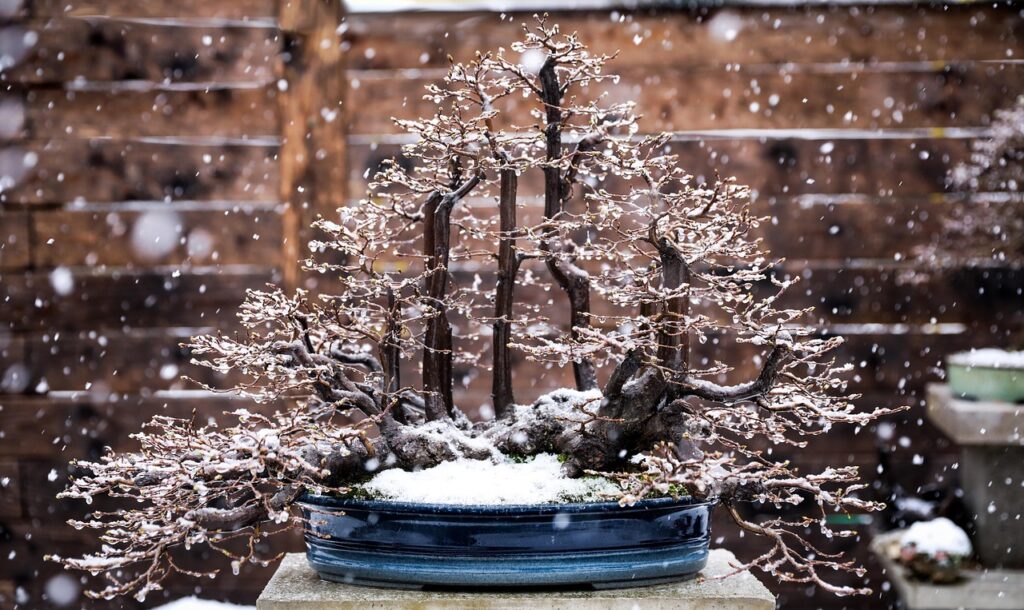
It is also important not to rely on mulch alone for winter protection. In very cold climates, bonsai trees may still need shelter from strong winds, heavy frost, snow accumulation, or freezing rain.
Benefits of using mulch for bonsai trees in winter
- Helps insulate exposed bonsai roots
- Reduces rapid soil temperature changes
- Retains moisture during dry winter conditions
- Protects pots from freeze-thaw stress
- Adds extra protection during frost events
- Helps outdoor bonsai survive colder temperatures
- Reduces moisture evaporation from shallow containers
- Supports more stable winter root conditions
Tips for using mulch safely with bonsai
When using mulch around bonsai trees, moderation is important. A thin to moderate layer around the outside of the pot is usually enough to provide insulation without trapping excessive moisture. Completely burying the trunk or covering drainage holes should be avoided.
Good airflow remains essential during winter. Bonsai soil should never stay permanently soggy, even when trees are dormant. Always check moisture levels regularly rather than assuming the mulch is maintaining ideal conditions automatically.
Mulch should also be monitored for pests. Damp organic material can sometimes attract insects, slugs, or fungal growth if left unmanaged for long periods. Replacing overly wet or decomposing mulch helps prevent problems from developing.
Positioning also matters. Mulch works best alongside other winter protection strategies such as placing bonsai near sheltered walls, using cold frames, or grouping pots together to reduce exposure to freezing winds.
Winter protection starts with healthy roots
Healthy roots are essential for strong bonsai growth throughout the year, and winter is one of the most important times to protect them properly. Using mulch can be an effective way to shield bonsai roots from cold temperatures, moisture loss, and sudden environmental changes during winter.
While not every bonsai tree requires mulch, outdoor species in colder climates often benefit from the additional insulation and stability it provides. By selecting the right mulch materials and applying them carefully, bonsai enthusiasts can help their trees survive winter more comfortably and prepare for healthy spring growth.