
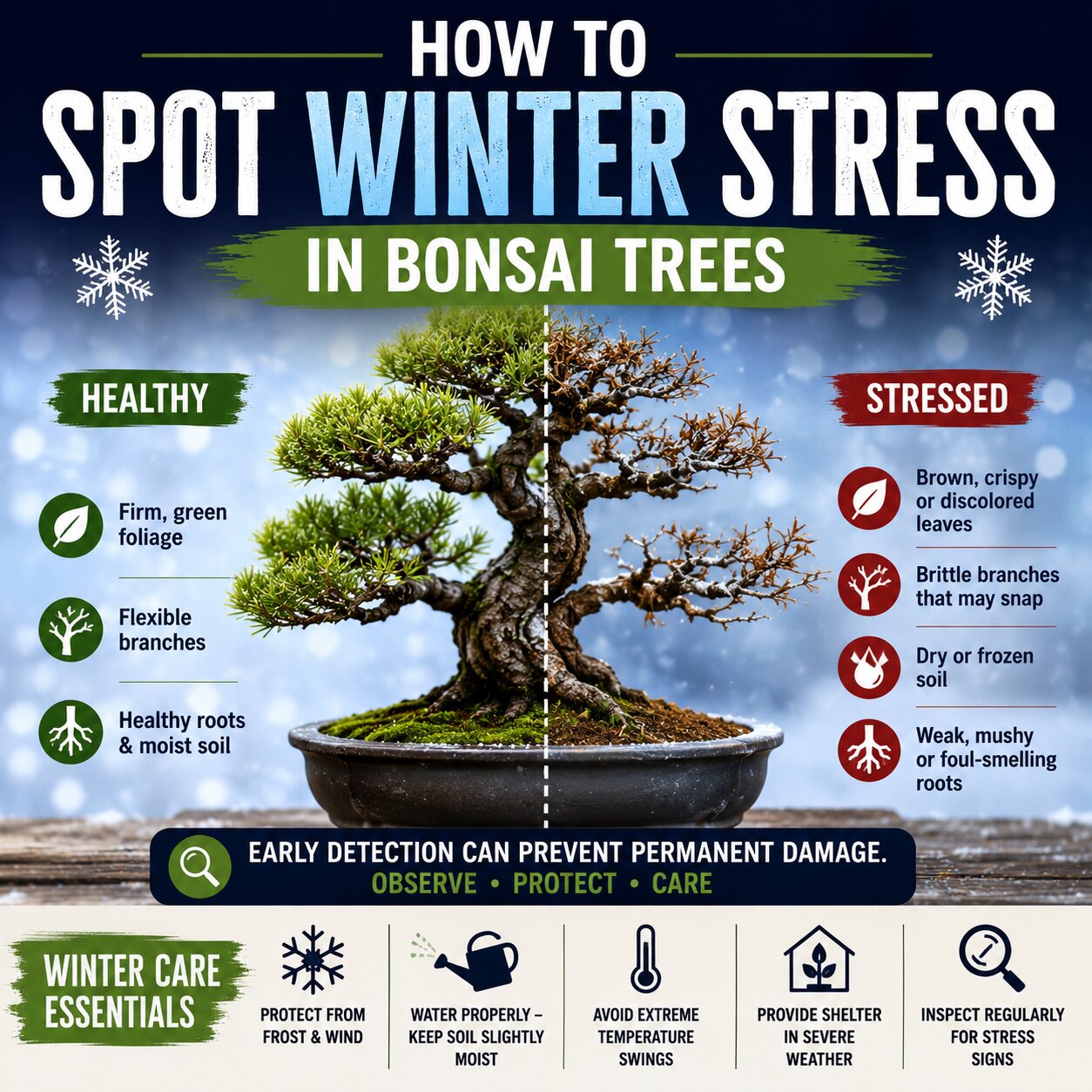
Winter can be one of the most challenging seasons for bonsai enthusiasts. While many bonsai trees naturally enter dormancy during colder months, harsh weather conditions, improper watering, frost, wind, and sudden temperature changes can place significant stress on these miniature trees. Knowing how to spot winter stress in bonsai trees early can help prevent serious damage and improve survival rates during the colder season.
Many beginners mistake dormancy for decline, while others overlook subtle warning signs until the damage becomes severe. Understanding the difference between natural winter behaviour and harmful stress is essential for maintaining healthy bonsai trees throughout winter.
By monitoring foliage, branches, roots, soil moisture, and overall tree condition, bonsai owners can identify winter stress problems early and take corrective action before permanent damage occurs.
Understanding normal winter dormancy

Before identifying winter stress, it is important to understand what normal dormancy looks like in bonsai trees. Deciduous species naturally lose their leaves during autumn and winter as part of their seasonal cycle. Growth slows significantly, and the tree conserves energy until spring returns.
During dormancy, branches may appear bare and inactive, but the tree itself remains healthy internally. Evergreen species may also reduce growth activity while maintaining their foliage throughout winter.
A healthy dormant bonsai should still have flexible branches, firm bark, and healthy roots beneath the soil. Buds for spring growth often remain visible even while the tree appears inactive.
Recognising these normal seasonal changes helps prevent unnecessary panic and overcorrection during winter care.
Common signs of winter stress in bonsai trees
Winter stress usually becomes visible through changes in foliage, bark, branch flexibility, and overall appearance. One of the first warning signs is excessive leaf browning or drying beyond normal seasonal shedding.
Evergreen bonsai trees may develop yellowing needles or leaves when exposed to freezing winds or prolonged dehydration. Deciduous trees can also experience branch dieback if cold damage becomes severe.
Another important warning sign is brittle branches. Healthy dormant branches should still bend slightly without snapping. Dry, fragile branches may indicate dehydration or frost damage.
Root stress is another major concern during winter. Waterlogged soil combined with freezing temperatures can damage roots and lead to rot. At the same time, frozen soil can prevent proper water absorption, leaving the tree dehydrated despite wet conditions.
Watch for these symptoms carefully:
- Sudden blackened foliage
- Crispy or brittle leaves
- Dry branch tips
- Bark splitting or cracking
- Mushy or foul-smelling roots
- Weak or shrivelled buds
- Severe needle drop in evergreens
- Persistent wilting despite moist soil
These signs often indicate that the bonsai is struggling with environmental stress rather than normal dormancy.
Environmental causes of winter bonsai stress
Several environmental factors contribute to winter stress in bonsai trees. Frost is one of the biggest risks, especially for trees grown in shallow bonsai containers where roots have less insulation than trees planted in the ground.
Cold winter winds can rapidly dry out branches and foliage, particularly in evergreen species. This windburn effect is common when bonsai trees are exposed on balconies, patios, or open garden shelves.
Temperature fluctuations also create problems. Sudden warming followed by freezing temperatures may confuse the tree’s dormancy cycle and damage delicate tissues.
Indoor bonsai trees face their own challenges during winter. Dry indoor heating systems often reduce humidity levels dramatically, causing leaf drop and dehydration.
Poor watering practices are another common issue. Many owners either overwater dormant bonsai or allow the soil to become excessively dry during cold weather.
How to reduce winter stress in bonsai trees
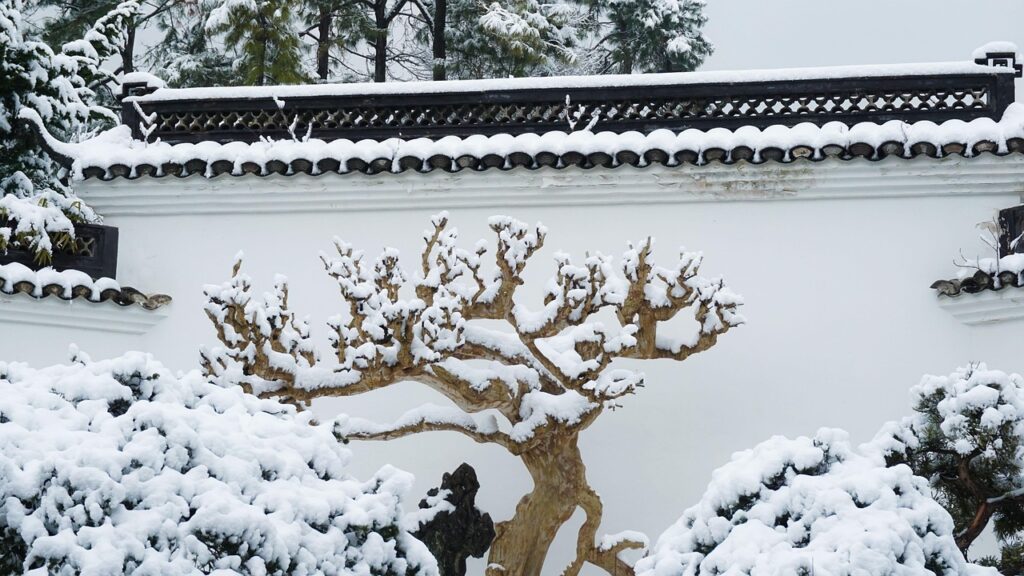
Protecting bonsai trees during winter starts with proper placement. Outdoor species should be shielded from freezing winds while still experiencing natural seasonal temperatures needed for dormancy.
Cold frames, sheltered patios, greenhouses, and insulated bonsai benches can provide excellent protection during severe weather. Some growers also bury pots in mulch or soil to help insulate roots from freezing temperatures.
Watering should remain consistent but reduced compared to summer. Bonsai soil should stay slightly moist without becoming waterlogged. Always check soil moisture before watering during winter.
Indoor tropical bonsai benefit from increased humidity, stable temperatures, and adequate sunlight during colder months. Grow lights may help supplement shorter winter days.
Regular inspection is equally important. Early detection of winter stress allows for quicker intervention and significantly improves recovery chances.
Helping bonsai trees survive the winter season
Learning how to spot winter stress in bonsai trees is an important skill for every bonsai enthusiast. While dormancy is natural for many species, harsh winter conditions can quickly become dangerous if warning signs go unnoticed.
By understanding the difference between healthy dormancy and genuine stress, bonsai owners can respond appropriately and protect their trees throughout the coldest months of the year. Careful observation, proper placement, balanced watering, and environmental protection all play essential roles in keeping bonsai healthy during winter.
With patience and attentive care, bonsai trees can emerge from winter stronger, healthier, and ready for vibrant spring growth.