
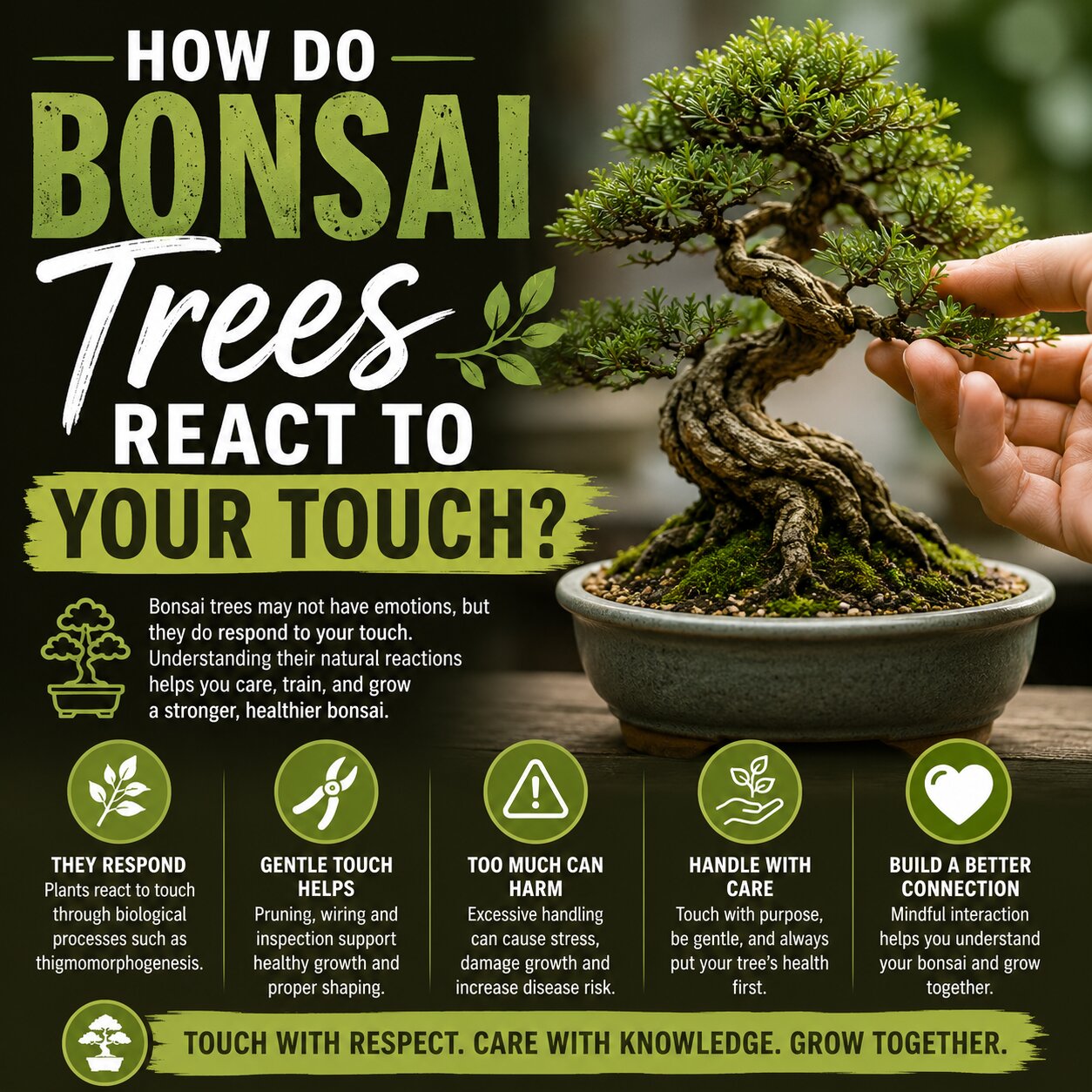
Many bonsai enthusiasts spend countless hours caring for their trees and naturally wonder whether bonsai trees react to human touch. While bonsai trees do not experience emotions in the way humans or animals do, they are living organisms that respond to physical interaction and environmental changes.
Every touch can have some effect on a bonsai tree. Leaves, branches, buds, bark, and roots are all sensitive to varying degrees, and repeated handling can influence growth, health, and development over time.
Understanding how bonsai trees react to touch helps owners provide better care while avoiding unnecessary stress or damage.
When handled correctly, occasional interaction is not harmful and often forms part of regular bonsai maintenance.
How Leaves And Branches Respond
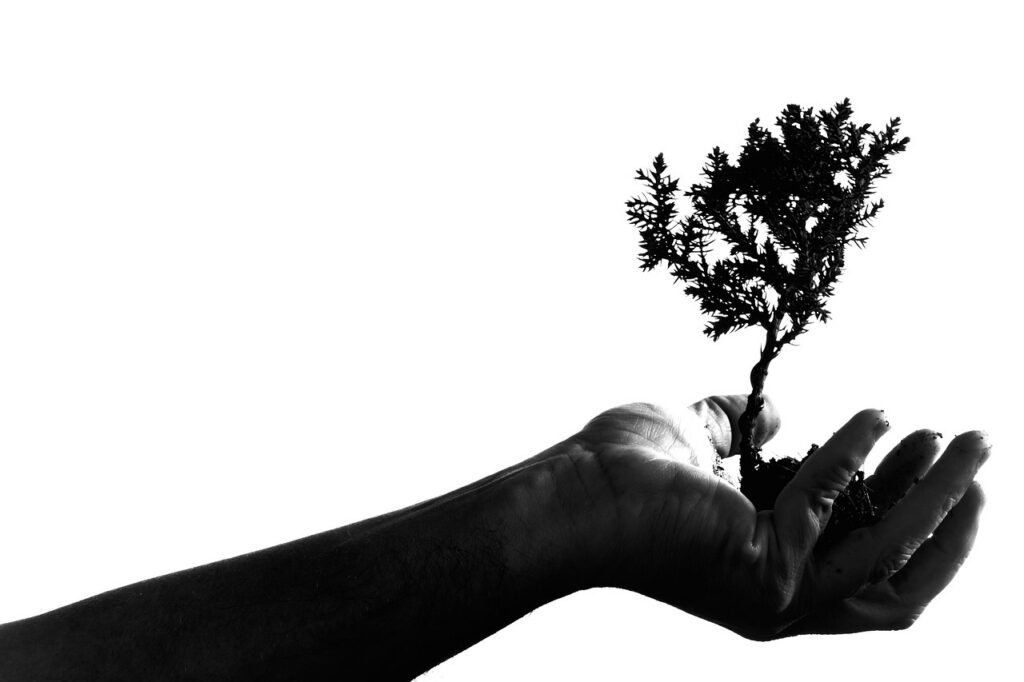
The leaves and branches of bonsai trees are constantly responding to external stimuli. Gentle pruning, wiring, and shaping are examples of intentional forms of touch that guide development and create the desired bonsai form.
Plants possess natural mechanisms that allow them to react to physical contact. Repeated movement or pressure can sometimes influence growth patterns, a phenomenon known as thigmomorphogenesis. In nature, this response helps plants adapt to wind, rain, and other environmental forces.
However, excessive touching of foliage can damage delicate leaves, remove protective wax coatings, or transfer oils and contaminants from human skin.
For this reason, bonsai owners should handle foliage only when necessary during maintenance activities.
Benefits Of Gentle Handling
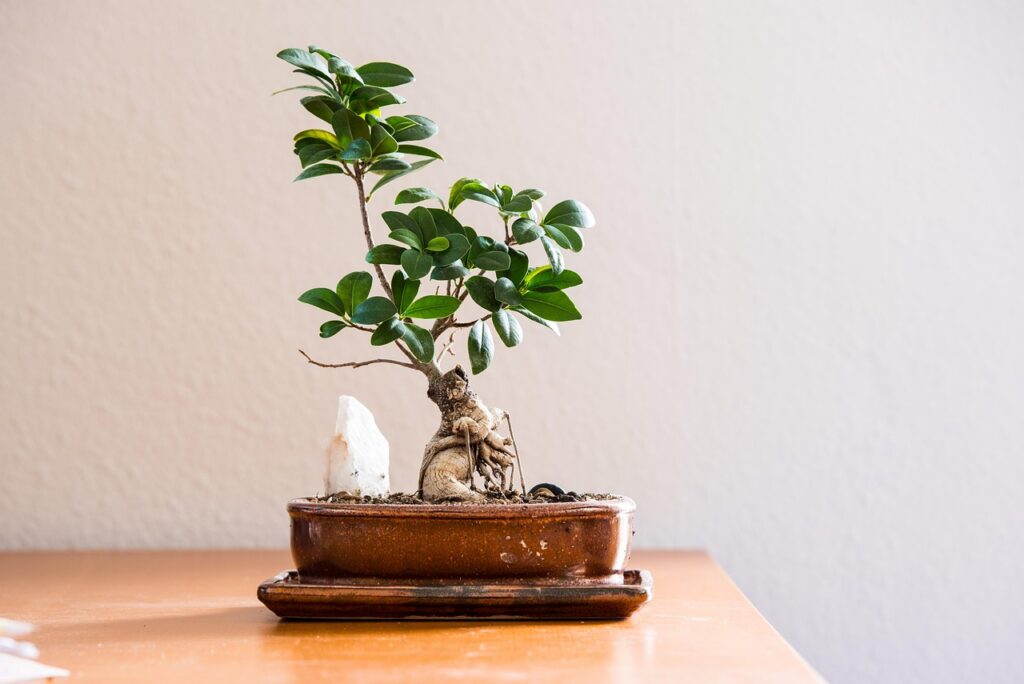
There are several situations where physical interaction benefits a bonsai tree:
- Inspecting for pests and disease
- Performing pruning and trimming
- Applying wiring techniques
- Cleaning dead foliage
- Checking soil moisture levels
- Repositioning branches during training
- Monitoring overall health
These forms of interaction allow growers to identify problems early and maintain the tree’s long-term health.
When Touch Can Become Harmful
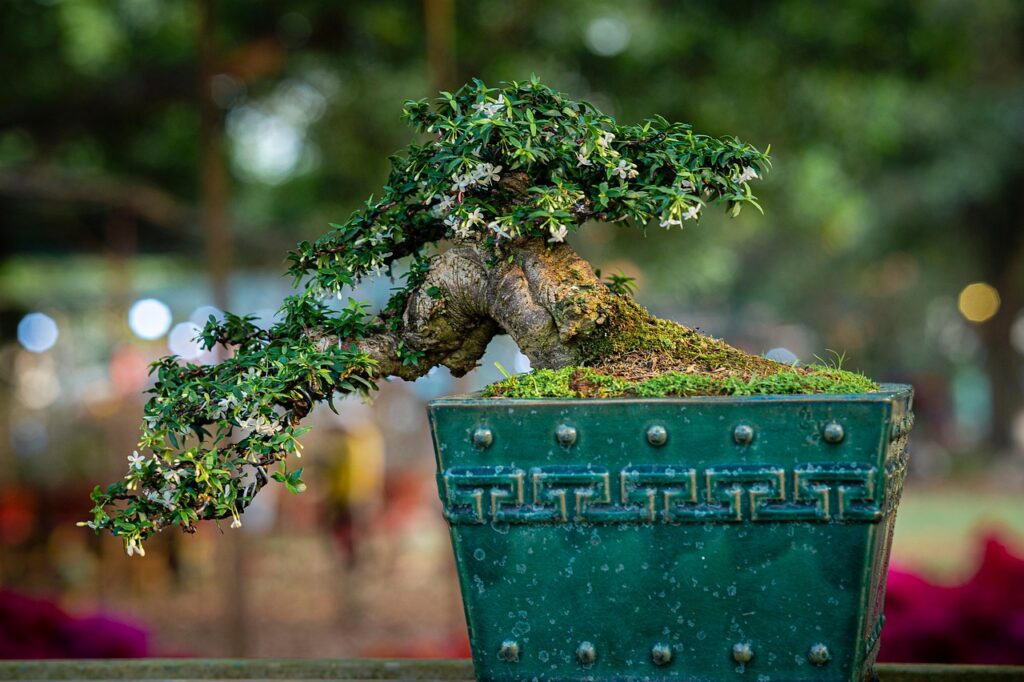
While bonsai trees tolerate normal maintenance, excessive handling can create unnecessary stress. Constant touching of branches may weaken new growth or cause accidental breakage, particularly in young or delicate species.
Repeated contact with foliage can also increase the risk of spreading fungal spores, pests, or diseases between trees if proper hygiene is not maintained.
Roots are especially vulnerable. During repotting, bonsai practitioners handle roots carefully because unnecessary damage can affect water uptake and overall tree health.
The key is to interact with purpose rather than treating the bonsai as a decorative object that is frequently handled.
Building A Better Connection With Your Bonsai
One of the most rewarding aspects of bonsai cultivation is developing a close relationship with a living tree. Observing its growth, studying its structure, and performing regular maintenance naturally involves some degree of touch and interaction.
Bonsai trees react to physical contact through biological responses rather than emotions, but careful handling plays an important role in their development and wellbeing. By understanding how different parts of the tree respond, growers can avoid damage while supporting healthy growth.
The best approach is one of mindful care. Touch your bonsai when necessary, handle it gently, and use every interaction as an opportunity to better understand the unique needs of your tree.