Choosing your first bonsai style can feel overwhelming. With dozens of recognised styles, each offering its own beauty and challenges, many enthusiasts wonder where they should begin. The good news is that there is no single “correct” bonsai style. The best choice depends on your tree species, available space, growing conditions, and personal preferences.
Understanding how different bonsai styles complement specific trees and your own gardening goals will help you make a confident decision. Rather than trying to force a tree into an unsuitable design, successful bonsai artists work with the natural characteristics of the plant while expressing their own creativity.
By taking a thoughtful approach, you can select a style that is both rewarding to grow and enjoyable to maintain for many years.
Start With Your Tree Species
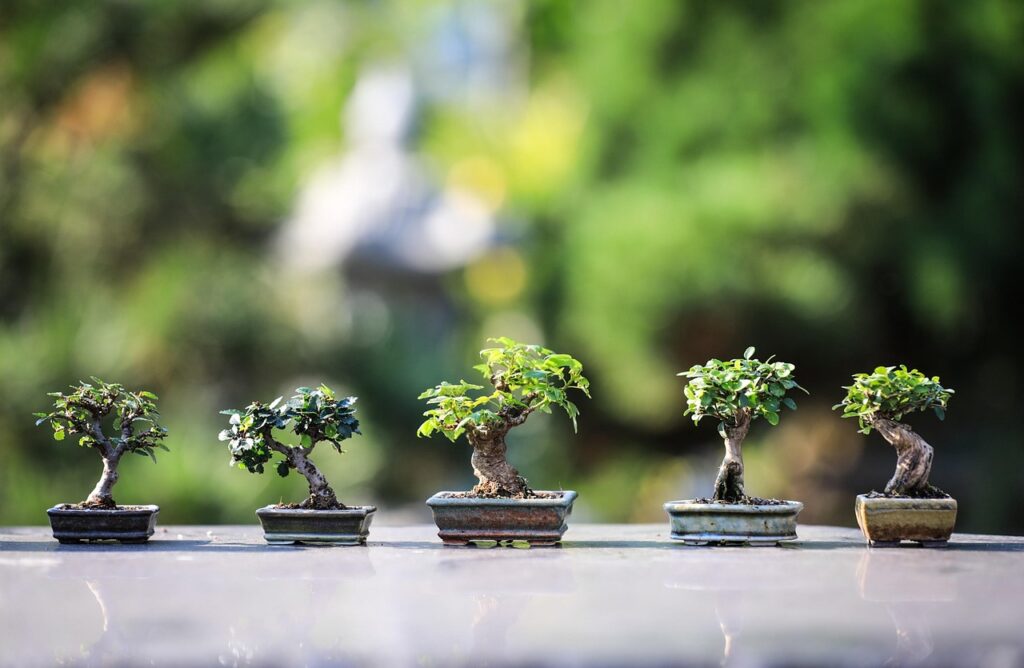
One of the most important factors when choosing a bonsai style is the species of tree you intend to grow. Every species has unique growth habits, branch flexibility, leaf size, and natural form.
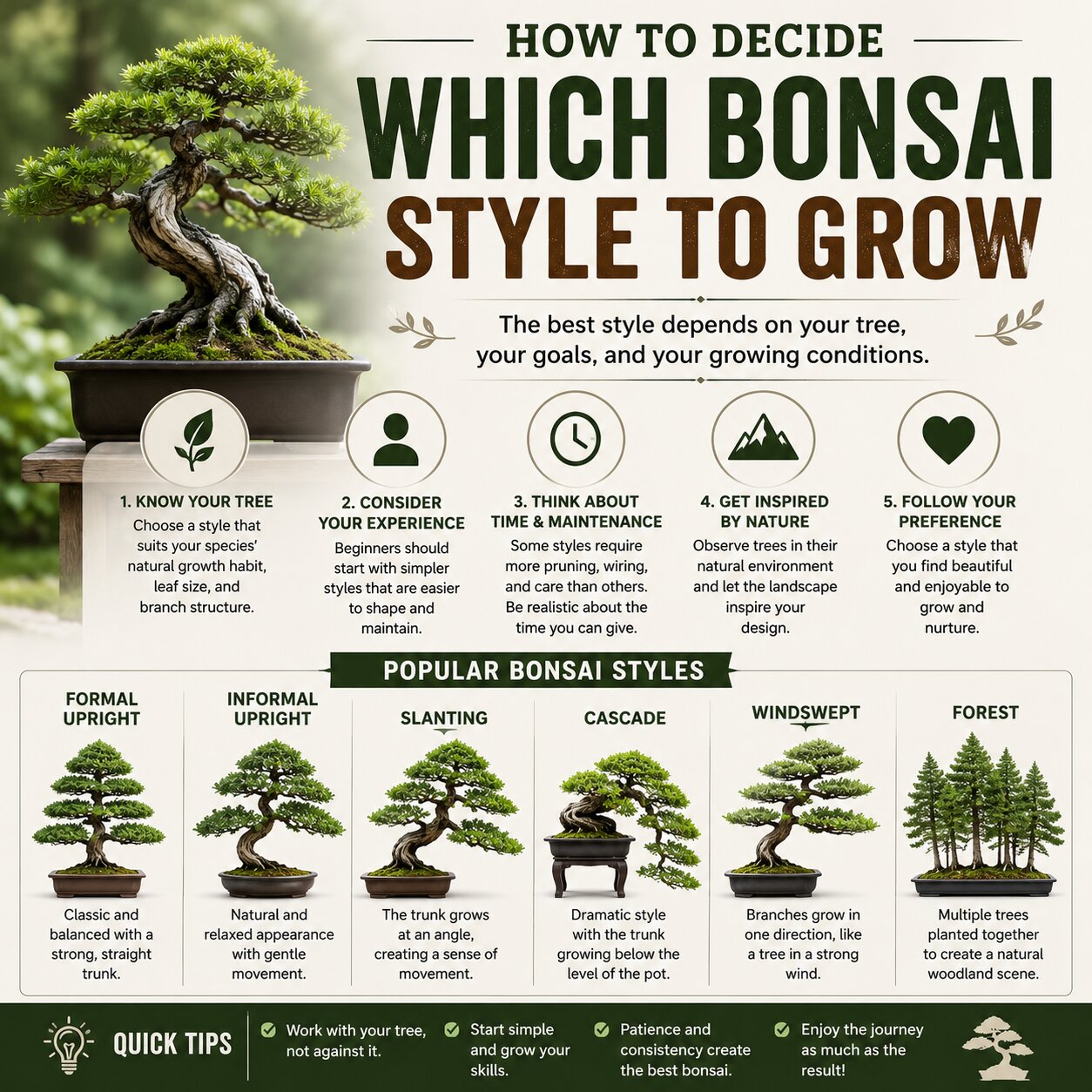
Pines and junipers often lend themselves to formal upright, informal upright, slanting, or cascade styles because of their strong trunks and flexible branches. Deciduous species such as maples and elms are excellent candidates for broom, informal upright, and forest styles thanks to their fine branching and seasonal interest.
Flowering and fruiting species may suit more naturalistic styles that showcase blossoms or fruit, while tropical species often allow greater freedom because they respond well to pruning throughout the growing season.
Allowing the species to guide your design usually produces the most convincing bonsai.
Consider Your Experience And Available Time
Some bonsai styles require considerably more maintenance than others. Beginners often achieve better results by selecting styles that are easier to develop and maintain.
Formal upright and informal upright bonsai generally provide excellent starting points because their structure is relatively straightforward and pruning techniques are easier to learn. More advanced styles such as cascade, windswept, or raft plantings often require greater experience with wiring, branch positioning, and long-term planning.
It is also worth considering how much time you can dedicate to maintenance. Trees requiring frequent pruning, wiring adjustments, or specialised care may become difficult to manage if your schedule is limited.
Choosing a style that matches your experience and available time helps make bonsai a relaxing hobby rather than a frustrating one.
Let Nature Be Your Inspiration
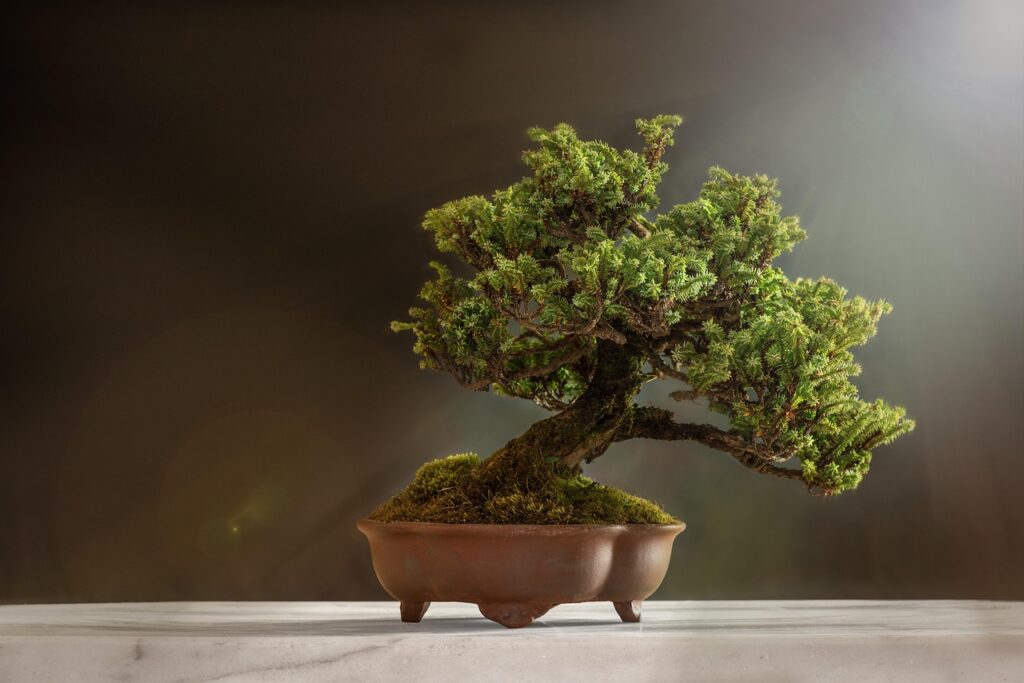
One of the greatest lessons in bonsai is learning to observe trees growing naturally. Mountainsides, forests, coastlines, and open grasslands all provide inspiration for different bonsai styles.
A tree growing on a windy cliff may inspire a windswept design, while an old oak standing proudly in an open field might suggest a majestic informal upright bonsai. Multi-trunk trees found in nature often inspire clump or forest compositions that capture the feeling of a mature woodland.
Rather than forcing a design, many experienced artists spend time studying how trees respond to their environment before making styling decisions.
This approach often produces bonsai that feel authentic and timeless.
Questions To Help You Choose
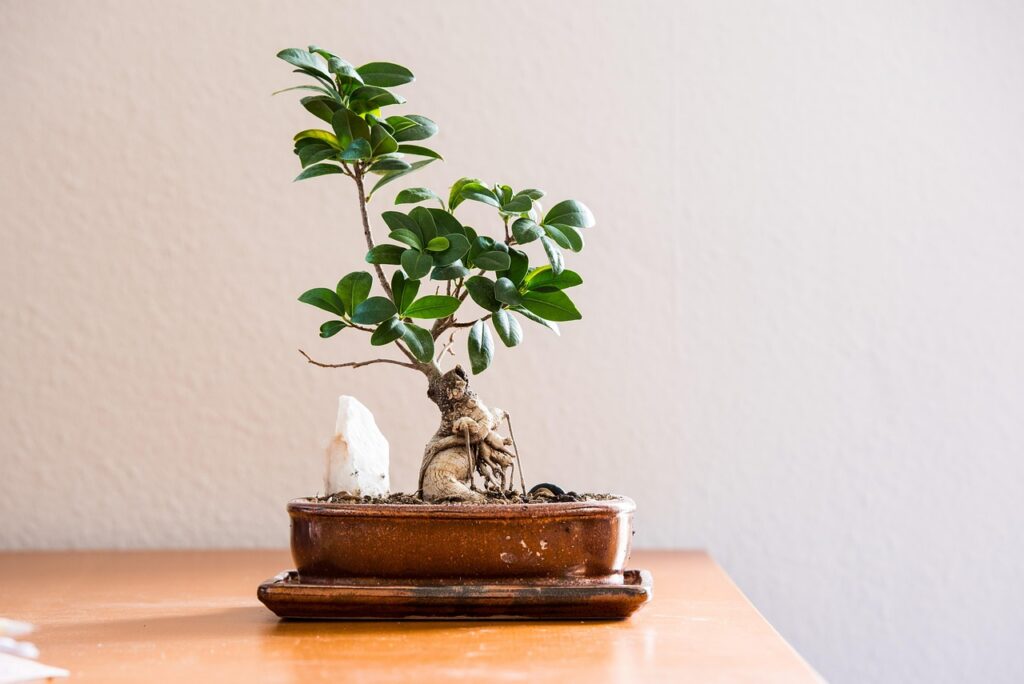
Before selecting a bonsai style, ask yourself:
- What tree species am I growing?
- Is this my first bonsai?
- How much maintenance can I realistically provide?
- Do I prefer formal or natural-looking designs?
- Does the tree already suggest a particular style?
- What inspires me most in nature?
- Am I creating a display tree or simply enjoying the learning process?
- Do I have enough growing space for the chosen design?
Enjoy The Journey Of Discovery
Every bonsai tells a unique story, and choosing a style is simply the beginning of that journey. As your skills develop, you may discover that your preferences evolve, leading you to explore new designs and techniques over time.
The most successful bonsai are rarely those that follow strict rules alone. Instead, they reflect a balance between horticultural knowledge, artistic vision, and respect for the tree’s natural character. By selecting a style that complements both your tree and your goals, you’ll create a bonsai that continues bringing enjoyment and satisfaction for many years to come.