
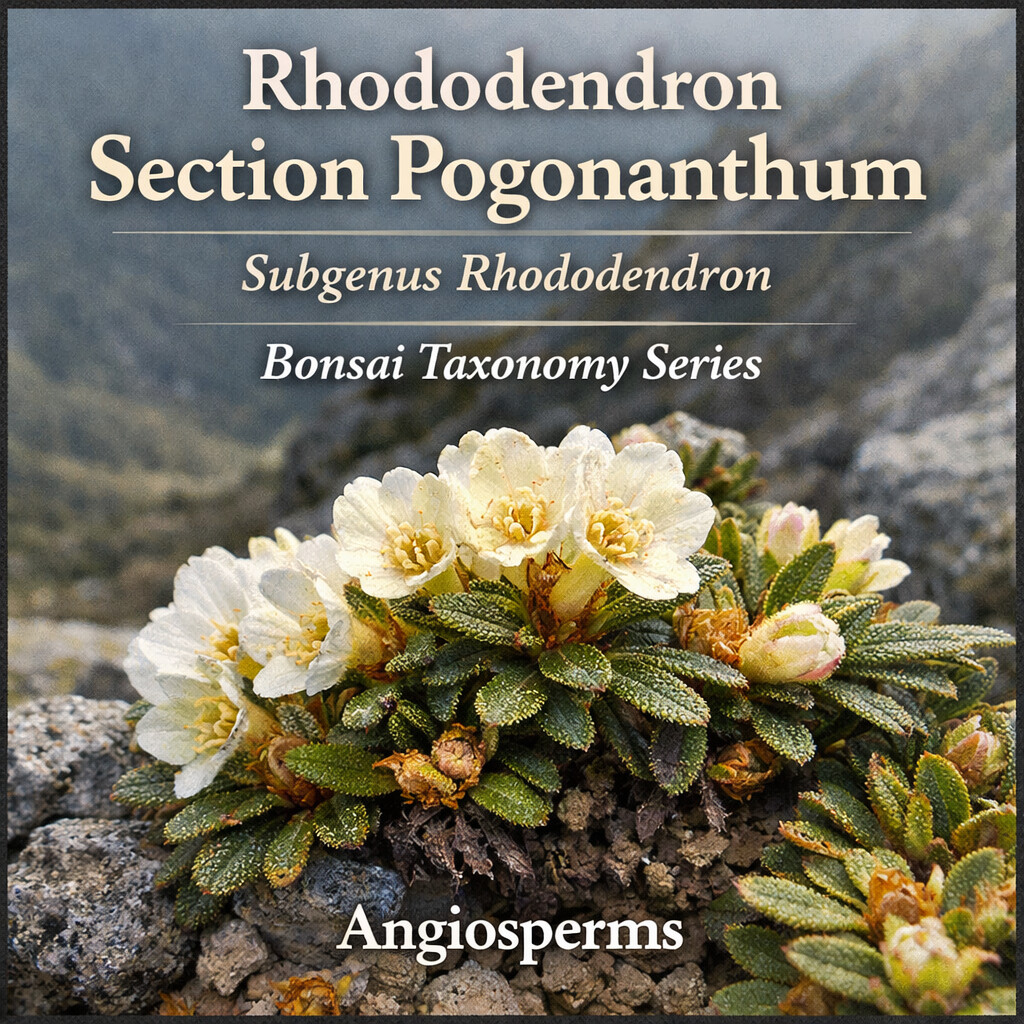
Rhododendron Section Pogonanthum represents a distinctive group of small, evergreen, lepidote rhododendrons adapted to some of the harshest growing conditions in the world. Often referred to as Daphne-flowered rhododendrons, species in this section are characterised by their aromatic foliage, scaly leaves, and delicate, tubular to salver-shaped flowers with a distinctive ring of hairs inside the throat.
Native primarily to high-altitude regions of the Himalayas and western China, Section Pogonanthum includes dwarf to low-growing shrubs that thrive in cold, exposed, and rocky environments. Their compact habit, resilience, and subtle floral beauty have made them of particular interest to botanists, alpine plant enthusiasts, and bonsai practitioners alike.
This taxonomy guide explores the defining characteristics, distribution, species diversity, and horticultural relevance of Section Pogonanthum within the wider Rhododendron genus.
Table of Contents
Taxonomy
– Kingdom: Plantae (Plant Kingdom)
— Clade: Embryophytes (Land Plants)
— Clade: Polysporangiophytes (Multiple Sporangia)
—- Clade: Tracheophytes (Vascular Plants)
—– Superdivision: Spermatophytes (Seed Plants)
—— Clade: Angiospermae (Flowering Plants)
——- Division: Eudicots (True Dicotyledons)
——– Subdivision: Core Eudicots
——— Class: Superasterids (Advanced Flowering Plants)
———- Subclass: Asterids (Unified-Flowering Plants)
———– Order: Ericales (Heath and Tea)
———— Family: Ericaceae (Heath)
————- Subfamily: Ericoideae (Heath)
————– Tribe: Rhodoreae (Rhododendron)
————— Genus: Rhododendron
————— Subgenus: Rhododendron (Lepidote Rhododendrons)
—————- Section: Pogonanthum (Daphne-Flowered Rhododendrons)
What is Rhododendron Section Pogonanthum?
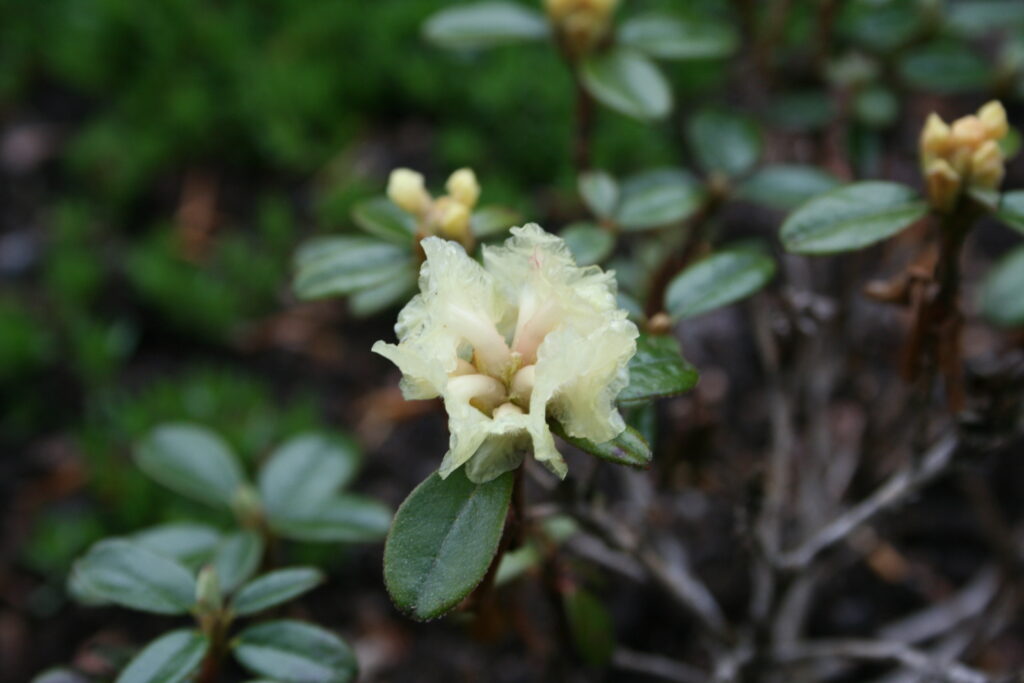
Rhododendron Section Pogonanthum is a botanical section within the genus Rhododendron, belonging to the subgenus Rhododendron, which contains all lepidote (scaly-leaved) rhododendrons. This section comprises around 22 species of small, evergreen shrubs, many of which are dwarf or low-growing, and is best known for its aromatic foliage and distinctive flower structure.
Species in Section Pogonanthum are characterised by scaly leaves with multi-tiered stalked scales, strongly aromatic foliage, and salver-shaped to narrowly tubular flowers that always feature a prominent ring of hairs inside the corolla throat. This internal hair ring is one of the most reliable diagnostic traits separating Pogonanthum from closely related rhododendron sections. The flowers are typically small but richly coloured, appearing in shades of white, pink, red, purple, or yellow.
Geographically, Section Pogonanthum is native to high-altitude regions of the Himalayas and East Asia, ranging from Afghanistan and Nepal through Tibet, Yunnan, and Sichuan in China, with extensions into Myanmar, Mongolia, and parts of Russia. These plants are adapted to alpine and montane environments, often growing in rocky, exposed habitats at elevations reaching 4,800 metres (16,000 ft). Their compact growth, cold tolerance, and resilience to harsh conditions make them ecologically specialised and of particular interest in alpine horticulture and bonsai cultivation.
Taxonomic Placement of Rhododendron Section Pogonanthum
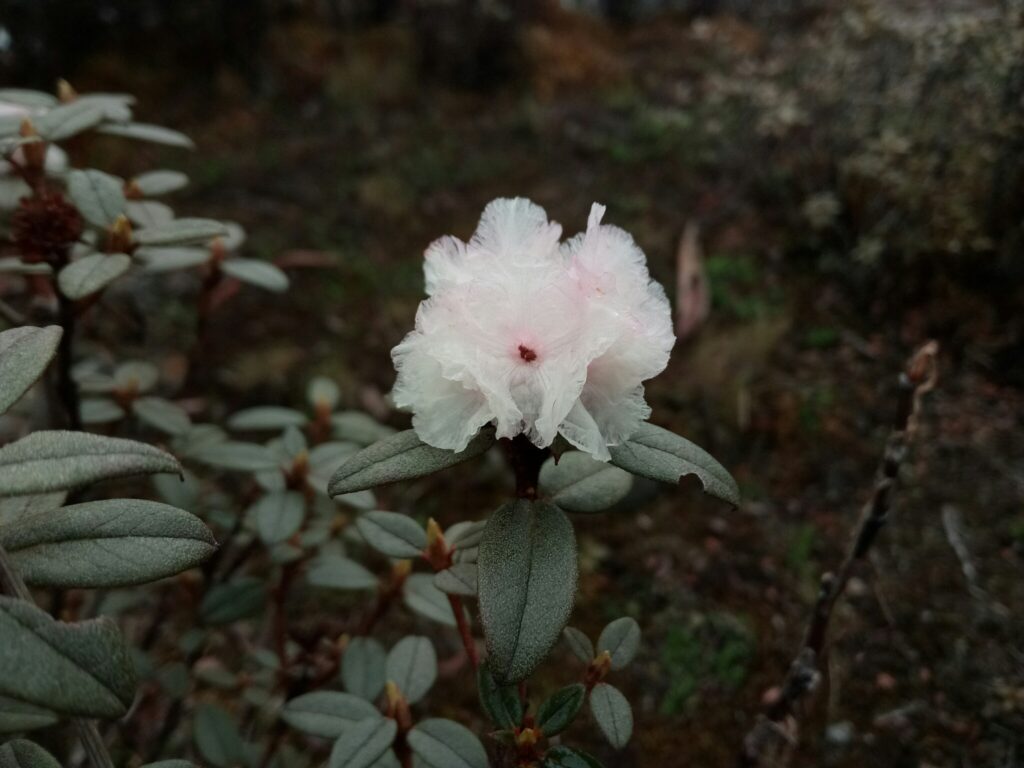
Rhododendron Section Pogonanthum is a formally recognised section within the genus Rhododendron, one of the largest and most diverse genera in the Ericaceae family. It belongs to subgenus Rhododendron, a major subdivision that encompasses all lepidote rhododendrons, meaning species with small, scaly leaves rather than the larger, smooth leaves seen in elepidote groups.
Within subgenus Rhododendron, Section Pogonanthum is distinguished by a specific combination of morphological traits, particularly its aromatic, scaly foliage, small evergreen habit, and flowers with a conspicuous ring of hairs inside the corolla throat. These characteristics are used to separate Pogonanthum from closely related sections such as Rhododendron, Lapponica, and Triflorum, which may share alpine habitats but differ in floral structure, leaf scaling, or reproductive features.
Taxonomically, the section is considered relatively cohesive despite its wide geographic distribution. Most species share a consistent floral plan, including salver-shaped or narrowly tubular corollas, included stamens, and non-twisting capsule valves after dehiscence. The seeds are also diagnostic, lacking the pronounced tails or wings seen in some other rhododendron groups. These shared traits support the treatment of Pogonanthum as a distinct section rather than a loosely assembled assemblage.
Modern treatments recognise approximately 22 species within Section Pogonanthum, with the highest diversity found in western China, particularly in Tibet, Sichuan, and Yunnan. Many species are endemic to narrow alpine ranges, reflecting both historical isolation and adaptation to extreme montane environments. This taxonomic placement highlights Section Pogonanthum as a specialised evolutionary branch within the lepidote rhododendrons, shaped by high-altitude ecology and long-term geographic separation.
Evolutionary Background and Section Delimitation
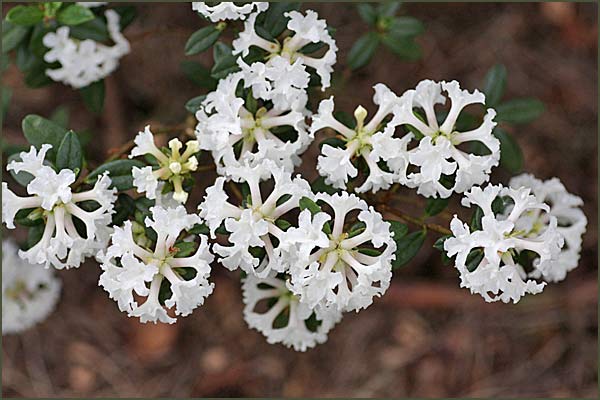
Section Pogonanthum represents a highly specialised evolutionary lineage within the lepidote rhododendrons, shaped by long-term adaptation to alpine and subalpine environments. Its species share a consistent set of traits that reflect both ecological pressure and gradual divergence, allowing botanists to define the section with relative confidence despite the overall complexity of the Rhododendron genus.
The delimitation of Section Pogonanthum is based on a combination of floral structure, leaf morphology, and reproductive features rather than a single defining character. These traits occur together across the section and support its treatment as a distinct taxonomic unit within subgenus Rhododendron.
Alpine adaptation and evolutionary pressures
The evolutionary development of Section Pogonanthum is closely linked to high-altitude habitats in the Himalayas and western China. Species typically occur at elevations between 3,000 and 4,800 metres, where low temperatures, strong winds, intense sunlight, and short growing seasons exert strong selective pressures.
These environmental conditions have favoured compact, evergreen shrubs with protective leaf scales that reduce moisture loss and shield tissues from ultraviolet radiation. Aromatic foliage is also common in the section and may contribute to herbivore deterrence and physiological stress tolerance, reinforcing survival in exposed alpine terrain.
Floral specialisation and reproductive isolation
Floral morphology plays a central role in the evolutionary identity of Section Pogonanthum. The presence of a prominent ring of hairs inside the corolla throat is one of the most consistent traits across the section and is thought to help regulate pollinator access while protecting reproductive organs from cold and moisture.
Salver-shaped to narrowly tubular corollas, combined with included stamens and short styles, suggest adaptation to specific pollinators capable of navigating confined floral structures. Over time, this specialisation likely contributed to reproductive isolation from related lepidote rhododendrons, supporting the evolutionary separation of the section.
Section delimitation within lepidote rhododendrons
Section Pogonanthum is delimited from other lepidote sections by its combination of scaly, aromatic leaves, distinctive corolla morphology, and reproductive traits such as non-twisting capsule valves and seeds lacking pronounced tails or wings.
While individual traits may appear in other sections, their consistent co-occurrence in Pogonanthum species provides a reliable basis for taxonomic recognition. This integrative approach to section delimitation reflects modern botanical practice, which considers morphology, ecology, and evolutionary history together when defining natural groupings.
Defining Morphological Characteristics of Section Pogonanthum
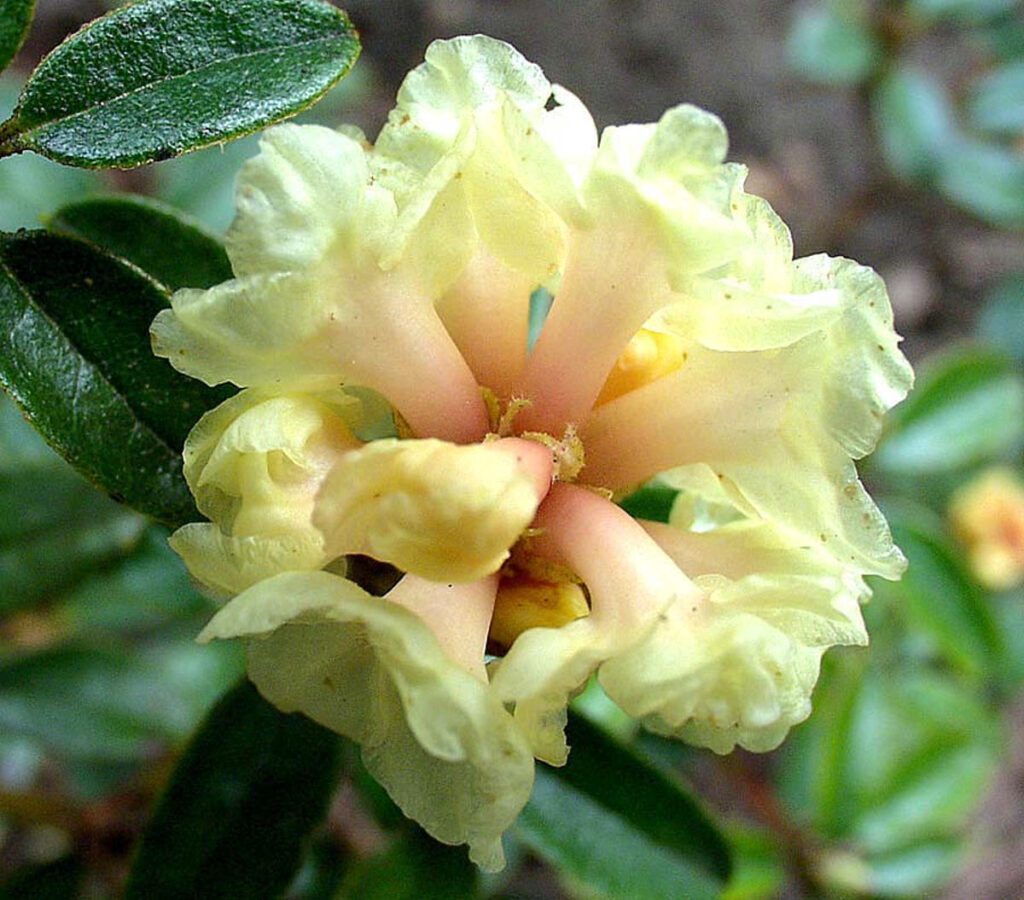
Section Pogonanthum is defined by a distinctive and internally consistent set of morphological traits that separate it from other lepidote rhododendrons. These characteristics reflect both evolutionary adaptation to alpine environments and structural specialisation within the genus Rhododendron. When viewed together, they provide a reliable framework for identifying members of this section in both botanical study and horticultural contexts.
The defining features of Section Pogonanthum are most clearly expressed in the leaves, flowers, and reproductive structures, with each contributing to the section’s taxonomic stability and recognisability.
Growth habit and plant form
Species in Section Pogonanthum are small, evergreen shrubs, typically ranging from 0.3 to 1.5 metres in height, though some species may reach up to 2.8 metres under favourable conditions. Many exhibit a compact or dwarf habit, particularly those growing at higher elevations where exposure and limited growing seasons restrict vertical growth.
Branchlets are often scaly and aromatic, contributing to the overall rugged appearance of the plant. This low, dense growth form reduces wind damage and helps retain warmth close to the plant body, a critical adaptation in alpine and subalpine environments.
Lepidote leaf structure and aromatic foliage
Leaves in Section Pogonanthum are characteristically small, evergreen, and strongly aromatic when crushed. The most distinctive feature is the presence of lepidote scales on the abaxial leaf surface. These scales are typically stalked, incised, and arranged in multiple tiers due to variations in stalk length.
The upper leaf surface may be glabrous or sparsely scaly, while the underside often displays dense, layered scaling in shades of pale yellow, brown, or ferruginous tones. This scaly covering plays an important role in moisture regulation, temperature control, and protection against ultraviolet radiation.
Flower structure and corolla morphology
The flowers of Section Pogonanthum are among its most diagnostic traits. They are generally small and produced in terminal inflorescences, often forming compact umbels or capitate clusters. Corolla shape ranges from salver-shaped to narrowly tubular, with lobes that spread gently at the opening.
A defining feature across all species is the prominent ring of hairs inside the corolla throat. This internal hair ring is absent in many related sections and serves as a key identification marker. Flower colours vary widely, including white, pink, red, purple, and yellow, often appearing vivid against the plant’s compact foliage.
Stamens, ovary, and reproductive structures
Stamen number typically ranges from five to ten, and they are consistently included within the corolla tube, rather than protruding beyond it. Staminal filaments may be glabrous or bear hairs toward the base, depending on the species.
The ovary is usually five-celled and scaly, with a short, clavate style that remains included within the corolla. After flowering, the plant produces a small, scaly capsule. Unlike some other rhododendron sections, the capsule valves in Section Pogonanthum do not twist after dehiscence, and the seeds lack distinct wings or tails, further supporting section-level differentiation.
Lepidote Leaf Structure and Aromatic Foliage
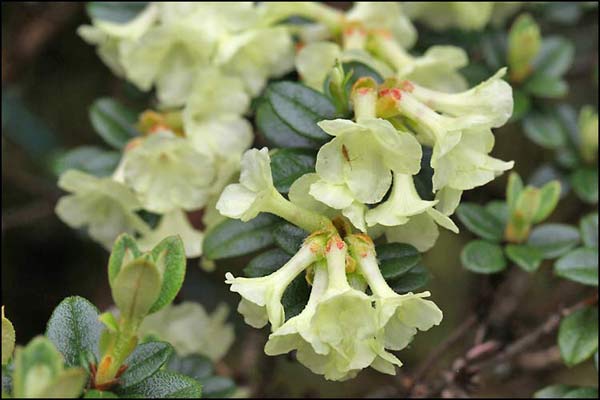
The leaves of Section Pogonanthum are among the most important diagnostic features of the group. Their lepidote structure, combined with strong aromatic properties, reflects both taxonomic identity and adaptation to extreme alpine conditions. These traits are consistent across the section and are especially useful for distinguishing Pogonanthum species from other lepidote rhododendrons in the field and in cultivation.
Leaf morphology in this section is not merely decorative or incidental. It plays a direct role in environmental resilience, physiological efficiency, and species recognition within the genus.
Lepidote scales and multi-tiered arrangement
Species in Section Pogonanthum are characterised by the presence of lepidote scales on the abaxial (underside) surface of the leaves. These scales are typically stalked, incised, and lacerate, often with or without a domed centre. One of the defining features of the section is that the scales are commonly arranged in multiple tiers, caused by variation in stalk length.
This layered scaling creates a dense protective surface that reduces transpiration, shields leaf tissue from ultraviolet radiation, and helps buffer temperature fluctuations. The colour of the scales can vary between species, ranging from pale yellow and brown to dark ferruginous tones, and is often used as a supporting character in species identification.
Leaf size, shape, and evergreen habit
Leaves in Section Pogonanthum are generally small, narrow, and evergreen, with shapes ranging from linear and lanceolate to oblong or elliptic. Leaf length commonly falls between 7 mm and 50 mm, depending on species and habitat, with smaller leaves typically associated with higher elevations.
The evergreen habit allows plants to retain photosynthetic capability throughout short alpine growing seasons. Small leaf size further reduces wind resistance and moisture loss, making these shrubs well suited to exposed, rocky terrain.
Aromatic compounds and ecological function
A notable characteristic of Pogonanthum leaves is their strong aromatic scent, which becomes evident when the foliage is crushed or warmed by the sun. These aromas are produced by essential oils stored within the leaf tissues and are especially pronounced in species such as Rhododendron anthopogon.
The aromatic compounds are thought to serve multiple ecological functions. They may deter herbivores, inhibit microbial growth, and reduce insect damage in environments where plant recovery is slow. In some regions, these aromatic leaves have also been traditionally harvested for incense, medicinal use, and essential oil production.
Taxonomic significance of leaf traits
Within subgenus Rhododendron, lepidote scaling is a defining feature, but the structure, density, and tiering of scales in Section Pogonanthum are unusually consistent. When combined with aromatic foliage and small evergreen leaves, these traits provide a reliable set of characters for section-level identification.
Although individual leaf features may overlap with other lepidote sections, their consistent association in Pogonanthum species reinforces the section’s taxonomic integrity. For botanists and horticulturists alike, leaf structure remains one of the most accessible and informative indicators of membership within Section Pogonanthum.
Flower Morphology and Reproductive Traits
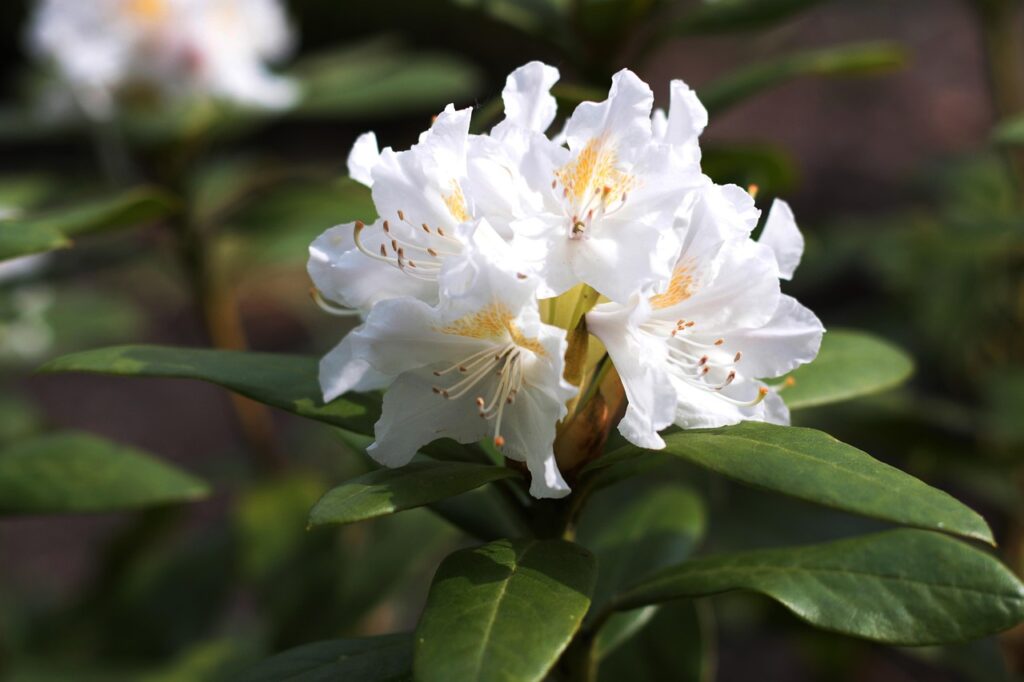
The flowers of Section Pogonanthum are among the most distinctive within the lepidote rhododendrons and play a central role in defining the section taxonomically. While often small in size, they display a consistent and specialised structure that reflects both evolutionary adaptation and reproductive efficiency in high-altitude environments.
Floral traits in Section Pogonanthum are remarkably uniform across species, making them a reliable tool for identification and for understanding the section’s evolutionary separation from related groups.
Corolla form and diagnostic hair ring
Flowers in Section Pogonanthum typically have salver-shaped to narrowly tubular corollas, with the tube extending before opening into spreading lobes. This shape allows for controlled access to the reproductive organs while protecting them from harsh environmental conditions such as wind, rain, and cold.
A defining characteristic of the section is the prominent ring of hairs located inside the corolla throat. This internal hair ring is present in all recognised species and is rarely found in combination with other Pogonanthum traits elsewhere in the genus. It is believed to help regulate pollinator movement, ensuring contact with stamens and stigma while also providing thermal and moisture protection.
Flower colour, size, and inflorescence structure
Despite their small size, Pogonanthum flowers exhibit a wide range of colours, including white, pink, red, purple, pale yellow, and greenish-yellow. Flowers are usually borne in terminal inflorescences, forming compact umbels or capitate clusters that enhance visibility to pollinators in open alpine landscapes.
Flower size varies between species but generally ranges from approximately 5 mm to 20 mm in length. This modest scale is consistent with the compact habit of the plants and reflects adaptation to environments where producing large, showy flowers may be energetically costly.
Stamens, pistil, and pollination strategy
Stamen number in Section Pogonanthum typically ranges from five to ten, and the stamens are consistently included within the corolla tube rather than extending beyond it. Staminal filaments may be glabrous or bear hairs toward the base, depending on the species, but they remain functionally positioned for efficient pollen transfer.
The ovary is usually five-celled and scaly, with a short, clavate style that does not protrude beyond the corolla. This compact reproductive arrangement supports pollination by small, cold-tolerant insects capable of navigating narrow floral tubes. The floral structure as a whole suggests a specialised but flexible pollination strategy suited to alpine and montane conditions.
Fruit development and seed characteristics
Following successful pollination, flowers develop into small, scaly capsules. A notable reproductive trait of Section Pogonanthum is that the capsule valves do not twist after dehiscence, unlike those of some other rhododendron sections.
The seeds are wingless or lack distinct tails, with only obscure fins present. This suggests limited wind dispersal, with seeds more likely to fall close to the parent plant or be redistributed by gravity, water movement, or surface disturbance. This reproductive strategy aligns with the stable but spatially restricted habitats typical of high-altitude rhododendron populations.
Geographic Distribution and High-Altitude Habitat
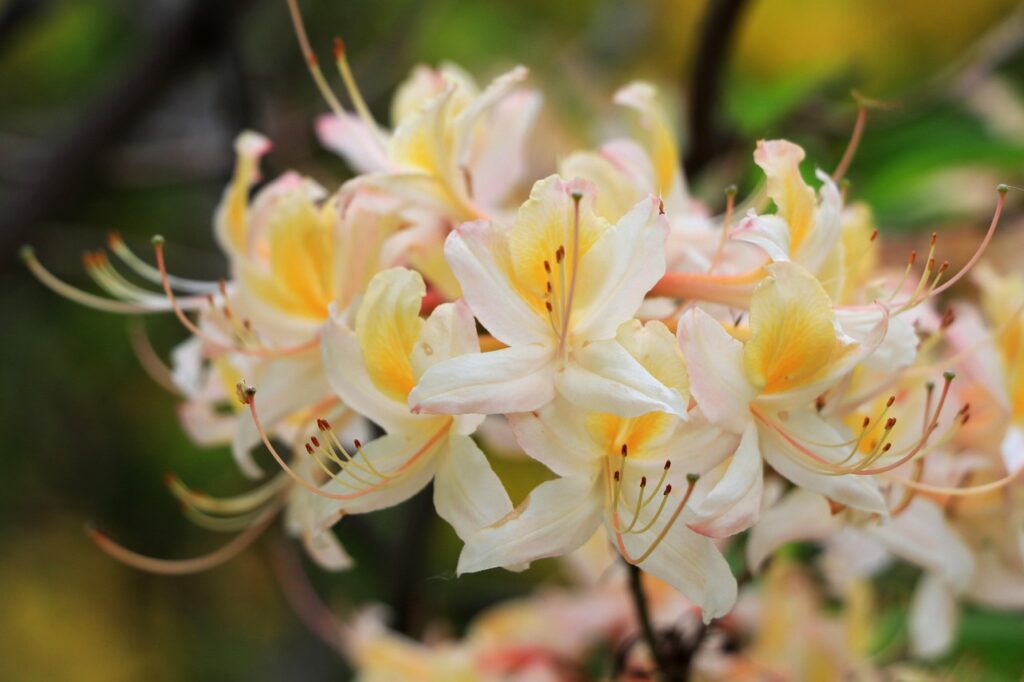
Section Pogonanthum is distributed across a broad but discontinuous range in Central and East Asia, with its greatest species diversity concentrated in the high mountain systems of the Himalayas and western China. The section is strongly associated with alpine and upper montane zones, where environmental conditions are extreme, and competition from larger woody plants is limited.
Most species occur at elevations between 3,000 and 4,800 metres, with some populations reaching altitudes of approximately 16,000 feet. These elevations are characterised by cold temperatures, high ultraviolet exposure, strong winds, and short growing seasons, all of which have shaped the morphology and ecology of the section.
Key regions where Section Pogonanthum species are found include:
- The Himalayan range, extending from Afghanistan and Kashmir through Nepal, Bhutan, and Sikkim
- Western and south-western China, particularly Tibet, Sichuan, and Yunnan
- Parts of northern Myanmar and Mongolia
- Isolated areas of southern Russia
Within these regions, species typically occupy rocky slopes, open alpine meadows, scree fields, and exposed ridgelines, often growing among low shrubs, grasses, and mosses. They are commonly found in well-drained, acidic soils derived from mountain substrates, where water drains quickly and root systems must tolerate periodic drought as well as freeze-thaw cycles.
Habitats supporting Section Pogonanthum species share several common characteristics:
- High light exposure, including intense direct sunlight
- Strong wind exposure and minimal shelter
- Thin, mineral-rich soils with low organic matter
- Seasonal snow cover and rapid temperature fluctuations
These demanding conditions favour small, evergreen shrubs with protective leaf scales, aromatic foliage, and compact growth forms. The restricted and fragmented nature of suitable habitats has also contributed to high levels of endemism, particularly in China, where many species are limited to narrow geographic ranges. This combination of isolation and environmental pressure has played a key role in shaping the evolution and diversity of Section Pogonanthum.
Species Diversity and Representative Species in Section Pogonanthum
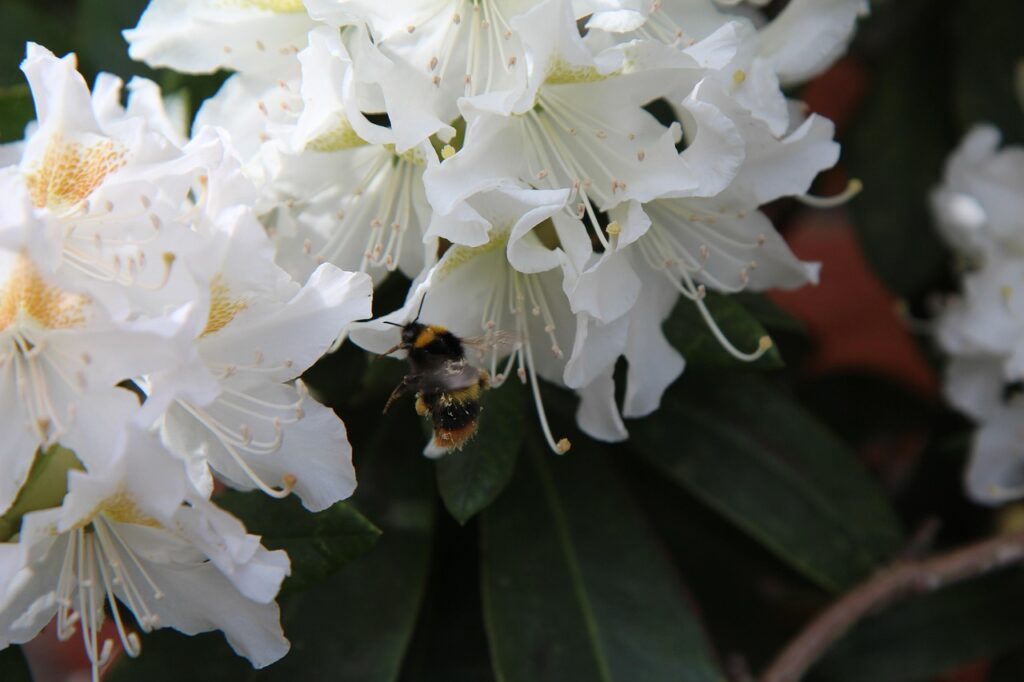
Section Pogonanthum comprises approximately 22 recognised species, making it a moderately sized but well-defined section within subgenus Rhododendron. While the species share a common structural and ecological framework, they display notable variation in leaf size, scale colouration, flower shape, and habitat preference. Many species are highly localised, with narrow distributions tied to specific mountain ranges or alpine zones.
The greatest concentration of species occurs in western China, particularly in Tibet, Sichuan, and Yunnan, where complex topography and climatic gradients have promoted speciation and endemism. Several species extend westward into the Himalayas, while others are restricted to small geographic areas, making accurate identification important for both botanical study and conservation.
Notable and representative species within Section Pogonanthum include:
- Rhododendron anthopogon – One of the best-known species in the section and the primary focus for bonsai cultivation. It is a compact, aromatic shrub with small, scaly leaves and white to pale yellow flowers. Its naturally dwarf habit, slow growth, cold tolerance, and fine branching make it particularly well suited to bonsai and container culture. The species is also historically valued for its fragrant foliage, which has been used for incense and essential oils in Himalayan regions.
- Rhododendron anthopogonoides – Closely related to R. anthopogon, this species typically has slightly larger leaves and more floriferous inflorescences. It is less compact overall but shares many of the same alpine adaptations and aromatic qualities.
- Rhododendron hypenanthum – A distinctive species known for its small, yellow to yellow-green flowers. It is occasionally cultivated and is notable for its clear floral colour and relatively tidy growth habit.
- Rhododendron cephalanthum – Characterised by rounded to obtuse leaf tips and white to pink flowers. This species shows some variation across its range and may appear in several regional forms.
- Rhododendron primuliflorum – Recognised by its narrowly tubular flowers and elongated corolla tube. It occupies high-elevation habitats and exhibits strong lepidote scaling.
- Rhododendron bellissimum – A more upright species with rose-coloured flowers and pale-scaled leaves. It can reach greater heights than many other members of the section.
- Rhododendron rufescens – Noted for its dark, richly coloured leaf undersides and compact proportions, making it visually distinctive within the section.
- Rhododendron sargentianum – A small-leaved species with layered scale colouration on the underside of the leaves, often used as a diagnostic character.
- Rhododendron atropunicum – Identified by its dark ferruginous scales and non-ciliate calyx lobes.
- Rhododendron kongboense – A species with relatively larger flowers and a corolla tube that is usually hairy or scaly externally.
- Rhododendron heteroclitum – Distinguished by its hypocrateriform corolla and fimbriate-lepidote calyx margins.
- Rhododendron platyphyllum – Notable for its broader leaves and large, persistent leaf bud scales.
- Rhododendron luhuoense, Rhododendron nyingchiense, Rhododendron tubulosum, Rhododendron mainlingense, Rhododendron hoi, and Rhododendron radendum – Additional species that contribute to the diversity of the section, each defined by subtle differences in leaf form, scale structure, flower size, and calyx morphology.
Although many Pogonanthum species are attractive and ecologically fascinating, Rhododendron anthopogon stands out as the most suitable candidate for bonsai cultivation. Its naturally compact size, slow growth rate, fine-textured foliage, and tolerance of cold, exposed conditions align closely with the requirements of bonsai training.
For this reason, R. anthopogon will serve as the primary species for upcoming bonsai care sheets and practical cultivation guides within this taxonomy series.
Section Pogonanthum in Bonsai and Horticulture
Section Pogonanthum occupies a unique position in both horticulture and bonsai, bridging the gap between botanical interest and practical cultivation. Its species are not valued for dramatic size or flamboyant floral displays, but rather for their natural refinement, compact growth habits, and remarkable adaptations to harsh environments. These traits make the section especially appealing to growers who appreciate subtle structure, texture, and long-term development.
In horticulture, Pogonanthum species are most often grown in rock gardens, alpine beds, and cold-climate collections, where their evergreen foliage and aromatic leaves provide year-round interest. Their preference for well-drained, acidic soils and tolerance of cold temperatures make them well-suited to high-altitude and temperate regions. However, their sensitivity to poor drainage and excessive summer heat means they are best cultivated with careful attention to soil composition and site selection.
From a bonsai perspective, Section Pogonanthum offers exceptional potential, particularly among naturally dwarf species. Their small leaves, fine branching, and slow growth rates align closely with bonsai aesthetics, allowing for convincing scale and mature character even in relatively young plants. The aromatic foliage and delicate flowers add seasonal interest without overpowering the tree’s overall form.
Among all species in the section, Rhododendron anthopogon stands out as the most suitable and reliable choice for bonsai cultivation. Its compact habit, resilience, and tolerance of pruning and root work make it an ideal candidate for long-term training. For these reasons, R. anthopogon will serve as the primary focus for future bonsai care sheets, styling guidance, and cultivation experiments within the Budding Backyard Bonsaist taxonomy series.
Ultimately, Section Pogonanthum demonstrates how extreme natural environments can produce plants of exceptional character and refinement. Whether appreciated in alpine gardens or trained as bonsai, these rhododendrons offer a rare combination of botanical significance, horticultural challenge, and understated beauty.