
Rhododendron Section Vireya represents one of the most distinctive and diverse groups within the genus Rhododendron. Commonly known as Vireyas, Vireya rhododendrons, Tropical rhododendrons, or Malaysian rhododendrons, this section comprises over 300 species adapted to warm, humid, high-altitude environments across Southeast Asia, Malesia, Papuasia, and parts of Australia.
Unlike the temperate rhododendrons more familiar to gardeners, species in Section Vireya are primarily tropical to subtropical plants, many of which grow as epiphytes on trees or as lithophytes on rocky outcrops. They are especially noted for their glossy evergreen foliage, repeated flowering cycles, and vividly coloured, often fragrant blooms. True blue or purple flowers are absent in this group, but a wide range of reds, yellows, whites, oranges, and pinks is common.
From a taxonomic perspective, Section Vireya has long been the subject of scientific debate, having been treated at different times as a section, subgenus, or under alternative names such as Schistanthe. Modern phylogenetic research continues to refine its classification, reflecting both its evolutionary complexity and its geographic diversity. As the largest tropical grouping within Rhododendron, Section Vireya plays a key role in understanding the genus as a whole, bridging horticulture, taxonomy, and evolutionary biology.
Table of Contents
Taxonomy
– Kingdom: Plantae (Plant Kingdom)
— Clade: Embryophytes (Land Plants)
— Clade: Polysporangiophytes (Multiple Sporangia)
—- Clade: Tracheophytes (Vascular Plants)
—– Superdivision: Spermatophytes (Seed Plants)
—— Clade: Angiospermae (Flowering Plants)
——- Division: Eudicots (True Dicotyledons)
——– Subdivision: Core Eudicots
——— Class: Superasterids (Advanced Flowering Plants)
———- Subclass: Asterids (Unified-Flowering Plants)
———– Order: Ericales (Heath and Tea)
———— Family: Ericaceae (Heath)
————- Subfamily: Ericoideae (Heath)
————– Tribe: Rhodoreae (Rhododendron)
————— Genus: Rhododendron
————— Subgenus: Rhododendron (Lepidote Rhododendrons)
—————- Section: Vireya (Tropical Rhododendrons)
What Is Rhododendron Section Vireya?
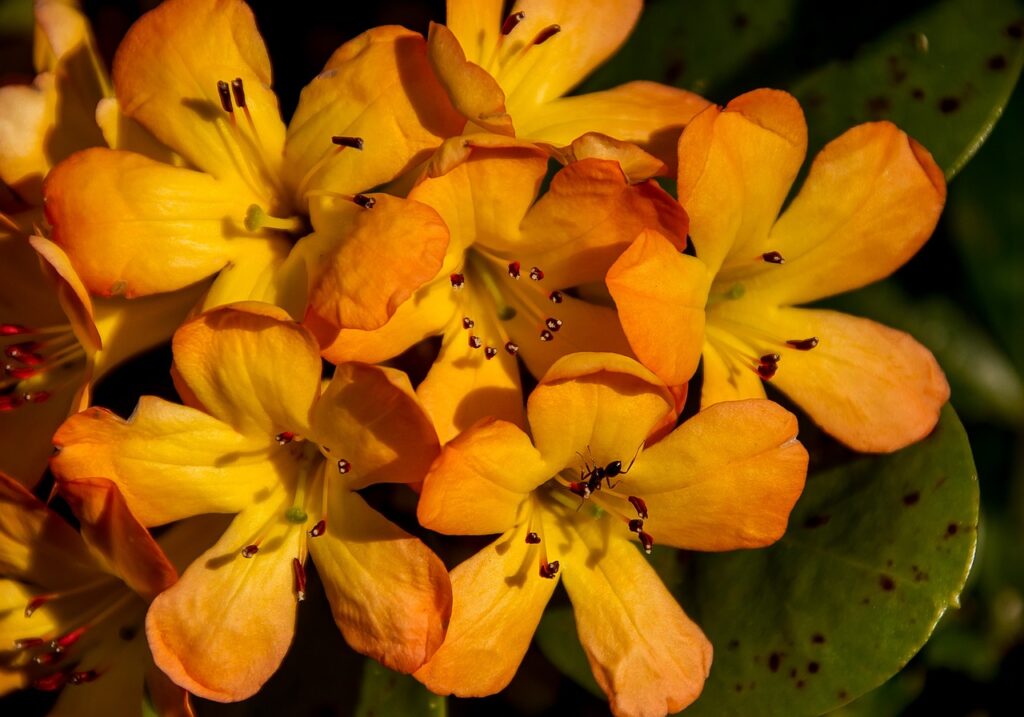
Rhododendron Section Vireya is a large and diverse taxonomic group within the genus Rhododendron, consisting of more than 300 tropical species. These plants are commonly referred to as Vireyas, Vireya rhododendrons, Tropical rhododendrons, or Malaysian rhododendrons, reflecting both their historical classification and their geographic centre of diversity.
Section Vireya is distinguished from temperate rhododendrons by its adaptation to warm, humid, and often high-altitude tropical environments. Many species grow as epiphytes, rooted on tree branches in cloud forests, or as lithophytes, clinging to mossy rock faces. This growth habit, combined with excellent drainage and high atmospheric moisture, defines much of their ecology and cultivation requirements.
From a botanical standpoint, Section Vireya is characterised by several unique traits, including seeds with distinct tail-like appendages, specialised leaf cells known as idioblasts, and seed capsules whose valves twist as they open. The flowers are highly variable in shape and colour, ranging from tubular to trumpet-shaped forms, and often bloom more than once a year. While vivid reds, yellows, oranges, whites, and pinks are common, true blue or purple pigmentation is absent in this group.
Taxonomically, Section Vireya has been treated in different ways over time. Some botanists recognise it as a section within Rhododendron, while others have elevated it to subgenus rank or referred to it under alternative names such as Schistanthe. Despite these debates, the term Section Vireya remains widely used to describe this distinctive group of tropical rhododendrons, both in scientific literature and horticulture.
Taxonomic Placement of Section Vireya Within Rhododendron
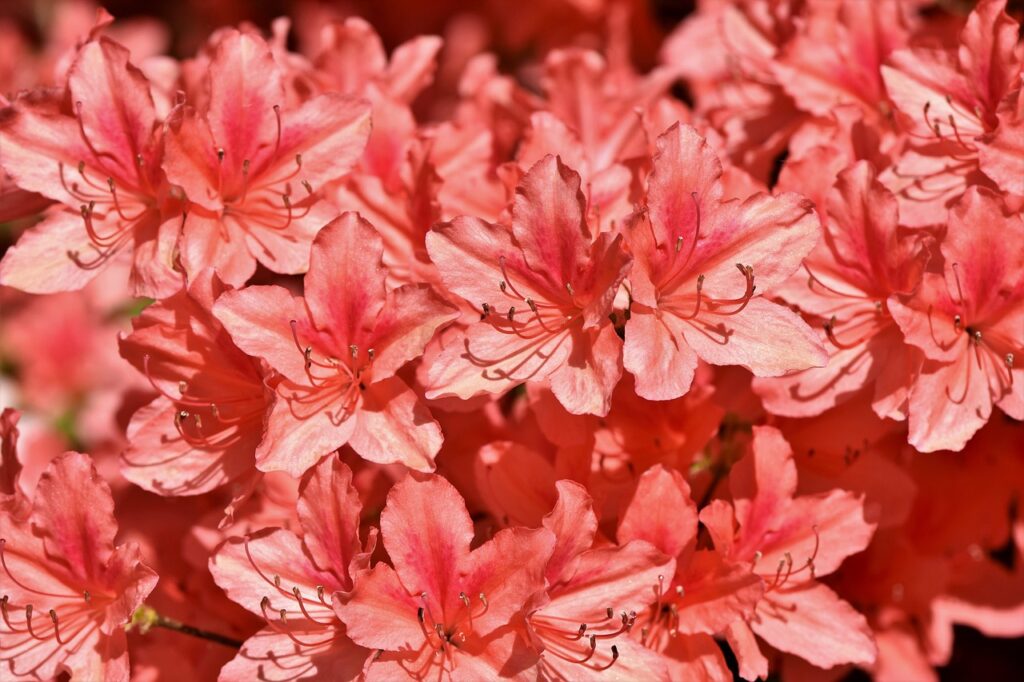
Section Vireya occupies a unique and sometimes contested position within the taxonomic structure of the genus Rhododendron. Traditionally, the genus has been divided into subgenera, sections, and subsections based on morphological characteristics such as leaf scales, flower structure, and seed morphology. Within this framework, Section Vireya has most commonly been placed as a major section of subgenus Rhododendron, where it represents the largest and most distinctive tropical grouping.
What sets Section Vireya apart taxonomically is both its size and its divergence from the temperate rhododendrons that dominate the genus. With roughly a third of all Rhododendron species belonging to this group, Section Vireya includes an extraordinary range of growth forms and ecological adaptations. These differences led some botanists to treat Vireya as a separate subgenus, while others proposed the alternative name Schistanthe to reflect nomenclatural rules and phylogenetic interpretations.
Modern molecular and phylogenetic studies have helped clarify these relationships, although they have not entirely resolved the debate. DNA-based analyses indicate that Section Vireya forms a coherent evolutionary lineage within Rhododendron, but one that is internally complex and geographically structured. As a result, contemporary classifications often retain Section Vireya within subgenus Rhododendron, while recognising that its internal subdivisions do not always align neatly with older, morphology-based systems.
From a horticultural perspective, including specialist cultivation such as bonsai and bonsai trees, understanding the taxonomic placement of Section Vireya provides important context. Its separation from temperate sections explains why these tropical rhododendrons have very different growth habits, environmental requirements, and responses to pruning and training.
While taxonomy remains the primary lens through which Section Vireya is studied, its classification also underpins practical decisions in cultivation, conservation, and botanical research.
Evolutionary History and Taxonomic Debate Around Section Vireya
The evolutionary history of Section Vireya is closely linked to the complex geological and climatic development of Southeast Asia and the wider Malesian region. Unlike temperate Rhododendron groups that evolved largely in continental environments, Section Vireya diversified in tropical mountain systems shaped by island formation, tectonic uplift, and long-term climatic instability. These conditions created ideal circumstances for isolation, adaptation, and rapid speciation.
Origins and Diversification in Tropical Asia
Current evidence suggests that the ancestors of Section Vireya spread across the island arcs and highland regions of Southeast Asia, New Guinea, and adjacent areas. Geographic isolation caused by rising mountain ranges, volcanic activity, and changing sea levels repeatedly separated populations, encouraging the emergence of new species. This process explains the remarkable concentration of Vireya species in New Guinea, which supports the highest diversity of the group.
Adaptations such as epiphytic growth, lithophytic habits, and specialised seed dispersal mechanisms allowed these plants to exploit ecological niches unavailable to most temperate rhododendrons. These evolutionary traits form the foundation of Section Vireya’s distinct identity within the genus.
Morphology Versus Molecular Evidence
Early taxonomic systems classified Section Vireya primarily on morphological characteristics, including scale structure, flower form, and capsule behaviour. While these features remain useful for identification, they often produced artificial groupings that did not fully reflect evolutionary relationships.
Molecular phylogenetic studies later revealed that many traditional subsections within Section Vireya were not monophyletic. Instead, genetic data showed clearer patterns of relationship based on geographic distribution rather than shared morphology. This discovery challenged long-standing classification schemes and prompted major revisions to how the group is organised.
Ongoing Taxonomic Revisions and Nomenclatural Debate
As a result of these findings, botanists have proposed multiple competing classification models for Section Vireya. Some treatments reduce the group to fewer subsections based on genetic coherence, while others elevate certain lineages to section rank or retain alternative names such as Schistanthe. Despite these debates, the name Section Vireya remains widely used in both scientific literature and horticultural contexts.
The continuing refinement of Vireya taxonomy reflects the group’s evolutionary complexity. It also highlights the limits of relying on morphology alone in highly diverse tropical plant lineages. For researchers, horticulturists, and even specialist bonsai practitioners, this evolving classification underscores the importance of viewing Section Vireya as a dynamic and still-developing branch of the Rhododendron family.
Defining Morphological Characteristics of Section Vireya
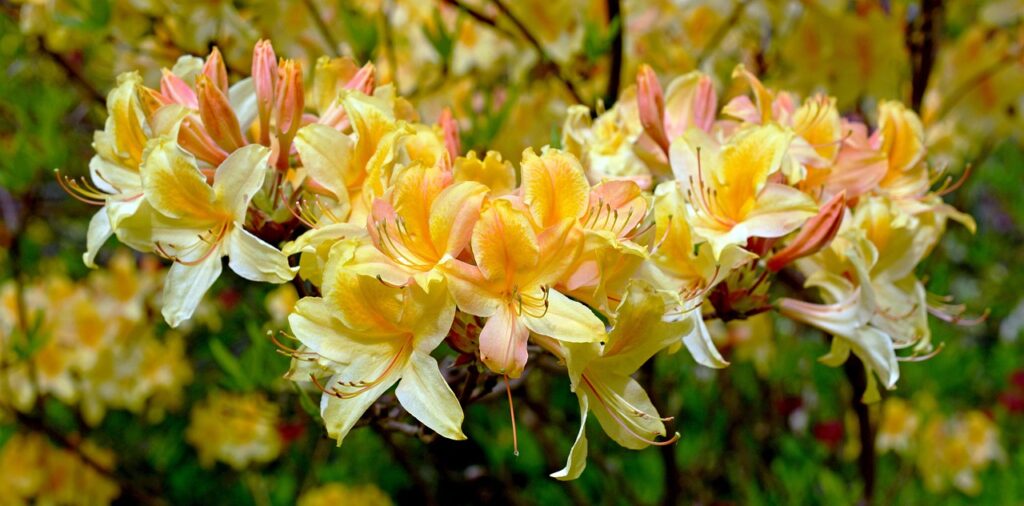
Section Vireya is defined by a combination of morphological traits that clearly distinguish it from temperate rhododendron groups. While the section displays considerable variation in form and habit, several consistent structural features unite its members. These characteristics reflect adaptation to tropical and subtropical environments and form the basis for both traditional taxonomy and modern identification of Vireya species.
Growth Habit and Plant Form
Species within Section Vireya exhibit a wide range of growth habits, from compact shrubs to sprawling, loosely branched plants. Many species grow as epiphytes, anchoring themselves to tree branches in cloud forests, while others are lithophytes, inhabiting rocky slopes and cliffs. Terrestrial forms also occur, particularly in well-drained, humus-rich soils at higher elevations.
This flexibility in growth habit contributes to their popularity in specialist horticulture and, more selectively, in bonsai cultivation, where understanding natural form is essential for long-term success.
Leaf Structure and Scale Characteristics
Vireya leaves are evergreen, typically leathery, and often glossy, an adaptation that helps reduce water loss in humid yet well-ventilated environments. A key identifying feature is the presence of lepidote scales on leaf surfaces, particularly on the undersides. These scales may be sessile or stalked, sparse or densely packed, and are often lobed or deeply incised.
The structure, density, and appearance of these scales have historically played an important role in classification, even though they do not always align perfectly with genetic relationships.
Floral Morphology and Stamen Arrangement
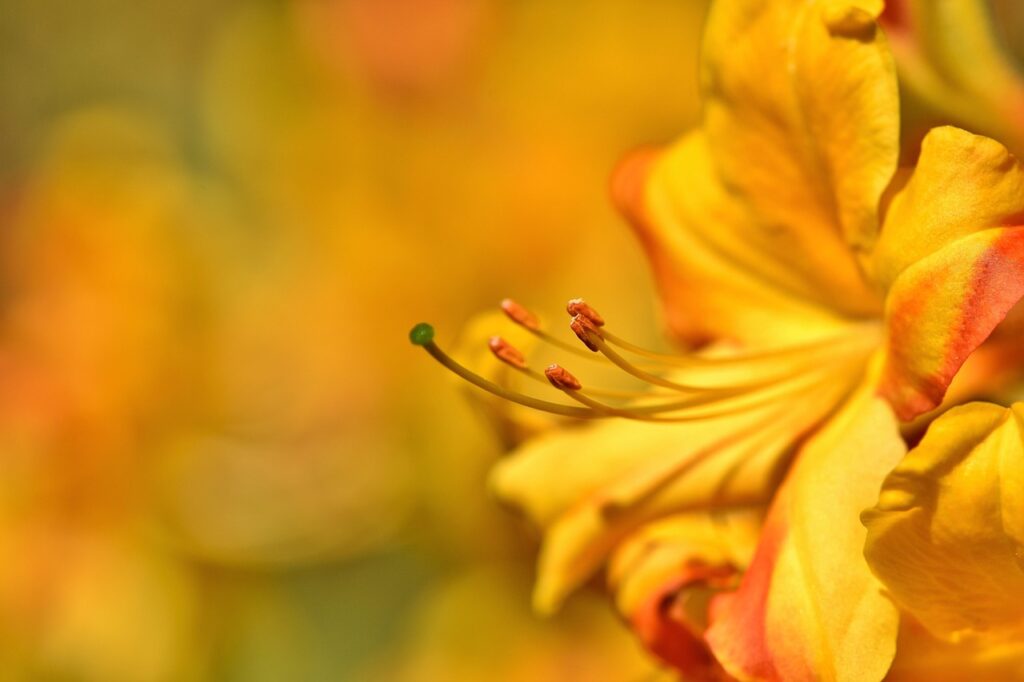
Flowers in Section Vireya are highly variable in shape and size, ranging from tubular and trumpet-shaped to campanulate or funnel-shaped forms. Colour diversity is one of the group’s most striking features, with reds, oranges, yellows, whites, and pinks common, though true blue or purple pigmentation is absent.
Stamen number typically ranges from five to sixteen, and stamens may be exserted or included within the corolla. Filaments can be glabrous or hairy, often from the base. Many species produce lightly to strongly fragrant flowers and may bloom more than once a year under favourable conditions.
Fruit, Seed, and Reproductive Traits
The fruit of Vireya rhododendrons is a dry capsule that opens by dehiscence, with the capsule valves characteristically twisting as they split open. This twisting motion aids in seed dispersal. The seeds themselves are distinctive, bearing tail-like appendages at both ends, which help them travel by air currents in forested environments.
These reproductive traits are among the most consistent morphological markers of Section Vireya and remain central to its identification and delimitation within the genus Rhododendron.
Leaf, Seed, and Capsule Traits Unique to Vireya Rhododendrons
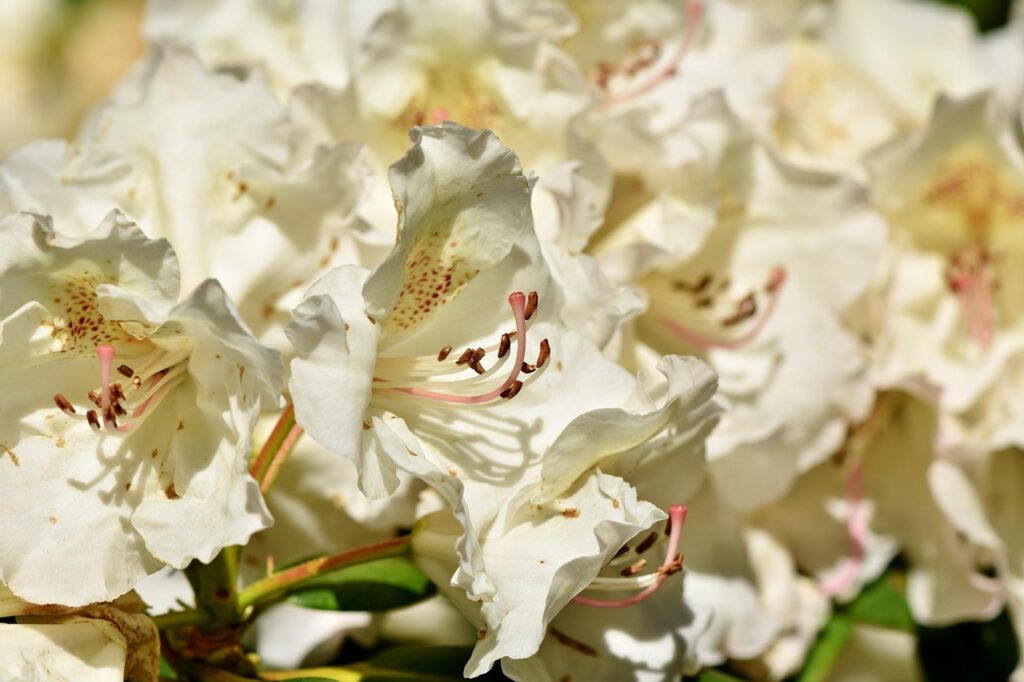
The vegetative and reproductive structures of Section Vireya reveal a set of specialised traits that reflect adaptation to tropical montane environments. Leaf anatomy, seed morphology, and capsule behaviour together provide some of the most reliable features for distinguishing Vireya rhododendrons from other sections within the genus. These traits have long been used in taxonomy and remain important even as molecular data reshapes classification.
Leaf Anatomy and Idioblast Presence
Leaves of Vireya rhododendrons are typically evergreen, leathery, and well adapted to humid conditions combined with constant airflow. A distinctive anatomical feature is the presence of idioblasts, specialised cells embedded within the leaf tissue. These cells are thought to play a role in defence and structural support, and their consistent presence across Section Vireya makes them a useful diagnostic character.
The leaf surface often shows lepidote scaling, particularly on the underside, which helps regulate moisture and protect against fungal growth. This combination of thick cuticles, internal specialisation, and surface scales supports survival in cloud forest environments where rainfall is frequent but soils are shallow or absent.
Seed Structure and Tailed Appendages
One of the defining features of Section Vireya is its highly distinctive seed morphology. Vireya seeds possess elongated tail-like appendages at both ends, a trait rarely seen in other rhododendron groups. These appendages significantly increase the surface area of the seed, allowing it to be dispersed more effectively by air currents.
This form of dispersal is particularly advantageous in forest canopies and mountainous terrain, where seeds must travel beyond the immediate vicinity of the parent plant to find suitable germination sites. Seed structure has therefore played a central role in both the ecological success and taxonomic recognition of Vireya rhododendrons.
Capsule Dehiscence and Valve Twisting
Following fertilisation, Vireya rhododendrons produce dry capsules that open through dehiscence. A key characteristic of these capsules is the twisting of the capsule valves as they split open. This mechanical action assists in gradually releasing seeds, improving dispersal efficiency over time rather than releasing all seeds at once.
The twisting capsule valves, in combination with tailed seeds, form a highly effective reproductive strategy suited to tropical mountain habitats. These capsule traits are consistently cited in formal botanical descriptions of Section Vireya and remain among the most reliable morphological indicators of the group.
Flower Morphology and Reproductive Adaptations in Section Vireya
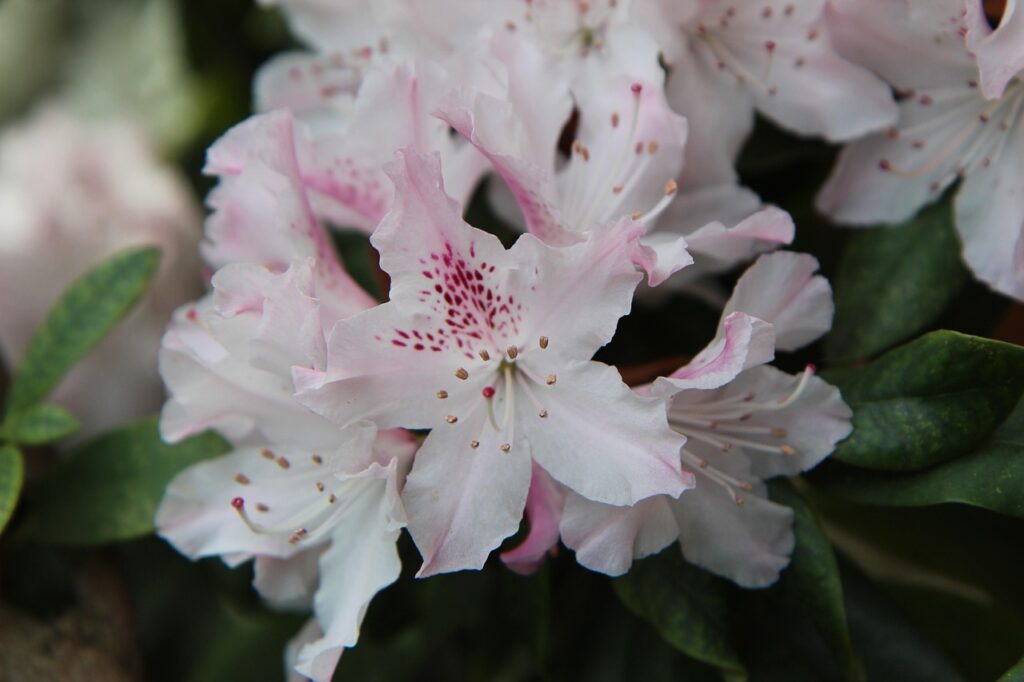
The floral structures of Section Vireya are among the most diverse within the genus Rhododendron, reflecting adaptation to a wide range of pollinators and ecological niches. Flower morphology, combined with specialised reproductive strategies, has played a significant role in the evolutionary success of this tropical group and remains central to its taxonomic recognition.
Corolla Form and Floral Diversity
Flowers in Section Vireya display remarkable variation in shape and size. Corolla forms include tubular, trumpet-shaped, funnel-shaped, campanulate, and salver-shaped structures. This diversity is not merely ornamental but closely linked to pollination strategies, with different flower forms accommodating birds, moths, bats, and insects depending on species and habitat.
Colour range is broad and vivid, with reds, oranges, yellows, whites, and pinks common across the section. Notably, true blue or purple pigmentation is absent, a trait that distinguishes Vireya rhododendrons from some temperate relatives. Many species also produce lightly to strongly fragrant flowers, enhancing their attractiveness to nocturnal and crepuscular pollinators.
Stamen Number and Floral Anatomy
Stamen arrangement in Section Vireya varies considerably, typically ranging from five to sixteen stamens per flower. Stamens may be exserted beyond the corolla or enclosed within it, and the filaments can be either glabrous or hairy, often from the base. This variability has historically been used in species-level identification and subsection classification.
The flexibility in floral anatomy reflects adaptation to differing pollination pressures across the group’s wide geographic range. Rather than a single dominant reproductive strategy, Section Vireya exhibits a spectrum of solutions shaped by local ecological conditions.
Pollination Strategies and Reproductive Timing
Many Vireya species flower more than once a year when environmental conditions are favourable, an unusual trait within Rhododendron. This repeated flowering increases reproductive opportunities in environments where pollinator availability may fluctuate seasonally or unpredictably.
Pollination in Section Vireya is closely tied to habitat structure, particularly in cloud forests, where vertical space and canopy dynamics influence pollinator movement. Bright colours, tubular flowers, and fragrance all contribute to efficient pollen transfer, supporting successful reproduction in complex tropical ecosystems.
Together, these floral and reproductive adaptations underline the evolutionary distinctiveness of Section Vireya and help explain both its taxonomic complexity and its exceptional species richness within the genus.
Geographic Distribution and Tropical Highland Habitat
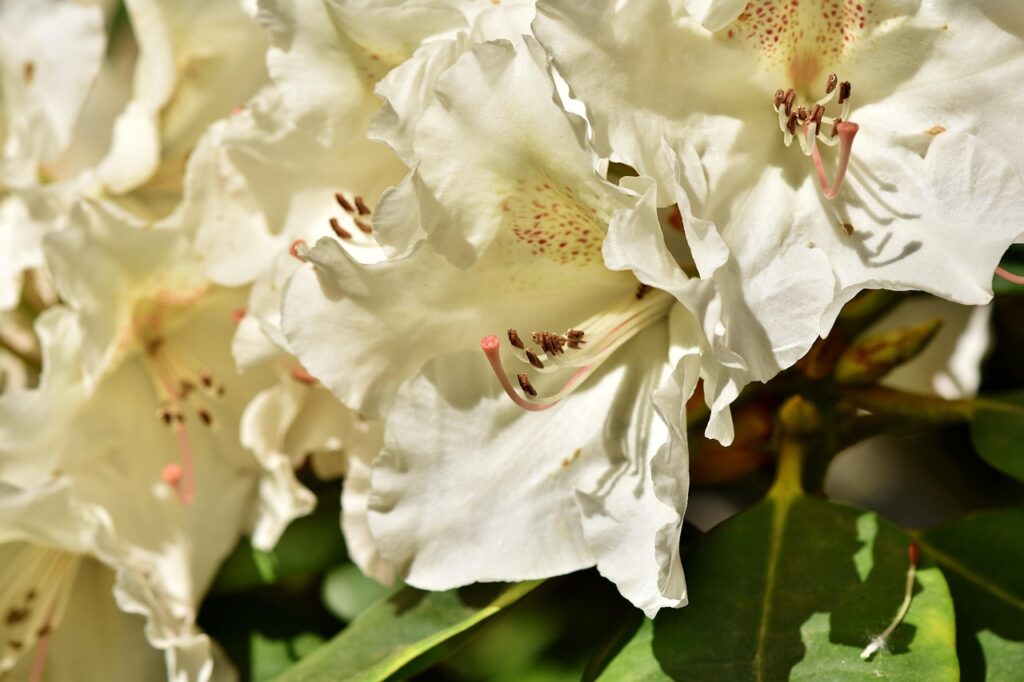
Section Vireya is distributed across a broad yet ecologically specific region spanning Southeast Asia, the Malesian Archipelago, Papuasia, and parts of Australia. Its range extends from Thailand and southern China through Peninsular Malaysia, Sumatra, Borneo, Java, the Philippines, Sulawesi, the Lesser Sunda Islands, and Maluku, continuing eastward into New Guinea, the Bismarck Archipelago, and the Solomon Islands. Smaller numbers of species also occur in India, Nepal, Taiwan, Vietnam, and northern Australia.
Despite this wide geographic spread, Vireya rhododendrons are strongly associated with tropical highland environments, particularly cool, humid zones at mid to high elevations. These plants are most commonly found in cloud forests, montane rainforests, and sub-alpine grasslands, where consistent moisture, airflow, and mild temperatures dominate.
Key habitat characteristics typically include:
- High humidity with frequent mist or cloud cover
- Excellent drainage, often with little or no soil
- Moderate daytime temperatures and cooler nights
- High exposure to airflow and diffuse light
New Guinea represents the centre of diversity for Section Vireya, supporting the highest number of species of any single landmass, followed by Borneo. In contrast, mainland Asian species are comparatively limited in number and largely restricted to specific lineages within the group.
Growth forms are closely tied to habitat conditions. Many species grow as epiphytes on tree branches or as lithophytes on exposed rock faces, while terrestrial species occupy steep slopes or forest floors with deep leaf litter and rapid water movement. This ecological specialisation helps explain both the high species richness of Section Vireya and its sensitivity to environmental change, particularly habitat loss and climate shifts.
The strong link between geography, elevation, and habitat structure is a defining feature of Section Vireya, shaping not only its evolutionary history but also its taxonomic complexity and horticultural requirements.
Subsections and Species Diversity of Section Vireya
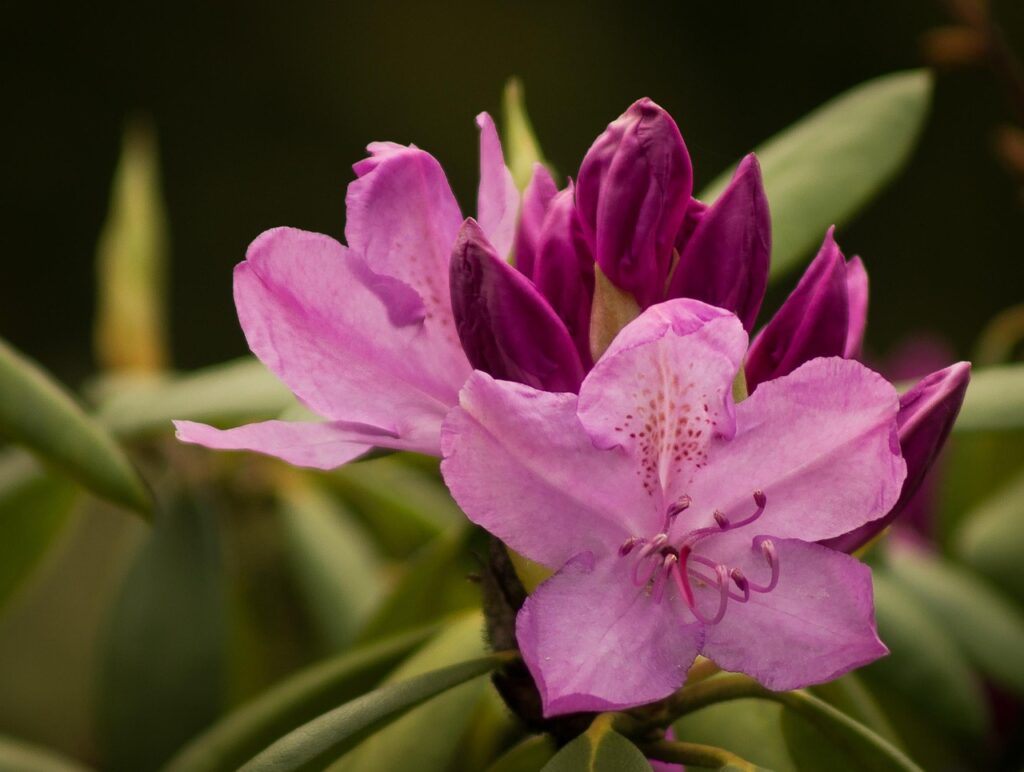
Section Vireya is notable not only for its large number of species but also for the complexity of its internal classification. Over time, botanists have proposed multiple subsectional frameworks to organise this diversity, reflecting differing interpretations based on morphology, geography, and molecular evidence. While older systems recognised numerous subsections, modern phylogenetic research has favoured fewer, more genetically coherent groupings.
Subsection Euvireya
Euvireya represents the core and largest grouping within Section Vireya. Species in this subsection are widely distributed across the Malesian region and beyond, and they exhibit considerable morphological variation. Scales on the leaves may be sessile or stalked, are not strongly divided into size classes, and are often lobed or deeply incised without a darkened centre. This subsection includes some of the most adaptable Vireya species, making it particularly important from a horticultural perspective and the primary focus for bonsai-related exploration within this section.
Subsection Malayovireya
Malayovireya is a smaller and more tightly defined subsection, characterised by dense, sessile leaf scales that are clearly divided into two size classes and typically have dark-coloured centres. Species in this group are more geographically restricted and show stronger morphological consistency. Their specialised traits reflect adaptation to specific ecological niches within the tropical highlands, and they are generally less flexible in cultivation than members of Euvireya.
Other Historical and Regional Groupings
Earlier classification systems recognised additional subsections such as Albovireya, Pseudovireya, Siphonovireya, Solenovireya, and Phaeovireya, largely based on morphological traits. However, molecular studies have shown that many of these groupings are not monophyletic and instead represent geographically distinct lineages rather than true evolutionary units. As a result, several of these names are now treated as sections or informal groupings in some modern classifications, while others are no longer widely used.
Species Diversity and Geographic Patterns
Section Vireya contains more than 300 recognised species, making it one of the most species-rich groupings within Rhododendron. Diversity is not evenly distributed. New Guinea alone accounts for well over half of the known species, followed by Borneo, while mainland Asia and Australia support comparatively few. This uneven distribution reflects the role of island biogeography, elevation, and habitat fragmentation in driving speciation.
Species diversity within Section Vireya is expressed through variation in growth habit, leaf structure, flower form, and reproductive strategy. This diversity has made the group taxonomically challenging but also biologically significant, offering insight into how tropical plant lineages diversify under complex environmental pressures.
For a bonsai-focused study, this richness reinforces the need for selective emphasis, concentrating on subsections and species whose growth habits and adaptability align with long-term cultivation goals. Therefore, we will not be discussing all 300 species on our site, only the few we select.
Section Vireya in Horticulture and Bonsai Cultivation
Section Vireya occupies a distinctive place in horticulture, valued for its striking flowers, evergreen foliage, and adaptability to tropical and subtropical environments. In cultivation, Vireya rhododendrons are typically grown as ornamental shrubs or container plants, often using methods similar to orchid culture. Their preference for excellent drainage, high humidity, and consistent airflow reflects their natural epiphytic and lithophytic habitats and sets them apart from temperate rhododendrons.
From a bonsai perspective, Section Vireya represents a specialist and advanced category rather than a mainstream bonsai group. Most species grow vigorously, require warm, frost-free conditions, and are sensitive to poor drainage or stagnant air. As a result, only a small number of species are suitable for long-term bonsai cultivation, and even these demand careful environmental control and informed technique.
Within this section, Rhododendron javanicum from subsection Euvireya and the Malayanum Rhododendron (Rhododendron malayanum) from subsection Malayovireya stand out as representative examples for bonsai study. These species illustrate how certain growth habits, leaf proportions, and tolerance for pruning can align with bonsai principles when cultivated under appropriate conditions. They also highlight the importance of understanding subsection-level taxonomy when selecting plants for bonsai, as not all Vireya rhododendrons respond similarly to training.
In the broader context of Budding Backyard Bonsaist, Section Vireya is included to provide taxonomic completeness and to acknowledge its limited but meaningful relevance to bonsai cultivation. While the majority of rhododendron bonsai species are drawn from other subgenera, particularly Azaleastrum and its well-known azalea groups, Section Vireya offers valuable insight into the diversity of the genus and the boundaries of bonsai practice.
Its inclusion reinforces the principle that successful bonsai begins with informed plant selection, guided by taxonomy, ecology, and realistic horticultural expectations.