
Rhododendron Subsection Pentanthera represents one of the most distinctive and horticulturally celebrated groups within the wider Rhododendron genus. Commonly referred to as the North American deciduous azaleas, members of this subsection are prized for their fragrant, vividly coloured flowers, seasonal foliage changes, and strong ecological adaptability. From a taxonomic perspective, Subsection Pentanthera is notable for its consistent floral structure, deciduous habit, and lack of scaly hairs, setting it apart from evergreen azaleas and other related groups.
Although primarily studied within botanical, ecological, and horticultural contexts, Subsection Pentanthera has also drawn interest from specialised growers exploring its potential in bonsai and bonsai trees, particularly due to its strong branching response, dramatic seasonal character, and natural growth rhythms.
This guide focuses on the taxonomy, classification, and defining characteristics of Rhododendron Subsection Pentanthera, providing a structured overview of its place within Subgenus Hymenanthes while laying the groundwork for understanding its broader cultivation and ornamental relevance.
Table of Contents
Taxonomy
– Kingdom: Plantae (Plant Kingdom)
— Clade: Embryophytes (Land Plants)
— Clade: Polysporangiophytes (Multiple Sporangia)
—- Clade: Tracheophytes (Vascular Plants)
—– Superdivision: Spermatophytes (Seed Plants)
—— Clade: Angiospermae (Flowering Plants)
——- Division: Eudicots (True Dicotyledons)
——– Subdivision: Core Eudicots
——— Class: Superasterids (Advanced Flowering Plants)
———- Subclass: Asterids (Unified-Flowering Plants)
———– Order: Ericales (Heath and Tea)
———— Family: Ericaceae (Heath)
————- Subfamily: Ericoideae (Heath)
————– Tribe: Rhodoreae (Rhododendron)
————— Genus: Rhododendron
————— Subgenus: Hymenanthes (Elepidote Rhododendrons)
—————- Section: Pentanthera (Deciduous Elepidote Rhododendrons)
—————– Subsection: Pentanthera (North American Azaleas)
What is Rhododendron Subsection Pentanthera?
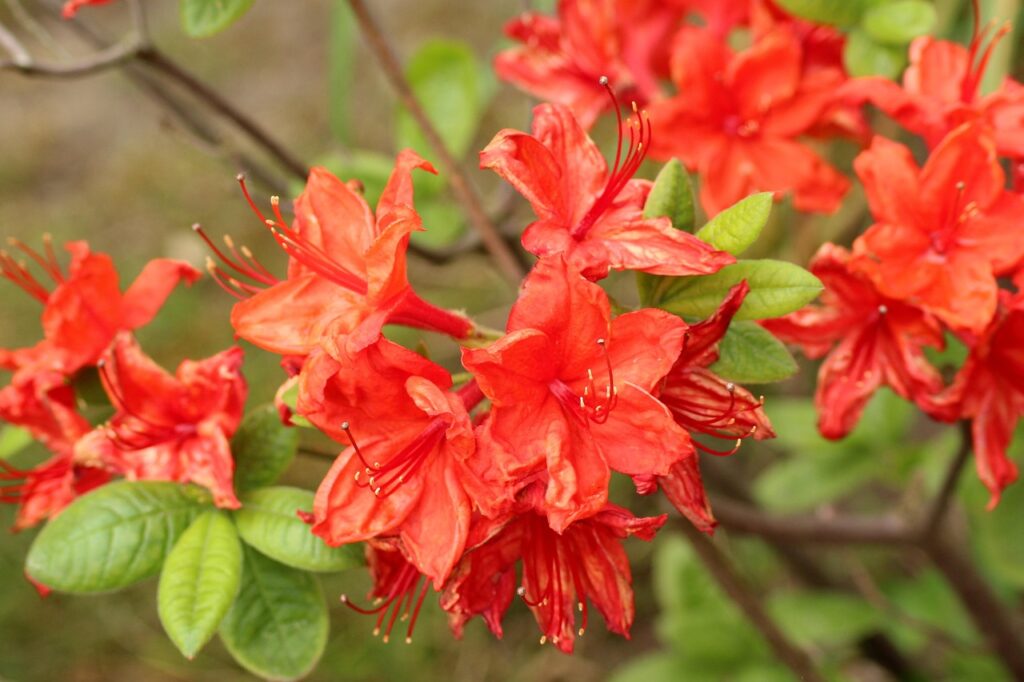
Rhododendron Subsection Pentanthera is a taxonomic grouping within the genus Rhododendron that encompasses the deciduous azaleas, most notably those native to North America. These plants are widely recognised for their showy, often fragrant flowers, seasonal leaf colour changes, and adaptability to a range of light conditions. In botanical literature and horticulture, they are frequently referred to collectively as North American azaleas.
From a taxonomic standpoint, Subsection Pentanthera is defined by a combination of consistent morphological traits. These include a deciduous growth habit, the absence of lepidote (scaly) hairs on leaves and stems, and a floral structure characterised by five stamens and a five-lobed corolla. These features clearly distinguish Pentanthera species from evergreen azaleas and other rhododendron groups.
Modern classification places Subsection Pentanthera within Subgenus Hymenanthes, reflecting advances in molecular phylogenetics and a clearer understanding of evolutionary relationships within the genus. While historically treated as a separate subgenus in older systems, Pentanthera is now recognised as a cohesive subsection unified by shared ancestry, floral anatomy, and ecological adaptations.
Taxonomic placement within Subgenus Hymenanthes
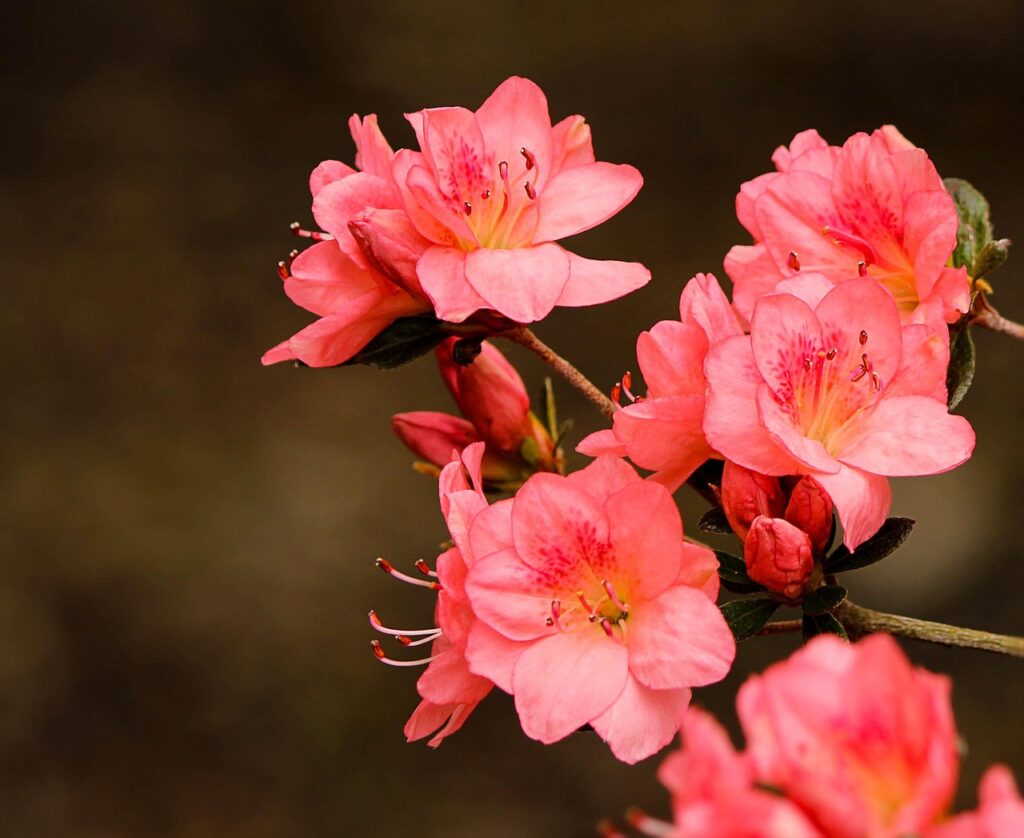
Rhododendron Subsection Pentanthera is currently placed within Subgenus Hymenanthes, a classification that reflects modern botanical consensus based on morphological study and molecular phylogenetics. This placement groups Pentanthera with other large-leaved, non-scaly rhododendrons that share deeper evolutionary traits, despite clear differences in leaf habit and seasonal behaviour.
Historically, Pentanthera was treated as its own subgenus, largely because its members are deciduous and visually distinct from the predominantly evergreen rhododendrons commonly associated with Hymenanthes. Advances in genetic analysis, however, have demonstrated that deciduous azaleas are more closely related to certain evergreen rhododendrons than previously believed. As a result, Pentanthera is now recognised as a subsection rather than a standalone subgenus.
Within Subgenus Hymenanthes, Subsection Pentanthera is defined by a stable set of diagnostic features, including non-lepidote leaves, consistent floral anatomy, and shared reproductive traits. This taxonomic placement helps clarify evolutionary relationships across the genus while providing a structured framework for comparing Pentanthera species with other rhododendron groups in botanical research, horticulture, and specialist applications such as bonsai taxonomy.
Historical classification of Pentanthera and the North American azaleas
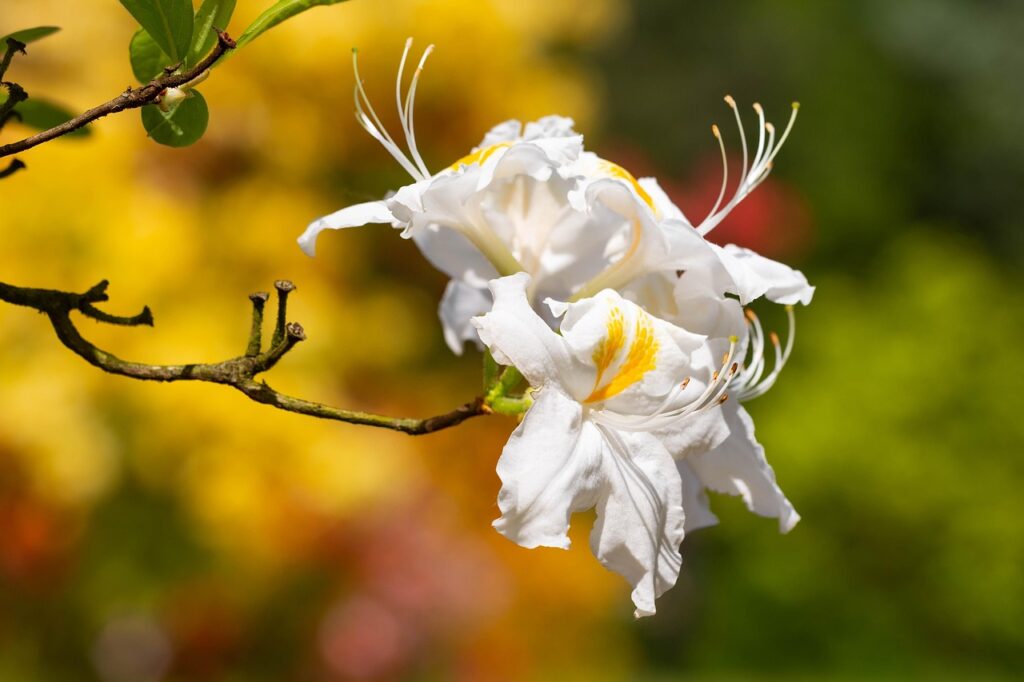
The taxonomic history of Pentanthera is closely tied to the early botanical exploration of North America and the gradual refinement of Rhododendron classification. When European botanists first encountered the deciduous azaleas of eastern North America in the 18th and early 19th centuries, they immediately recognised them as distinct from the evergreen rhododendrons already known from Asia and Europe. Their seasonal leaf drop, strong fragrance, and consistent floral structure set them apart so clearly that early systems had little difficulty justifying their separation.
These early observations laid the foundation for Pentanthera’s long-standing identity as a unique group within the genus, even as its exact rank shifted over time.
Early botanical descriptions and European classification systems
Initial scientific descriptions of North American azaleas were produced by botanists such as Linnaeus, Michaux, Torrey, and Sweet, who worked primarily from morphological characteristics. In these early European classification systems, deciduous azaleas were often grouped together based on visible traits such as leaf drop, flower form, and stamen number. The name Pentanthera, meaning “five anthers,” directly references the consistent five-stamen structure observed across the group.
At this stage, taxonomy relied almost entirely on observable traits, and Pentanthera was seen as sufficiently distinct to warrant separation from both evergreen azaleas and large-leaved rhododendrons.
Pentanthera as a distinct subgenus in classical taxonomy
By the 19th and early 20th centuries, Pentanthera was widely treated as a separate subgenus within Rhododendron. This approach was formalised in several influential taxonomic works, where deciduous azaleas were grouped under Subgenus Pentanthera to reflect their shared morphology and growth habits.
This classification was reinforced by horticultural practice, as North American azaleas behaved very differently from evergreen types in cultivation. Their tolerance for sunlight, winter dormancy, and dramatic autumn colour further strengthened the perception that Pentanthera represented a fundamentally separate evolutionary lineage.
Influence of North American botanical research
As botanical research expanded within North America, local studies began to refine species boundaries and clarify relationships within Pentanthera. Field-based research highlighted ecological specialisation, regional endemism, and hybridisation patterns that were less visible in herbarium-based European studies.
These insights reinforced the cohesion of Pentanthera as a group while also revealing connections to other rhododendron lineages, hinting that its taxonomic isolation might be overstated.
Morphological traits driving early taxonomic separation
The historical separation of Pentanthera was driven by a combination of key traits: deciduous leaves, non-lepidote surfaces, tubular to funnel-shaped flowers, strong fragrance, and a consistent five-lobed corolla with five stamens. These features contrasted sharply with evergreen azaleas, which often display scaly leaves, different stamen counts, and less pronounced seasonal change.
Because early taxonomy prioritised such visible distinctions, Pentanthera’s placement as a separate subgenus remained largely unchallenged for decades.
Reclassification through molecular phylogenetics
The most significant shift in Pentanthera’s classification came with the advent of molecular phylogenetics in the late 20th century. DNA-based studies revealed that deciduous azaleas share closer genetic relationships with certain evergreen rhododendrons than previously assumed. This evidence demonstrated that leaf habit alone was not a reliable indicator of deep evolutionary divergence.
As a result, Pentanthera was reclassified from a subgenus to a subsection within Subgenus Hymenanthes. This modern placement preserves Pentanthera’s identity as a coherent and distinctive group while accurately reflecting its evolutionary relationships within the wider Rhododendron genus.
Defining morphological characteristics of Subsection Pentanthera
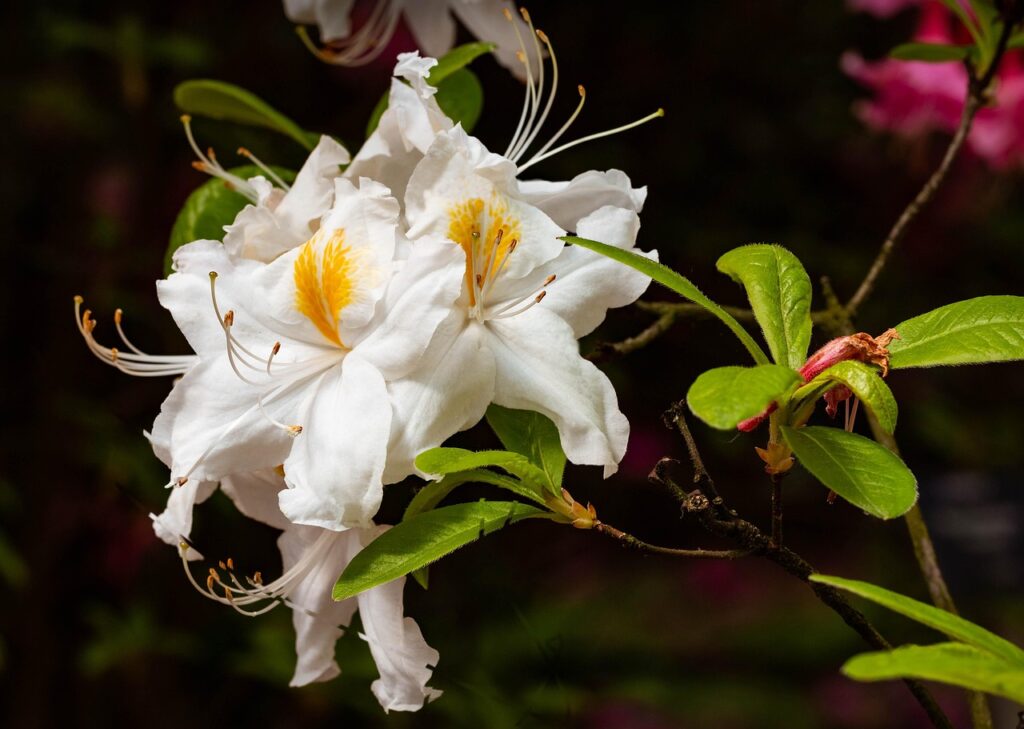
The defining morphology of Rhododendron Subsection Pentanthera is remarkably consistent across its species, making it one of the more clearly recognisable groups within the genus. These shared physical traits were central to Pentanthera’s early taxonomic separation and remain critical for identification today. While flower colour and size may vary widely between species, the underlying structural features show strong uniformity.
This subsection is distinguished not by a single characteristic, but by a suite of morphological traits that collectively separate it from evergreen azaleas and other rhododendron groups.
Deciduous growth habit and seasonal foliage change
All members of Subsection Pentanthera are deciduous, shedding their leaves annually. This trait alone differentiates them sharply from evergreen azaleas. Many species display striking autumn colouration, with foliage turning vivid shades of red, orange, and yellow before leaf drop, a feature that has both ecological and ornamental significance.
The deciduous habit is closely linked to their native temperate environments and seasonal climate patterns, reflecting an evolutionary adaptation to cold winters and variable light conditions.
Leaf structure and surface characteristics
Leaves in Subsection Pentanthera are non-lepidote, meaning they lack the scaly hairs commonly found on evergreen rhododendrons. Instead, leaves are typically thin to moderately thick, elliptic to obovate in shape, and often softly pubescent when young.
This absence of scales is a key diagnostic feature in rhododendron taxonomy and has historically played an important role in distinguishing Pentanthera from other azalea groups.
Floral anatomy and stamen count
One of the most defining traits of Subsection Pentanthera is its consistent five-stamen structure, from which the name Pentanthera is derived. Flowers are usually tubular, funnel-shaped, or slightly flared, with a clearly defined five-lobed corolla.
This uniform floral anatomy provides strong taxonomic cohesion and remains one of the most reliable features for identifying members of the subsection in both wild and cultivated settings.
Flower fragrance and colour variation
Many Pentanthera species are notable for their strong floral fragrance, a characteristic less common among evergreen azaleas. Flower colours span a wide spectrum, including white, pink, red, yellow, and orange, often with blotches or gradients on the upper lobes.
This combination of fragrance and colour diversity has contributed to the horticultural popularity of North American azaleas while maintaining taxonomic consistency in structural form.
Branching, bud formation, and growth habit
Subsection Pentanthera species typically exhibit an open, upright to spreading shrub form, with flowers borne in terminal clusters that appear before or alongside emerging leaves. Buds are usually well-defined and formed on mature wood, following predictable seasonal cycles.
These growth patterns reflect adaptations to woodland margins and open forest environments and help explain the subsection’s responsiveness to pruning and structural training in specialised horticultural practices, including limited bonsai experimentation.
Flower structure, fragrance, and reproductive traits
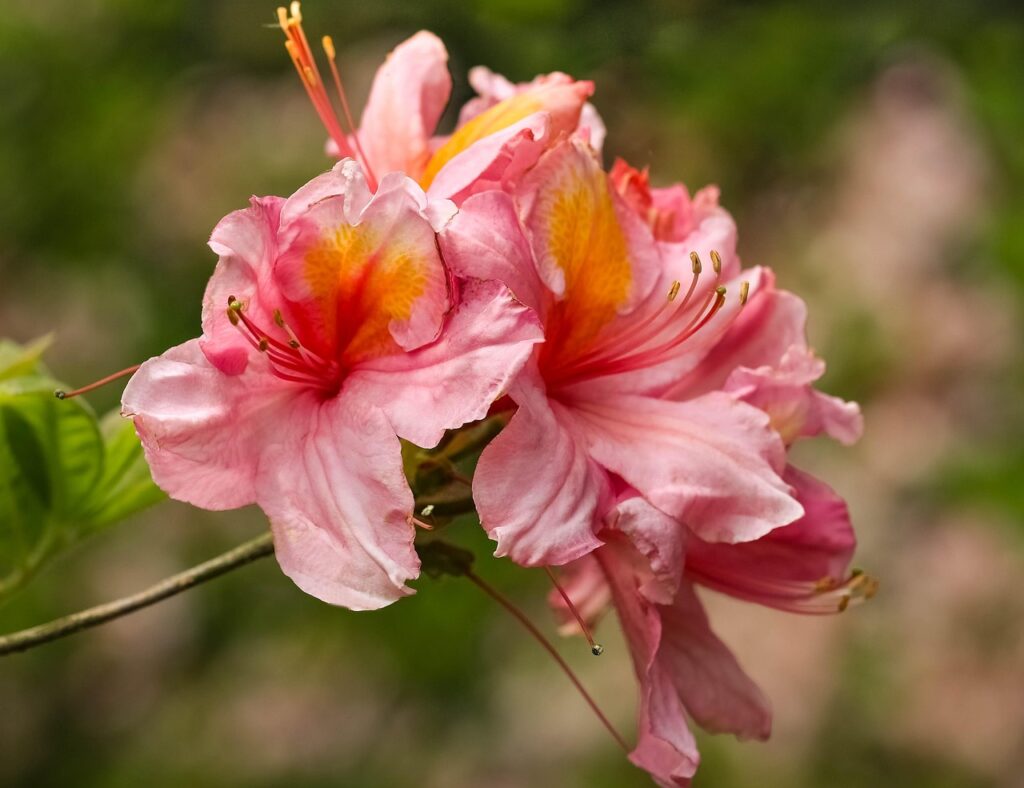
Flowers are the most visually and taxonomically significant feature of Rhododendron Subsection Pentanthera, and they play a central role in how the group is identified, classified, and studied. While colour and size vary between species, the underlying floral architecture and reproductive mechanisms show a high degree of consistency across the subsection.
These shared traits not only define Pentanthera taxonomically, but also reflect its close ecological relationship with pollinators and its evolutionary success across diverse environments.
Corolla form and floral symmetry
Flowers of Subsection Pentanthera are typically tubular to funnel-shaped, sometimes slightly flared at the mouth, with a clearly defined five-lobed corolla. The lobes are often uneven, with the upper lobe displaying blotches or markings that act as nectar guides for pollinators.
Floral symmetry is generally actinomorphic to weakly zygomorphic, maintaining a balanced structure that supports a wide range of pollinating insects. This consistent corolla form is one of the most reliable morphological indicators used in Pentanthera classification.
Stamen arrangement and pollen production
A defining reproductive feature of Subsection Pentanthera is the presence of five functional stamens, a trait that directly informs the subsection’s name. These stamens are typically exserted beyond the corolla tube, increasing pollen visibility and accessibility.
Pollen grains are produced in abundance and are adapted for insect-mediated pollination. The exposed stamen structure enhances cross-pollination efficiency, contributing to the genetic diversity observed within the subsection.
Floral fragrance and pollinator attraction
Many Pentanthera species produce strongly fragrant flowers, a characteristic that distinguishes them from most evergreen azaleas. The scent ranges from sweet and citrus-like to musky, depending on the species, and is most pronounced during peak flowering periods.
This fragrance plays a key ecological role by attracting a broad range of pollinators, including bees, butterflies, moths, and other insects. In several species, fragrance intensity increases during warmer daylight hours, aligning scent release with pollinator activity.
Flowering timing and phenology
Species within Subsection Pentanthera typically flower in spring to early summer, often before full leaf expansion. This timing maximises floral visibility and reduces competition with foliage for pollinator attention.
The synchronised flowering habit within populations increases pollination success and supports cross-breeding between compatible species, a factor that has influenced both natural hybridisation and horticultural breeding efforts.
Fertilisation, seed development, and dispersal
Following successful pollination, flowers develop into dry, dehiscent capsules containing numerous small seeds. These seeds are lightweight and adapted for wind dispersal, allowing species to colonise suitable habitats over relatively wide areas.
Reproductive success in Subsection Pentanthera is closely tied to habitat stability, soil acidity, and seasonal moisture patterns, reinforcing the subsection’s strong association with woodland margins, river systems, and open forest ecosystems.
Ecological adaptations, sunlight tolerance, and soil preferences
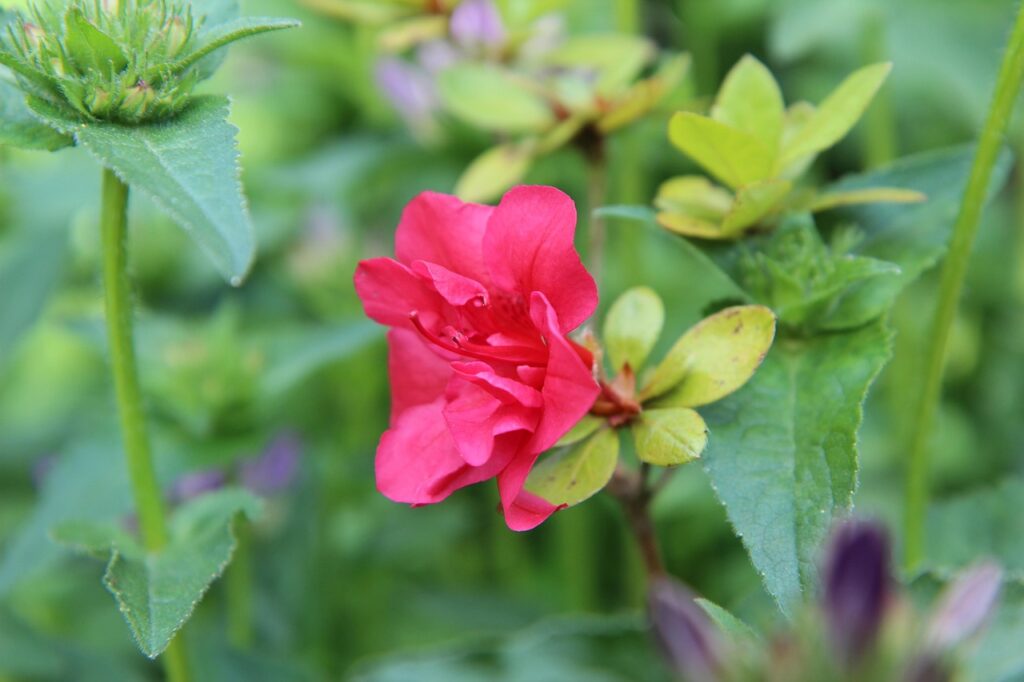
Rhododendron Subsection Pentanthera is strongly shaped by its native environments, and its ecological adaptations explain both its resilience in the wild and its distinct cultivation requirements. Unlike many evergreen rhododendrons that favour sheltered forest interiors, Pentanthera species evolved in more open, variable habitats, resulting in greater tolerance to sunlight, seasonal change, and environmental stress.
These adaptations are key to understanding how the subsection functions ecologically and why it behaves differently from other azalea groups.
Adaptation to temperate and seasonal climates
Pentanthera species are native primarily to temperate regions of North America, where they experience cold winters, warm summers, and pronounced seasonal shifts. Their deciduous habit is a direct adaptation to these conditions, allowing plants to reduce water loss and avoid frost damage during winter dormancy.
This seasonal growth cycle also supports efficient resource allocation, with energy directed toward rapid spring growth, flowering, and seed production before summer stress and autumn senescence.
Sunlight tolerance and light exposure
One of the most distinctive ecological traits of Subsection Pentanthera is its high tolerance for sunlight. Many species naturally grow along woodland edges, open slopes, riverbanks, and clearings where they receive partial to full sun for much of the day.
Compared to evergreen azaleas, Pentanthera species generally perform better in brighter conditions, with increased flowering and stronger growth when exposed to adequate sunlight. This tolerance reflects their evolutionary adaptation to less shaded environments and contributes to their horticultural versatility.
Soil acidity and nutrient preferences
Like all rhododendrons, Subsection Pentanthera requires acidic soils, typically with a pH range between 4.5 and 6.0. These plants are adapted to nutrient-poor, organic-rich soils where competition from other shrubs is reduced.
Their fine, shallow root systems are efficient at absorbing nutrients in acidic conditions but are highly sensitive to alkaline soils, which can lead to nutrient lockout and poor plant health.
Drainage, moisture, and root sensitivity
Pentanthera species prefer well-drained yet consistently moist soils, often found in loamy forest soils or along waterways with good aeration. While some species, such as swamp azaleas, tolerate wetter conditions, prolonged waterlogging is generally detrimental.
The shallow root structure makes proper drainage essential, as compacted or poorly drained soils can quickly lead to root stress and decline.
Ecological role within native habitats
In their native ecosystems, Pentanthera species contribute to pollinator support, seasonal biodiversity, and understory structure. Their early flowering period provides an important nectar source, while their open growth habit allows light penetration to lower vegetation layers.
These ecological roles, combined with strong environmental adaptability, help explain the subsection’s broad distribution and long-term evolutionary success across diverse landscapes.
Geographic distribution and biogeographic significance
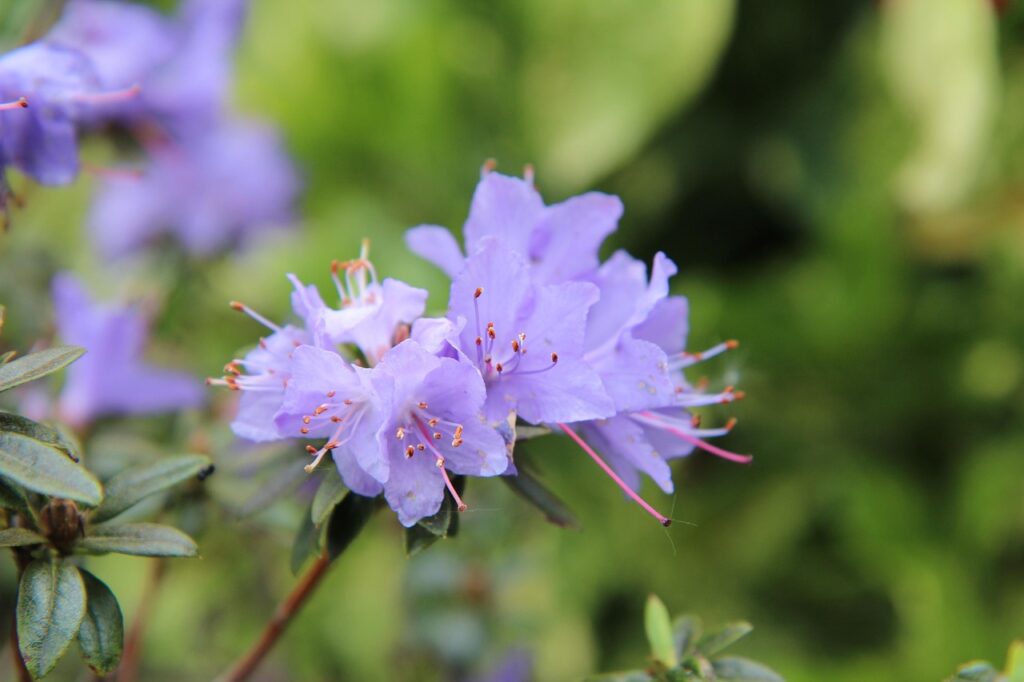
Rhododendron Subsection Pentanthera has a geographically distinctive distribution that sets it apart from many other rhododendron groups. The subsection is best known for its strong association with North America, where the majority of species evolved, diversified, and persist today. This regional concentration makes Pentanthera especially important in studies of temperate plant evolution and biogeography.
While North America forms the core of its range, Pentanthera also includes a small number of outlying species in Eurasia, offering valuable insight into historical plant migration and ancient climatic connections.
Key aspects of its geographic distribution include:
- The highest species diversity occurs in eastern North America, particularly in the Appalachian region, southeastern coastal plains, and surrounding temperate forests
- Most species are distributed across multiple U.S. states, with several showing strong regional endemism
- A smaller number of species occur in Europe and Asia, indicating historical links between continents
- Many species occupy ecotone habitats, such as woodland edges, river systems, and open forest margins
From a biogeographic perspective, Subsection Pentanthera is significant because it reflects ancient migration patterns dating back to periods when temperate forests were more continuous across the Northern Hemisphere. Fossil evidence and phylogenetic studies suggest that ancestral rhododendron lineages once spanned much wider ranges before climatic cooling and glaciation fragmented populations.
The concentration of Pentanthera species in North America, combined with limited Eurasian representation, supports the idea that the group underwent regional radiation after large-scale climatic shifts. This makes Subsection Pentanthera a valuable reference point for understanding how geography, climate change, and habitat fragmentation shape long-term plant evolution within the Rhododendron genus.
Species diversity within Subsection Pentanthera
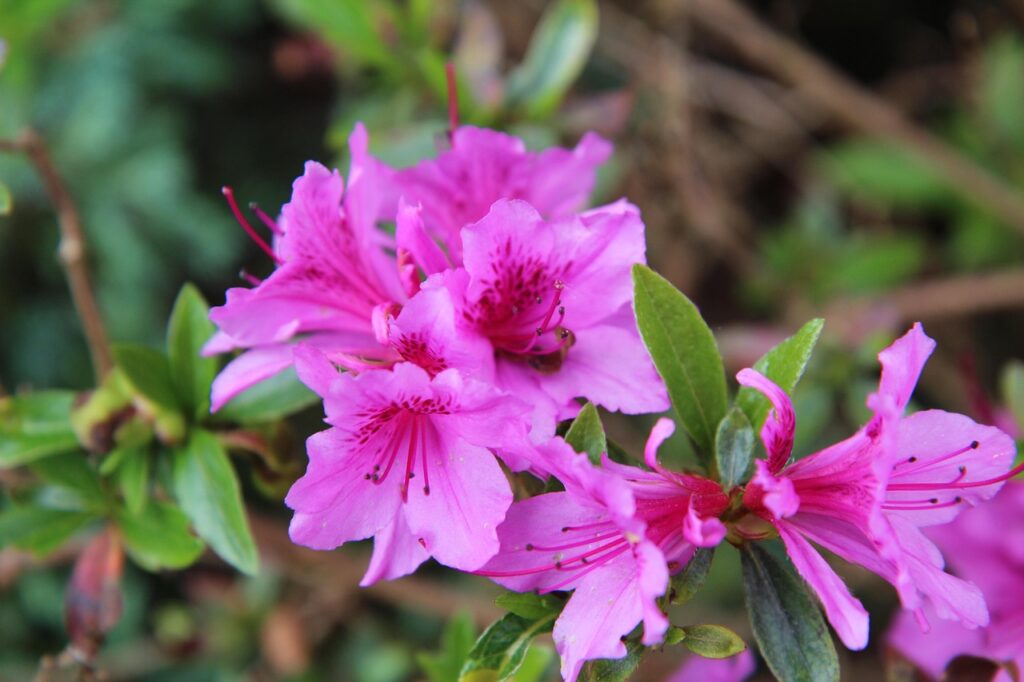
Rhododendron Subsection Pentanthera contains a relatively compact yet ecologically and morphologically diverse group of species. Most are deciduous azaleas native to North America, with a small number of Eurasian representatives. Despite sharing a consistent structural framework, individual species vary in size, growth habit, fragrance intensity, habitat preference, and climatic tolerance.
This diversity has made Subsection Pentanthera especially important in both botanical study and ornamental horticulture, while still remaining taxonomically cohesive.
Notable species within Subsection Pentanthera include:
- Rhododendron alabamense (Alabama azalea)
- Rhododendron arborescens (sweet azalea)
- Rhododendron atlanticum (coastal azalea)
- Rhododendron austrinum (Florida flame azalea)
- Rhododendron calendulaceum (flame azalea)
- Rhododendron canadense (Canada azalea)
- Rhododendron canescens (Piedmont azalea)
- Rhododendron colemanii
- Rhododendron cumberlandense (Cumberland azalea)
- Rhododendron eastmanii
- Rhododendron flammeum (Oconee azalea)
- Rhododendron luteum (yellow azalea, honeysuckle azalea)
- Rhododendron occidentale (western azalea)
- Rhododendron periclymenoides (pinxterbloom azalea)
- Rhododendron prinophyllum (rose azalea)
- Rhododendron prunifolium (plumleaf azalea)
- Rhododendron viscosum (swamp azalea)
Although this list represents the recognised diversity of the subsection, not all species will be covered on this site. For practical and educational clarity, BBB will initially focus on a single representative species, with the possibility of expanding coverage over time.
Our chosen focus species for Subsection Pentanthera is Rhododendron luteum, selected for its well-documented taxonomy, distinctive fragrance, and relevance within both botanical and horticultural contexts.
How Viable is Subsection Pentanthera for Bonsai Cultivation?
From an honest and practical perspective, Subsection Pentanthera is challenging but not impossible for bonsai cultivation. While deciduous azaleas can respond well to pruning and seasonal cycles, many species develop coarse branching, large leaves, and strong root systems that limit refinement at smaller scales.
Species such as Rhododendron luteum may show potential in larger bonsai formats or naturalistic styles, particularly when grown for seasonal interest rather than fine ramification. However, Pentanthera should be viewed as a specialist or experimental bonsai group, better suited to experienced growers rather than beginners, and appreciated primarily for its botanical significance rather than traditional bonsai aesthetics.
Subsection Pentanthera in horticulture and bonsai contexts
Within horticulture, Rhododendron Subsection Pentanthera holds a respected and enduring position. Its species are valued for their dramatic spring flowering, strong fragrance, autumn foliage colour, and adaptability to brighter growing conditions than many evergreen azaleas. These traits have made North American azaleas staples in gardens, conservation plantings, and breeding programmes, where they contribute both ornamental value and genetic diversity.
From a cultivation standpoint, Pentanthera species are generally robust when grown in acidic, well-drained soils and are often more tolerant of sun and temperature variation than their evergreen counterparts. Their seasonal growth cycle aligns well with temperate climates, reinforcing their importance in regional horticulture and native plant landscapes.
In bonsai contexts, Subsection Pentanthera occupies a far more specialised niche. While not traditionally favoured due to larger leaves, coarse branching, and strong vigour, select species can be explored in larger-scale or naturalistic bonsai styles where seasonal character takes priority over fine ramification. Their deciduous nature, spring flowers, and autumn colour can offer compelling visual interest when handled with realistic expectations and appropriate design choices.
Ultimately, Subsection Pentanthera is best understood as a taxonomically significant and horticulturally valuable group, with limited but genuine bonsai potential for experienced growers. Its primary strength lies in its botanical identity and ecological adaptations, while its role in bonsai remains an area of careful experimentation rather than mainstream practice.