
Rhododendron Subsection Tsutsusi represents one of the most important and widely recognised groups of azaleas within the genus Rhododendron. Best known for its ornamental value, this subsection includes many of the classic evergreen and semi-deciduous azaleas cultivated in gardens across East Asia and beyond. Despite their popularity in horticulture, the plants grouped under Subsection Tsutsusi are defined first and foremost by shared morphological and taxonomic characteristics rather than garden performance.
Taxonomically, Subsection Tsutsusi sits within Section Tsutsusi of Subgenus Azaleastrum, a placement that reflects decades of revision, debate, and refinement within rhododendron classification. Species in this subsection are united by distinctive features such as characteristic leaf and twig indumentum, variable leaf persistence, and a wide range of floral forms and colours.
Native primarily to Japan, China, Taiwan, and parts of Southeast and Northeast Asia, Subsection Tsutsusi also holds significant cultural and botanical importance, particularly in Japan where azaleas have been cultivated and selected for centuries.
This taxonomy guide explores Subsection Tsutsusi in detail, examining its classification history, defining traits, species diversity, ecological range, and relevance in horticulture and bonsai contexts.
Table of Contents
Taxonomy
– Kingdom: Plantae (Plant Kingdom)
— Clade: Embryophytes (Land Plants)
— Clade: Polysporangiophytes (Multiple Sporangia)
—- Clade: Tracheophytes (Vascular Plants)
—– Superdivision: Spermatophytes (Seed Plants)
—— Clade: Angiospermae (Flowering Plants)
——- Division: Eudicots (True Dicotyledons)
——– Subdivision: Core Eudicots
——— Class: Superasterids (Advanced Flowering Plants)
———- Subclass: Asterids (Unified-Flowering Plants)
———– Order: Ericales (Heath and Tea)
———— Family: Ericaceae (Heath)
————- Subfamily: Ericoideae (Heath)
————– Tribe: Rhodoreae (Rhododendron)
————— Genus: Rhododendron
————— Subgenus: Azaleastrum (Evergreen Azalea Rhododendrons)
—————- Section: Tsutsusi (Evergreen Azaleas)
—————– Subsection: Tsutsusi (Evergreen Azaleas)
What is Rhododendron Subsection Tsutsusi?
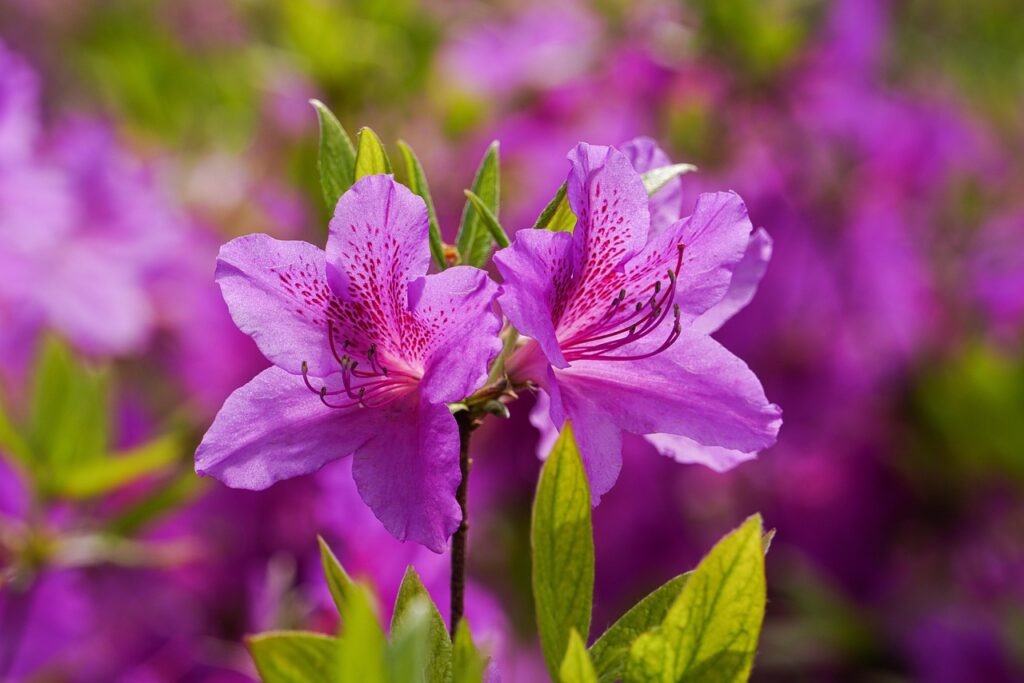
Rhododendron Subsection Tsutsusi is a taxonomic subdivision within the genus Rhododendron that groups a large and distinctive set of azaleas sharing common morphological and evolutionary traits. It belongs to Section Tsutsusi within Subgenus Azaleastrum and primarily comprises evergreen and semi-deciduous azalea species native to East and Southeast Asia. This subsection includes many of the azaleas most familiar in cultivation, particularly those long associated with Japanese and East Asian horticulture.
From a botanical perspective, Subsection Tsutsusi is defined not by garden use but by shared structural features. Species within this group are typically shrubs, sometimes dwarf, with leaves that may be evergreen, semi-evergreen, or seasonally deciduous. A key diagnostic feature is the presence of flattened, often coarse, multicellular hairs on young twigs and leaves. Leaves may appear dimorphic, with some apical leaves persisting through winter while others are shed.
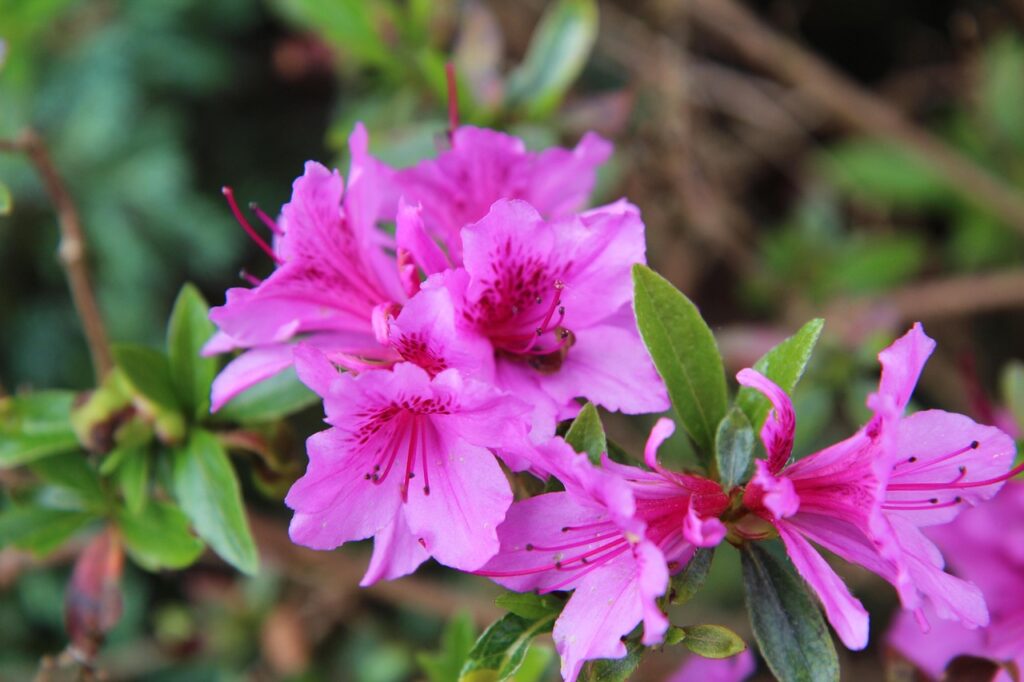
The flowers of Subsection Tsutsusi are highly variable, ranging from rotate to tubular or campanulate forms, and occur in colours from white and pale pink to deep red and purple, often marked with spotting. These floral traits, combined with distinctive indumentum and growth habits, help separate Subsection Tsutsusi from other azalea groups within Rhododendron.
Historically, this group has undergone several taxonomic revisions. Once treated as a larger subgeneric grouping, it was refined and stabilised into its current placement as a subsection following modern morphological and phylogenetic studies. Today, Subsection Tsutsusi is recognised as one of the most species-rich and horticulturally significant azalea groups, with dozens of species distributed across Japan, China, Taiwan, Korea, and parts of mainland Southeast Asia.
In short, Rhododendron Subsection Tsutsusi represents a well-defined, evolutionarily coherent group of azaleas that bridges botanical taxonomy and centuries of ornamental cultivation, making it a cornerstone subsection within the genus Rhododendron.
Taxonomic placement within Subgenus Azaleastrum and Section Tsutsusi
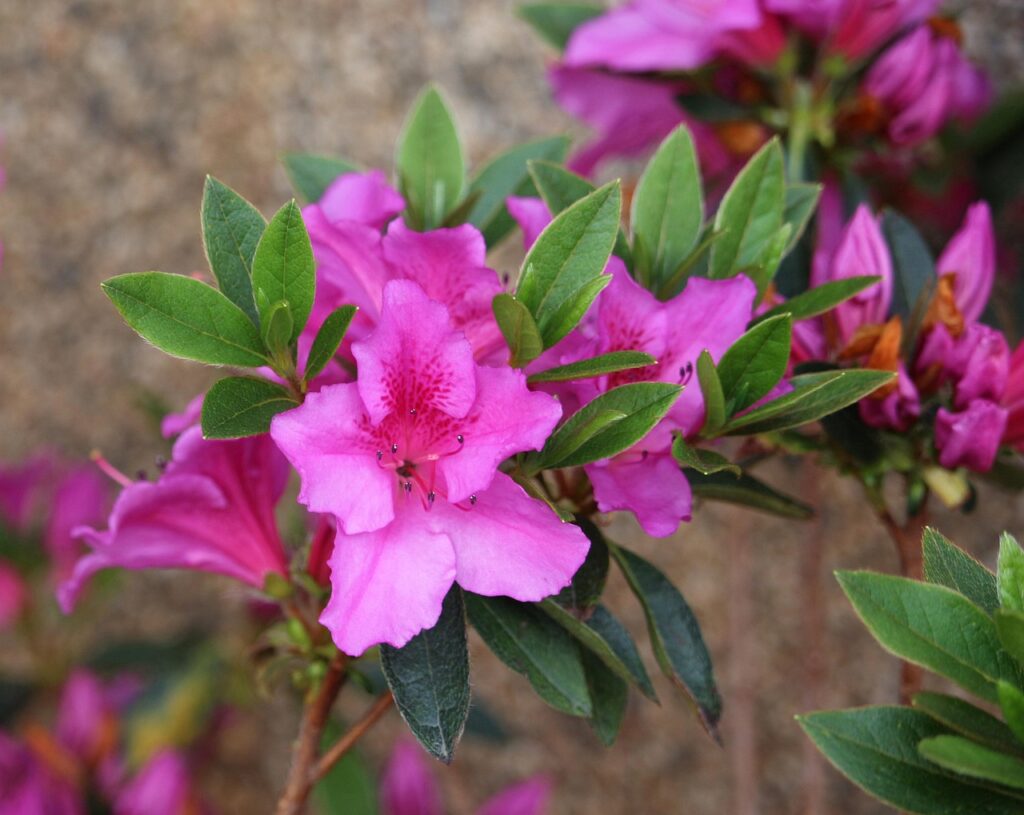
Rhododendron Subsection Tsutsusi is taxonomically placed within Subgenus Azaleastrum, a major subdivision of the genus Rhododendron that encompasses the true azaleas and several closely related groups. This subgenus is distinguished from other rhododendron lineages by a combination of floral structure, growth habit, and leaf characteristics, particularly the tendency toward smaller leaves and more compact shrub forms.
Within Subgenus Azaleastrum, Subsection Tsutsusi belongs to Section Tsutsusi. This section groups together azaleas that share a suite of morphological traits, most notably the presence of distinctive indumentum on young shoots and leaves, variable leaf persistence, and a wide range of floral morphologies. Section Tsutsusi is one of the most species-rich and horticulturally important sections within the subgenus, reflecting both natural diversification and long histories of human cultivation.
Subsection Tsutsusi represents a more refined classification within Section Tsutsusi, grouping species that are closely related at a morphological and evolutionary level. Members of this subsection typically exhibit flattened, multicellular hairs on young twigs, buds, and leaves, a feature that is consistently used as a diagnostic character in taxonomic treatments. Leaf dimorphism is also common, with some leaves persisting over winter while others are shed, depending on species and climate.
This taxonomic placement reflects modern approaches to rhododendron classification, which aim to balance historical morphology-based systems with insights from phylogenetic studies. By situating Subsection Tsutsusi within Subgenus Azaleastrum and Section Tsutsusi, botanists recognise both its close relationship to other azalea groups and its distinct evolutionary identity within the broader Rhododendron genus.
Historical classification and taxonomic revisions of Subsection Tsutsusi
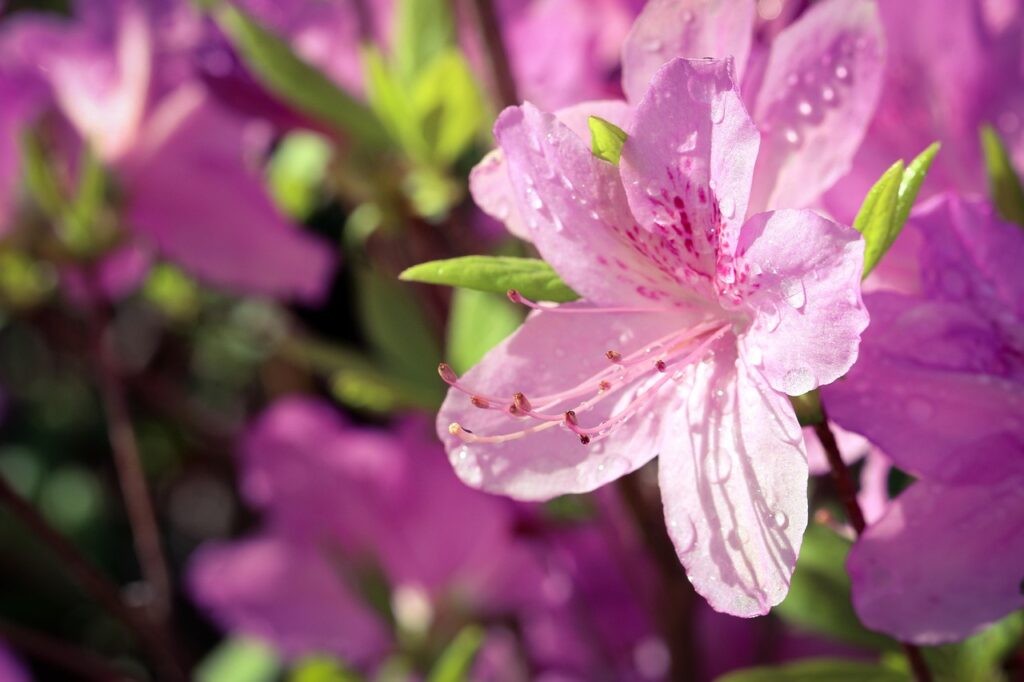
The classification of Rhododendron Subsection Tsutsusi reflects the broader and often complex taxonomic history of azaleas within the genus Rhododendron. For much of botanical history, azaleas were treated separately from rhododendrons due to their distinct appearance and horticultural prominence. As botanical understanding advanced, these groups were gradually unified, leading to repeated re-evaluation of how azaleas should be ranked and subdivided.
Subsection Tsutsusi has been particularly affected by these shifts, moving through different taxonomic ranks as botanists refined their understanding of morphological variation, geographic distribution, and evolutionary relationships within the azalea lineage.
Early separation of azaleas from rhododendrons
In early botanical literature, azaleas were often classified as a separate genus, Azalea, distinct from Rhododendron. This separation was largely based on visible traits such as flower form, leaf size, and growth habit rather than deeper structural or evolutionary evidence.
Species now placed in Subsection Tsutsusi were originally described under this older framework, with many names and groupings reflecting regional horticultural traditions, especially in Japan and China. These early classifications laid the groundwork for later taxonomic refinement but lacked consistency across regions.
Integration into the genus Rhododendron
By the 19th and early 20th centuries, taxonomists began consolidating azaleas into the genus Rhododendron, recognising that the differences between azaleas and rhododendrons were not sufficient to justify separate genera. This integration brought Tsutsusi-type azaleas into Rhododendron, though their internal placement remained debated.
During this period, the group was often treated at higher taxonomic ranks, sometimes as a distinct subgenus or as a broad section encompassing many loosely related species. The emphasis remained largely on floral traits and leaf persistence rather than consistent diagnostic characters.
Recognition of Section Tsutsusi
As morphological studies became more detailed, particularly those focusing on indumentum, bud structure, and leaf anatomy, botanists began to recognise Section Tsutsusi as a more coherent grouping within the azaleas. This section brought together species sharing similar hair types, growth habits, and ecological preferences.
Subsection Tsutsusi emerged as a further refinement within this framework, allowing taxonomists to separate closely related species from other azalea groups that shared only superficial similarities. This step marked an important move toward greater precision in azalea classification.
Reduction in rank and modern taxonomic treatment
A major revision occurred in the early 21st century, when broader taxonomic restructuring led to the reduction of several azalea groupings in rank. What were once treated as subgenera were reorganised under Subgenus Azaleastrum, with Section Tsutsusi retained as a key internal division.
Within this modern system, Subsection Tsutsusi was stabilised as a subsection rather than a higher-ranking unit. This change reflects improved understanding of evolutionary relationships, supported by both morphological analysis and molecular phylogenetic studies. Closely related groups, such as Section Brachycalyx, were also clarified during this period.
Ongoing refinement and species-level revisions
Although the placement of Subsection Tsutsusi is now relatively stable, species-level revisions continue. New species are still being described, particularly from China and Southeast Asia, while others are reassessed, merged, or redefined based on improved field data and genetic research.
This ongoing refinement highlights that Subsection Tsutsusi is not a static concept but an actively studied group. Its taxonomic history illustrates how botanical classification evolves over time, balancing traditional morphology with modern scientific tools to better reflect natural relationships within Rhododendron.
Defining morphological characteristics of Subsection Tsutsusi azaleas
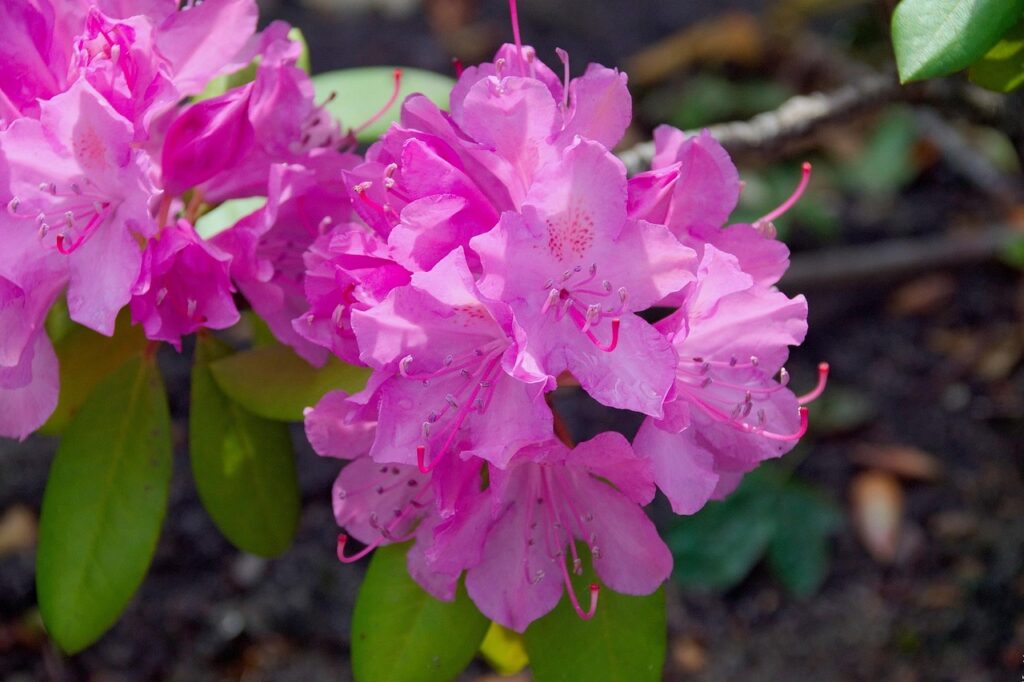
Rhododendron Subsection Tsutsusi is defined by a distinctive combination of vegetative and floral traits that separate it from other azalea groups within Subgenus Azaleastrum. While individual species vary in size, habit, and leaf persistence, the subsection as a whole is united by consistent structural features that are used diagnostically in botanical classification.
These morphological characteristics are especially important because many Tsutsusi azaleas overlap in flower colour and general appearance with other azalea sections. Careful attention to leaves, indumentum, buds, and growth habit is therefore essential when identifying members of Subsection Tsutsusi.
Growth habit and plant form
Species within Subsection Tsutsusi are typically woody shrubs, ranging from low-growing, compact forms to larger, upright shrubs several metres in height. Many species exhibit a dense branching structure, often with multiple stems arising from the base.
Dwarf or slow-growing forms are common, particularly among species adapted to rocky slopes or exposed habitats. This variability in size reflects the subsection’s wide ecological range but remains within a generally shrubby growth form rather than tree-like habits.
Leaf morphology and persistence
Leaves in Subsection Tsutsusi are usually small to medium in size and may be evergreen, semi-evergreen, or deciduous depending on species and climate. A notable feature is leaf dimorphism, where different leaf types appear on the same plant, often with apical leaves persisting through winter while others are shed.
Leaves are typically arranged in whorls of three or scattered along the stems. Shapes range from elliptic to lanceolate, with margins that are usually entire. Texture and thickness vary, but leaves are generally thinner than those found in large-leaved rhododendrons.
Indumentum and surface hairs
One of the most important defining features of Subsection Tsutsusi is the presence of distinctive indumentum on young twigs, buds, and leaves. The hairs are often flattened, coarse, and multicellular, lying appressed to the surface rather than standing upright.
These hairs are frequently red-brown, tawny, or pale in colour and are widely distributed across young growth. The type, density, and persistence of this indumentum are key diagnostic characters used to distinguish Subsection Tsutsusi from closely related groups.
Buds and shoot characteristics
Vegetative and floral buds in Subsection Tsutsusi are usually small and often covered with fine hairs similar to those on the young shoots. Bud scales may be reduced or partially obscured by indumentum, contributing to a softer, less sharply defined bud outline.
Young shoots tend to be slender and flexible, especially in species adapted to forest margins or mountainous regions. As shoots mature, they typically lose much of their hair covering, becoming smoother and more rigid.
Root systems and growth behaviour
While less frequently discussed in taxonomic descriptions, root systems in Subsection Tsutsusi follow the typical rhododendron pattern of fine, fibrous roots adapted to shallow, acidic soils. This growth behaviour supports efficient nutrient uptake in leaf litter-rich environments.
This rooting structure also contributes to the sensitivity of Tsutsusi azaleas to soil compaction and poor drainage, a trait that has implications for both natural ecology and horticultural cultivation.
Flower structure, foliage traits, and diagnostic features
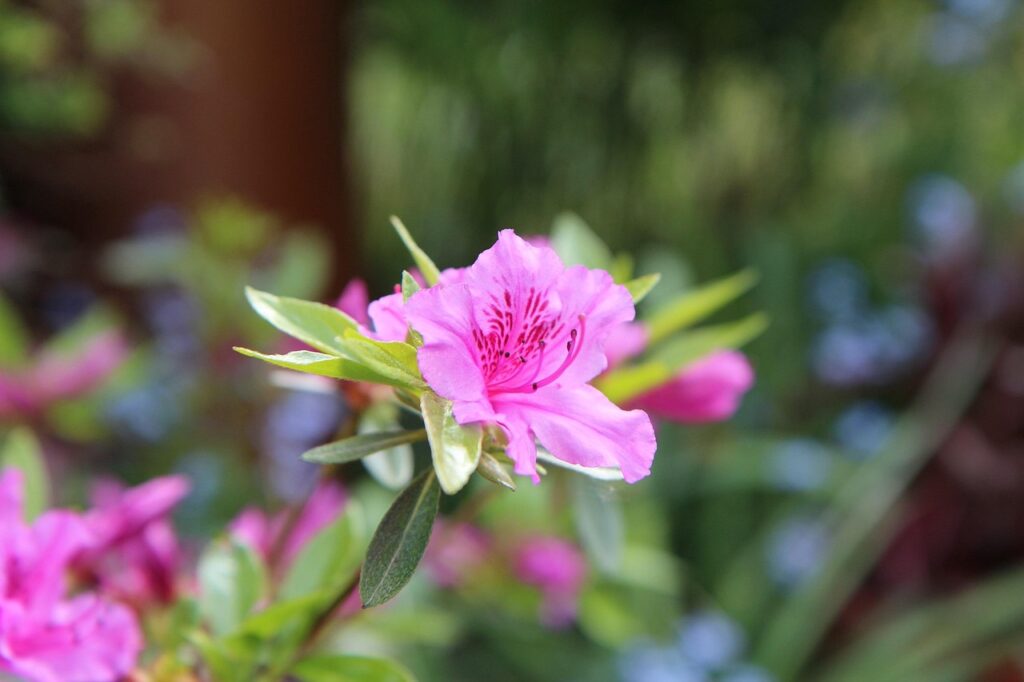
Within Rhododendron Subsection Tsutsusi, flowers and foliage provide some of the most reliable characters for identification and differentiation at both subsection and species level. While overall appearance can vary widely, particularly in cultivated forms, the underlying structural traits remain consistent and are central to taxonomic diagnosis.
These features are especially important because many Tsutsusi azaleas overlap geographically and ecologically with other azalea groups. Accurate identification therefore depends on observing a combination of floral structure, leaf traits, and surface characteristics rather than relying on colour or habit alone.
Flower structure and inflorescence form
Flowers in Subsection Tsutsusi are typically borne singly or in small clusters at the ends of short shoots. The corolla is usually funnel-shaped, tubular, or campanulate, though rotate forms occur in some species. Flower size varies from relatively small and delicate to showy and conspicuous, depending on species.
Most species exhibit five lobes, with occasional variation due to floral asymmetry or evolutionary reduction. The corolla tube is often short to moderately elongated, and the flower posture may be upright or slightly spreading. These traits help distinguish Tsutsusi azaleas from groups with consistently long-tubed or strongly pendulous flowers.
Floral colour, markings, and seasonal timing
Colour variation within Subsection Tsutsusi is broad, ranging from white and pale pink to rose, crimson, purple, and deep red. Many species display distinctive spotting or blotches on the upper lobes, which often function as nectar guides for pollinators.
Flowering time is another useful diagnostic feature. Many Tsutsusi azaleas bloom early to mid-season, with some species flowering before leaf emergence and others blooming as new foliage develops. This timing can help separate species within mixed habitats or cultivated collections.
Stamens, pistils, and reproductive features
The number of stamens in Subsection Tsutsusi is typically five, occasionally increasing in some species. Stamens are usually included within the corolla tube or only slightly exserted, unlike some rhododendron groups where stamens protrude prominently.
The pistil is slender, with a style that often extends to or slightly beyond the stamens. Ovary indumentum varies by species and can be glabrous or hairy, making it a useful character in detailed taxonomic work. These reproductive features are frequently referenced in formal species descriptions.
Foliage texture and seasonal behaviour
Foliage in Subsection Tsutsusi is generally finer and more delicate than that of large-leaved rhododendrons. Leaves are thin to moderately leathery and often show a soft surface texture due to the presence of appressed hairs, especially on young growth.
Seasonal leaf behaviour varies across the subsection. Some species are fully evergreen, others semi-evergreen, and some lose most of their leaves in colder conditions. This variability is influenced by both genetic factors and local climate, but the pattern of leaf retention and replacement can still aid identification.
Diagnostic features separating Subsection Tsutsusi from related groups
The most important diagnostic features of Subsection Tsutsusi include the combination of flattened, multicellular indumentum, variable leaf persistence, relatively small flowers with short to moderate corolla tubes, and predominantly five-stamened floral structures.
Together, these traits help separate Subsection Tsutsusi from closely related groups such as Section Brachycalyx, which differs in indumentum type and bud characteristics, and from deciduous azalea sections with thinner leaves and more seasonal growth patterns.
When assessed collectively, flower structure, foliage traits, and surface features form a consistent diagnostic framework that supports the recognition of Subsection Tsutsusi as a coherent and well-defined taxonomic unit within Rhododendron.
Natural habitat and ecology
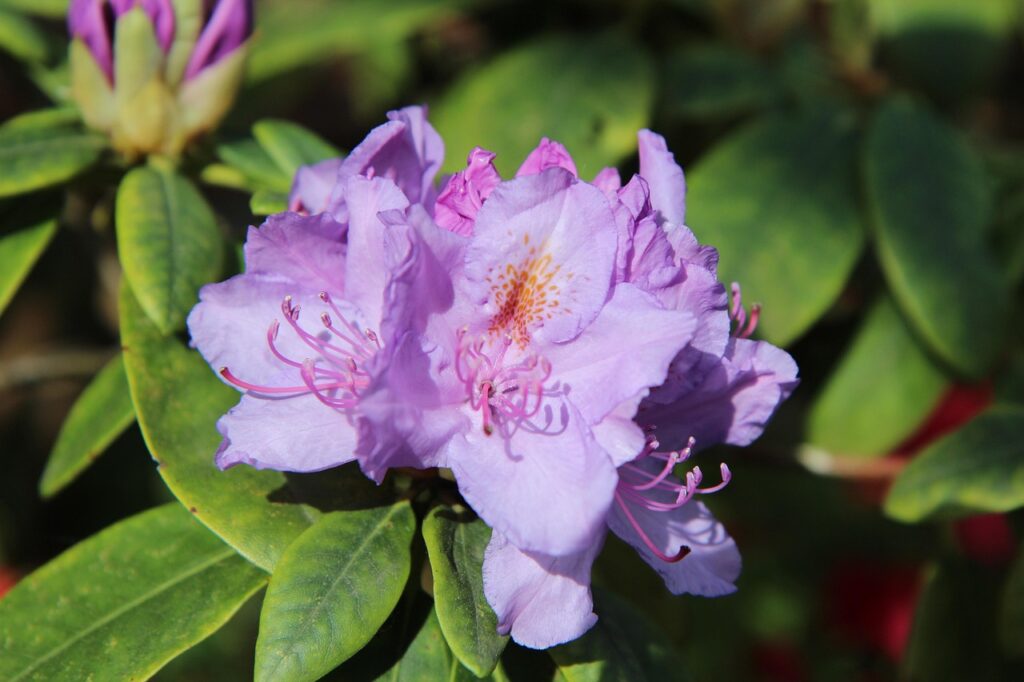
Rhododendron Subsection Tsutsusi occupies a broad range of ecological niches, unified less by geography than by shared environmental conditions. Across its range, species are consistently associated with habitats that offer acidic soils, good drainage, and seasonal moisture, often within forested or semi-forested landscapes. These ecological preferences help explain both the evolutionary cohesion of the subsection and its long-term success in cultivation.
Understanding the habitat and ecology of Subsection Tsutsusi is essential for accurate identification, conservation assessment, and horticultural application. Many defining morphological traits of the group are direct responses to the environments in which these plants evolved.
Forest margins and woodland understories
Most Tsutsusi azaleas naturally occur along forest edges, woodland clearings, or open understory environments rather than in deep, closed-canopy forests. These settings provide filtered light, protection from extreme weather, and a steady supply of organic matter from leaf litter.
In such habitats, plants benefit from moderate sunlight that supports flowering without excessive moisture loss. This ecological position explains the balance between sun tolerance and shade preference seen across the subsection.
Soil conditions and nutrient dynamics
Species in Subsection Tsutsusi are adapted to acidic, humus-rich soils that are typically low in available nutrients. These soils are often derived from decomposing leaf litter rather than mineral-rich substrates, favouring plants with efficient nutrient uptake strategies.
Fine, fibrous root systems allow Tsutsusi azaleas to exploit surface nutrients quickly, but also make them sensitive to soil compaction, alkalinity, and poor drainage. This ecological specialization is a defining trait shared across the subsection.
Moisture regimes and drainage
While Subsection Tsutsusi species generally prefer consistent moisture, they are rarely found in waterlogged conditions. Natural habitats usually provide good drainage, whether on slopes, rocky ground, or well-structured forest soils.
Seasonal rainfall patterns play a role in growth and flowering cycles. Many species are adapted to climates with distinct wet and dry periods, responding with leaf shedding, reduced growth, or dormancy during less favourable conditions.
Climate tolerance and seasonal adaptation
Ecologically, Subsection Tsutsusi spans a range of temperate to subtropical climates. Species exhibit varying degrees of cold tolerance, heat resistance, and drought sensitivity, often correlated with elevation and exposure in their native habitats.
Leaf dimorphism and variable leaf persistence are ecological adaptations that allow plants to reduce water loss or cold damage during harsher seasons while maintaining photosynthetic capacity when conditions improve.
Pollination and ecological interactions
Flowers of Subsection Tsutsusi are adapted for insect pollination, particularly by bees and other nectar-seeking insects active during early to mid-season flowering periods. Bright colours, spotting, and accessible corolla structures support effective pollinator attraction.
In natural ecosystems, Tsutsusi azaleas contribute to seasonal food availability for pollinators and form part of complex woodland ecological networks. Their flowering timing often coincides with periods of high insect activity, reinforcing their ecological integration.
Geographic distribution in East and Southeast Asia
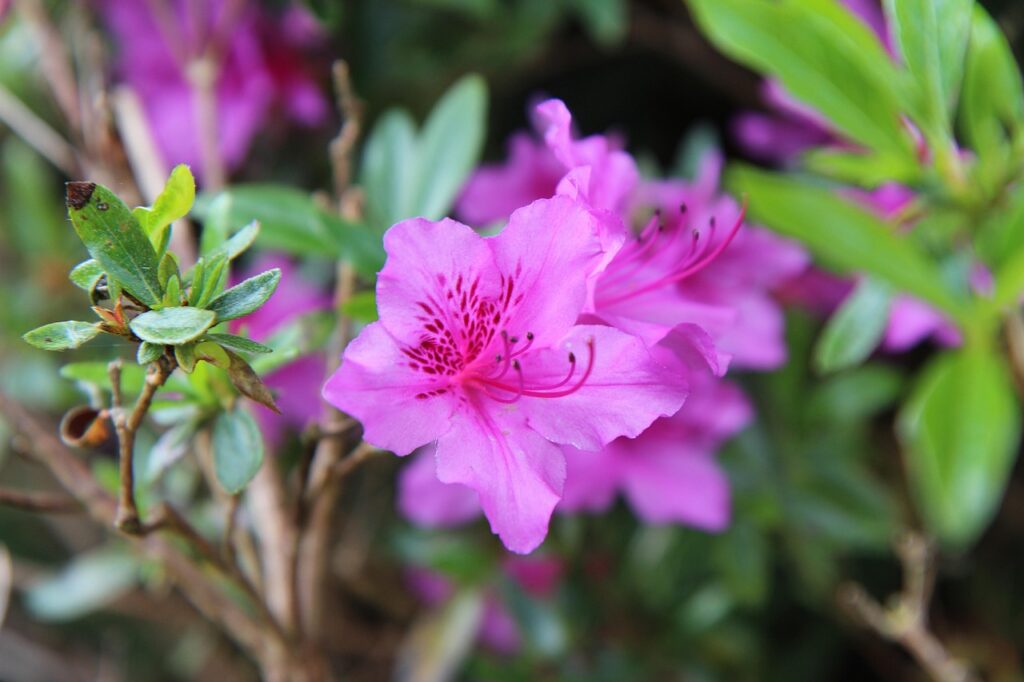
Rhododendron Subsection Tsutsusi is distributed primarily across East and Southeast Asia, with its greatest species diversity concentrated in regions that combine complex topography, varied microclimates, and long-term ecological stability. While individual species may have narrow or highly localised ranges, the subsection as a whole spans a wide arc of temperate to subtropical Asia.
The centre of diversity lies in East Asia, particularly in China and Japan, where both ancient lineages and more recently described species occur. Southern and southeastern China host a significant number of endemic taxa, many of which are restricted to specific provinces, mountain systems, or forest types. Japan is especially important culturally and botanically, as several Tsutsusi species have been cultivated, selected, and hybridised for centuries, influencing both wild and horticultural populations.
Further south, the subsection extends into parts of Southeast Asia, often in upland or montane environments where suitable acidic soils and cooler conditions persist. In these regions, Tsutsusi azaleas are typically more scattered and habitat-specific, reflecting narrower ecological tolerances.
Broadly, the geographic distribution of Subsection Tsutsusi includes the following regions:
- Eastern and southeastern China, with high endemism in provinces such as Guangxi, Guangdong, Fujian, Hunan, Jiangxi, Guizhou, Sichuan, Yunnan, and Zhejiang
- Japan, including Honshu, Kyushu, Shikoku, the Nansei Islands, and outlying island groups such as Yakushima and the Ogasawara Islands
- Taiwan, where several endemic species occur, often associated with mountainous terrain
- The Korean Peninsula, at the northern edge of the subsection’s range
- Northern mainland Southeast Asia, including parts of Vietnam, Laos, Myanmar, and Thailand
- Isolated occurrences in the Philippines and adjacent regions
This wide but uneven distribution reflects both historical biogeography and ongoing speciation, particularly in regions with complex terrain and climatic gradients. As a result, Subsection Tsutsusi includes both broadly distributed species and highly localised endemics, making it one of the most geographically and taxonomically dynamic azalea groups within Rhododendron.
Species diversity and notable species within Subsection Tsutsusi
Rhododendron Subsection Tsutsusi is one of the most species-rich groups of azaleas within the genus Rhododendron. Estimates of species numbers vary depending on taxonomic treatment, with current assessments generally recognising several dozen species, many of which have limited natural ranges or are known from specific habitats. This diversity reflects long evolutionary history, geographic isolation, and ecological specialisation across East and Southeast Asia.
While the subsection contains many botanically significant species, only a small number have had a major influence on horticulture and cultivation. These species form the foundation of most ornamental azaleas and are also the most relevant when considering long-term cultivation, hybridisation, and bonsai use.
Among the most notable species within Subsection Tsutsusi are:
- Rhododendron indicum: Often regarded as the type species of Section Tsutsusi, this species is central to the identity of the subsection. It has played a major role in traditional Japanese azalea cultivation and is the basis for numerous cultivars and hybrid lines. Its adaptability, compact growth, and reliable flowering make it a cornerstone species for both garden and bonsai use.
- Rhododendron simsii: One of the most widely distributed and influential species in the subsection, Rhododendron simsii has contributed extensively to modern azalea breeding. It is known for its vigorous growth, variable flower colours, and adaptability to different climates. Many commercial azalea cultivars trace part of their lineage to this species.
- Rhododendron kaempferi: Native to Japan, this species is valued for its strong seasonal flowering and cold tolerance. It is commonly used in breeding programs and is especially important in traditional Japanese gardens. Its growth habit and resilience also make it a frequent subject in bonsai cultivation.
- Rhododendron obtusum: Closely associated with cultivated azaleas, Rhododendron obtusum represents a complex of forms and hybrids derived from Tsutsusi species. It is widely grown for ornamental purposes and is notable for its dense branching, profuse flowering, and responsiveness to pruning.
These species illustrate the breadth of Subsection Tsutsusi, from wild species with ecological specificity to highly refined cultivated forms. Together, they underpin much of the horticultural and cultural significance of Tsutsusi azaleas and serve as the primary reference points for cultivation, breeding, and bonsai care within this subsection.
Subsection Tsutsusi in horticulture and bonsai contexts
Rhododendron Subsection Tsutsusi occupies a unique position where botanical taxonomy and horticultural practice strongly intersect. Few azalea groups have been cultivated, selected, and refined as extensively as this subsection, particularly in East Asia. Over centuries, Tsutsusi azaleas have been shaped not only by natural evolution but also by deliberate human selection for form, flower, and seasonal performance.
In horticulture, species from Subsection Tsutsusi are valued for their manageable shrub size, dense branching, and reliable flowering. Their adaptability to pruning, responsiveness to seasonal cues, and tolerance of container cultivation have made them foundational to ornamental azalea breeding. Many modern garden azaleas, especially those associated with Japanese traditions, trace their lineage directly to Tsutsusi species.
From a bonsai perspective, Subsection Tsutsusi is among the most suitable azalea groups. Fine branching, small to medium leaf size, and strong back-budding allow these plants to be shaped and maintained over long periods. Their tolerance for root pruning, when combined with appropriate acidic soil and careful watering, further supports their use in bonsai cultivation. Seasonal flowering adds a dramatic but manageable visual element, provided structural training remains the primary focus.
It is important, however, to recognise that not all Tsutsusi species are equally suitable for bonsai. Differences in vigour, leaf persistence, and climate tolerance mean that species selection plays a critical role in long-term success. For this reason, care guidance is best approached at the species level rather than applied uniformly across the subsection.
In conclusion, Subsection Tsutsusi represents a rare alignment of taxonomic clarity, ecological adaptability, and horticultural value. Its species continue to define both traditional azalea cultivation and modern bonsai practice, making the subsection a cornerstone group within Rhododendron for growers, collectors, and taxonomists alike.