
Rhododendron Section Tsutsusi is one of the most important and recognisable taxonomic groups within the genus Rhododendron, encompassing what are commonly known as the evergreen azaleas. While these plants are widely encountered in garden centres, nurseries, and bonsai collections, their taxonomic identity is often misunderstood or oversimplified under the broad label of “azalea.”
From a botanical perspective, Section Tsutsusi represents a well-defined evolutionary lineage within subgenus Azaleastrum, formally reduced from subgenus rank in 2005 following phylogenetic analysis. This section includes between 80 and 117 species, distributed primarily across Japan, China, and northeastern Asia, and is notable for containing some of the largest-flowering azaleas known.
For bonsai practitioners, Section Tsutsusi holds particular relevance. These are the azaleas most commonly cultivated for bonsai, valued for their fine branching potential, dense foliage, and prolific flowering. However, beneath their horticultural popularity lies a complex taxonomy shaped by morphology, geography, and evolutionary history.
This guide focuses on understanding Section Tsutsusi as a taxonomic unit first, while situating its horticultural and bonsai importance within that scientific framework.
Table of Contents
Taxonomy
– Kingdom: Plantae (Plant Kingdom)
— Clade: Embryophytes (Land Plants)
— Clade: Polysporangiophytes (Multiple Sporangia)
—- Clade: Tracheophytes (Vascular Plants)
—– Superdivision: Spermatophytes (Seed Plants)
—— Clade: Angiospermae (Flowering Plants)
——- Division: Eudicots (True Dicotyledons)
——– Subdivision: Core Eudicots
——— Class: Superasterids (Advanced Flowering Plants)
———- Subclass: Asterids (Unified-Flowering Plants)
———– Order: Ericales (Heath and Tea)
———— Family: Ericaceae (Heath)
————- Subfamily: Ericoideae (Heath)
————– Tribe: Rhodoreae (Rhododendron)
————— Genus: Rhododendron
————— Subgenus: Azaleastrum (Evergreen Azalea Rhododendrons)
—————- Section: Tsutsusi (Evergreen Azaleas)
What Is Rhododendron Section Tsutsusi?
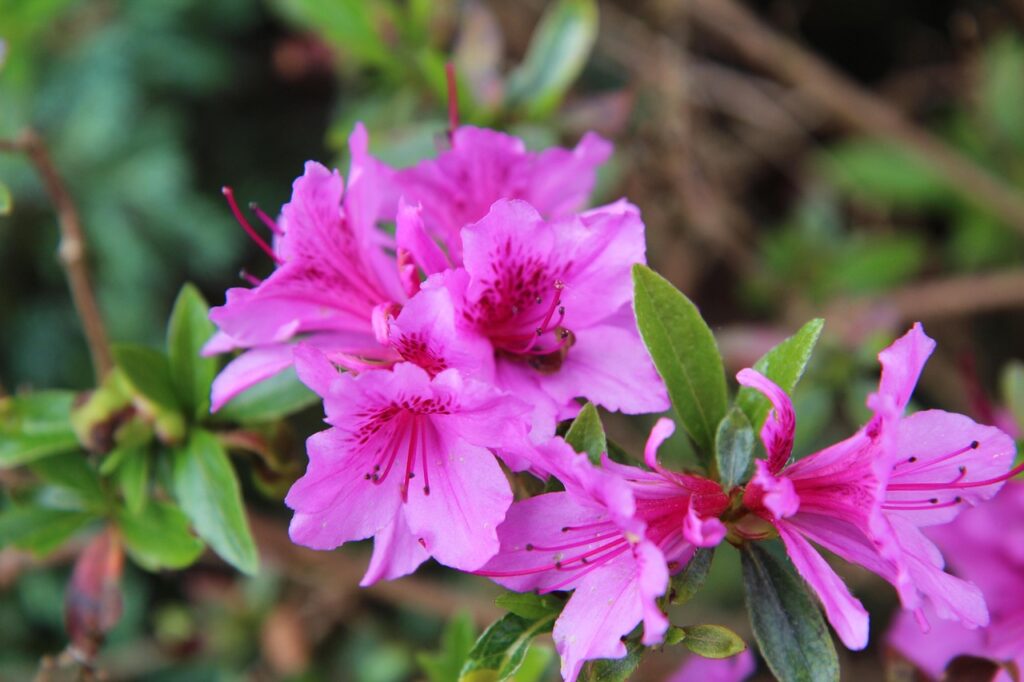
Rhododendron Section Tsutsusi is a major taxonomic section within the genus Rhododendron, encompassing the plants most commonly referred to as evergreen azaleas. Although the term “azalea” is widely used in horticulture, it has no formal standing as a genus in modern taxonomy. Instead, these plants are correctly classified within Rhododendron, with Section Tsutsusi representing one of the most significant groupings.
Historically, Tsutsusi was treated as its own subgenus, reflecting its distinctive growth habits and floral characteristics. However, advances in molecular phylogenetics led to a major reclassification in 2005, reducing Tsutsusi to a section within subgenus Azaleastrum. Genetic evidence confirmed that the species within Section Tsutsusi form a monophyletic group, meaning they share a common evolutionary ancestor.
The section comprises roughly 80 to 117 species, including primarily evergreen and semi-deciduous shrubs. These species are characterised by terminal buds that contain both vegetative and floral tissues, a trait that contributes to their dense growth habit and suitability for fine ramification in cultivation. Many species also display distinctive indumentum, such as flattened, rust-coloured hairs on leaves and young stems.
From a practical standpoint, Section Tsutsusi is the taxonomic group most frequently encountered in nurseries, landscape plantings, and bonsai collections worldwide. Understanding what defines Section Tsutsusi is essential not only for correct botanical identification, but also for making informed decisions in cultivation, breeding, conservation, and long-term bonsai development.
Taxonomic Placement of Section Tsutsusi Within Subgenus Azaleastrum
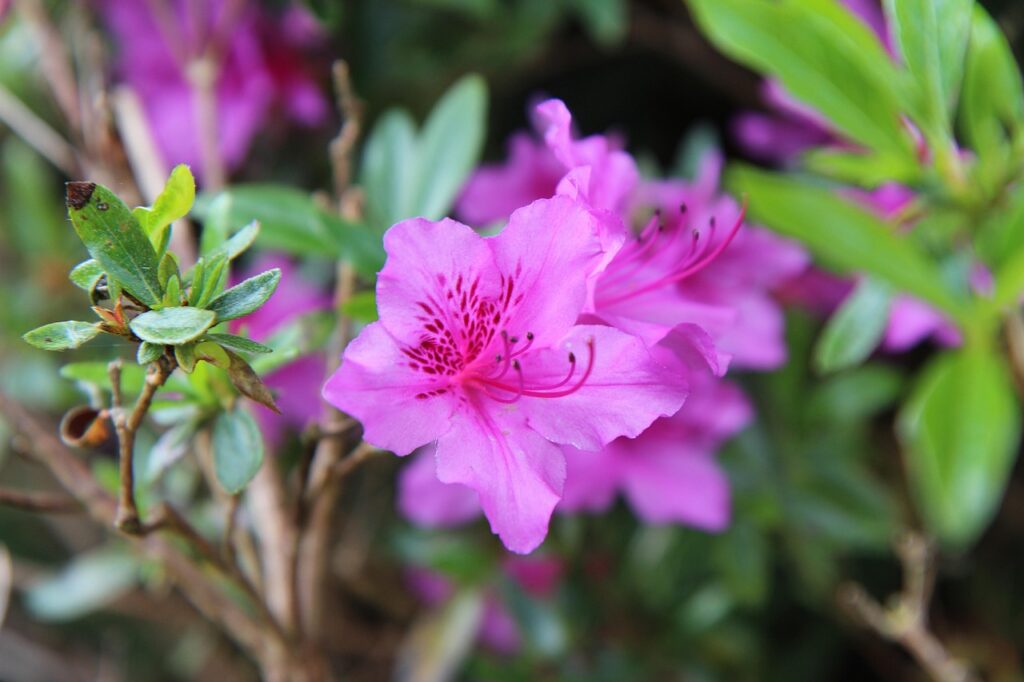
Section Tsutsusi occupies a clearly defined position within the modern taxonomic structure of the genus Rhododendron. Under current classification systems, it is placed within subgenus Azaleastrum, a grouping that consolidates several azalea-related lineages based on both morphological traits and molecular evidence.
Prior to the early 21st century, Tsutsusi was widely treated as a distinct subgenus, reflecting its strong horticultural identity and apparent differences from large-leaved rhododendrons. However, comprehensive phylogenetic studies published in the early 2000s demonstrated that the traditional separation did not accurately reflect evolutionary relationships. As a result, in 2005, Tsutsusi was formally reduced from subgenus rank to section level and subsumed within subgenus Azaleastrum.
Subgenus Azaleastrum now serves as a taxonomic umbrella for multiple azalea groups, both evergreen and deciduous, with Section Tsutsusi representing one of its most cohesive and evolutionarily stable lineages. Molecular analyses have confirmed the monophyly of Section Tsutsusi, meaning all species within the section descend from a single common ancestor distinct from other sections in the subgenus.
This placement has important implications for taxonomy, breeding, and identification. While horticultural traits such as flower colour, corolla size, or leaf persistence are visually striking, they have proven unreliable for defining evolutionary relationships within the group. Instead, the classification of Section Tsutsusi within subgenus Azaleastrum reflects deeper genetic relationships that underpin both its botanical integrity and its remarkable adaptability in cultivation and bonsai contexts.
Evolutionary Origins and East Asian Biogeographic History
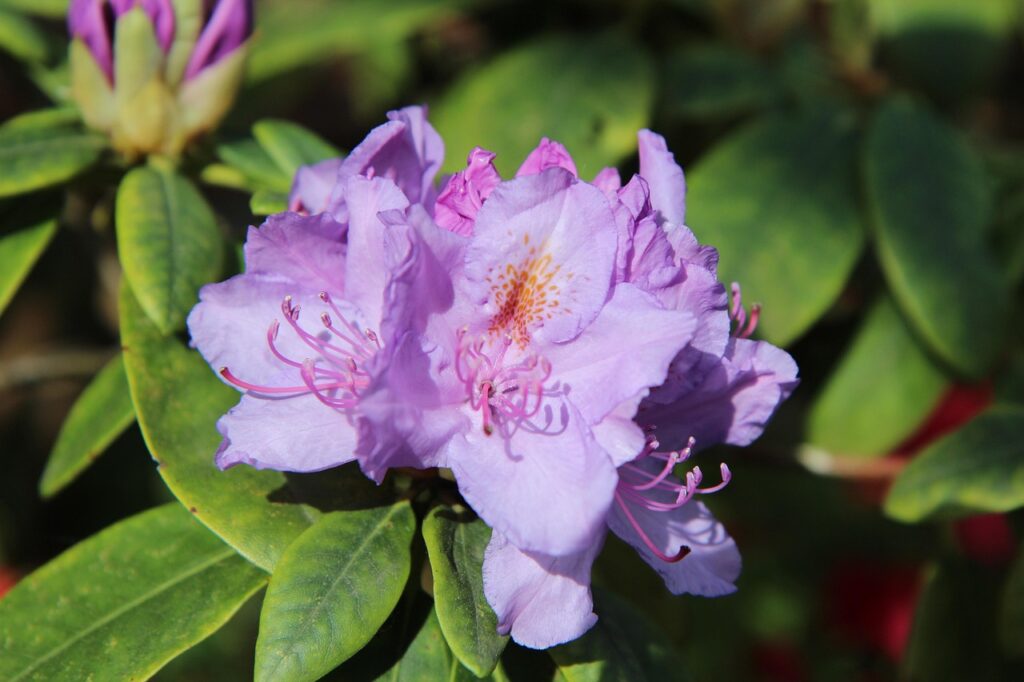
The evolutionary history of Rhododendron Section Tsutsusi is deeply tied to the geological and climatic complexity of East Asia. Unlike many plant groups defined primarily by modern morphology, Tsutsusi represents a lineage shaped by long-term isolation, regional diversification, and repeated climatic shifts. Its present-day distribution reflects millions of years of adaptation to temperate and subtropical environments across Japan, China, and neighbouring regions.
Understanding the evolutionary and biogeographic background of Section Tsutsusi provides critical context for its diversity, resilience, and prominence in both natural ecosystems and cultivated forms, including bonsai.
East Asia as a centre of diversification
East Asia is recognised as one of the world’s most important centres of plant diversification, and Section Tsutsusi is a clear example of this pattern. The complex topography of the region, including mountain ranges, river systems, islands, and coastal zones, created numerous isolated habitats where populations could diverge over time.
In particular, Japan and southern China played a major role in the radiation of Tsutsusi species. Geographic isolation between islands, valleys, and mountain slopes encouraged speciation, leading to the high number of closely related yet distinct species observed within the section today.
Climatic stability and refugial survival
During past glacial and interglacial periods, much of East Asia experienced relative climatic stability compared to Europe and North America. This stability allowed many Tsutsusi lineages to survive in refugial habitats rather than being eliminated or forced into rapid migration.
These long-term refugia supported gradual evolutionary change rather than abrupt extinction, helping preserve ancient genetic lineages. As a result, Section Tsutsusi retains deep evolutionary roots while also displaying significant regional variation in growth habit, leaf morphology, and flowering traits.
Evolution of evergreen and semi-deciduous traits
The predominance of evergreen and semi-deciduous species within Section Tsutsusi is closely linked to its East Asian origins. Mild winters, seasonal rainfall patterns, and forest-edge habitats favoured the retention of foliage year-round or partial leaf persistence during colder months.
This adaptive strategy provided a competitive advantage in understory and woodland-margin environments, contributing to the dense branching and compact growth forms that later made Tsutsusi species highly suitable for ornamental cultivation and bonsai training.
Implications for modern taxonomy and cultivation
The evolutionary history of Section Tsutsusi explains why morphological traits alone often fail to accurately represent relationships within the group. Many visible characteristics evolved multiple times in response to similar environmental pressures rather than from shared ancestry.
For taxonomists, this reinforces the importance of molecular data in defining the section. For horticulturists and bonsai practitioners, it highlights why species within Section Tsutsusi can behave differently in cultivation despite superficial similarities, reflecting their diverse evolutionary paths across East Asia.
Evergreen and Semi-Deciduous Growth Habits of Section Tsutsusi
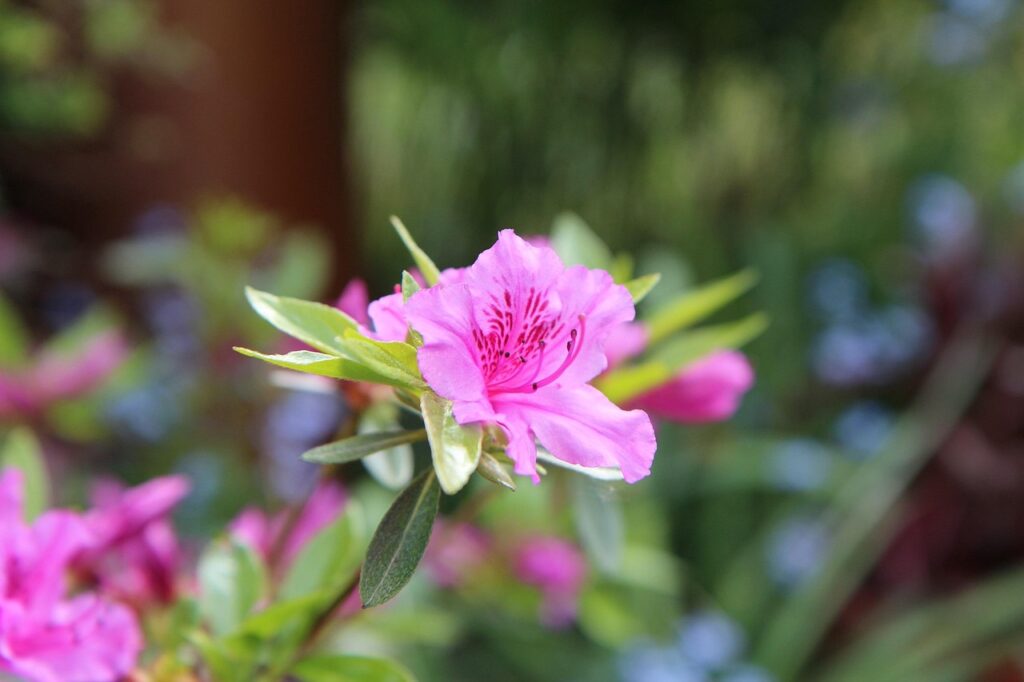
One of the defining biological features of Rhododendron Section Tsutsusi is its predominantly evergreen to semi-deciduous growth habit. This characteristic distinguishes the section from many other azalea groups and plays a key role in both its ecological success and its horticultural popularity. While often collectively referred to as evergreen azaleas, the growth behaviour of Tsutsusi species exists along a spectrum rather than as a single uniform trait.
Understanding these growth habits is essential for accurate taxonomic interpretation, as well as for informed cultivation and bonsai development.
Evergreen foliage retention and seasonal stability
Most species within Section Tsutsusi are fully evergreen, retaining foliage throughout the year under suitable climatic conditions. This trait is closely linked to the temperate and subtropical regions of East Asia, where winters are cool but rarely severe enough to necessitate full leaf drop.
Evergreen foliage allows these plants to maintain photosynthetic activity across seasons, supporting steady growth and energy storage. In bonsai and horticultural contexts, this contributes to year-round structure, visual continuity, and the ability to refine branch ramification over multiple seasons.
Semi-deciduous behaviour and environmental influence
Some Tsutsusi species exhibit semi-deciduous behaviour, shedding older leaves while retaining apical foliage through winter. This partial leaf persistence is often influenced by environmental factors such as temperature, altitude, and exposure rather than strict genetic determinism.
In colder climates or under stress, even typically evergreen species may behave as semi-deciduous. From a taxonomic standpoint, this variability highlights why leaf persistence alone is an unreliable character for defining evolutionary relationships within Section Tsutsusi.
Bud structure and growth rhythm
A critical feature underlying the growth habit of Section Tsutsusi is the presence of terminal buds that contain both floral and vegetative tissues. This dual-purpose bud structure influences the plant’s seasonal rhythm, allowing flowering and shoot extension to be closely coordinated.
This growth pattern supports dense branching and compact form, traits that are highly valued in ornamental cultivation and bonsai training. It also contributes to the predictable flush cycles seen in many Tsutsusi species, aiding long-term structural planning.
Relevance to taxonomy and cultivation
The evergreen and semi-deciduous habits of Section Tsutsusi reflect evolutionary adaptation rather than rigid classification markers. These traits have enabled the section to thrive across varied habitats while remaining structurally suited to cultivation.
For taxonomists, this reinforces the need to rely on genetic and developmental evidence rather than growth habit alone. For growers and bonsai practitioners, it explains both the resilience of Tsutsusi species and their responsiveness to careful seasonal management.
Leaf Morphology, Indumentum, and Structural Characteristics
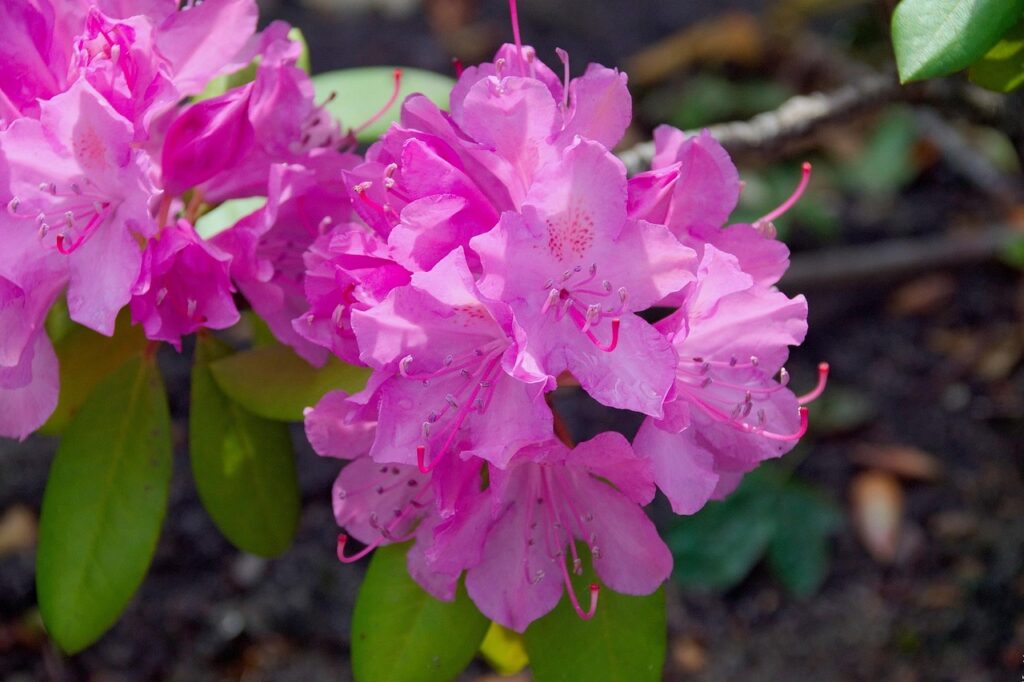
The leaves of Rhododendron Section Tsutsusi display a combination of structural consistency and subtle variation that has long been used in taxonomic study. While leaf shape, arrangement, and surface features were once considered key diagnostic tools, modern research has shown that many of these traits are adaptive rather than strictly phylogenetic. Even so, leaf morphology and indumentum remain important for species-level identification and understanding ecological adaptation.
These characteristics also help explain why Tsutsusi species respond so well to pruning, shaping, and long-term refinement in cultivation and bonsai.
Leaf arrangement and form
Leaves in Section Tsutsusi are typically small to medium-sized, contributing to the fine-textured appearance for which evergreen azaleas are known. Many species exhibit pseudoverticillate leaf arrangement, where leaves appear clustered or whorled near the shoot apex rather than evenly spaced along the stem.
Leaf shape is commonly elliptic to rhombic, with smooth margins and a relatively thick, leathery texture. This compact leaf structure supports moisture retention and durability, particularly in woodland-edge and understory environments.
Indumentum and surface characteristics
A distinctive feature of many Tsutsusi species is the presence of flattened multicellular hairs, often described as ferrugineous or rust-coloured. These hairs may cover leaves, stems, or young twigs, giving certain species a coppery or bronzed appearance.
In some species, indumentum is widespread across vegetative structures, while in others it is restricted to specific areas such as leaf axils or the bases of floral buds. This variation reflects ecological adaptation rather than strict taxonomic division, as similar hair patterns can arise independently in unrelated lineages within the section.
Structural traits and branch development
Structurally, Section Tsutsusi is characterised by dense branching and short internodes, particularly in species adapted to forest margins and open woodland. These traits promote compact growth and facilitate the development of layered canopies in natural settings.
The combination of terminal bud structure, fine branching, and resilient leaf tissue allows these plants to recover well from pruning and environmental stress. This structural resilience is one of the reasons Tsutsusi species dominate both ornamental azalea cultivation and bonsai collections worldwide.
Taxonomic limitations of leaf-based traits
Although leaf morphology and indumentum have historically been used to divide Section Tsutsusi into subsections, molecular studies have demonstrated that these traits do not always correlate with evolutionary relationships. Features such as leaf dimorphism, hair distribution, and leaf persistence can vary significantly within closely related species.
As a result, while leaf and structural characteristics remain valuable for descriptive taxonomy and practical identification, they are now understood as supportive traits rather than definitive indicators of phylogeny within Section Tsutsusi.
Flower Size, Form, and Reproductive Traits in Section Tsutsusi
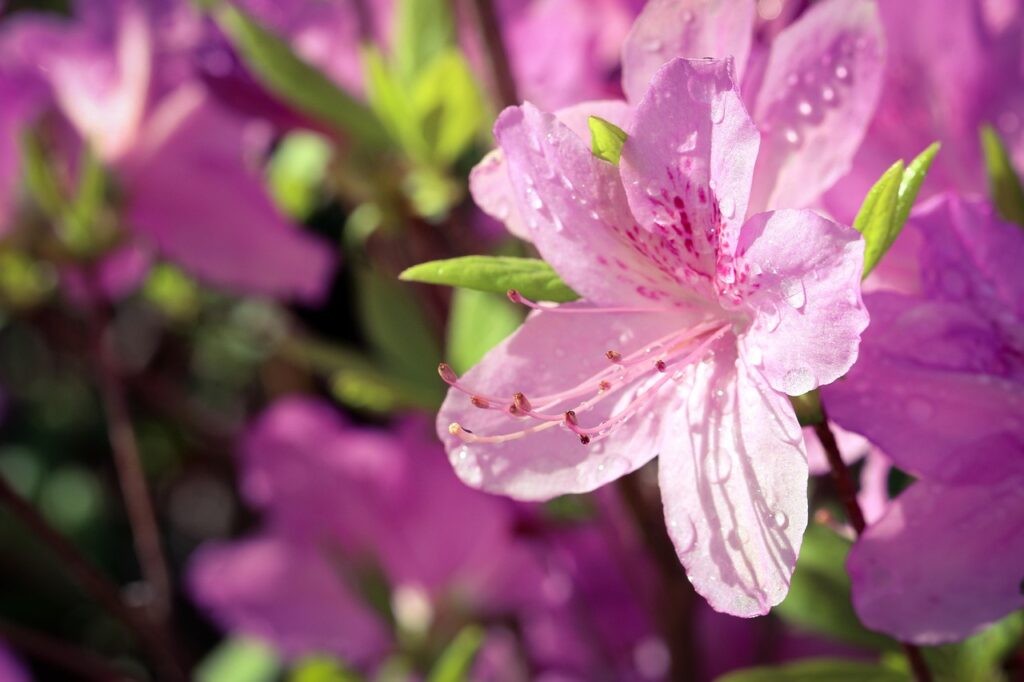
Flowering characteristics are among the most visually striking features of Rhododendron Section Tsutsusi, and they have historically played a prominent role in both taxonomic description and horticultural selection. While flower size, colour, and form vary widely across the section, modern research has shown that these traits are often shaped by ecological pressures and human selection rather than strict evolutionary lineage.
As a result, floral traits in Section Tsutsusi are best understood as biologically important and diagnostically useful at the species level, but limited in their ability to define deeper phylogenetic relationships.
Flower size and corolla form
Section Tsutsusi includes some of the largest-flowering azaleas within the genus Rhododendron, with corollas ranging from modest and delicate to broad, showy blooms. Flowers are typically funnel-shaped to broadly tubular, with five lobes that may be overlapping or flared.
Variation in corolla size and shape is extensive, even among closely related species. This diversity reflects adaptation to different pollinators and environmental conditions rather than consistent taxonomic separation, which explains why flower size alone has proven unreliable for defining subsections within Tsutsusi.
Colour variation and ornamental diversity
Flower colour in Section Tsutsusi spans a wide spectrum, including whites, pinks, reds, purples, and bicoloured forms. This diversity has been heavily amplified through centuries of cultivation and hybridisation, particularly in Japan and China.
From a taxonomic standpoint, colour is one of the least reliable characters, as it can vary within species and is strongly influenced by selective breeding. However, its importance in horticulture and bonsai aesthetics cannot be overstated, as flowering remains a primary reason for the global popularity of Tsutsusi azaleas.
Reproductive structures and pollination
Flowers in Section Tsutsusi typically possess five stamens, a characteristic feature distinguishing azaleas from many large-leaved rhododendrons. The stamens are often prominent and contribute to the open, accessible structure of the flower.
Pollination strategies vary across the section but are generally adapted to insects, including bees and butterflies. Floral form, nectar availability, and timing of bloom all play roles in attracting pollinators, contributing to reproductive success across diverse habitats.
Flowering behaviour and growth integration
A key biological feature of Section Tsutsusi is the integration of flowering and vegetative growth through terminal buds that contain both floral and leaf primordia. This developmental structure tightly links flowering cycles to overall plant growth and energy allocation.
In cultivation and bonsai, this trait has practical implications. Flower bud formation directly affects subsequent vegetative growth, requiring careful management to balance flowering display with long-term structural development. From a taxonomic perspective, this growth integration further demonstrates that reproductive traits in Section Tsutsusi are deeply intertwined with the plant’s overall developmental strategy rather than isolated characteristics.
Geographic Distribution and Native Habitats of Section Tsutsusi
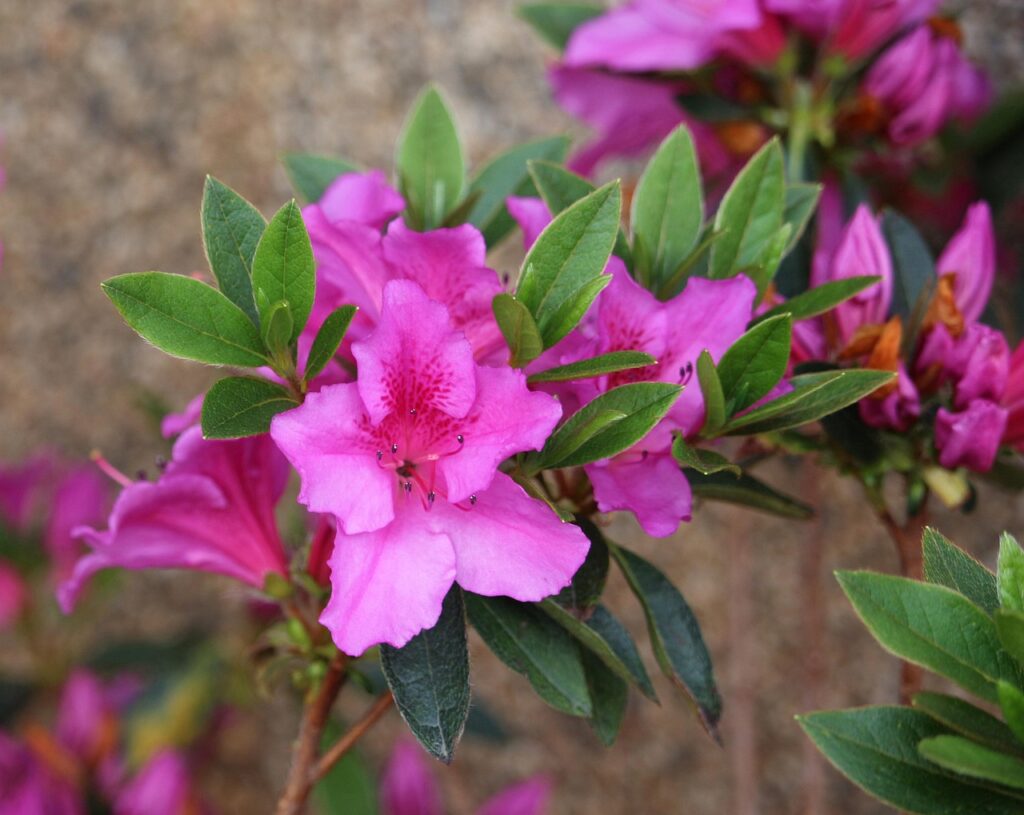
Rhododendron Section Tsutsusi is primarily distributed across temperate and subtropical regions of East and Southeast Asia, with its greatest diversity concentrated in Japan and China. This geographic pattern reflects both the evolutionary origins of the section and its long-term adaptation to varied but relatively stable climatic conditions.
Japan represents a major centre of diversity and cultural significance for Section Tsutsusi. Many species evolved in island environments characterised by mountainous terrain, forest margins, and seasonal humidity. These conditions promoted compact growth habits, dense branching, and evergreen or semi-deciduous foliage, traits that later made Tsutsusi azaleas highly adaptable to cultivation.
China forms the second major stronghold of the section, particularly in eastern and southern regions. Here, species occupy a broad range of elevations and microclimates, from lowland woodlands to upland slopes. The ecological diversity of these habitats contributed to significant speciation within the section, resulting in numerous closely related but ecologically distinct taxa.
Beyond Japan and China, Section Tsutsusi extends more sporadically into neighbouring regions. These peripheral populations reflect historical migration and adaptation rather than primary centres of diversification.
Native distribution includes:
- Japan, where Tsutsusi species are deeply embedded in natural landscapes and traditional gardens
- Eastern and southern China, across temperate and subtropical zones
- Northeastern Asia, including parts of Korea
- Isolated occurrences in Thailand, Myanmar (Burma), Laos, and parts of India
In their native habitats, Tsutsusi species are most commonly found in forest edges, open woodlands, slopes, and areas with acidic, well-drained soils. They often occupy transitional zones rather than deep forest interiors, where filtered light and seasonal moisture patterns support steady growth.
This ecological flexibility helps explain the section’s success outside its native range. While geographically rooted in East Asia, the habitat preferences of Section Tsutsusi align closely with conditions found in cultivated landscapes worldwide, further reinforcing its prominence in horticulture and bonsai practice.
Subsections of Section Tsutsusi: Tsutsusi and Brachycalyx
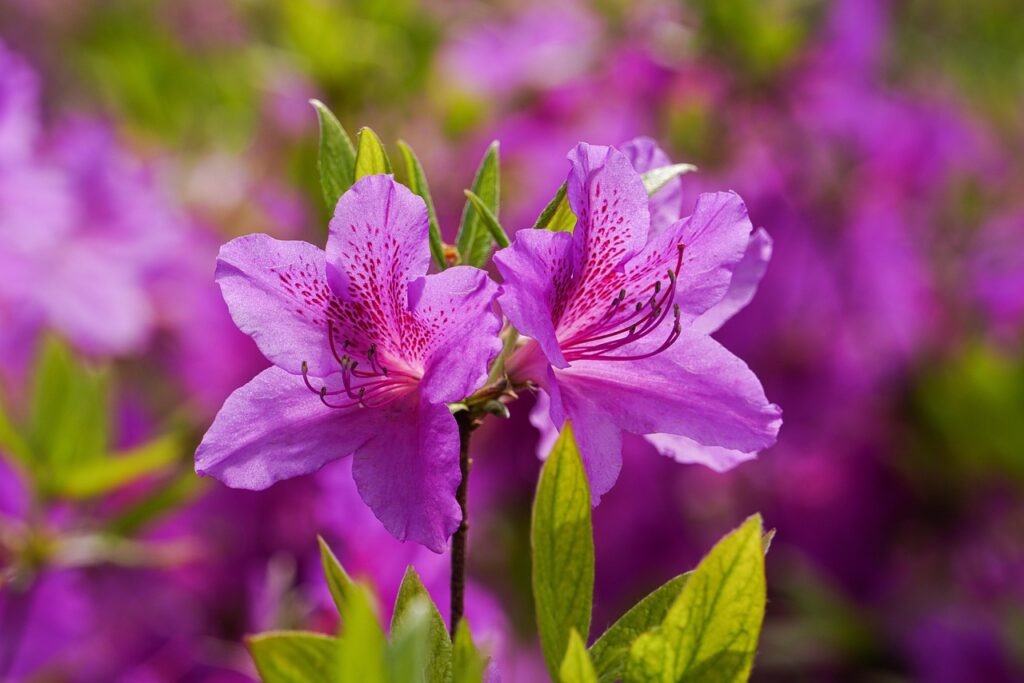
Within Rhododendron Section Tsutsusi, taxonomists traditionally recognise two subsections based on a combination of leaf structure, indumentum distribution, and growth behaviour. While modern molecular studies have shown that many visible traits do not perfectly map to evolutionary relationships, these subsections remain useful as broad organisational frameworks for understanding diversity within the section.
Given the large number of species involved, the overviews below focus on defining characteristics rather than exhaustive species coverage, with emphasis on taxa most relevant to cultivation and future bonsai care work.
Rhododendron subsect. Tsutsusi
Subsection Tsutsusi is the larger and more widely recognised of the two, comprising roughly 60–70 species. It includes many of the azaleas most commonly encountered in horticulture, retail nurseries, and bonsai collections.
Species in this subsection are typically characterised by dimorphic leaves, where larger summer leaves are paired with smaller, more persistent apical leaves that may overwinter. Young twigs often bear flattened multicellular hairs distributed across their surfaces, contributing to the distinctive texture seen in many cultivated forms.
From a practical perspective, this subsection represents the core of evergreen azalea cultivation, and it is where most modern hybrids trace their ancestry. For BBB’s bonsai focus, key species selected for future care sheets include:
- Rhododendron indicum
- Rhododendron simsii
- Rhododendron kaempferi
- Rhododendron obtusum
These species are foundational not because they are taxonomically exhaustive, but because they underpin a vast proportion of cultivated material and exhibit growth traits well suited to bonsai refinement.
Rhododendron subsect. Brachycalyx
Subsection Brachycalyx is much smaller, containing approximately 15 species, and is less commonly encountered in mainstream cultivation. Species within this group are generally defined by monomorphic, deciduous leaves that are pseudoverticillate, rhombic in shape, and densely clustered near shoot tips. Indumentum, when present, is often confined to leaf axils or the bases of floral buds rather than being widely distributed.
The type species for this subsection, and the most representative choice for focused study, is:
- Rhododendron farrerae
This species is taxonomically important as the defining reference point for the subsection and offers a clear contrast to the evergreen-dominant Tsutsusi subsection. While less common in bonsai practice, R. farrerae provides valuable insight into the structural and seasonal diversity that exists within Section Tsutsusi as a whole.
Together, these two subsections illustrate why Section Tsutsusi cannot be reduced to a single growth model or horticultural profile. Instead, it represents a spectrum of forms unified by shared ancestry but shaped by varied ecological and evolutionary pressures.
Section Tsutsusi in Horticulture, Bonsai, and Cultural Contexts
Rhododendron Section Tsutsusi occupies a unique position where botanical taxonomy, horticultural practice, and cultural tradition intersect. While its scientific classification places it firmly within subgenus Azaleastrum, its influence extends far beyond taxonomy into gardens, nurseries, and artistic disciplines across the world.
In horticulture, Section Tsutsusi forms the backbone of evergreen azalea cultivation. These are the azaleas most commonly grown as landscape shrubs and potted plants, valued for their manageable size, dense branching, and spectacular flowering. Centuries of selection and hybridisation, particularly in East Asia, have produced an enormous range of forms while retaining the structural traits that define the section.
From a bonsai perspective, Tsutsusi species are among the most widely used flowering bonsai trees. Their fine ramification potential, relatively small leaves, and ability to respond well to pruning make them especially suitable for long-term training. However, successful bonsai cultivation depends on understanding their biological rhythms, especially the close relationship between flowering, bud development, and vegetative growth, all of which are rooted in the section’s underlying taxonomy.
Culturally, Section Tsutsusi holds profound significance, especially in Japan, where the word tsutsuji is synonymous with azaleas themselves. These plants are deeply embedded in traditional gardens, seasonal festivals, and landscape design, symbolising renewal, refinement, and the changing rhythms of nature. This cultural legacy has shaped how Tsutsusi azaleas are cultivated, displayed, and appreciated across generations.
Ultimately, Section Tsutsusi demonstrates why taxonomy matters. Recognising these plants as a coherent evolutionary group provides clarity for identification, conservation, cultivation, and bonsai practice. By grounding horticultural use in scientific understanding, growers and enthusiasts can better appreciate not only how these azaleas look, but why they grow, behave, and respond the way they do.