
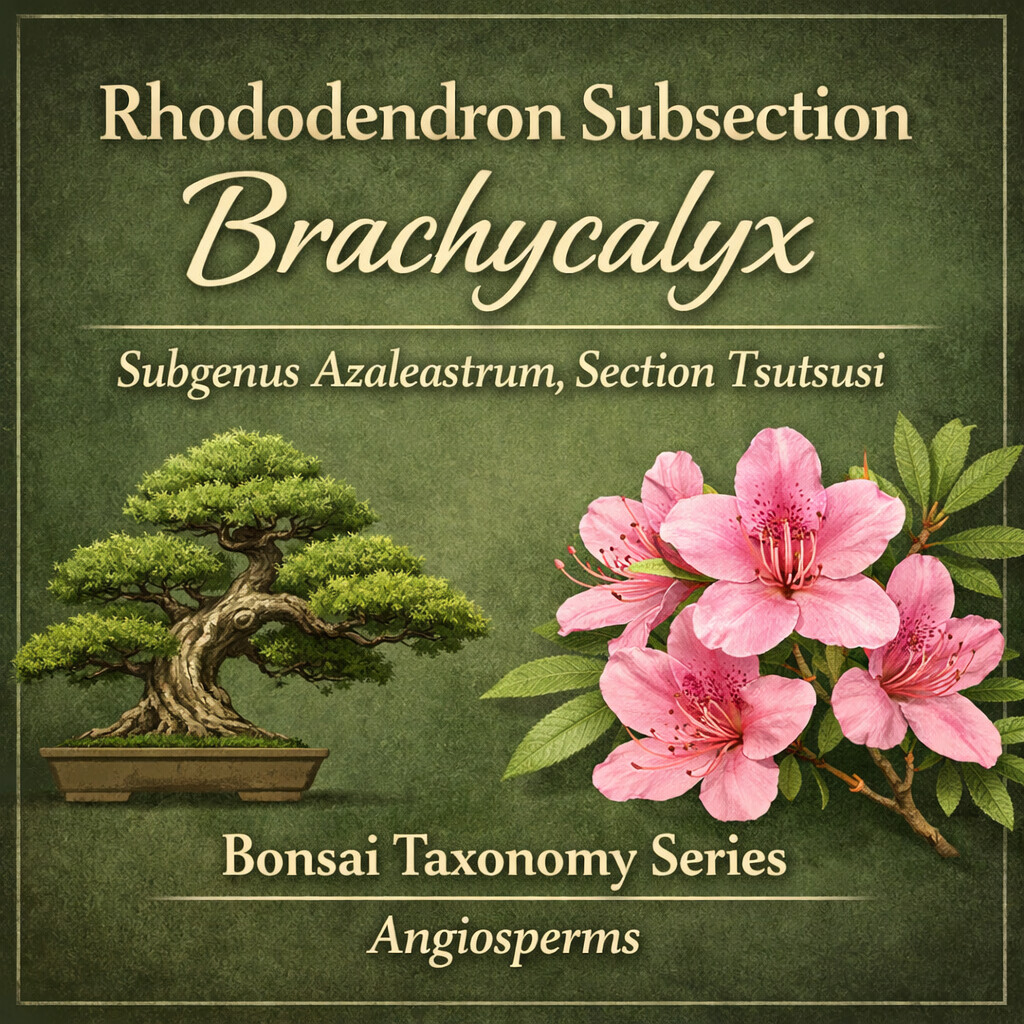
Rhododendron Subsection Brachycalyx represents a distinctive group of deciduous Asian azaleas within the genus Rhododendron. Although it sits inside Section Tsutsusi, a section more commonly associated with evergreen azaleas, Brachycalyx stands apart through its consistent deciduous habit, monomorphic leaf structure, and clearly defined morphological traits.
Native primarily to East Asia, including Japan, China, Taiwan, and Korea, species within Subsection Brachycalyx occupy a range of temperate to subtropical habitats, from mountain forests to rocky slopes. Their flowers often appear before or alongside the leaves, giving these azaleas strong seasonal character and ecological significance.
This taxonomy guide explores the defining features, classification history, geographic range, and horticultural relevance of Rhododendron Subsection Brachycalyx, clarifying its place within azalea taxonomy and its importance for collectors, botanists, and bonsai practitioners alike.
Table of Contents
Taxonomy
– Kingdom: Plantae (Plant Kingdom)
— Clade: Embryophytes (Land Plants)
— Clade: Polysporangiophytes (Multiple Sporangia)
—- Clade: Tracheophytes (Vascular Plants)
—– Superdivision: Spermatophytes (Seed Plants)
—— Clade: Angiospermae (Flowering Plants)
——- Division: Eudicots (True Dicotyledons)
——– Subdivision: Core Eudicots
——— Class: Superasterids (Advanced Flowering Plants)
———- Subclass: Asterids (Unified-Flowering Plants)
———– Order: Ericales (Heath and Tea)
———— Family: Ericaceae (Heath)
————- Subfamily: Ericoideae (Heath)
————– Tribe: Rhodoreae (Rhododendron)
————— Genus: Rhododendron
————— Subgenus: Azaleastrum (Evergreen Azalea Rhododendrons)
—————- Section: Tsutsusi (Evergreen Azaleas)
—————– Subsection: Brachycalyx (Deciduous Azaleas)
What is Rhododendron Subsection Brachycalyx?
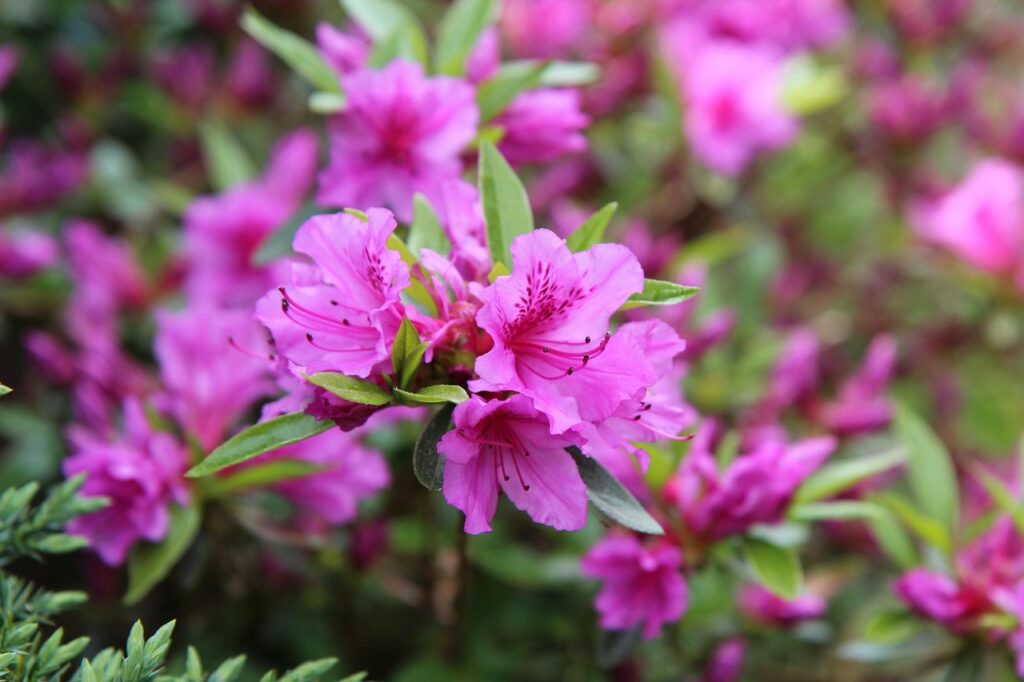
Rhododendron Subsection Brachycalyx is a small, well-defined group of deciduous Asian azaleas within the genus Rhododendron. It belongs to Subgenus Azaleastrum, Section Tsutsusi, but differs from the predominantly evergreen azaleas of that section by its fully deciduous habit and consistent leaf morphology.
The subsection includes roughly 15 species native mainly to Japan, with additional species found in China, Taiwan, and Korea. Plants in Subsection Brachycalyx are characterised by monomorphic leaves (all leaves of similar form), which are often pseudoverticillate and crowded near the shoot tips, with hairs typically confined to the leaf axils. Flowers usually appear before or together with the leaves, giving these azaleas strong seasonal visual impact.
Taxonomically, Subsection Brachycalyx is distinguished from Subsection Tsutsusi by its deciduous foliage and specific hair distribution, rather than the dimorphic leaves seen in evergreen Tsutsusi azaleas. It is recognised as a distinct and specialised lineage of Asian azaleas, valued for its botanical significance and, in select cases, its horticultural and bonsai potential.
Taxonomic placement within Subgenus Azaleastrum and Section Tsutsusi
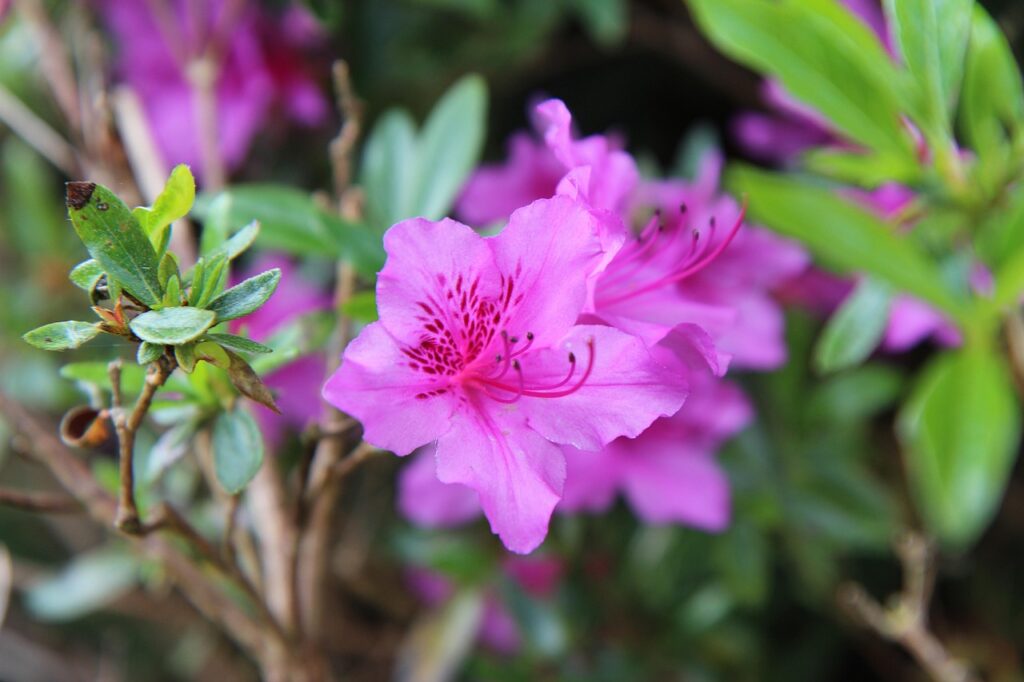
Rhododendron Subsection Brachycalyx is taxonomically placed within Subgenus Azaleastrum, a group that contains the true azaleas of the genus Rhododendron. This subgenus is defined by generally smaller leaves, distinctive floral structures, and growth habits that separate azaleas from the large-leaved evergreen rhododendrons of other subgenera.
Within Subgenus Azaleastrum, Brachycalyx belongs to Section Tsutsusi, a section best known for its evergreen azaleas. Despite this association, Subsection Brachycalyx represents a deciduous lineage within Tsutsusi, demonstrating that the section is more diverse in growth habit than is often assumed. Its placement reflects shared floral and structural characteristics with Tsutsusi azaleas, even though its foliage behaviour differs.
The recognition of Subsection Brachycalyx within Section Tsutsusi is based on a combination of morphological traits, particularly leaf uniformity, bud structure, and hair distribution. These shared features justify its inclusion in Tsutsusi, while its deciduous nature and monomorphic leaves clearly distinguish it as a separate and specialised subsection within the broader azalea taxonomy.
Historical classification and taxonomic development of Subsection Brachycalyx
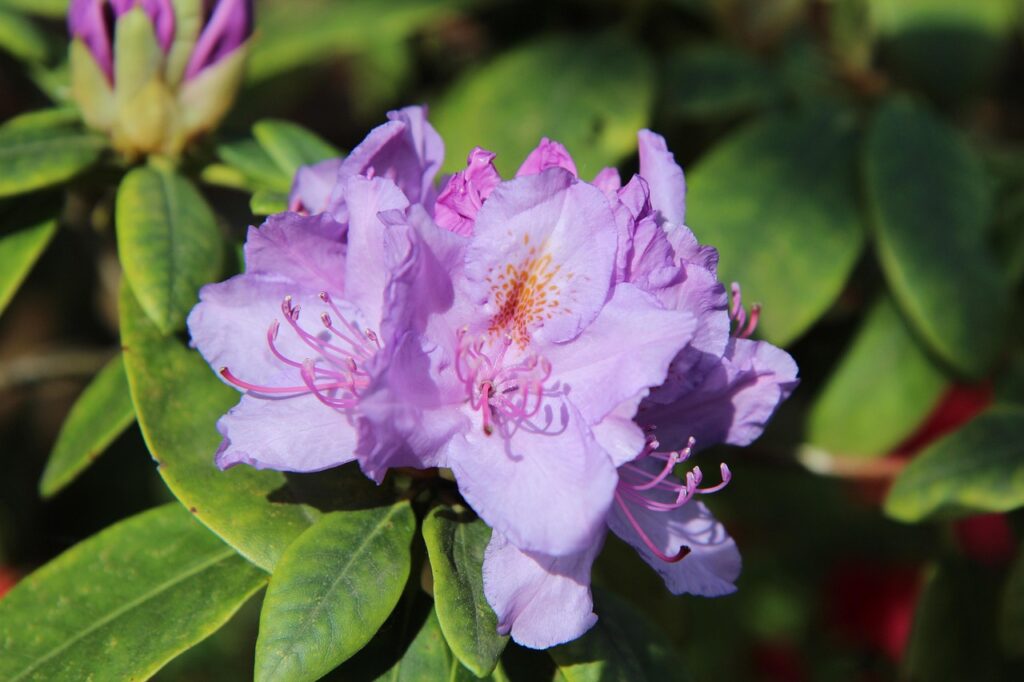
The taxonomic history of Rhododendron Subsection Brachycalyx reflects the gradual refinement of azalea classification as botanists worked to distinguish foliage habit, leaf morphology, and indumentum patterns within the genus Rhododendron. Rather than emerging from a single major revision, the subsection was recognised through accumulated observations of consistent structural traits among certain Asian azaleas.
Early botanical treatments placed many of these species broadly within Section Tsutsusi. Over time, the repeated appearance of deciduous foliage, uniform leaf form, and restricted hair placement led to the recognition of Subsection Brachycalyx as a coherent and specialised lineage within that section.
Early recognition and the role of Rhododendron farrerae
The origins of Subsection Brachycalyx are closely associated with Rhododendron farrerae, which later became the type species for the group. Botanists observed that this species differed markedly from typical evergreen Tsutsusi azaleas through its deciduous habit, monomorphic leaves, and limited indumentum.
These early observations suggested that Rhododendron farrerae and related species represented a distinct evolutionary grouping rather than anomalous members of Section Tsutsusi.
Formal description and nineteenth-century taxonomic treatment
Subsection Brachycalyx was formally described in the early nineteenth century, when Robert Sweet published the name in The British Flower Garden in 1831. This description helped stabilise the taxonomic concept and provided a clearer framework for distinguishing these deciduous azaleas from other Tsutsusi groups.
At the time, azalea classification relied primarily on morphological features such as leaf persistence, shape, and hair distribution. Brachycalyx consistently stood out due to its uniform deciduous foliage and clearly defined structural traits.
Refinement through East Asian botanical exploration
As botanical exploration expanded across Japan, China, Taiwan, and Korea, additional species fitting the Brachycalyx profile were identified and described. Japanese botanists in particular contributed significantly to clarifying species limits and documenting regional variation within the subsection.
These discoveries reinforced the view that Subsection Brachycalyx represented a geographically and morphologically coherent group rather than an isolated taxonomic curiosity.
Modern taxonomic consensus and current status
In modern classifications, Subsection Brachycalyx is widely accepted as a valid and distinct subsection within Section Tsutsusi. Contemporary morphological studies and phylogenetic research support its separation based on deciduous habit, monomorphic leaf structure, and restricted hair distribution.
Today, Subsection Brachycalyx is recognised as a specialised lineage of Asian azaleas, contributing important insight into the diversity and evolutionary history of Section Tsutsusi.
Defining morphological characteristics of Subsection Brachycalyx azaleas
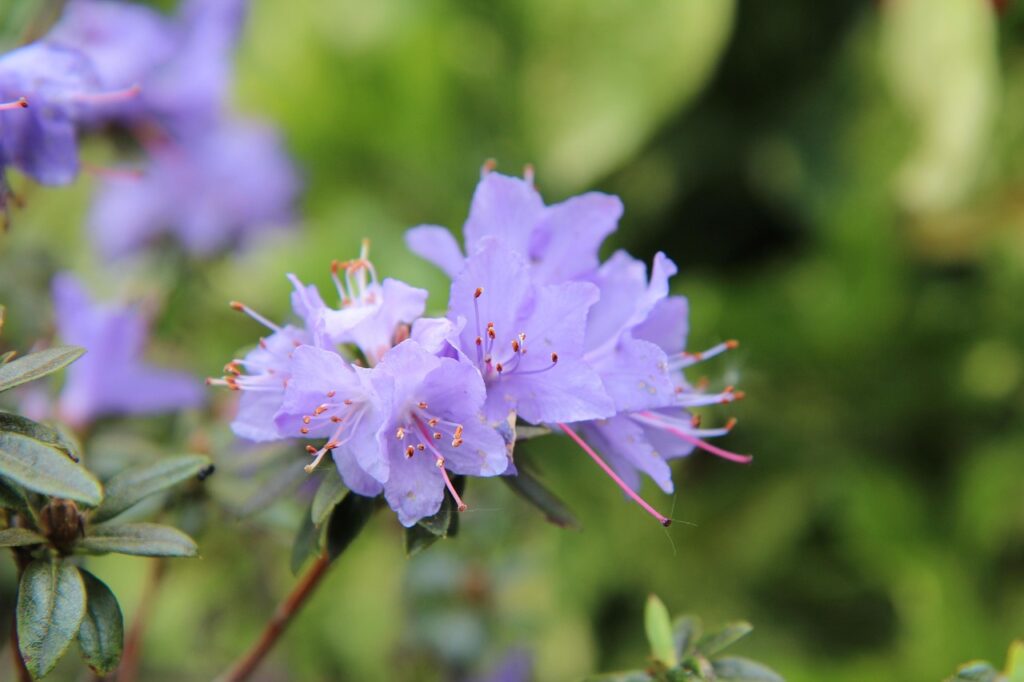
Rhododendron Subsection Brachycalyx is defined by a combination of morphological traits that clearly separate it from other azalea groups within Section Tsutsusi. These characteristics are expressed consistently across the subsection and are especially evident in leaf structure, growth habit, and indumentum patterns. Together, they support the recognition of Brachycalyx as a distinct and coherent taxonomic unit.
Although floral features link Brachycalyx to other Tsutsusi azaleas, its vegetative traits provide the most reliable diagnostic characters.
Deciduous growth habit and seasonal behaviour
All members of Subsection Brachycalyx are deciduous azaleas, shedding their leaves annually. This deciduous habit contrasts with the predominantly evergreen nature of most Tsutsusi azaleas and gives Brachycalyx species strong seasonal expression.
Leaf emergence often coincides with or follows flowering, resulting in a brief period where flowers are displayed on largely bare branches. This growth rhythm influences both the ecological strategy and visual character of the plants.
Leaf morphology and arrangement
Leaves in Subsection Brachycalyx are monomorphic, meaning all leaves on a plant are of similar form and size throughout the growing season. They are typically rhombic to elliptic in shape and are often pseudoverticillate, appearing crowded near the shoot apex.
This uniformity in leaf structure distinguishes Brachycalyx from Subsection Tsutsusi, where dimorphic leaves are common and seasonal leaf forms differ markedly.
Indumentum and hair distribution
One of the most diagnostic features of Subsection Brachycalyx is its restricted indumentum. Hairs are usually confined to the leaf axils, with leaf surfaces otherwise remaining relatively glabrous.
This limited hair distribution contrasts with other azalea groups that display more extensive pubescence on leaves, stems, or buds, and it provides an important morphological marker for identifying Brachycalyx species.
Shoot structure and bud characteristics
Shoots in Subsection Brachycalyx are generally slender, with buds formed near the shoot tips where leaves are densely clustered. Bud scales are modest in size and align with the overall compact structure of the subsection.
The combination of slender shoots, crowded apical leaves, and restrained bud morphology contributes to the refined and often delicate appearance characteristic of Brachycalyx azaleas.
Leaf structure, hair distribution, and diagnostic traits
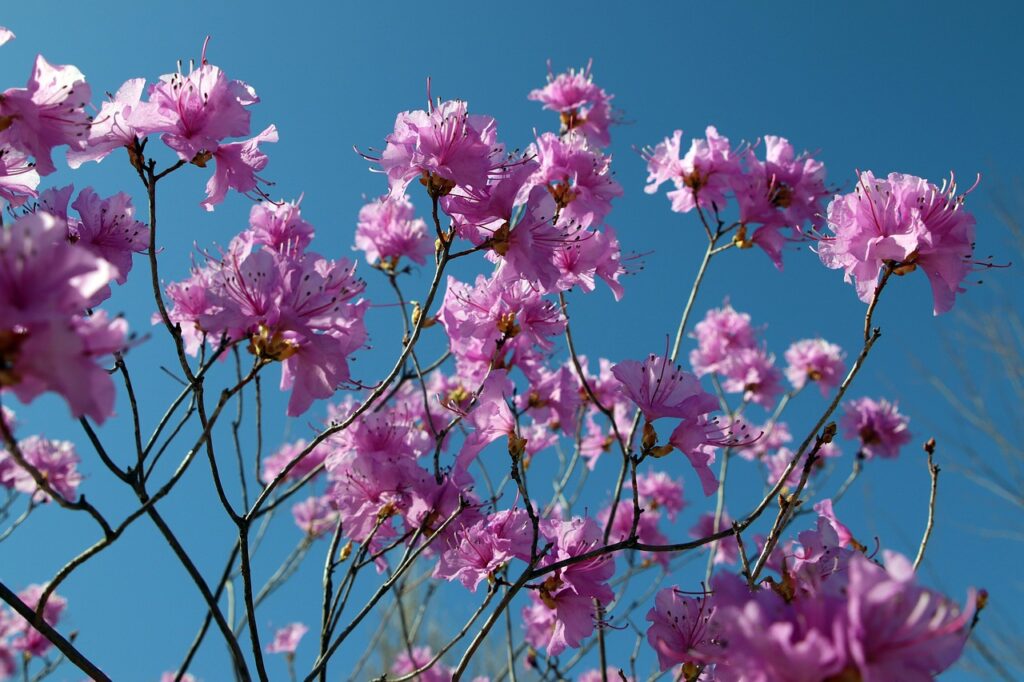
Leaf morphology provides some of the most reliable characters for identifying Rhododendron Subsection Brachycalyx and distinguishing it from other azalea groups within Section Tsutsusi. The subsection shows a high degree of consistency in leaf form, surface texture, and indumentum, making vegetative traits particularly valuable for diagnostic purposes.
These features remain stable across species and throughout the growing season, reinforcing the taxonomic coherence of the group.
Monomorphic leaf form and shape
Leaves in Subsection Brachycalyx are monomorphic, with a uniform shape and size across each plant. They are typically rhombic to elliptic, sometimes slightly ovate, and lack the seasonal variation seen in dimorphic-leaved azaleas.
This consistent leaf form contrasts strongly with Subsection Tsutsusi, where summer and winter leaves may differ in size, thickness, and persistence. In Brachycalyx, the absence of such dimorphism is a key identifying trait.
Pseudoverticillate leaf arrangement
A characteristic feature of Subsection Brachycalyx is the pseudoverticillate arrangement of leaves. Leaves are often crowded near the ends of shoots, giving the appearance of a whorled arrangement even though they are not truly verticillate.
This clustering at the shoot apex contributes to the compact visual structure of the plants and provides an additional vegetative cue when distinguishing Brachycalyx species from other azaleas.
Hair distribution and indumentum patterns
Indumentum in Subsection Brachycalyx is highly restricted. Hairs are usually confined to the leaf axils, with leaf blades, margins, and stems remaining largely glabrous.
This limited hair distribution is one of the most diagnostic traits of the subsection. It differentiates Brachycalyx from other azalea groups that exhibit more extensive pubescence on leaf surfaces, petioles, or young shoots.
Diagnostic value in taxonomic identification
The combination of monomorphic leaves, pseudoverticillate arrangement, and axil-confined hairs provides a dependable set of characters for identifying Subsection Brachycalyx, even outside the flowering period.
These vegetative traits are especially valuable in field identification and herbarium work, where floral material may be absent. Together, they form a clear diagnostic framework that supports the continued recognition of Subsection Brachycalyx as a distinct taxonomic unit within the Asian azaleas.
Flowering behaviour and reproductive features
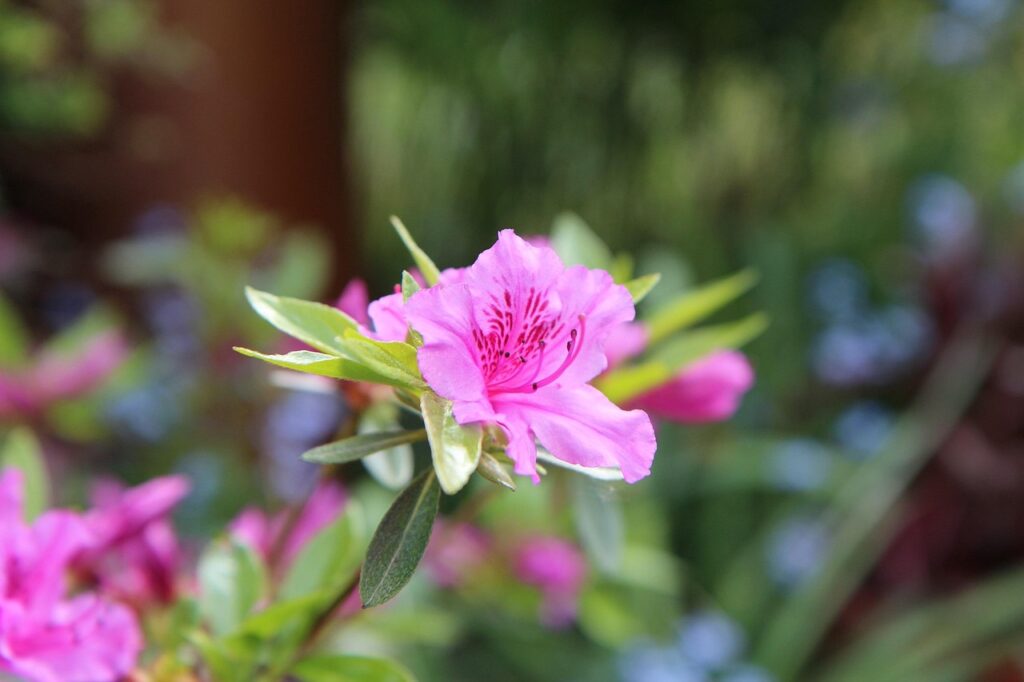
The flowering characteristics of Rhododendron Subsection Brachycalyx play an important role in defining the visual and ecological identity of the group. While vegetative traits are the primary taxonomic markers, reproductive features reinforce the subsection’s placement within Section Tsutsusi and highlight its seasonal distinctiveness among Asian azaleas.
Flowering in Brachycalyx species is closely tied to their deciduous growth cycle and native temperate habitats.
Timing of flowering in relation to leaf emergence
Species within Subsection Brachycalyx typically flower before or simultaneously with leaf emergence. In many cases, blooms appear on sparsely foliated or nearly bare branches, making the flowers especially conspicuous during early spring.
This flowering timing enhances pollinator visibility and distinguishes Brachycalyx azaleas from evergreen Tsutsusi species, where flowers often appear against a backdrop of persistent foliage.
Floral structure and form
Flowers of Subsection Brachycalyx conform broadly to the azalea floral type, with funnel-shaped to broadly tubular corollas. They are usually borne singly or in small clusters near the shoot tips, aligning with the subsection’s compact growth habit.
Corolla colours vary among species but commonly include shades of white, pale pink, rose, or soft purplish tones. Floral proportions are generally balanced and restrained, reflecting the overall structural uniformity of the subsection.
Reproductive organs and pollination traits
The reproductive structures of Brachycalyx azaleas show typical Tsutsusi characteristics, including well-developed stamens and a single style extending beyond or level with the corolla tube. These features support efficient insect pollination, particularly by early-season pollinators active in temperate East Asian forests.
The synchronisation of flowering across individuals within populations further enhances reproductive success by concentrating pollinator activity during a limited seasonal window.
Fruit development and seed production
Following pollination, Subsection Brachycalyx produces dry capsules characteristic of azaleas, which mature as the growing season progresses. Seeds are released later in the season, coinciding with favourable conditions for dispersal and germination.
This reproductive strategy aligns with the deciduous life cycle of the subsection, allowing plants to complete seed development before leaf drop and winter dormancy.
Natural habitat and geological distribution
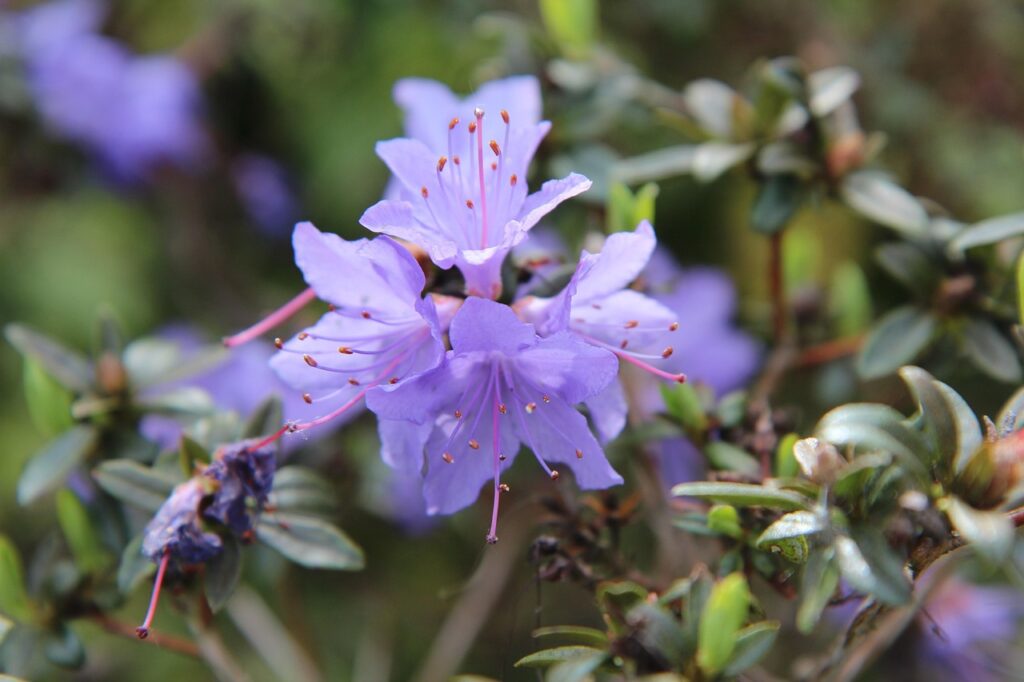
Rhododendron Subsection Brachycalyx occupies a range of natural habitats that reflect its adaptation to temperate and subtropical environments in East Asia. While individual species vary in their precise ecological preferences, the subsection as a whole is associated with seasonally dynamic ecosystems where temperature, moisture, and light availability fluctuate throughout the year.
These ecological conditions have shaped the deciduous habit and morphological traits that define Brachycalyx azaleas.
Habitat types and environmental settings
Species of Subsection Brachycalyx are commonly found in mountain forests, woodland margins, and rocky or sloping terrain. They often grow in areas with good air circulation and well-drained soils, including forested hillsides and upland valleys.
Many species occur in semi-open habitats where they receive dappled light rather than full shade, particularly during the growing season after canopy leaf-out.
Soil preferences and moisture conditions
Brachycalyx azaleas typically favour acidic, humus-rich soils derived from forest litter or weathered rock. These soils are usually well-drained yet capable of retaining sufficient moisture to support active growth during spring and early summer.
Seasonal moisture availability plays an important ecological role. Plants benefit from regular rainfall during flowering and leaf expansion, followed by gradually drier conditions as the growing season progresses.
Climatic adaptation and seasonal cycles
The deciduous nature of Subsection Brachycalyx reflects adaptation to distinct seasonal cycles, including cold winters or dry periods that would be stressful for evergreen foliage. Leaf drop reduces water loss and frost damage, allowing plants to persist in environments with pronounced seasonal change.
Flowering before or alongside leaf emergence takes advantage of early-season light and reduced canopy competition, improving reproductive efficiency.
Ecological interactions and role within plant communities
Within their native habitats, Brachycalyx azaleas contribute to understory and mid-story diversity in forest ecosystems. Their early flowering provides an important nectar source for insects active at the beginning of the growing season.
By occupying transitional ecological niches between open slopes and forest interiors, these azaleas play a role in stabilising soils, supporting pollinators, and enhancing structural diversity within their ecosystems.
Geographic distribution in East Asia
Rhododendron Subsection Brachycalyx is geographically restricted to East Asia, with its greatest species diversity occurring in Japan. The subsection occupies a discontinuous but well-defined regional range shaped by island systems, mountain chains, and climatic gradients across the western Pacific rim.
Japan represents the primary centre of diversity for Subsection Brachycalyx, with multiple species endemic to specific islands or regions. From there, the subsection extends westward and southward into parts of mainland East Asia, where species occur more sparsely and are often geographically isolated.
The distribution of Subsection Brachycalyx reflects historical biogeographic processes such as island formation, glacial cycles, and regional climate differentiation. Many species are associated with limited ranges rather than broad continental distributions, contributing to their taxonomic and conservation significance.
Key regions where Subsection Brachycalyx species are found include:
- Japan, particularly Honshu, Kyushu, Shikoku, and the Nansei Islands
- China, mainly in southern and central regions
- Taiwan, where select species extend into subtropical mountain habitats
- Korea, at the northern edge of the subsection’s range
Across this range, species often show strong local adaptation, with populations confined to specific mountain systems or ecological zones. This pattern of regional endemism highlights the evolutionary distinctiveness of Subsection Brachycalyx within Asian azaleas and helps explain the morphological consistency observed across the group.
Species diversity and notable species within Subsection Brachycalyx
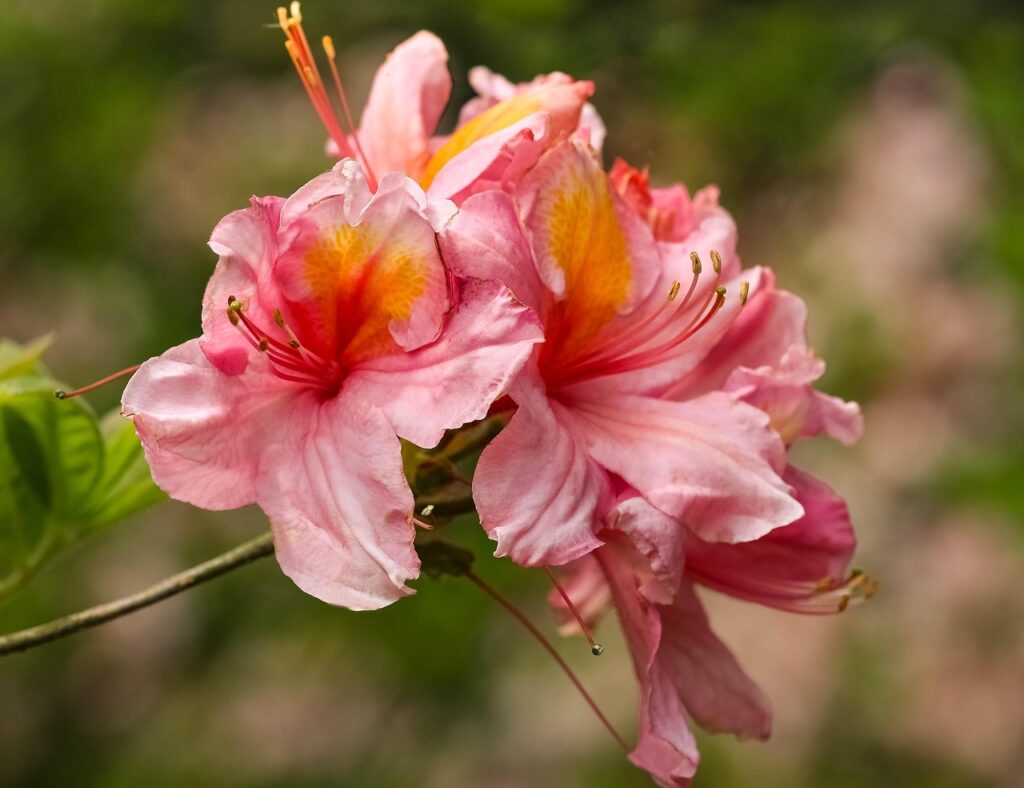
Rhododendron Subsection Brachycalyx is a relatively small and tightly defined group, consisting of approximately fifteen recognised species. Unlike larger azalea subsections with broad species radiation, Brachycalyx shows limited but coherent diversity, with most species concentrated in Japan and a smaller number extending into China, Taiwan, and Korea.
This modest species count makes the subsection easier to define taxonomically, as its members share a consistent set of vegetative and reproductive traits. Many species are geographically localised, often restricted to particular islands, mountain ranges, or climatic zones.
Recognised species within Subsection Brachycalyx include:
- Rhododendron amagianum
- Rhododendron dilatatum
- Rhododendron farrerae (type species)
- Rhododendron hidakanum
- Rhododendron kiyosumense
- Rhododendron lagopus
- Rhododendron mariesii
- Rhododendron mayebarae
- Rhododendron nudipes
- Rhododendron reticulatum
- Rhododendron sanctum
- Rhododendron tashiroi
- Rhododendron viscistylum
- Rhododendron wadanum
- Rhododendron weyrichii
Among these, Rhododendron farrerae holds particular taxonomic importance as the type species of the subsection. It is also one of the best-documented members, making it a natural focal point for further horticultural and bonsai exploration.
Other notable species, such as Rhododendron reticulatum and Rhododendron wadanum, are valued in regional horticulture for their seasonal flowering display and refined growth habits, though they remain less commonly cultivated outside their native range.
Are Subsection Brachycalyx species viable for bonsai?
Subsection Brachycalyx presents limited but genuine potential for bonsai cultivation, particularly when compared to evergreen Tsutsusi azaleas. The deciduous habit, fine branching, and restrained leaf size of certain species align well with bonsai principles, especially for seasonal and naturalistic designs.
That said, not all species within the subsection are equally suitable. Some exhibit coarse growth or strong apical dominance that can be challenging to manage in containers. Careful species selection is therefore essential.
Rhododendron farrerae stands out as the most promising candidate for bonsai within Subsection Brachycalyx. Its balanced growth, refined leaf structure, and strong seasonal character make it well-suited for further evaluation and cultivation. For this reason, Rhododendron farrerae has been selected as the primary species for a dedicated bonsai care sheet within the Budding Backyard Bonsaist taxonomy series.
Subsection Brachycalyx in horticulture and bonsai contexts
Rhododendron Subsection Brachycalyx occupies a niche position in horticulture, valued more for its botanical interest and seasonal character than for widespread ornamental use. While it lacks the commercial prominence of evergreen Tsutsusi azaleas, the subsection offers distinctive qualities, particularly its deciduous habit and early flowering display.
In garden settings, Brachycalyx species are best suited to temperate climates that mirror their native environments. Their preference for acidic, well-drained soils and seasonal moisture patterns aligns closely with traditional azalea cultivation, although their deciduous nature requires slightly different expectations regarding year-round visual impact.
From a bonsai perspective, Subsection Brachycalyx represents a specialist interest rather than a mainstream choice. Its species reward careful cultivation with fine branching, seasonal transitions, and elegant spring flowering, but they demand an understanding of deciduous azalea behaviour. This makes them particularly appealing to experienced growers seeking diversity beyond evergreen azaleas.
Among the subsection, Rhododendron farrerae stands out as the most practical and promising candidate for bonsai cultivation. Its balanced growth, manageable leaf size, and historical significance within the subsection make it an ideal focus for further study and refinement.
As a whole, Subsection Brachycalyx bridges botanical taxonomy and applied cultivation, offering insight into the diversity of Asian azaleas while providing selective opportunities for horticulture and bonsai. Its inclusion in the Budding Backyard Bonsaist taxonomy series helps clarify its role within azalea classification and lays the groundwork for species-specific care guidance, beginning with Rhododendron farrerae.