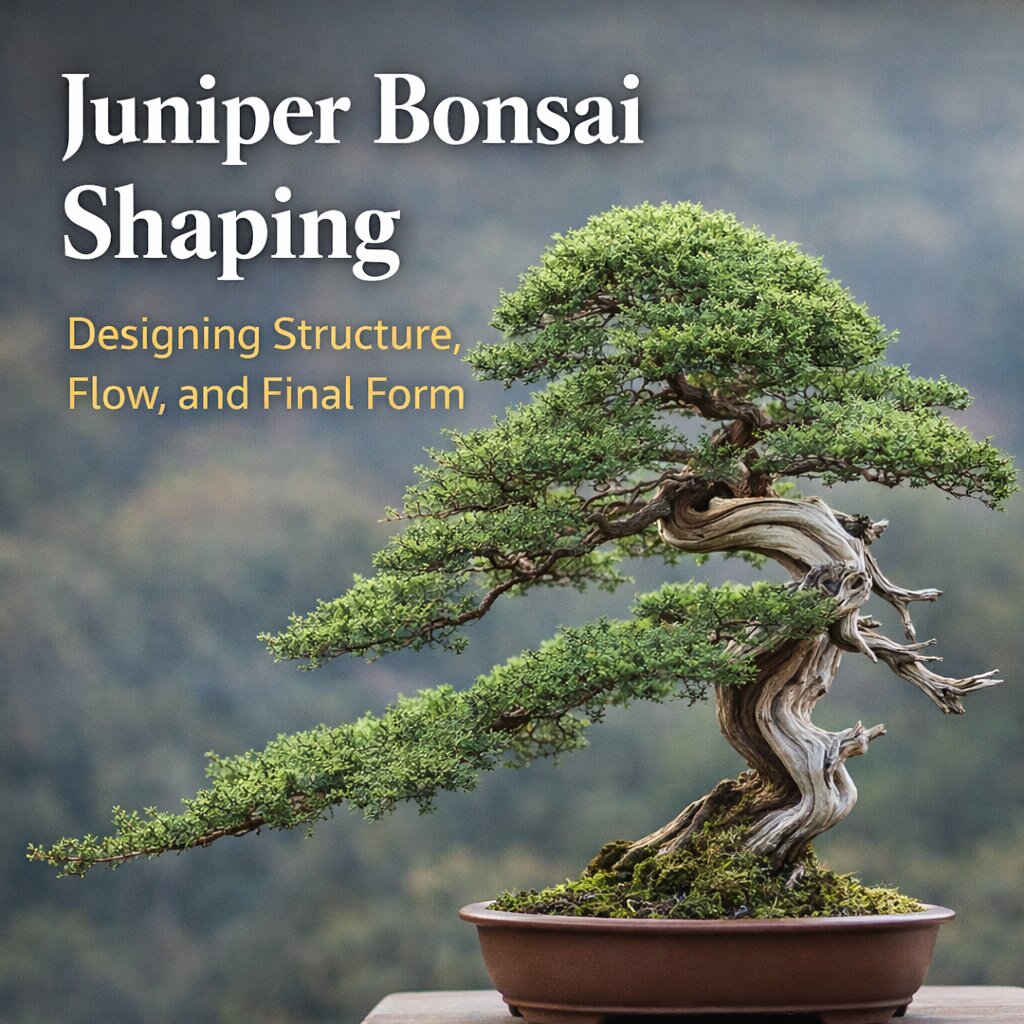
Juniper bonsai shaping is the art of guiding the tree’s overall structure toward a chosen design or style. Unlike pruning, which focuses on removing growth for health or density control, shaping is about long-term vision. It considers trunk movement, branch placement, negative space, balance, and the final silhouette of the tree.
When shaping a juniper bonsai, you are not simply trimming foliage. You are designing a living sculpture. The goal is to work with the tree’s natural characteristics while gradually refining it into a cohesive and expressive form.
Understanding the design before shaping
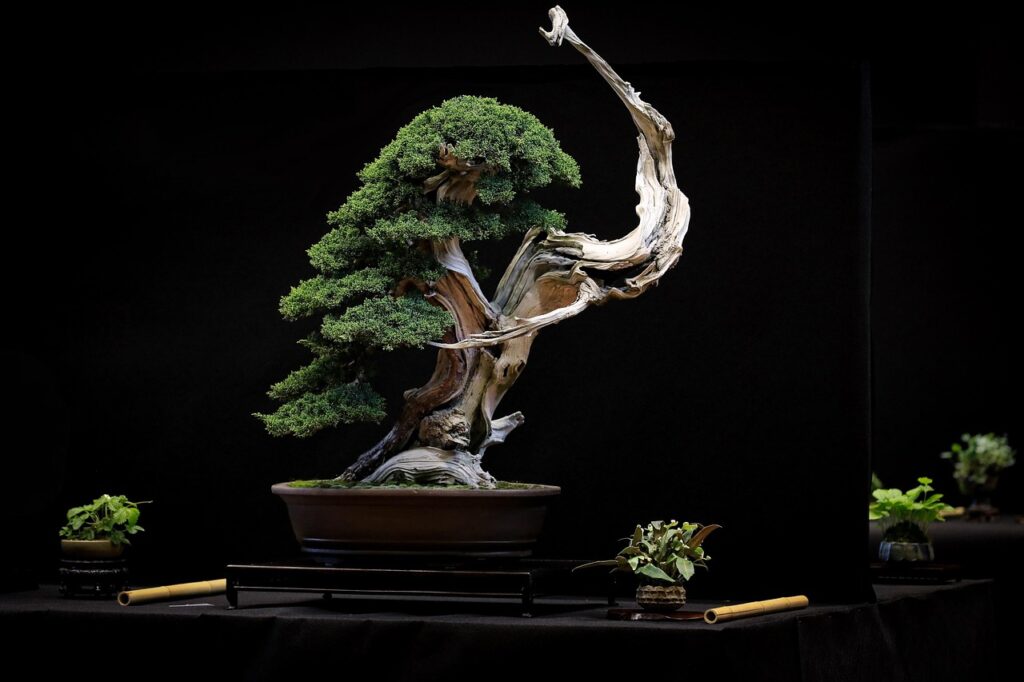
Before any juniper bonsai shaping begins, the most important step is observation. Junipers naturally grow in dynamic, flowing patterns. Their flexible branches and textured foliage pads make them ideal candidates for dramatic movement and layered structure.
Study the trunk line first. The trunk determines the story of the tree. Does it lean? Twist? Cascade? The direction and character of the trunk will guide your shaping decisions. Forcing a tree into a style that contradicts its natural movement often results in an artificial appearance.
Visualise the final silhouette. Juniper bonsai shaping works best when you plan three to five years ahead rather than reacting to the current growth alone.
Primary structure and branch positioning
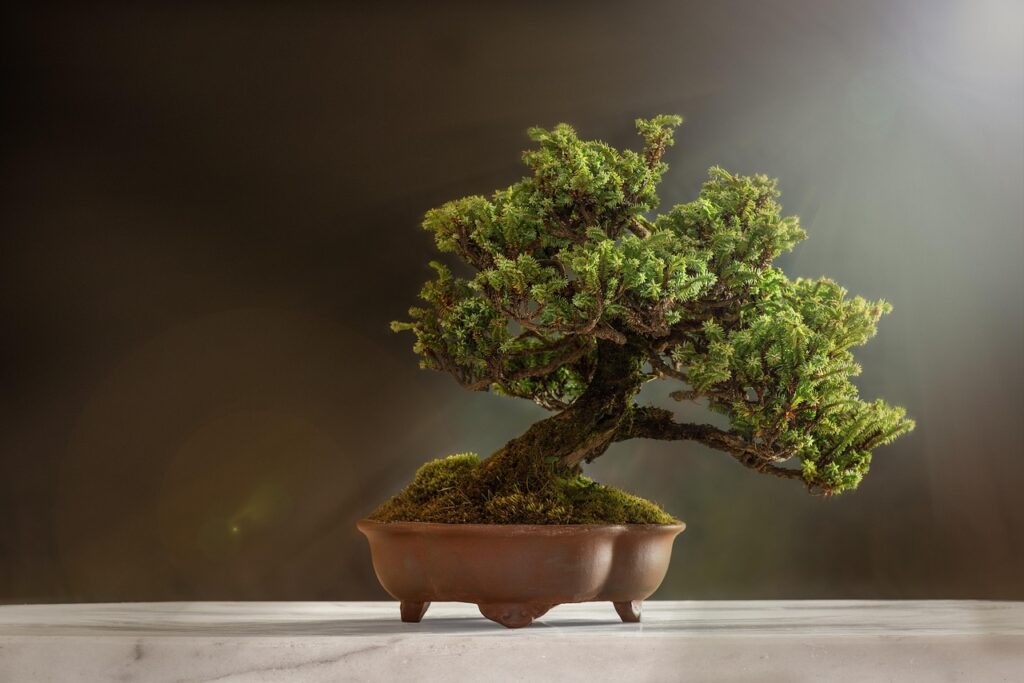
Juniper bonsai shaping focuses heavily on primary branches. These are the structural limbs that define the tree’s framework. Once positioned correctly, secondary growth can later be refined for density and detail.
In juniper bonsai shaping, you should consider:
- The first branch placement and its visual weight
- Alternating branch positioning for balance
- Creating depth through rear branches
- Avoiding symmetrical or evenly spaced growth
- Establishing open negative space beneath branch pads
Junipers respond exceptionally well to wiring. Wiring allows you to gently reposition branches into flowing curves that enhance movement and natural realism. This is a shaping tool, not a pruning one.
Remember that shaping aims to create harmony between trunk movement and branch direction.
Creating foliage pads and layered depth
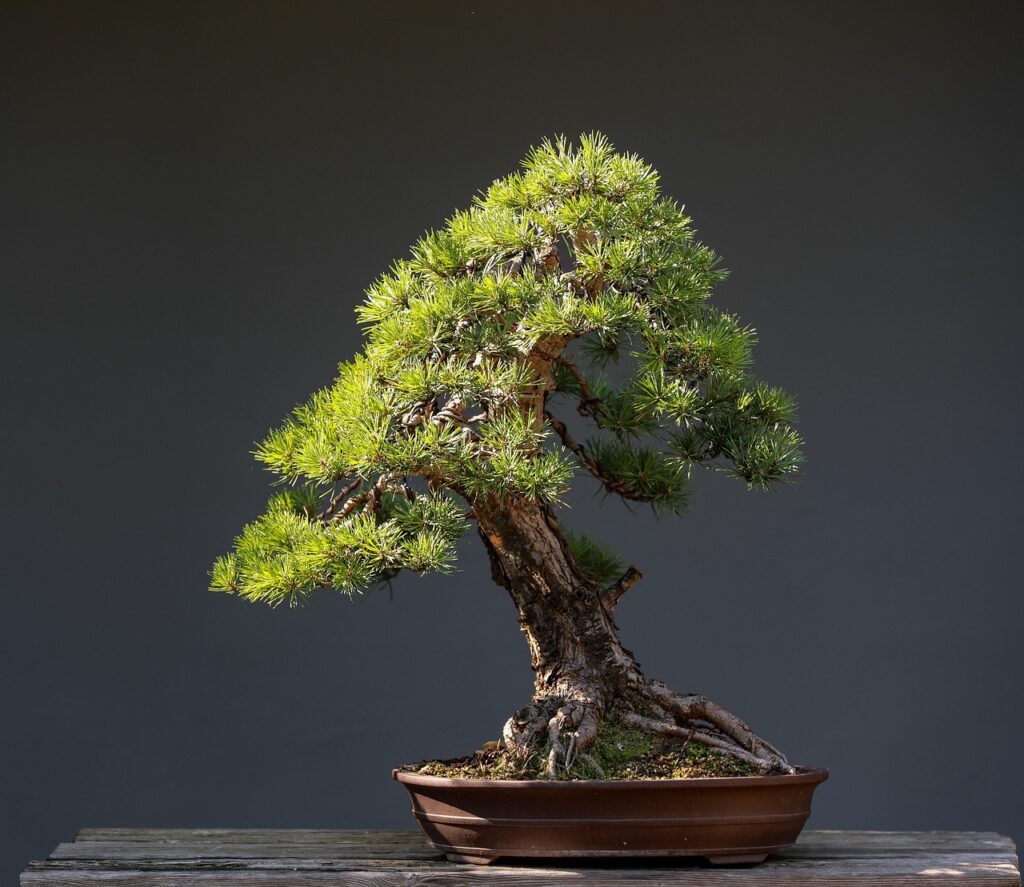
Junipers are famous for their layered foliage pads. Shaping involves arranging branches so that these pads form distinct tiers, allowing light and air to pass through while maintaining visual depth.
Instead of focusing on cutting back foliage, shaping involves repositioning branches to form horizontal planes or subtle downward angles. This creates the impression of age and weight.
Each foliage pad should contribute to the overall silhouette. Pads should not stack directly on top of each other without visual separation. Depth is achieved when the viewer can see through the tree from certain angles.
Juniper bonsai shaping is often about subtraction through repositioning rather than cutting.
Working with different bonsai styles
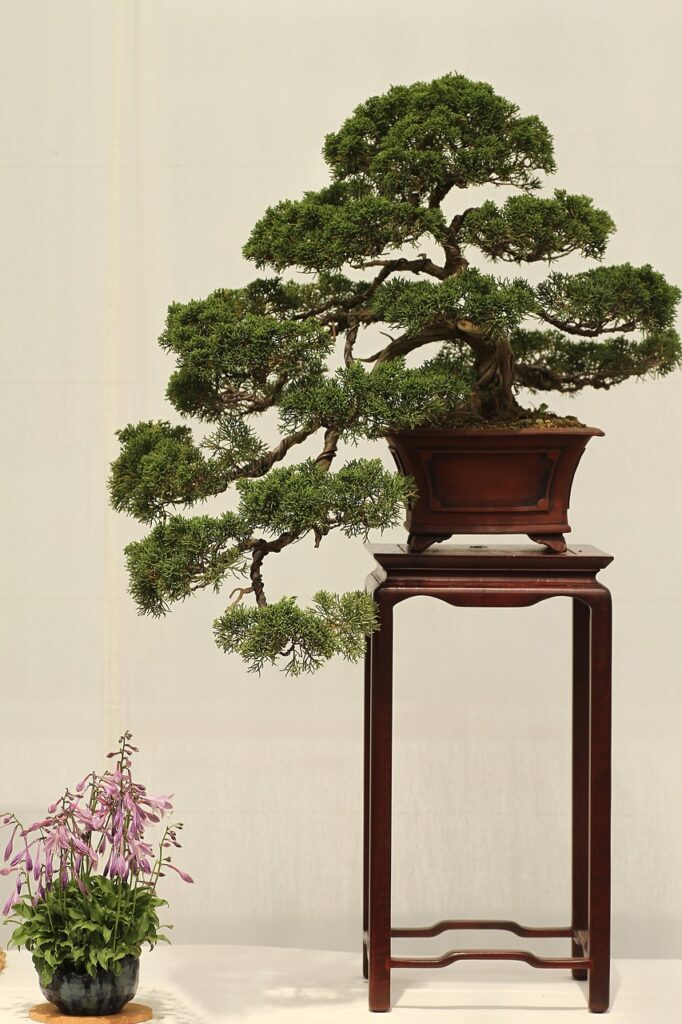
Junipers are versatile and can be shaped into several classic bonsai styles. The chosen style influences every shaping decision.
Formal upright styles require balanced taper and structured branch placement. Informal upright forms allow for natural curves and asymmetry. Cascade and semi-cascade styles emphasise dramatic downward flow, often inspired by trees growing on cliffs.
Windswept styles suit junipers particularly well due to their flexible branches and textured foliage. In these designs, shaping focuses on directional consistency, with all growth appearing influenced by a prevailing force.
Choosing the correct style before shaping prevents conflicting structural decisions later.
Long-term juniper bonsai shaping strategy
Juniper bonsai shaping is not completed in a single session. It is a gradual process that evolves over seasons. After wiring and repositioning, the tree must be monitored as branches set into place.
Over time, minor adjustments refine the structure while maintaining the intended design direction. Rushing the shaping process can stress the tree and weaken its health.
Patience is essential. The most compelling juniper bonsai are shaped over years, not weeks.
Juniper bonsai shaping is about vision. It is the thoughtful alignment of trunk, branches, and foliage into a cohesive design that reflects both natural growth and artistic intention. When approached with patience and clarity, shaping transforms a simple nursery plant into a mature, expressive bonsai masterpiece.
If you are unsure which style best suits your tree, explore our separate Juniper species bonsai care sheets. In each guide, we outline the bonsai styles that work best for that specific species, helping you shape with confidence rather than guesswork. Different junipers respond differently to structure and movement, so aligning your shaping strategy with the species’ natural growth habit makes a significant difference.