
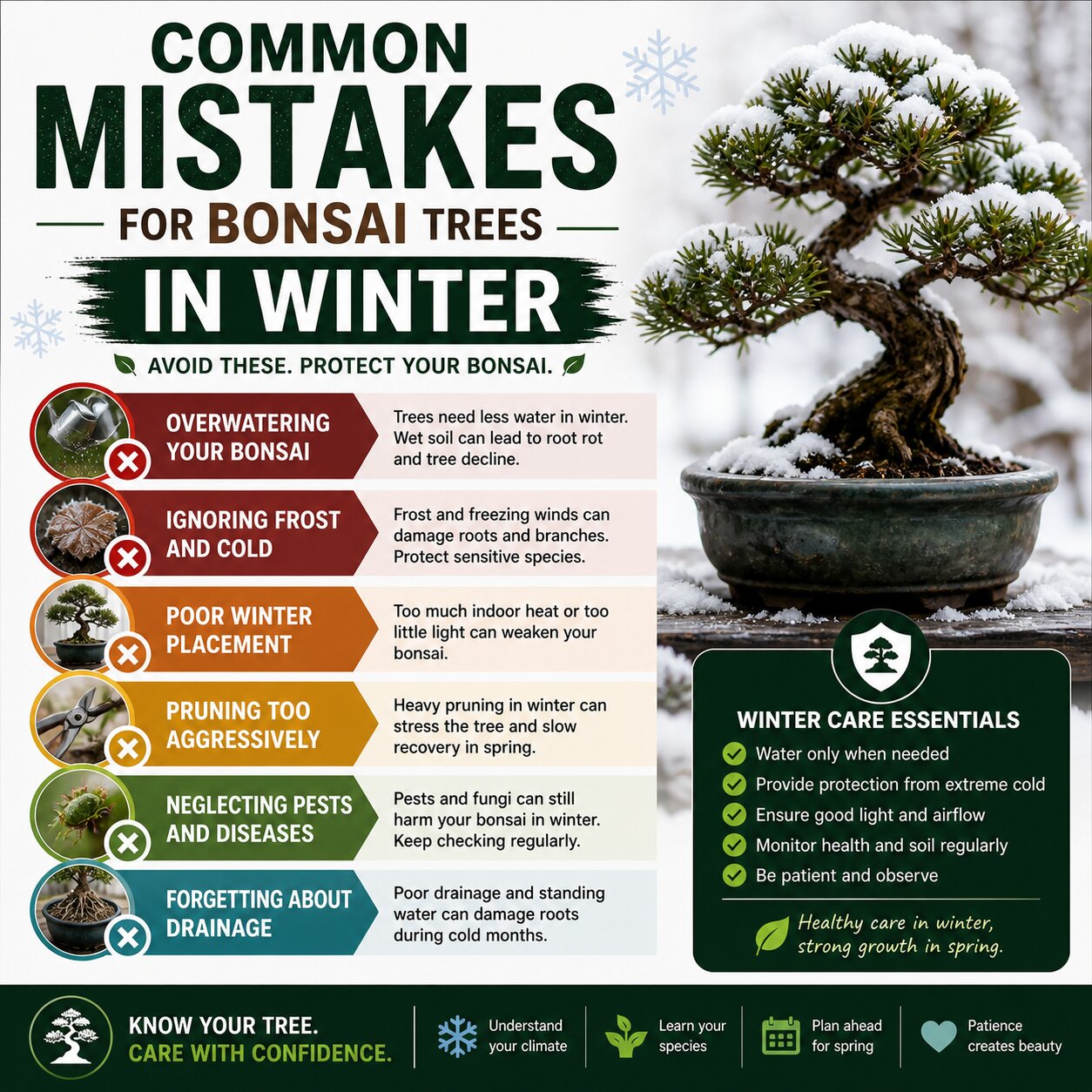
Winter can be one of the most challenging seasons for bonsai enthusiasts, especially for beginners who are still learning how different tree species respond to colder temperatures, rain, frost, reduced sunlight, and seasonal dormancy. While many bonsai trees are surprisingly resilient when cared for properly, simple mistakes during winter can quickly weaken or even kill a tree before spring arrives.
Understanding the common mistakes for bonsai trees in winter is essential for protecting your collection during the colder months. Many issues arise not because owners neglect their bonsai entirely, but because they unintentionally apply the wrong care routines during winter conditions. Overwatering, poor drainage, incorrect placement, and excessive pruning are just a few examples of problems that frequently affect bonsai trees during this time of year.
By recognising these common winter mistakes early, bonsai owners can create healthier conditions that support dormancy, protect root systems, and prepare their trees for strong spring growth.
Overwatering Bonsai Trees During Winter
One of the most common mistakes for bonsai trees in winter is overwatering. During colder months, many bonsai trees grow more slowly or enter dormancy, meaning they use far less water than they do during spring and summer.
Because evaporation rates are lower in winter, soil often stays wet for much longer. Beginners sometimes continue watering on the same schedule they used during warmer seasons, which can lead to waterlogged soil and root rot.
Instead of following fixed watering routines, bonsai owners should monitor soil moisture carefully before watering. The soil should be checked regularly, but only watered when necessary depending on the species, climate, and weather conditions.
Good drainage becomes especially important during rainy winter periods. Bonsai pots that hold excess moisture for too long can quickly create dangerous conditions for roots.
Ignoring Frost And Extreme Cold Protection
Not all bonsai trees respond to winter conditions in the same way. While some species require cold dormancy to remain healthy, others are highly sensitive to frost and freezing temperatures.
A common mistake is assuming every bonsai tree can tolerate outdoor winter exposure equally. Tropical and subtropical bonsai species often require protection during very cold nights, while temperate species may only need shelter from extreme frost or icy winds.
Roots are particularly vulnerable because bonsai containers expose them more directly to changing temperatures compared to trees growing naturally in the ground. Strong frost can freeze root systems much faster in shallow bonsai pots.
Some winter protection methods include:
- Moving sensitive trees into sheltered areas
- Using cold frames or greenhouses
- Elevating pots for drainage
- Adding mulch around pots
- Protecting trees from freezing winds
- Avoiding sudden temperature fluctuations
Proper winter protection depends heavily on local climate conditions and bonsai species.
Placing Bonsai Trees In Poor Winter Locations
Placement is another major factor when discussing common mistakes for bonsai trees in winter. Many bonsai owners move trees indoors without considering how reduced light, dry air, or poor ventilation may affect the plant.
Indoor heating systems can dry out bonsai trees rapidly while reducing humidity levels. At the same time, placing trees in dark areas with insufficient sunlight can weaken them significantly over winter.
Outdoor bonsai also require careful placement. Strong winter winds can dry out branches and roots even when temperatures remain relatively mild. Excessive rain exposure may create drainage problems or fungal issues.
Finding balanced winter locations with suitable light, airflow, and protection is essential for maintaining bonsai health throughout the season.
Pruning Too Aggressively In Winter
Heavy pruning during winter can place unnecessary stress on bonsai trees. While some maintenance pruning may still be appropriate depending on the species, major structural pruning is often better performed during other growth periods.
Aggressive winter pruning can expose trees to additional stress while slowing recovery during dormancy. Open cuts may also heal more slowly in cold conditions, increasing vulnerability to disease or dieback.
Many bonsai owners use winter instead as a planning season for studying branch structure, wiring goals, and future styling decisions rather than performing extensive cutting immediately.
Species-specific timing remains extremely important because some trees tolerate winter work better than others.
Neglecting Winter Pest And Disease Monitoring
Another common mistake for bonsai trees in winter is assuming pests and diseases disappear entirely during colder months. While some insect activity decreases in winter, fungal problems and certain pests can still affect weakened trees.
Excess moisture, poor airflow, and crowded winter storage conditions may increase the risk of mould, mildew, root problems, or hidden infestations.
Bonsai owners should continue inspecting their trees regularly throughout winter, even during dormancy periods. Early detection often prevents small problems from becoming serious issues before spring arrives.
Healthy winter care habits help strengthen bonsai trees naturally against stress and disease pressure.
Preparing Bonsai Trees For A Strong Spring
Avoiding the common mistakes for bonsai trees in winter can make a major difference in long-term tree health and development. Winter should not simply be viewed as a dormant waiting period, but rather as an important stage in the bonsai care cycle that prepares trees for vigorous spring growth.
Careful watering, proper placement, frost protection, drainage management, and species-specific care all contribute to healthier bonsai collections during colder months. Bonsai enthusiasts who understand how their trees respond to winter conditions are far more likely to maintain strong root systems, healthy branches, and balanced growth year after year.
With patience and observation, winter can become a valuable learning season that strengthens both bonsai trees and the skills of the people caring for them.