
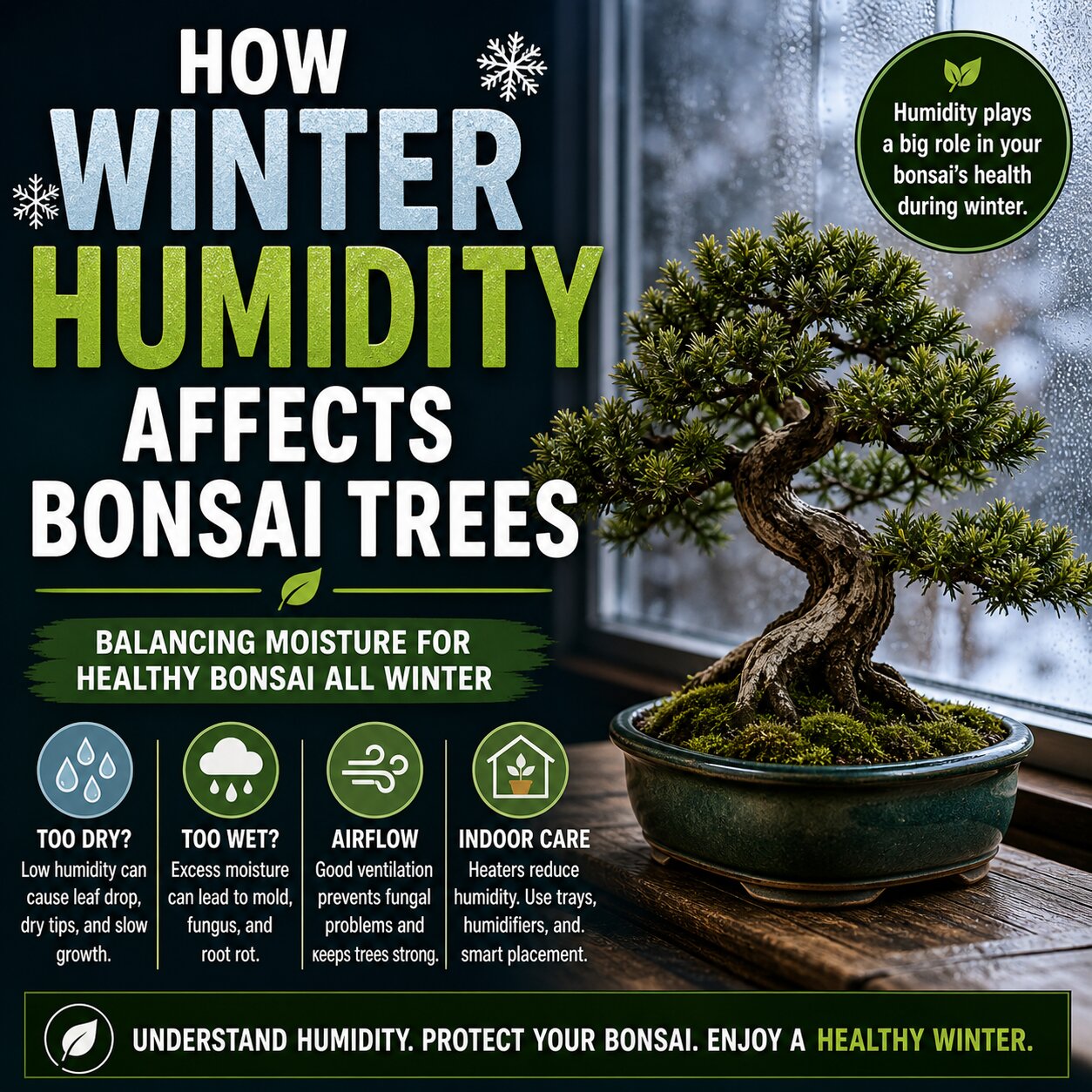
Winter creates several challenges for bonsai trees, especially when humidity levels begin changing due to colder weather, indoor heating, rainfall patterns, and seasonal airflow. Many bonsai owners focus mainly on temperature during winter, but humidity can play an equally important role in tree health and survival.
Some bonsai species thrive in higher humidity environments, while others may struggle when winter air becomes too dry or excessively damp. Understanding how winter humidity affects bonsai trees helps owners make better decisions regarding placement, watering, airflow, and protection.
Whether your bonsai trees remain outdoors or move indoors during colder months, humidity management becomes an important part of successful winter bonsai care.
Why humidity matters for bonsai trees in winter
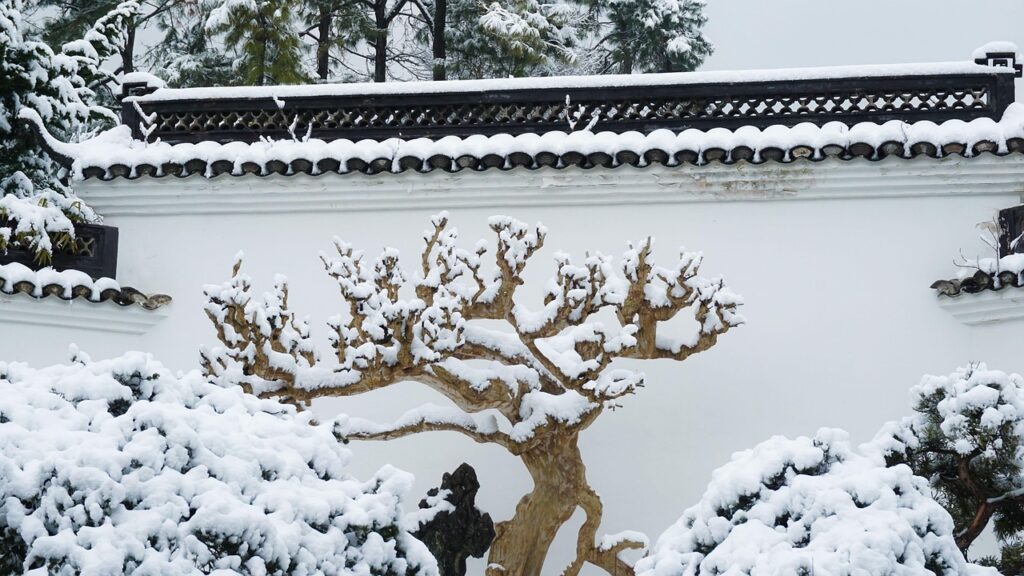
Humidity affects how much moisture remains in the air surrounding your bonsai tree. During winter, humidity levels can fluctuate dramatically depending on climate conditions and indoor heating systems.
Dry winter air can cause bonsai trees to lose moisture more quickly through their leaves and branches. This is especially problematic for tropical and subtropical species that naturally prefer humid environments.
Excessively damp conditions can also become dangerous. Poor airflow combined with high winter humidity may encourage fungal growth, mould, mildew, and root-related problems.
Outdoor bonsai trees generally adapt better to natural humidity changes, but indoor bonsai trees often experience sudden environmental shifts once heaters and fireplaces begin drying out the air.
Understanding how winter humidity affects bonsai trees allows owners to create a more balanced growing environment during the colder season.
Common humidity problems during winter
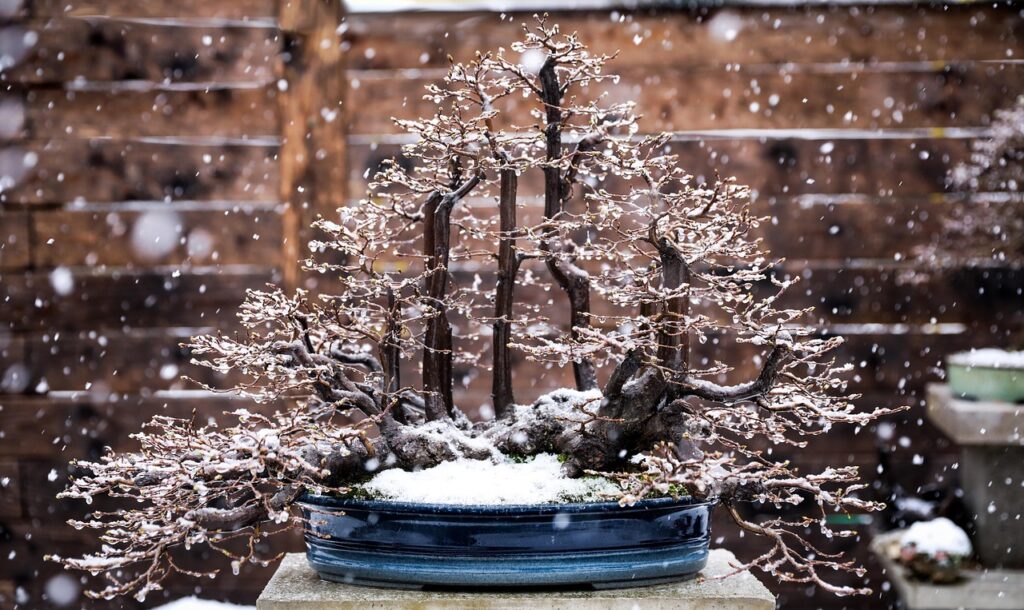
Different bonsai species react differently to winter humidity conditions. Some signs of humidity-related stress may appear gradually over time.
Common winter humidity problems include:
- Dry and brittle leaves
- Browning leaf edges
- Increased leaf drop
- Weak new growth
- Mould or mildew formation
- Root rot in damp conditions
- Pest infestations from stressed trees
- Slow recovery after watering
Indoor bonsai trees often struggle the most with dry air caused by heaters and reduced ventilation. Tropical species such as Ficus bonsai may suffer noticeably if humidity levels become too low.
On the other hand, excessive winter rainfall and poor drainage outdoors may trap too much moisture around the roots, especially during prolonged cold periods.
Monitoring both humidity and airflow is important for maintaining healthy bonsai trees throughout winter.
Managing indoor humidity for bonsai trees
Indoor bonsai trees often require additional attention during winter because household heating systems can significantly reduce humidity levels.
Humidity trays are one of the simplest solutions. These shallow trays filled with water and pebbles help increase moisture around the tree without keeping roots submerged directly in water.
Grouping bonsai trees together may also improve local humidity levels naturally through moisture released by the plants themselves.
Some bonsai owners use humidifiers in growing rooms or enclosed indoor spaces during extremely dry winter conditions. However, proper airflow remains essential to prevent fungal problems.
Positioning bonsai trees away from direct heaters, fireplaces, and hot air vents can also reduce moisture loss and environmental stress.
Winter humidity affects bonsai trees differently depending on species, so monitoring each tree individually often produces the best results.
Outdoor humidity and airflow considerations
Outdoor bonsai trees experience more natural humidity fluctuations, but they still require careful monitoring during winter.
Heavy rainfall combined with poor drainage may create overly damp conditions that weaken roots and increase disease risks. Bonsai benches with proper drainage spacing help reduce water accumulation around pots.
Cold winter winds can also dry trees out even when humidity appears high. Wind exposure increases moisture loss from foliage and branches, especially during storms or cold fronts.
Good airflow remains one of the most important factors for outdoor winter bonsai care. Stagnant damp air can create fungal issues even when temperatures remain relatively low.
Protective coverings, cold frames, and sheltered bonsai areas should still allow some ventilation rather than trapping excessive moisture around the tree.
Creating healthier winter environments for bonsai trees
Understanding how winter humidity affects bonsai trees helps owners avoid many common seasonal problems. Both excessively dry air and overly damp conditions can place stress on bonsai trees during winter.
The goal is not to create perfect humidity levels at all times, but rather to maintain stable and balanced conditions suitable for each bonsai species. Monitoring airflow, watering habits, drainage, and indoor heating exposure all contribute toward healthier winter care.
With proper humidity management, bonsai trees can remain healthier, recover more effectively in spring, and continue developing strong roots, foliage, and structure throughout the colder months.