
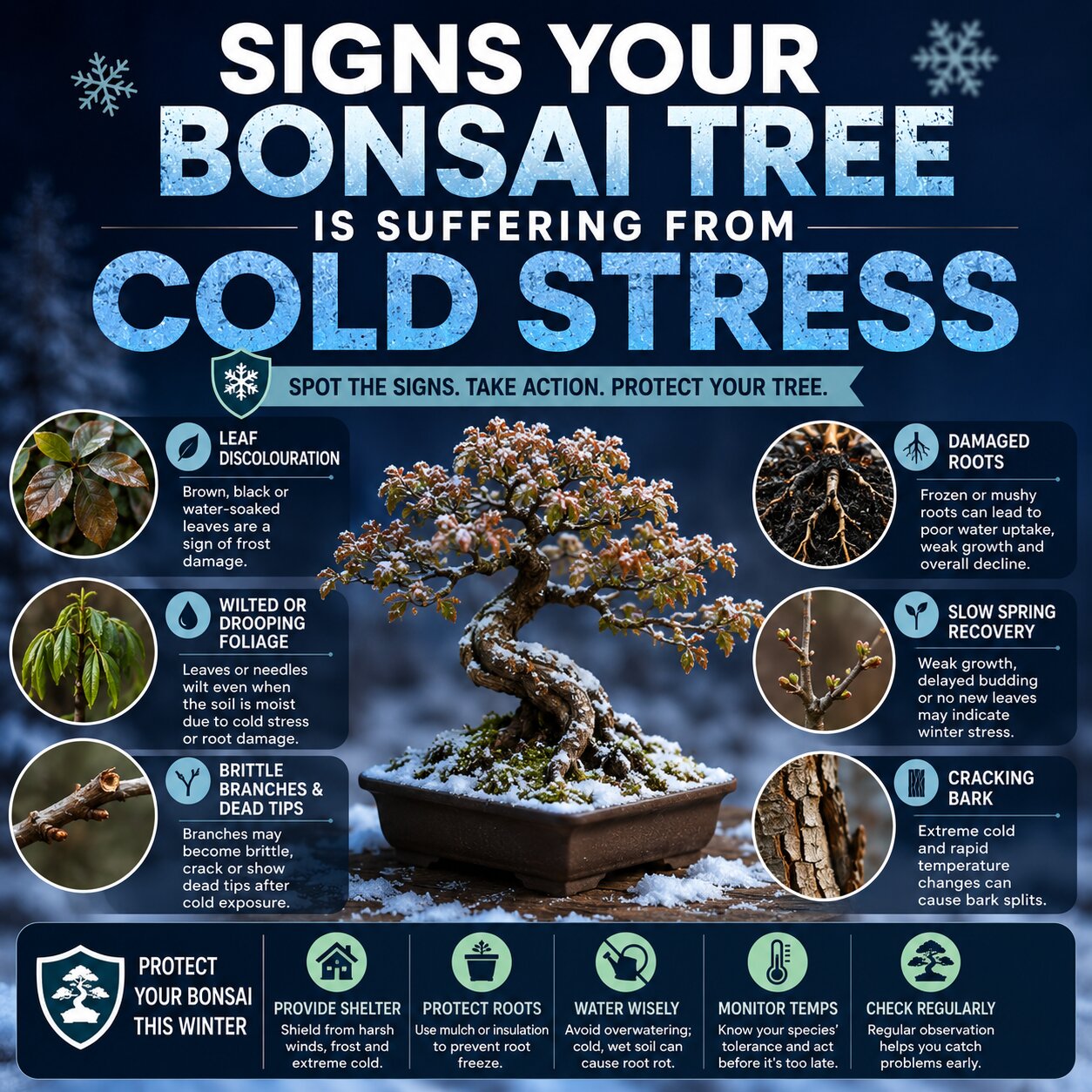
Winter can be one of the most challenging seasons for bonsai enthusiasts. While many bonsai species naturally enter dormancy during colder months, extreme temperatures, frost exposure, icy winds, and sudden temperature fluctuations can place trees under significant stress. Understanding the signs your bonsai tree is suffering from cold stress can help you act quickly before serious damage occurs.
Different bonsai species have different levels of cold tolerance. Some outdoor bonsai trees thrive in winter conditions, while tropical and subtropical species may struggle when temperatures drop too low. Recognising early warning signs is essential for protecting your bonsai tree during winter.
What is cold stress in bonsai trees?
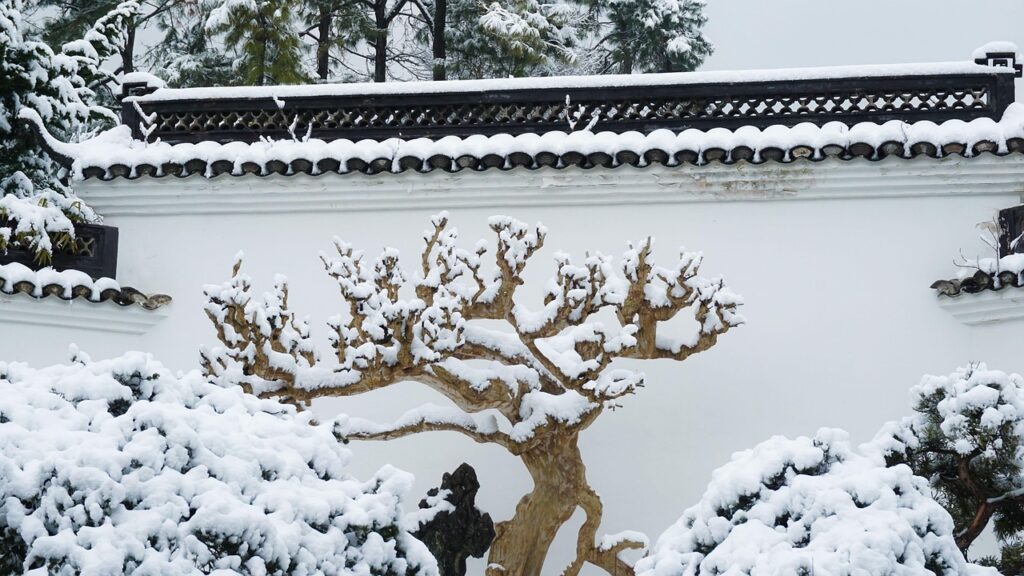
Cold stress occurs when a bonsai tree is exposed to temperatures or environmental conditions beyond what the species can comfortably tolerate. This may happen due to:
- Frost exposure
- Sudden temperature drops
- Frozen roots
- Cold winds
- Excessive moisture combined with freezing conditions
- Indoor heating fluctuations
- Poor winter protection
Cold stress weakens the tree and may affect leaves, branches, roots, and overall health.
Leaf discolouration and damage
One of the earliest signs your bonsai tree is suffering from cold stress is unusual leaf damage.
Browning leaves
Leaves may develop brown patches, dry edges, or fully brown surfaces after exposure to cold temperatures or frost.
Blackened foliage
In severe cases, frost damage can cause leaves to turn black or appear water-soaked before dying.
Sudden leaf drop
Some bonsai trees naturally lose leaves in winter, especially deciduous species. However, sudden or excessive leaf drop outside normal seasonal behaviour may indicate cold stress.
Wilted or drooping foliage
Cold stress can interfere with the tree’s ability to move water properly through its system. This may cause leaves or needles to wilt even when the soil contains moisture.
Drooping foliage during winter may suggest root damage, frozen soil conditions, or severe temperature shock.
Brittle branches and shoots
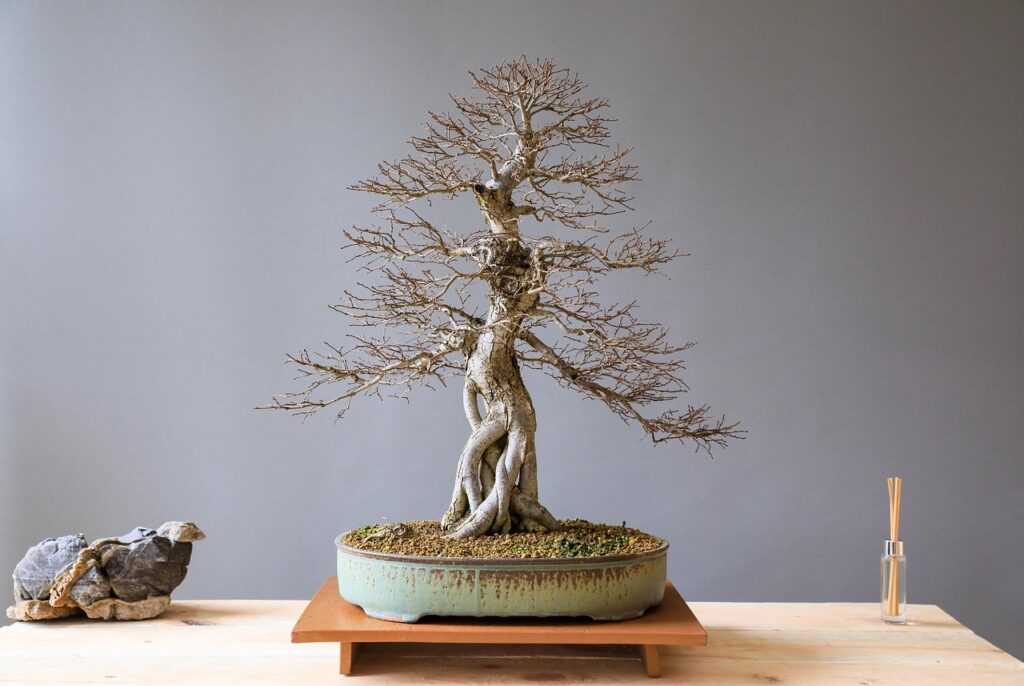
Cold-damaged branches may become dry, brittle, or fragile.
Cracking bark
Rapid freezing and thawing can sometimes cause bark splitting or cracking, especially in younger bonsai trees or species sensitive to cold.
Dead branch tips
Small branch tips and new growth are often the first parts affected by frost damage.
Frozen or damaged roots
Bonsai roots are especially vulnerable during winter because they are confined within shallow pots with limited insulation.
Signs of root-related cold stress may include:
- Weak growth
- Poor water absorption
- Persistent wilting
- Sudden decline in health
- Mushy or blackened roots
Frozen roots can severely damage or even kill a bonsai tree if left untreated.
Slow recovery in spring
Sometimes cold stress damage becomes more obvious after winter ends.
If your bonsai tree:
- Produces weak spring growth
- Develops leaves slowly
- Has dieback in branches
- Fails to bud properly
it may have suffered winter cold stress earlier in the season.
Species most vulnerable to cold stress
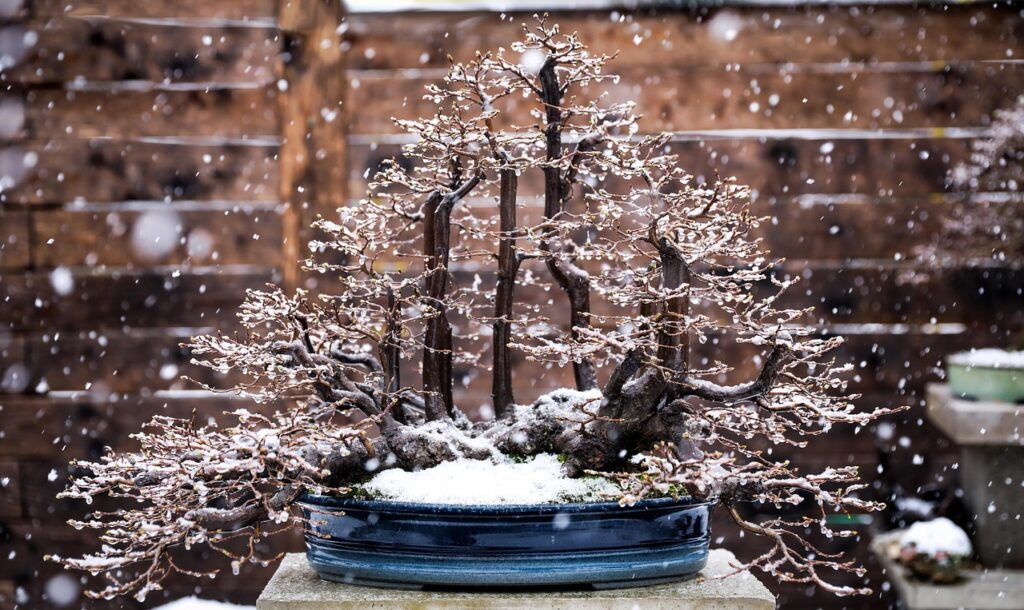
Not all bonsai trees respond to winter conditions in the same way.
Tropical bonsai trees
Species such as:
- Ficus
- Jade
- Fukien Tea
- Schefflera
are highly sensitive to cold temperatures and often require indoor protection during winter.
Young bonsai trees
Younger trees generally have weaker root systems and lower cold tolerance compared to mature bonsai specimens.
Recently repotted bonsai
Repotting weakens the root system temporarily, making bonsai trees more vulnerable to winter stress.
How to protect bonsai trees from cold stress
Preventing cold stress is far easier than trying to reverse severe winter damage.
Provide winter shelter
Outdoor bonsai trees may benefit from sheltered locations protected from icy winds and heavy frost.
Protect the roots
Using mulch, insulation, cold frames, or sheltered benches can help prevent root freezing.
Avoid overwatering
Cold wet soil increases the risk of root rot and frost damage during winter.
Monitor temperatures carefully
Tropical bonsai trees should be moved indoors before temperatures drop below their tolerance levels.
When to seek recovery action
If your bonsai tree shows severe cold stress symptoms, recovery steps may include:
- Moving the tree to a more stable environment
- Removing dead growth
- Protecting roots from further freezing
- Allowing gradual recovery in spring
- Avoiding heavy pruning or fertilising immediately
Patience is important, as stressed bonsai trees may recover slowly over time.
Winter awareness helps protect bonsai health
Recognising the signs your bonsai tree is suffering from cold stress can make a major difference in protecting its long-term health. By monitoring your bonsai carefully during winter and providing appropriate seasonal care, you can reduce damage risks and help your tree survive colder conditions safely until spring arrives.