
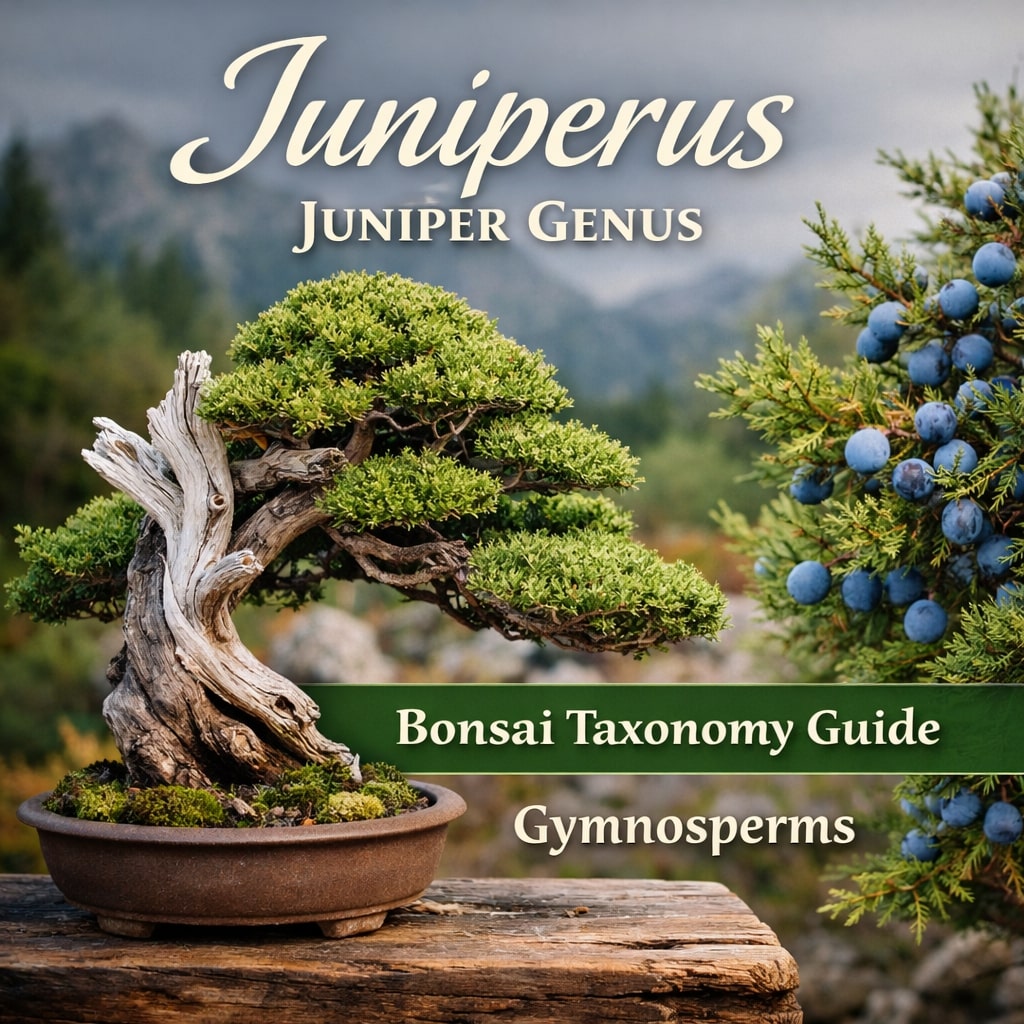
Juniperus is one of the most important and recognisable conifer genera in the world, encompassing a diverse group of evergreen trees and shrubs commonly known as junipers. Belonging to the cypress family, Cupressaceae, the juniper genus includes between 50 and 67 species distributed widely across the Northern Hemisphere, from Arctic regions and high mountain ranges to temperate forests, semi-arid landscapes, and even parts of tropical Africa.
As gymnosperms, Juniperus species produce seeds but no flowers or true fruits, instead forming distinctive berry-like cones that play a key role in both ecological systems and human use. Junipers are notable for their remarkable adaptability, structural diversity, and longevity, traits that have allowed the genus to persist across changing climates and geological eras. From towering trees to low, creeping shrubs, the juniper tree has evolved into a wide range of forms suited to extreme environments.
Within horticulture and bonsai, Juniperus holds exceptional significance. Many species have become foundational subjects for bonsai cultivation due to their resilience, flexible growth habits, and ability to develop dramatic deadwood features. Understanding the genus Juniperus from a taxonomic, ecological, and morphological perspective provides essential context for exploring individual species, their care requirements, and their role in both natural landscapes and cultivated settings.
Table of Contents
Taxonomy
– Kingdom: Plantae (Plant Kingdom)
— Clade: Embryophytes (Land Plants)
— Clade: Polysporangiophytes (Multiple Sporangia)
—- Clade: Tracheophytes (Vascular Plants)
—– Superdivision: Spermatophytes (Seed Plants)
—— Clade: Gymnospermae (Naked Seeds)
——- Division: Pinophyta (Conifers)
——– Class: Pinopsida (Living Conifers)
——— Subclass: Cupressidae (Evergreen Conifers)
———- Order: Cupressales (Cypress)
———– Family: Cupressaceae (Cypress)
———— Subfamily: Cupressoideae (Cypress)
————- Genus: Juniperus (Juniper)
What Is Juniperus?
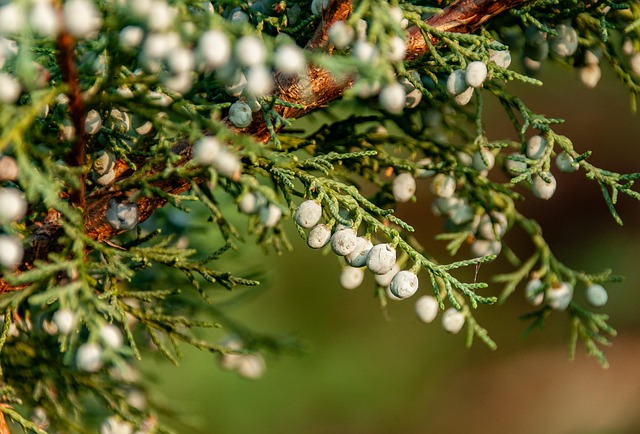
Juniperus is a genus of coniferous trees and shrubs within the cypress family, Cupressaceae. Members of the juniper genus are evergreen gymnosperms, meaning they reproduce through seeds rather than flowers and do not produce true fruits. Instead, junipers form distinctive fleshy seed cones, commonly referred to as juniper berries, which are a defining feature of the genus.
Junipers vary widely in size, structure, and growth habit. Depending on the species, a juniper tree may grow as a tall, upright conifer reaching several tens of metres in height, or as a low-growing, spreading shrub that hugs the ground. This adaptability has allowed Juniperus to thrive in an extraordinary range of environments, including mountains, deserts, coastal regions, and boreal landscapes.
As one of the most widely distributed conifer genera in the Northern Hemisphere, Juniperus plays an important ecological role in stabilising soils, supporting wildlife, and shaping plant communities. At the same time, the genus holds major cultural and horticultural importance, with junipers widely used in landscaping, traditional medicine, culinary applications, and bonsai. Understanding what Juniperus represents at a genus level provides the foundation for exploring its taxonomy, species diversity, and relevance in cultivation.
Taxonomic Position of Juniperus Within Cupressaceae
Juniperus belongs to the family Cupressaceae, commonly known as the cypress family, which is one of the largest and most diverse families of conifers. Cupressaceae includes many well-known genera such as Cupressus, Thuja, Chamaecyparis, Taxodium, and Sequoia, all sharing key structural and reproductive traits typical of gymnosperms.
Within Cupressaceae, Juniperus is positioned among the scale- and needle-leaved conifers and is distinguished by its unique seed cones, which are fleshy and berry-like rather than woody. This characteristic sets the juniper genus apart from many other members of the family and has significant ecological and evolutionary implications, particularly for seed dispersal by animals.
Taxonomically, Juniperus has historically been divided into sections based on cone structure, leaf morphology, and later molecular data. These divisions reflect deep evolutionary splits within the genus and help explain the wide variation seen among juniper trees and shrubs worldwide. While modern classifications have proposed elevating some of these sections to separate genera, Juniperus remains widely recognised as a cohesive genus within Cupressaceae in horticulture, bonsai practice, and much of botanical literature.
Understanding the taxonomic position of Juniperus within Cupressaceae provides essential context for interpreting its morphological diversity, evolutionary history, and relationship to other conifer genera. This framework also supports accurate identification and classification at the species level, which is especially important in cultivation and bonsai taxonomy.
Evolutionary History and Ancient Origins of Junipers
Juniperus represents one of the most ancient and resilient lineages within the conifers. The evolutionary history of junipers is closely tied to global climatic shifts, continental drift, and the gradual transformation of terrestrial ecosystems. Their ability to adapt to cold, drought, altitude, and poor soils has allowed the genus to persist while many other plant lineages declined or disappeared.
Fossil evidence and molecular studies suggest that junipers diverged early within the Cupressaceae, developing survival strategies that enabled them to occupy ecological niches largely inaccessible to less tolerant trees. This long evolutionary journey explains the remarkable diversity and global spread of the juniper genus seen today.
Early divergence within conifers
Junipers are believed to have diverged from other Cupressaceae lineages during the late Mesozoic to early Cenozoic eras. During this time, gymnosperms were already well established, but flowering plants were beginning to dominate many ecosystems. Juniperus adapted by specialising in harsher environments where competition from angiosperms was limited.
Key evolutionary traits, such as tough evergreen foliage, slow growth, and durable wood, allowed early junipers to survive extreme conditions. These traits became defining characteristics of the genus and remain evident in modern juniper species.
Adaptation to climate extremes
One of the most significant aspects of juniper evolution is its adaptation to climatic extremes. Junipers evolved to tolerate drought, freezing temperatures, strong winds, and nutrient-poor soils. This adaptability enabled them to spread across vast regions of the Northern Hemisphere, from Arctic and alpine zones to semi-desert landscapes.
The development of needle-like and scale-like leaves reduced water loss, while deep or extensive root systems improved access to scarce moisture. These evolutionary adaptations explain why juniper trees are often among the last woody plants found near tree lines and in marginal habitats.
Animal-mediated seed dispersal
The evolution of fleshy, berry-like seed cones marked a crucial turning point in the success of Juniperus. Unlike woody cones that rely on wind dispersal, juniper cones evolved to attract birds and mammals. Animals consume the cones and disperse the seeds over long distances, often depositing them in favourable germination sites.
This dispersal strategy significantly expanded the geographic reach of junipers and contributed to their broad distribution. It also explains the genetic diversity found across populations separated by vast distances and challenging terrain.
Persistence through geological change
Junipers have survived multiple periods of major environmental change, including ice ages, warming phases, and shifts in rainfall patterns. Their slow growth and long lifespan allowed individual plants to persist through unstable conditions, while seed dispersal ensured population continuity.
This evolutionary resilience positions Juniperus as a living record of Earth’s botanical history. The ancient origins of junipers continue to influence their role in modern ecosystems, horticulture, and bonsai, where their endurance and adaptability remain defining strengths.
Defining Characteristics of the Juniper Genus
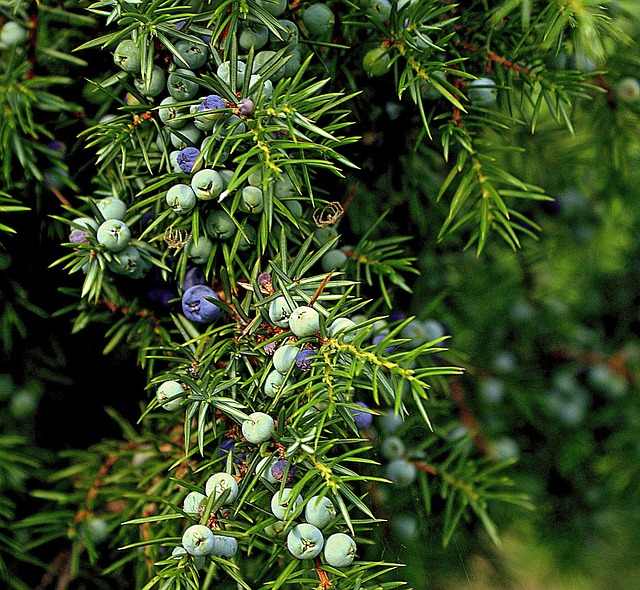
The juniper genus (Juniperus) is defined by a distinctive combination of structural, reproductive, and physiological traits that set it apart from other conifers. While junipers display remarkable variation in size and form, they share a core set of characteristics that reflect their adaptation to challenging environments and long evolutionary history.
These defining features make Juniperus immediately recognisable in both natural landscapes and cultivated settings, and they explain why junipers are so widely used in horticulture and bonsai.
Evergreen habit and coniferous structure
All junipers are evergreen conifers, retaining their foliage year-round. This allows them to photosynthesise whenever conditions permit, an advantage in cold, arid, or high-altitude environments where growing seasons are short. Their woody structure is typically dense and fibrous, contributing to durability and longevity.
Juniper trees and shrubs often develop irregular trunks and branches, shaped by wind, snow load, drought, and grazing pressure. This natural ruggedness is one of the most visually distinctive traits of the juniper genus.
Needle-like and scale-like foliage
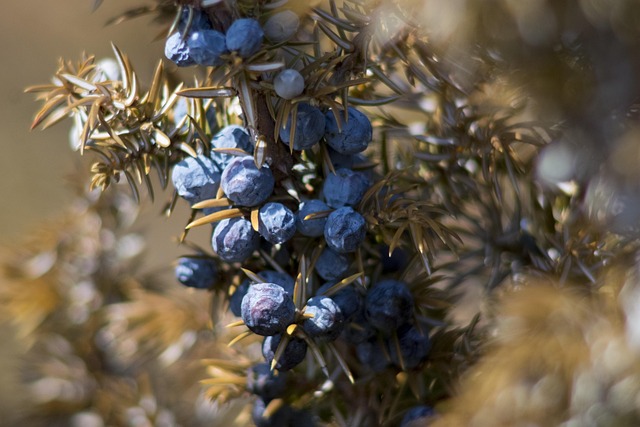
One of the most important identifying characteristics of Juniperus is its foliage variation. Many species display two distinct leaf forms: juvenile needle-like leaves and mature scale-like leaves. The transition between these forms can occur as the plant matures or in response to light and growth conditions.
In some species, such as Juniperus communis, needle-like leaves persist throughout the plant’s life. In others, scale-like leaves dominate on mature growth. This foliage diversity is a key diagnostic feature used to distinguish junipers from closely related genera.
Fleshy seed cones (juniper “berries”)
Junipers do not produce flowers or fruits. Instead, they form modified seed cones with fleshy, fused scales that resemble berries. These cones typically contain one to several hard-shelled seeds and mature over one to three years, depending on the species.
The aromatic, often blue or purple cones are a hallmark of the juniper genus and play an important role in seed dispersal, attracting birds and mammals that spread the seeds across wide areas.
Dioecious and monoecious reproduction
Most junipers are dioecious, meaning male and female cones are produced on separate plants. Some species, however, are monoecious and carry both male and female cones on the same individual. This reproductive flexibility contributes to the genus’s success across varied environments.
Male cones release pollen that is wind-dispersed, while female cones develop slowly into fleshy seed structures, reinforcing the genus’s unique reproductive strategy among conifers.
Adaptations to harsh environments
Junipers are exceptionally tolerant of drought, cold, poor soils, and wind exposure. Thick cuticles, reduced leaf surface area, and efficient water-use strategies allow them to survive where many other tree species cannot.
These adaptations explain why junipers are often dominant or persistent species in marginal habitats, including rocky slopes, dry plains, alpine regions, and exposed coastal landscapes.
Leaf Types, Growth Forms, and Structural Diversity

One of the most striking aspects of Juniperus is the sheer range of leaf types and growth forms found within the genus. From sharp, needle-like foliage to fine, overlapping scales, and from towering trees to ground-hugging shrubs, junipers exhibit exceptional structural diversity. This variation reflects both evolutionary adaptation and environmental response, making the genus highly versatile in nature and cultivation.
Juvenile and adult leaf forms
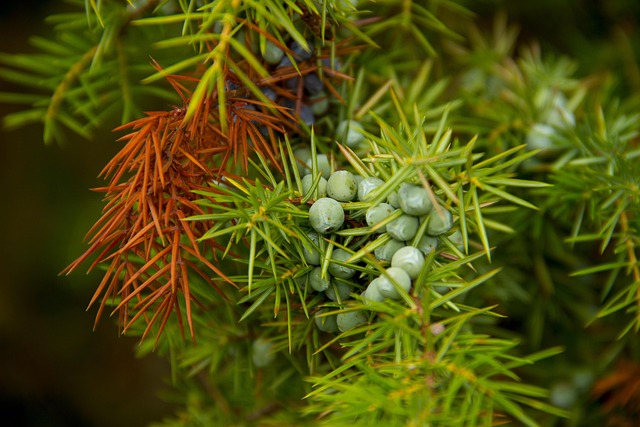
Many juniper species display heterophylly, meaning they produce different leaf types at different stages of growth. Juvenile foliage is typically needle-like, sharp, and spreading, while adult foliage is often scale-like, tightly appressed to the stems.
Juvenile leaves may persist on shaded shoots, stressed branches, or vigorous “whip” growth even on mature plants. In contrast, adult scale leaves usually dominate in well-lit, stable growth conditions. This dual foliage system is a key identifying feature of the juniper genus.
Needle-leaf versus scale-leaf species
Not all junipers transition fully to scale leaves. Some species, such as Juniperus communis and Juniperus squamata, retain needle-like foliage throughout their life cycle. These needles are typically hard, sharp, and prickly, offering protection from grazing animals.
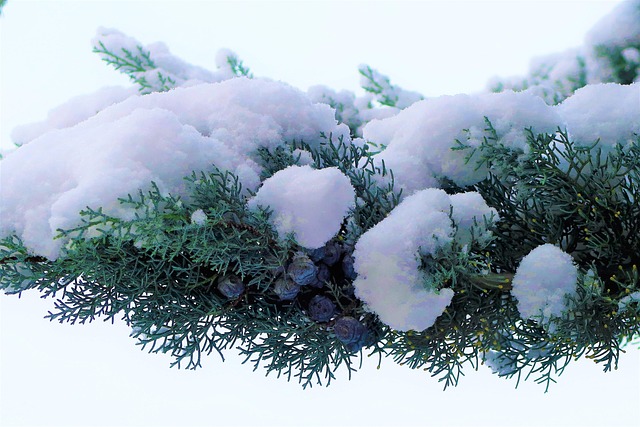
Other species, including Juniperus chinensis and Juniperus procumbens, are predominantly scale-leaved in maturity. This distinction is important in taxonomy, species identification, and horticultural selection, particularly for bonsai and landscape use.
Growth forms: trees, shrubs, and prostrate types
The juniper genus includes an extraordinary range of growth habits. Some species develop into tall, upright trees exceeding 30 metres in height, while others form dense shrubs, spreading groundcovers, or low, trailing mats.
Prostrate and creeping junipers are especially common in alpine and coastal environments, where wind exposure and poor soils favour low-growing forms. Upright juniper trees are more often found in open woodlands, dry forests, and mountainous regions.
Branching patterns and trunk character
Junipers often develop irregular branching structures shaped by environmental stress. Twisting trunks, contorted branches, and asymmetrical crowns are common, particularly in older specimens exposed to wind, snow, or drought.
The wood is fibrous and resilient, allowing branches to bend rather than break. This structural flexibility contributes to the dramatic natural forms seen in wild junipers and is a major reason the genus is so highly valued in bonsai.
Structural diversity and ecological advantage
The wide range of leaf types and growth forms gives Juniperus a significant ecological advantage. By occupying niches ranging from ground level to canopy height, junipers can colonise environments where competition is limited.
This structural diversity not only explains the genus’s broad geographic distribution but also underpins its importance in horticulture, landscape design, and bonsai, where different forms can be selected to suit specific aesthetic and environmental goals.
Reproductive Biology and Cone Morphology in Juniperus
The reproductive strategy of Juniperus is one of the most distinctive within the conifer world. Unlike many gymnosperms that rely on woody cones and wind-only dispersal, the juniper genus has evolved specialised reproductive traits that combine wind pollination with animal-assisted seed dispersal. These adaptations have played a major role in the long-term success and wide distribution of juniper trees and shrubs.
Gymnosperm reproduction without flowers or fruit
Junipers are gymnosperms, meaning they produce seeds that are not enclosed within flowers or true fruits. Instead, reproduction occurs through male and female cones. Male cones produce pollen that is released into the air, while female cones develop over time to house the seeds.
Pollination is primarily wind-driven, often occurring from late winter through spring, although some species may release pollen multiple times in favourable climates. This reliance on wind pollination aligns Juniperus closely with other members of the Cupressaceae.
Dioecious and monoecious species
Most species in the juniper genus are dioecious, with individual plants producing either male or female cones, but not both. This separation encourages genetic diversity by reducing self-fertilisation. Some junipers, however, are monoecious, bearing both male and female cones on the same plant.
The presence of separate male and female plants has practical implications in cultivation, landscaping, and bonsai, particularly where seed or cone production is desired or where pollen levels are a concern.
Fleshy seed cones and galbuli
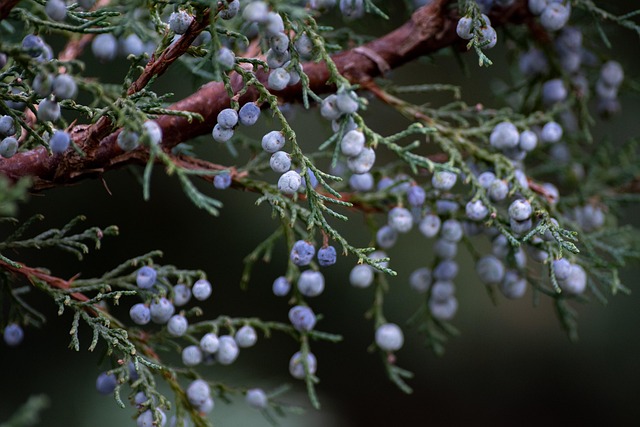
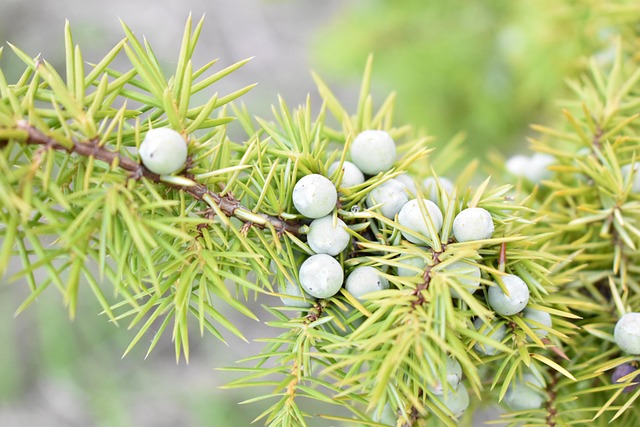
The most recognisable reproductive feature of Juniperus is the female seed cone. Unlike the woody cones of many conifers, juniper cones are fleshy, rounded, and berry-like, technically known as galbuli. These cones form when the cone scales fuse together during development.
Juniper cones typically measure between a few millimetres and over two centimetres in diameter, depending on the species. They often mature to shades of blue, purple, red-brown, or orange and are frequently coated with a waxy bloom. Most contain one to several hard-shelled seeds.
Seed maturation and dispersal
Seed development in junipers is slow, often taking between one and three years from pollination to maturity. Once mature, the fleshy cones attract birds and mammals, which consume them and later disperse the seeds through their droppings.
This animal-mediated dispersal allows junipers to colonise distant and isolated habitats, including rocky slopes, high altitudes, and marginal soils. The tough seed coat protects the embryo during digestion and contributes to long seed dormancy, further enhancing survival chances.
Cone morphology as a taxonomic feature
Cone structure and seed number are important diagnostic traits within the juniper genus. Differences in cone size, colour, surface texture, and seed count are used to distinguish species and to define major taxonomic sections within Juniperus.
These reproductive characteristics not only aid botanical classification but also reflect deep evolutionary adaptations that continue to shape the ecology and cultivation of junipers today.
Global Distribution and Ecological Roles of Junipers
Juniperus is one of the most widely distributed conifer genera in the world, occupying an extraordinary range of habitats across the Northern Hemisphere. Junipers are found from the Arctic and subarctic regions to temperate zones, arid landscapes, high mountain ranges, and parts of tropical Africa, demonstrating a level of ecological adaptability unmatched by most conifers.
Global distribution across continents
Juniper species occur throughout Europe, Asia, North America, and northern Africa, with particularly high diversity in mountainous and semi-arid regions. Some species form extensive forests, while others exist as scattered individuals or low-growing shrubs in harsh environments where few trees can survive.
Notably, junipers reach some of the highest known tree lines on Earth, including populations in the Himalayas and southeastern Tibet at elevations approaching 4,900 metres. In these extreme conditions, junipers often represent the final woody vegetation before alpine or polar zones.
Adaptation to marginal environments
Junipers thrive in environments that are inhospitable to many other plant species. They are commonly found on rocky slopes, limestone outcrops, sandy soils, and drought-prone landscapes. Their tolerance of poor soil fertility, low moisture availability, and temperature extremes allows them to colonise areas with minimal competition.
Deep or extensive root systems help junipers access limited water sources, while their reduced leaf surface area minimises water loss. These adaptations explain why junipers are frequently among the dominant woody plants in dry woodlands, steppe margins, and alpine zones.
Ecological stabilisation and soil protection
Junipers play an important role in stabilising fragile ecosystems. Their root systems reduce soil erosion on slopes and prevent desertification in dry regions. In mountainous terrain, junipers help anchor thin soils and protect watersheds from runoff and landslides.
In open landscapes, juniper canopies also influence microclimates by moderating temperature extremes and retaining soil moisture, benefiting understory plants and microorganisms.
Wildlife interactions and food sources
The fleshy seed cones of junipers provide an important food source for birds and mammals. As animals consume the cones and disperse the seeds, junipers benefit from long-distance propagation while contributing to broader ecosystem dynamics.
Juniper foliage and wood also support a range of insects, including moth and butterfly species whose larvae feed exclusively on juniper plants. These interactions position junipers as key contributors to local food webs.
Ecological balance and landscape dynamics
In some regions, changes in fire regimes and land management have led to the expansion of juniper populations into areas previously dominated by grasses or other woody species. While this expansion can alter ecosystems and land use, it also highlights the genus’s resilience and competitive strength.
Overall, the global distribution and ecological roles of Juniperus reflect a genus shaped by endurance, adaptability, and long-term interaction with some of the planet’s most challenging environments.
Major Sections and Species Diversity Within Juniperus
The juniper genus (Juniperus) is taxonomically diverse, reflecting its long evolutionary history and broad geographic spread. Botanists traditionally divide Juniperus into major sections based on leaf type, cone structure, and molecular data. These sections help explain the wide variation seen among juniper trees and shrubs worldwide.
Primary sections within Juniperus include:
- Section Caryocedrus
- Characterised by large, woody, berry-like cones with three fused seeds
- Represented by a single species, Juniperus drupacea
- Native to the Mediterranean region
- Section Juniperus
- Composed mainly of needle-leaf junipers
- Adult foliage remains needle-like and is typically arranged in whorls
- Includes species with circumboreal and temperate distributions
- Notable for hard, prickly foliage and strong cold tolerance
- Section Sabina
- Dominated by scale-leaf junipers
- Juvenile foliage is needle-like, while mature foliage is mostly scale-like
- Represents the largest and most diverse section
- Species are distributed across both the Old World and New World
Together, these sections account for roughly 50 to 67 recognised species, depending on taxonomic interpretation. Modern classifications have proposed elevating some sections to separate genera, but Juniperus remains widely treated as a single genus in horticulture and bonsai practice.
Top Juniper Species Grown as Bonsai
Junipers are among the most popular and enduring subjects in bonsai, prized for their resilience, foliage texture, and ability to develop dramatic deadwood. The following species are especially favoured in bonsai cultivation:
- Juniperus procumbens
- Low-growing, spreading habit
- Excellent for cascade and semi-cascade styles
- Very forgiving and beginner-friendly
- Juniperus chinensis
- Highly versatile with many cultivars
- Scale foliage responds well to refinement
- Common in traditional and modern bonsai styles
- Juniperus communis
- Needle-leaf species with strong character
- Naturally rugged appearance
- Suited to literati and naturalistic designs
- Juniperus rigida
- Upright growth with sharp needle foliage
- Excellent for dramatic, windswept forms
- Juniperus squamata
- Dense, fine-textured foliage
- Popular for compact bonsai compositions
- Juniperus virginiana
- Strong trunk development and fibrous bark
- Valued for deadwood features and mature character
These species represent only a fraction of the diversity within Juniperus, but they highlight why the juniper genus remains foundational in bonsai, bridging botanical history with living art. These are the Juniper species we will focus on here at Budding Backyard Bonsaist, forming the foundation of our juniper bonsai guides.
Juniperus in Bonsai, Horticulture, and Cultivation
Juniperus holds a unique position at the intersection of natural history and cultivated art. As one of the most adaptable and resilient conifer genera, junipers have become foundational plants in both horticulture and bonsai, valued for their longevity, structural flexibility, and visual character. From expansive landscapes to carefully refined containers, the juniper tree continues to demonstrate its versatility.
In horticulture, junipers are widely used for their tolerance of poor soils, drought, wind exposure, and temperature extremes. Their diverse growth forms allow them to function as groundcovers, shrubs, hedging plants, or specimen trees, making the juniper genus a mainstay in gardens and public spaces around the world. Low maintenance requirements and strong resistance to environmental stress further enhance their appeal.
In bonsai, Juniperus is unrivalled in its ability to express age, movement, and natural drama. The genus responds exceptionally well to pruning, wiring, and deadwood techniques such as jin and shari, allowing practitioners to recreate the weathered forms seen in nature. Many juniper species also tolerate root work and container cultivation, making them suitable for both beginners and advanced bonsai artists.
Understanding Juniperus at the genus level provides essential context for successful cultivation. By appreciating its taxonomy, evolutionary history, structural traits, and ecological adaptations, growers can make informed decisions when selecting species, applying techniques, and planning long-term development.
As Budding Backyard Bonsaist expands into species-level guides, junipers will remain a cornerstone genus, bridging botanical knowledge with practical cultivation and the living art of bonsai.