
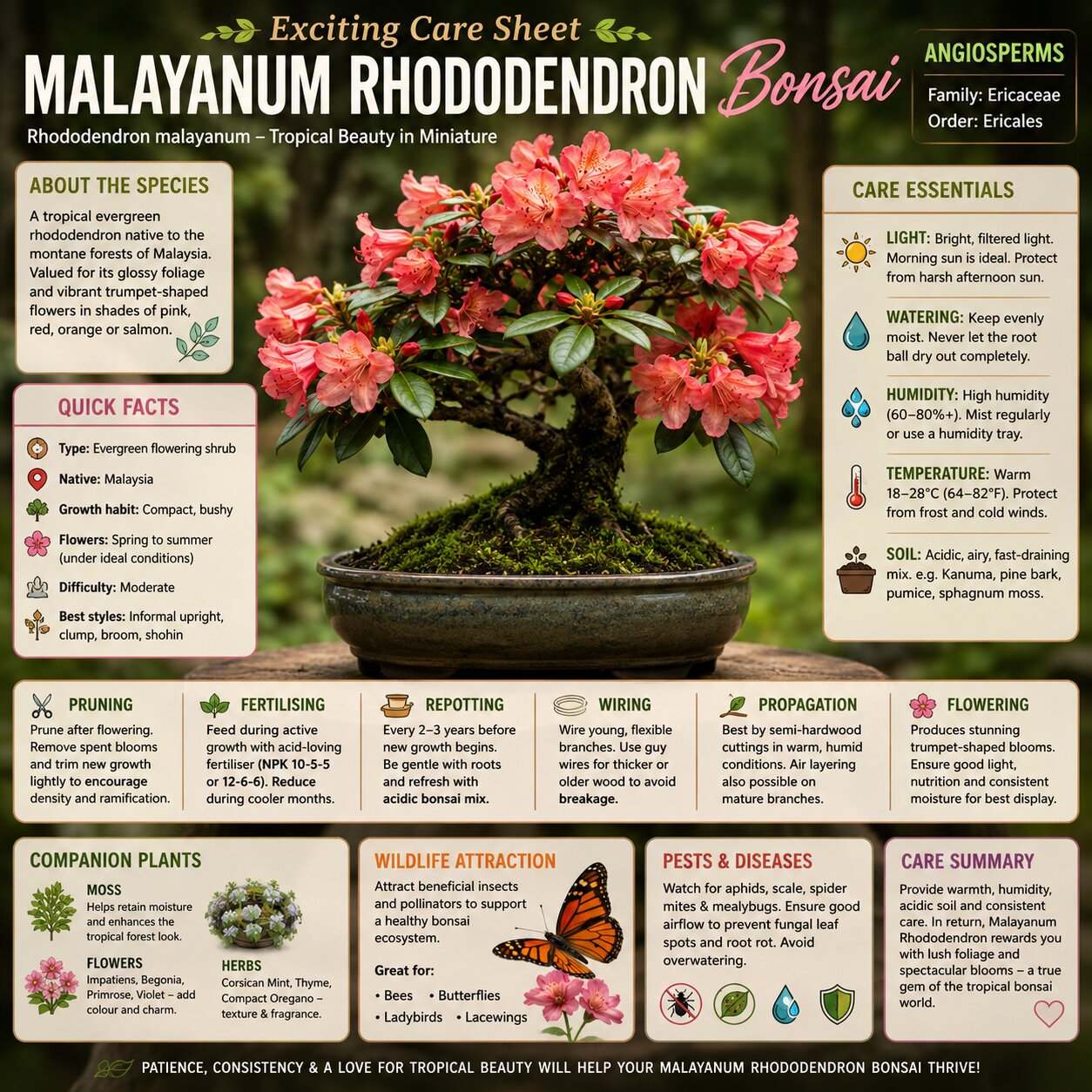
The Malayanum Rhododendron bonsai is a fascinating tropical species prized for its attractive evergreen foliage, compact growth habit, and spectacular floral displays. Native to Southeast Asia’s mountainous forests, this rhododendron brings an exotic character to any bonsai collection while offering enthusiasts the opportunity to work with a species that differs significantly from many traditional bonsai subjects.
Growing a Malayanum Rhododendron bonsai requires an understanding of its natural environment. In the wild, these plants thrive in humid forests with filtered light, consistent moisture, and acidic soils rich in organic matter. Replicating these conditions in cultivation is key to maintaining healthy growth and encouraging flowering.
While the Malayanum Rhododendron bonsai can be more demanding than some beginner-friendly species, experienced growers are often rewarded with stunning blooms and refined branch structures that make this bonsai a true centrepiece. With proper care, attention to watering, and protection from environmental extremes, the species can develop into a beautiful miniature representation of its larger forest counterpart.
Table of Contents
TL:DR Quick Malayanum Rhododendron Bonsai Care Overview
Before diving into the complete care sheet, here is a quick-reference guide for the Malayanum Rhododendron bonsai. Native to the humid montane forests of Southeast Asia, Rhododendron malayanum is a tropical rhododendron that appreciates warm temperatures, high humidity, and consistently acidic growing conditions. While somewhat challenging compared to common bonsai species, its attractive foliage and colourful flowers make it a rewarding choice for dedicated enthusiasts.
| Care Aspect | Malayanum Rhododendron Bonsai |
|---|---|
| Scientific name | Rhododendron malayanum |
| Common name | Malayanum Rhododendron |
| Bonsai type | Evergreen flowering shrub |
| Light | Bright indirect light to partial sun. Morning sun is beneficial, while protection from intense afternoon heat is recommended. |
| Watering | Keep soil consistently moist but never saturated. High humidity is beneficial, and the root ball should not be allowed to dry completely. |
| Soil | Acidic, well-draining bonsai mix containing kanuma, fine pine bark, pumice, and sphagnum moss. |
| Fertiliser | Use an acid-loving fertiliser such as NPK 10-5-5 or 12-6-6 during active growth. Reduce applications during slower growth periods. |
| Pruning | Prune after flowering to maintain shape and encourage ramification. Remove spent flower clusters to conserve energy. |
| Wiring | Best applied to young shoots and flexible branches. Older branches can be brittle and may respond better to guy wires. |
| Difficulty | Moderate to advanced. Requires careful moisture management, acidic soil, and stable growing conditions. |
| Rarity | Rare. Typically found through specialist rhododendron collectors, botanical collections, or dedicated bonsai growers. |
| Climate sensitivity | Sensitive to frost, prolonged cold, and dry air. Thrives in warm, humid, protected environments. |
| Growth habit | Compact evergreen shrub with glossy leaves and clusters of colourful flowers. Suitable for informal upright, clump, and flowering bonsai styles. |
Malayanum Rhododendron Bonsai Care Sheet

Caring for a Malayanum Rhododendron bonsai requires an understanding of the tropical mountain environments from which this species originates. Unlike many traditional rhododendrons grown in cooler climates, Rhododendron malayanum naturally occurs in warm, humid montane forests where moisture, filtered light, and acidic growing conditions are consistently available. Successfully cultivating this species as a bonsai involves recreating these environmental conditions as closely as possible.
The Malayanum Rhododendron bonsai thrives when provided with high humidity, excellent drainage, and protection from temperature extremes. While it can be more demanding than some common bonsai species, growers are rewarded with attractive evergreen foliage, compact growth, and vibrant floral displays that make it a standout specimen in any collection.
One of the most appealing characteristics of a Malayanum Rhododendron bonsai is its colourful flowering habit. Depending on the individual plant and growing conditions, blooms may display shades of pink, red, orange, or salmon, creating a striking contrast against the glossy green foliage. With proper care, this species can become a beautiful flowering bonsai that reflects the elegance of its tropical origins.
Below is a detailed breakdown of how to care for your Malayanum Rhododendron bonsai throughout the year.
Light
A Malayanum Rhododendron bonsai performs best in bright, filtered light. Morning sun encourages healthy growth and flowering, while protection from harsh afternoon sunlight helps prevent leaf scorch and excessive moisture loss.
In its native habitat, Rhododendron malayanum often grows beneath forest canopies where it receives dappled sunlight throughout the day. Replicating these conditions will help maintain healthy foliage and reduce stress during warmer months.
Watering
Consistent moisture is essential for maintaining a healthy Malayanum Rhododendron bonsai. The growing medium should remain evenly moist but never saturated. Poor drainage can quickly lead to root problems and fungal diseases.
Unlike drought-tolerant bonsai species, this rhododendron should never be allowed to dry out completely. Frequent monitoring is especially important during warm weather or periods of active growth. Rainwater or low-mineral water is preferred where possible to help preserve soil acidity.
Pruning
Pruning is best performed after flowering has finished. This timing allows the bonsai to redirect energy into new growth while preserving future flower production.
Spent flower clusters should be removed promptly to prevent unnecessary energy expenditure. Light pruning of new shoots encourages ramification and helps maintain the desired shape without reducing the plant’s overall vigour.
Shaping
A Malayanum Rhododendron bonsai naturally develops a compact, shrub-like structure that responds well to careful refinement. Shaping should focus on enhancing the plant’s natural growth pattern rather than forcing dramatic designs.
Regular maintenance trimming helps improve branch distribution and overall balance. Over time, selective shaping can create a mature appearance while preserving the species’ ornamental flowering characteristics.
Soil
The soil for a Malayanum Rhododendron bonsai should be acidic, airy, and highly free-draining. These plants are adapted to organic-rich growing environments where roots receive ample oxygen while retaining adequate moisture.
A suitable bonsai mix may include kanuma, fine pine bark, pumice, and sphagnum moss. Heavy soils or alkaline growing media should be avoided as they can negatively affect nutrient uptake and root health.
Repotting
Repotting is generally required every two to three years depending on the age and growth rate of the tree. Younger specimens may require more frequent attention, while mature bonsai can often remain in the same container for longer periods.
Repotting is best performed shortly before active growth begins. Root pruning should be conservative, as Rhododendron malayanum can be sensitive to excessive disturbance. Refreshing the growing medium helps maintain both drainage and acidity.
Wiring
Wiring can be used to shape a Malayanum Rhododendron bonsai, although care should be taken due to the brittle nature of older branches.
Younger shoots are generally more flexible and respond well to light wiring. Many growers prefer guy wires for major adjustments, as they provide gradual movement while reducing the risk of cracking or breakage.
Fertiliser
Regular feeding promotes healthy foliage, strong root growth, and reliable flowering. Fertilisers formulated for acid-loving plants are generally the best choice for this species.
Balanced fertilisers such as NPK 10-5-5 or 12-6-6 can be applied during active growth periods. Feeding should be reduced during slower growth phases and after flowering. Excessive fertilisation should be avoided as it can damage sensitive roots.
Propagation
Propagation is most commonly achieved through semi-hardwood cuttings taken during active growth. Cuttings root best in warm, humid conditions using an acidic and free-draining propagation medium.
Air layering can also be successful on mature plants but generally requires greater patience. Propagation allows growers to preserve desirable traits and expand their collection of tropical rhododendrons.
Seasonal Care
Unlike temperate rhododendrons, Rhododendron malayanum does not experience a true winter dormancy. Growth may slow during cooler periods, but the plant typically remains evergreen throughout the year.
During warmer months, increased watering and humidity support vigorous growth and flowering. In cooler weather, watering should be adjusted to match reduced growth rates while ensuring the root system never dries completely.
Pests
Common pests affecting a Malayanum Rhododendron bonsai include aphids, spider mites, scale insects, and mealybugs. These pests can weaken the plant and reduce flowering performance if not controlled.
Regular inspections help identify problems before they become severe. Organic insecticidal soaps and horticultural oils are often effective when used alongside good cultural practices.
Diseases
Root rot remains the most serious disease threat to a Malayanum Rhododendron bonsai and is usually caused by poor drainage or excessive watering. Maintaining an airy, free-draining soil mix is the best preventative measure.
Fungal leaf spots and mildew can occasionally develop in humid conditions where airflow is inadequate. Removing affected foliage and improving ventilation usually helps prevent further spread. Consistent care and proper environmental management remain the best defence against disease.
How To Identify A Malayanum Rhododendron Bonsai

Correctly identifying a Malayanum Rhododendron bonsai is important for providing the proper care and growing conditions this tropical species requires. While Rhododendron malayanum belongs to the diverse Vireya rhododendron group, it possesses several distinctive characteristics that help separate it from other rhododendrons and flowering bonsai species. Its glossy evergreen foliage, colourful flowers, and compact growth habit make it a rewarding specimen for enthusiasts who appreciate tropical flowering bonsai.
By examining the leaves, flowers, fruiting structures, seeds, and bark, you can confidently identify a Malayanum Rhododendron bonsai and better understand how its natural habitat influences its cultivation requirements.
Leaf Identification
The leaves of a Malayanum Rhododendron bonsai are evergreen, glossy, and somewhat leathery in texture. They are typically elliptical to lance-shaped, with smooth edges and a rich green appearance that remains attractive throughout the year.
Compared to many temperate rhododendrons, the foliage tends to appear more tropical and refined. Leaves often develop in clusters near the ends of branches, creating dense foliage pads that contribute to the species’ ornamental value as a bonsai.
Flower Gallery
The flowers are one of the most recognisable features of a Malayanum Rhododendron bonsai. Rhododendron malayanum produces attractive trumpet-shaped blooms that may appear in shades of pink, red, orange, salmon, or reddish-orange depending on the individual plant and growing conditions.
Flower clusters generally form at branch tips and can create spectacular displays when the tree is in bloom. These colourful blossoms contrast beautifully against the glossy foliage and are often the main reason growers seek out this species.
Fruit Identification
After successful pollination, a Malayanum Rhododendron bonsai may produce elongated seed capsules where flowers once developed. These capsules gradually mature and serve as the plant’s fruiting structure.
Although they are not particularly decorative, the capsules can assist with identification and indicate successful flowering and pollination. Many bonsai growers remove developing capsules to conserve the tree’s energy for growth and future blooms.
Seeds And Pods
The seed pods of a Malayanum Rhododendron bonsai are slender capsules that split open when mature. Inside are numerous fine seeds adapted for wind dispersal in the species’ natural mountain forest habitat.
While seed propagation is possible, it is generally less common than propagation through cuttings. Growing Rhododendron malayanum from seed requires patience, stable humidity, and consistently acidic growing conditions.
Bark Textures
The bark of a young Malayanum Rhododendron bonsai is typically smooth and light brown to grey in colour. As the tree ages, the bark may become slightly rougher, although it rarely develops the deeply fissured appearance seen in many traditional bonsai species.
This relatively smooth bark complements the elegant and tropical appearance of the tree. Mature specimens may develop subtle signs of age that add character while retaining the refined look that makes flowering rhododendrons so appealing in bonsai cultivation.
Bonsai Styles Suited To Malayanum Rhododendron Bonsai

The Malayanum Rhododendron bonsai naturally develops as a compact evergreen shrub, making it particularly well-suited to bonsai styles that emphasise graceful branching, attractive foliage, and seasonal flowering displays. While its growth habit does not lend itself to heavily formal or rugged designs, it excels in styles that showcase its tropical character and colourful blooms.
When selecting a design, it is often best to work with the tree’s natural growth pattern rather than attempting dramatic structural changes. This approach reduces stress on the plant and allows its ornamental features to take centre stage.
Informal Upright Style (Moyogi)
The informal upright style is one of the most suitable options for a Malayanum Rhododendron bonsai. Gentle curves in the trunk create visual interest while maintaining a natural appearance.
This style allows the foliage and flowers to remain the primary focal points while showcasing the elegant branch structure that develops over time. Most specimens can be trained into an informal upright design with relatively little intervention.
Clump Style (Kabudachi)
Because rhododendrons naturally grow as multi-stemmed shrubs, the clump style is an excellent choice. Multiple trunks emerging from a common root system create the appearance of a mature flowering thicket found in nature.
The clump style highlights the species’ natural growth habit and can produce spectacular floral displays when several trunks flower simultaneously.
Broom Style (Hokidachi)
The broom style can work well for Malayanum Rhododendron bonsai when the tree develops fine branching and a balanced canopy. The rounded crown provides an attractive framework for displaying both foliage and flowers.
This style is particularly effective for mature specimens that have undergone years of careful ramification development.
Shohin Bonsai
The relatively small leaves and compact growth habit of Rhododendron malayanum make it well suited to shohin-sized bonsai. Smaller trees can still produce impressive floral displays while remaining easy to maintain and display.
Shohin specimens are especially popular among flowering bonsai enthusiasts who appreciate colourful blooms on compact trees.
Group Planting (Yose-ue)
Group plantings can create the appearance of a miniature tropical forest. Several Malayanum Rhododendron bonsai planted together provide visual depth and can replicate the species’ natural occurrence in montane woodland environments.
When multiple trees flower at the same time, the display can be particularly striking and visually impressive.
Styles Generally Less Suitable
Some bonsai styles are less compatible with the natural characteristics of Rhododendron malayanum.
These include:
- Formal Upright (Chokkan)
- Literati (Bunjingi)
- Windswept (Fukinagashi)
- Cascade (Kengai)
- Semi-Cascade (Han-kengai)
These designs often require dramatic trunk movement or structural features that are difficult to achieve with the species’ naturally shrubby growth habit and somewhat brittle branches.
Choosing The Right Design
The best bonsai styles for a Malayanum Rhododendron bonsai are those that emphasise its natural form, evergreen foliage, and spectacular flowers. Informal upright, clump, broom, shohin, and group planting styles all allow the tree’s tropical beauty to shine while minimising stress from excessive shaping.
By working with the species’ natural tendencies rather than against them, growers can create elegant flowering bonsai that remain healthy, balanced, and visually stunning for many years.
Symbolism And Cultural Significance

The Malayanum Rhododendron bonsai carries many of the symbolic meanings traditionally associated with rhododendrons while also reflecting the values commonly linked to bonsai cultivation. Its vibrant flowers, evergreen foliage, and ability to thrive in challenging mountain environments have led to associations with endurance, beauty, renewal, and personal growth.
In bonsai collections, a Malayanum Rhododendron bonsai often represents the balance between strength and elegance. The plant’s ability to produce spectacular blooms despite demanding growing conditions serves as a reminder that patience, care, and perseverance can yield remarkable results. This symbolism resonates strongly with bonsai enthusiasts who spend years refining their trees.
Across many cultures, flowering rhododendrons are viewed as symbols of beauty, passion, and appreciation for nature. Their colourful blossoms are often associated with joy, celebration, and the arrival of favourable seasons. When cultivated as a bonsai, these qualities are condensed into a miniature living artwork that can be appreciated throughout the year.
The evergreen nature of Rhododendron malayanum also contributes to its symbolism. Evergreen plants are frequently linked to resilience, longevity, and continuity because they maintain their foliage regardless of seasonal changes. This characteristic makes the species a fitting representation of steadfastness and perseverance.
In tropical regions where Vireya rhododendrons naturally occur, these plants are admired for their ability to flourish in misty mountain forests and challenging environments. As a result, they are sometimes seen as symbols of adaptation and harmony with nature. Their presence in bonsai collections can remind growers of the importance of working with natural processes rather than attempting to dominate them.
For bonsai practitioners, the Malayanum Rhododendron bonsai ultimately represents more than a flowering tree. It embodies patience, careful cultivation, and the enduring connection between people and the natural world. Its colourful blooms and refined structure make it both a horticultural achievement and a meaningful symbol of growth, resilience, and beauty.
Companion Plants And Wildlife Attraction

Selecting suitable companion plants for a Malayanum Rhododendron bonsai can enhance both its appearance and growing conditions. Because Rhododendron malayanum thrives in acidic, well-draining soil and humid environments, companion species should ideally share similar requirements. The right plant combinations can create a more natural display while helping maintain a favourable microclimate around the bonsai.
In addition to companion planting, encouraging beneficial wildlife can support pollination, improve biodiversity, and assist with natural pest management. Together, these elements can transform a simple bonsai display into a miniature ecosystem inspired by the tropical mountain forests where Rhododendron malayanum naturally occurs.
Moss
Moss is one of the most suitable companions for a Malayanum Rhododendron bonsai. It helps retain surface moisture, protects exposed roots, and creates the appearance of a humid forest floor.
Suitable moss species include:
- Hypnum cupressiforme (Cypress-leaved Plait Moss)
- Leucobryum glaucum (Pincushion Moss)
- Dicranum scoparium (Broom Moss)
- Thuidium delicatulum (Fern Moss)
These mosses thrive in humid conditions and complement the tropical nature of Rhododendron malayanum while helping maintain soil moisture levels.
Flowers
Small flowering plants can provide seasonal colour without overshadowing the Malayanum Rhododendron bonsai itself. Species that tolerate acidic soils and partial shade generally make the most suitable companions.
Recommended flowering companions include:
- Impatiens walleriana (Busy Lizzie)
- Begonia semperflorens (Wax Begonia)
- Primula vulgaris (Primrose)
- Viola odorata (Sweet Violet)
These plants add visual interest throughout the year while harmonising with the colourful blooms produced by the bonsai.
Herbs
Compact herbs can be incorporated into larger display arrangements where moisture and humidity can be maintained consistently.
Suitable herb companions include:
- Mentha requienii (Corsican Mint)
- Thymus serpyllum (Creeping Thyme)
- Origanum vulgare ‘Compactum’ (Compact Oregano)
- Plectranthus amboinicus (Cuban Oregano)
These herbs provide additional texture and fragrance while remaining manageable around bonsai displays.
Wildlife Attraction (Bees, Butterflies, And Beneficial Insects)
Creating a healthy environment around a Malayanum Rhododendron bonsai can attract pollinators and beneficial insects that contribute to plant health and ecological balance.
Plants that encourage wildlife include:
- Lavandula angustifolia (Lavender) – attracts bees and butterflies
- Borago officinalis (Borage) – highly attractive to pollinators
- Achillea millefolium (Yarrow) – supports beneficial insects
- Foeniculum vulgare (Fennel) – attracts predatory insects
- Cosmos bipinnatus (Cosmos) – encourages pollinators and beneficial garden visitors
These companion plants help create a living environment that supports natural pollination and biological pest control while adding movement and ecological value to the display.
By selecting compatible companion plants and encouraging beneficial wildlife, a Malayanum Rhododendron bonsai becomes more than a decorative specimen. It becomes part of a thriving miniature ecosystem that reflects the humid tropical forests where Rhododendron malayanum evolved and continues to flourish.
Care Summary And Practical Notes
The Malayanum Rhododendron bonsai is a rewarding tropical flowering species that offers year-round evergreen beauty and spectacular seasonal blooms. While it requires more attention than many beginner bonsai trees, its unique appearance and vibrant flowers make the extra effort worthwhile for enthusiasts seeking something distinctive.
Success with Rhododendron malayanum largely depends on recreating the conditions of its native montane forest habitat. Consistently moist but well-draining acidic soil, high humidity, bright filtered light, and protection from frost are the foundations of healthy growth. When these requirements are met, the tree responds with lush foliage, strong branch development, and impressive flowering displays.
Regular maintenance should focus on careful watering, moderate feeding, light pruning after flowering, and periodic repotting to maintain soil quality and root health. Growers should also monitor for common pests and fungal issues, particularly during periods of high humidity or reduced airflow.
The species is best suited to naturalistic bonsai styles such as informal upright, clump, broom, and shohin designs, where its compact growth habit and ornamental flowers can be fully appreciated. Combined with suitable companion plants and a healthy micro-ecosystem, a Malayanum Rhododendron bonsai can become a striking centrepiece that reflects the beauty of tropical mountain forests in miniature form.
For bonsai enthusiasts willing to provide the specialised care it requires, the Malayanum Rhododendron bonsai offers an exceptional combination of elegance, colour, and horticultural satisfaction that few other flowering species can match.