
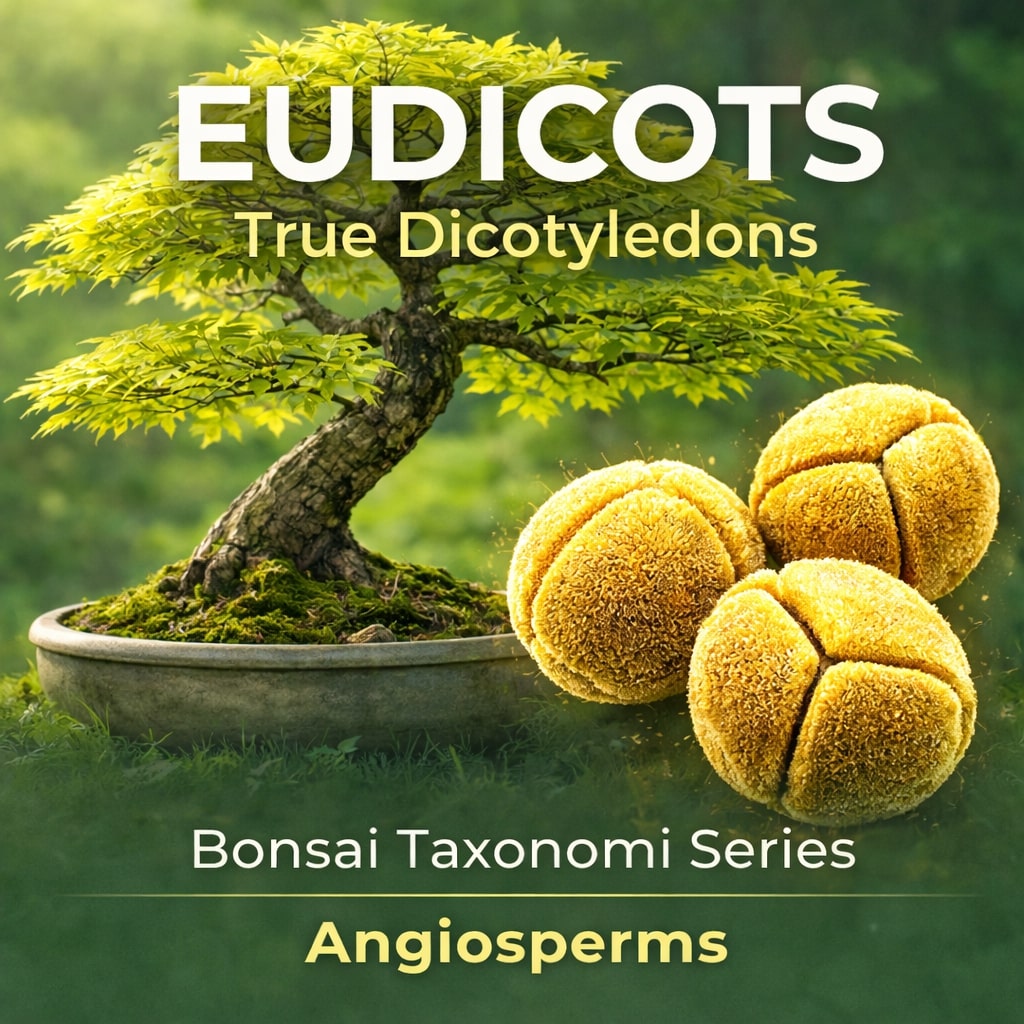
Eudicots, also known as true dicotyledons, represent one of the largest and most important groups of flowering plants. This angiosperm division includes the majority of broadleaf trees, shrubs, and flowering species commonly used in bonsai, from maples and elms to figs, azaleas, and fruiting trees.
The defining feature of Eudicots is the presence of two cotyledons, or seed leaves, at germination. While this trait appears early in a plant’s life, it is linked to a wide range of structural and growth characteristics that persist throughout maturity. These characteristics influence leaf shape, branching behaviour, vascular structure, and the ability to respond to pruning, all of which are central to bonsai cultivation.
In bonsai, Eudicots behave very differently from conifers. They typically backbud more readily, tolerate heavier pruning, and respond well to leaf reduction and ramification techniques. Many also produce flowers and fruit, adding seasonal interest and design complexity that is not found in gymnosperms.
This guide explores Eudicots from a bonsai-focused perspective, explaining where true dicotyledons fit within plant taxonomy, what defines them biologically, and why they form the backbone of broadleaf bonsai. Rather than presenting abstract botany, the goal is to connect classification directly to practical understanding, helping bonsai practitioners work more effectively with flowering trees at every stage of development.
Table of Contents
Taxonomy
– Kingdom: Plantae (Plant Kingdom)
— Clade: Embryophytes (Land Plants)
— Clade: Polysporangiophytes (Multiple Sporangia)
—- Clade: Tracheophytes (Vascular Plants)
—– Superdivision: Spermatophytes (Seed Plants)
—— Clade: Angiospermae (Flowering Plants)
——- Division: Eudicots (True Dicotyledons)
What are Eudicots (true dicotyledons)?
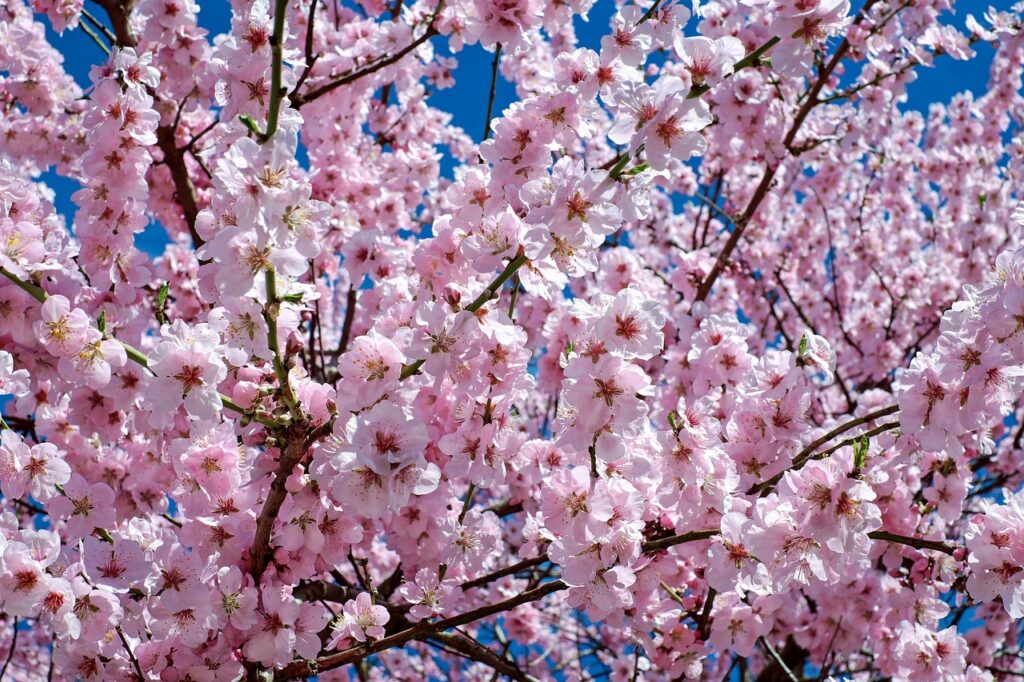
Eudicots, also known as true dicotyledons, are a major division of flowering plants (angiosperms) defined by a combination of seed, pollen, and structural characteristics. They represent the largest clade of angiosperms and include the majority of broadleaf trees and shrubs used in bonsai.
The term eudicot literally means “true dicot”, and it was introduced to replace the older and less accurate concept of “dicots”. Historically, many flowering plants were grouped as dicots simply because they were not monocots. Modern botanical research showed that this older grouping was not evolutionarily consistent, leading to the adoption of Eudicots as a scientifically valid, monophyletic group.
The most recognisable feature of Eudicots is the presence of two cotyledons, or seed leaves, when the plant germinates. These cotyledons emerge before the true leaves and play an early role in nutrient storage and seedling development. While cotyledons are only visible at the earliest stage of growth, this trait is linked to deeper structural patterns that remain throughout the plant’s life.
Beyond seed structure, Eudicots are defined by a suite of shared characteristics, including:
- Broad leaves, often with netted or branching veins
- Vascular bundles arranged in a ring within the stem
- Floral parts commonly arranged in multiples of four or five
- The presence of tricolpate pollen, a key evolutionary marker
Together, these traits distinguish true dicotyledons from monocots, which typically produce a single cotyledon, parallel leaf veins, and different floral arrangements.
For bonsai practitioners, understanding what Eudicots are is more than a taxonomic exercise. Most deciduous and evergreen broadleaf bonsai belong to this group, and their shared biological traits explain why they respond well to pruning, backbudding, defoliation, and fine ramification. Recognising a tree as a eudicot provides immediate insight into how it is likely to grow, recover, and mature in bonsai cultivation.
Key characteristics that define Eudicots
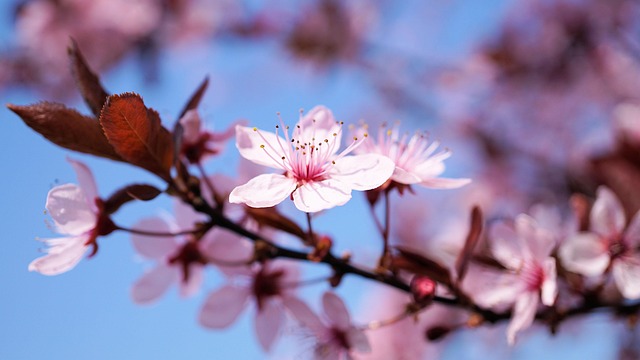
Eudicots are defined by a combination of seed, leaf, stem, and floral characteristics that remain consistent across the group. These traits are not just useful for botanical classification. They directly explain why Eudicots behave the way they do in bonsai, particularly in terms of pruning response, ramification, and leaf refinement.
Two cotyledons at germination
The defining feature of Eudicots is the presence of two cotyledons, or seed leaves, when the plant germinates. While this trait is only visible early in the plant’s life, it reflects a broader developmental pattern that influences how the plant allocates energy, produces shoots, and recovers from pruning.
In bonsai, this underlying structure contributes to the strong regenerative ability seen in many eudicot species, including reliable backbudding and vigorous response to cut-back.
Broad leaves with netted venation
Most Eudicots have broad leaves with a branching, net-like vein structure rather than parallel veins. This venation pattern allows damage to part of the leaf to be compensated by other veins, contributing to the plant’s resilience.
For bonsai growers, this means:
- Leaves often reduce in size with correct pruning
- Partial defoliation is possible in many species
- Fine ramification can be developed over time
This is a key reason why eudicot bonsai can achieve refined silhouettes and dense branching far more quickly than conifers.
Vascular bundles arranged in a ring
In Eudicots, the vascular tissue within the stem is arranged in a ring, rather than being scattered. This structural trait allows the plant to thicken its trunk and branches evenly through secondary growth.
In bonsai, this translates to:
- Predictable trunk thickening
- Clear taper development
- Strong response to directional pruning
This ringed vascular system is one reason why many eudicot trees respond well to trunk chopping and branch replacement techniques.
Flexible branching and growth habits
Eudicots generally have less rigid apical dominance than conifers. While they still exhibit upward growth tendencies, energy can be redirected more easily to lower branches.
This flexibility allows bonsai practitioners to:
- Correct design mistakes more easily
- Rebuild structure through aggressive pruning
- Develop balanced canopies over shorter timeframes
This adaptability makes eudicot species especially suitable for learning advanced bonsai techniques.
Floral structure and reproductive traits
Eudicot flowers typically have parts arranged in multiples of four or five, a trait linked to their evolutionary lineage. While flowering is not always a design focus in bonsai, it introduces seasonal variation and additional aesthetic options.
Flowering and fruiting also influence energy management, requiring bonsai growers to balance structural refinement with reproductive effort.
Why these traits matter in bonsai
Taken together, these characteristics explain why Eudicots form the backbone of broadleaf bonsai. Their ability to backbud, reduce leaf size, heal wounds, and respond predictably to pruning makes them highly adaptable to container cultivation.
Understanding these defining traits helps bonsai practitioners choose appropriate techniques, set realistic timelines, and work in harmony with the biology of true dicotyledons rather than forcing unsuitable methods onto the tree.
Tricolpate pollen and why it matters
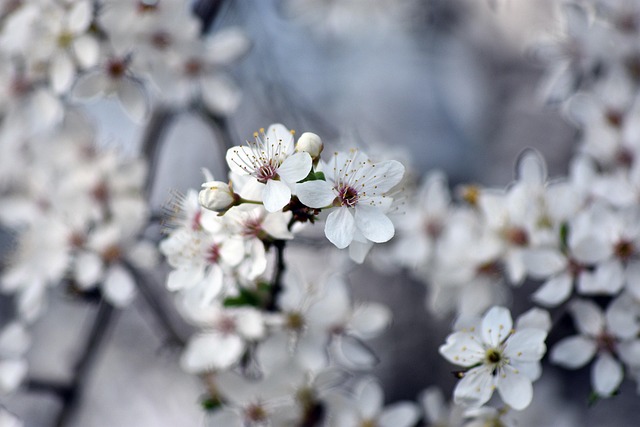
One of the most important features that defines Eudicots as a natural group is their pollen structure. Unlike many other flowering plants, true dicotyledons produce tricolpate pollen, a characteristic that played a major role in reshaping modern plant classification.
Tricolpate pollen grains have three elongated grooves, known as colpi, running parallel to the pollen’s polar axis. These grooves act as exit points for the pollen tube during fertilisation and allow the grain to expand and contract as moisture levels change. While this detail may seem microscopic, it represents a profound evolutionary distinction.
Before the concept of Eudicots was established, flowering plants were often grouped loosely as “dicots” based on visible traits such as leaf shape or seed structure. The discovery that a large, coherent group of flowering plants shared this three-grooved pollen structure provided strong evidence that these plants formed a true evolutionary lineage. This is why early botanical literature often referred to Eudicots as tricolpates, a term still used in scientific contexts today.
Tricolpate pollen matters because it reflects:
- A shared evolutionary origin
- A clear separation from monocots, which typically have single-grooved (monosulcate) pollen
- A reliable trait that remains consistent even when visible features vary
Molecular studies later confirmed that plants with tricolpate pollen also share deep genetic similarities, reinforcing the idea that Eudicots are a monophyletic group, meaning they all descend from a common ancestor.
For bonsai practitioners, pollen structure is not something managed directly, but it helps explain why Eudicots behave consistently across many unrelated-looking species. Trees as different as maples, elms, figs, and azaleas all fall within the Eudicots because they share this hidden structural trait. That shared lineage underpins their similar responses to pruning, growth patterns, and regenerative ability.
In short, tricolpate pollen is one of the quiet foundations of Eudicots. It is the feature that allowed botanists to define true dicotyledons accurately, and it helps explain why such a wide range of broadleaf bonsai species can be trained using similar principles despite their outward differences.
Evolutionary history of Eudicots
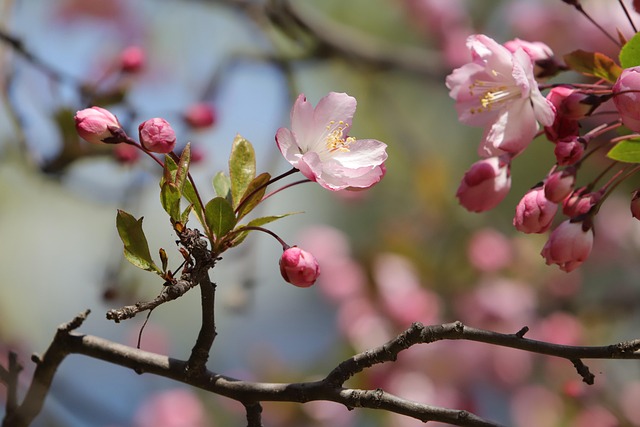
The evolutionary history of Eudicots explains why this group became the dominant lineage of flowering plants and why true dicotyledons are so diverse and adaptable in bonsai cultivation. Rather than emerging all at once, Eudicots evolved gradually as flowering plants diversified and refined their structures over millions of years.
Eudicots first appeared during the Early Cretaceous period, roughly 130 to 150 million years ago. At this time, flowering plants were beginning to expand rapidly, experimenting with new reproductive strategies, leaf forms, and growth habits. The emergence of tricolpate pollen marked a major evolutionary turning point, separating Eudicots from earlier angiosperm lineages that retained simpler pollen structures.
As Eudicots evolved, they developed traits that allowed them to colonise a wide range of environments. Broad leaves with netted venation improved photosynthetic efficiency, while ringed vascular systems supported stronger stems and more complex branching. These innovations gave Eudicots a competitive advantage over earlier flowering plants and many gymnosperms, particularly in temperate and seasonal climates.
Fossil evidence shows that early Eudicots diversified quickly. By around 120 million years ago, multiple eudicot lineages were already established, occupying forests, open woodlands, and disturbed habitats. This rapid diversification laid the groundwork for the enormous variety of trees and shrubs seen today.
Over time, Eudicots became the most species-rich group of angiosperms, eventually accounting for more than two-thirds of all flowering plant species. Their success is tied to flexibility. Unlike conifers, which evolved for endurance and stability, Eudicots evolved for adaptability, rapid regeneration, and efficient reproduction.
For bonsai practitioners, this evolutionary background explains why Eudicots respond so well to intensive training. Their ability to backbud, heal wounds, adjust growth direction, and tolerate repeated pruning is not accidental. It is the result of an evolutionary strategy that favoured resilience and responsiveness over long-term rigidity.
Understanding the evolutionary history of Eudicots helps bonsai growers appreciate these trees as dynamic organisms shaped by change. This perspective encourages techniques that work with their natural adaptability, allowing broadleaf bonsai to develop quickly while still achieving refinement, balance, and seasonal character.
Basal Eudicots vs Core Eudicots (overview)
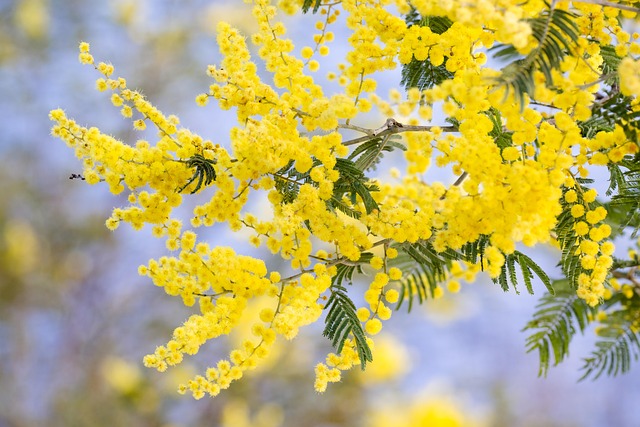
Within the Eudicots, botanists recognise a key evolutionary split between basal eudicots and core eudicots. This distinction is not about importance or quality, but about when different lineages diverged and how consistently they share defining traits. For bonsai practitioners, this overview helps explain why some broadleaf trees behave slightly differently despite all being true dicotyledons.
What are basal Eudicots?
Basal eudicots are the earliest branching members of the Eudicot lineage. They evolved soon after Eudicots separated from other flowering plants and retain some ancestral characteristics that are less uniform across the group.
Basal eudicots are considered a paraphyletic group, meaning they do not include all descendants of a single common ancestor. They share the defining eudicot traits, such as two cotyledons and tricolpate pollen, but lack the tighter structural consistency seen in later lineages.
From a bonsai perspective, basal eudicots may show:
- Greater variation in flower structure
- Less predictable growth responses between species
- Behaviour that sometimes bridges early angiosperms and more advanced broadleaf trees
Examples of basal eudicot lineages include early-diverging groups that are botanically significant but less dominant in mainstream bonsai collections.
What are Core Eudicots?
Core eudicots represent a more evolutionarily refined subgroup within the Eudicots. This group is monophyletic, meaning all its members share a single, well-defined common ancestor and a consistent set of traits.
Most familiar broadleaf trees used in bonsai fall within the core eudicots. These plants share strong structural similarities, including consistent floral patterns and highly predictable growth behaviour.
In bonsai, core eudicots are known for:
- Reliable backbudding
- Strong response to pruning and defoliation
- Predictable branching and ramification
- Broad adaptability to bonsai techniques
Because of this consistency, core eudicots form the foundation of most modern broadleaf bonsai practice.
Why this distinction matters for bonsai
Understanding the difference between basal and core eudicots helps bonsai growers set realistic expectations. While all Eudicots share certain defining traits, not all behave identically under training.
Basal eudicots may require more observation and species-specific adjustment, while core eudicots tend to respond reliably to established bonsai methods. This distinction also provides a natural transition into deeper taxonomy, allowing bonsai practitioners to move from broad classification toward more precise groupings.
This overview sets the stage for a deeper exploration of Core Eudicots, where most bonsai-relevant flowering trees are found and where structural consistency becomes a defining strength.
Major Eudicot families relevant to bonsai

The majority of broadleaf bonsai species belong to a relatively small number of Eudicot families that share traits well suited to container cultivation, pruning, and long-term refinement. While Eudicots include an enormous diversity of flowering plants, these families consistently appear in bonsai practice because of their growth behaviour, aesthetic qualities, and resilience under training.
Sapindaceae (maple family)
The Sapindaceae family includes maples and related species, which are among the most iconic deciduous bonsai trees. Maples are valued for their:
- Fine branching structure
- Strong backbudding ability
- Excellent leaf reduction potential
- Seasonal colour changes
Their predictable response to pruning and wiring makes them foundational species for broadleaf bonsai.
Rosaceae (rose family)
The Rosaceae family is one of the most important eudicot families in bonsai, particularly for flowering and fruiting trees. This family includes apples, cherries, quinces, and hawthorns.
Rosaceae species are popular in bonsai because they:
- Flower readily in containers
- Produce attractive fruit
- Respond well to structural pruning
- Develop fine ramification over time
They allow bonsai growers to combine structure, seasonal interest, and narrative design.
Fagaceae (beech and oak family)
The Fagaceae family includes beeches and oaks, both valued for their strong trunks and naturalistic appearance. These trees are often used to create powerful, mature bonsai designs.
In bonsai, Fagaceae species are known for:
- Strong apical growth
- Thick bark development
- Long-term structural stability
While slower to refine than some other families, they reward patience with imposing presence and realism.
Oleaceae (olive family)
The Oleaceae family includes olives, ashes, and privets, many of which are well suited to bonsai. Olives, in particular, are prized for their ancient appearance, twisted trunks, and tolerance of heavy pruning.
This family is valued because its members:
- Backbud reliably
- Heal wounds reasonably well
- Tolerate drought and poor soils
Oleaceae species are often used for both formal and naturalistic bonsai styles.
Ericaceae (heath family)
The Ericaceae family includes azaleas and rhododendrons, which are among the most popular flowering bonsai plants. These trees are prized for:
- Spectacular floral displays
- Fine branching when properly managed
- Compact growth habits
While they have specific soil and care requirements, their visual impact makes them staples in flowering bonsai collections.
Moraceae (fig family)
The Moraceae family includes figs, which are widely used in bonsai, especially in warmer climates. Figs are valued for:
- Extremely strong backbudding
- Rapid trunk development
- Large leaves that reduce well with training
Their forgiving nature makes them ideal for both beginners and advanced practitioners.
Why most broadleaf bonsai are Eudicots
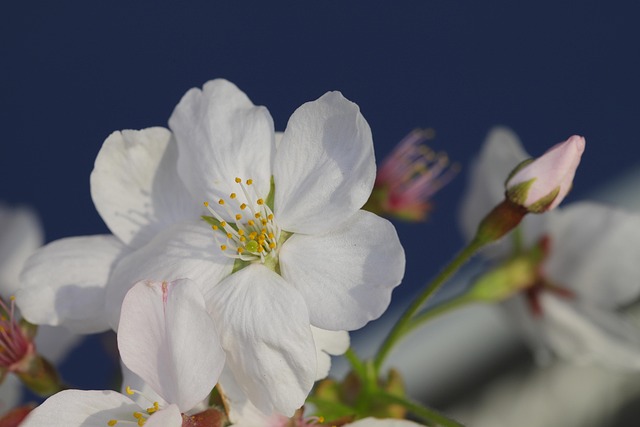
Most broadleaf bonsai belong to this division because true dicotyledons possess a combination of traits that make them exceptionally well suited to bonsai cultivation. These traits are the result of their evolutionary history as adaptable, responsive flowering plants, and they align closely with the techniques used to create refined bonsai.
One of the most important reasons is reliable backbudding. Many Eudicots can produce new shoots from old wood after pruning. This allows bonsai practitioners to correct structural mistakes, rebuild branch systems, and refine silhouettes over time. This regenerative ability is far less common in conifers and is a defining advantage of broadleaf bonsai.
Eudicots also respond well to leaf size reduction. Because their leaves have branching venation and flexible growth patterns, repeated pruning and defoliation can gradually reduce leaf size while increasing ramification. This makes it possible to create the illusion of maturity and scale in relatively small containers.
Another key factor is flexible growth and energy distribution. Eudicots generally exhibit weaker apical dominance than conifers, allowing energy to be redirected throughout the canopy more easily. This flexibility supports balanced branch development and makes it easier to maintain proportion between the trunk, primary branches, and fine twigs.
The ability to heal wounds and scars also contributes to their dominance in bonsai. Eudicots often form callus tissue efficiently, allowing large cuts to close over time. This makes techniques such as trunk chopping and branch replacement viable options during development, something that is much more limited in many conifer species.
Many in this division also offer seasonal interest through flowers, fruit, autumn colour, or leaf drop. These features add narrative depth to a bonsai and allow the tree to change throughout the year, reinforcing its connection to natural cycles.
Eudicots compared to conifers in bonsai
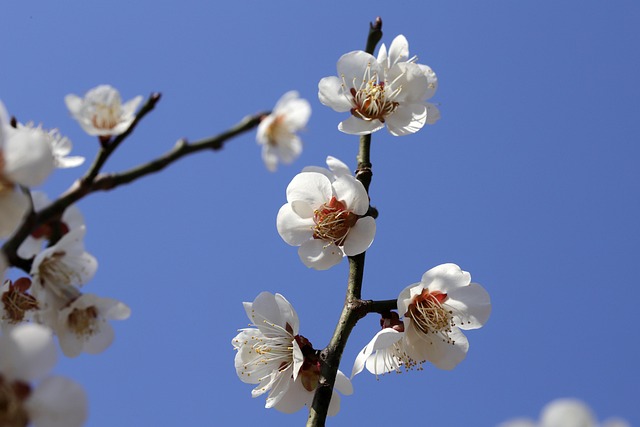
Eudicots and conifers represent two very different approaches to bonsai, shaped by their biology and evolutionary history. While both can produce exceptional bonsai, the techniques, timelines, and expectations involved are often quite different.
Eudicots are generally more adaptable and forgiving. Most true dicotyledons backbud readily on old wood, allowing bonsai practitioners to correct mistakes, rebuild branch structure, and refine silhouettes through repeated pruning. Leaf size reduction is achievable in many species, making it easier to create believable scale in smaller trees. Wounds also tend to heal more effectively, enabling techniques such as trunk chopping and aggressive branch replacement during development.
In contrast, conifers prioritise stability and endurance. Many conifers have limited backbudding and strong apical dominance, meaning structural decisions must be made early and maintained carefully. Needle and scale foliage do not reduce in the same way broad leaves do, and refinement relies more on shoot selection and energy management than direct trimming. Large scars often remain visible for life, which places greater importance on thoughtful design from the beginning.
From a developmental standpoint, this division typically allows for faster progress. Their responsiveness makes them well suited to learning advanced techniques and experimenting with design. Conifers develop more slowly, but reward patience with dramatic age, powerful trunks, and enduring deadwood features.
Conclusion: Eudicots as the backbone of broadleaf bonsai
Eudicots, or true dicotyledons, form the biological and practical foundation of broadleaf bonsai. Their defining traits, from two cotyledons at germination to flexible growth patterns and efficient wound healing, explain why so many of the most popular and versatile bonsai species belong to this group.
The evolutionary success of this division produced plants that are adaptable, responsive, and capable of rapid regeneration. In bonsai, these qualities translate into reliable backbudding, effective leaf reduction, and the ability to reshape structure over time. This adaptability allows bonsai practitioners to refine design gradually, correct mistakes, and develop trees that feel mature while still responding to training.
This division also brings seasonal depth to bonsai. Flowers, fruit, autumn colour, and winter silhouettes allow a single tree to tell multiple visual stories throughout the year. This seasonal rhythm, combined with structural flexibility, makes true dicotyledons uniquely expressive within the art of bonsai.
By understanding Eudicots as a distinct angiosperm division rather than a vague category of “broadleaf trees”, bonsai growers gain clearer insight into how and why these plants behave as they do. This knowledge bridges taxonomy and technique, helping practitioners work with the natural strengths of Eudicots rather than against them.
As the backbone of broadleaf bonsai, Eudicots provide the balance to conifer-dominated traditions, offering creativity, adaptability, and seasonal beauty. Mastery of broadleaf bonsai begins with understanding true dicotyledons, making Eudicots an essential foundation for any serious bonsai practice.