

Pinophyta is the plant division that includes all living conifers, and it forms the backbone of some of the most iconic and long-lived bonsai trees in the world. Pines, junipers, cypresses, yews, and redwoods all belong to this ancient gymnosperm group, valued in bonsai for their strength, resilience, and ability to convey great age in miniature form.
Unlike flowering trees, Pinophyta species do not produce flowers or fruit. Instead, they reproduce using cones and exposed seeds, a defining feature of conifers. This difference influences how these trees grow, respond to pruning, develop foliage, and age over time, all of which are critical considerations when cultivating conifer bonsai.
In this guide, we explore Pinophyta from a bonsai perspective, explaining where conifers fit into plant classification, what makes them unique, and why they dominate traditional and modern bonsai practice. Rather than focusing purely on academic botany, this article connects taxonomy directly to styling, care, and long-term development, helping bonsai enthusiasts understand not just what Pinophyta is, but why it matters.
Table of Contents
Taxonomy
– Kingdom: Plantae (Plant Kingdom)
— Clade: Embryophytes (Land Plants)
— Clade: Polysporangiophytes (Multiple Sporangia)
—- Clade: Tracheophytes (Vascular Plants)
—– Superdivision: Spermatophytes (Seed Plants)
—— Clade: Gymnospermae (Naked Seeds)
——- Division: Pinophyta (Conifers)
What is Pinophyta?

Pinophyta is the plant division that includes all living conifers, and it forms the backbone of some of the most iconic and long-lived bonsai trees in the world. Pines, junipers, cypresses, yews, and redwoods all belong to this ancient gymnosperm group, valued in bonsai for their strength, resilience, and ability to convey great age in miniature form.
Unlike flowering trees, Pinophyta species do not produce flowers or fruit. Instead, they reproduce using cones and exposed seeds, a defining feature of conifers. This difference influences how these trees grow, respond to pruning, develop foliage, and age over time, all of which are critical considerations when cultivating conifer bonsai.
In this guide, we explore Pinophyta from a bonsai perspective, explaining where conifers fit into plant classification, what makes them unique, and why they dominate traditional and modern bonsai practice. Rather than focusing purely on academic botany, this article connects taxonomy directly to styling, care, and long-term development, helping bonsai enthusiasts understand not just what Pinophyta is, but why it matters.
What defines a conifer?

A conifer is a seed-bearing plant that belongs to the gymnosperm division Pinophyta. What sets conifers apart from other trees, especially flowering plants, is how they grow, reproduce, and respond to their environment. These defining traits are also the reason conifers are so distinctive, and sometimes challenging, in bonsai cultivation.
The most fundamental defining feature of a conifer is cone-based reproduction. Instead of flowers and fruit, conifers produce male and female cones, with seeds developing exposed on cone scales rather than enclosed within fruit. This reproductive system is one of the key characteristics that separates Pinophyta from flowering trees (angiosperms).
Another defining trait of conifers is their woody, perennial growth. All true conifers are woody plants, most commonly trees or large shrubs, with continuous secondary growth. This allows them to thicken their trunks and branches over many years, making them especially well suited to bonsai styles that emphasise age, strength, and permanence.
Conifers are also defined by their foliage structure. Instead of broad leaves, most conifers have:
- Needle-like leaves (such as pines and spruces), or
- Scale-like foliage (such as junipers and cypresses)
These leaf forms reduce water loss, resist cold and wind, and influence how conifers are pruned and shaped as bonsai. Unlike deciduous trees, many conifers do not readily backbud on old wood, making careful planning essential.
Most conifers are evergreen, retaining their foliage year-round. While there are notable exceptions, such as larches and dawn redwoods, the evergreen habit contributes to the visual stability and year-round presence that many bonsai growers value.
Finally, conifers are typically wind-pollinated and often produce resin. Resin helps protect the tree from pests, disease, and physical damage, but it also affects pruning, carving, and wound healing in bonsai practice.
In summary, a conifer is defined by:
- Cone-based reproduction
- Woody, long-lived growth
- Needle or scale foliage
- Predominantly evergreen habit
- Adaptations for harsh environments
These characteristics explain why conifers behave differently from flowering bonsai trees, and why understanding Pinophyta is essential for anyone working with conifer bonsai.
Evolutionary background of Pinophyta

The evolutionary history of Pinophyta helps explain why conifers behave the way they do in bonsai cultivation. Their growth habits, longevity, wood structure, and resilience are not accidents of gardening, but the result of hundreds of millions of years of adaptation. Understanding this background gives bonsai practitioners deeper insight into why conifers demand patience, long-term planning, and respect for their natural rhythms.
Origins of Pinophyta in deep time
Pinophyta first appeared more than 300 million years ago, long before flowering plants evolved. Early conifers emerged during the late Carboniferous period, at a time when Earth’s climate was changing and many plant groups were struggling to survive.
Unlike early seed plants that depended on moist environments for reproduction, conifers evolved exposed seeds and wind pollination, allowing them to colonise drier, colder, and more unstable landscapes. This adaptation is a defining reason conifers still dominate harsh environments today, from alpine slopes to boreal forests.
Dominance before flowering plants
For much of Earth’s history, conifers were the dominant trees on land. During the Mesozoic era, conifer forests covered vast areas of the planet, shaping entire ecosystems long before flowering plants became widespread.
When angiosperms later diversified and began to dominate many regions, conifers did not disappear. Instead, many species retreated into ecological niches where their ancient adaptations gave them an advantage. This retreat is why modern conifers often appear in extreme environments and why they tend to grow slowly but persist for centuries.
Survival traits that matter in bonsai
Many of the traits bonsai artists value most in conifers come directly from their evolutionary history. These include:
- Exceptional longevity, often measured in hundreds or thousands of years
- Dense, durable wood capable of surviving physical damage
- Strong apical growth patterns developed to compete for light
- Natural deadwood formation from wind, snow, and age
These traits make conifers ideal for bonsai styles that emphasise age, struggle, and endurance. Deadwood features such as jin and shari are not artificial concepts imposed on conifers, but reflections of how Pinophyta species naturally age in the wild.
Relict species and “living fossils”
Some conifers are considered relict species, surviving in small, isolated regions while their relatives vanished long ago. Trees such as the dawn redwood and certain ancient pines are often described as “living fossils”.
From a bonsai perspective, these species embody the idea of time compressed into miniature form. Their slow growth, ancient lineage, and distinctive structure make them powerful subjects for bonsai that aim to convey history rather than rapid refinement.
Why conifers evolve slowly and grow slowly
Because Pinophyta evolved to survive long-term environmental stress rather than rapid change, most conifers grow slowly and respond cautiously to disturbance. This evolutionary strategy explains why:
- Heavy pruning must be carefully timed
- Backbudding is limited compared to deciduous trees
- Development is measured in years rather than seasons
For bonsai growers, this slow pace is not a disadvantage, but a defining strength. Conifers reward patience with stability, character, and a sense of permanence that few other plant groups can match.
The evolutionary background of Pinophyta is the foundation of conifer bonsai. By working with these ancient survival strategies rather than against them, bonsai practitioners can create trees that feel timeless, grounded, and deeply connected to the natural history of conifers.
Major conifer families used in bonsai

Within the division Pinophyta, several conifer families are especially important in bonsai due to their growth habits, foliage characteristics, and long-term styling potential. While Pinophyta includes a wide range of conifers found across the world, only a handful of families consistently perform well and are widely used in bonsai practice.
Understanding these families helps bonsai growers recognise why certain trees behave the way they do, and why care techniques vary even among conifers.
Pinaceae (the pine family)
The Pinaceae family is one of the most significant conifer families in bonsai. It includes pines, spruces, firs, cedars, and hemlocks.
From a bonsai perspective, Pinaceae species are valued for:
- Strong trunk development
- Distinct needle foliage
- Clear seasonal growth cycles
Pines, in particular, are foundational to traditional bonsai and are often associated with classical styles. However, many Pinaceae species have limited backbudding and require precise timing when pruning and decandling. Their inclusion in bonsai demands a solid understanding of conifer growth behaviour.
Cupressaceae (the cypress family)
The Cupressaceae family includes junipers, cypresses, and redwoods, making it one of the most widely used conifer families in bonsai.
This family is especially popular because:
- Many species backbud more reliably than pines
- Scale and needle foliage respond well to refinement
- Trees tolerate shaping, wiring, and deadwood techniques
Junipers, in particular, are often recommended as entry points into conifer bonsai, while still offering immense depth for advanced styling. Cupressaceae species are also well suited to dramatic deadwood features, reflecting their natural adaptation to harsh environments.
Taxaceae (the yew family)
The Taxaceae family, which includes yews, occupies a unique place in bonsai. These conifers differ noticeably from many others in both appearance and behaviour.
Yews are prized in bonsai for:
- Soft, flat needles
- Exceptional shade tolerance
- Strong ability to backbud on old wood
Unlike many conifers, Taxaceae species are highly forgiving and adaptable, making them excellent for both beginners and advanced practitioners. Their slow growth and dense foliage allow for refined, naturalistic bonsai designs.
Araucariaceae (ancient southern conifers)
The Araucariaceae family includes ancient conifers such as monkey puzzle trees and Norfolk Island pines. While historically significant, this family plays a more limited role in bonsai.
In bonsai terms:
- Growth patterns are often coarse
- Foliage can be difficult to refine
- Long-term styling options are limited
These trees are better suited to botanical interest and collection rather than traditional bonsai refinement, though they may still appeal to enthusiasts interested in ancient conifer lineages within Pinophyta.
Podocarpaceae (podocarps)
The Podocarpaceae family includes podocarps and related species, many of which are used in bonsai in warmer climates.
Podocarps are notable for:
- Broad, leaf-like needles that resemble angiosperms
- Strong tolerance for pruning and shaping
- Adaptability to container cultivation
Although they are true conifers, podocarps often behave more like broadleaf trees in bonsai care, making them a useful bridge between conifer and non-conifer techniques.
Why family-level understanding matters in bonsai
Each conifer family within Pinophyta carries distinct evolutionary traits that influence:
- Pruning response
- Wiring tolerance
- Foliage refinement
- Long-term development speed
By recognising which family a conifer belongs to, bonsai growers can make better decisions about styling, care, and expectations. This family-level understanding forms a crucial step between general conifer knowledge and species-specific bonsai care.
Conifer foliage types and bonsai implications
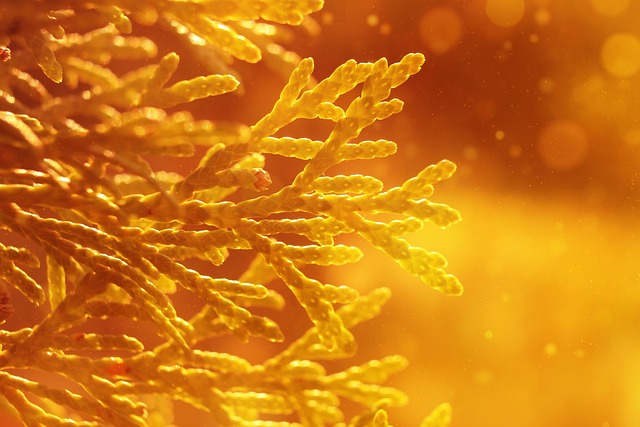
One of the most important characteristics of conifers in Pinophyta is their foliage type. Conifer foliage does far more than define a tree’s appearance. It directly affects pruning techniques, refinement speed, wiring strategy, and long-term bonsai planning. Understanding foliage types helps bonsai growers work with the tree’s biology instead of against it.
Needle foliage
Needle foliage is most commonly associated with conifers such as pines, spruces, firs, and cedars. These needles may appear singly, in clusters, or in bundles depending on the species.
From a bonsai perspective, needle foliage has several implications:
- Needles do not reduce in size as easily as broad leaves
- Refinement relies more on shoot selection than leaf trimming
- Bud placement is critical, as backbudding can be limited
Pines are a clear example of how needle foliage demands patience and technique. Instead of cutting needles directly, bonsai growers manage energy through candle pruning, decandling (in specific species), and selective thinning. The result is slower refinement, but greater long-term stability and realism.
Scale foliage
Scale foliage is found in many members of the cypress family, including junipers and some cypresses. The foliage consists of small overlapping scales that hug the branch closely.
Scale foliage offers several bonsai advantages:
- Naturally compact appearance
- Easier pad formation
- More forgiving response to pruning
Because scale foliage can regenerate more readily than needle foliage, trees such as junipers are well suited to shaping and refinement over time. However, improper pruning, such as cutting scales directly instead of thinning shoots, can still weaken the tree.
Juvenile versus adult foliage
Many conifers, especially junipers, display juvenile foliage early in life or when under stress. Juvenile foliage is typically sharper, needle-like, and less refined than adult foliage.
In bonsai, juvenile foliage is significant because:
- It often appears after heavy pruning or repotting
- It indicates stress or energy imbalance
- It is usually less desirable aesthetically
Encouraging the transition from juvenile to adult foliage requires careful energy management, consistent health, and appropriate pruning techniques. Bonsai refinement is often delayed until stable adult foliage is established.
Foliage arrangement and light exposure
Conifer foliage is usually arranged spirally along shoots, even when it appears flattened. This arrangement evolved to maximise light capture in forest environments.
For bonsai growers, this means:
- Interior foliage must receive sufficient light
- Overcrowded branches can weaken rapidly
- Strategic thinning is essential for long-term health
Ignoring foliage arrangement often leads to leggy growth and interior dieback, especially in dense conifer bonsai.
Evergreen foliage and year-round presence
Most conifers are evergreen, retaining their foliage for several years. This evergreen habit affects bonsai care by:
- Making structural flaws visible year-round
- Allowing continuous photosynthesis
- Requiring consistent care even outside growing seasons
Because foliage is not shed annually like deciduous trees, mistakes remain visible longer, reinforcing the need for thoughtful, gradual development.
Why foliage type shapes bonsai strategy
Foliage type determines how quickly a conifer can be refined and how it must be maintained over time. Needle conifers reward long-term planning and restraint, while scale-leaved conifers allow more flexibility and faster visual progress.
Recognising these differences is essential when working with Pinophyta. Foliage is not just a visual feature, but a guide to how each conifer species should be trained, pruned, and respected in bonsai cultivation.
Growth patterns and wood characteristics of conifers
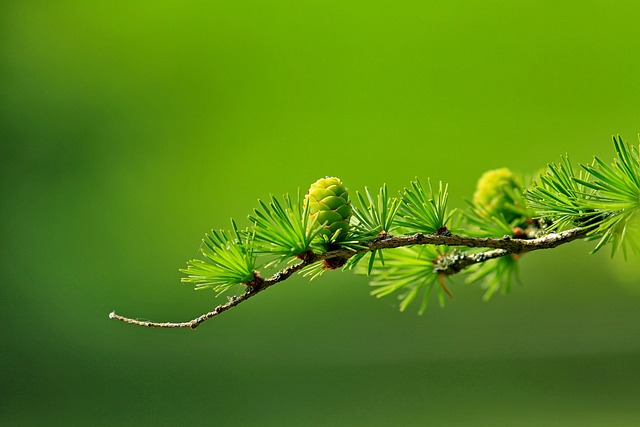
The way conifers grow and the structure of their wood are direct results of their evolution within Pinophyta, and both have major implications for bonsai cultivation. Conifers do not grow or respond like flowering trees, and many common bonsai mistakes come from treating them as if they do.
Understanding growth patterns and wood characteristics allows bonsai practitioners to plan development over years rather than seasons.
Strong apical dominance
Most conifers exhibit strong apical dominance, meaning the highest point of the tree naturally grows more vigorously than lower branches. This growth strategy evolved to help conifers compete for light in dense forests.
In bonsai, apical dominance means:
- Upper branches thicken faster than lower ones
- Lower branches can weaken or die if not protected
- Energy must be deliberately redirected downward
Without careful management, conifer bonsai can quickly become top-heavy, losing the balanced silhouette required for convincing age and stability.
Directional growth and limited backbudding
Unlike many deciduous trees, most conifers have limited ability to backbud on old wood. New growth usually emerges only where foliage already exists.
This has several important bonsai implications:
- Branch placement must be planned early
- Removing all green growth from a branch can permanently kill it
- Structural mistakes are difficult or impossible to correct later
This growth behaviour is why conifer bonsai development emphasises foresight and restraint rather than frequent hard pruning.
Seasonal growth cycles
Conifers follow predictable seasonal growth rhythms, especially in temperate climates. Growth typically occurs in flushes rather than continuously.
For bonsai growers, this means:
- Timing of pruning is critical
- Heavy work must align with active growth periods
- Incorrect timing can stall development for years
Pines, in particular, require precise seasonal techniques such as candle control, which rely on understanding how growth energy moves through the tree.
Tracheid-based wood structure
Conifer wood is composed almost entirely of tracheids, long, narrow cells that conduct water and provide structural support. Unlike deciduous trees, conifers lack the complex vessel systems found in hardwoods.
This wood structure results in:
- Strong, fibrous wood
- High resistance to compression and wind damage
- Predictable grain patterns
In bonsai, this makes conifers especially suitable for carving and deadwood techniques, as the grain holds form well over time.
Deadwood formation and durability
Deadwood features such as jin and shari are hallmarks of conifer bonsai. These features are not artificial embellishments, but reflections of how conifers age in nature.
Because conifer wood:
- Resists decay
- Dries slowly and evenly
- Retains structure for decades
Deadwood can be preserved and refined with minimal chemical treatment compared to deciduous species. This durability allows conifer bonsai to convey extreme age and survival.
Resin production and wound response
Many conifers produce resin when wounded. Resin acts as a natural sealant, protecting the tree from pests and infection.
In bonsai practice:
- Resin can slow healing of large cuts
- Excessive resin flow may indicate stress
- Carving and pruning should be deliberate and minimal
While resin is protective, it also means conifers rarely heal scars as smoothly as deciduous trees, reinforcing the importance of careful branch selection and placement.
Conifer reproduction: cones instead of flowers
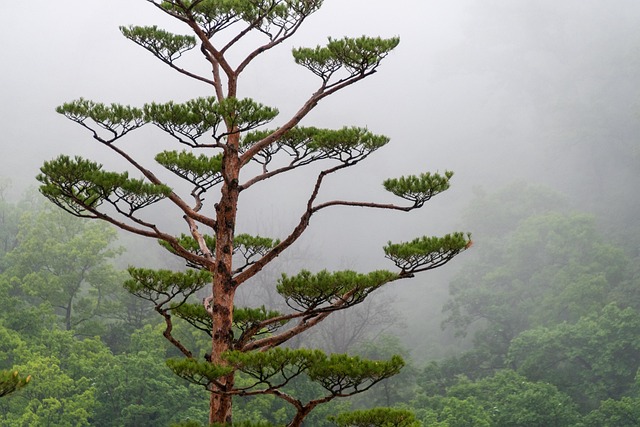
One of the defining characteristics of conifers in Pinophyta is that they reproduce using cones rather than flowers. This distinction separates conifers from flowering trees and directly influences how they grow, mature, and are managed as bonsai.
Male and female cones
Conifers produce two types of cones:
- Male cones, which release pollen
- Female cones, which develop and protect the seeds
In most conifer species, both male and female cones appear on the same tree, usually at different positions. Pollination occurs when wind carries pollen from the male cones to the female cones, a process that does not rely on insects or animals.
For bonsai growers, this wind-based reproduction explains why conifers do not produce showy flowers and why their reproductive structures are often subtle or easily overlooked.
Exposed seeds and the gymnosperm trait
Unlike flowering plants, where seeds are enclosed within fruit, conifers produce exposed seeds that sit openly on cone scales. This is the defining gymnosperm trait and a core feature of Pinophyta.
In bonsai, this means:
- No fruiting cycles to manage
- No flower-based energy drain
- Reproductive effort is usually minimal in young or heavily trained trees
Because bonsai cultivation prioritises controlled growth and refinement, cone production is often limited or absent, especially in smaller or younger trees.
When cones appear on bonsai
Cones generally appear only when a conifer is:
- Mature
- Healthy and stable
- Experiencing minimal stress
In bonsai, cone production is most common in older, well-established trees that are no longer undergoing heavy structural work. Their presence can be a sign of balance and long-term health rather than a goal in itself.
However, excessive cone production can divert energy away from foliage and branch development. For this reason, bonsai growers often remove cones unless they contribute to the tree’s seasonal character or educational value.
Cone structure and longevity
Conifer cones are typically woody and slow to develop. In some species, cones take more than one growing season to mature fully. This slow reproductive cycle mirrors the overall growth pace of conifers.
From a bonsai perspective, this reinforces the idea that:
- Conifers operate on long timelines
- Development is measured in years rather than months
- Stability is prioritised over rapid change
Why flowers are not missed in conifer bonsai
Although conifers lack flowers, this absence is not a disadvantage in bonsai. Instead, it shifts the visual focus to:
- Trunk movement
- Bark texture
- Foliage structure
- Deadwood and age features
Conifer bonsai is about conveying endurance and time, not seasonal blooms. Cones, when present, act as quiet accents rather than focal points.
Reproduction as a secondary concern in bonsai
In bonsai cultivation, reproduction is rarely a priority. Most conifers are propagated through cuttings, grafting, or nursery-grown material rather than seed. Cone production is therefore treated as a natural by-product of maturity, not a cultivation goal.
Understanding conifer reproduction helps bonsai practitioners appreciate why these trees behave differently from flowering species and why patience, stability, and restraint are essential when working with Pinophyta.
Natural habitats and ecological adaptations of Pinophyta
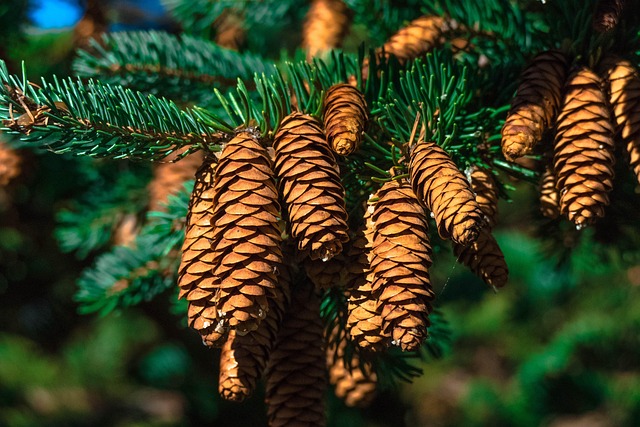
The natural habitats of Pinophyta explain many of the traits that make conifers both resilient and demanding as bonsai. Conifers evolved to survive in environments where conditions are harsh, resources are limited, and competition is intense. These ecological adaptations are deeply embedded in how conifers grow, respond to stress, and must be cared for in containers.
Many conifers originate from cold, windy, or mountainous regions, including boreal forests, alpine slopes, coastal cliffs, and nutrient-poor soils. Pines, spruces, firs, and larches dominate vast northern forests, while junipers and cypresses thrive in rocky, exposed landscapes where few other trees can survive. These environments shaped conifers into plants that prioritise survival over speed.
One of the most important adaptations of Pinophyta is reduced water loss. Needle and scale foliage minimises surface area, while thick, waxy coatings help prevent dehydration in freezing winds or dry conditions. In bonsai, this translates into trees that prefer free-draining soil and dislike constantly wet roots, even though they may tolerate drought better than many deciduous species.
Conifers are also adapted to high light exposure. Many species evolved in open or elevated habitats with strong sunlight and little canopy cover. This is why most conifer bonsai require full outdoor conditions and struggle indoors. Insufficient light quickly leads to weak growth, elongated shoots, and interior foliage loss.
Another key adaptation is tolerance of poor or shallow soils. In nature, many conifers anchor themselves in cracks, scree, or thin mountain soils. This makes them well suited to shallow bonsai containers, but only if drainage is excellent and roots are not suffocated. Compacted or waterlogged soil works directly against their evolutionary design.
Cold tolerance is another defining trait of Pinophyta. Many conifers evolved to withstand long winters, snow load, and freezing temperatures. Their conical forms, flexible branches, and strong wood help shed snow and resist breakage. For bonsai growers, this means many conifers require winter dormancy and should not be protected from cold too aggressively unless species-specific needs demand it.
Fire, wind, and age have also shaped conifer form. In the wild, broken branches, lightning strikes, and environmental damage are common. These forces contribute to the twisted trunks, exposed roots, and deadwood that bonsai artists seek to recreate. What appears dramatic in bonsai is often a direct reflection of natural conifer survival strategies.
Understanding the natural habitats and ecological adaptations of Pinophyta allows bonsai practitioners to make better decisions about placement, watering, soil composition, and styling. When conifers are treated as trees evolved for endurance rather than comfort, they respond with strength, stability, and the timeless character that defines great conifer bonsai.
Conclusion: Pinophyta as the foundation of conifer bonsai
Pinophyta is more than a botanical classification. It is the evolutionary and structural foundation behind many of the most respected and enduring bonsai trees. Pines, junipers, cypresses, yews, and other conifers all carry traits shaped by millions of years of survival, and those traits define how they must be approached in bonsai.
From cone-based reproduction and evergreen foliage to slow growth, strong apical dominance, and durable wood, conifers demand a different mindset than flowering trees. They reward patience over speed, planning over correction, and restraint over constant intervention. These qualities are not limitations, but strengths that allow conifer bonsai to convey age, endurance, and quiet power.
Understanding Pinophyta helps bonsai practitioners see conifers not as difficult trees, but as honest trees. They respond clearly to good care and equally clearly to mistakes. When their natural habits are respected, conifers offer unmatched longevity, dramatic structure, and the ability to tell a story of time in miniature.
As the foundation of conifer bonsai, Pinophyta connects taxonomy to practice. It explains why certain techniques work, why others fail, and why some trees feel timeless even when small. By grounding bonsai cultivation in an understanding of Pinophyta, growers can move beyond imitation and begin creating conifer bonsai that feel natural, resilient, and deeply rooted in the biology of the trees themselves.