
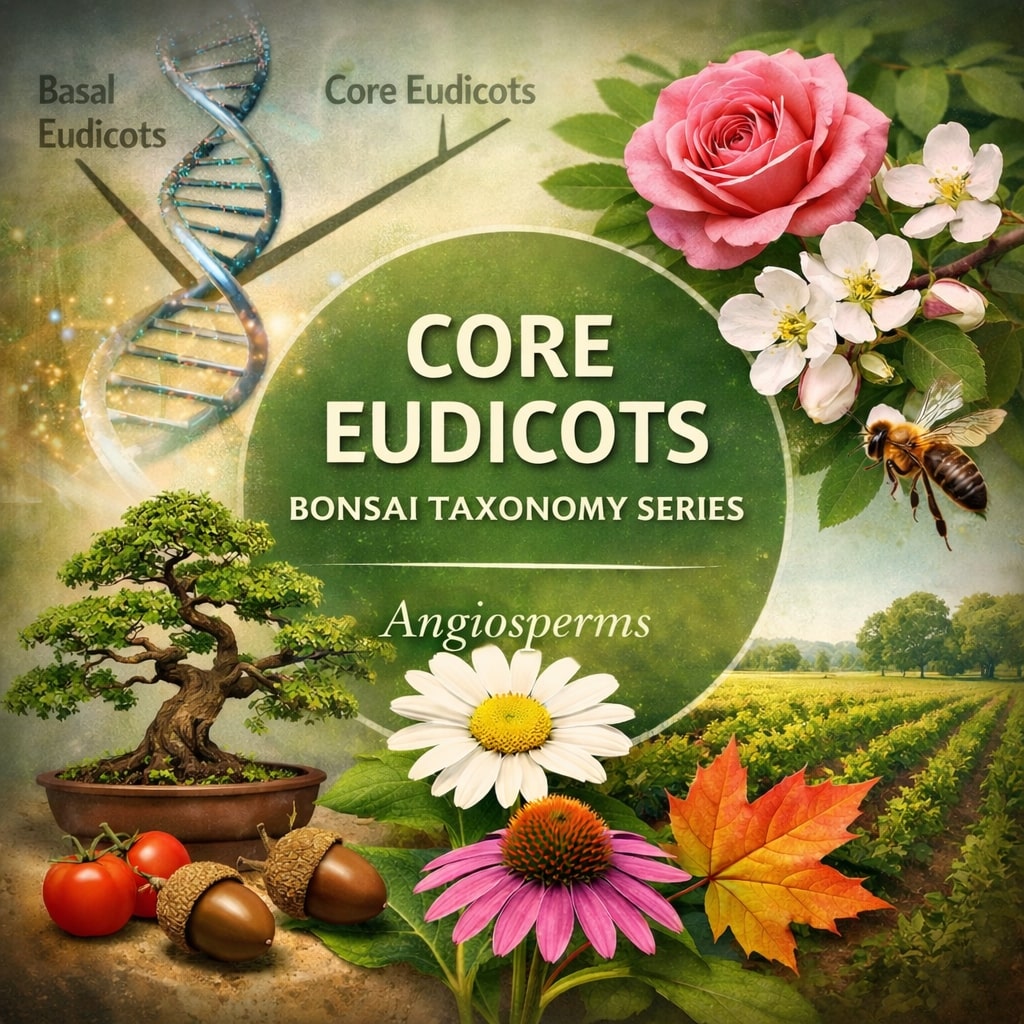
Core eudicots form the central and most diverse lineage within the broader eudicot group of flowering plants. While many plant taxonomy resources mention eudicots in passing, the subdivision into basal eudicots and core eudicots is often overlooked, despite its importance in understanding how modern flowering plants evolved.
Core eudicots represent a monophyletic group, meaning they share a common ancestor and include the vast majority of familiar trees, shrubs, crops, and ornamental plants. By exploring core eudicots as their own subdivision, this guide helps bridge the gap between high-level plant classification and the orders, families, and genera commonly encountered in horticulture and bonsai.
On Budding Backyard Bonsaist, this page serves as a taxonomy anchor, connecting the division Eudicots to the major clades and orders that follow. Understanding where core eudicots sit in the plant family tree makes it easier to recognise relationships between plants, anticipate growth and flowering traits, and navigate plant classification with confidence.
Table of Contents
Taxonomy
– Kingdom: Plantae (Plant Kingdom)
— Clade: Embryophytes (Land Plants)
— Clade: Polysporangiophytes (Multiple Sporangia)
—- Clade: Tracheophytes (Vascular Plants)
—– Superdivision: Spermatophytes (Seed Plants)
—— Clade: Angiospermae (Flowering Plants)
——- Division: Eudicots (True Dicotyledons)
——– Subdivision: Core Eudicots
What Are Core Eudicots?
Core eudicots are a major evolutionary subdivision within the division Eudicots, representing the largest and most advanced lineage of flowering plants. They form a monophyletic group, meaning all core eudicots descend from a single common ancestor and include all of that ancestor’s descendants. This distinguishes them from basal eudicots, which are an informal and paraphyletic grouping.
In practical terms, core eudicots include the vast majority of flowering plants people interact with every day. Most trees, shrubs, crops, garden plants, and bonsai species fall within this group. Their dominance in modern ecosystems reflects a long evolutionary history marked by diversification, specialisation, and adaptation to a wide range of environments.
From a scientific perspective, core eudicots are identified primarily through molecular and genetic evidence, rather than a single visible trait. While many core eudicots share common features such as more complex floral structures and diversified leaf forms, it is DNA analysis that confirms their shared ancestry. This genetic unity is what allows botanists to confidently group them as a coherent subdivision.
Within the broader eudicot lineage, core eudicots act as the foundation for most higher-level plant classification. Major clades such as Superrosids and Superasterids, along with numerous well-known orders and families, all branch from this group. Understanding what core eudicots are provides essential context for exploring plant taxonomy at deeper levels, from orders and families down to genera and species.
What Defines a Core Eudicot?
A core eudicot is defined primarily by its shared evolutionary ancestry, rather than by a single visible characteristic. Core eudicots form a monophyletic group, confirmed through molecular and genetic studies, which means all members descend from the same common ancestor. This genetic relationship is the key factor that separates core eudicots from basal eudicots within the broader eudicot lineage.
From a structural perspective, many core eudicots share a tendency toward more organised and complex floral arrangements, often with parts arranged in fives or multiples of five. While this trait is not universal, it is common enough to help distinguish core eudicots from earlier-diverging eudicot groups that show greater variability in flower structure.
Core eudicots also exhibit advanced vascular and developmental traits that support diverse growth forms. These plants include herbaceous species, shrubs, and large woody trees, reflecting a high degree of adaptability. Their success across different habitats has led to the immense diversification seen within the group.
Ultimately, what defines a core eudicot is its position within the flowering plant family tree. Core eudicots serve as the evolutionary backbone from which major clades such as Superrosids and Superasterids arise. Recognising this definition helps clarify why most familiar plant families, including many used in horticulture and bonsai, trace their origins back to this central lineage.
Core Eudicots vs Basal Eudicots
The distinction between core eudicots and basal eudicots lies in evolutionary relationships rather than simple appearance. Both groups fall under the division Eudicots, but they represent different stages in the evolutionary history of flowering plants. Understanding this difference helps clarify why some plant lineages are grouped more formally than others.
Basal eudicots is an informal term used for early-diverging eudicot lineages. This group is paraphyletic, meaning it includes some, but not all, descendants of a common ancestor. Because of this, basal eudicots do not form a single, clearly defined evolutionary branch. They represent transitional forms that split off before the emergence of the more unified core eudicot lineage.
In contrast, this subdivision form a monophyletic group. All core eudicots share a single common ancestor, and all descendants of that ancestor are included in the group. This makes core eudicots a scientifically robust classification supported by genetic and molecular evidence. As a result, most modern plant taxonomy systems treat core eudicots as a clearly defined subdivision.
From a practical perspective, this distinction is especially relevant in bonsai. The vast majority of bonsai trees cultivated worldwide belong to core eudicot lineages, including many familiar genera used for flowering, deciduous, and broadleaf bonsai. Basal eudicots, by comparison, are rarely encountered in bonsai practice due to their limited diversity and growth characteristics.
Recognising the difference between core and basal eudicots helps bonsai enthusiasts better understand plant relationships, anticipate growth behaviour, and navigate bonsai classification beyond common names alone.
Evolutionary History of Core Eudicots
The evolutionary history of core eudicots traces back to the early diversification of flowering plants during the Cretaceous period. As angiosperms began to expand rapidly, certain eudicot lineages split off early, forming what are now referred to as basal eudicots. The remaining lineage continued to diversify and eventually gave rise to the unified group known as the core eudicots.
What sets core eudicots apart in evolutionary terms is the emergence of a shared genetic foundation. Molecular studies have shown that core eudicots descended from a single common ancestor, marking a turning point in flowering plant evolution. This genetic cohesion allowed core eudicots to develop more consistent reproductive and structural traits, supporting rapid diversification into new ecological niches.
As core eudicots evolved, they gave rise to major branches such as Gunnerales and Pentapetalae, with the latter becoming the most species-rich lineage of flowering plants. Within Pentapetalae, further diversification led to the formation of large clades such as Superrosids and Superasterids, which include most modern plant families familiar today.
This evolutionary success explains why core eudicots dominate terrestrial ecosystems. Their adaptability, efficient reproductive strategies, and structural diversity allowed them to thrive in forests, grasslands, wetlands, and human-managed landscapes. Understanding the evolutionary history of core eudicots provides essential context for modern plant classification and helps explain why so many cultivated and bonsai plants trace their origins back to this central lineage.
Key Elements of Core Eudicots
Core eudicots share a set of evolutionary and structural characteristics that distinguish them from earlier-diverging flowering plant groups. While no single feature defines all core eudicots, a combination of genetic, floral, and developmental traits reflects their shared ancestry and evolutionary success. These elements help explain why core eudicots dominate modern plant diversity and include many species important to horticulture and bonsai.
Monophyletic genetic lineage
One of the most important elements of core eudicots is their monophyletic origin. All core eudicots descend from a single common ancestor, a relationship confirmed through molecular and DNA-based studies. This shared genetic foundation provides the framework for consistent evolutionary patterns across the group.
Floral organisation and symmetry
Many core eudicots exhibit more organised floral structures compared to basal eudicots. Flowers are often arranged in parts of five or multiples of five, particularly within the large Pentapetalae lineage. Although exceptions exist, this pattern reflects an evolutionary trend toward greater floral specialisation.
Advanced vascular development
Core eudicots show advanced vascular tissue organisation, supporting a wide range of growth forms. This includes herbaceous plants, shrubs, and large woody trees. Enhanced vascular systems contribute to efficient water transport, structural stability, and adaptability across different environments.
Diversified growth and life strategies
Another key element of core eudicots is their remarkable diversity in growth habits and life cycles. Core eudicots include annuals, perennials, climbers, groundcovers, and long-lived trees. This flexibility has allowed them to colonise nearly every terrestrial habitat.
Ecological and horticultural significance
This subdivision plays a central role in natural ecosystems and human cultivation. They dominate forests and agricultural systems and include most flowering ornamental plants. In bonsai, many of the most popular genera belong to core eudicot lineages, making an understanding of these key elements especially valuable for growers and enthusiasts.
Major Lineages Within Core Eudicots
Core eudicots are not a single uniform group but a branching network of evolutionary lineages that reflect how flowering plants diversified after sharing a common ancestor. These major lineages form the backbone of modern angiosperm classification and help organise the immense diversity found within this subdivision.
At the highest level, this subdivision splits into a small number of early-diverging orders and a much larger, highly diversified clade known as Pentapetalae. From there, further branching gives rise to the plant groups that dominate ecosystems, agriculture, horticulture, and bonsai today.
Early-diverging core eudicot lineages
The earliest branches within this subdivision include orders such as Gunnerales and Dilleniales. These lineages diverged soon after the core eudicots emerged and retain a mix of ancestral and derived traits. Although relatively small in species number, they are important for understanding how later groups evolved.
Pentapetalae
Pentapetalae is the largest and most influential lineage within this subdivision. This clade includes the majority of flowering plants and is characterised by a general trend toward flowers with five-part structures, although variation is common. Pentapetalae forms the foundation for nearly all major plant groups encountered in everyday life.
Superrosids
One of the two major branches within Pentapetalae is the Superrosids. This lineage includes a wide range of woody and herbaceous plants and encompasses economically and ecologically important orders. Superrosids are further divided into major clades such as Rosids, which include many trees and shrubs commonly used in landscaping and bonsai.
Superasterids
The second major branch within Pentapetalae is the Superasterids. This lineage includes plants with highly diverse growth forms and often more specialised flowers. Superasterids give rise to the Asterids, a group known for its dominance in flowering plant diversity and its importance in both wild ecosystems and cultivated settings.
Together, these major lineages explain how core eudicots expanded into an extraordinary range of forms and functions. Understanding these branches provides a clear framework for exploring plant orders, families, and genera in a logical, evolutionary context.
Pentapetalae: The Heart of Core Eudicots
Pentapetalae represents the central and most expansive lineage within the core eudicots. It is often described as the “heart” of the group because it contains the vast majority of flowering plant species found on Earth today. Nearly all familiar trees, shrubs, crops, and ornamental plants trace their evolutionary roots back to this clade.
The name Pentapetalae reflects a common evolutionary trend toward flowers with parts arranged in fives or multiples of five. While this characteristic is not universal, it highlights a shared developmental direction that helped unify this large group of plants. This floral organisation played an important role in diversification, particularly through interactions with pollinators.
Within this subdivision, Pentapetalae acts as the primary branching point from which the most significant plant lineages emerge. It splits into two dominant evolutionary paths: Superrosids and Superasterids. Together, these branches encompass most modern plant orders and families, including those most relevant to horticulture, agriculture, and bonsai.
This section serves as a high-level overview of Pentapetalae’s role within core eudicots. A more detailed exploration of Pentapetalae, its defining traits, and its internal structure will follow in a dedicated article, allowing for deeper discussion without overwhelming the broader core eudicot framework.
Why Core Eudicots Matter for Bonsai and Horticulture
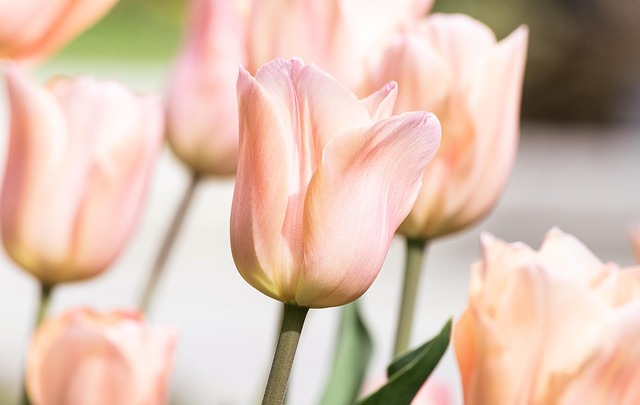
Understanding core eudicots is especially valuable in bonsai and horticulture because this group includes the majority of plants cultivated for structure, foliage, and flowers. From deciduous trees to flowering shrubs, core eudicots form the backbone of most collections, gardens, and landscapes.
Rather than viewing plants only by common names or surface traits, recognising their place helps growers make more informed decisions about care, styling, and long-term development.
A shared foundation for most bonsai species
Most broadleaf and flowering bonsai species belong to core eudicot lineages. Maples, elms, figs, azaleas, oaks, and many fruiting trees all trace their ancestry back to this group. Because these plants share deep evolutionary relationships, they often respond in similar ways to pruning, defoliation, and seasonal changes.
This shared foundation allows bonsai practitioners to transfer knowledge between species. Techniques learned on one species can often be adapted to another, making taxonomy a practical tool rather than an abstract classification system.
Predicting growth and seasonal behaviour
Core eudicots display a wide range of growth habits, but many follow recognisable patterns tied to their evolutionary background. Deciduous behaviour, bud formation, flowering cycles, and leaf development are often linked to lineage rather than individual species alone.
In horticulture, understanding these patterns helps with planning pruning schedules, fertilisation timing, and repotting cycles. For bonsai, it supports better timing for styling work and reduces the risk of stressing plants during vulnerable growth phases.
Flowering and reproductive traits
Many core eudicots are prized for their flowers, fruit, or seed structures. Azaleas, wisteria, crabapples, and numerous other ornamental plants belong to this group. Their floral traits are often influenced by their position within major core eudicot clades, particularly Pentapetalae.
Recognising these relationships helps growers understand why certain species flower abundantly while others prioritise vegetative growth. It also informs decisions about pruning before or after flowering to preserve blooms without compromising plant health.
Long-term structure and refinement
Core eudicots include a high proportion of woody plants capable of developing complex branch structures over time. This makes them ideal for long-term bonsai refinement, where ramification, taper, and silhouette are developed gradually.
In broader horticulture, this structural potential supports hedging, topiary, espalier, and tree training techniques. Understanding this subdivision helps growers select species suited to long-term shaping rather than short-lived ornamental displays.
A taxonomy-based approach to better plant care
By grounding bonsai and horticultural practices in plant taxonomy, growers move beyond trial and error. This subdivision provides a logical framework for understanding why plants behave the way they do, linking care techniques to evolutionary history.
This approach encourages more consistent results, healthier plants, and a deeper appreciation of the biological relationships that shape the living material used in bonsai and horticulture.
Conclusion: Understanding the Backbone of Flowering Plants
Core eudicots form the structural and evolutionary backbone of flowering plants, representing the lineage from which most modern angiosperms have emerged. Their shared ancestry, genetic cohesion, and capacity for diversification explain why this group dominates terrestrial ecosystems and includes the majority of plants cultivated by humans.
By exploring these plants as a distinct subdivision within eudicots, plant classification becomes clearer and more meaningful. Rather than appearing as a complex web of disconnected orders and families, flowering plant taxonomy resolves into an understandable progression shaped by evolution and adaptation.
For bonsai practitioners and horticulturists, understanding this subdivision provides more than academic insight. It offers a practical framework for predicting growth behaviour, refining care techniques, and recognising relationships between species that may appear unrelated at first glance. This deeper understanding supports healthier plants and more informed long-term cultivation decisions.
As a taxonomy anchor within the Budding Backyard Bonsaist series, core eudicots connect high-level classification to the plants grown, styled, and studied every day. Grasping their role helps unlock the structure behind flowering plant diversity and lays the groundwork for exploring orders, families, genera, and species with confidence.