
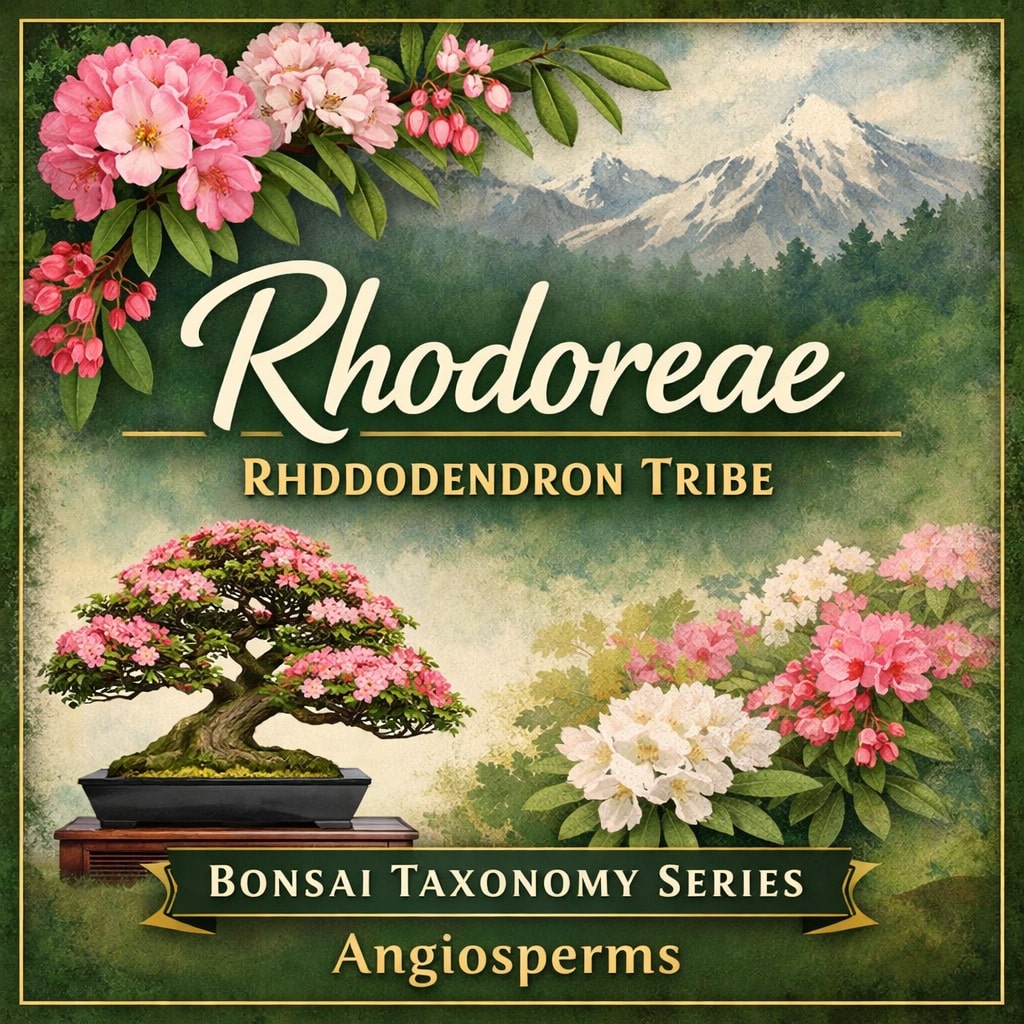
Rhodoreae, often referred to as the Rhododendron tribe, is one of the more curious groupings in plant taxonomy. Nested within the subfamily Ericoideae of the heath family (Ericaceae), Rhodoreae stands out because it contains only a single genus: Rhododendron. This immediately raises a fair question for readers and growers alike. Why does a tribe exist for just one genus, and what purpose does it serve in modern botanical classification?
Despite its apparent simplicity, Rhodoreae represents a deep and complex evolutionary lineage. The genus Rhododendron is extraordinarily diverse, encompassing everything from evergreen shrubs and deciduous azaleas to alpine dwarf species and tree-sized ornamentals. Its size, global distribution, and genetic distinctiveness are precisely why taxonomists have retained Rhodoreae as a separate tribal rank rather than merging it into broader groupings.
For bonsai practitioners, horticulturists, and taxonomy enthusiasts, understanding Rhodoreae provides important context. It explains why azaleas and rhododendrons behave the way they do, how they differ from other members of Ericaceae, and why their care requirements are so specific. This article explores the Rhododendron tribe in detail, unpacking its classification, evolutionary history, and practical relevance in cultivation and bonsai.
Table of Contents
Taxonomy
– Kingdom: Plantae (Plant Kingdom)
— Clade: Embryophytes (Land Plants)
— Clade: Polysporangiophytes (Multiple Sporangia)
—- Clade: Tracheophytes (Vascular Plants)
—– Superdivision: Spermatophytes (Seed Plants)
—— Clade: Angiospermae (Flowering Plants)
——- Division: Eudicots (True Dicotyledons)
——– Subdivision: Core Eudicots
——— Class: Superasterids (Advanced Flowering Plants)
———- Subclass: Asterids (Unified-Flowering Plants)
———– Order: Ericales (Heath and Tea)
———— Family: Ericaceae (Heath)
————- Subfamily: Ericoideae (Heath)
————– Tribe: Rhodoreae (Rhododendron)
What Is Rhodoreae?

Rhodoreae is a recognised botanical tribe within the subfamily Ericoideae, part of the heath family (Ericaceae). At first glance, it appears unusual because it contains only a single genus: Rhododendron, which includes both rhododendrons and azaleas. However, this classification is not an oversight or a historical artefact. It reflects the exceptional size, diversity, and evolutionary distinctiveness of the genus itself.
In plant taxonomy, a tribe is used to group genera that share a close evolutionary relationship but are distinct enough from other groups within the same subfamily. In the case of Rhodoreae, the genus Rhododendron is so large and internally complex that it effectively functions as a tribe-level lineage on its own. With hundreds of species, numerous subgenera, sections, and horticultural forms, Rhododendron exceeds the diversity found in many tribes that contain multiple genera.
Rhodoreae also represents a clearly defined evolutionary branch within Ericoideae. Molecular and morphological studies have shown that Rhododendron diverged early from other ericoid lineages, developing unique floral structures, growth habits, and ecological adaptations. These differences are significant enough that grouping Rhododendron directly alongside smaller, less diverse genera would obscure its evolutionary history.
In practical terms, Rhodoreae exists to acknowledge that rhododendrons and azaleas are not just another subgroup within the heath family. They represent a dominant, globally distributed lineage with distinctive biological and horticultural traits, deserving of recognition at the tribal level despite containing only one genus.
Taxonomic Position of Rhodoreae Within Ericaceae
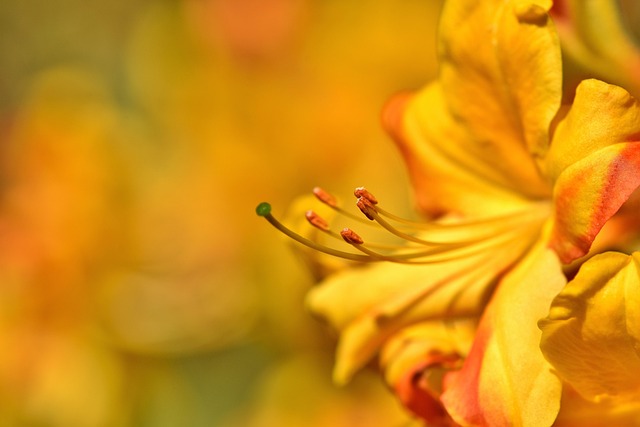
Rhodoreae occupies a clearly defined position within the heath family, Ericaceae, one of the most diverse families of flowering plants, best known for heathers, blueberries, and rhododendrons. Within Ericaceae, Rhodoreae sits inside the subfamily Ericoideae, a group characterised by woody growth forms, evergreen or deciduous leaves, and flowers adapted to specialised pollinators.
At the tribal level, Rhodoreae stands alongside several other well-established tribes within Ericoideae. These include Ericeae, which contains the true heathers (Erica), and Vaccinieae, which includes economically important genera such as Vaccinium (blueberries and cranberries). Other tribes within the broader Ericaceae family, though sometimes placed in different subfamilies, include groups adapted to very specific ecological niches, such as alpine, bog, or acidic woodland environments.
What distinguishes Rhodoreae within this framework is not its size in terms of genera, but its depth of internal diversity. While tribes like Ericeae and Vaccinieae contain multiple genera with relatively clear boundaries, Rhodoreae is defined entirely by the genus Rhododendron, which itself contains hundreds of species, multiple subgenera, and a vast range of growth forms. Taxonomically, this makes Rhodoreae comparable in complexity to multi-genus tribes elsewhere in the family.
By maintaining Rhodoreae as a separate tribe, botanists are able to reflect evolutionary reality more accurately. It signals that Rhododendron diverged early from other ericoid lineages and followed its own evolutionary path, rather than being a late offshoot of a broader, more generalised tribe. This placement helps preserve clarity within Ericaceae taxonomy and provides a stable framework for both scientific research and horticultural classification.
Why Does Rhodoreae Contain Only One Genus?
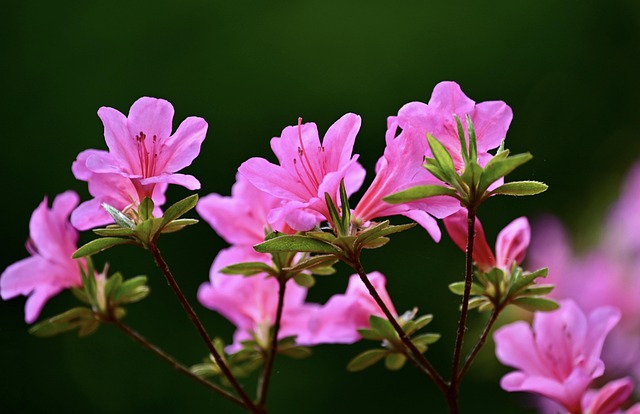
At first glance, it can seem counterintuitive that Rhodoreae contains only a single genus. In botanical taxonomy, however, this is not as unusual as it appears, especially when a lineage is exceptionally large, ancient, and distinct. In the case of Rhodoreae, the sole genus Rhododendron is so diverse and evolutionarily separate from other members of Ericoideae that it warrants its own tribal rank.
One key reason is scale and internal diversity. Rhododendron is one of the largest genera of woody flowering plants, comprising hundreds of species spread across multiple subgenera, sections, and subsections. This internal complexity rivals, and often exceeds, that of many tribes that contain several separate genera. Creating a tribe for Rhododendron allows taxonomists to acknowledge this diversity without fragmenting the genus into multiple artificial groups.
Another reason lies in evolutionary history. Molecular phylogenetic studies have shown that Rhododendron diverged early from other ericoid lineages. Over time, it developed a unique combination of traits, including specialised floral structures, distinct leaf anatomy, and highly varied growth habits ranging from alpine shrubs to forest trees. These differences are deep-rooted and consistent across the genus, making Rhododendron clearly separable from other tribes within Ericoideae.
There is also a practical taxonomic benefit. Historically, some closely related plants, such as Menziesia, were treated as separate genera. As genetic evidence improved, these were absorbed into Rhododendron, further reinforcing the idea that what appears to be a single-genus tribe is actually a broad evolutionary grouping. Maintaining Rhodoreae avoids repeated reclassification while preserving clarity and stability in naming.
In short, Rhodoreae contains only one genus because Rhododendron is not a small or marginal lineage. It represents a major evolutionary branch within Ericaceae, and recognising it as a standalone tribe allows botanists, horticulturists, and growers to reflect that reality accurately rather than forcing it into an oversimplified structure.
Evolutionary History of the Rhododendron Lineage
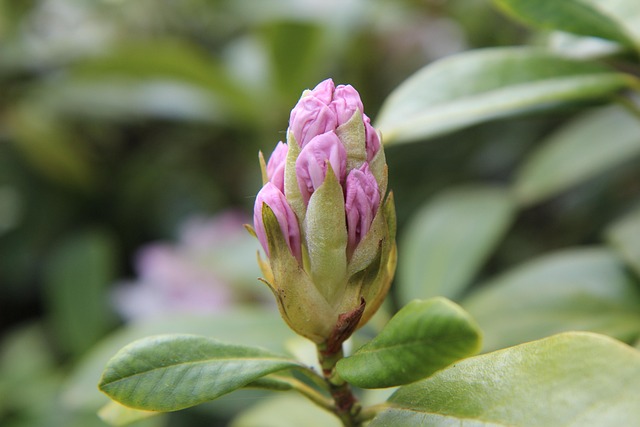
The evolutionary history of the Rhododendron lineage is long, complex, and central to understanding why the tribe Rhodoreae exists at all. Rather than emerging as a recent offshoot within Ericaceae, Rhododendron represents an ancient and deeply diverged branch that has had tens of millions of years to radiate, adapt, and diversify across the globe. This deep evolutionary separation is one of the primary reasons the genus stands alone at the tribal level.
Over time, climatic shifts, continental movement, and ecological pressures shaped the lineage into one of the most diverse woody plant groups on Earth. Its history explains not only its taxonomic position but also the wide range of forms, habitats, and physiological traits seen in modern rhododendrons and azaleas.
Early divergence within Ericaceae
Fossil evidence and molecular phylogenetics suggest that the Rhododendron lineage split early from other ericoid groups. This early divergence allowed it to evolve independently, developing floral and vegetative traits that differ noticeably from related tribes such as Ericeae. The result is a lineage with a strong, coherent identity that persists across hundreds of species.
Adaptive radiation and species expansion
Once established, Rhododendron underwent extensive adaptive radiation. Species evolved to occupy a wide range of ecological niches, from temperate woodlands and subtropical forests to alpine slopes and high-altitude cloud forests. This radiation led to dramatic variation in leaf size, growth habit, and cold tolerance, all within a single genus.
Influence of geography and climate
Geographic isolation played a major role in shaping the Rhododendron lineage. Major centres of diversity developed in regions such as the Himalayas, East Asia, and Southeast Asia, where complex terrain and shifting climates promoted speciation. Glacial cycles further fragmented populations, accelerating divergence and local adaptation.
Evolutionary basis for azaleas and rhododendrons
The traditional distinction between azaleas and rhododendrons reflects evolutionary branching within the genus rather than separation into different genera. Deciduous and evergreen lineages evolved in response to climate and habitat, but genetic evidence confirms that these forms remain closely related within a single evolutionary framework.
Why evolutionary history supports a single-genus tribe
Taken together, early divergence, long independent evolution, and massive internal diversification explain why Rhododendron is placed alone within Rhodoreae. Its evolutionary history is simply too distinct and too expansive to be comfortably grouped with other genera, making the single-genus tribe not an anomaly, but a reflection of deep biological reality.
The Reclassification of Menziesia Into Rhododendron
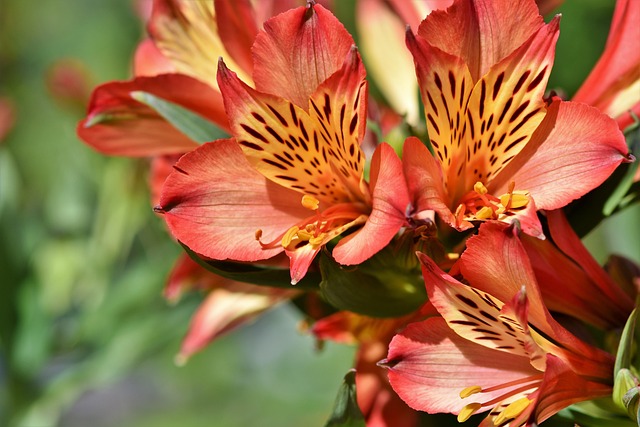
For many years, Menziesia was treated as a separate genus within the heath family due to a handful of visible differences in flower structure and growth habit. These shrubs, native mainly to North America and East Asia, were considered close relatives of rhododendrons and azaleas but distinct enough to stand on their own in traditional, morphology-based classification systems.
This view began to change with the rise of molecular phylogenetics. DNA analysis revealed that Menziesia species were not merely related to Rhododendron, but were in fact nested within the Rhododendron evolutionary tree. In other words, keeping Menziesia as a separate genus made Rhododendron genetically incomplete, or paraphyletic, which modern taxonomy aims to avoid.
As a result, botanists reclassified Menziesia as part of Rhododendron, placing it within the subgenus Azaleastrum. This move was not about diminishing Menziesia, but about accurately reflecting evolutionary relationships. The traits once used to separate it, such as deciduous growth and subtle floral differences, were shown to be variations that evolved within the broader Rhododendron lineage rather than markers of a truly separate genus.
This reclassification helps explain why Rhodoreae remains a single-genus tribe. What once appeared to be multiple related genera are now understood as branches within one exceptionally diverse and ancient lineage. For horticulturists and bonsai growers, this shift reinforces why azaleas, rhododendrons, and former Menziesia species share similar soil, water, and care requirements despite their outward differences.
Defining Characteristics of Rhodoreae
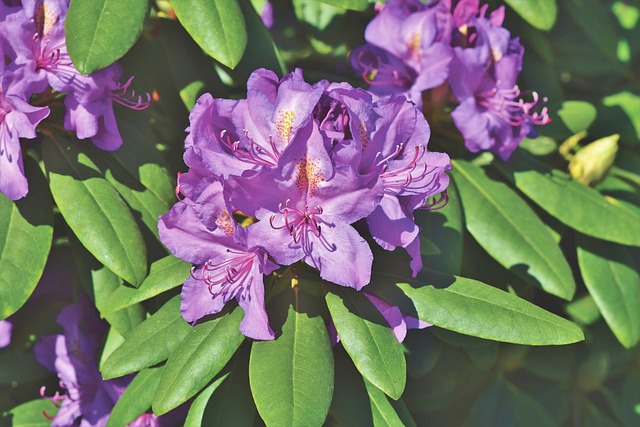
Although Rhodoreae contains only one genus, it is defined by a clear and consistent set of traits that distinguish it from other tribes within Ericaceae. These characteristics are shared across the diverse members of Rhododendron, from compact alpine shrubs to large evergreen trees, and they help explain why the group is treated as a distinct tribal lineage.
Rather than relying on a single feature, Rhodoreae is defined by a combination of growth habits, leaf traits, floral structure, and ecological preferences that together form a coherent biological identity.
Woody growth forms and structural diversity
Members of Rhodoreae are exclusively woody plants, ranging from low-growing, mat-forming shrubs to tall, tree-like species. This structural flexibility has allowed the lineage to adapt to a wide range of environments, including forests, mountain slopes, and exposed alpine regions, while retaining a shared underlying architecture.
Evergreen and deciduous leaf adaptations
Leaf form within Rhodoreae varies considerably, but all members share adaptations suited to acidic, nutrient-poor soils. Leaves are typically leathery or finely textured, often with protective coatings or hairs that reduce moisture loss and environmental stress. The presence of both evergreen and deciduous forms reflects evolutionary responses to climate rather than deep genetic separation.
Distinctive floral morphology
Flowers are one of the most recognisable defining characteristics of Rhodoreae. They are usually showy, tubular to bell-shaped, and adapted for insect pollination. The structure of the corolla, stamens, and nectar placement is consistent across the genus, reinforcing the unity of the tribe despite visual variation in colour and size.
Acid-soil specialisation and mycorrhizal relationships
Like many members of Ericaceae, Rhodoreae species are highly specialised for acidic soils. They rely on symbiotic relationships with mycorrhizal fungi to access nutrients in poor substrates. This physiological adaptation is a key trait separating Rhodoreae from unrelated woody plant groups and underpins their specific cultivation requirements.
High genetic cohesion despite visual diversity
Perhaps the most important defining characteristic of Rhodoreae is its genetic cohesion. Despite dramatic differences in appearance, habitat, and growth habit, molecular studies consistently show that all members form a single, well-defined evolutionary lineage. This cohesion is the scientific foundation for recognising Rhodoreae as a distinct tribe rather than splitting it into multiple genera or tribes.
Together, these characteristics demonstrate that Rhodoreae is not defined by simplicity, but by a deep, shared evolutionary framework that supports extraordinary diversity within a single, unified lineage.
Global Distribution of the Rhododendron Tribe
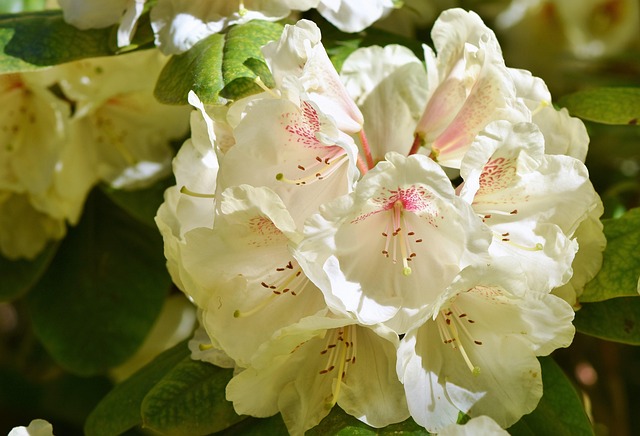
The Rhododendron tribe (Rhodoreae) has one of the widest geographic ranges of any lineage within Ericaceae. Members of Rhododendron occur across multiple continents and climate zones, reflecting a long evolutionary history and remarkable ecological adaptability.
Key aspects of the global distribution of Rhodoreae include:
- Northern Hemisphere dominance: The greatest species diversity is found in the Northern Hemisphere, particularly across temperate and subtropical regions.
- Asian centres of diversity: The Himalayas, southwestern China, and Southeast Asia represent the primary evolutionary hotspots for Rhododendron, with hundreds of species adapted to mountainous terrain and varied microclimates.
- North American representation: Several species occur naturally in North America, especially in the Appalachian Mountains and Pacific Northwest, where cool, acidic soils support woodland and montane forms.
- European range: Native European rhododendrons are fewer but well established, particularly in alpine and subalpine regions, where cold tolerance and compact growth habits are advantageous.
- Southern Hemisphere presence: Although less diverse, species are found in parts of New Guinea and northern Australia, highlighting the tribe’s ability to adapt beyond its primary centres.
- Absence only in Antarctica: Rhodoreae is effectively cosmopolitan, with Antarctica being the only continent where it does not naturally occur.
- Habitat diversity: Species occupy a wide range of habitats, including forest understories, mountain slopes, alpine meadows, and cloud forests, often in environments with acidic, well-drained soils.
This broad distribution helps explain both the extraordinary diversity within Rhododendron and the taxonomic decision to recognise Rhodoreae as a distinct tribe encompassing a truly global lineage.
Horticultural Importance of the Rhododendron Tribe
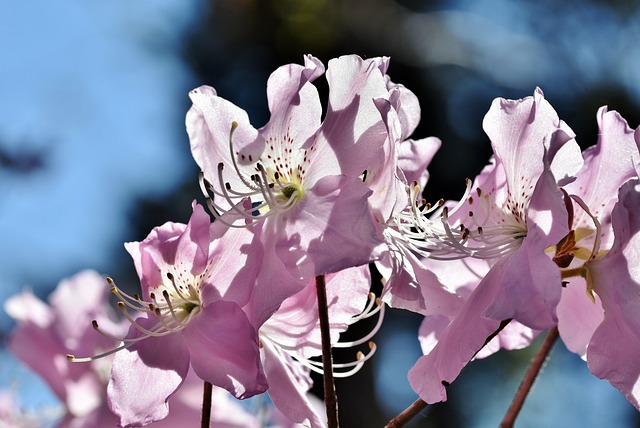
The Rhododendron tribe (Rhodoreae) holds exceptional importance in horticulture, far beyond what its single-genus status might suggest. Species within Rhododendron are among the most widely cultivated ornamental shrubs in the world, valued for their spectacular flowers, evergreen structure, and adaptability to garden and container growing.
Their long history of cultivation, hybridisation, and selective breeding has made rhododendrons and azaleas cornerstone plants in ornamental horticulture, public landscapes, and specialist collections.
Ornamental value and floral display
Rhodoreae species are prized for their bold, showy blooms, which appear in a wide range of colours, sizes, and forms. Flowering periods often coincide with spring and early summer, making them focal points in seasonal garden design. The consistency of floral structure across the tribe has also made them ideal candidates for selective breeding.
Breeding, hybrids, and cultivar diversity
The genetic cohesion of the Rhododendron lineage has allowed extensive hybridisation between species and subgroups. This has resulted in thousands of cultivars with improved cold tolerance, compact growth habits, enhanced flowering, and greater disease resistance. Many modern garden varieties exist only because the tribe’s evolutionary compatibility allows successful cross-breeding.
Adaptability to gardens and managed landscapes
Members of the Rhododendron tribe adapt well to managed environments when their basic requirements are met. They thrive in acidic soils, partial shade, and climates with reliable moisture. This adaptability has made them popular in private gardens, botanical collections, and large-scale landscape planting.
Economic and cultural significance
Rhododendrons and azaleas have significant economic value through the nursery trade, breeding programmes, and ornamental plant markets. In many regions, they also hold cultural importance, featuring prominently in festivals, heritage gardens, and national plant collections.
Influence on specialised cultivation practices
The horticultural demands of Rhodoreae have influenced broader gardening practices, particularly in soil management, mulching, and acidic soil cultivation. Their needs have driven advances in potting mixes, fertilisers, and water management strategies tailored to ericaceous plants.
Together, these factors make the Rhododendron tribe one of the most influential lineages in ornamental horticulture, bridging botanical classification with everyday gardening and specialised plant cultivation.
Rhodoreae in Bonsai and Cultivation
Within bonsai and specialised cultivation, the Rhododendron tribe (Rhodoreae) occupies a unique and respected position. Species and cultivars of Rhododendron, particularly evergreen and deciduous azaleas, are valued not for dramatic trunk girth but for refined branching, seasonal character, and exceptional floral display.
Understanding Rhodoreae at a taxonomic level helps explain many of the cultivation traits bonsai growers encounter. These plants are highly adapted to acidic soils, rely on fine root systems, and respond best to careful water management and gentle pruning. Their natural growth patterns favour compact forms, making them well-suited to bonsai styles that emphasise proportion, surface roots, and ramification rather than heavy structural shaping.
From a broader cultivation perspective, recognising Rhodoreae as a distinct tribal lineage reinforces why rhododendrons and azaleas should be treated differently from other woody plants. Their shared evolutionary background explains their sensitivity to lime, their preference for specific mycorrhizal relationships, and their consistent response to ericaceous growing conditions.
In bonsai, taxonomy is not abstract theory. It is practical knowledge that informs soil choice, feeding, pruning timing, and long-term health. Rhodoreae may contain only one genus, but its depth, diversity, and horticultural importance make it a cornerstone group for both serious growers and enthusiasts seeking to align botanical understanding with successful cultivation.