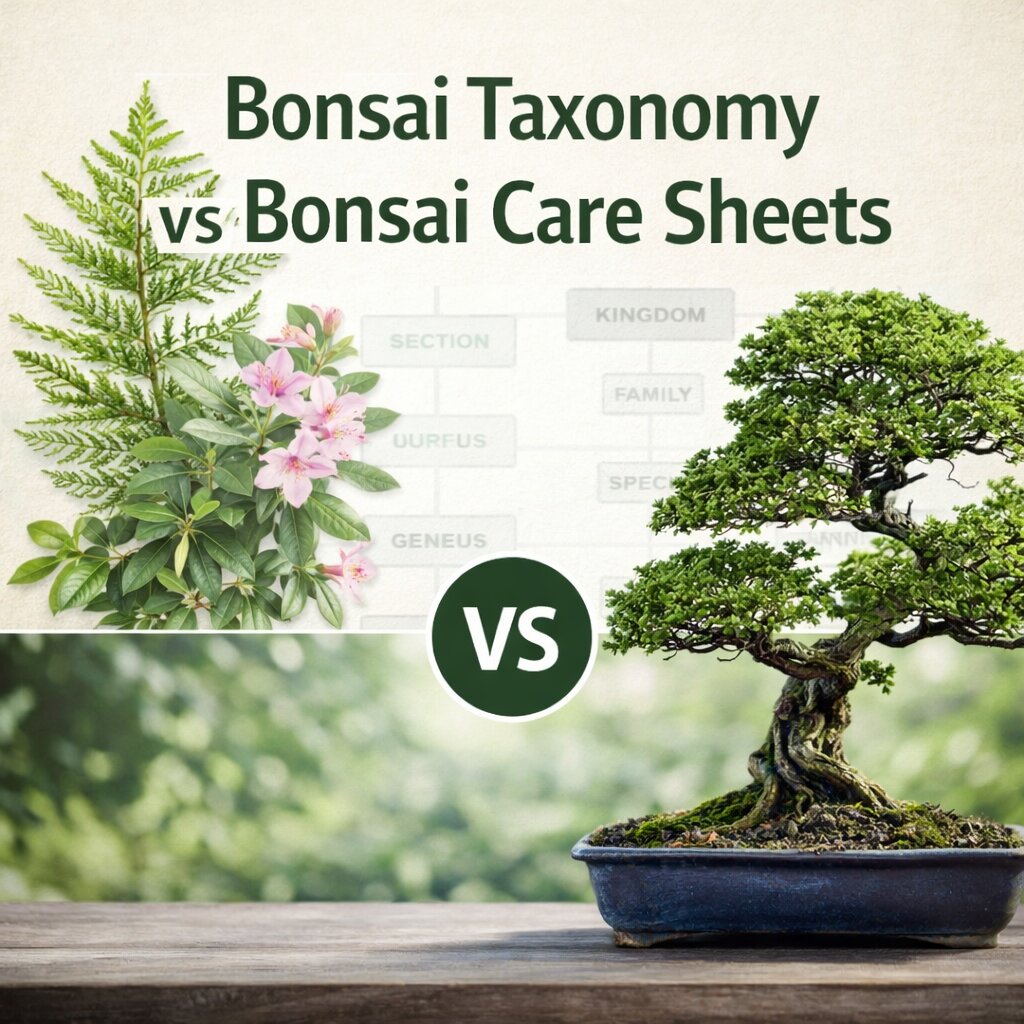
As Budding Backyard Bonsaist continues to grow, so does the way we organise and present bonsai knowledge. With the completion of our Bonsai Taxonomy Series for Juniper and Rhododendron down to subsection level, it’s the perfect moment to explain the difference between our two core educational pillars: Bonsai Taxonomy Series and Bonsai Care Sheets.
While both focus on bonsai trees, they serve very different purposes and are designed to support growers at different stages of their journey.
What the Bonsai Taxonomy Series focuses on
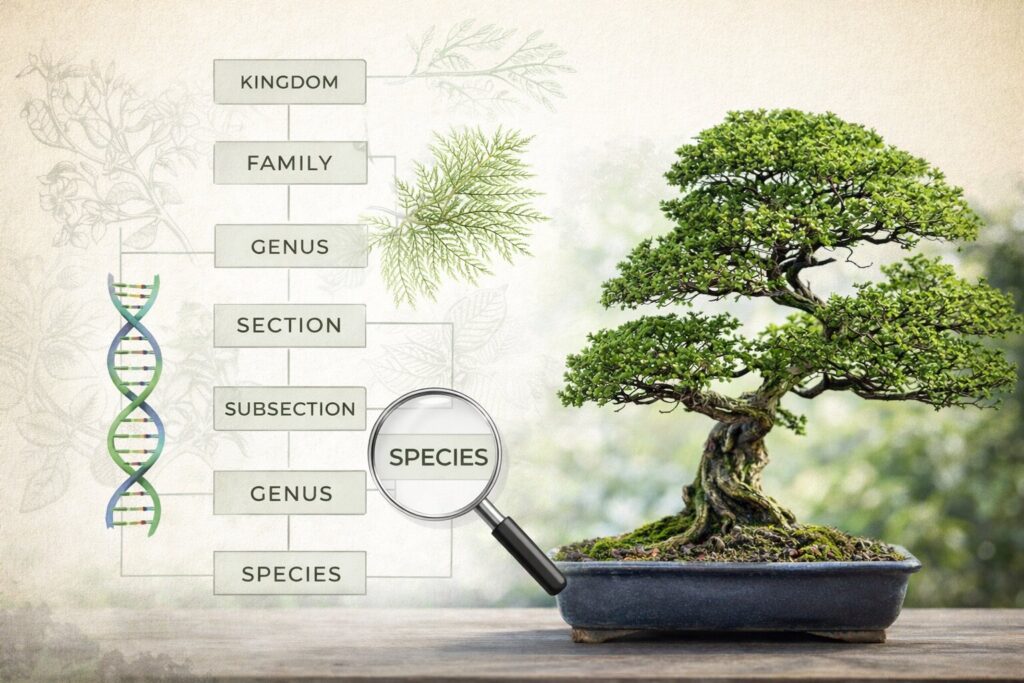
The Bonsai Taxonomy Series is rooted in botanical science. Its purpose is to explain what a plant is, where it fits in the plant kingdom, and how it relates to other species and groups.
In these articles, we explore classification layers such as family, genus, section, subsection, and eventually species. We look at natural growth habits, geographic origins, leaf and bark characteristics, and evolutionary traits. This scientific context helps readers understand why a plant behaves the way it does.
The taxonomy series is especially valuable for growers who want deeper knowledge, collectors who work with multiple species, and enthusiasts interested in accuracy, identification, and long-term planning. Consider it our very own Bonsaipedia.
What Bonsai Care Sheets are designed to do
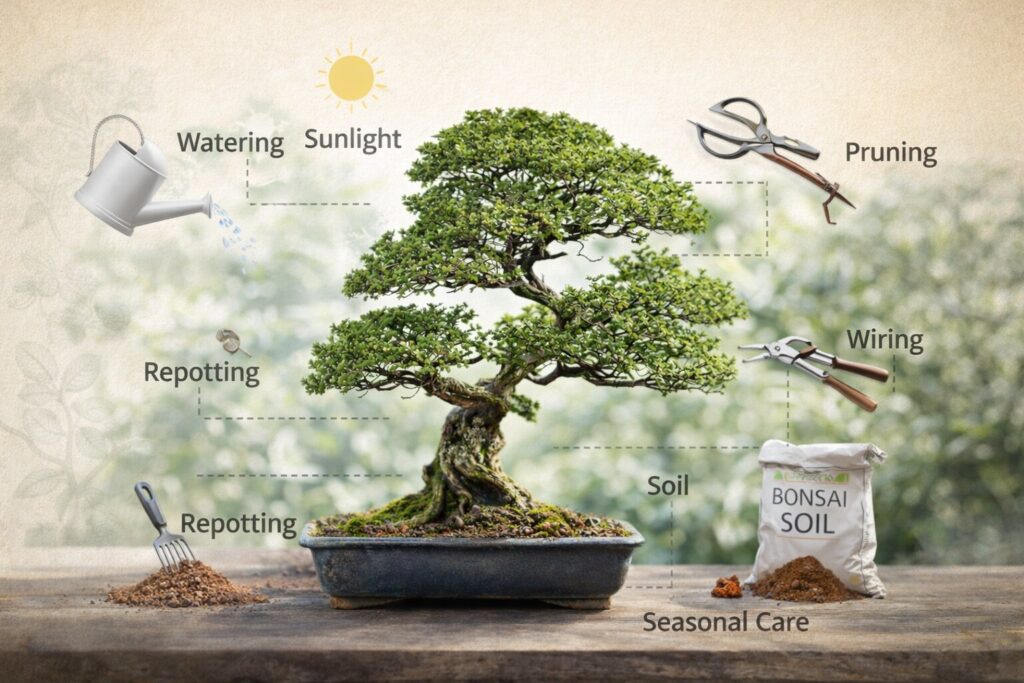
Bonsai Care Sheets are practical and hands-on. Instead of asking what is this plant?, they answer how do I care for this bonsai?
These guides focus on bonsai-specific needs such as watering routines, light requirements, pruning timing, wiring considerations, repotting cycles, soil preferences, and seasonal care. They are written for people who already own a bonsai or are about to acquire one and want clear, usable guidance.
Care sheets prioritise real-world bonsai management rather than botanical classification, making them ideal for daily reference and ongoing maintenance.
Why we keep taxonomy and care separate
Although related, taxonomy and care answer fundamentally different questions. Mixing them into a single article often leads to confusion, shallow explanations, or incomplete guidance.
By separating the scientific identity of the plant from the practical care of the bonsai, we can go deeper into both areas. Taxonomy articles remain clean, structured, and educational, while care sheets stay focused, actionable, and bonsai-specific.
This separation also allows readers to choose what they need at any given moment, whether they’re researching a species or checking how often to water their tree.
How the two work together
While distinct, the two series are designed to complement each other. A taxonomy article gives the background and context, while the care sheet translates that knowledge into bonsai practice.
Understanding a plant’s natural habitat, growth rate, and biological traits makes bonsai care decisions more intuitive. Likewise, practical experience with a bonsai often sparks curiosity about the species behind it.
Together, they form a complete learning system rather than isolated guides.
What’s coming next for Budding Backyard Bonsaist
With Juniper and Rhododendron taxonomy complete through subsections, the next phase begins soon. Species-level taxonomy articles and dedicated bonsai care sheets will be tackled side by side, expanding both knowledge depth and practical value.
By building these resources separately but linking them thoughtfully, Budding Backyard Bonsaist continues its goal of being both accurate and approachable, whether you’re a curious beginner or a detail-driven bonsai enthusiast.
This is just the next step in growing a bonsai library that respects both the science and the art of bonsai.