
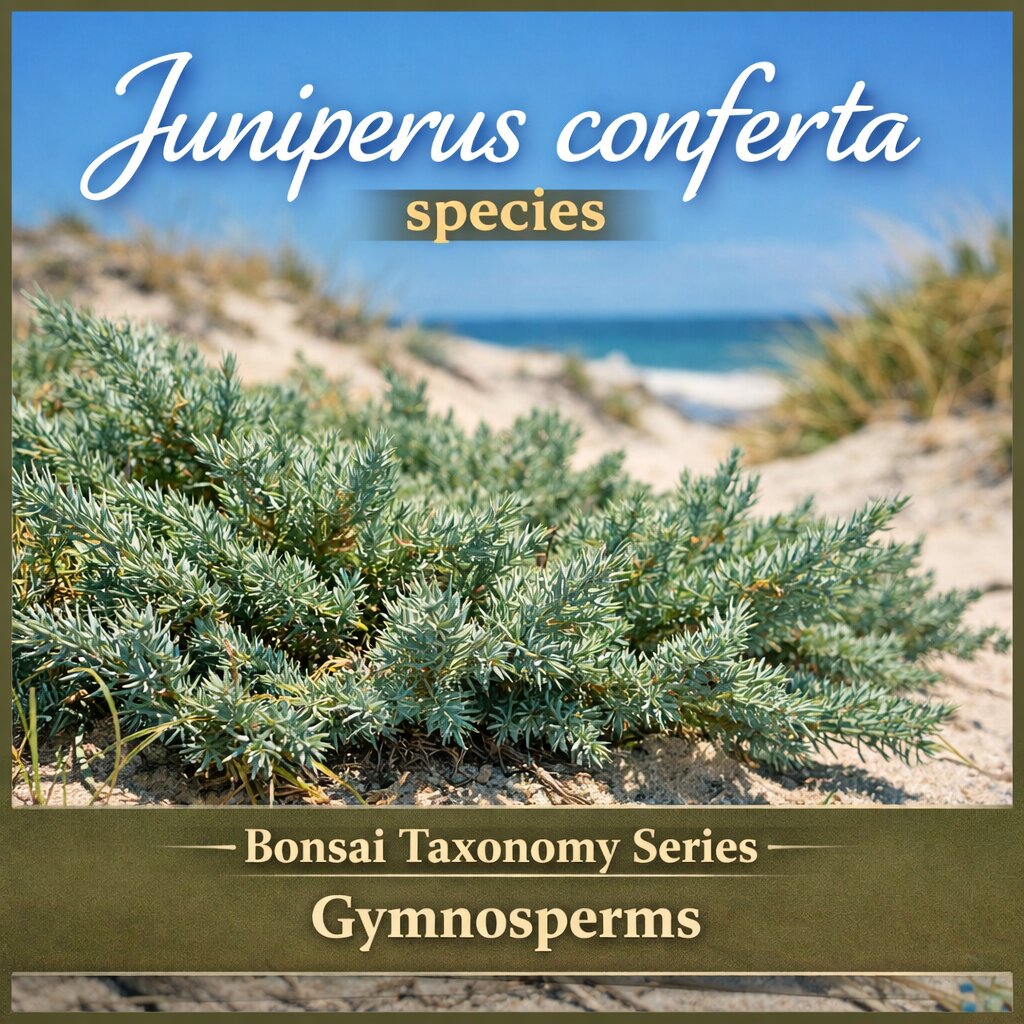
Juniperus conferta is a low-growing, coastal conifer species native primarily to Japan and parts of the Russian Far East, including Sakhalin. Commonly known as Shore Juniper, this species is best recognised for its dense, mat-forming growth habit and exceptional tolerance to salt, wind, and shifting sandy soils. Unlike many upright junipers, Juniperus conferta evolved as a ground-hugging shrub adapted to stabilising coastal dunes and surviving in harsh maritime environments.
Although sometimes treated as a variety or subspecies of Juniperus rigida, Juniperus conferta possesses distinct morphological and ecological traits that justify its recognition as a separate species. Its stiff, awl-shaped juvenile foliage persists throughout its life cycle, and its prostrate growth form differentiates it clearly from more upright relatives. Within the broader genus Juniperus, it represents a specialised lineage adapted to coastal exposure, making it both botanically significant and horticulturally valuable.
In the context of bonsai taxonomy, Juniperus conferta occupies an interesting position. While it is not traditionally associated with classic upright bonsai forms, its natural creeping structure, rugged foliage, and resilience make it highly adaptable for cascading and ground-cover styles. Understanding its taxonomy and ecological background provides essential insight into how the species behaves in cultivation and how it differs from closely related junipers.
Table of Contents
Taxonomy
– Kingdom: Plantae (Plant Kingdom)
— Clade: Embryophytes (Land Plants)
— Clade: Polysporangiophytes (Multiple Sporangia)
—- Clade: Tracheophytes (Vascular Plants)
—– Superdivision: Spermatophytes (Seed Plants)
—— Clade: Gymnospermae (Naked Seeds)
——- Division: Pinophyta (Conifers)
——– Class: Pinopsida (Living Conifers)
——— Subclass: Cupressidae (Evergreen Conifers)
———- Order: Cupressales (Cypress)
———– Family: Cupressaceae (Cypress)
———— Subfamily: Cupressoideae (Cypress)
————- Genus: Juniperus (Juniper)
————– Section: Juniperus (Common Junipers)
————— Subsection: Juniperus (Evergreen Junipers)
—————- Species: Juniperus conferta (Shore Juniper)
What is Juniperus conferta?
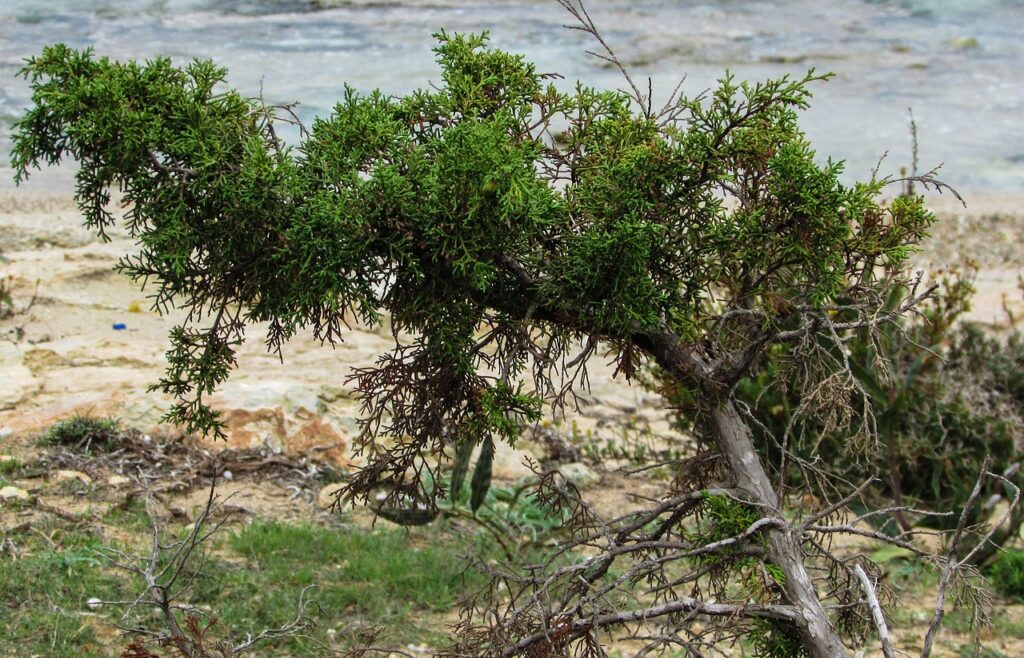
Juniperus conferta is a prostrate evergreen conifer species within the cypress family, Cupressaceae. It is commonly known as Shore Juniper due to its natural occurrence along coastal sand dunes in Japan and parts of Sakhalin Island in the Russian Far East. Unlike many juniper species that develop upright or tree-like forms, Juniperus conferta grows as a low, spreading shrub that forms dense mats across sandy terrain.
Botanically, it belongs to the genus Juniperus, a group of resinous conifers characterised by needle-like or scale-like foliage and berry-like seed cones. What distinguishes Juniperus conferta from many other junipers is its persistent juvenile foliage. The plant retains sharp, awl-shaped needles throughout its life rather than transitioning to softer scale leaves as it matures. This gives it a coarse, textured appearance and a slightly prickly feel.
Ecologically, Juniperus conferta is highly specialised for maritime environments. It tolerates salt spray, wind exposure, nutrient-poor soils, and drought conditions. Its creeping stems and fibrous root system help stabilise dunes, making it an important species in coastal ecosystems.
In horticulture and bonsai contexts, Juniperus conferta is valued for its resilience, vibrant blue-green foliage, and natural cascading growth habit. Its adaptability and durability make it both a practical landscape plant and an intriguing species within bonsai taxonomy.
Taxonomic Classification of Juniperus conferta
Juniperus conferta is placed within Section Juniperus, Subsection Juniperus, the group often referred to as the “true junipers.” This subsection is defined by species that retain needle-like, awl-shaped foliage rather than transitioning fully to scale-like adult leaves. Members of this group typically produce berry-like seed cones containing multiple seeds and maintain a distinctly rigid, prickly texture.
Within this taxonomic framework, Juniperus conferta shares structural similarities with species such as Juniperus rigida. The persistence of sharp, three-whorled needles is a defining characteristic of Subsection Juniperus, clearly distinguishing it from species in Section Sabina, where adult foliage becomes scale-like and softer in texture.
Taxonomic Debate and Relationship to Juniperus rigida
Juniperus conferta has historically been treated by some botanists as a variety or subspecies of Juniperus rigida. The debate stems from similarities in needle morphology and general vegetative structure. Both species retain sharp, awl-shaped leaves and share overlapping anatomical traits typical of Subsection Juniperus.
However, several distinctions support its recognition as a separate species. Juniperus conferta exhibits a consistently prostrate, mat-forming growth habit, whereas Juniperus rigida typically grows upright as a shrub or small tree. Their ecological niches also differ significantly. Juniperus conferta is highly specialised for coastal sand dune environments, while Juniperus rigida occupies inland and mountainous habitats across northeastern Asia.
Modern taxonomic consensus generally recognises Juniperus conferta as a distinct species based on stable morphological differences, ecological separation, and geographic distribution. While the historical classification as a subspecies remains part of its botanical record, current treatment within most authoritative references maintains full species status.
Botanical Description and Diagnostic Identifying Characteristics
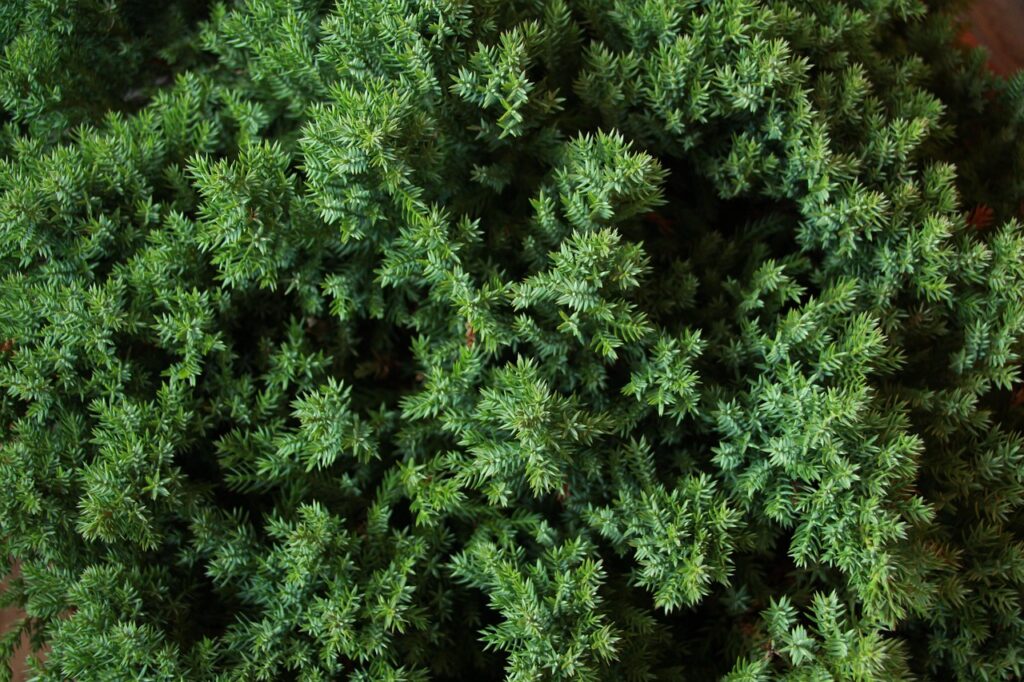
Juniperus conferta is a low-growing, evergreen conifer distinguished by its dense, mat-forming structure and persistent needle foliage. Unlike many juniper species that transition from juvenile needles to adult scale leaves, this species retains its sharp, awl-shaped foliage throughout its life cycle. Its coarse texture, prostrate branching habit, and blue-green to silvery-green colouration make it readily recognisable in both wild and cultivated settings.
Accurate identification relies on examining growth form, needle arrangement, and cone structure. While it shares traits with other members of Subsection Juniperus, several diagnostic characteristics allow Juniperus conferta to be distinguished from closely related species such as Juniperus rigida.
Prostrate Growth Structure and Stem Architecture
The most immediately recognisable feature of Juniperus conferta is its creeping, ground-hugging habit. It forms dense mats through trailing stems that root as they spread across the soil surface. Mature plants rarely exceed 25 to 45 centimetres in height but may spread several metres laterally under favourable conditions.
The stems are woody, flexible when young, and become more rigid with age. Branchlets are relatively stout and densely clothed in needle foliage, contributing to the species’ compact appearance. This consistently prostrate architecture is one of the primary traits separating it from upright juniper species.
Needle Arrangement and Foliage Texture
Juniperus conferta bears stiff, sharply pointed needles arranged in whorls of three around the stem. Each needle is typically 10 to 15 millimetres long, with a distinct pale stomatal band on the upper surface. The foliage often displays a blue-green or glaucous hue, particularly in well-lit environments.
Unlike species that develop scale-like adult leaves, Juniperus conferta retains this juvenile needle form permanently. The texture is coarse and prickly to the touch, a useful diagnostic feature when distinguishing it from softer-foliaged junipers. Seasonal colour shifts may occur, with foliage taking on bronze or slightly yellow-green tones during colder months.
Cone Morphology and Seed Characteristics
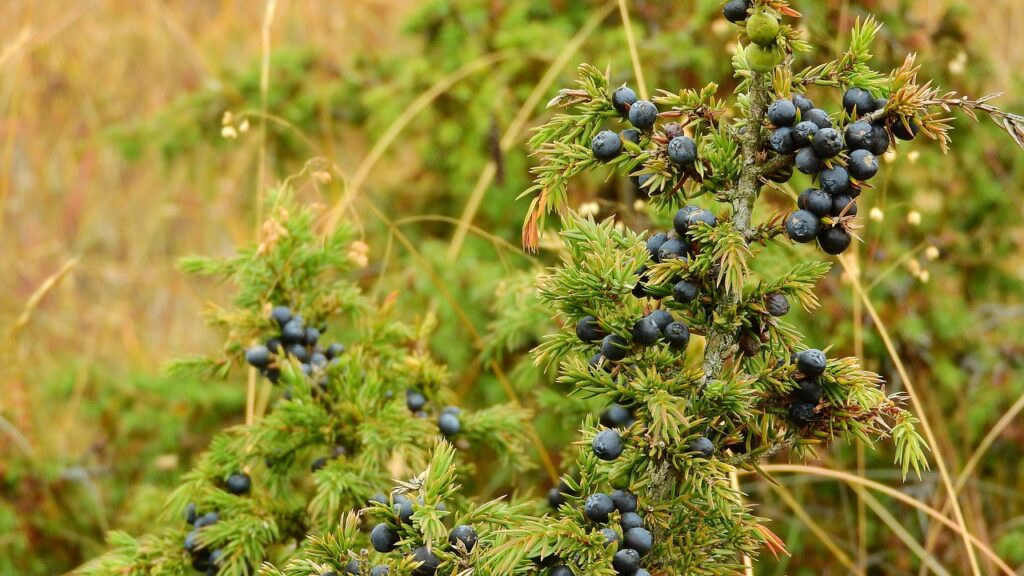
The reproductive structures of Juniperus conferta consist of small, globose seed cones often referred to as “berries.” These cones typically mature to a dark bluish-black colour with a silvery bloom. They are usually 8 to 12 millimetres in diameter and contain multiple seeds embedded within fleshy cone scales.
Male pollen cones are smaller and less conspicuous, appearing at the tips of short shoots. As with other junipers, the species is generally dioecious, meaning male and female cones occur on separate plants. The size, colour, and multi-seeded nature of the cones support its placement within Subsection Juniperus.
Root System and Sand-Stabilising Adaptations
An often overlooked but diagnostic feature of Juniperus conferta is its extensive root system. Adapted to coastal sand dunes, it develops fibrous roots capable of anchoring shifting substrates. The plant’s ability to root along trailing stems further enhances its stability and spread.
This sand-binding capacity, combined with salt tolerance and wind resistance, reflects its evolutionary adaptation to maritime environments. These ecological specialisations reinforce its identity as a distinct coastal species within the genus.
Growth Habit, Size Variation, and Longevity
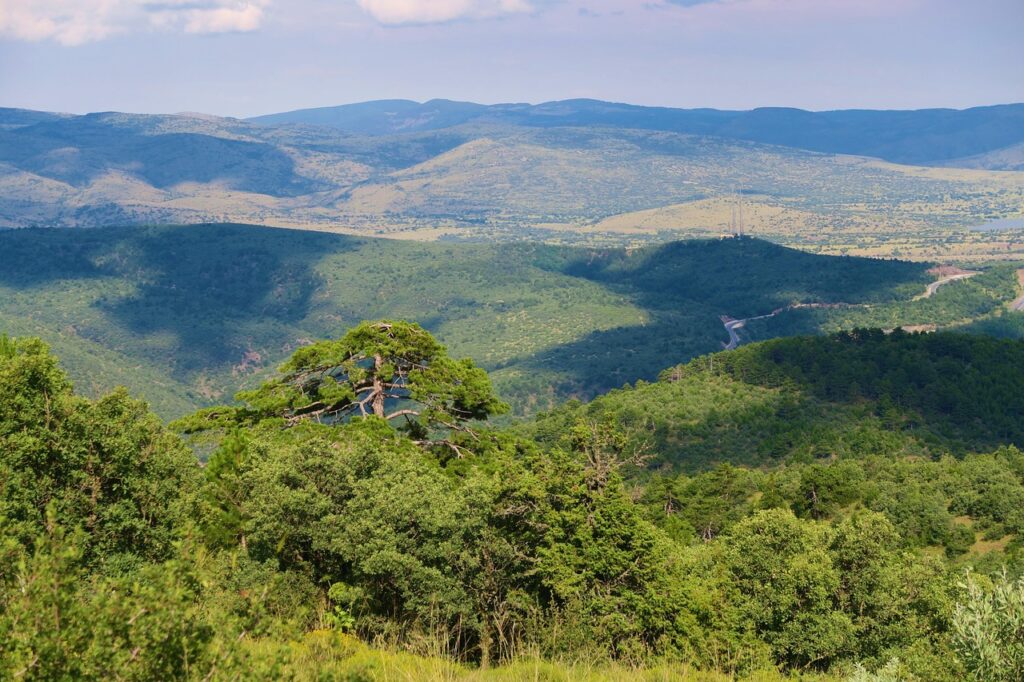
Juniperus conferta exhibits a distinctly prostrate and mat-forming growth habit that reflects its adaptation to exposed coastal environments. Unlike upright juniper species that develop a central trunk and vertical canopy, this species spreads horizontally across the ground, forming dense, interwoven layers of foliage. Its structure is not accidental but an evolutionary response to wind exposure, salt spray, and shifting sands.
Understanding its growth pattern is essential for both accurate identification and cultivation. While generally consistent in form, Juniperus conferta can display variation in spread, density, and vigour depending on environmental conditions and cultivar selection.
Prostrate Architecture and Lateral Expansion
The defining characteristic of Juniperus conferta is its creeping architecture. The plant rarely grows taller than 25 to 45 centimetres, yet it can extend 1.8 to 3 metres or more in width over time. Stems trail along the surface and may root at nodes when in contact with suitable substrate, gradually forming expansive mats.
This lateral expansion allows the plant to stabilise sandy soils and resist coastal erosion. The dense layering of branches also reduces moisture loss by shielding underlying stems and roots from direct sun and wind.
Environmental Influence on Size and Density
Although the species maintains a low profile, environmental conditions significantly influence its overall density and colouration. In full sun and well-drained sandy soils, Juniperus conferta typically develops compact, tightly packed foliage with vibrant blue-green tones.
In less optimal conditions, such as partial shade or poorly drained soils, growth may become looser and less uniform. Excess moisture can reduce vigour and compromise structural integrity. Coastal exposure, however, does not hinder growth. The species is highly tolerant of salt spray and strong winds, maintaining stability where many other conifers would fail.
Cultivated varieties may exhibit subtle differences in foliage colour and compactness, but the fundamental prostrate habit remains consistent across forms.
Longevity and Structural Maturity
Juniperus conferta is a long-lived evergreen shrub capable of persisting for decades in favourable conditions. While it does not achieve the towering age or size of tree-form junipers, its woody framework gradually thickens and becomes more structurally resilient over time.
As the plant matures, older interior stems may lignify and become more rigid, while new growth continues to extend outward. In stable environments, especially coastal landscapes or well-maintained gardens, established specimens can maintain their form with minimal intervention.
Its longevity, combined with environmental resilience, contributes to its popularity in landscaping and reinforces its ecological role as a durable coastal stabiliser.
Foliage Structure, Needle Morphology, and Seasonal Colouration
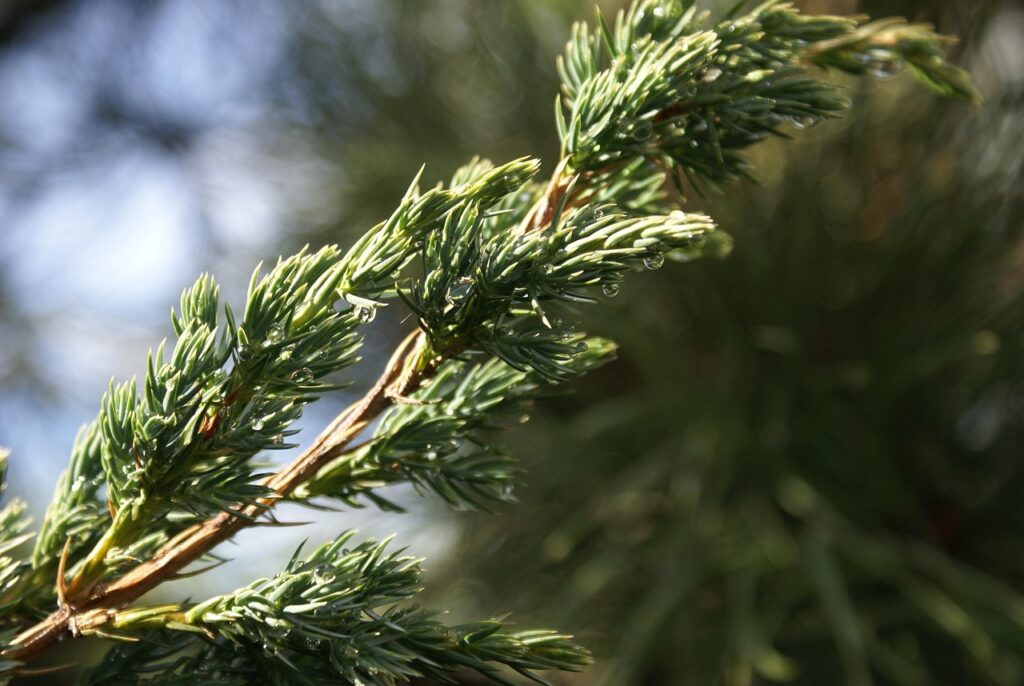
The foliage of Juniperus conferta is one of its most defining and diagnostic characteristics. Unlike many juniper species that transition from juvenile needle leaves to mature scale-like foliage, this species retains its sharp, awl-shaped needles throughout its life. This persistent juvenile morphology gives the plant its coarse texture and rugged visual appeal.
The structure, arrangement, and seasonal response of its needles not only aid in identification but also reflect its adaptation to harsh coastal conditions. The foliage plays a central role in water conservation, salt tolerance, and resistance to environmental stress.
Persistent Juvenile Needle Form
Juniperus conferta bears stiff, sharply pointed needles arranged in whorls of three around the stem. Each needle typically measures between 10 and 15 millimetres in length and tapers to a fine, spiny tip. The leaves are relatively thick and rigid, contributing to the plant’s prickly texture.
A pale stomatal band is visible along the upper surface of each needle. This feature, common within Subsection Juniperus, assists with gas exchange while reducing water loss. The persistence of this juvenile needle form throughout the plant’s life cycle distinguishes Juniperus conferta from species that eventually develop scale-like adult foliage.
Foliage Density and Surface Texture
The needles are densely arranged along short branchlets, creating a compact and layered surface. This density reduces wind penetration and helps protect inner stems from desiccation. The slightly overlapping arrangement also enhances the plant’s ability to withstand salt spray in coastal environments.
The overall texture is coarse and firm rather than soft or feathery. When handled, the foliage feels noticeably prickly, a trait that can assist in field identification. The rigidity of the needles also contributes to the plant’s structural durability in exposed habitats.
Seasonal Colour Shifts
In active growing seasons, Juniperus conferta typically displays blue-green to glaucous green foliage. The silvery bloom on the needles can become more pronounced under intense sunlight, giving the plant a cool-toned appearance.
During colder months, especially in temperate climates, the foliage may take on bronze-green or slightly yellow-green hues. This seasonal colour change is a natural physiological response to lower temperatures and reduced metabolic activity. The shift is generally subtle but noticeable, particularly in exposed conditions.
Despite these seasonal variations, the plant remains evergreen, retaining its foliage year-round. The consistent needle form and durable colouration reinforce its resilience and ecological suitability for coastal and sandy environments.
Reproductive Biology, Seed Cones, and Pollination Ecology
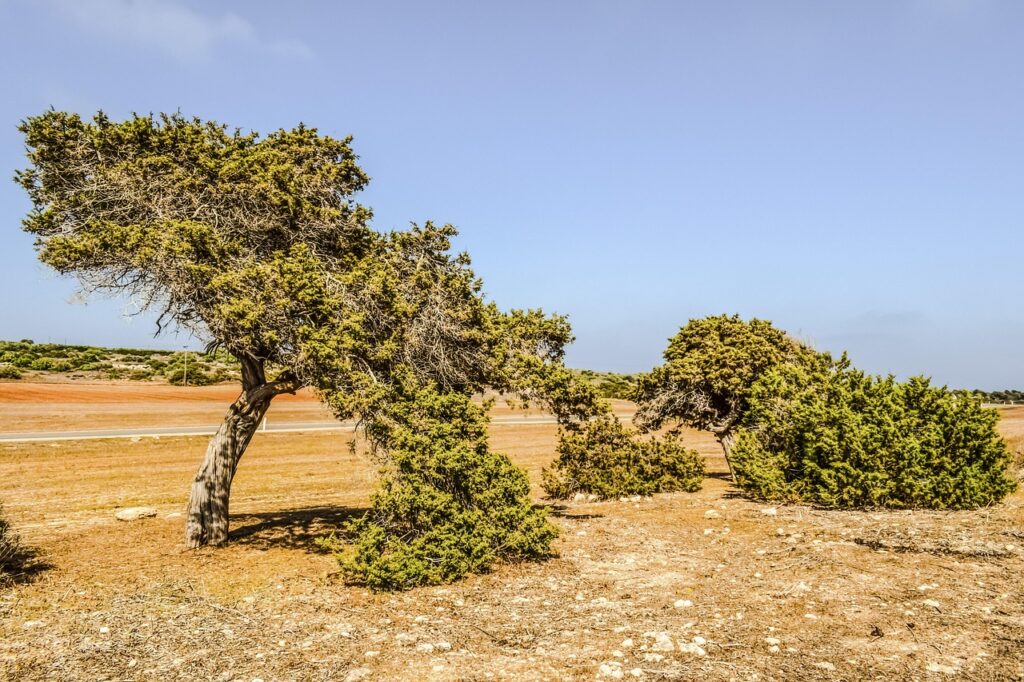
Juniperus conferta follows the typical reproductive strategy of the genus Juniperus, producing separate male and female cones and relying primarily on wind for pollination. Like most junipers, it is generally dioecious, meaning individual plants bear either pollen cones or seed cones, though occasional exceptions may occur.
Its reproductive cycle reflects adaptation to open, windswept coastal habitats where insect pollination is unreliable. The structure, maturation period, and dispersal mechanisms of its cones contribute to both species survival and ecological stability in dune systems.
Male Pollen Cones and Wind Pollination
Male cones of Juniperus conferta are small, yellowish to tan, and typically appear at the tips of short lateral shoots. They are inconspicuous compared to the larger seed cones but produce abundant pollen during the reproductive season.
Pollination occurs through wind dispersal. In coastal habitats, steady air movement enhances pollen transfer between male and female plants. This strategy allows the species to reproduce efficiently in exposed dune environments where insect populations may be limited or seasonal.
The timing of pollen release usually coincides with favourable spring conditions, though exact timing varies depending on climate and latitude.
Female Seed Cones and Development
The female cones of Juniperus conferta are fleshy, globose structures commonly referred to as “berries,” though botanically they are modified cones. They typically measure between 8 and 12 millimetres in diameter and mature over a period that may extend beyond a single growing season.
Initially green, the cones gradually ripen to a dark blue or blackish-blue colour, often coated with a silvery glaucous bloom. This bloom gives them a slightly powdery appearance and may assist in moisture regulation.
Each cone usually contains multiple seeds embedded within fleshy scales. The multi-seeded structure aligns with its placement in Subsection Juniperus and differentiates it from species with fewer seeds per cone.
Seed Dispersal and Ecological Role
Seed dispersal in Juniperus conferta is primarily facilitated by birds. The fleshy cones attract avian species, which consume the fruit and later deposit viable seeds through digestion. This process aids in spreading the plant across suitable sandy habitats.
The species’ reproductive ecology supports dune stabilisation. As seedlings establish in open sand, their creeping growth habit gradually binds soil particles and reduces erosion. The ability to colonise exposed substrates reinforces its importance in coastal ecosystems.
The combination of wind pollination and bird-mediated seed dispersal enables Juniperus conferta to persist in dynamic maritime environments where conditions are often harsh and unstable.
Natural Distribution, Coastal Habitat Range, and Ecological Adaptations
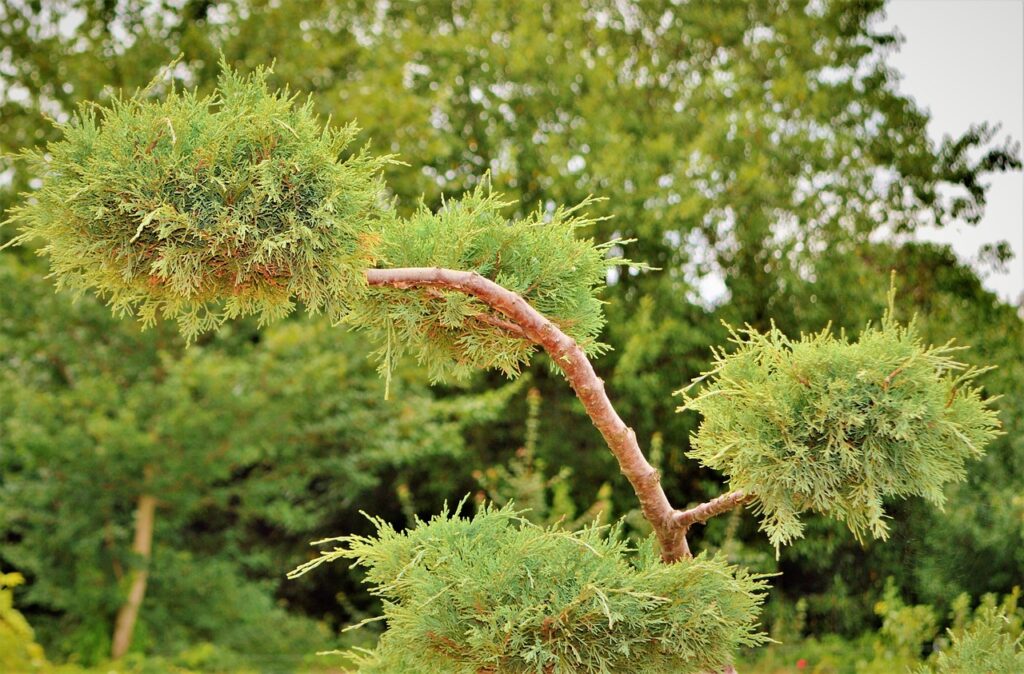
Juniperus conferta is native to northeastern Asia, with its strongest natural populations found along the coastal regions of Japan. It also occurs in parts of Sakhalin Island in the Russian Far East. Its distribution is closely tied to maritime environments, particularly sandy shorelines and dune systems where few woody plants can survive long-term exposure.
Unlike many juniper species that inhabit inland mountains, forests, or rocky slopes, Juniperus conferta is highly specialised for coastal life. Its range reflects this ecological niche, thriving in open, windswept landscapes shaped by salt spray, shifting sands, and seasonal temperature fluctuations.
Coastal Sand Dune Specialisation
The most characteristic habitat of Juniperus conferta is coastal sand dunes. In these environments, soils are nutrient-poor, fast-draining, and frequently unstable. Wind exposure is constant, and salt carried from the ocean can accumulate on foliage and soil surfaces.
Juniperus conferta has evolved to tolerate these conditions. Its prostrate growth form reduces wind resistance and limits structural damage. The dense mat it forms helps trap sand, gradually stabilising the dune surface. Over time, this stabilisation allows other plant species to establish, contributing to ecological succession in coastal systems.
Salt Tolerance and Wind Resistance
One of the defining ecological adaptations of Juniperus conferta is its tolerance to salt spray. Many inland junipers struggle with saline exposure, but this species maintains foliage integrity even under repeated salt deposition.
Its stiff, needle-like leaves reduce surface area relative to broader foliage types, limiting moisture loss. The thick cuticle and compact needle arrangement help protect against desiccation caused by wind. These adaptations collectively allow it to endure conditions that would inhibit less specialised conifers.
Wind resistance is further enhanced by its low profile. By hugging the ground, the plant avoids the mechanical stress experienced by upright shrubs and trees in coastal storms.
Soil Preferences and Climatic Range
Juniperus conferta prefers well-drained, sandy substrates but is adaptable to slightly acidic, neutral, or mildly alkaline soils. Poor drainage is one of the few conditions it does not tolerate well. Waterlogged soils can compromise root health and reduce vigour.
Climatically, the species is hardy across temperate regions and can withstand both summer heat and winter frost. Its evergreen foliage remains functional year-round, allowing it to photosynthesise whenever conditions permit.
These ecological adaptations make Juniperus conferta not only a key coastal stabiliser in its native range but also a valuable horticultural species in regions with similar environmental conditions.
Infraspecific Variation and Relationship to Juniperus rigida
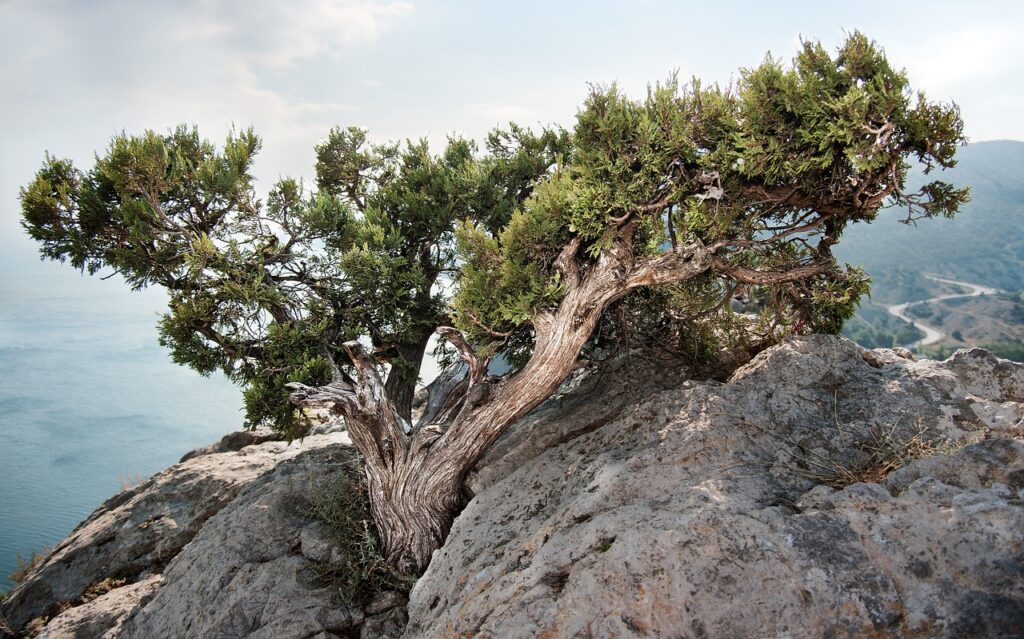
Juniperus conferta shows relatively limited recognised infraspecific variation in the wild. Unlike some juniper species that are divided into formal varieties or subspecies across broad geographic ranges, Juniperus conferta is generally treated as a single, stable species throughout its native coastal distribution in Japan and Sakhalin.
Minor variation can occur in foliage colour intensity, needle length, and overall density depending on local environmental conditions such as wind exposure, soil fertility, and sunlight. However, these differences are typically phenotypic responses rather than taxonomically distinct forms. As a result, no widely accepted subspecies are formally recognised within Juniperus conferta.
In horticulture, however, several cultivated selections have been developed and are sometimes mistaken for botanical variation. Common cultivars include:
- ‘Blue Pacific’, known for its pronounced blue-green foliage and vigorous spreading habit
- ‘Silver Mist’, which exhibits a more silvery or glaucous tone
- ‘Sunsplash’, a variegated selection with yellow-tipped foliage
These cultivars represent horticultural selections rather than naturally occurring taxonomic divisions.
The relationship between Juniperus conferta and Juniperus rigida remains one of the most interesting aspects of its classification history. Earlier botanical treatments sometimes regarded Juniperus conferta as a coastal form or subspecies of Juniperus rigida due to shared needle morphology and placement within Subsection Juniperus. Both species retain stiff, awl-shaped leaves arranged in whorls of three, and both produce multi-seeded berry-like cones.
However, consistent structural and ecological differences support their separation at species level. The key distinctions include:
- Juniperus conferta maintains a strictly prostrate, mat-forming habit, while Juniperus rigida typically grows upright as a shrub or small tree
- Juniperus conferta is specialised for coastal sand dune habitats, whereas Juniperus rigida occupies inland and mountainous environments
- Geographic distribution patterns show ecological segregation rather than simple variation within a single species
Modern taxonomic consensus recognises Juniperus conferta as a distinct species rather than a subspecies of Juniperus rigida. While their shared ancestry within Subsection Juniperus is evident, their growth form, habitat preference, and ecological adaptations demonstrate clear evolutionary divergence.
Juniperus conferta in Horticulture and Bonsai Contexts
Juniperus conferta has earned a strong reputation in horticulture for its resilience, adaptability, and aesthetic appeal. Originally valued for stabilising coastal sand dunes, it is now widely cultivated as a low-maintenance groundcover in landscapes that demand durability. Its tolerance to salt spray, drought, heat, and poor soils makes it particularly suitable for coastal gardens, rockeries, slopes, and erosion-prone embankments.
In landscape design, its dense, spreading habit provides effective soil coverage while suppressing weeds and reducing surface erosion. The blue-green to silvery foliage offers year-round interest, with subtle seasonal shifts that add texture rather than dramatic colour change. Because it requires minimal pruning and fertilisation once established, it is frequently selected for public plantings and large-scale groundcover applications.
Within bonsai contexts, Juniperus conferta presents both opportunities and challenges. Its naturally prostrate growth habit makes it especially suited to cascading, semi-cascade, and ground-cover styles. The stiff needle foliage lends itself well to rugged, coastal-inspired compositions that reflect its natural habitat. However, the persistent juvenile needles require careful handling and refinement, as they do not soften into scale foliage like some other juniper species.
For bonsai practitioners, understanding its coastal origins is key. Excellent drainage, strong light, and controlled watering are essential to maintain health and compact growth. When cultivated with respect for its ecological background, Juniperus conferta becomes a powerful species for creating dynamic, windswept designs that echo the harsh beauty of maritime landscapes.
As part of the Bonsai Taxonomy Series, Juniperus conferta stands as a clear example of how habitat, morphology, and evolutionary adaptation shape both botanical identity and horticultural application. Its specialised coastal lineage continues to influence how it is grown, styled, and appreciated in gardens and bonsai collections around the world.