

The Temple Juniper bonsai is a resilient and characterful evergreen species known for its rugged bark, sharp needle foliage, and strong upright growth habit. Originating from East Asia, this species brings a sense of age and permanence to any bonsai collection, making it especially appealing for traditional and naturalistic styling.
Despite its hardy nature, proper care is essential to maintain healthy foliage, compact growth, and balanced structure. Understanding the Temple Juniper bonsai’s light requirements, watering habits, soil preferences, and seasonal rhythms will ensure long-term vitality and refined development.
This care sheet provides practical, structured guidance to help you cultivate a strong, healthy Temple Juniper bonsai in your local climate.
Table of Contents
TL:DR Quick Temple Juniper Bonsai Care Overview
The Temple Juniper bonsai is a hardy outdoor evergreen that thrives in full sun and well-draining soil. It prefers moderate watering, responds well to structured pruning, and develops beautifully rugged character over time. While resilient, it requires careful wiring due to stiff branches and sharp needle foliage.
Below is a quick-reference guide for essential Temple Juniper bonsai care:
| Care aspect | Details |
|---|---|
| Scientific name | Juniperus rigida |
| Common name | Temple juniper |
| Bonsai type | Outdoor bonsai |
| Light | Full sun (minimum 6 hours daily) |
| Watering | Moderate; allow soil to slightly dry between waterings |
| Soil | Free-draining bonsai soil mix (akadama, pumice, lava or similar) |
| Fertiliser | Balanced fertiliser, NPK 10–10–10 or 12–12–12 during growing season |
| Pruning | Spring and late summer; avoid heavy winter pruning |
| Wiring | Suitable but use caution due to stiff, brittle branches |
| Difficulty | Intermediate |
| Rarity | Uncommon outside specialist bonsai nurseries |
| Climate sensitivity | Cold-hardy; tolerates frost and wind |
| Growth habit | Upright or slightly spreading with rigid needle foliage |
Temple Juniper Bonsai Care Guide

The Temple Juniper bonsai is a rugged, characterful evergreen valued for its sharp needle foliage, textured bark, and strong upright presence. Native to East Asia, it thrives in outdoor conditions and rewards patient growers with a powerful, ancient aesthetic.
While hardy and adaptable, the Temple Juniper bonsai benefits from consistent care, structured pruning, and proper seasonal management. Understanding its natural growth rhythm is key to maintaining health, compact foliage, and refined structure.
Light
Temple Juniper bonsai require full sun to remain healthy and compact. A minimum of six hours of direct sunlight daily is ideal. Strong light encourages dense growth, vibrant colour, and shorter internodes, all of which are essential for bonsai refinement.
Insufficient light leads to weak, elongated growth and thinning interior foliage. Even in hot climates, this species prefers direct exposure rather than shade. Good air circulation combined with strong sunlight helps prevent fungal issues and strengthens overall resilience.
Watering
Watering should be moderate and consistent. Allow the top layer of soil to slightly dry between waterings, but never let the root ball become completely dry for extended periods.
Temple Juniper bonsai dislike constantly wet soil. Overwatering can lead to root rot, especially in poorly draining substrates. During summer, watering frequency increases, while in winter it should be reduced in line with slower growth.
Pruning
Pruning is best carried out in spring and late summer. Regular trimming encourages back budding and maintains shape. Pinching back soft growth rather than cutting hard wood supports compact development.
Avoid heavy structural pruning during winter dormancy. Temple Juniper branches can be slow to recover from aggressive cuts, so shaping should be gradual and planned.
Shaping
Temple Juniper bonsai suit upright, informal upright, and slightly windswept styles. Their rigid needle foliage and strong vertical growth lend themselves well to powerful silhouettes.
When shaping, focus on creating depth and movement rather than overly tight pads. Allow some natural irregularity to emphasise the species’ rugged character. Removing excess interior growth improves airflow and light penetration.
Soil
A free-draining bonsai soil mix is essential. A combination of akadama, pumice, and lava rock works well, or a similar inorganic blend suited to your climate.
Heavy organic soils retain too much moisture and increase the risk of root problems. Good drainage ensures oxygen reaches the roots, which is vital for long-term health.
Repotting
Repot every two to three years for younger trees and less frequently for mature specimens. Early spring, just before active growth begins, is the ideal time.
When repotting, reduce roots conservatively. Temple Juniper bonsai do not respond well to severe root pruning. Always maintain a balanced root system to preserve stability and vigour.
Wiring
Wiring is suitable but must be done carefully. Branches are stiff and can be brittle, particularly older wood.
Apply wire during the growing season when branches are more flexible. Monitor closely and remove wire before it bites into the bark. Slow, gradual shaping is safer than aggressive bending.
Fertiliser
Feed with a balanced fertiliser during the growing season, such as NPK 10–10–10 or 12–12–12. Apply every two to four weeks from spring through early autumn.
Avoid heavy feeding during peak summer heat or winter dormancy. Controlled feeding supports steady growth without producing overly soft foliage.
Propagation
Temple Juniper bonsai can be propagated from semi-hardwood cuttings taken in late summer. Use rooting hormone and maintain high humidity until roots develop.
Propagation from seed is possible but slow. Cuttings are preferred when you want to maintain consistent characteristics from the parent tree.
Seasonal Care
In spring, focus on repotting, structural pruning, and feeding as growth resumes. Summer requires careful watering management and light pruning to maintain shape.
Autumn is ideal for reducing fertiliser and preparing the tree for dormancy. In winter, protect the roots from extreme frost, especially in shallow bonsai containers, while still allowing exposure to natural cold for proper dormancy.
Pests
Temple Juniper bonsai may occasionally attract aphids, spider mites, or scale insects. Regular inspection helps detect early infestations before damage becomes significant.
Maintaining good airflow, full sun exposure, and proper watering reduces pest vulnerability. If needed, treat with appropriate insecticidal soap or horticultural oil.
Diseases
Root rot is the most common issue and usually results from overwatering or poor drainage. Ensuring a well-draining soil mix is the best preventative measure.
Fungal problems can occur in humid conditions with limited airflow. Removing dense interior growth and maintaining proper spacing between trees reduces disease risk.
How to identify a Temple Juniper bonsai
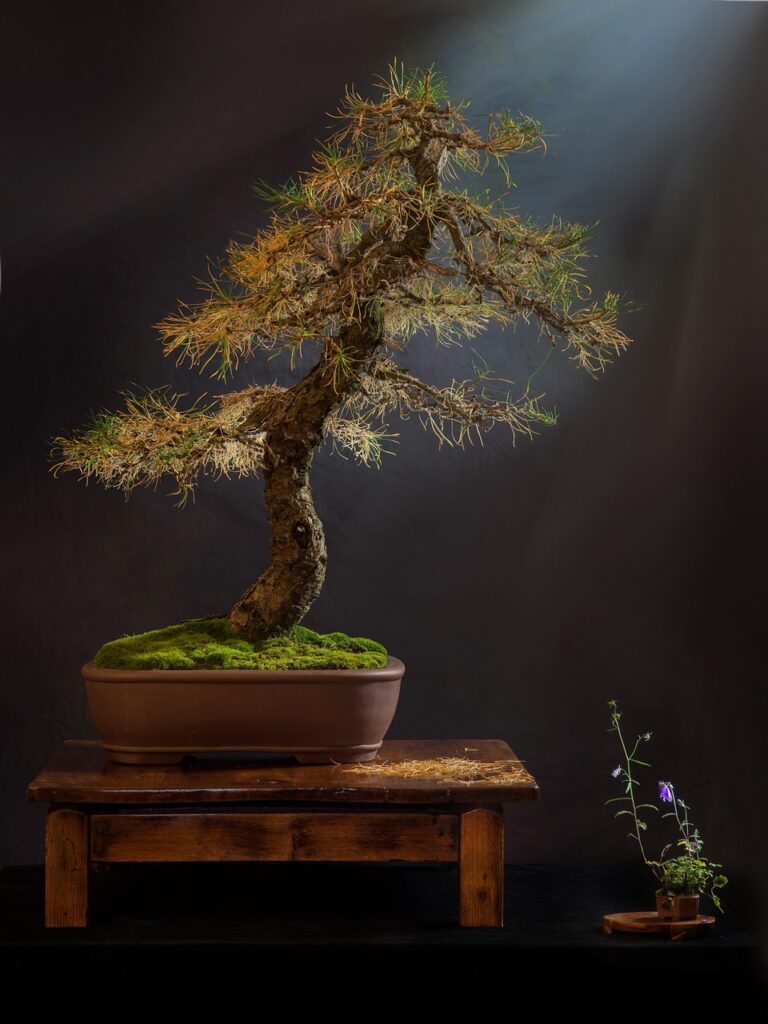
Correctly identifying a Temple Juniper bonsai is essential, especially since many juniper species look similar when young. The Temple Juniper bonsai, scientifically known as Juniperus rigida, has distinct needle structure, bark texture, and growth characteristics that separate it from softer-scale junipers commonly found in commercial stock.
Below are the key features to look for when identifying this species.
Leaf Identification
Temple Juniper bonsai have stiff, sharp, needle-like foliage rather than soft scale leaves. The needles are typically arranged in whorls of three and are noticeably rigid to the touch.
Each needle has a pronounced pale or silvery-white band along the upper surface, giving the foliage a slightly frosted appearance in strong light. Unlike many other junipers, Temple Juniper does not transition into scale foliage as it matures. The sharp needle form remains consistent throughout the tree’s life.
Flower Gallery
Temple Juniper bonsai do not produce showy flowers. Like all junipers, they are conifers and reproduce through cones rather than traditional blossoms.
Male trees produce small yellowish pollen cones in spring. These are subtle and often go unnoticed unless viewed closely. Female trees develop seed cones that later resemble berries.
Fruit Identification
The fruit of a Temple Juniper bonsai is technically a berry-like cone. These cones are usually spherical and start green before maturing to a bluish-black colour.
The surface often has a powdery bloom, giving it a dusty or frosted look. These berry-like cones typically take more than one season to fully mature, so different stages may appear on the same tree.
Seeds and Pods
Inside the berry-like cones are one to three hard seeds. These are protected by the fleshy outer coating of the cone.
Seed production only occurs if both male and female trees are present for pollination. In bonsai cultivation, fruiting is not always common, especially in heavily pruned specimens.
Bark Textures
One of the most distinctive features of a mature Temple Juniper bonsai is its bark. Over time, the bark becomes fibrous and begins to peel in vertical strips.
The colour ranges from grey-brown to reddish-brown, adding aged character and rugged texture. Older specimens may develop dramatic deadwood features naturally, enhancing their traditional bonsai appeal.
Seasonal Changes
Temple Juniper bonsai remain evergreen throughout the year. However, subtle seasonal shifts occur.
In colder months, foliage may take on a slightly darker or more muted tone. Growth slows significantly in winter dormancy, while spring brings fresh, lighter green tips. Unlike deciduous species, there is no leaf drop, but overall vigour and colour intensity fluctuate with the seasons.
Bonsai styles suited to this species
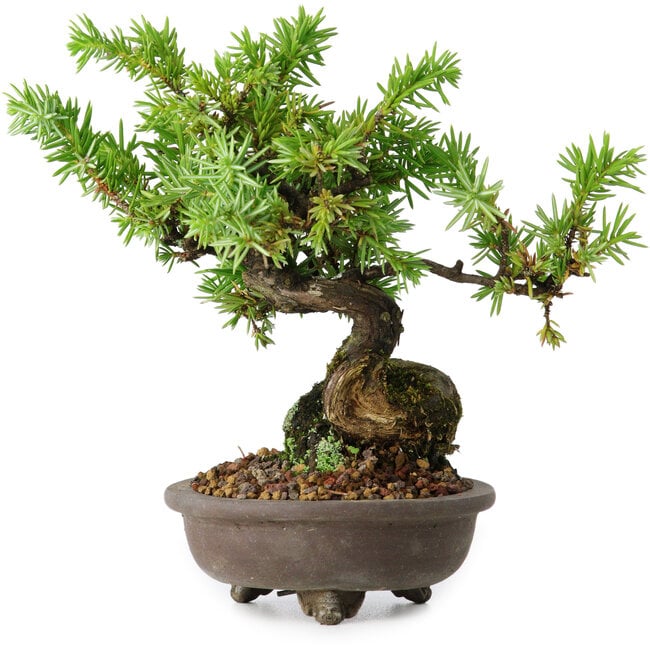
The natural growth habits and environmental resilience of the Temple Juniper bonsai make it well-suited to bonsai styles that emphasise endurance, exposure, and structural strength. Rather than forcing highly ornamental or overly refined forms, this species is best expressed through designs that reflect its rigid needle foliage, upright posture, and mountain-born character.
The following bonsai styles align particularly well with the structure and behaviour of a Temple Juniper bonsai.
Informal upright: Informal upright styles work well for Temple Juniper bonsai grown in stable conditions with strong vertical growth. Subtle trunk movement, balanced taper, and irregular branching allow the tree’s strength and maturity to develop without appearing overly formal or constrained.
Slanting: Slanting styles reflect trees shaped by wind, slope, or environmental pressure. This approach suits the species’ natural resilience and creates strong directional movement while maintaining a grounded and stable base.
Windswept: The windswept style is especially appropriate for Temple Juniper bonsai, given its stiff needle foliage and rigid branching. Sparse foliage pads, exposed trunk lines, and unified branch flow reinforce the impression of long-term exposure to harsh mountain elements.
Prostrate and semi-cascade: Prostrate and semi-cascade styles suit material that shows natural downward movement or spreading growth. These styles emphasise horizontal flow and low profiles, closely mirroring how the species survives in exposed or elevated terrain.
Deadwood features: While not a standalone style, the use of jin and shari complements many of the above forms. The species’ fibrous bark and firm wood lend themselves well to subtle deadwood features that enhance age and survival rather than dramatic contrast.
Overall, the most successful bonsai designs for the Temple Juniper bonsai are those that respect its natural rigidity and environmental strength. Styles that prioritise realism, structural integrity, and long-term development allow the species to express its character most convincingly in bonsai form.
Symbolism and cultural significance
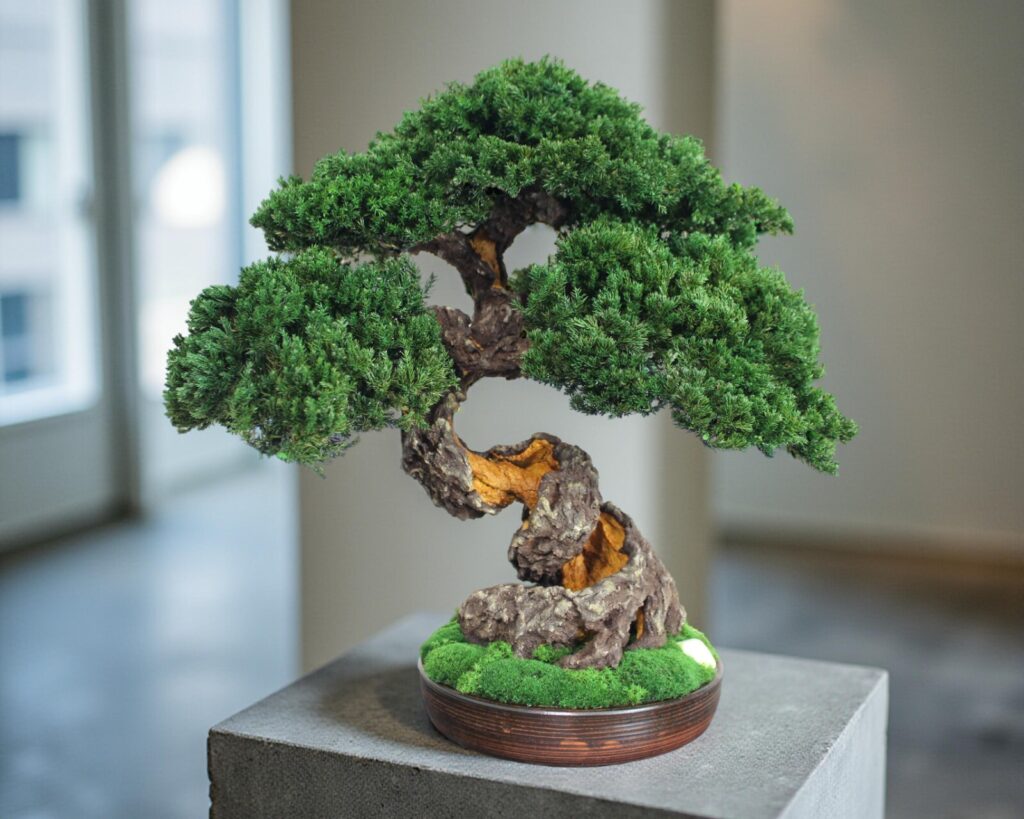
The Temple Juniper bonsai carries deep symbolic meaning rooted in endurance, spiritual strength, and permanence. In East Asian landscapes where Juniperus rigida naturally grows, it is often associated with sacred spaces, mountain temples, and rugged cliffside environments. Its ability to thrive in harsh conditions has long made it a symbol of resilience and quiet strength.
In traditional symbolism, junipers represent protection and purification. Their evergreen nature reflects constancy and continuity, while their sharp needle foliage conveys alertness and defence. The Temple Juniper bonsai, in particular, embodies disciplined endurance rather than delicate beauty.
Longevity and endurance
Temple Juniper trees can live for many decades, even centuries in natural environments. This longevity reinforces their association with perseverance and timelessness. In bonsai form, the species is often styled to emphasise age through textured bark, subtle deadwood, and strong trunk lines.
Because it withstands wind, frost, and poor soils, it is seen as a tree that survives through adversity. This makes it a meaningful choice for growers who value symbolism tied to endurance and inner strength.
Spiritual associations
The name “Temple Juniper” reflects its frequent presence near temples and sacred sites in parts of East Asia. Its upright growth and weathered appearance often complement spiritual architecture and mountain shrines.
In bonsai culture, this association enhances its presence as a contemplative tree. It is not flashy or ornamental. Instead, it conveys grounded stability and reflection, making it well-suited to traditional or naturalistic displays.
Aesthetic character in bonsai tradition
Within bonsai tradition, junipers are widely respected as classic subjects. The Temple Juniper bonsai stands out for its rigid needle foliage and structured growth, which encourage designs that feel ancient and elemental.
Rather than refined elegance, this species communicates strength, exposure, and survival. Its symbolism aligns closely with themes of resilience, protection, and the passage of time.
Overall, the Temple Juniper bonsai is not merely a decorative tree. It represents endurance shaped by environment, making it both horticulturally rewarding and culturally meaningful.
Companion Plants and Wildlife Attraction
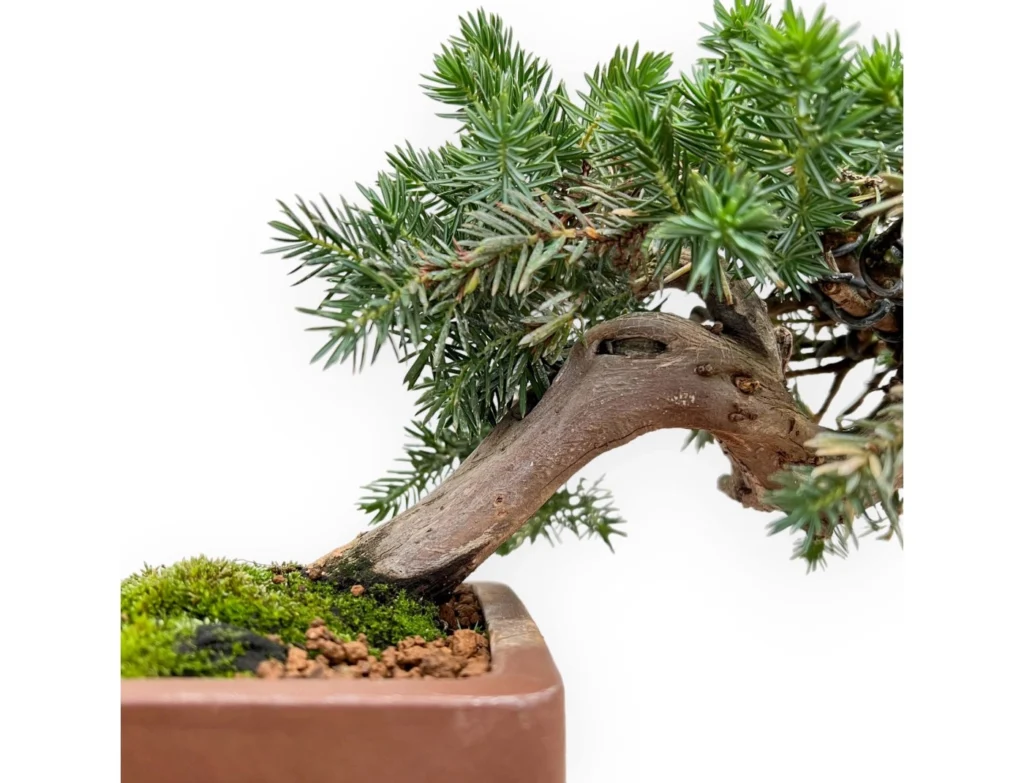
The Temple Juniper bonsai pairs well with understated companion plants that complement its rugged character without overpowering its structure. Because this species conveys strength and mountain resilience, companion selections should remain subtle, low-growing, and texturally balanced.
In outdoor bonsai displays, carefully chosen moss, flowers, and herbs can enhance realism while supporting biodiversity.
Moss
Temple Juniper bonsai benefit from low, fine-textured moss that enhances visual maturity without trapping excessive moisture around the trunk.
Good options include:
Hypnum cupressiforme: This feathery moss forms soft, low mats and suits rugged, naturalistic displays. It complements the fibrous bark of Temple Juniper without looking overly manicured.
Bryum argenteum: A compact, silver-green moss that tolerates sun exposure better than many species. It works well in brighter outdoor conditions where Temple Juniper bonsai thrive.
Avoid thick, sponge-like moss that retains too much water around the root base, as Temple Juniper prefers well-draining conditions.
Flowers
Flowering companions should remain subtle and low-growing so they do not compete visually with the bonsai’s strong structure.
Lobelia erinus: A compact flowering plant with delicate blue or white blooms. Its fine texture contrasts nicely with the sharp needle foliage.
Alyssum maritimum (Sweet Alyssum): Low-growing and lightly scented, this plant produces small clusters of white or pale flowers. It enhances display composition without dominating it.
Dianthus deltoides
A hardy alpine-style flowering plant that suits mountain-inspired compositions and reflects the Temple Juniper’s rugged origins.
Herbs
Low, structured herbs complement the Temple Juniper bonsai in outdoor settings and can tolerate similar sunlight exposure.
Thymus serpyllum (Creeping Thyme)
A sun-loving groundcover with fine foliage and subtle flowers. It suits rock-inspired or alpine-style displays and does not overwhelm the bonsai visually.
Origanum vulgare (Compact Oregano varieties)
Dwarf varieties work well in larger display pots or surrounding plantings, adding texture without heavy moisture demand.
Chamaemelum nobile (Dwarf Chamomile): Provides fine, delicate foliage that contrasts beautifully with the rigid needles of Temple Juniper.
Wildlife Attraction
Temple Juniper bonsai and its companion plantings can support beneficial wildlife when displayed outdoors.
The berry-like cones of Temple Juniper may attract small birds in natural settings, particularly if multiple junipers are present nearby.
Flowering companions such as Lobelia and Alyssum attract pollinators including:
• Bees
• Small native butterflies
• Hoverflies
Creeping thyme and oregano also draw pollinators when in bloom.
Maintaining healthy companion plantings encourages beneficial insects such as ladybirds and praying mantises, which help control aphids and other minor pests naturally.
By combining Temple Juniper bonsai with carefully selected moss, alpine flowers, and sun-tolerant herbs, you create a balanced display that reflects natural mountain ecosystems while gently supporting local biodiversity.
Care summary and practical notes
The Temple Juniper bonsai is a hardy, sun-loving evergreen that rewards consistency and restraint. Its rigid needle foliage, strong upright growth, and fibrous bark make it a powerful and enduring species in bonsai cultivation. When grown in full sun with well-draining soil and moderate watering, it develops compact growth and a naturally rugged character over time.
This species does not respond well to extremes. Avoid overwatering, heavy root reduction, or aggressive bending of mature branches. Slow, deliberate shaping and seasonal awareness are key to long-term success. Structural pruning should be thoughtful rather than reactive, allowing the tree to mature gradually.
Temple Juniper bonsai thrive outdoors and benefit from natural seasonal cycles, including winter dormancy. Protect the roots from severe frost in shallow containers, but do not bring the tree indoors long term, as it requires natural light intensity and airflow.
For growers seeking a resilient and traditional evergreen with strong symbolic presence, the Temple Juniper bonsai is a rewarding choice. With proper care and patient development, it becomes a living expression of endurance shaped by environment.