

The shore juniper bonsai is one of the most resilient and visually striking conifer species used in bonsai cultivation. Known for its rugged coastal origins and dense needle foliage, it adapts exceptionally well to structured training while retaining a wild, natural character. This care sheet is designed to provide practical, experience-based guidance for maintaining a healthy and refined shore juniper bonsai in a home growing environment.
In this detailed bonsai care guide, we will cover essential aspects of shore juniper care, including light requirements, watering strategy, pruning techniques, soil structure, wiring considerations and seasonal adjustments.
Whether you are refining an established specimen or developing a young tree, understanding the specific growth habits of the shore juniper bonsai will ensure long-term health, structural integrity and aesthetic balance.
Table of Contents
TL:DR Quick Shore Juniper Bonsai Care Overview
The shore juniper bonsai is a hardy outdoor conifer known for its coastal resilience, dense needle foliage and strong structure. As a species adapted to wind, salt air and exposed conditions, it performs best in full sun with excellent drainage. This quick care sheet provides a concise overview of essential shore juniper care, making it easy to reference key bonsai care requirements at a glance.
Whether you are refining structure or maintaining a mature specimen, understanding the basic needs of your shore juniper bonsai will ensure steady growth, compact foliage and long-term health.
| Care aspect | Details |
|---|---|
| Scientific name | Juniperus conferta |
| Common name | Shore juniper |
| Bonsai type | Outdoor bonsai |
| Light | Full sun (minimum 6 hours daily) |
| Watering | Moderate; allow soil to slightly dry between waterings |
| Soil | Free-draining bonsai soil mix (akadama, pumice, lava or similar) |
| Fertiliser | Balanced fertiliser, NPK 10–10–10 or 12–12–12 during growing season |
| Pruning | Spring and late summer; avoid heavy winter pruning |
| Wiring | Suitable but use caution due to stiff, somewhat brittle branches |
| Difficulty | Intermediate |
| Rarity | Uncommon outside specialist bonsai nurseries |
| Climate sensitivity | Cold-hardy; tolerates frost, wind and coastal conditions |
| Growth habit | Low-spreading, ground-hugging form with rigid needle foliage |
Shore Juniper Bonsai Care Guide
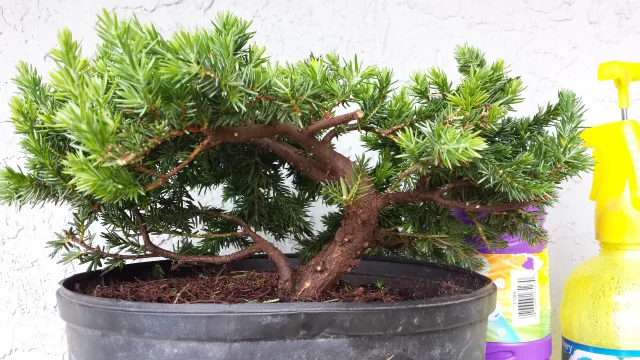
The shore juniper bonsai is a hardy, low-growing coastal species prized for its rugged character and dense needle foliage. Naturally adapted to wind, salt exposure and sandy soils, this tree develops a powerful, ground-hugging form that translates beautifully into bonsai. When cultivated correctly, a shore juniper bonsai combines resilience with refined structure, making it a rewarding subject for growers who appreciate strong lines and natural movement.
This care sheet provides a complete guide to shore juniper care, covering all essential aspects of bonsai care from light and watering to shaping and seasonal maintenance. Although the species is tolerant and adaptable, proper technique is necessary to achieve compact growth, balanced ramification and long-term health.
Light
The shore juniper bonsai thrives in full sun. It should receive a minimum of six hours of direct sunlight daily to maintain tight needle growth and strong branch development. Adequate light encourages compact foliage pads and prevents the tree from becoming leggy or weak.
Insufficient light results in elongated shoots and reduced interior growth, which can compromise design refinement. In very hot inland climates, brief afternoon shade may help prevent stress, but in most environments the shore juniper bonsai performs best in open, bright conditions. Strong light is one of the most important foundations of consistent shore juniper care.
Watering
Watering should be moderate and controlled. Allow the top layer of soil to dry slightly before watering again, but never allow the entire root ball to become completely dry. Junipers prefer a balanced moisture cycle rather than constant saturation.
Because the shore juniper bonsai is grown in free-draining bonsai soil, watering frequency will depend on climate, pot size and season. During active growth in spring and summer, daily watering may be necessary. In autumn and winter, watering should be reduced. Monitoring soil moisture rather than following a rigid schedule is key to effective bonsai care.
Pruning
Pruning maintains structure and promotes dense foliage. Structural pruning is best carried out in early spring before vigorous growth begins. Remove unwanted branches to establish primary lines and improve air circulation within the canopy.
Maintenance pruning can be done throughout late spring and summer by trimming back new growth to encourage ramification. Avoid heavy pruning during winter dormancy, as recovery will be slower. Proper pruning is central to successful shore juniper care and long-term refinement.
Shaping
The natural growth habit of a shore juniper bonsai is low and spreading, making it well suited to informal upright, slanting and cascading styles. Shaping should respect the tree’s inherent movement rather than forcing unnatural verticality.
When refining form, focus on creating layered foliage pads and clear branch structure. Allow negative space between pads to enhance depth and visual balance. Strong shaping decisions early in development reduce corrective work later and improve overall bonsai care outcomes.
Soil
Free-draining soil is essential. A mix containing akadama, pumice and lava rock works well for the shore juniper bonsai. The goal is to ensure strong aeration and prevent root rot, which junipers are particularly sensitive to.
Heavy, water-retentive soil will suffocate roots and weaken growth. Proper soil structure allows controlled watering, healthy root development and improved nutrient uptake. Good soil management forms the technical backbone of responsible shore juniper care.
Repotting
Repotting is typically required every two to three years for younger trees and less frequently for mature specimens. Early spring, just before new growth begins, is the ideal time to repot a shore juniper bonsai.
During repotting, prune roots conservatively. Remove circling or overly long roots while preserving enough fine feeder roots to support recovery. Avoid excessive root reduction in a single session. Controlled repotting supports long-term bonsai care and root system stability.
Wiring
Wiring is suitable for shaping a shore juniper bonsai, but caution is required. Branches can be stiff and somewhat brittle, especially on older growth. Apply wire carefully and bend gradually to avoid cracking.
Check wiring regularly to prevent scarring, particularly during active growth periods. Because junipers set their shape slowly, wire may need to remain in place for extended periods. Thoughtful wiring enhances structure without compromising bark integrity.
Fertiliser
Fertilising should be consistent during the growing season. A balanced fertiliser such as NPK 10–10–10 or 12–12–12 supports steady growth without excessive elongation. Feed from early spring through late summer.
Reduce or stop fertilising in late autumn and winter when growth slows. Over-fertilisation can produce coarse growth that weakens design refinement. Controlled feeding supports healthy development while maintaining the compact character expected in quality shore juniper care.
Propagation
Shore juniper bonsai can be propagated from semi-hardwood cuttings taken in late spring or early summer. Use a well-draining propagation medium and maintain consistent moisture without waterlogging.
Rooting hormone may improve success rates. Cuttings should be placed in bright, indirect light until roots establish. Propagation allows growers to develop new material and maintain genetic continuity within their bonsai collection.
Seasonal Care
In spring and summer, the shore juniper bonsai focuses on active growth. This is the period for pruning, fertilising and structural refinement. Adequate watering and strong light support vigorous but controlled development.
During autumn, growth slows and fertilisation should taper off. In winter, the tree enters dormancy. Although cold-hardy, young or recently repotted trees may benefit from protection against severe frost. Seasonal adjustments are essential components of disciplined bonsai care.
Pests
The shore juniper bonsai may occasionally attract spider mites, scale insects or aphids. Regular inspection is important, especially in dry conditions where mites thrive.
Good airflow and proper watering reduce pest risk. If infestation occurs, treat promptly using appropriate horticultural controls. Preventative monitoring is part of responsible shore juniper care.
Diseases
Junipers can be susceptible to fungal diseases if grown in poorly draining soil or overly humid conditions. Root rot is the most serious threat and is usually caused by waterlogged substrate.
Maintaining free-draining soil, proper spacing and controlled watering significantly reduces disease risk. Strong cultural practices remain the most effective defence. Healthy roots and balanced growth form the foundation of long-term shore juniper bonsai success.
Got it — this is for Shore Juniper bonsai, not Temple Juniper.
We’ll keep it species-specific to Juniperus conferta and structured in BBB style.
How to Identify a Shore Juniper Bonsai
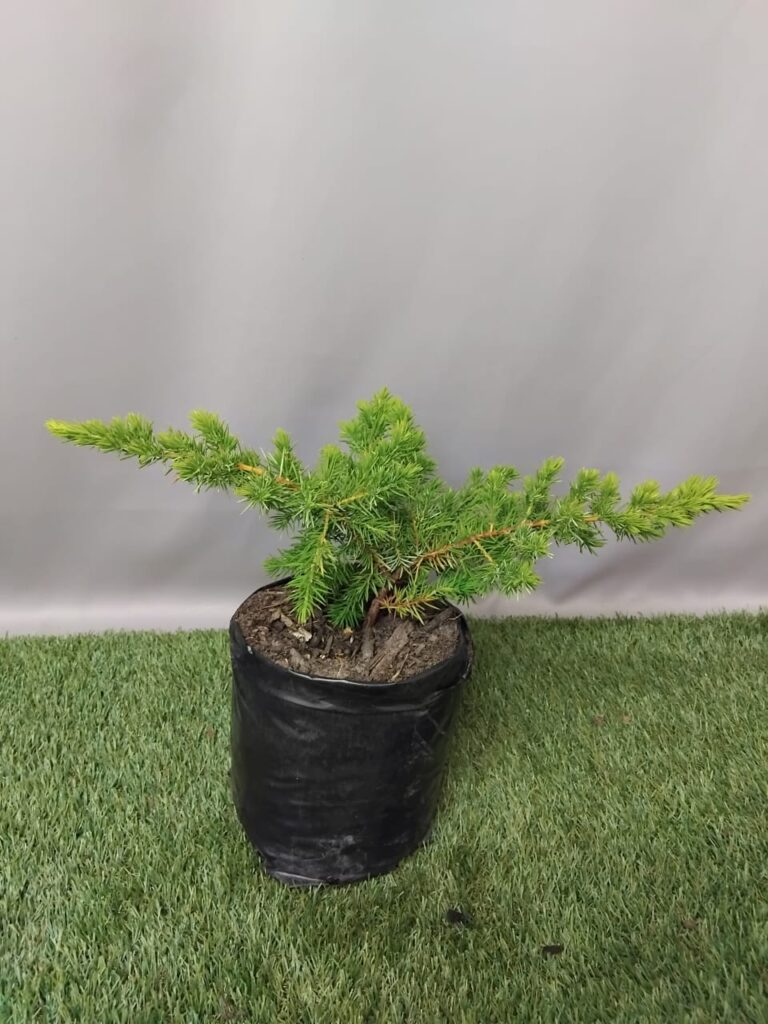
Correctly identifying a shore juniper bonsai is important because its growth habit, foliage structure and bark development differ from many other juniper species used in bonsai. Shore juniper, botanically known as Juniperus conferta, is a coastal species with a naturally low-spreading form and dense needle foliage.
Unlike upright junipers commonly used in bonsai, the shore juniper bonsai tends to exhibit a ground-hugging, horizontal growth pattern. Its foliage texture, berry size and bark characteristics provide reliable clues for identification.
Leaf Identification
The shore juniper bonsai has sharp, needle-like foliage rather than soft scale foliage. The needles are typically arranged in whorls of three and are noticeably stiff and pointed. Each needle features a distinct silvery-white stomatal band running along the upper surface, creating a subtle striped appearance.
The colour of the foliage ranges from medium green to bluish green, depending on growing conditions. In strong sunlight, the needles may appear slightly more compact and vibrant. Unlike some other juniper species, shore juniper does not transition into scale-like foliage as it matures. The persistent needle structure is one of its most reliable identifying features.
Flower Gallery
The shore juniper bonsai produces small, inconspicuous reproductive structures rather than showy flowers. As a conifer, it develops pollen cones on male plants and seed cones on female plants.
Male cones are small and yellowish, typically appearing in spring. Female cones begin as small green structures that later develop into berry-like forms. Because bonsai cultivation often involves pruning and shaping, flowering may be subtle or less noticeable than in wild specimens.
Fruit Identification
One of the clearest identifiers of the shore juniper bonsai is its relatively large berry-like cones. These fruits are often noticeably larger than those of many other juniper species.
The berries begin green and gradually mature into a bluish or purplish tone with a powdery bloom on the surface. They are typically round and firm. In cultivated bonsai, fruiting may not occur every year, but when present, the larger cone size is a distinguishing characteristic of shore juniper.
Seeds and Pods
Inside each berry-like cone are typically one to three hard seeds. These seeds are protected by a fleshy outer layer that develops as the cone matures.
Seed development can take over a year from pollination to full maturity. In bonsai specimens, seed production may be limited due to pruning practices, but the structure remains botanically consistent with the species.
Bark Textures
Young shore juniper bonsai trees have relatively smooth, greyish-brown bark. As the tree matures, the bark begins to develop fibrous texture and subtle peeling characteristics.
Older specimens may show reddish-brown undertones beneath weathered outer layers. While not as dramatically flaky as some juniper species, the bark develops character over time, contributing to the rugged coastal appearance associated with shore juniper.
Seasonal Changes
The shore juniper bonsai remains evergreen throughout the year. It does not shed foliage seasonally, although needle colour may deepen slightly during colder months.
Growth is most vigorous in spring and early summer. During winter, the tree enters dormancy, and foliage may appear slightly duller or tighter in structure. Unlike deciduous species, seasonal change in shore juniper is subtle and expressed primarily through growth rate rather than dramatic colour shifts.
Bonsai Styles Suited to Shore Juniper Bonsai
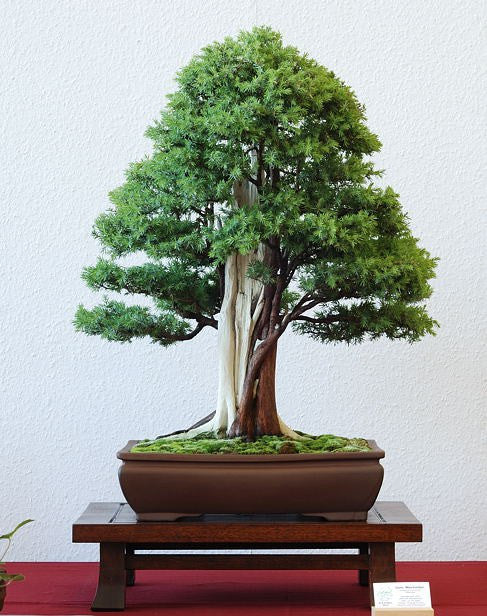
The shore juniper bonsai naturally grows low, spreading and wind-swept along coastal dunes. Its growth habit makes it particularly well-suited to horizontal and movement-driven styles rather than rigid upright forms. When selecting a bonsai style for shore juniper care, it is best to work with its natural character rather than force it into unnatural vertical structure.
Below are the styles that complement the species most effectively.
Informal Upright (Moyogi): Although shore juniper is naturally spreading, it can be trained into an informal upright style with gentle trunk movement. The key is to preserve soft curves rather than create rigid vertical lines.
Because the foliage is needle-based and somewhat coarse, branch pads should be well-spaced and layered. This style works best when the trunk shows natural bends that suggest wind influence rather than strict symmetry.
Slanting (Shakan): The slanting style suits shore juniper exceptionally well. Its coastal origins make a leaning trunk look completely natural, as if shaped by constant sea winds.
Strong surface roots on one side of the trunk enhance realism in this style. When shaping a slanting shore juniper bonsai, allow branches to extend slightly downward on the windward side and fuller on the protected side to create visual tension and balance.
Cascade (Kengai): The natural trailing habit of shore juniper makes it ideal for cascade or semi-cascade forms. The flexible young branches allow downward shaping that mimics vegetation clinging to rocky cliffs.
Because the needles are sharp and structured, foliage pads in cascade designs should be compact and directional. This prevents the silhouette from appearing heavy or chaotic.
Windswept (Fukinagashi): Few species embody the windswept style as convincingly as shore juniper. Its coastal resilience makes this design visually authentic.
All branches are directed in a single flowing direction, suggesting strong prevailing wind. The trunk may show subtle bends rather than extreme curves. This style highlights the rugged personality of the shore juniper bonsai and aligns perfectly with its natural habitat.
Ground-Cover or Driftwood-Inspired Forms: Because shore juniper naturally grows low and spreading, it can also be styled in naturalistic ground-cover forms or combined with driftwood features.
Incorporating jin and shari techniques can enhance the aged coastal appearance. Deadwood features should be subtle and believable rather than overly dramatic. The goal is to evoke weathered shoreline growth rather than mountain drama.
Symbolism and cultural significance
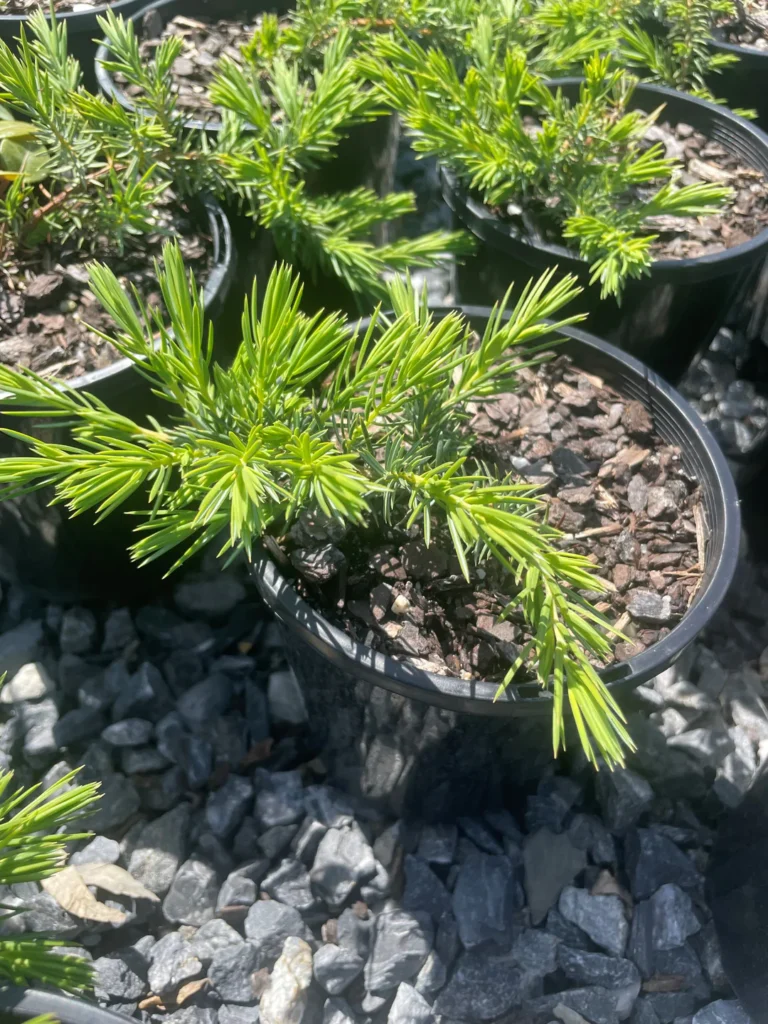
The shore juniper bonsai carries symbolism rooted in resilience, endurance and quiet strength. As a coastal species that naturally withstands wind, salt spray and shifting sands, it represents survival in exposed and challenging environments. This symbolism translates beautifully into bonsai form, where controlled shaping meets natural toughness.
In many cultures, junipers in general are associated with protection and purification. Historically, juniper branches were used in ritual cleansing practices, and the tree was often planted near homes as a protective presence. While the shore juniper bonsai is not as widely referenced in classical bonsai literature as other species, it inherits this broader juniper symbolism of safeguarding and perseverance.
The rugged character of a shore juniper bonsai also symbolises adaptability. Its ability to grow low and spread across unstable ground reflects flexibility rather than rigidity. In bonsai design, this can represent humility and groundedness, especially when styled in windswept or cascade forms that emphasise environmental influence over forced structure.
In Japanese bonsai tradition, junipers are frequently used to convey age and endurance. Through techniques such as jin and shari, artists create deadwood features that suggest survival through storms and hardship. When applied thoughtfully to a shore juniper bonsai, these techniques reinforce themes of time, weathering and persistence.
The evergreen nature of the shore juniper bonsai also carries symbolic weight. Because it remains green throughout the year, it represents continuity and constancy. Unlike deciduous trees that shed leaves, the juniper maintains its presence in all seasons, quietly enduring through cycles of growth and dormancy.
For many growers, the shore juniper bonsai becomes a personal symbol of steady progress. Its care requires patience, observation and disciplined bonsai care practices. It does not respond well to rushed shaping or aggressive intervention. Instead, it rewards gradual refinement and thoughtful structure, reflecting the principle that strength develops over time rather than through force.
In modern bonsai culture, junipers remain among the most respected conifers for expressive design. The shore juniper bonsai, with its coastal heritage and spreading form, stands as a reminder that beauty can emerge from harsh environments and that resilience often shapes the most compelling character.
Companion Plants and Wildlife Attraction
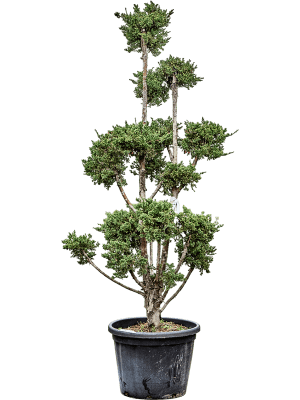
A shore juniper bonsai pairs beautifully with subtle companion plantings that enhance its coastal character without competing for attention. Because this species naturally grows in sandy, wind-exposed environments, companion selections should reflect similar resilience and low-profile structure.
When selecting companions, the goal is balance. The shore juniper bonsai should remain the focal point, while moss, flowers or herbs provide scale, seasonal contrast and ecological interest.
Moss
For a shore juniper bonsai, low-growing mosses that tolerate sun and moderate dryness work best. Suitable options include Hypnum cupressiforme (Sheet Moss), which forms soft, feathery mats, and Bryum argenteum (Silver Moss), which handles brighter conditions well.
In coastal or warm climates, Tortula muralis can also perform well in shallow bonsai trays. Avoid overly thick or water-retentive moss that traps excessive moisture around the trunk base. Moss should enhance surface texture while still allowing proper drainage, which is critical for shore juniper care.
Flowers
Subtle flowering companions help soften the rugged look of a shore juniper bonsai without overwhelming it. Alpine or coastal-style bloomers are ideal. Good choices include Armeria maritima (Sea Thrift), which complements the coastal identity of the species, and dwarf varieties of Dianthus for low-profile seasonal colour.
Miniature succulents such as Delosperma cooperi can also add controlled bursts of colour in warm climates. Keep flowering plants small and restrained. The intention is accent, not competition.
Herbs
Low-growing herbs can provide fragrance and texture while reinforcing a naturalistic setting. Thymus serpyllum (Creeping Thyme) works particularly well due to its drought tolerance and compact growth. Dwarf varieties of Rosmarinus officinalis (prostrate rosemary) may also complement the hardy character of a shore juniper bonsai when used sparingly.
Herbs should be planted in separate accent pots rather than directly in the bonsai container unless the display is temporary. Root competition can disrupt long-term bonsai care if unmanaged.
Wildlife Attraction
Although a shore juniper bonsai is not a major nectar source, it can contribute to a small ecological habitat when placed outdoors. Mature specimens that produce berry-like cones may attract small birds that feed on juniper berries.
When paired with flowering companions such as Sea Thrift or creeping thyme, the surrounding display may attract pollinators, including bees and butterflies. The evergreen structure of the shore juniper bonsai can also provide micro-shelter for beneficial insects such as ladybirds.
Encouraging wildlife around your bonsai display enhances environmental interaction without compromising tree health. The key is to support natural balance rather than create excess moisture or pest attraction.
Care Summary and Practical Notes
The shore juniper bonsai is a hardy, sun-loving conifer that rewards patient and structured bonsai care. Its coastal origins make it resilient to wind and temperature variation, but it still depends on proper light exposure, controlled watering and free-draining soil. When these fundamentals are respected, the tree develops dense foliage, strong branch structure and long-term health.
Successful shore juniper care revolves around balance. Provide full sun to maintain compact growth. Water consistently but never allow the soil to remain saturated. Use a well-draining substrate to protect the root system. Prune gradually rather than aggressively, and wire carefully due to the species’ somewhat stiff branches.
This species is particularly well suited to slanting, cascade and windswept styles, where its natural spreading habit feels authentic rather than forced. Avoid imposing rigid upright forms that contradict its coastal character. Design decisions should enhance its natural identity rather than compete with it.
Seasonal awareness is also essential. Active growth in spring and summer is the time for shaping, feeding and structural refinement. Autumn signals preparation for dormancy, while winter requires restraint and protection from extreme frost for younger trees. A shore juniper bonsai remains evergreen, but its energy cycles still demand respect.
For growers seeking a durable outdoor bonsai with expressive potential, the shore juniper bonsai offers both resilience and refinement. With disciplined bonsai care and thoughtful styling, it becomes a powerful representation of strength shaped by environment rather than control.