
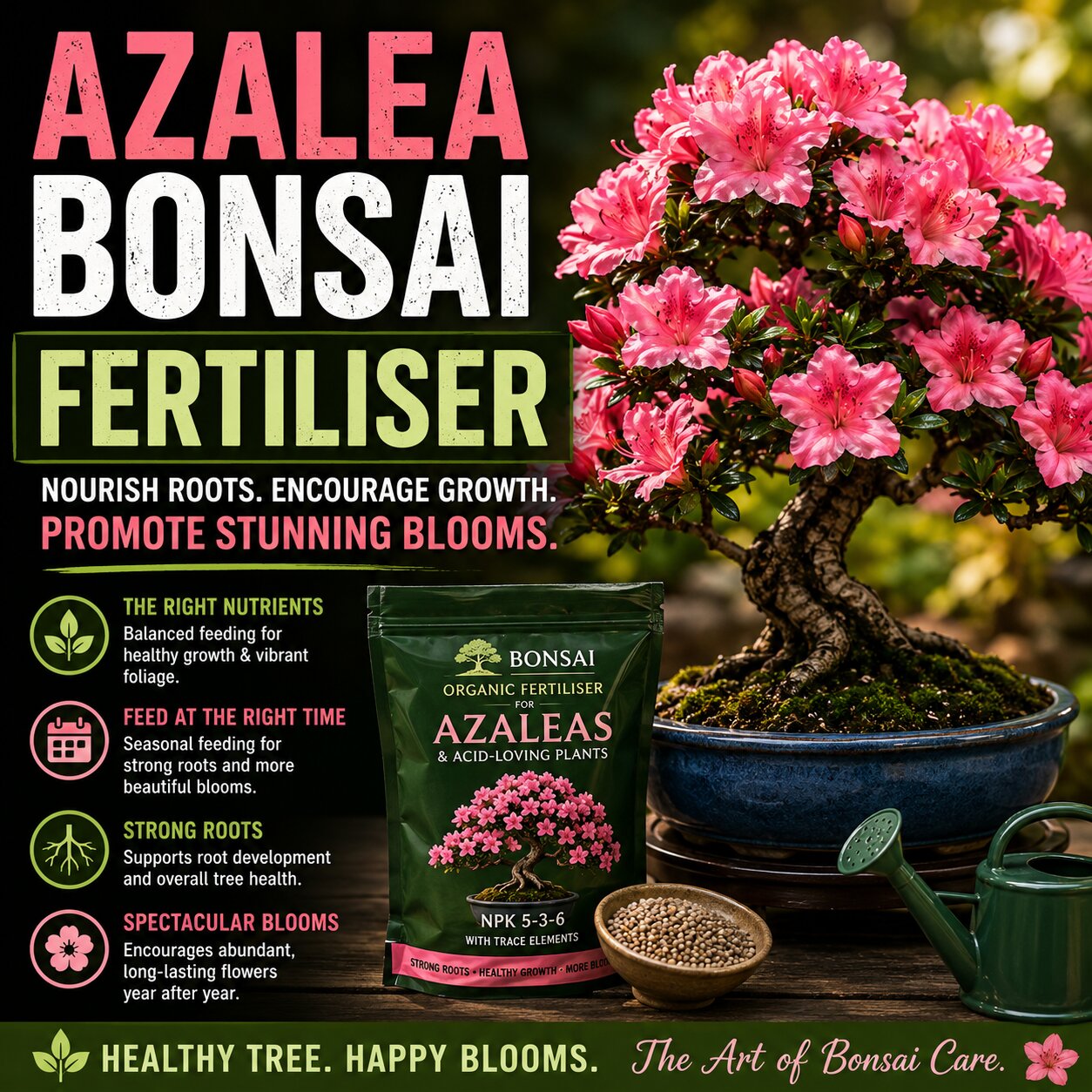
Choosing the right azalea bonsai fertiliser is one of the most important aspects of caring for these beautiful flowering trees. Azaleas are admired for their spectacular blooms and compact growth, but they also have specific nutritional requirements that differ from many other bonsai species. Providing the correct fertiliser at the right time helps maintain healthy foliage, encourages vigorous root development and supports abundant flowering year after year.
Unlike some fast-growing bonsai varieties, azaleas respond best to a balanced feeding programme that complements their natural growth cycle. Too little fertiliser may result in weak growth and poor flowering, while excessive feeding can damage roots, encourage excessive foliage growth or reduce the number of blooms produced.
Understanding how and when to use azalea bonsai fertiliser allows bonsai enthusiasts to maintain healthy trees that remain both visually attractive and structurally balanced throughout the seasons.
Understanding the Nutritional Needs of Azalea Bonsai
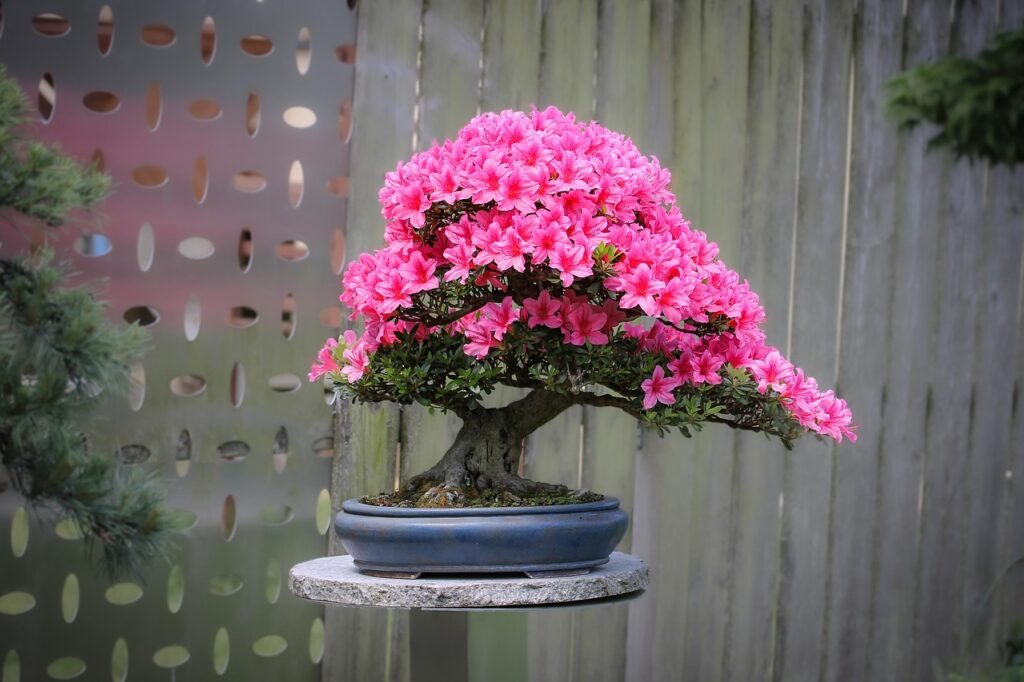
Azaleas belong to a group of acid-loving plants that thrive in specialised growing conditions. Their preferred growing medium typically has a lower pH than many other bonsai species, and their nutritional requirements reflect these conditions.
Nitrogen supports healthy leaf and shoot development, phosphorus contributes to root growth and flower production, while potassium strengthens the overall health and resilience of the tree. Numerous secondary nutrients and trace elements also play important roles in maintaining vibrant foliage and supporting the flowering process.
Because bonsai are grown in relatively small containers, nutrients are gradually depleted through watering. Regular fertilisation replaces these nutrients, ensuring the tree continues growing without exhausting the limited resources available in the pot.
Selecting an appropriate azalea bonsai fertiliser specifically formulated for acid-loving plants often provides the best long-term results.
Choosing the Right Fertiliser
There are many bonsai fertilisers available, but not all are equally suitable for azaleas. Products formulated for acid-loving plants generally provide the correct balance of nutrients while helping maintain an appropriate growing environment.
Organic fertilisers remain popular among many bonsai growers because they release nutrients gradually, reducing the risk of sudden nutrient spikes. They also encourage beneficial microbial activity within the growing medium.
Liquid fertilisers provide another excellent option. These can be applied during active growth and allow growers to adjust feeding strength according to the tree’s condition. Because nutrients become available quickly, careful dilution according to manufacturer recommendations is important.
Slow-release fertilisers offer convenience by providing nutrients over an extended period. They are particularly useful for enthusiasts seeking a consistent feeding programme with fewer applications.
When to Feed Your Azalea Bonsai
Timing plays an equally important role in successful azalea bonsai fertiliser use. Feeding schedules should follow the natural growth cycle rather than remaining identical throughout the year.
Spring is typically the most active period of growth. As new shoots emerge, regular feeding supports leaf development and prepares the tree for flowering. Once flowering has finished, continued fertilisation helps the tree recover and produce healthy new growth for the following season.
During the hottest periods of summer, particularly if the tree experiences stress from extreme temperatures, some growers reduce feeding slightly until vigorous growth resumes.
Autumn feeding helps strengthen the tree before winter dormancy while encouraging root development. During winter, when growth slows significantly or becomes dormant depending on local conditions, fertilisation is usually reduced or temporarily suspended.
Observing the tree’s condition remains more important than following rigid calendar dates.
Signs That Your Azalea Needs Nutritional Support
Healthy azalea bonsai display vibrant green foliage, balanced growth and reliable flowering during the appropriate season. Changes in appearance may indicate nutritional deficiencies or other cultural issues.
Watch for the following signs:
- Pale or yellowing leaves.
- Weak or slow shoot development.
- Smaller than normal leaves.
- Reduced flowering or fewer flower buds.
- General loss of vigour.
- Poor recovery after pruning or repotting.
- Limited root development during repotting.
These symptoms do not always indicate fertiliser problems alone. Watering, soil quality, sunlight and root health should also be evaluated before making significant adjustments to the feeding programme.
Avoiding Common Fertilising Mistakes
Overfeeding remains one of the most common mistakes made by bonsai enthusiasts. More fertiliser does not necessarily produce healthier trees. Excess nutrients may damage delicate roots or encourage excessive foliage growth at the expense of flowers.
Applying fertiliser to a dry root ball can also stress the plant. Watering beforehand helps protect the roots and promotes even nutrient distribution throughout the growing medium.
Another common mistake involves fertilising immediately after repotting. Recently disturbed roots require time to recover before receiving additional nutrients. Waiting until active growth resumes generally produces better results.
Consistency usually delivers better outcomes than irregular heavy feeding. Smaller, regular applications often provide healthier long-term development than infrequent large doses.
Supporting Flower Production
One of the greatest attractions of azalea bonsai is their spectacular floral display. Healthy flowering depends on more than fertiliser alone, but appropriate nutrition certainly plays an important role.
Balanced feeding encourages strong growth capable of producing abundant flower buds for the following season. Excessive nitrogen late in the growing season may encourage leafy growth while reducing flowering potential, making timing particularly important.
Good sunlight, careful watering, regular pruning and healthy roots all work alongside azalea bonsai fertiliser to maximise flowering performance.
Growers should remember that flowering places considerable energy demands on the tree. Continued care after blooming helps replenish those energy reserves for future growth.
Combining Fertilisation with Overall Bonsai Care
Fertilisation should never be viewed in isolation. Successful azalea bonsai cultivation depends upon a complete care programme that integrates watering, pruning, repotting, pest management and appropriate positioning.
Healthy roots absorb nutrients efficiently, making suitable soil mixtures and careful watering just as important as the fertiliser itself. Similarly, regular structural pruning encourages balanced growth that makes better use of available nutrients.
Monitoring the tree throughout the year allows growers to adjust fertilisation according to weather conditions, growth rates and overall health rather than relying solely on fixed schedules.
When combined with sound bonsai practices, a thoughtful feeding programme supports both the beauty and longevity of these remarkable trees.
Nourishing Beautiful Azalea Bonsai for Years to Come
Using the correct azalea bonsai fertiliser provides the nutrients these beautiful flowering bonsai need to thrive throughout the seasons. By selecting suitable products, feeding at the appropriate times and avoiding common mistakes, growers can encourage vigorous growth, healthy roots and spectacular floral displays.
Every azalea bonsai develops slightly differently depending on its age, environment and growing conditions. Careful observation remains one of the most valuable skills any bonsai enthusiast can develop.
With patience, consistency and proper nutrition, your azalea bonsai will continue rewarding you with healthy growth and breathtaking flowers for many years to come.