Azaleas are among the most rewarding bonsai trees to cultivate, producing spectacular blooms and vibrant foliage when kept healthy. However, like all living plants, they can be affected by a variety of diseases if environmental conditions become unfavourable or proper care is neglected. Recognising the early signs of illness can make the difference between a quick recovery and the loss of your bonsai.
Understanding azalea bonsai diseases helps growers identify problems before they become serious, allowing timely treatment while maintaining the long-term health and beauty of these popular flowering bonsai.
With careful observation and good horticultural practices, most diseases can either be prevented or successfully managed.
Why azalea bonsai diseases develop
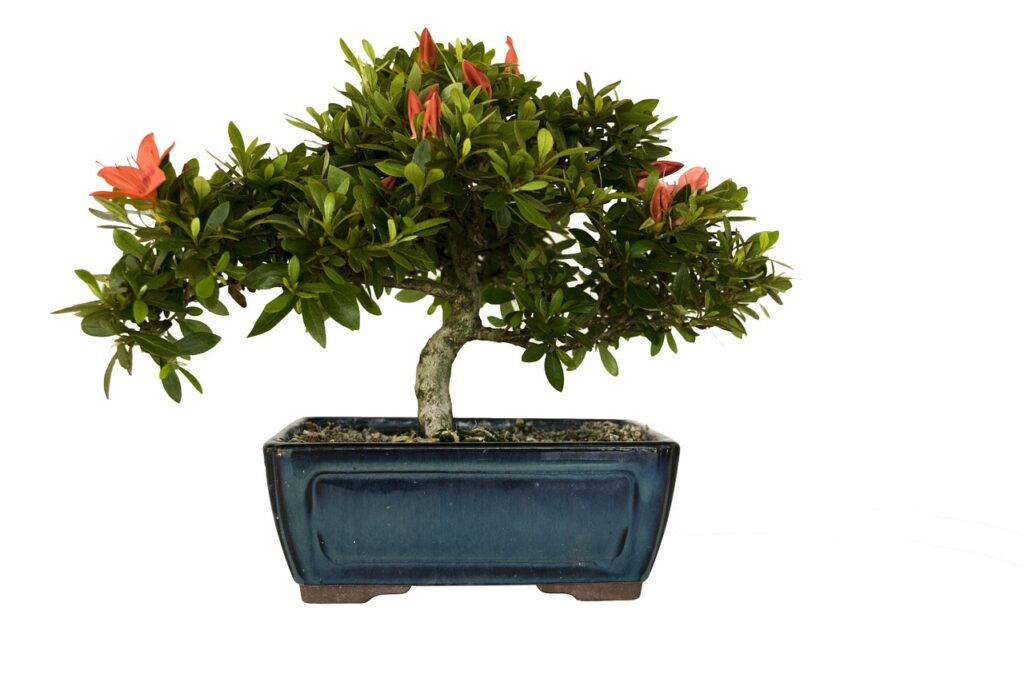
Healthy bonsai are naturally more resistant to disease than stressed trees.
Many of the common diseases affecting azalea bonsai occur because of environmental factors such as excessive moisture, poor air circulation, contaminated tools or unsuitable soil conditions.
Overwatering is particularly problematic, as constantly wet roots create ideal conditions for fungal pathogens to thrive. Likewise, placing trees in crowded or poorly ventilated areas allows moisture to remain on leaves for extended periods.
Preventative care remains far easier than treating an established infection.
Root rot is one of the biggest threats
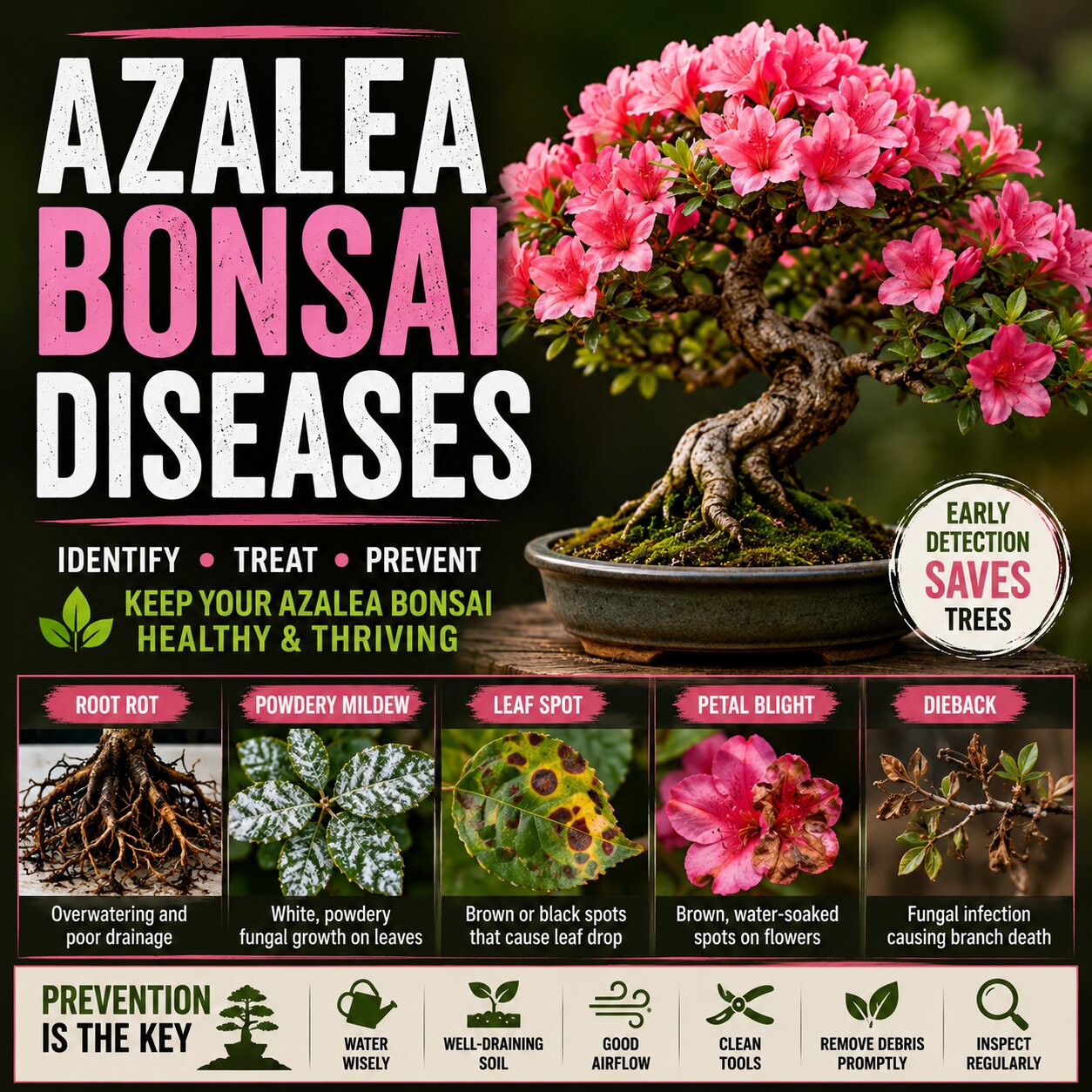
Among all azalea bonsai diseases, root rot is one of the most destructive.
Usually caused by waterlogged soil and poor drainage, fungal pathogens attack the root system, preventing the tree from absorbing water and nutrients effectively.
Symptoms include:
- Yellowing leaves
- Wilting despite moist soil
- Slow or stunted growth
- Black or mushy roots
- Premature leaf drop
- Overall decline in vigour
If detected early, repotting into fresh, well-draining azalea bonsai soil and removing damaged roots may save the tree.
Avoid allowing water to collect around the roots for prolonged periods.
Powdery mildew affects leaves
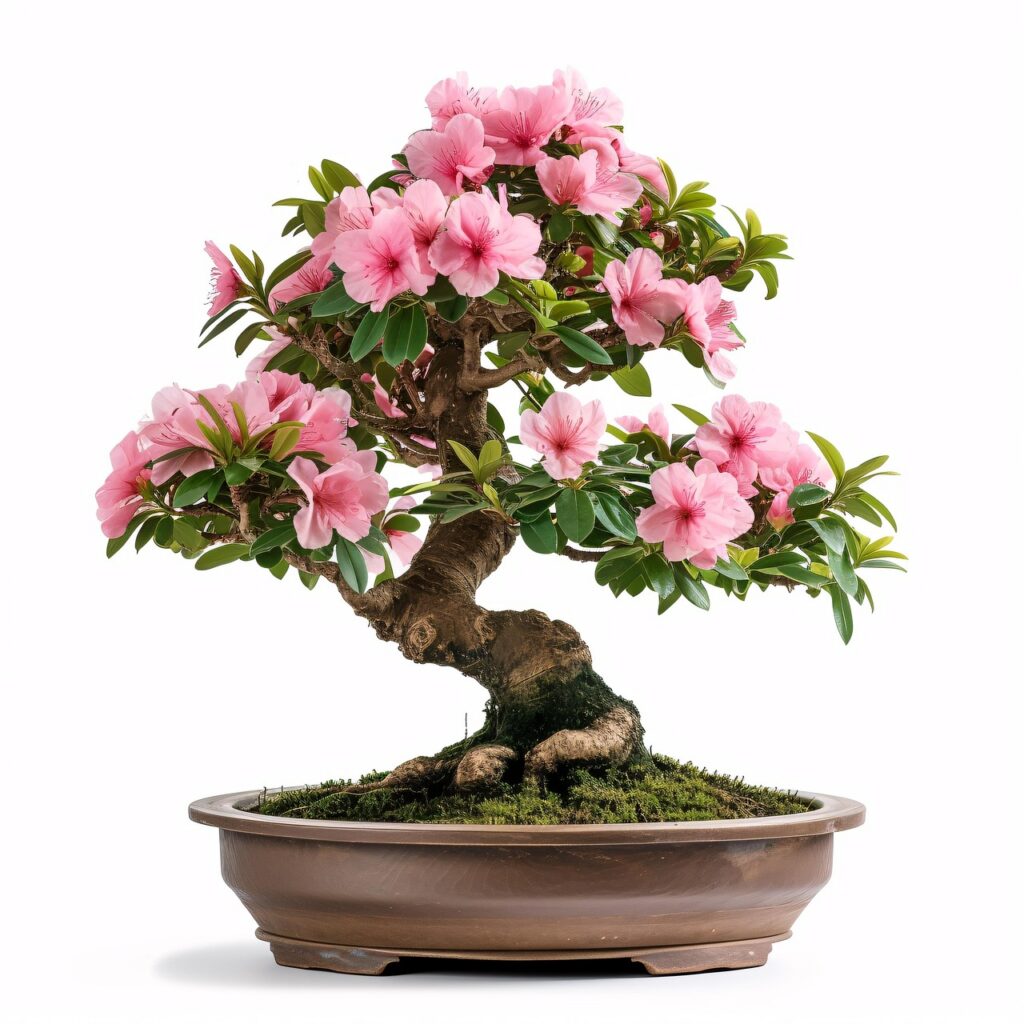
Powdery mildew appears as a white, dusty coating on leaves and young shoots.
This fungal disease thrives during warm days combined with cool, humid evenings and poor airflow.
While it rarely kills an established bonsai, untreated infections reduce photosynthesis, weaken the tree and affect its appearance.
Improving air circulation, avoiding overhead watering and removing infected foliage often provide effective control.
Fungicides may be used when infections become widespread.
Leaf spot diseases
Various fungi can cause leaf spot diseases on azalea bonsai.
These typically appear as brown, black or reddish circular spots that gradually enlarge over time.
Severely infected leaves may yellow before dropping prematurely, reducing the tree’s ability to produce energy.
Removing affected foliage and improving ventilation usually limits further spread.
Always dispose of infected leaves rather than adding them to compost where fungal spores may survive.
Petal blight during flowering
One disease unique to flowering azaleas is petal blight.
This fungal infection affects blossoms rather than leaves, causing brown, water-soaked spots that rapidly spread across individual flowers.
The blooms collapse prematurely, reducing the spectacular floral display azaleas are famous for.
Because the fungus survives in fallen flowers, prompt removal of spent or infected blooms greatly reduces future outbreaks.
Avoid watering flowers directly whenever possible.
Dieback and branch infections
Dieback occurs when fungal pathogens invade twigs or branches, causing sections of the bonsai to gradually die from the tips inward.
Affected branches often become brittle and discoloured while leaves wilt and remain attached.
Pruning infected wood back to healthy tissue helps prevent the disease from spreading further through the tree.
Always sterilise pruning tools before and after use to avoid transferring pathogens between bonsai.
Healthy fertilisation and correct watering also help the tree recover more quickly.
Preventing azalea bonsai diseases
Most azalea bonsai diseases can be avoided through good everyday care rather than relying on chemical treatments.
Healthy growing conditions strengthen the tree’s natural defences while reducing opportunities for pathogens to establish themselves.
Preventative measures include:
- Water only when needed
- Use well-draining bonsai soil
- Ensure good airflow around the tree
- Sterilise tools before pruning
- Remove fallen leaves and flowers promptly
- Inspect your bonsai regularly
- Avoid overcrowding multiple trees
- Repot when soil begins breaking down
- Protect against prolonged damp conditions
- Feed appropriately during the growing season
Regular observation is often the most valuable disease prevention tool available.
Healthy bonsai begin with attentive care
While diseases can occasionally affect even well-maintained trees, most serious infections develop only after prolonged periods of stress or unsuitable growing conditions.
Learning to recognise the early warning signs allows bonsai enthusiasts to respond quickly before permanent damage occurs.
With proper watering, excellent drainage, good hygiene and regular inspections, your azalea bonsai can remain vigorous and continue producing beautiful flowers year after year.
A healthy bonsai is not simply the result of treatment when problems appear. It is the outcome of consistent care, thoughtful observation and creating the ideal environment in which the tree can naturally thrive.