
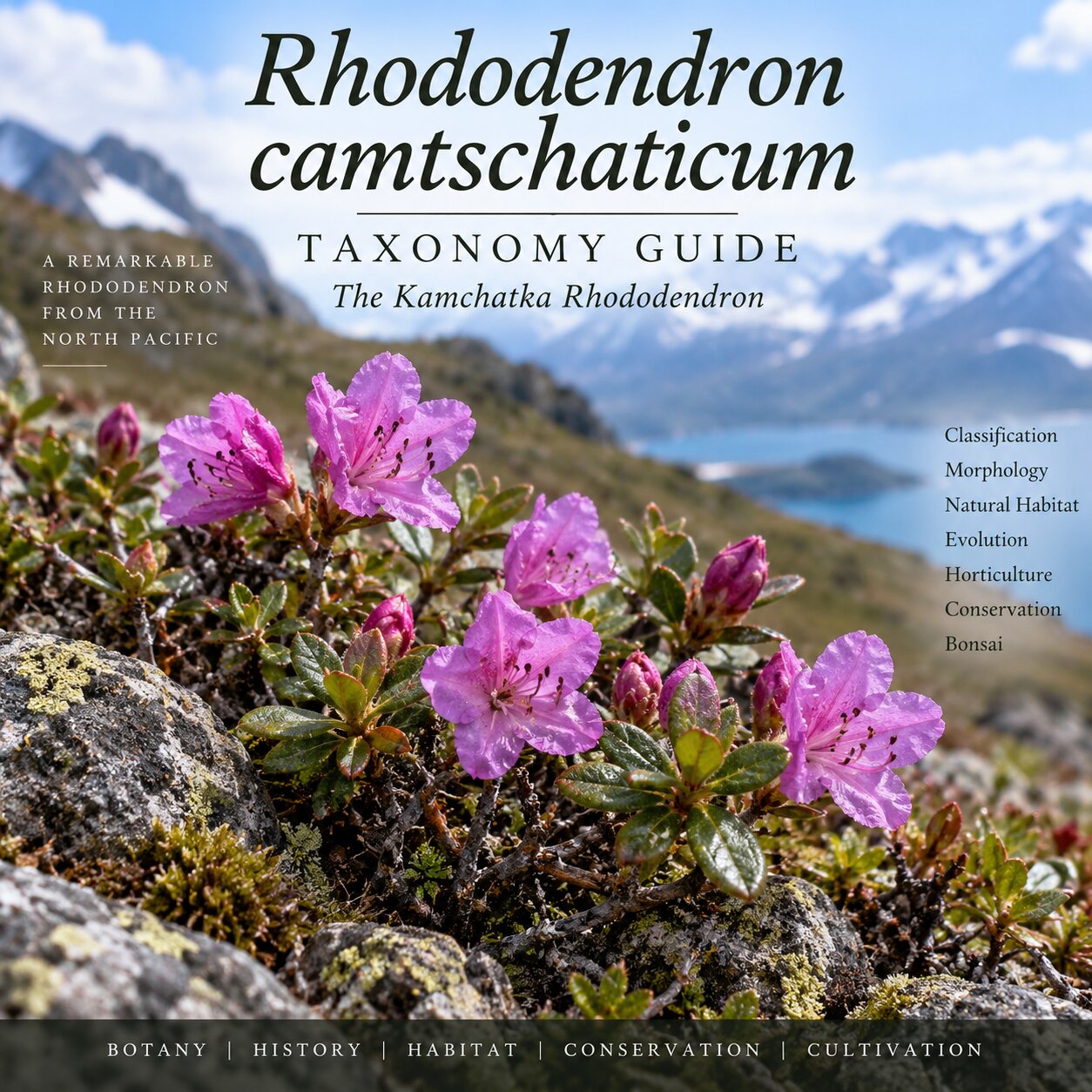
Rhododendron camtschaticum, commonly known as the Kamchatka rhododendron, is a distinctive low-growing member of the Ericaceae family with a natural range extending across the colder regions of northeastern Asia and northwestern North America. Unlike the large evergreen shrubs many gardeners associate with Rhododendron, this species develops as a compact deciduous subshrub adapted to demanding subalpine and subarctic environments.
Its unusual characteristics have also given Rhododendron camtschaticum an interesting place within rhododendron taxonomy. The species belongs to the subgenus Therorhodion, a lineage that has historically attracted botanical attention because of its relationship to other members of the wider Rhododendron genus.
Beyond its classification, the Kamchatka rhododendron is notable for its relatively small stature, seasonal foliage and striking flowers, which can introduce vivid colour into the often harsh landscapes where it naturally occurs. Its distribution across areas including the Russian Far East, Japan and Alaska further demonstrates its strong association with cool northern environments.
In this Rhododendron camtschaticum species taxonomy guide, we will examine its complete classification, botanical characteristics, leaves, stems, flowers, natural distribution and ecological adaptations. We will also explore its evolutionary relationships, recognised variations and synonyms, conservation relevance, and its place within horticulture and bonsai.
Together, these characteristics reveal a rhododendron species that differs considerably from many of its more familiar relatives and deserves closer attention within our growing bonsai taxonomy collection.
Table of Contents
Taxonomy
– Kingdom: Plantae (Plant Kingdom)
— Clade: Embryophytes (Land Plants)
— Clade: Polysporangiophytes (Multiple Sporangia)
—- Clade: Tracheophytes (Vascular Plants)
—– Superdivision: Spermatophytes (Seed Plants)
—— Clade: Angiospermae (Flowering Plants)
——- Division: Eudicots (True Dicotyledons)
——– Subdivision: Core Eudicots
——— Class: Superasterids (Advanced Flowering Plants)
———- Subclass: Asterids (Unified-Flowering Plants)
———– Order: Ericales (Heath and Tea)
———— Family: Ericaceae (Heath)
————- Subfamily: Ericoideae (Heath)
————– Tribe: Rhodoreae (Rhododendron)
————— Genus: Rhododendron
————— Subgenus: Therorhodion (Kamchatka Rhododendrons)
—————- Species: Rhododendron Camtschaticum (Kamchatka Rhododendron)
What Is Rhododendron Camtschaticum?
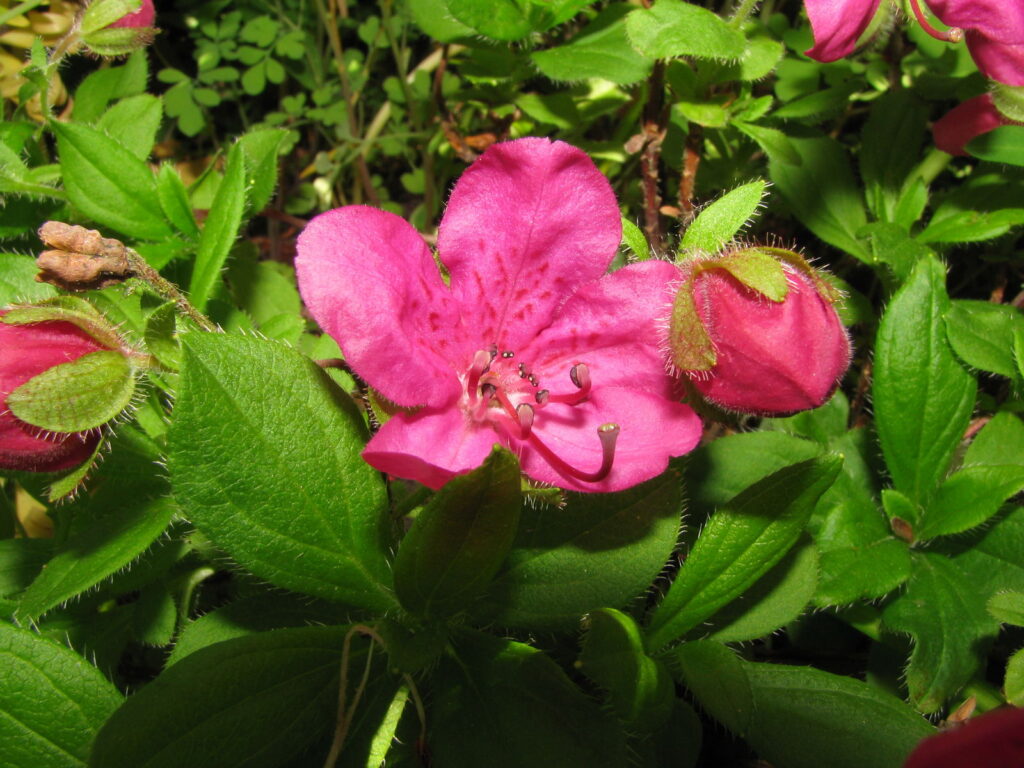
Rhododendron camtschaticum, commonly known as the Kamchatka rhododendron, is a small deciduous subshrub belonging to the heath family, Ericaceae. Rather than developing into the substantial woody shrubs associated with many familiar rhododendrons, this species maintains a naturally low-growing form suited to exposed northern environments. Kew’s Plants of the World Online currently recognises Rhododendron camtschaticum Pall. as an accepted species within the genus Rhododendron.
The species was formally published by botanist Peter Simon Pallas in 1784. Its scientific name reflects its strong association with Kamchatka in the Russian Far East, although its natural distribution is considerably broader. Populations occur from the Russian Far East through parts of Japan to Alaska, including the Aleutian Islands. Kew records the species primarily within subalpine and subarctic biomes, highlighting its adaptation to colder environments.
One of the most interesting aspects of Rhododendron camtschaticum is its taxonomic history. Botanists have not always agreed on where the plant belongs. It has previously appeared under names including Azalea camtschatica, Chamaecistus camtschaticus, Rhodothamnus camtschaticus and Therorhodion camtschaticum. Modern Kew taxonomy treats these names as synonyms of Rhododendron camtschaticum, although some other taxonomic systems have historically recognised Therorhodion separately.
Its compact growth, deciduous foliage and conspicuous flowers also make the Kamchatka rhododendron visually different from many larger members of its genus. Historical botanical descriptions characterise it as a heavily branched, low shrub capable of spreading through underground suckers, helping create its characteristic ground-hugging habit.
These botanical and taxonomic characteristics make Rhododendron camtschaticum an especially interesting species to examine within the broader Rhododendron lineage. Its classification, morphology, and cold-region distribution reveal a plant shaped by a very different environment from the ornamental rhododendrons commonly encountered in gardens.
Taxonomic Classification Of Rhododendron Camtschaticum
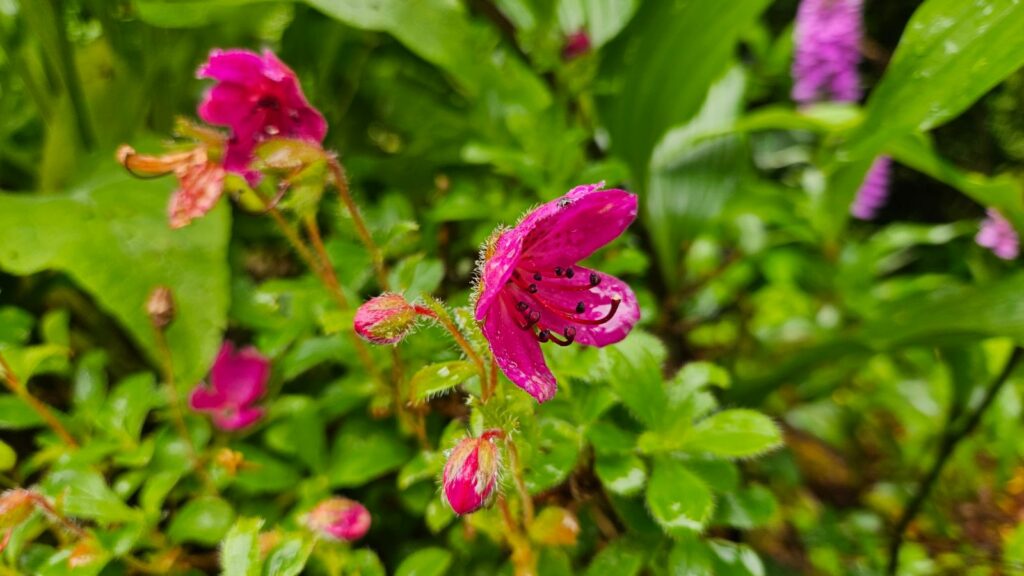
The taxonomic position of Rhododendron camtschaticum is particularly interesting because the species represents a somewhat distinctive lineage within the enormous and diverse Rhododendron genus. While it shares the fundamental characteristics that place it within the heath family, Ericaceae, its morphology and evolutionary history have led botanists to reconsider its precise relationship with other rhododendrons several times.
Within Ericaceae, Rhododendron camtschaticum belongs to the subfamily Ericoideae and tribe Rhodoreae. These groups contain many of the woody plants commonly associated with rhododendrons and their close relatives. From there, the species is placed within the genus Rhododendron, but its classification becomes more specialised at subgenus level.
Rhododendron camtschaticum is associated with the subgenus Therorhodion. This placement distinguishes it from many of the better-known rhododendrons and azaleas found elsewhere within the genus. Therorhodion has historically been treated differently by botanists, including being recognised as a separate genus in some classifications. This helps explain why the Kamchatka rhododendron has accumulated several scientific synonyms over its botanical history.
Names previously applied to the species include Therorhodion camtschaticum and Rhodothamnus camtschaticus, among others. Such changes do not necessarily mean that botanists were identifying different plants. Instead, they reflect changing interpretations of how the species relates evolutionarily to neighbouring groups.
Modern molecular research has significantly reshaped the classification of Rhododendron. Genetic evidence allows botanists to compare evolutionary relationships that cannot always be determined reliably from visible characteristics alone. This has been particularly valuable for a genus containing more than a thousand accepted species and considerable morphological diversity.
For Rhododendron camtschaticum, its specialised taxonomic position helps explain why it can appear quite different from the larger evergreen shrubs that many people immediately picture when they hear the word rhododendron. Its low-growing deciduous habit and northern ecological adaptations represent characteristics of its particular evolutionary lineage rather than exceptions that exclude it from the wider group.
Understanding this classification therefore provides important context for the rest of the Rhododendron camtschaticum species taxonomy guide. Its position within Therorhodion connects its unusual appearance, botanical history and evolutionary relationships, all of which help distinguish the Kamchatka rhododendron from its many relatives.
Botanical Identification, Growth Habit, And Distinguishing Features
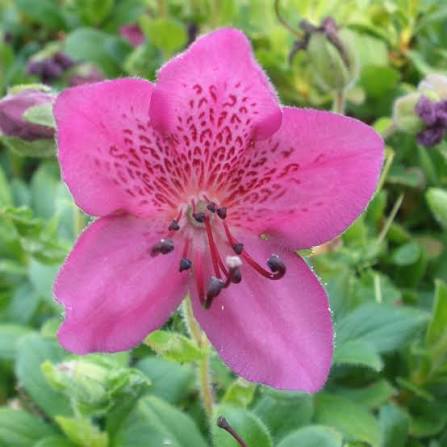
Identifying Rhododendron camtschaticum becomes considerably easier once its unusual growth form is understood. Unlike the upright, densely woody shrubs commonly associated with the genus, the Kamchatka rhododendron remains remarkably close to the ground. Its compact structure reflects its natural occurrence in exposed northern and mountainous habitats, where low vegetation is better equipped to tolerate challenging environmental conditions.
The combination of its spreading habit, deciduous foliage and comparatively large, colourful flowers gives the species a distinctive appearance. These characteristics are useful not only for botanical identification but also for distinguishing Rhododendron camtschaticum from many other members of Rhododendron.
Low-Growing Subshrub Habit
Rhododendron camtschaticum develops as a low deciduous subshrub rather than a conventional upright rhododendron. Mature plants generally remain relatively short, often reaching only around 10–30 cm in height, although dimensions can vary according to habitat and growing conditions.
Its stems spread horizontally or rise only slightly above the surrounding vegetation, producing a broad, ground-hugging form. This growth habit can make established specimens appear more like a flowering groundcover than the woody rhododendron shrubs familiar in temperate gardens.
The plant can also spread through underground shoots, allowing individual specimens to gradually occupy a wider area. This vegetative expansion contributes to the dense patches that may develop in suitable natural habitats.
Compact And Highly Branched Structure
Despite its small stature, the Kamchatka rhododendron can develop considerable branching. Numerous short stems contribute to its compact appearance, while new seasonal growth supports its leaves and flowers.
The woody framework remains comparatively fine because the plant does not need to support the height and canopy mass seen in larger Rhododendron species. Older portions of the plant form the persistent structure from which fresh seasonal growth develops.
This naturally compact architecture is one of the most useful characteristics for recognising Rhododendron camtschaticum, particularly when the plant is not flowering.
Deciduous Rather Than Evergreen Growth
Another important distinguishing feature is its deciduous nature. Many commonly cultivated rhododendrons retain leathery foliage throughout the year, but Rhododendron camtschaticum follows a seasonal cycle in which its leaves are produced during the growing period and later shed.
This behaviour is closely associated with the cold environments in which the species evolved. Rather than maintaining foliage through severe northern winters, the plant retreats to its persistent woody structure before producing new growth when favourable conditions return.
Its seasonal behaviour therefore provides another useful distinction between the Kamchatka rhododendron and many evergreen members of the genus.
Large Flowers On A Small Plant
Perhaps the most visually striking identifying characteristic of Rhododendron camtschaticum is the contrast between its diminutive growth and its relatively prominent flowers.
The blooms can appear disproportionately large against the plant’s low foliage and short stems. Flower colour commonly falls within pink, rose, reddish-purple or magenta tones, creating conspicuous displays against the surrounding vegetation.
This combination of a ground-hugging deciduous plant and prominent, brightly coloured rhododendron-like flowers makes flowering specimens particularly recognisable.
A Rhododendron With An Unusual Appearance
Taken together, these characteristics give Rhododendron camtschaticum an appearance that can initially seem atypical for its genus. It is small, spreading and deciduous, yet its flowers reveal the characteristics expected from its rhododendron heritage.
Its distinctive form also illustrates why botanical identification should consider more than one visible feature. Growth habit, branching structure, seasonal behaviour, foliage and flowers all contribute to correctly recognising the species.
For the Kamchatka rhododendron, it is precisely this unusual combination of characteristics that makes Rhododendron camtschaticum such a distinctive member of the wider Rhododendron lineage.
Leaf Morphology, Stem Structure, And Seasonal Growth
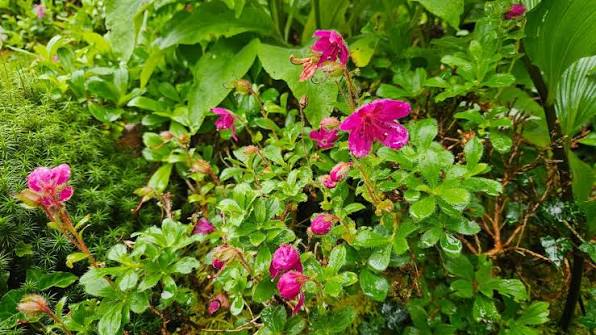
The compact appearance of Rhododendron camtschaticum is shaped by more than its naturally low height. Its leaves, fine woody stems and strongly seasonal growth pattern all reflect a plant adapted to cool northern and subalpine environments. These features also provide useful botanical characteristics for distinguishing the Kamchatka rhododendron from larger and more familiar members of the genus.
As a deciduous species, Rhododendron camtschaticum undergoes a pronounced annual cycle. New foliage and shoots emerge during the growing season, flowers are produced while conditions are favourable, and the above-ground plant eventually prepares for dormancy as colder weather returns.
Leaf Shape And Arrangement
The leaves of Rhododendron camtschaticum are relatively small and are generally described as obovate to broadly obovate, meaning that they tend to be broader towards the outer end than at the base. Some leaves may appear more elliptic depending on the individual plant and stage of development.
Foliage is arranged alternately along the shoots, although the relatively short distances between leaves can create a clustered appearance towards the ends of stems.
The leaves are usually noticeably larger and broader than might initially be expected from such a diminutive shrub. Their shape contributes to the dense covering of foliage that develops across the plant during its active season.
Leaf Surface And Margins
Leaf texture provides additional identification characteristics. The foliage may display fine hairs, particularly along the margins and surfaces, giving the leaves a subtly textured appearance when examined closely.
The margins can also show fine hair-like structures rather than appearing completely smooth. These details become especially valuable when distinguishing closely related plants or examining specimens outside their flowering period.
Leaf colour is typically green during active growth, providing a strong contrast with the vivid pink to purplish flowers produced by the species.
Fine Woody Stems
The stems of Rhododendron camtschaticum are comparatively slender and highly branched. Instead of developing the thick trunks and substantial branches found on larger rhododendrons, the Kamchatka rhododendron forms a network of fine woody growth close to ground level.
Young shoots are generally more flexible and may carry fine hairs, while older stems gradually become more distinctly woody. Branches can spread laterally, contributing to the plant’s characteristic low and broad form.
This stem structure is closely connected to the species’ natural growth habit. Remaining close to the ground reduces the need for a substantial supporting framework while allowing the plant to occupy spaces between rocks and surrounding vegetation.
Underground Growth And Spreading Behaviour
Not all of the important structure of Rhododendron camtschaticum is immediately visible above ground. The species can produce underground shoots or rhizome-like spreading growth, from which additional stems emerge.
This allows an established plant to expand horizontally rather than concentrating its development into a single upright crown. Over time, the resulting growth can produce patches of Kamchatka rhododendron across suitable terrain.
The ability to maintain much of its persistent structure close to or beneath the soil surface is particularly advantageous in environments where exposed vegetation must contend with severe winter conditions.
Spring And Summer Growth
The active season begins when environmental conditions become favourable enough for Rhododendron camtschaticum to resume growth. New shoots and foliage emerge from the persistent woody structure, rapidly rebuilding the plant’s above-ground appearance.
Because its native habitats can experience relatively short growing seasons, development needs to occur during a limited period of suitable temperatures. Leaf expansion, shoot development, flowering and reproductive activity are consequently concentrated within the warmer months.
Flowering generally occurs during this active period, although exact timing varies considerably across its broad geographical range and according to elevation and local climate.
Autumn Senescence And Winter Dormancy
As temperatures decline and the growing season ends, Rhododendron camtschaticum does not retain its foliage like an evergreen rhododendron. Its leaves undergo seasonal senescence before being shed.
The loss of foliage substantially changes the plant’s appearance. During dormancy, its low woody stems and underground structures remain while the conspicuous leaves and flowers of the growing season disappear.
This annual transition is an important part of the species’ ecological strategy. Rather than investing resources in maintaining foliage through harsh subarctic or alpine winters, the plant survives in a dormant state until conditions once again support active growth.
The resulting cycle of emergence, flowering, leaf development and dormancy is one of the defining characteristics of Rhododendron camtschaticum and demonstrates how closely its morphology is connected to the strongly seasonal environments in which it evolved.
Flower Characteristics, Blooming Behaviour, And Pollination
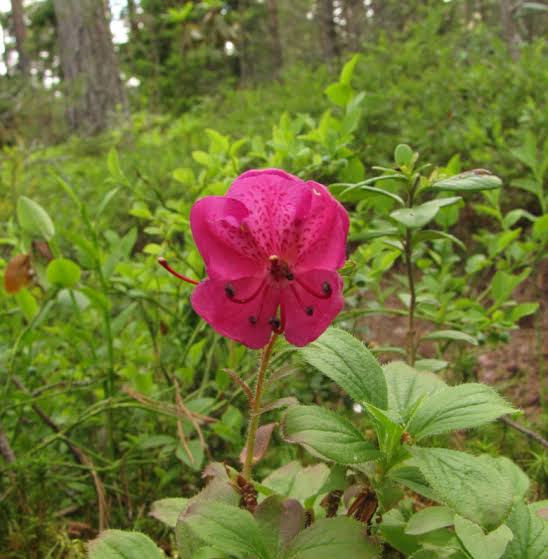
The flowers of Rhododendron camtschaticum are among the species’ most distinctive botanical features. Their relatively large size compared with the plant’s diminutive stature creates a striking display, particularly when blooms emerge above the low-growing foliage. Flower colour is most commonly within the pink to reddish-purple range, although variation occurs between populations and individual plants.
Flowering is closely connected to the short growing seasons experienced across much of the Kamchatka rhododendron’s natural range. The plant needs to complete flowering and reproduction while temperatures and other environmental conditions remain favourable.
Flower Shape And Structure
The flowers of Rhododendron camtschaticum have the open, conspicuous appearance characteristic of many rhododendrons. They are broadly funnel-shaped to saucer-shaped, with five spreading corolla lobes creating a wide floral display.
Individual flowers can reach approximately 2.5–4 cm across, making them particularly noticeable against a plant that may only stand a few centimetres above surrounding vegetation.
The stamens project prominently from the flower, while the central reproductive structures remain clearly exposed. This open floral architecture makes pollen-bearing and pollen-receiving structures readily accessible to visiting insects.
Pink, Purple, And Occasionally White Flowers
One of the easiest ways to recognise a flowering Rhododendron camtschaticum is by its vivid colour.
Flowers typically appear in shades ranging from rose-pink and reddish-pink to purple or deep magenta. Colour intensity varies naturally, meaning populations can contain plants with noticeably different shades.
White-flowered forms have also been documented, although these are considerably less representative of the species than its characteristic pink and purple colouration.
Against rocky landscapes and low green vegetation, these intensely coloured flowers can make the otherwise small plant surprisingly conspicuous.
Solitary And Small Flower Clusters
Flowers are generally produced singly or in small numbers near the ends of shoots rather than forming the large, densely packed flower trusses associated with many ornamental rhododendrons.
This difference contributes significantly to the species’ distinctive appearance.
Because Rhododendron camtschaticum remains so close to the ground, even a relatively small number of flowers can dominate the visible portion of the plant. An established specimen carrying multiple flowering shoots can consequently produce an impressive display without developing conventional rhododendron flower clusters.
Blooming Season
Flowering generally occurs during the late spring and summer growing period, although precise timing depends strongly on geographical location, altitude, snowmelt and local temperatures.
Across its subarctic and subalpine habitats, plants may remain dormant beneath snow for considerable periods. Flower development begins once seasonal conditions permit active growth.
The species can also exhibit an extended or occasional secondary flowering tendency under suitable conditions. Rather than every flower necessarily opening within one short period, individual blooms may appear across a broader portion of the growing season.
This behaviour helps Rhododendron camtschaticum take advantage of the relatively narrow reproductive opportunities available within its cold native environments.
Pollination By Insects
Like other flowering members of Ericaceae, Rhododendron camtschaticum relies primarily on insects for pollination.
Its conspicuous flowers act as visual signals to potential pollinators, while nectar and pollen provide resources that encourage insects to move between blooms. During these visits, pollen can be transferred from the stamens of one flower to the receptive stigma of another.
Bees and other suitable flower-visiting insects are likely contributors to this process across the species’ geographical range. The exact pollinator community can vary substantially between Alaska, the Russian Far East, Japan and other parts of its distribution because the available insects differ between ecosystems.
Seed Production And Reproductive Success
Following successful pollination and fertilisation, the flowers of Rhododendron camtschaticum develop into dry capsules containing numerous small seeds.
When mature, these capsules open and release the seeds into the surrounding environment. Their small size allows them to disperse away from the parent plant, although successful establishment depends on reaching suitable conditions for germination and subsequent development.
Sexual reproduction through flowers and seeds provides genetic variation within populations, while the species’ ability to spread vegetatively provides another means of maintaining and expanding established colonies.
The reproductive strategy of Rhododendron camtschaticum therefore combines conspicuous insect-pollinated flowers with seed production and persistent vegetative growth. Together, these characteristics allow a remarkably small rhododendron to reproduce within some of the colder and more strongly seasonal landscapes occupied by the genus.
Natural Distribution, Native Habitat, And Ecological Adaptations
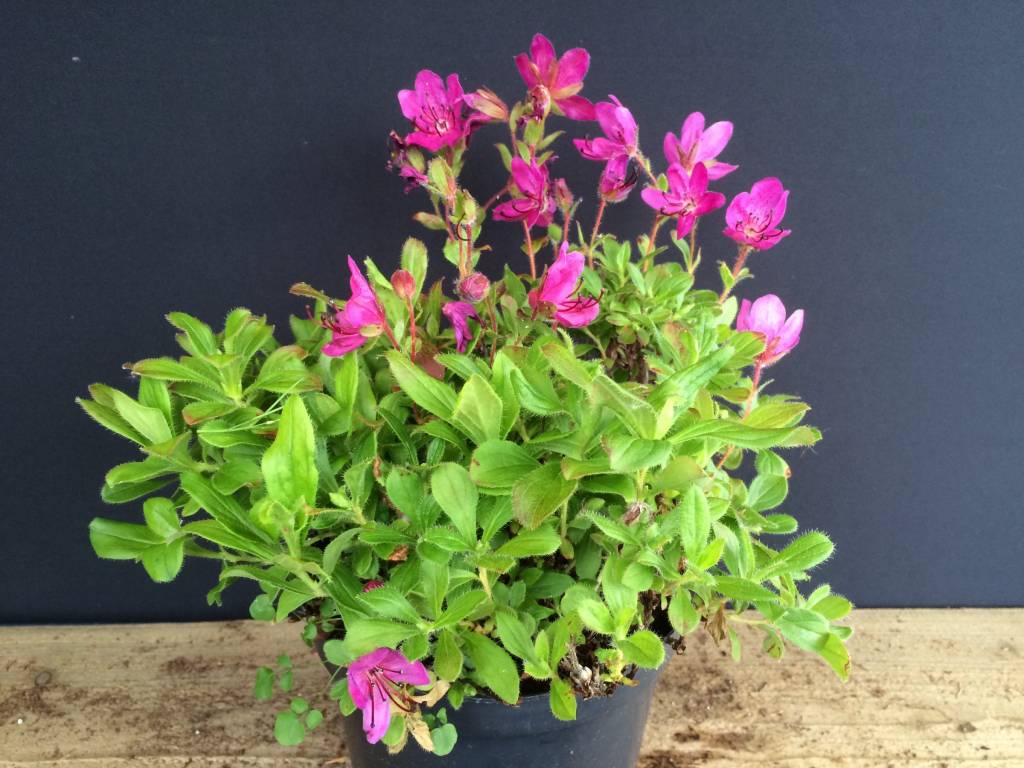
The natural distribution of Rhododendron camtschaticum is closely associated with the cool northern regions surrounding the North Pacific. Rather than occupying the temperate forests commonly associated with many rhododendrons, the Kamchatka rhododendron has evolved within subarctic and subalpine environments where low temperatures, snow cover, exposed terrain and short growing seasons strongly influence vegetation.
Its geographical range is particularly interesting because populations occur on both the Asian and North American sides of the Pacific. This distribution provides an excellent example of a species whose botanical characteristics have been shaped by demanding northern environments.
Native Range Across The North Pacific
Rhododendron camtschaticum has a native range extending through parts of the Russian Far East, Japan and northwestern North America. Kew’s Plants of the World Online records its distribution across areas including Kamchatka, the Kuril Islands, Sakhalin, Japan, Alaska and the Aleutian Islands.
The Kamchatka Peninsula is particularly significant to the species, as reflected by both its common name, Kamchatka rhododendron, and its scientific epithet camtschaticum.
Its presence across this broad North Pacific region means populations are separated by considerable geographical distances. Nevertheless, many of these locations share the cool climatic conditions and relatively short growing seasons to which the species is adapted.
Subarctic And Subalpine Habitats
Kew primarily associates Rhododendron camtschaticum with subarctic and subalpine biomes, immediately distinguishing its ecological preferences from those of many woodland rhododendrons.
The species can occur in tundra-like vegetation, alpine and subalpine areas, open slopes, rocky terrain and other exposed environments. In Alaska, descriptions of the Kamchatka rhododendron place it in alpine tundra, meadows and rocky areas, where its low growth allows it to occupy spaces among other small northern plants.
These habitats can experience substantial snowfall and long winters followed by comparatively brief periods suitable for active plant growth.
Life Close To The Ground
The extremely low growth of Rhododendron camtschaticum can be understood partly as an adaptation to its environment.
Remaining close to the ground reduces the amount of vegetation exposed above the surrounding landscape. Low-growing plants may experience less severe wind exposure than taller shrubs, while accumulated snow can provide valuable insulation during winter.
Its spreading structure also allows the plant to occupy protected spaces around rocks and other vegetation rather than depending on a tall woody framework.
This ground-hugging architecture is therefore not merely an unusual identifying characteristic. It is closely connected to the ecological conditions under which the Kamchatka rhododendron evolved.
Adaptation To Cold And Snow
Winter dormancy is another important component of the species’ survival strategy.
Rhododendron camtschaticum is deciduous, shedding its foliage rather than maintaining leaves throughout the severe northern winter. Its persistent woody and underground structures survive the dormant period and produce new growth when seasonal conditions improve.
Snow itself can become beneficial once sufficient accumulation occurs. A stable layer of snow helps insulate low vegetation from extreme fluctuations in air temperature and drying winter winds.
When snow melts, moisture becomes available as the plant enters another active growing season.
Coping With A Short Growing Season
Northern latitude and high-elevation environments provide plants with a limited window for growth and reproduction.
For Rhododendron camtschaticum, leaf development, flowering, pollination, seed formation and new vegetative growth must take place while conditions remain suitable. The plant consequently follows a strongly seasonal growth cycle.
Its deciduous foliage can be produced when needed and abandoned when maintaining leaves becomes energetically disadvantageous.
The prominent flowers are similarly important. Their vivid pink, reddish or purple colouring creates highly visible floral displays during the comparatively short period when pollinating insects are active.
Rocky And Nutrient-Limited Environments
The natural habitats occupied by the Kamchatka rhododendron are not necessarily rich, sheltered soils. Plants can occur among rocky slopes, mountain vegetation and open tundra environments, where soil depth and nutrient availability may vary considerably.
Its compact structure means Rhododendron camtschaticum does not need to support the extensive woody framework of a large shrub. Instead, resources can be directed towards seasonal leaves, flowers and relatively short shoots emerging from its persistent structure.
Like other members of Ericaceae, the species is associated with the ecological characteristics typical of plants capable of occupying acidic and comparatively nutrient-poor environments.
Ecological Role Within Northern Plant Communities
Despite its small size, Rhododendron camtschaticum forms part of diverse plant communities occupying some of the northern Pacific region’s most challenging landscapes.
Its flowers provide resources for insects during the growing season, while its spreading growth contributes to the low vegetation covering exposed ground. Seed production allows genetic exchange and establishment in suitable new locations, while vegetative expansion helps established plants persist locally.
The Kamchatka rhododendron therefore demonstrates how morphology, seasonal behaviour and geographical distribution can become closely connected.
Its deciduous leaves, low stems, spreading growth and concentrated summer activity are all characteristics suited to environments where winter dominates much of the year. Far from being a miniature version of a conventional rhododendron, Rhododendron camtschaticum is a specialised northern species shaped by the subarctic and subalpine landscapes it calls home.
Evolutionary Relationships And Placement Within The Rhododendron Genus
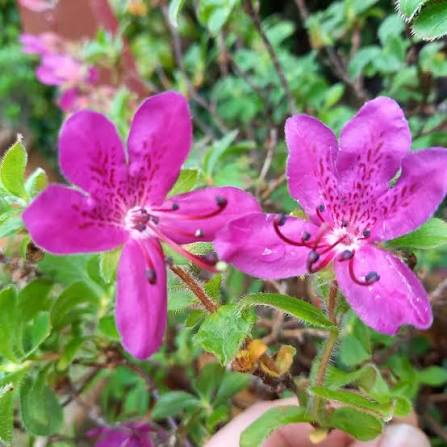
The evolutionary position of Rhododendron camtschaticum is one of the most fascinating aspects of the species. Although its flowers clearly suggest a relationship with other rhododendrons, its unusual morphology has historically made its precise classification difficult. Modern molecular studies have provided considerably more insight, showing that the lineage represented by Rhododendron camtschaticum occupies a remarkably early branch within the evolutionary history of Rhododendron.
This distinctive position is reflected in its placement within subgenus Therorhodion. Depending on the taxonomic system being followed, however, Therorhodion has sometimes been elevated from a rhododendron subgenus to a separate genus. That debate remains relevant because different modern authorities do not necessarily treat the group identically. Kew’s Plants of the World Online currently accepts Rhododendron camtschaticum, while other classifications recognise Therorhodion camtschaticum.
An Early-Diverging Rhododendron Lineage
Molecular phylogenetic research has repeatedly placed Rhododendron camtschaticum at or near the base of the rhododendron evolutionary tree.
A major 2005 study examining RPB2 gene sequences found R. camtschaticum, representing Therorhodion, to be sister to all other sampled members of the expanded Rhododendron clade. Earlier research using plastid and ITS DNA sequences had produced a similar placement.
More extensive later research has reinforced this relationship. A 2021 phylogenetic study recovered Rhododendron as a strongly supported evolutionary group and again found R. camtschaticum as sister to the remainder of the genus in its analyses.
Importantly, describing it as a sister lineage does not mean that the modern Kamchatka rhododendron itself is the direct ancestor of today’s other rhododendrons. Instead, it indicates that its lineage separated very early from the lineage that subsequently diversified into the other major rhododendron groups.
The Importance Of Subgenus Therorhodion
Within the classification we’re using for this BBB taxonomy guide, Rhododendron camtschaticum belongs to subgenus Therorhodion. This small and unusual group has long attracted botanical interest because its members differ from typical rhododendrons in several morphological characteristics.
Its distinctive traits include a deeply divided corolla and unusual inflorescence characteristics. These differences have been considered significant enough for some botanists to recognise Therorhodion as an independent genus rather than a subdivision of Rhododendron.
The Kamchatka rhododendron’s low, deciduous and spreading growth habit further reinforces how different it can appear from the large evergreen shrubs commonly associated with the Rhododendron name.
Rhododendron Or Therorhodion?
The debate surrounding Rhododendron camtschaticum provides a useful example of how botanical classification changes as new evidence becomes available.
Historically, the species has been assigned names including Azalea camtschatica, Chamaecistus camtschaticus, Rhodothamnus camtschaticus and Therorhodion camtschaticum. Kew currently treats these as synonyms and accepts Rhododendron camtschaticum as the species name.
However, the alternative interpretation has not disappeared from scientific research. A recent study of the migration history of Kamchatka rhododendrons treated Therorhodion as distinct and noted molecular and morphological evidence supporting its recognition as a separate taxon.
This means readers may encounter both Rhododendron camtschaticum and Therorhodion camtschaticum when consulting botanical literature.
What Molecular Evidence Reveals
DNA analysis has become particularly valuable in understanding Rhododendron because physical appearance alone does not always accurately reveal evolutionary relationships.
Research examining different genetic regions has repeatedly separated the Therorhodion lineage from the major groups containing most familiar rhododendrons and azaleas. Research into flower-symmetry genes has similarly treated subgenus Therorhodion as sister to the remaining members of Rhododendron.
This evidence helps explain why Rhododendron camtschaticum possesses such an unusual collection of characteristics while still sharing ancestry with the wider rhododendron lineage.
A Significant Species In Rhododendron Evolution
From an evolutionary perspective, Rhododendron camtschaticum is therefore much more than an unusually small northern rhododendron.
Its early-diverging lineage provides botanists with an important point of comparison when studying how the enormous diversity within Rhododendron developed. Characteristics found in R. camtschaticum can be compared with those of later-diverging groups to investigate changes in morphology, reproductive structures and other botanical traits.
Its position also demonstrates why taxonomy cannot always be understood as a permanently fixed hierarchy. As morphological studies, genetic research and broader phylogenetic analyses provide new evidence, scientists can reassess where particular plants belong.
For the purposes of our taxonomy series, we follow the treatment currently used by Kew’s Plants of the World Online, recognising the plant as Rhododendron camtschaticum within the wider Rhododendron lineage. Its distinctive position within subgenus Therorhodion, however, remains one of the characteristics that makes the Kamchatka rhododendron especially significant to the study of rhododendron evolution.
Rhododendron Camtschaticum Variations, Synonyms, And Related Taxa
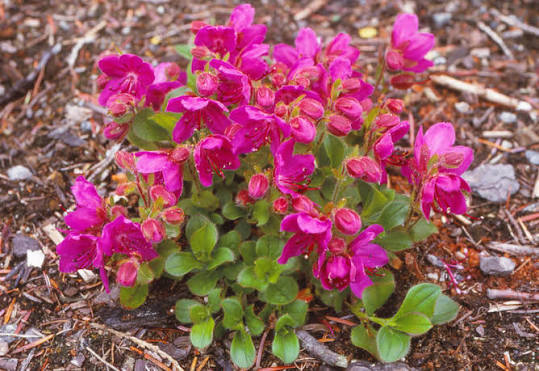
The botanical history of Rhododendron camtschaticum includes several changes in classification, alternative scientific names and recognised variation within the species. This is particularly understandable given its unusual position within the wider Rhododendron lineage. Its distinctive morphology led different botanists to place the Kamchatka rhododendron in several genera before modern classifications increasingly incorporated molecular evidence alongside traditional botanical characteristics.
Kew’s Plants of the World Online currently recognises Rhododendron camtschaticum Pall. as the accepted species name. Among the names now treated as synonyms are Azalea camtschatica, Chamaecistus camtschaticus, Rhodothamnus camtschaticus and Therorhodion camtschaticum. These names reflect changing interpretations of the plant’s relationships rather than entirely different species.
The spelling of the specific epithet can also cause confusion. Historical botanical literature may contain variations based around camtschaticum, camtschaticus or camtschatica, partly because the grammatical ending changes according to the genus in which the plant was placed. Consequently, encountering Therorhodion camtschaticum or Rhodothamnus camtschaticus in older or alternative taxonomic treatments does not necessarily indicate a different plant.
Variation also occurs naturally across the extensive geographical range of Rhododendron camtschaticum. Populations are distributed across northeastern Asia and northwestern North America, including Kamchatka, the Kuril Islands, Sakhalin, Japan, Alaska and the Aleutian Islands. Geographic separation across this enormous North Pacific region has contributed to botanical interest in whether particular populations warrant recognition below species level.
One of the names readers may encounter is Rhododendron camtschaticum subsp. glandulosum, associated particularly with North American material. Depending on the taxonomic authority consulted, such plants have been interpreted at different ranks or incorporated into a broader concept of R. camtschaticum. This illustrates an important aspect of plant taxonomy: recognised varieties and subspecies can change as botanists obtain more morphological and genetic evidence.
The species also displays visible variation. Flower colour can range through pink, rose, reddish-purple and deeper magenta tones, while uncommon pale or white-flowered forms have also been reported. Plant stature, foliage and flowering characteristics may vary according to population and environmental conditions. Such differences should not automatically be interpreted as separate taxa, as considerable variation can exist naturally within a widespread species.
Its closest evolutionary relationships are particularly interesting. Rhododendron camtschaticum represents the distinctive Therorhodion lineage, which molecular studies have repeatedly recovered near the base of the Rhododendron evolutionary tree. Some taxonomic treatments therefore recognise Therorhodion separately, while others retain it within Rhododendron as a subgenus.
Another taxon frequently associated with this group is Rhododendron redowskianum, a small deciduous species from northeastern Asia that has also been placed within Therorhodion. Its relationship with R. camtschaticum is particularly relevant when examining the composition and evolutionary history of this unusual lineage.
For the BBB taxonomy series, we retain Rhododendron camtschaticum as the principal species name and Therorhodion at subgenus level, consistent with the classification established earlier in this guide. However, its extensive synonymy and alternative treatments are worth recognising. Anyone researching the Kamchatka rhododendron through botanical literature, herbarium records or historical publications may encounter several different names referring to the same distinctive northern plant.
Rather than representing unnecessary confusion, these names preserve part of the scientific history of Rhododendron camtschaticum. They show how botanists’ understanding of the species has developed from classifications based primarily on visible morphology to modern systems increasingly informed by evolutionary and molecular evidence.
Rhododendron Camtschaticum In Horticulture, Conservation, And Bonsai
The unusual appearance and botanical history of Rhododendron camtschaticum have given the species significance beyond its natural North Pacific habitats. Its compact stature, deciduous character and conspicuous flowers distinguish it from the larger evergreen rhododendrons that dominate ornamental horticulture, while its specialised ecological requirements provide an interesting challenge for growers outside its native range.
In horticulture, the Kamchatka rhododendron is primarily valued as a small ornamental species suited to cool-climate, alpine and rock-garden collections. Its ground-hugging habit allows its colourful flowers to appear particularly prominent, with pink, rose and purple shades creating an impressive display despite the plant’s diminutive dimensions.
However, Rhododendron camtschaticum should not be regarded simply as a miniature version of conventional garden rhododendrons. Its evolution within subarctic and subalpine environments has produced a plant adapted to conditions very different from those experienced by many commonly cultivated species. Understanding its natural ecology is therefore important when considering its horticultural potential.
Conservation provides another reason to understand these natural populations. The species has a broad distribution extending across northeastern Asia and northwestern North America, but individual populations occupy specialised habitats. Alpine and subarctic ecosystems can be vulnerable to environmental change, particularly where changing temperatures and snow patterns alter the conditions upon which cold-adapted plants depend.
Preserving wild populations is also important because geographically separated populations can contain valuable genetic diversity. This variation contributes to the species’ ability to persist across its extensive range and provides botanists with opportunities to investigate how populations have developed on opposite sides of the North Pacific.
From a bonsai perspective, Rhododendron camtschaticum presents an intriguing possibility. Its naturally small leaves, fine branching, compact proportions and spectacular flowers possess characteristics that immediately attract the attention of bonsai enthusiasts. Its naturally low growth means that any bonsai interpretation would differ considerably from the upright tree forms normally associated with the art.
The species may instead lend itself to compositions that celebrate its existing character as a diminutive northern shrub. Rock plantings, landscape-inspired arrangements and other naturalistic presentations could potentially complement the way the Kamchatka rhododendron grows in the wild.
That does not necessarily make it an easy bonsai subject. Its specialised environmental adaptations need to be respected, particularly when the species is grown in climates substantially warmer than its native habitat. We will examine those practical considerations separately in our dedicated Kamchatka Rhododendron Bonsai Care Guide, rather than covering cultivation requirements within this taxonomy article.
Ultimately, Rhododendron camtschaticum demonstrates just how diverse the Rhododendron genus can be. From its position within the unusual Therorhodion lineage to its deciduous foliage, vivid flowers and life among the cold landscapes surrounding the North Pacific, it bears little resemblance to the large rhododendron shrubs familiar to many gardeners.
For horticulturists, botanists and bonsai enthusiasts alike, that difference is precisely what makes the species so compelling. Understanding the taxonomy and natural history of Rhododendron camtschaticum provides the foundation for appreciating the Kamchatka rhododendron not merely as a beautiful flowering plant, but as a distinctive evolutionary lineage shaped by some of the world’s most demanding northern environments.