
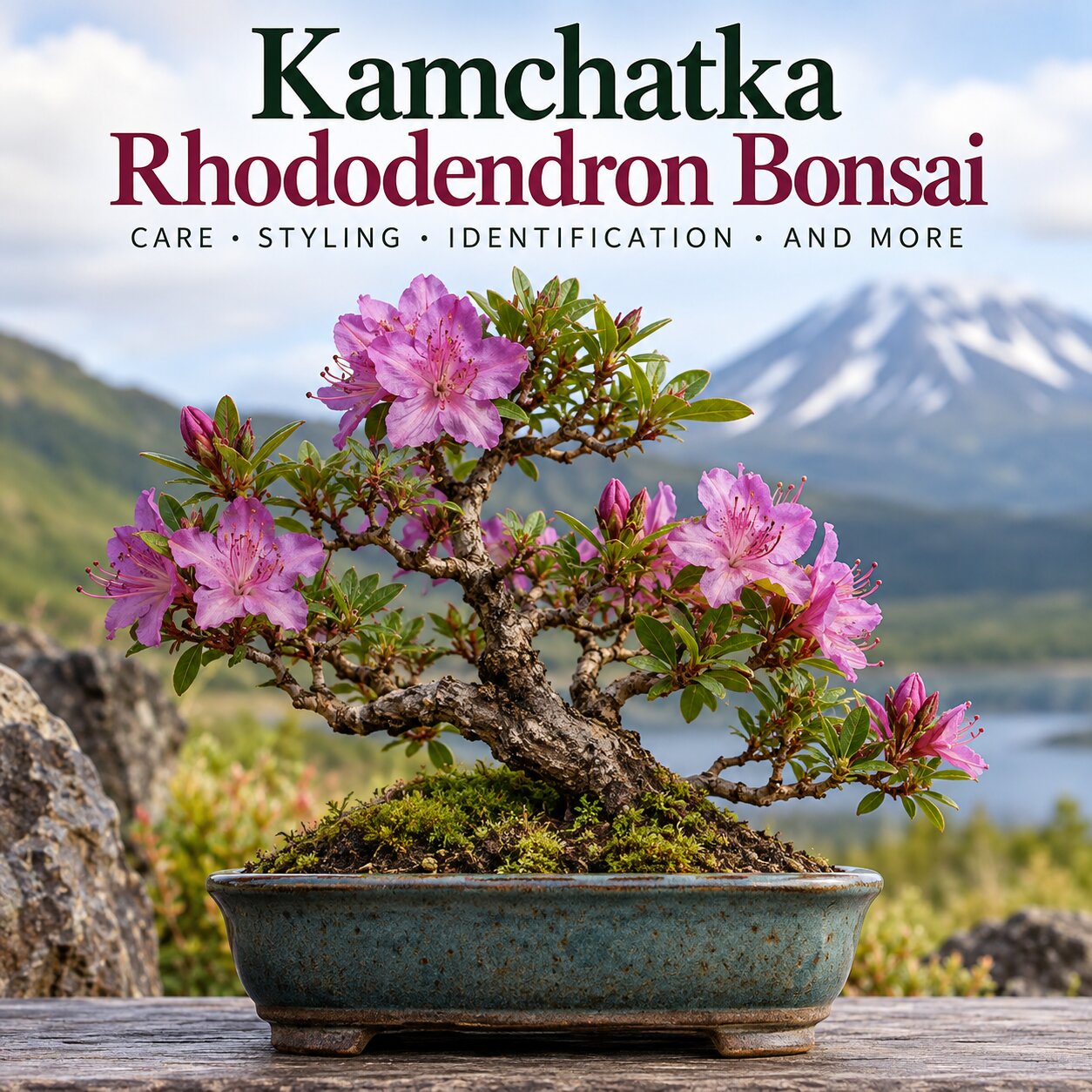
The Kamchatka Rhododendron Bonsai (Rhododendron camtschaticum) offers something a little different for growers who enjoy flowering bonsai species. Native to cold northern regions, this low-growing deciduous rhododendron produces striking pink to purple flowers that can create an impressive display against its compact foliage. Its naturally spreading growth habit also lends itself well to small bonsai compositions.
Growing a Kamchatka Rhododendron Bonsai successfully requires understanding its preference for cool conditions, acidic soil and consistent moisture. Unlike many traditional woody bonsai species, Rhododendron camtschaticum does not appreciate drying out completely or being exposed to excessive heat for extended periods. Its natural habitat provides useful clues about how it should be maintained in cultivation.
This care sheet covers the essential requirements for keeping your Kamchatka Rhododendron Bonsai healthy, including sunlight, watering, soil, fertilising, pruning, repotting, propagation and seasonal care. With the right conditions, this unusual rhododendron can reward bonsai enthusiasts with delicate foliage and spectacular seasonal flowers.
Table of Contents
TL;DR: Quick Kamchatka Rhododendron Bonsai Care Overview
Before diving into the complete care sheet, here is a quick-reference guide for the Kamchatka Rhododendron Bonsai. Rhododendron camtschaticum is a low-growing, deciduous rhododendron known for its attractive pink to purple flowers and naturally compact, spreading growth habit. As a cold-climate species, it prefers cool conditions, acidic soil and reliable moisture, while protection from excessive heat is particularly important when growing it in a shallow bonsai container.
| Care Aspect | Kamchatka Rhododendron Bonsai |
|---|---|
| Scientific name | Rhododendron camtschaticum |
| Common name | Kamchatka Rhododendron |
| Bonsai type | Deciduous flowering shrub |
| Light | Bright filtered light to partial sun. Morning sun is beneficial, but provide afternoon shade during warm weather to prevent heat stress. |
| Watering | Keep the soil consistently moist without allowing it to become waterlogged. Never allow the root ball to dry out completely, particularly during active growth and flowering. |
| Soil | Acidic, moisture-retentive and free-draining bonsai mix. Kanuma is an excellent base and can be combined with suitable materials such as pumice, pine bark or sphagnum where required. |
| Fertiliser | Use a fertiliser suitable for acid-loving plants during active growth. Feed conservatively and reduce or adjust fertilising during flowering and when growth slows. |
| Pruning | Prune primarily after flowering, removing spent blooms and unwanted growth. Its naturally low, spreading habit can be developed through selective pruning to encourage compact branching. |
| Wiring | Wire young shoots carefully while they remain flexible. Avoid aggressive bending, as rhododendron branches can be brittle. Guy wires may be useful for gradual structural adjustments. |
| Difficulty | Moderate. Particular attention should be given to moisture, acidic growing conditions and protection from excessive heat. |
| Rarity | Uncommon in bonsai cultivation. Plants are more likely to be sourced from specialist rhododendron growers, alpine plant nurseries or collectors. |
| Climate sensitivity | Highly suited to cool climates. Protect from prolonged heat, intense afternoon sun and drying winds. Cold winter conditions are generally much less problematic than excessive summer heat. |
| Growth habit | Low-growing, deciduous and spreading shrub with compact foliage and showy pink to purple flowers, making it particularly suitable for smaller flowering bonsai compositions. |
Kamchatka Rhododendron Bonsai Care Sheet
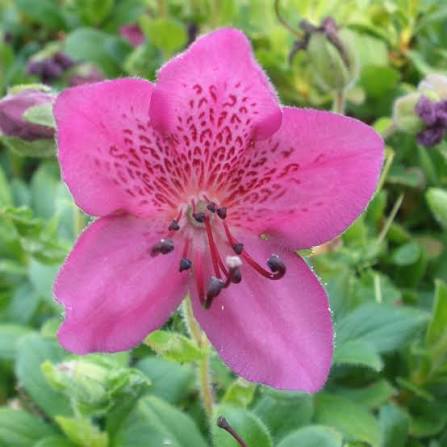
Caring for a Kamchatka Rhododendron Bonsai requires an understanding of the cool, moist environments in which Rhododendron camtschaticum naturally grows. Unlike many rhododendrons cultivated as bonsai, this species is deciduous and naturally forms a low, spreading shrub. Its compact growth and colourful flowers can make it an unusual and rewarding choice for smaller bonsai displays.
The Kamchatka Rhododendron Bonsai prefers acidic growing conditions, dependable moisture and protection from prolonged heat. Its roots should remain cool and moist without becoming waterlogged, something that requires additional attention when the plant is confined to a shallow bonsai container.
Its naturally modest stature means growers can work with the species’ existing character rather than forcing it into the proportions of a conventional tree. Careful pruning and gradual development can produce an attractive flowering bonsai with a distinctly alpine appearance.
Below is a detailed breakdown of how to care for your Kamchatka Rhododendron Bonsai throughout the year.
Light
A Kamchatka Rhododendron Bonsai benefits from bright light, although its positioning should take local temperatures into account. Morning sunlight followed by partial or filtered afternoon shade is a useful approach in warmer climates.
Protection becomes particularly important during hot summer weather. Rhododendron camtschaticum is adapted to cool environments, and the combination of intense sunlight and a rapidly heating bonsai container can place considerable stress on its roots and foliage.
Good light remains important for healthy growth and flowering, so avoid placing the bonsai in excessively deep shade throughout the growing season.
Watering
Consistent moisture is essential when growing a Kamchatka Rhododendron Bonsai. Check the growing medium frequently and water when necessary rather than following a fixed schedule.
The fine root system should not be allowed to dry completely. At the same time, constantly saturated soil can restrict oxygen around the roots and encourage deterioration.
Rainwater can be particularly beneficial where available. Rhododendrons favour acidic root conditions, so growers using hard or alkaline tap water should monitor how repeated watering affects the growing medium over time.
Hot or windy conditions may increase watering requirements considerably, especially when the bonsai is planted in a small container.
Pruning
Pruning should complement the naturally compact, spreading character of Rhododendron camtschaticum.
After flowering, spent blooms can be removed and unwanted shoots shortened to maintain the intended shape. Selective pruning can also help reduce congestion and encourage a more defined branching structure.
Avoid excessive pruning of weak specimens or plants recovering from repotting. Maintaining sufficient healthy foliage allows the bonsai to continue producing the energy required for recovery and future growth.
Shaping
A Kamchatka Rhododendron Bonsai is unlikely to develop naturally into the tall, upright form associated with many traditional bonsai trees. Its low-growing habit instead provides opportunities for informal, spreading and compact designs.
Work with this natural character when developing the plant.
Branches can be selected gradually to create separation and visual balance, while unwanted or crossing growth can be removed. Over several seasons, careful branch selection can create the impression of a mature shrub shaped by a harsh, exposed landscape.
Trying to force dramatic bends or an unnaturally tall structure may work against the qualities that make the species interesting in the first place.
Soil
The growing medium for a Kamchatka Rhododendron Bonsai should be acidic, moisture-retentive and well drained.
Kanuma is a popular choice for rhododendron and azalea bonsai because its properties suit acid-loving roots. Depending on growing conditions and locally available materials, it can be used alone or incorporated into a mixture containing suitable components such as pumice, fine pine bark or sphagnum.
The objective is to maintain moisture around the fine roots while still allowing excess water to drain and air to circulate through the growing medium.
Avoid alkaline substrates and dense garden soil that remains saturated for prolonged periods.
Repotting
A Kamchatka Rhododendron Bonsai can generally be assessed for repotting every two to three years, although the condition of the roots and growing medium should determine whether repotting is actually necessary.
Young plants developing rapidly may require attention sooner, while established specimens may remain comfortable for longer.
Handle the fine root system carefully during repotting. Avoid removing excessive amounts of healthy roots at once, particularly when working with a plant that is already stressed.
Replace degraded growing medium with a fresh acidic bonsai mixture and ensure that drainage holes remain unobstructed.
Wiring
Wiring can be used selectively to guide young branches, but it should not become the primary method used to shape a Kamchatka Rhododendron Bonsai.
Young shoots are easier to position while they remain flexible. Older rhododendron branches can become brittle and may break when subjected to sudden or excessive bending.
Check wired branches frequently during active growth to prevent the wire from cutting into the bark.
Where a branch requires a more substantial adjustment, a guy wire or another gradual shaping technique may be preferable.
Fertiliser
Feed a Kamchatka Rhododendron Bonsai moderately during active growth using a fertiliser suitable for acid-loving plants.
The objective should be healthy, controlled development rather than rapid growth produced through heavy feeding. Excessive fertiliser can be particularly problematic for a plant growing within a limited volume of acidic bonsai soil.
Feeding can be adjusted around flowering and reduced as the plant approaches seasonal dormancy.
Avoid fertilising heavily immediately after repotting or when the bonsai shows signs of environmental or root stress.
Propagation
Rhododendron camtschaticum can be propagated from seed, providing bonsai growers with an opportunity to develop plants from an early stage. Seed-grown material takes considerably longer to develop but gives the grower control over the plant’s structure from the beginning.
Vegetative propagation through suitable cuttings may also be attempted. Cuttings require an acidic, aerated growing medium and sufficiently high humidity to prevent them from drying while new roots develop.
Where suitable branches and growth characteristics allow, layering techniques may provide another option for producing new material.
Regardless of the method selected, young plants require particularly careful moisture management while their root systems become established.
Seasonal Care
Seasonal care is especially important for a Kamchatka Rhododendron Bonsai because the species is deciduous and adapted to distinctly cool growing conditions.
During spring, new growth should be monitored closely as the plant emerges from dormancy. Watering requirements will gradually increase, and feeding can begin once active growth is established.
Summer requires particular attention in warm climates. Protect the bonsai from extreme afternoon heat, monitor soil moisture frequently and ensure that air can circulate around the plant.
During autumn, foliage will naturally begin to decline as the plant prepares for dormancy. Reduce fertilisation as active growth slows.
Winter dormancy is a normal part of the species’ annual cycle. The absence of leaves should therefore not automatically be interpreted as a health problem. Continue monitoring soil moisture throughout dormancy and protect the shallow root system from inappropriate temperature extremes.
Pests
Regular inspections remain worthwhile even though a healthy Kamchatka Rhododendron Bonsai may spend part of the year without foliage.
During active growth, inspect young shoots, developing flower buds and the undersides of leaves for sap-feeding pests. Aphids, spider mites, scale insects and other common garden pests may occasionally become problematic.
Early intervention is preferable to allowing a large infestation to develop.
Where treatment becomes necessary, choose a product appropriate for rhododendrons and follow its application instructions carefully.
Diseases
Root health is one of the most important factors in preventing disease in a Kamchatka Rhododendron Bonsai.
Poorly draining soil and prolonged waterlogging can create conditions favourable to root deterioration and fungal problems. Maintaining an aerated growing medium while providing consistent moisture helps reduce this risk.
Foliage and flowers may also become susceptible to fungal problems where conditions remain excessively damp and airflow is limited.
Remove unhealthy or decaying plant material where necessary, maintain good air circulation and regularly inspect the bonsai for unusual changes in leaves, stems and roots.
Ultimately, maintaining a healthy Kamchatka Rhododendron Bonsai means recreating the qualities the species naturally prefers: cool roots, acidic soil, dependable moisture and protection from excessive heat. Combine these conditions with patient pruning and seasonal care, and Rhododendron camtschaticum can become a distinctive flowering addition to a bonsai collection.
How To Identify A Kamchatka Rhododendron Bonsai
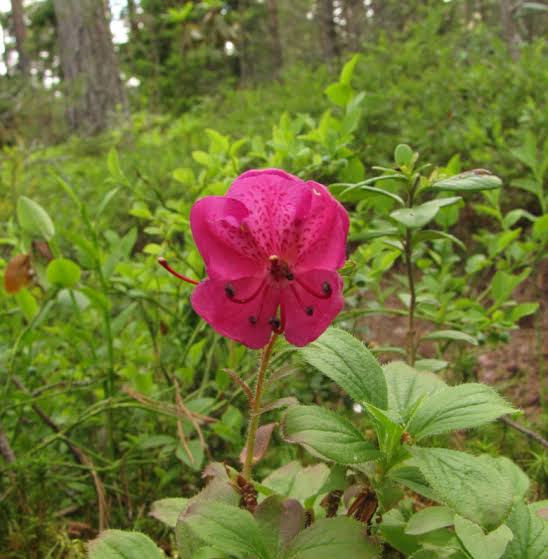
Correctly identifying a Kamchatka Rhododendron Bonsai is important because Rhododendron camtschaticum has characteristics that distinguish it from many of the evergreen rhododendrons commonly encountered in cultivation. One of the most obvious differences is that this species is deciduous, losing its foliage as it enters winter dormancy.
The species naturally develops as a low, spreading shrub rather than a tall, upright plant. Its relatively compact foliage, colourful flowers and creeping or spreading growth can make it particularly interesting for small bonsai compositions.
Identification should not rely on a single characteristic. Examining the leaves, flowers, fruit, seeds, stems and overall growth habit together provides a more reliable way of determining whether a plant is Rhododendron camtschaticum.
Leaf Identification
The foliage provides several useful clues when identifying a Kamchatka Rhododendron Bonsai.
Rhododendron camtschaticum produces relatively small leaves that are generally oval to obovate in shape. Unlike evergreen rhododendrons that retain their foliage throughout winter, the Kamchatka Rhododendron is deciduous.
This seasonal behaviour is an important identification characteristic. Leaves emerge during the growing season before eventually changing condition and being shed as the plant enters dormancy.
The foliage grows along the species’ low, branching stems and complements its naturally compact proportions. When cultivated as bonsai, these relatively small leaves can help create a convincing sense of scale.
When identifying an unknown specimen, examine several mature leaves and consider their shape, arrangement and seasonal behaviour rather than relying on a single leaf.
Flower Gallery
The flowers are among the most striking characteristics of Rhododendron camtschaticum.
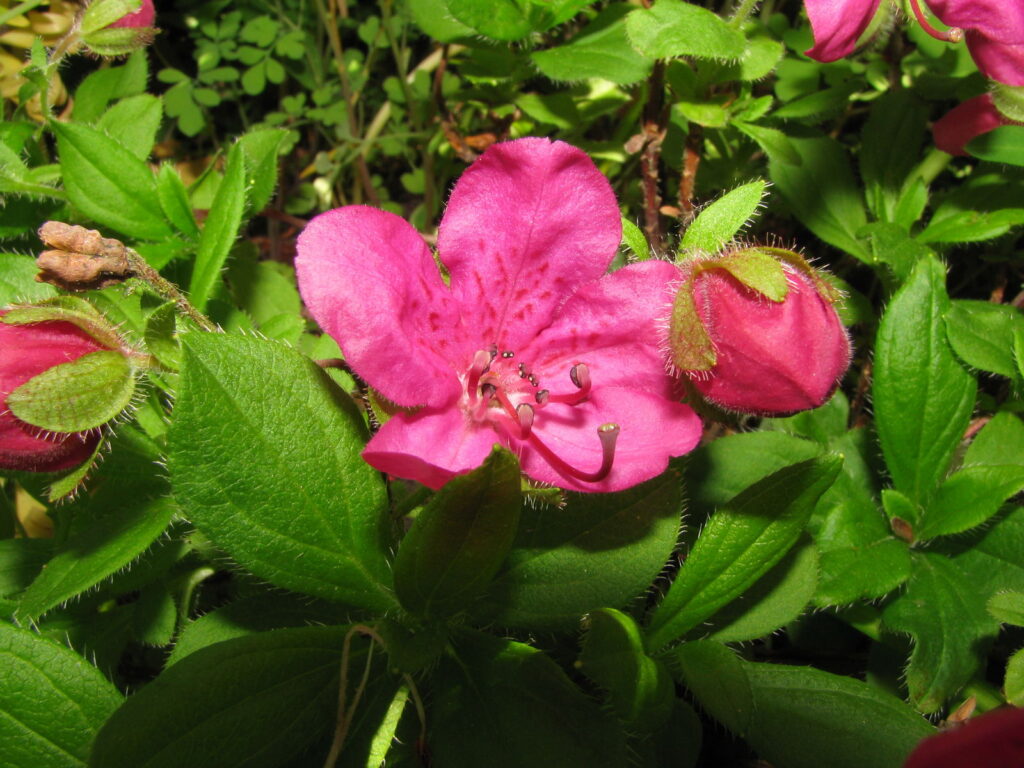
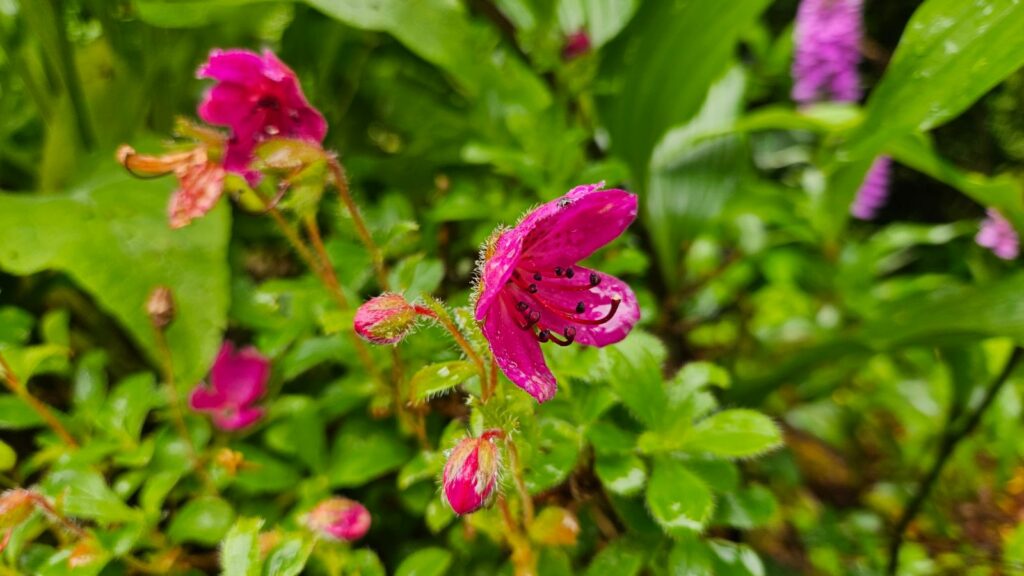
The species produces attractive flowers ranging through shades of pink, rose and purple. They can appear particularly large and dramatic relative to the plant’s naturally low-growing structure.
Flowers typically have the recognisable funnel-shaped appearance associated with rhododendrons, with spreading lobes and prominent reproductive structures extending from the centre.
For bonsai growers, flowering can temporarily transform a relatively understated shrub into an impressive display specimen.
Flower colour alone should not be used for definitive identification, however. Compare the blooms with the foliage, growth habit and other botanical characteristics before determining whether the bonsai is a Kamchatka Rhododendron.
Fruit Identification
After successful pollination, a Kamchatka Rhododendron Bonsai may develop dry seed capsules.
These form where the flowers were previously located and gradually mature as the plant progresses through its growing season. Once mature, the capsules can open and release the seeds contained within.
Fruit development provides another useful characteristic when attempting to identify Rhododendron camtschaticum, particularly when flowers are no longer present.
Bonsai growers do not necessarily need to allow every capsule to reach maturity. Removing spent flowers can prevent unnecessary seed production when the primary objective is strengthening the plant or developing its branching structure.
If seed collection is planned, selected capsules can instead be left to mature.
Seeds And Pods
The capsules of Rhododendron camtschaticum contain numerous small seeds.
Their size means propagation requires considerably more control than simply placing large seeds directly into conventional bonsai soil. A suitable propagation medium should provide consistent moisture while remaining sufficiently aerated to support developing seedlings.
Growing a Kamchatka Rhododendron from seed can nevertheless be particularly interesting for bonsai enthusiasts. Starting with young material allows the grower to influence the plant’s structure throughout its development.
Seedlings will require patience before they resemble mature bonsai material, making seed propagation a long-term project rather than a quick route to a finished tree.
The capsules themselves can also assist with identification when considered alongside flowers, foliage and the plant’s growth habit.
Bark Textures
Bark is generally a subtler identification feature on a Kamchatka Rhododendron Bonsai than the flowers or foliage.
Young stems tend to appear relatively smooth and slender. As the plant matures, established stems become increasingly woody and can develop additional texture and character.
Because Rhododendron camtschaticum naturally remains a relatively low shrub, growers should not expect the dramatically thick, heavily fissured trunk associated with some traditional bonsai species.
Its mature character instead develops through the relationship between its spreading woody stems, compact proportions, seasonal foliage and flowers.
When identifying an unknown specimen, bark should therefore be considered alongside the plant’s other characteristics. The combination of deciduous foliage, pink to purple flowers, low spreading growth, seed capsules and woody stems provides a much stronger indication that the bonsai may be Rhododendron camtschaticum.
Bonsai Styles Suited To Kamchatka Rhododendron Bonsai
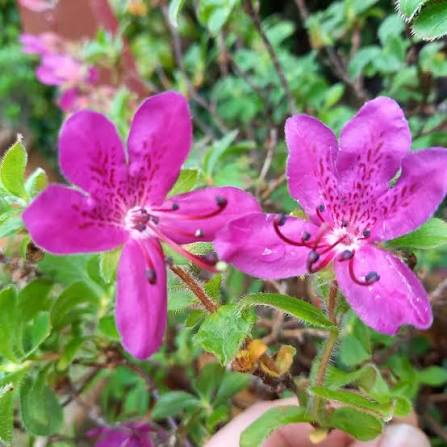
The natural growth habit of a Kamchatka Rhododendron Bonsai should play an important role when selecting an appropriate bonsai style. Rhododendron camtschaticum naturally develops as a low, spreading deciduous shrub, so styles that complement horizontal growth and compact proportions are generally more convincing than designs requiring a tall, powerful trunk.
Rather than forcing the plant into a traditional tree form, bonsai growers can use its natural characteristics to create compositions that suggest an alpine shrub growing across exposed terrain. Its spectacular pink to purple flowers can then become an important seasonal feature of the finished design.
Informal Upright (Moyogi)
An informal upright style can work for specimens that develop a sufficiently dominant central stem.
The trunk should rise with gentle movement rather than forming a perfectly straight vertical line. Lower branches can be allowed to spread more broadly, reflecting the species’ naturally shrubby character.
This approach is particularly useful when a young plant already possesses one stem that is noticeably stronger than the surrounding growth.
Slanting (Shakan)
The slanting style works particularly well with the natural character of Rhododendron camtschaticum.
A trunk or dominant stem can be developed at an angle, creating the impression of a plant shaped by wind, snow or challenging conditions in an exposed landscape.
Branches should support the direction of the composition without making the plant appear artificially arranged. The result can evoke the rugged environments associated with this cold-climate species.
Semi-Cascade (Han-Kengai)
A semi-cascade can take advantage of the Kamchatka Rhododendron’s naturally spreading growth.
One or more branches can extend beyond the edge of the container while remaining above or around the level of its base. This creates the impression of a shrub growing over a rock, slope or elevated bank.
Its flowers can make this style particularly attractive when blooms appear along the extending branches.
Cascade (Kengai)
Full cascade is possible with suitable material, although it requires more deliberate development.
The main line of the composition extends below the base of the container, representing a plant growing down a steep cliff or mountainside. Because rhododendron branches can become brittle, dramatic bends should be developed gradually while growth remains young and flexible.
A taller cascade pot can help visually balance the downward movement of the plant.
Multi-Trunk (Kabudachi)
The multi-trunk style is one of the most natural choices for a Kamchatka Rhododendron Bonsai.
Because the species naturally grows as a spreading shrub, several stems can be retained and developed from a shared root system. One should generally provide the dominant visual line, with the remaining trunks varying in height and thickness.
This approach allows growers to embrace the species’ natural growth rather than continually removing additional stems to create a conventional single-trunk tree.
Clump Style
A clump-style composition can emphasise the dense, low-growing nature of Rhododendron camtschaticum.
Multiple stems emerging from a compact base can create the impression of an old flowering shrub surviving in an exposed landscape. Careful pruning is important to prevent the interior from becoming excessively congested.
When flowering, a mature clump can produce an impressive mass of colour while retaining the miniature landscape quality expected from bonsai.
Root-Over-Rock (Sekijoju)
Root-over-rock styling may be considered with young material while the roots remain sufficiently flexible.
The roots are gradually encouraged to grow around and across a suitable rock before entering the growing medium below. Combined with the species’ low, spreading growth, this can create the impression of an alpine rhododendron clinging to rocky terrain.
This style requires considerable patience because the roots need time to establish naturally around the stone.
Choosing The Best Style
There is no single compulsory style for a Kamchatka Rhododendron Bonsai, and the existing structure of the individual plant should ultimately guide the design.
For this species, multi-trunk, clump, slanting and semi-cascade styles are particularly worth considering because they complement its naturally low and spreading growth habit. Informal upright designs can work with suitable material, while cascade and root-over-rock compositions offer more specialised possibilities.
The strongest designs will generally be those that work with Rhododendron camtschaticum rather than attempting to disguise its natural character. A bonsai that resembles a small flowering shrub shaped by an exposed northern landscape can showcase precisely what makes this unusual rhododendron so distinctive.
Symbolism And Cultural Significance
The Kamchatka Rhododendron Bonsai combines the symbolism traditionally associated with rhododendrons with characteristics inspired by the harsh northern environments in which Rhododendron camtschaticum naturally occurs. Its ability to survive cold, exposed conditions makes it particularly suited to themes of resilience, endurance and adaptation.
Rhododendrons more broadly have acquired different symbolic meanings across cultures and periods. Their spectacular flowers are often associated with beauty, elegance and abundance, while the potentially toxic nature of many members of the genus has also contributed to associations with caution and hidden danger.
For Rhododendron camtschaticum, its seasonal transformation adds another layer of meaning. As a deciduous species, it loses its foliage during dormancy before returning to active growth when favourable conditions return. When cultivated as bonsai, this cycle can represent renewal, patience and perseverance through difficult periods.
Its low, spreading growth habit also creates an impression very different from the towering strength represented by many traditional bonsai trees. Instead, the Kamchatka Rhododendron demonstrates strength through persistence. It survives close to the ground, adapting its form to challenging surroundings rather than attempting to dominate them.
The flowers provide a striking contrast. Bright pink to purple blooms emerge from an otherwise modest alpine shrub, creating a natural representation of beauty emerging from adversity.
Within a bonsai collection, a Kamchatka Rhododendron Bonsai can therefore symbolise:
- Resilience and endurance
- Renewal after hardship
- Adaptability
- Patience
- Beauty in difficult circumstances
- Quiet strength
There does not appear to be a major traditional bonsai symbolism specifically attached to Kamchatka Rhododendron Bonsai. Its significance as a bonsai is better interpreted through its natural ecology, seasonal behaviour and the wider symbolism associated with rhododendrons.
For growers who appreciate bonsai as more than horticulture, this can give Kamchatka Rhododendron Bonsai considerable character. A mature Kamchatka Rhododendron Bonsai can represent the idea that strength does not always need to be imposing: sometimes it is simply the ability to endure, adapt and flower again.
Companion Plants And Wildlife Attraction
Selecting suitable companion plants for a Kamchatka Rhododendron Bonsai can help create a display inspired by the cool, rocky and open habitats associated with Rhododendron camtschaticum. As the species prefers acidic soil, reliable moisture and relatively cool growing conditions, companions should either tolerate similar conditions or be maintained separately where their requirements differ.
The naturally low-growing character of the Kamchatka Rhododendron also makes it particularly suitable for alpine-inspired bonsai displays. Small flowering plants, mosses and groundcovers can reinforce the impression of a miniature northern landscape without overwhelming the bonsai itself.
Companion plants generally don’t need to share the bonsai container. Keeping them in separate pots allows each species to receive the soil, watering and sunlight it requires while still contributing to the overall presentation.
Moss
Moss can provide an attractive surface treatment around a Kamchatka Rhododendron Bonsai, particularly when attempting to recreate the appearance of a cool, moist natural environment.
Suitable mosses may include:
- Hypnum cupressiforme (Cypress-leaved Plait Moss)
- Dicranum scoparium (Broom Moss)
- Polytrichum commune (Common Haircap Moss)
- Leucobryum glaucum (Pincushion Moss)
A light covering of moss can help reduce rapid evaporation from the surface of the growing medium while creating a more established appearance.
However, avoid allowing moss to completely obscure the soil. You still need to monitor moisture levels and ensure that water drains effectively from the container.
Flowers
Small flowering plants can complement the spectacular pink to purple blooms of Rhododendron camtschaticum.
For an alpine or cool-climate-inspired display, potential companions include:
- Primula vulgaris (Primrose)
- Viola odorata (Sweet Violet)
- Campanula cochleariifolia (Fairy’s Thimble)
- Saxifraga oppositifolia (Purple Saxifrage)
Their relatively small proportions can work particularly well around a compact bonsai without visually dominating the composition.
Growing these plants in separate containers also allows the display to be rearranged according to flowering periods. This can create changing combinations throughout the growing season while allowing the Kamchatka Rhododendron Bonsai to remain the main focal point.
Herbs
Herbs are not necessarily the most obvious companions for Rhododendron camtschaticum, particularly because many popular culinary herbs prefer warmer, sunnier and drier conditions.
However, several low-growing herbs can still contribute interesting foliage and fragrance around the broader display.
Potential options include:
- Mentha requienii (Corsican Mint)
- Galium odoratum (Sweet Woodruff)
- Thymus serpyllum (Creeping Thyme)
- Chamaemelum nobile (Roman Chamomile)
These plants should generally be maintained in separate containers. Creeping thyme and chamomile, for example, typically prefer sunnier and better-drained conditions than the consistently moist environment required by the rhododendron.
Separate planting therefore provides the visual benefits of companion planting without forcing incompatible plants to share the same root environment.
Wildlife Attraction (Bees, Butterflies, And Beneficial Insects)
The flowers of a Kamchatka Rhododendron Bonsai can attract visiting pollinators when the tree is kept outdoors during its flowering period. Creating a broader wildlife-friendly growing area can provide additional food sources before and after the rhododendron blooms.
Suitable pollinator-friendly plants elsewhere in the garden may include:
- Lavandula angustifolia (Lavender) – highly attractive to bees and other pollinating insects
- Achillea millefolium (Yarrow) – supports pollinators and numerous beneficial insects
- Borago officinalis (Borage) – produces nectar-rich flowers popular with bees
- Cosmos bipinnatus (Cosmos) – attracts bees, butterflies and other pollinators
- Origanum vulgare (Oregano) – its flowers can attract numerous beneficial insects
These plants generally have different soil and moisture requirements from Rhododendron camtschaticum, so they are better planted elsewhere in the garden or maintained in separate containers.
A wildlife-friendly environment can also encourage predatory insects that naturally help control certain bonsai pests.
By combining mosses, compact flowering plants and nearby pollinator-friendly species, a Kamchatka Rhododendron Bonsai can become the centrepiece of a miniature landscape while contributing to a broader garden that supports biodiversity.
Care Summary And Practical Notes
Growing a Kamchatka Rhododendron Bonsai successfully comes down to understanding the natural character of Rhododendron camtschaticum. This is a cold-adapted, deciduous flowering shrub that performs best when its roots remain cool, acidic and consistently moist without becoming waterlogged.
For everyday care, pay particular attention to watering and temperature. The shallow bonsai container provides little protection against rapid drying or excessive root-zone heat, making afternoon shade especially valuable during warmer weather. An acidic, free-draining growing medium and moderate feeding during active growth will further support healthy development.
Pruning and shaping should work with the species rather than against it. Its naturally low, spreading habit makes clump, multi-trunk, slanting and semi-cascade designs particularly appropriate. Allowing some of this natural character to remain can produce a more convincing bonsai than attempting to force the plant into a tall, formal structure.
Seasonal changes are also part of the appeal. The loss of foliage during dormancy is normal for Rhododendron camtschaticum, while spring growth and its striking pink to purple flowers provide dramatic transformations throughout the year.
The most important practical points to remember for Kamchatka Rhododendron Bonsai are:
- Keep the growing medium consistently moist but well drained.
- Maintain acidic soil conditions suitable for rhododendrons.
- Protect the roots and foliage from excessive summer heat.
- Provide good light while avoiding prolonged scorching afternoon sun.
- Prune primarily around the flowering and active-growth cycle.
- Handle the fine roots carefully when repotting.
- Shape young branches gradually rather than forcing brittle mature wood.
- Allow the plant to experience its natural winter dormancy.
- Inspect regularly for pests, fungal problems and signs of poor root health.
The Kamchatka Rhododendron Bonsai may require more environmental control than some conventional beginner bonsai species, particularly in warmer climates. However, its compact proportions, unusual growth habit, seasonal transformation and spectacular flowers give it considerable potential as a distinctive bonsai specimen.
With patient development and careful attention to its natural requirements, Kamchatka Rhododendron Bonsai can become a beautiful representation of a hardy northern shrub in miniature—a bonsai defined not by towering proportions, but by resilience, seasonal character and colour.