
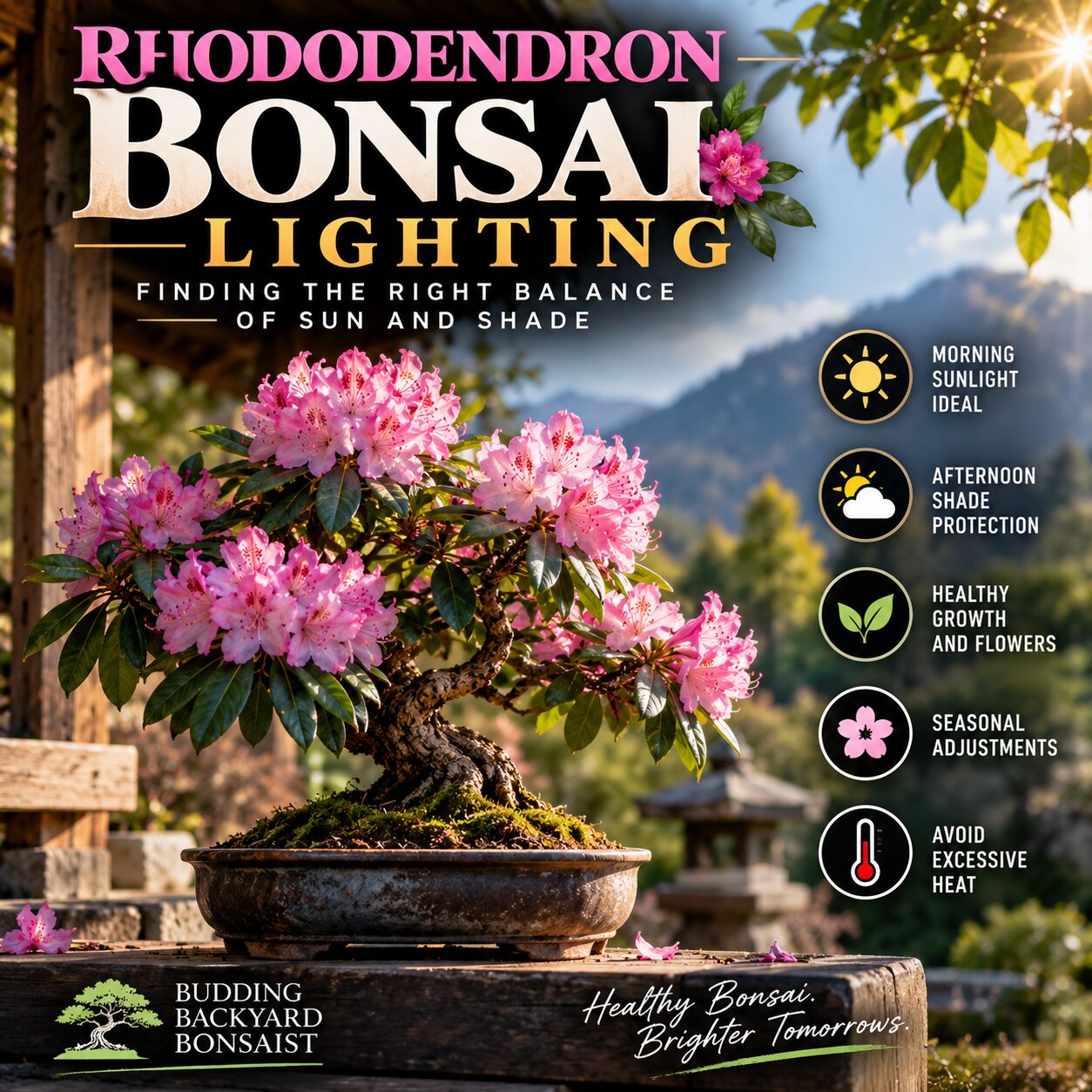
Getting rhododendron bonsai lighting right can make a significant difference to the health, flowering and appearance of your tree. Rhododendrons generally appreciate good light, but that does not mean every species should spend the entire day exposed to intense sunshine.
For bonsai growers, the challenge is finding a position that provides enough light for healthy growth and flower development without exposing the shallow root system and foliage to excessive heat.
The ideal balance can also change according to species, climate and season.
How Much Light Does a Rhododendron Bonsai Need?
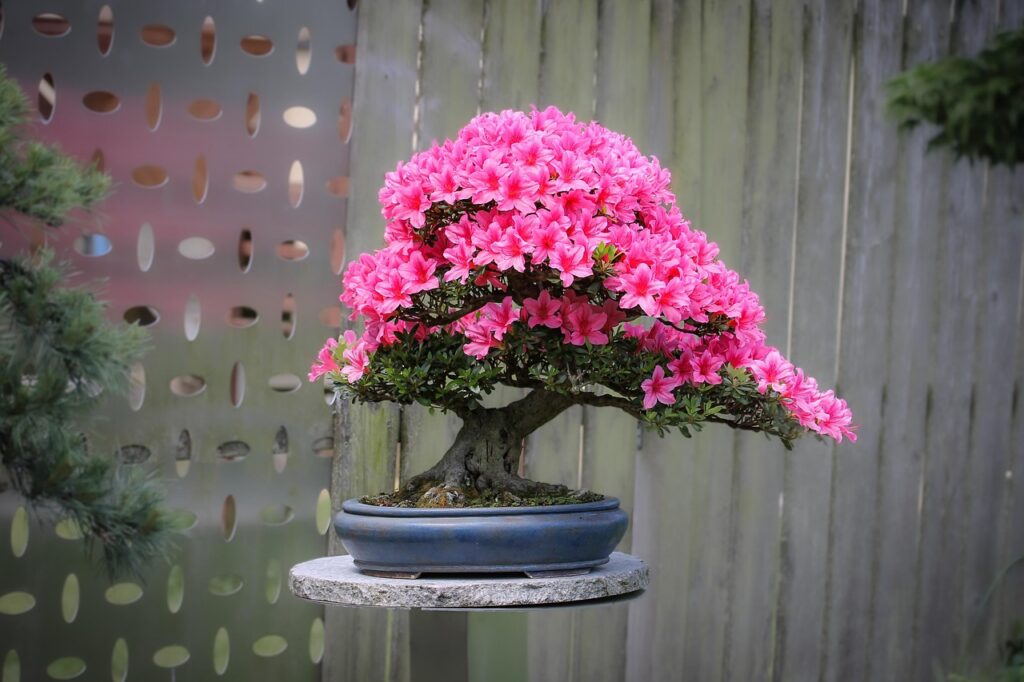
Most rhododendrons perform well in bright conditions with some protection from the strongest afternoon sun. Morning sunlight followed by afternoon shade can provide an excellent starting point for many bonsai specimens.
However, rhododendron bonsai lighting requirements should never be treated as identical across the entire genus. Rhododendron contains an enormous diversity of plants adapted to different habitats and elevations.
Some species tolerate greater sun exposure, while others naturally grow where surrounding vegetation or environmental conditions provide protection.
The specific species should therefore always influence placement decisions.
Morning Sun vs Afternoon Sun
Morning sunlight is particularly useful because it provides strong natural light while temperatures are generally lower. Positioning your rhododendron bonsai where it receives several hours of morning sun can encourage healthy foliage and support flowering.
Intense afternoon sunlight presents a greater challenge, especially during summer.
A bonsai container contains relatively little soil compared with a garden bed. Consequently, the root zone can heat and dry rapidly. Strong sunlight combined with hot temperatures may increase water loss and place additional stress on the plant.
Providing afternoon shade during particularly hot periods can help protect both the foliage and roots.
Signs Your Bonsai May Be Receiving Too Much Light
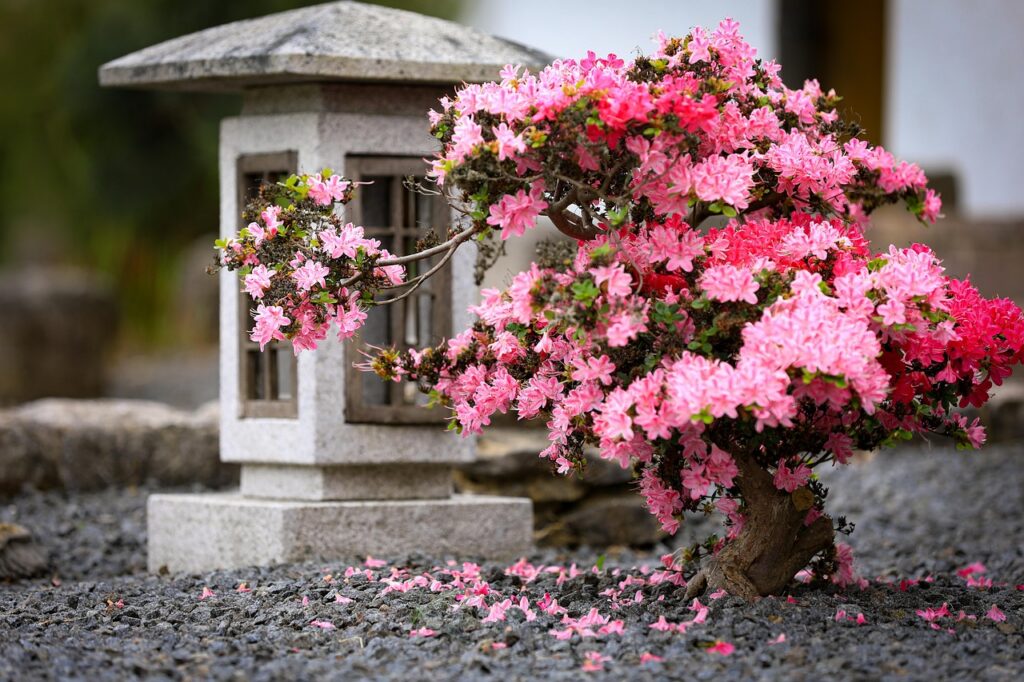
Rhododendrons can communicate quite clearly when environmental conditions become unsuitable. Leaf damage occurring during periods of strong sun or heat should encourage you to reassess the tree’s position.
Possible warning signs include:
- Scorched or browned leaf margins.
- Bleached or faded areas on exposed foliage.
- Leaves curling during intense afternoon heat.
- Bonsai soil drying unusually quickly.
- Increased wilting despite appropriate watering.
These symptoms can have several causes, so sunlight should not automatically receive all the blame. Watering problems, root stress and other environmental factors may produce similar symptoms.
Can Rhododendron Bonsai Grow in Shade?
Shade does not necessarily mean darkness.
A rhododendron bonsai can benefit from protection against harsh sunlight while still receiving substantial indirect light. Deep shade throughout the day, however, may produce weaker growth and potentially reduce flowering.
This distinction makes rhododendron bonsai lighting easier to understand. The objective is generally not to hide the tree from sunlight but to control the intensity and duration of its exposure.
Bright filtered light beneath shade cloth or nearby vegetation can sometimes provide an effective compromise during hotter months.
Seasonal Lighting Requirements
The best location for your bonsai in spring may not remain ideal throughout summer.
Spring often brings moderate temperatures and vigorous new growth, allowing rhododendrons to enjoy greater sunlight. As temperatures increase during summer, additional afternoon protection may become beneficial.
Autumn usually brings declining heat intensity, potentially allowing the tree to receive more direct light again. During winter, deciduous surrounding trees and the lower angle of the sun can also change conditions considerably.
Observing the actual microclimate around your bonsai collection is therefore more useful than choosing one position and never reconsidering it.
Protecting Flowers From Harsh Conditions
Rhododendrons are treasured for their spectacular flowers, and lighting can influence both bud development and how long those flowers remain attractive.
Good light supports healthy growth, but intense heat and direct sunlight can shorten the display once flowers have opened. Moving a flowering bonsai into a bright but more sheltered location can sometimes help protect delicate blooms from excessive heat.
Wind exposure should also be considered because hot, dry winds can increase moisture loss even when sunlight itself is manageable.
Finding the Best Rhododendron Bonsai Lighting Position
There is no single number of sunlight hours that perfectly suits every rhododendron bonsai in every climate. Species differences, local temperatures, humidity, container size and watering habits all influence how a tree responds.
Start with morning sunlight and afternoon protection, then observe your individual bonsai carefully. Healthy foliage, compact growth and reliable flowering provide useful indications that the position is working.
Most importantly, treat rhododendron bonsai lighting as something that can change throughout the year. Adjusting placement as seasons and temperatures shift can help your rhododendron receive the light it needs without subjecting it to unnecessary stress.
A successful lighting strategy ultimately comes from balancing sunlight, temperature and moisture while paying attention to what your bonsai is telling you.