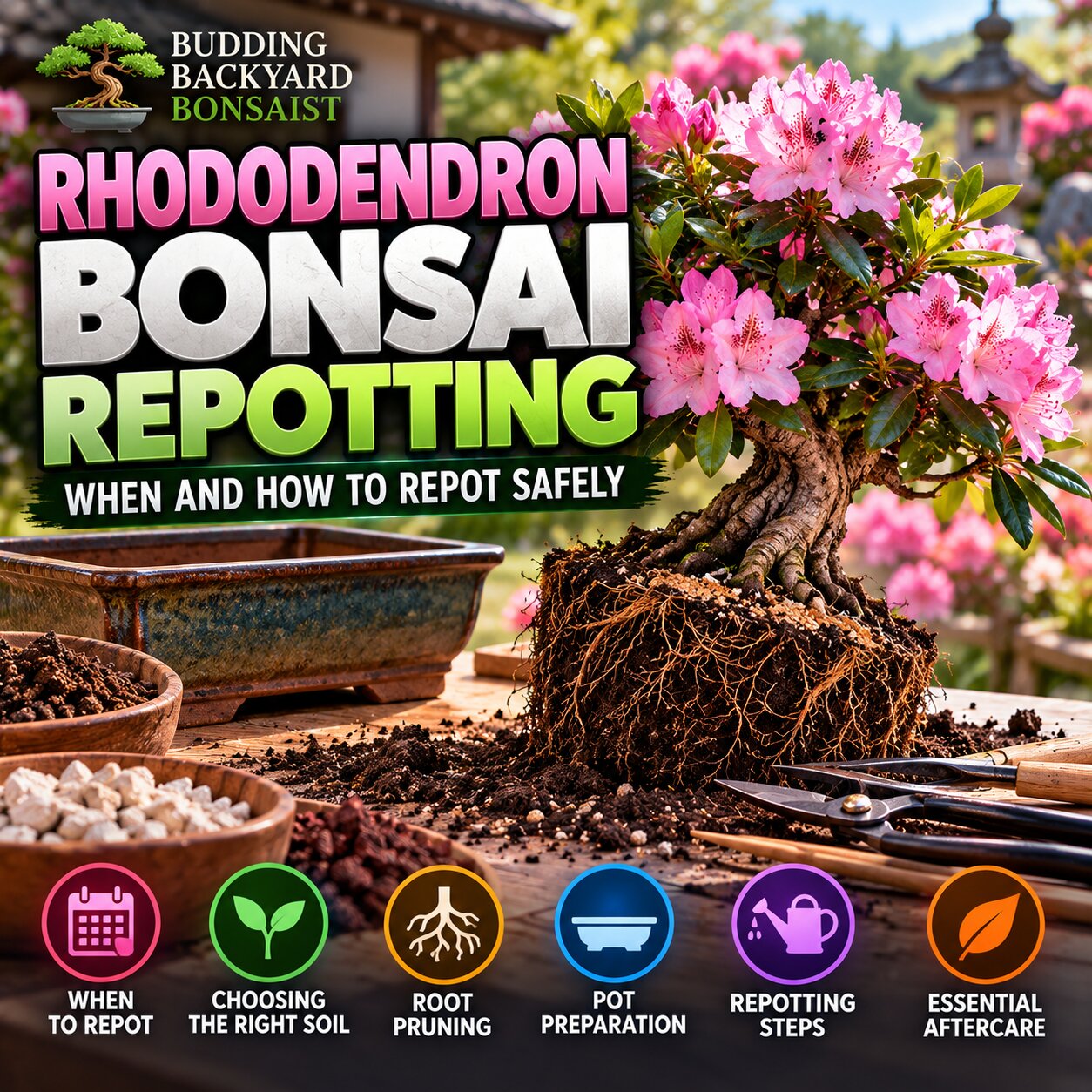
Repotting is one of the most important maintenance tasks when growing Rhododendron as bonsai. While pruning shapes the branches and foliage above the soil, rhododendron bonsai repotting allows you to manage the root system hidden beneath it. Done correctly, repotting refreshes the growing medium, improves drainage and gives you an opportunity to inspect and develop the roots.
Rhododendrons, including the many azaleas commonly grown as bonsai, develop fine fibrous root systems rather than relying primarily on large woody roots.
That characteristic requires careful handling.
Removing too many roots, allowing them to dry or placing the tree into unsuitable soil after repotting can cause unnecessary stress.
Understanding when and how to repot is therefore an essential part of long-term Rhododendron bonsai care.
When Should You Repot a Rhododendron Bonsai?
Repotting shouldn’t automatically happen every year.
Young, vigorous trees may require more frequent attention because their root systems can quickly fill smaller bonsai containers. Older and more established specimens can often remain undisturbed for longer periods.
Rather than relying exclusively on a calendar, inspect the tree and growing medium.
Signs that rhododendron bonsai repotting may be necessary include water taking longer to penetrate the soil, roots becoming densely packed inside the pot, declining drainage or soil beginning to break down.
If you lift the root mass and discover that fine roots have filled most of the available space, it may be time to repot.
What Is the Best Time for Rhododendron Bonsai Repotting?
Timing can vary according to climate, species and the way the tree is being managed.
Spring is commonly used for rhododendron bonsai repotting, particularly as the plant enters active growth. Some growers also work on azaleas after flowering, although local conditions and the health of the individual tree should always influence the decision.
Avoid unnecessary root disturbance when a Rhododendron is already weak, dehydrated or suffering from another major problem.
Repotting is stressful even when performed correctly.
A healthy, vigorous plant is better equipped to recover and establish fresh roots.
Choosing the Right Bonsai Soil
Rhododendrons prefer acidic growing conditions, making soil selection particularly important.
The growing medium should retain sufficient moisture for the tree’s fine roots while still providing enough drainage and aeration to prevent them from remaining waterlogged.
Kanuma is widely associated with azalea and Rhododendron bonsai cultivation because of its acidic characteristics and useful balance between moisture retention and drainage.
Depending on availability and local growing conditions, growers may also develop alternative acidic bonsai mixes.
Whatever medium you choose, avoid dense garden soil that compacts inside the container.
Our previous Rhododendron bonsai soil guide explores this subject in greater detail.
Preparing for Repotting
Have everything ready before removing the tree from its container.
You don’t want fine roots sitting exposed while you search for tools, drainage mesh or additional soil.
For rhododendron bonsai repotting, you may need:
- Fresh acidic bonsai growing medium
- Clean root scissors
- A root rake or chopstick
- Drainage mesh
- Bonsai wire for securing the tree
- The prepared bonsai pot
If you’re reusing the existing container, clean it before returning the tree.
Prepare the drainage holes and securing wires before beginning root work.
Removing the Rhododendron From Its Pot
Carefully loosen the tree from the container.
Avoid pulling aggressively on the trunk because doing so can damage fine roots or disturb the trunk base.
Once removed, inspect the root mass.
Healthy fine roots are what you want to preserve during rhododendron bonsai repotting. Gently work through compacted areas and remove old growing medium without unnecessarily tearing through the root system.
This is also your opportunity to inspect for damaged, dead or unhealthy roots.
Pruning the Roots
Root pruning allows the tree to remain healthy within the limited space of a bonsai container.
However, this isn’t an invitation to remove enormous portions of the root system simply because the roots will eventually grow back.
Rhododendrons depend heavily on their fine roots.
Remove problematic roots and reduce excessive growth carefully while maintaining enough healthy root mass to support the tree.
Root work should also contribute to developing a balanced radial root structure around the trunk.
For trees undergoing major development, this process may take several repotting cycles rather than being accomplished in one aggressive session.
Returning the Tree to the Pot
Add a layer of fresh growing medium before positioning the Rhododendron.
Check the planting angle and position before filling the remainder of the container. This is an excellent opportunity to make minor adjustments to the presentation of the bonsai.
Once you’re satisfied, secure the tree using the prepared wire.
A newly repotted bonsai shouldn’t move around inside its container. Movement can interfere with delicate new root development.
Add fresh soil around the root system and use a chopstick carefully to work the particles between roots and eliminate large air pockets.
Water thoroughly once rhododendron bonsai repotting is complete.
Aftercare Following Repotting
The work doesn’t finish when the tree goes back into its pot.
Aftercare is critical.
Protect the newly repotted Rhododendron from extreme heat, drying winds and unnecessary stress while its root system recovers.
Monitor moisture carefully.
The new growing medium may behave differently from the old soil, so don’t assume the previous watering routine will remain appropriate. Check the soil itself and water according to what the tree needs.
Avoid immediately subjecting the plant to additional major work.
Heavy pruning, wiring and other stressful techniques can usually wait until the tree has demonstrated healthy recovery.
Building a Healthy Rhododendron Bonsai Root System
Much of bonsai is focused on what we can see: trunks, branches, flowers and foliage.
Yet the health of all those visible features depends on what is happening beneath the soil.
Rhododendron bonsai repotting provides an opportunity to refresh deteriorating soil, improve drainage, inspect roots and gradually develop a root system capable of supporting the tree inside a shallow container.
The key is restraint.
Repot when the tree actually needs it, protect the fine roots, use an appropriate acidic growing medium and give the plant suitable aftercare.
Treat the roots with the same patience you give the branches, and your Rhododendron bonsai will have a stronger foundation for years of future development.