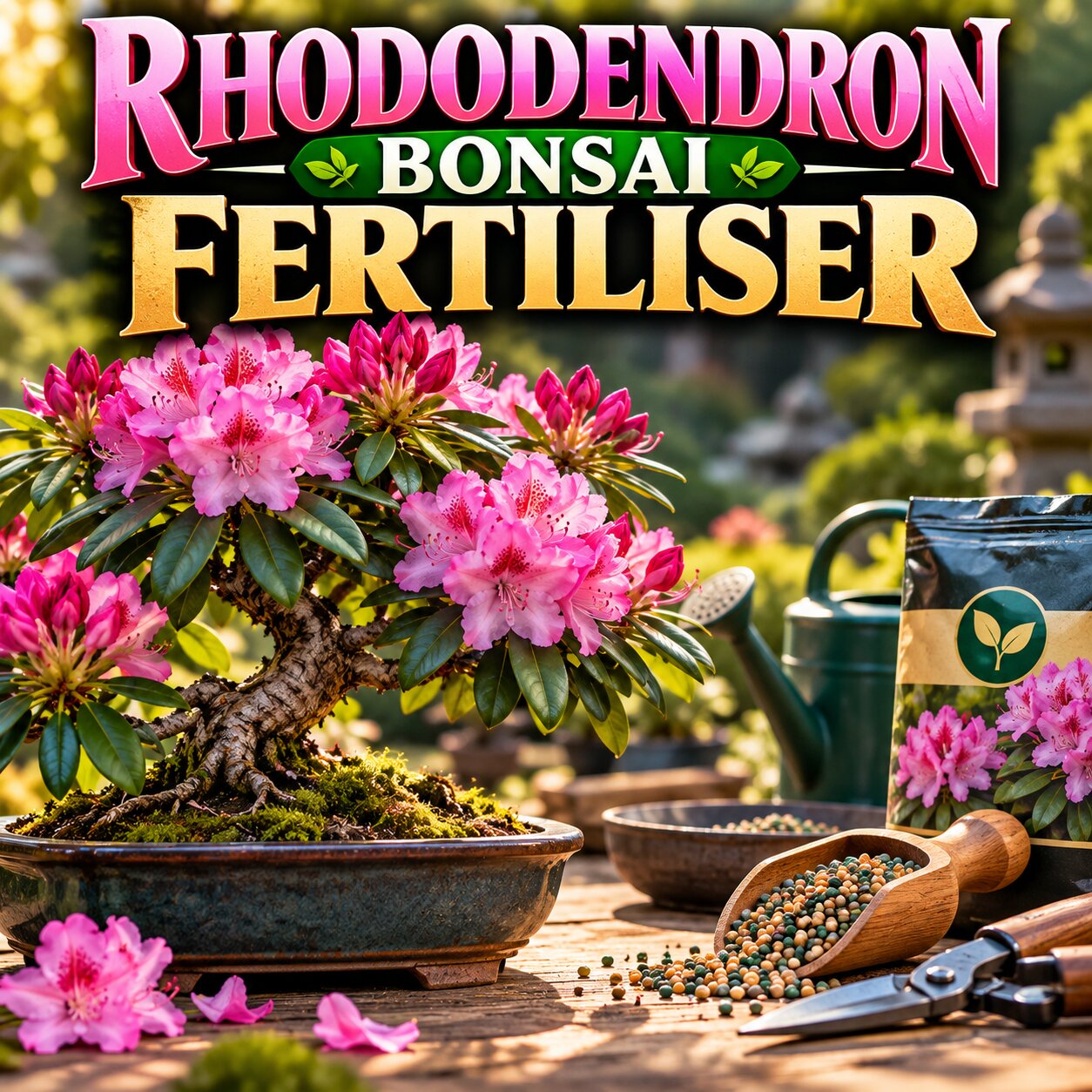
Rhododendrons can produce some of the most spectacular flowers found in bonsai, but those displays don’t appear without sufficient energy. Like every tree grown in a container, your rhododendron relies on the limited nutrients available within its bonsai soil and whatever additional nutrition you provide.
Choosing the right rhododendron bonsai fertiliser is therefore an important part of maintaining healthy foliage, developing branches and encouraging flowering.
However, feeding a rhododendron bonsai isn’t simply a matter of adding as much fertiliser as possible. These acid-loving plants have particular requirements, and excessive feeding can cause more problems than it solves.
Understanding when, how and why to fertilise your tree will help you create a feeding programme suited to its seasonal development.
Why Rhododendron Bonsai Need Fertiliser
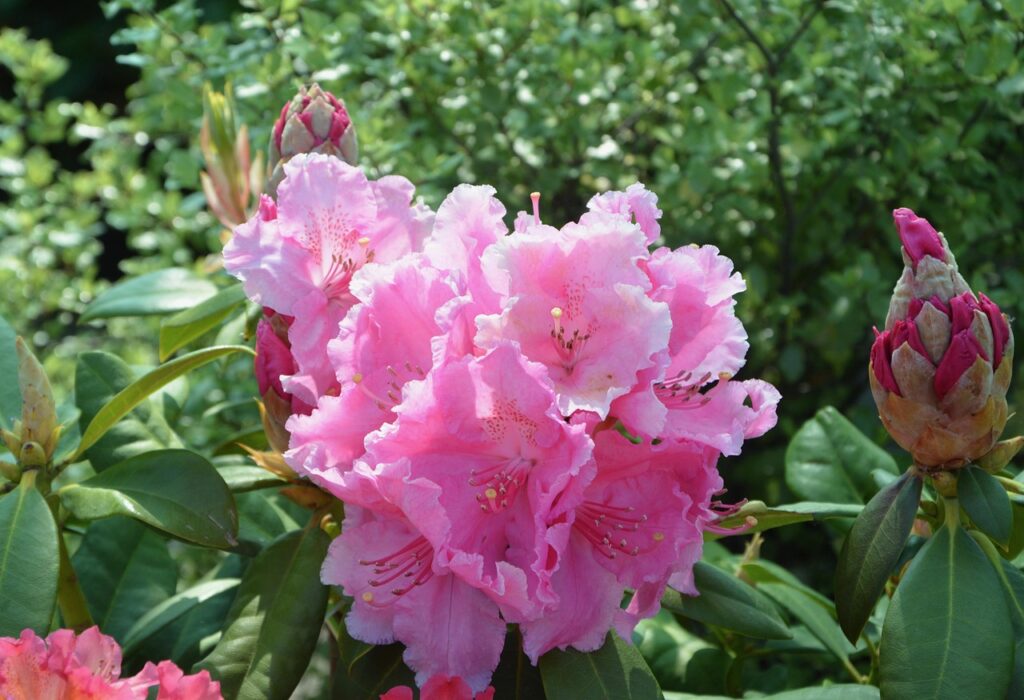
A rhododendron growing naturally in the ground can extend its roots through a large volume of soil in search of nutrients.
Bonsai don’t have that luxury.
Their roots are confined within relatively shallow containers, while the free-draining substrates commonly used for bonsai may contain relatively little natural nutrition. Regular watering can also gradually flush available nutrients from the growing medium.
This makes fertilisation an essential part of long-term bonsai care.
A suitable rhododendron bonsai fertiliser provides nutrients that support foliage, roots, flowers and new growth throughout the tree’s active season.
The objective isn’t to force unnaturally rapid growth. Instead, fertiliser should provide the nutrition required for controlled, healthy development.
Understanding NPK
Most fertilisers display three numbers representing nitrogen, phosphorus and potassium, commonly abbreviated as NPK.
Nitrogen primarily supports foliage and vegetative growth. Phosphorus contributes to processes including root development and flowering, while potassium plays several roles in overall plant function and resilience.
Bonsai growers sometimes become overly focused on finding one supposedly perfect NPK ratio.
In reality, your feeding programme should consider the tree’s stage of development, time of year, growing conditions and the characteristics of the particular fertiliser.
A young rhododendron being developed into bonsai may require stronger growth than a mature specimen where the objective is maintaining a refined structure.
The feeding approach can therefore change as the tree develops.
Rhododendrons Prefer Acidic Conditions
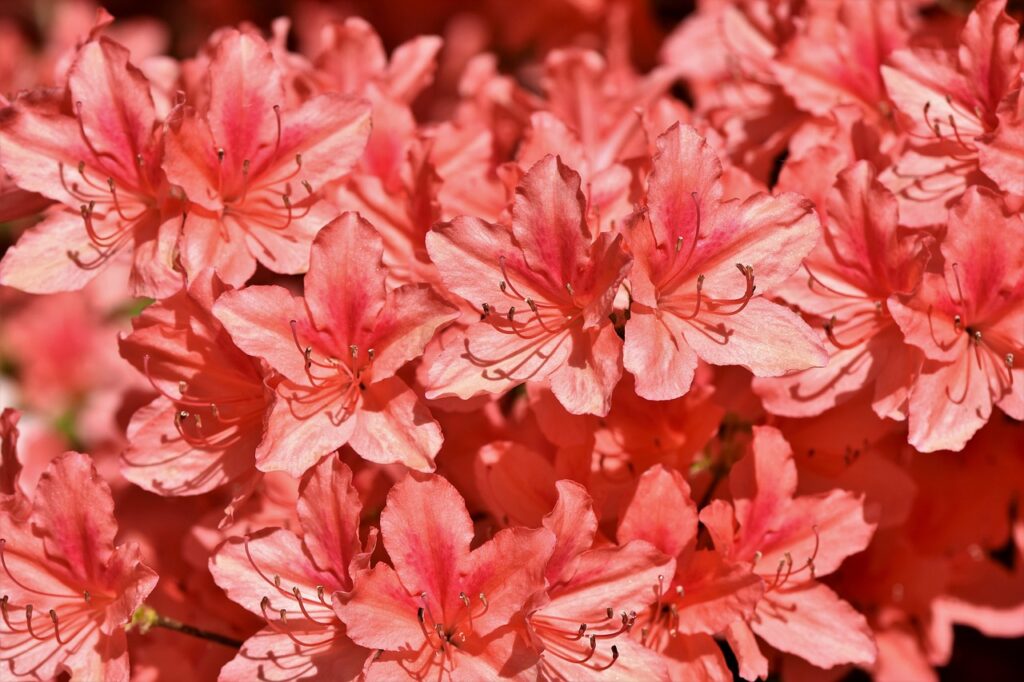
Rhododendrons are acid-loving plants, which is one reason their soil and water requirements deserve special attention.
Your choice of rhododendron bonsai fertiliser should complement those requirements rather than work against them.
Products formulated for azaleas, rhododendrons and other acid-loving plants can be useful because they are designed with these plants in mind. However, growers should still follow the manufacturer’s instructions carefully, particularly when applying liquid fertilisers to small bonsai containers.
More isn’t better.
Overfertilising can damage roots, create excessive growth or cause an accumulation of salts within the substrate.
Organic or Liquid Fertiliser?
Both organic and liquid fertilisers can form part of a successful rhododendron bonsai feeding programme.
Solid organic fertilisers are often placed on the soil surface, where nutrients gradually become available as the material breaks down through watering and microbial activity. This can provide a relatively steady supply of nutrition.
Liquid fertilisers offer greater control over timing and concentration.
Some bonsai growers use one method exclusively, while others combine them depending on the season and the needs of individual trees.
Whichever approach you choose, consistency is more useful than occasionally applying extremely strong doses.
Your rhododendron needs access to nutrition throughout appropriate periods of active growth rather than receiving a sudden feast followed by months of neglect.
When Should You Fertilise Rhododendron Bonsai?
Timing is one of the most important considerations when using rhododendron bonsai fertiliser.
Feeding generally corresponds with active growth, but flowering rhododendrons require some additional thought.
During spring, the tree uses stored energy to produce new foliage, shoots and flowers. Depending on the species, cultivar and your development goals, feeding may be adjusted around the flowering period rather than simply following the same routine used for non-flowering bonsai.
After flowering, rhododendrons often enter an important period of vegetative development.
This is when the tree can begin rebuilding its strength, producing new growth and preparing buds that may influence the following season’s display.
Feeding can continue through the appropriate growing period while being adjusted as growth begins slowing towards dormancy.
Local climate matters too.
South African bonsai growers shouldn’t blindly follow feeding calendars written for Europe, Japan or North America. Seasonal timing needs to reflect the actual behaviour of the tree in your climate.
Fertilising After Repotting
Recently repotted bonsai require particular care.
Repotting can involve removing old substrate, pruning roots and disturbing the tree’s root system. Immediately applying strong fertiliser to a stressed or freshly worked root system isn’t necessarily helpful.
Give the tree an opportunity to recover and resume active growth before returning to its normal feeding routine.
This is also why fertilisation cannot compensate for poor bonsai horticulture.
A rhododendron struggling because of damaged roots, unsuitable soil, incorrect watering or excessive heat isn’t automatically going to recover because you add more fertiliser.
First identify the underlying problem.
Watch the Tree, Not Just the Calendar
A fertilising schedule provides useful guidance, but your tree should ultimately tell you how it is responding.
Healthy foliage, appropriate shoot extension and strong flowering can indicate that your broader care routine is working. Unusually weak growth, discoloured foliage or poor development may suggest that something requires attention.
That doesn’t automatically mean nutrient deficiency.
Water quality, soil pH, root health, pests, drainage, sunlight and temperature can produce symptoms that resemble nutritional problems.
Before increasing the amount of rhododendron bonsai fertiliser, examine the entire growing environment.
Bonsai care works as a connected system.
Feeding for Flowers and Future Development
For many growers, flowers are the highlight of keeping rhododendron bonsai.
A spectacular flowering display, however, depends on the health of the entire tree.
Nutrition needs to support more than the blossoms currently visible. Your feeding programme should also contribute towards the roots, foliage and future growth that will sustain the bonsai for years to come.
That means balancing immediate beauty with long-term development.
A tree in early development may need sufficient nutrition to thicken branches and establish structure, while a refined bonsai may require more controlled growth to preserve its silhouette.
The correct feeding strategy depends on what you’re trying to achieve.
Build a Rhododendron Bonsai Fertiliser Routine
There isn’t one magical product that guarantees beautiful rhododendron bonsai.
Successful feeding comes from understanding your tree, using an appropriate fertiliser, respecting its preference for acidic growing conditions and adjusting nutrition according to the season and stage of development.
Start conservatively, follow product instructions and observe how your tree responds.
Combine fertilisation with suitable rhododendron bonsai soil, careful watering, appropriate sunlight and good root management.
Most importantly, remember that fertiliser is food—not medicine.
When your tree is healthy and actively growing, the right rhododendron bonsai fertiliser can provide the nutrition it needs to develop strong foliage, healthy roots and the spectacular flowers that make these bonsai so rewarding to grow.