Growing a bonsai from material you have propagated yourself adds another dimension to the hobby. Rather than purchasing an established plant and beginning its development from there, you can watch the entire journey unfold from the moment new roots or seedlings appear.
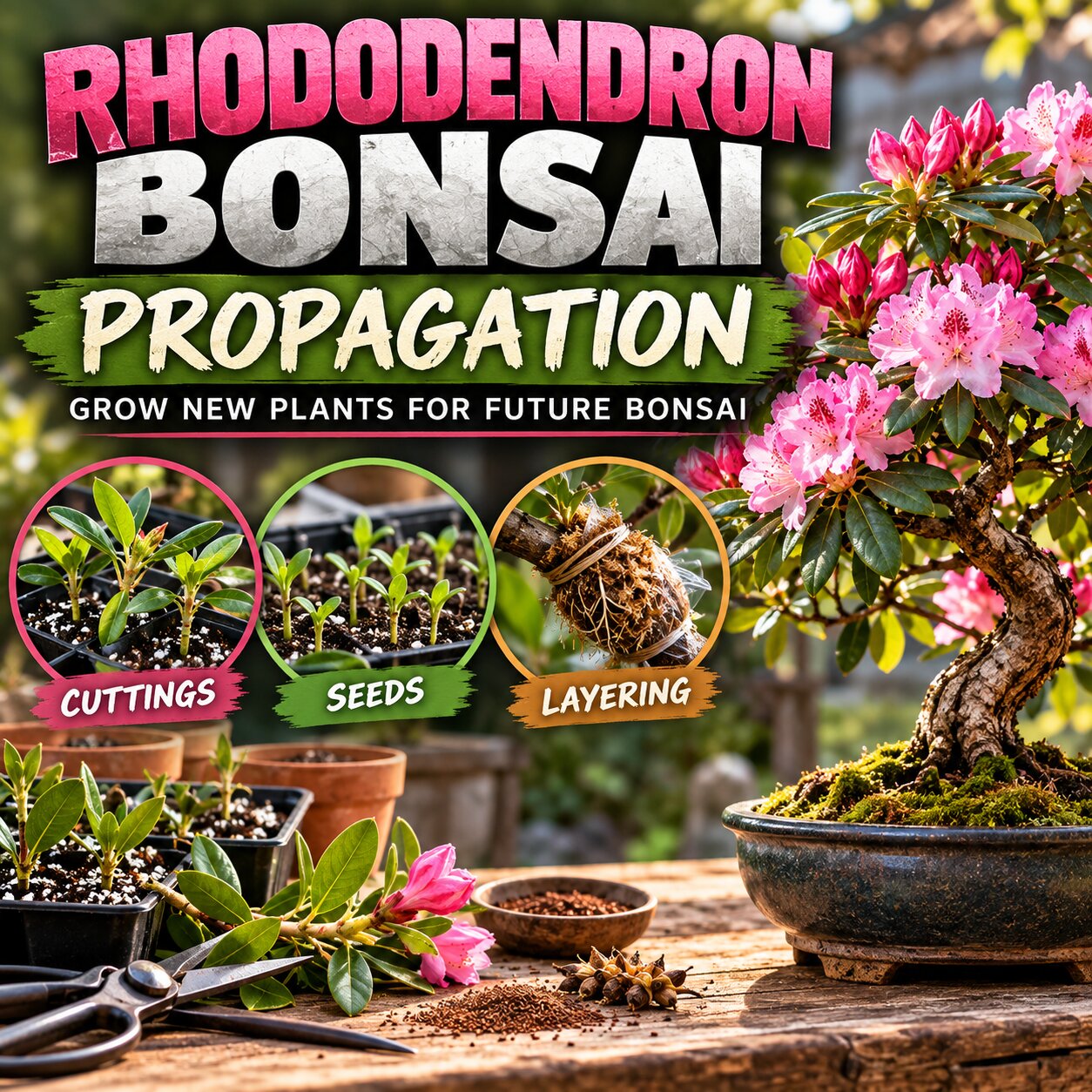
Rhododendron bonsai propagation provides several ways to produce new plants, including cuttings, layering and seeds. For bonsai growers, propagation also offers an opportunity to select material specifically for future trunk development, branching and styling.
As we continue our rhododendron bonsai series at Budding Backyard Bonsaist, let’s explore the main propagation methods and what each can offer.
Propagating Rhododendron Bonsai from Cuttings
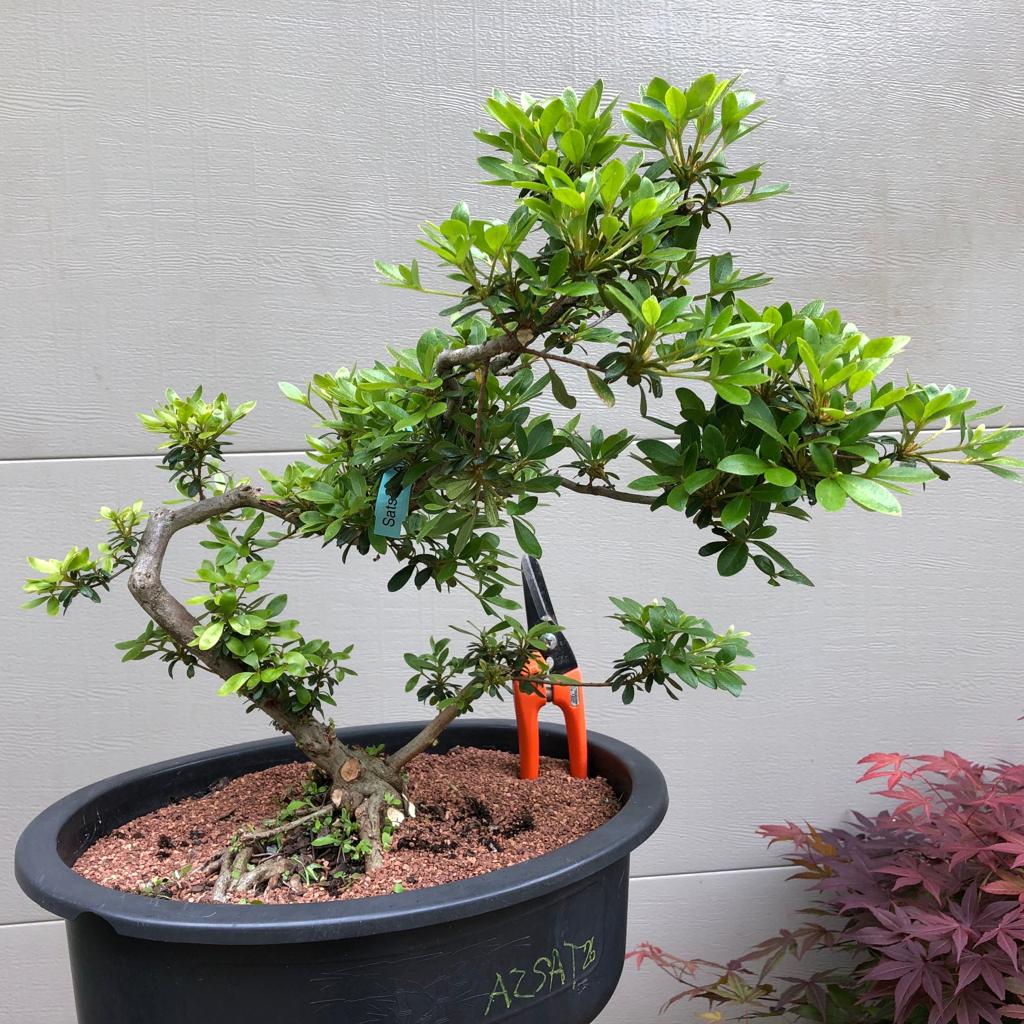
Cuttings are one of the most useful approaches to rhododendron bonsai propagation, particularly when you want a new plant with the same characteristics as the parent.
A healthy shoot is removed and prepared for rooting in a suitable propagation medium. Removing some lower foliage provides space for planting while reducing unnecessary leaf mass. Depending on the rhododendron and growing conditions, growers may also use rooting hormone to encourage root development.
Humidity is particularly important while the cutting lacks an established root system. The growing medium should remain appropriately moist without becoming permanently waterlogged.
Growing Rhododendron Bonsai from Seed
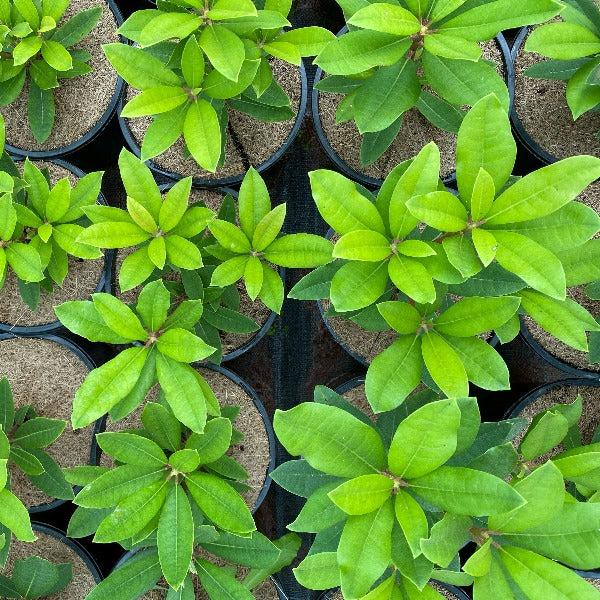
Seed propagation offers a completely different experience.
Unlike cuttings, seedlings are not clones of the parent plant. This introduces genetic variation, meaning individual plants can develop somewhat differently. It also requires considerably more patience before you have substantial material to work with.
For bonsai enthusiasts, however, that patience comes with an advantage. Starting from seed gives you control over development from the earliest stages, including root work, trunk movement and eventual branch selection.
Growing from seed can therefore be particularly rewarding for anyone who enjoys the long-term developmental side of bonsai.
Rhododendron Bonsai Propagation Through Layering
Layering allows roots to develop while the selected section remains connected to the parent plant.
Depending on the plant and situation, a lower branch may be encouraged to root where it contacts a suitable growing medium. Once a sufficient root system has developed, the rooted section can be separated and grown independently.
Air layering applies a similar principle higher on the plant. Roots are encouraged to develop around a selected portion of a branch or trunk before it is eventually separated.
For rhododendron bonsai propagation, layering can be particularly interesting because you may be able to select an existing section with useful movement, branching or trunk character.
Choosing Material with Bonsai Potential
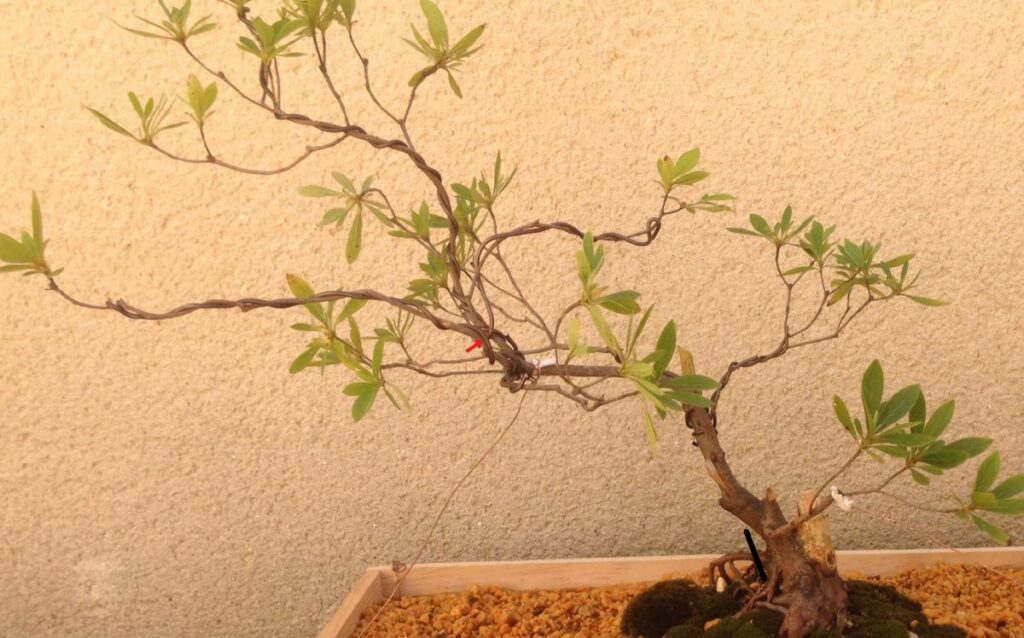
Successfully producing a new rhododendron is only the beginning. If your ultimate objective is bonsai, you should start considering the future tree while the plant is still young.
Strong roots, healthy growth and good vigour should initially take priority over creating a miniature tree. Young plants need enough foliage to generate energy and enough unrestricted growth to develop trunks and root systems.
However, early development can still influence the future bonsai. Depending on your goals, you can consider trunk movement, low branching and how the roots develop around the base.
This is where propagation becomes particularly exciting: you’re not merely creating another plant. You’re creating potential bonsai material.
Caring for Newly Propagated Rhododendrons
Newly rooted plants are more vulnerable than established rhododendrons.
Fresh cuttings and layers need time to establish functioning root systems before being subjected to aggressive bonsai techniques. Seedlings similarly need an opportunity to develop sufficient strength before substantial pruning or wiring begins.
Careful watering is essential. The growing medium should provide both moisture and aeration, while young roots should be protected from extremes. Suitable light without excessive stress can help new growth establish.
Most importantly, resist the temptation to begin styling too quickly. Propagation comes before bonsai training.
When Should Bonsai Training Begin?
There isn’t a single age at which every propagated rhododendron suddenly becomes ready for bonsai work.
Development depends on the propagation method, growth rate, species or cultivar, climate and the strength of the individual plant. A layered branch may already possess substantial woody structure, while a seedling starts virtually from scratch.
Once the plant is growing vigorously and has established a healthy root system, you can gradually begin making decisions about its future structure.
Early bonsai development should still prioritise building the tree rather than constantly restricting it.
Creating Your Own Rhododendron Bonsai
Rhododendron bonsai propagation requires patience, but that patience is part of its appeal.
Cuttings provide an accessible way to reproduce desirable plants. Seeds allow you to experience development from the very beginning, while layering can potentially transform an existing branch or trunk section into promising bonsai material.
Whichever method you choose, don’t rush the young plant into becoming a bonsai. Give it the opportunity to establish roots, build strength and develop healthy growth first.
Years later, when you’re looking at a flowering rhododendron bonsai that began as a tiny cutting, seedling or rooted branch, you’ll know the history of that tree from its very first roots.