
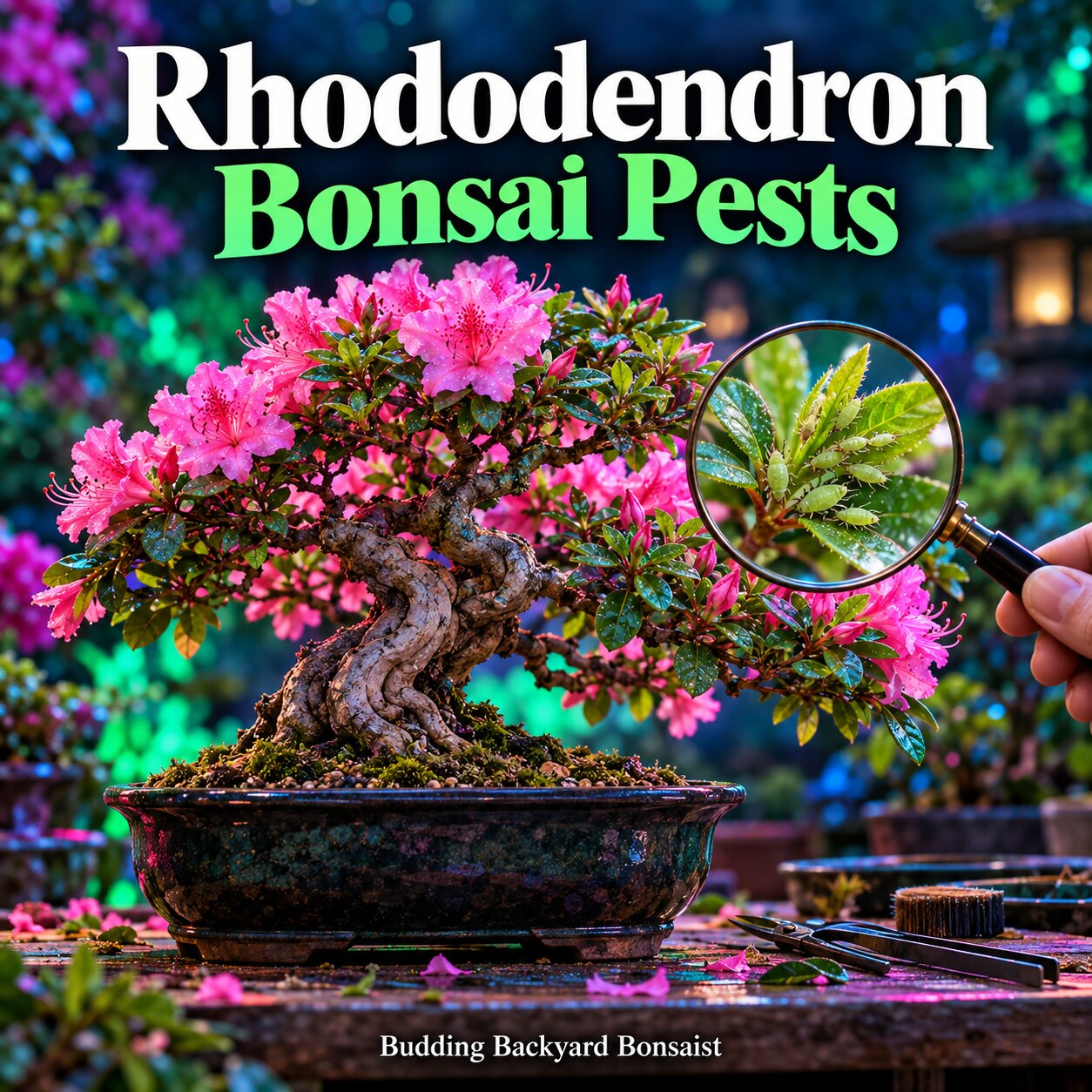
Rhododendron bonsai pests can damage tender shoots, mark attractive foliage and, in some cases, attack roots beneath the soil. Spotting the early signs gives you a better chance of managing a problem before it affects your tree’s growth or flowering display.
Azaleas belong to the Rhododendron genus, making this guidance relevant to many flowering bonsai collections. However, the pests you encounter will depend on your location, growing conditions and plant variety. At Budding Backyard Bonsaist, we recommend starting with careful observation and identifying the culprit before choosing a treatment.
Aphids on Tender New Growth
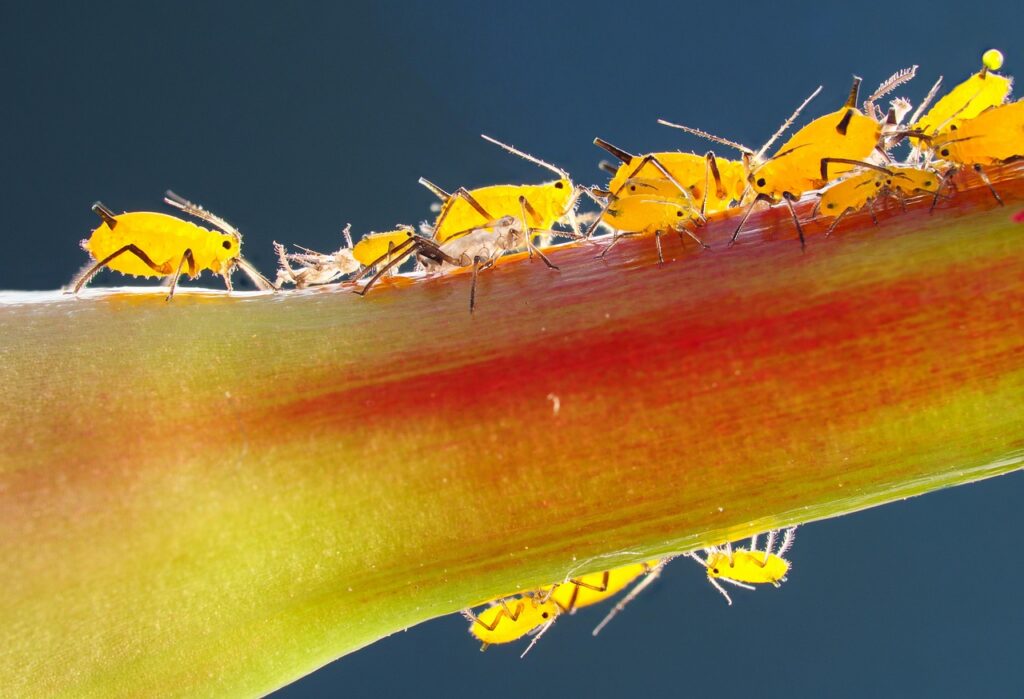
Aphids are among the rhododendron bonsai pests worth checking for when fresh shoots emerge. These small, soft-bodied insects often gather around growing tips, young leaves and flower buds, where they feed on sap. The RHS lists aphids among the potential pests of Rhododendron indicum, a species used for azalea bonsai.
Look closely at curled or distorted new growth rather than assuming the tree simply needs more fertiliser. Visible insect clusters, pale shed skins and sticky honeydew can help reveal an infestation. Check neighbouring shoots too, as a quick glance at the outer canopy may miss sheltered colonies.
For a small infestation, gently removing the insects or dislodging them with a controlled stream of water may be enough. Support delicate branches and avoid washing loose substrate out of the pot. Recheck the tree afterwards rather than assuming one intervention has solved the problem.
Scale Insects Along Stems and Leaves
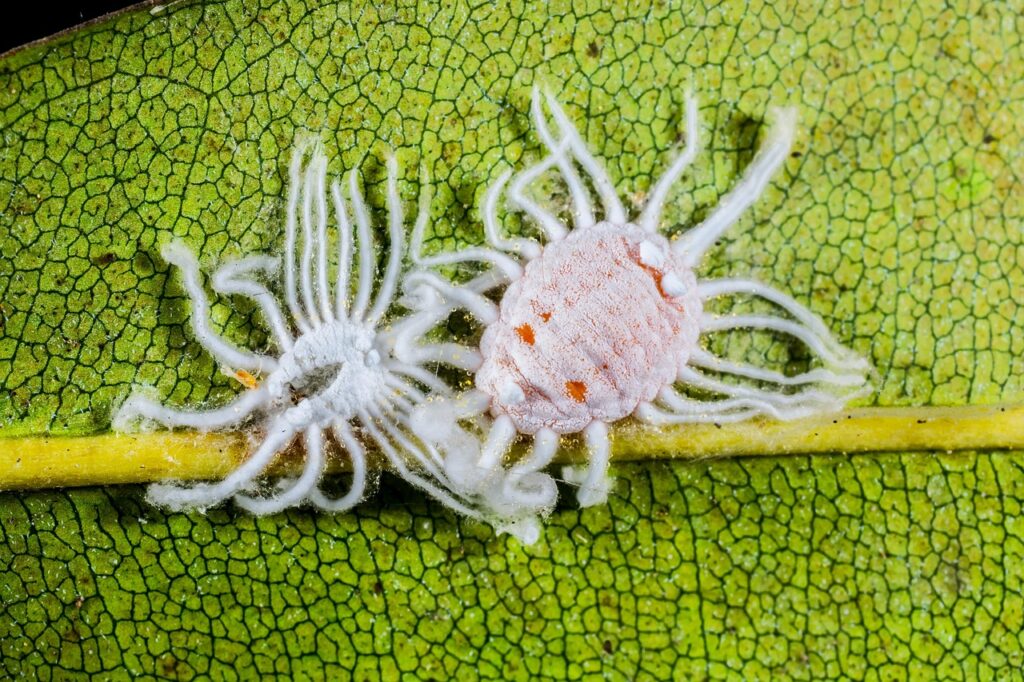
Scale insects can be easy to overlook because they often resemble small bumps attached to stems or foliage. Some produce conspicuous white, waxy coverings, while others blend into the bark. Rhododendrons are recognised hosts for scale insects.
These rhododendron bonsai pests deserve close inspection around branch junctions and leaf undersides. Depending on the species, you may notice honeydew or reduced vigour. A hand lens can help distinguish insects from ordinary bark features.
Where only a few are present, careful manual removal may be practical on a small bonsai. Avoid scraping tender bark or damaging buds. Heavy infestations require a more thorough approach because removing visible adults may leave younger stages behind. Natural predators can also help limit populations.
Lace Bugs and Thrips on the Foliage
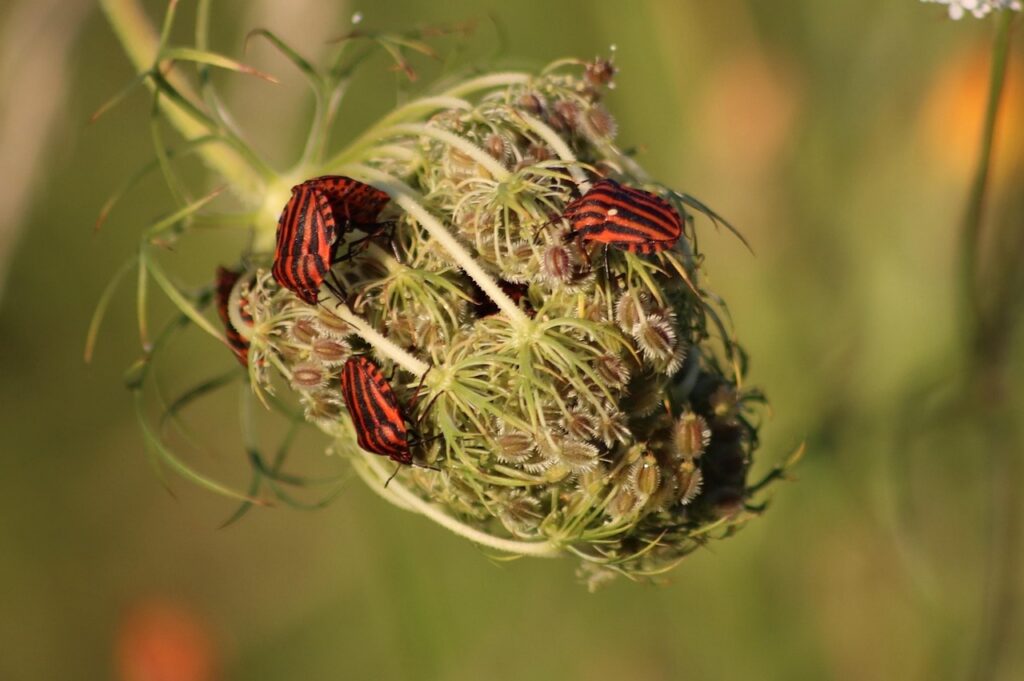
Lace bugs feed from the undersides of leaves, leaving pale spotting visible above. Dark deposits underneath provide another useful clue, alongside the insects themselves. Adult lace bugs have distinctive patterned wings, while immature stages look different.
Thrips can also damage rhododendron foliage. Greenhouse thrips, for example, feed on plants including azaleas and rhododendrons, causing bleached areas with dark droppings. Similar-looking damage is one reason to confirm which rhododendron bonsai pests are present before acting.
Turn affected leaves over and inspect several parts of the canopy. Photographing the insects through a hand lens can help when seeking identification. Damaged leaves will not necessarily regain their original appearance, so judge progress by pest activity and the condition of subsequent growth.
Spider Mites and Fine Leaf Stippling
Spider mites are tiny arachnids rather than insects, but they belong on your rhododendron bonsai pests checklist. Feeding can produce fine pale stippling, and some infestations develop delicate webbing. Hot, dry, dusty conditions favour certain pest mite species.
Holding white paper beneath a branch and gently tapping the foliage can help reveal moving specks. Use magnification to investigate further: not every mite is harmful, and beneficial predatory mites may also be present.
Avoid reaching automatically for a broad-spectrum insecticide. Some insecticides kill mite predators without effectively controlling spider mites, allowing the problem to worsen. Correct identification and a targeted response are particularly important here.
Vine Weevils and Other Chewing Visitors
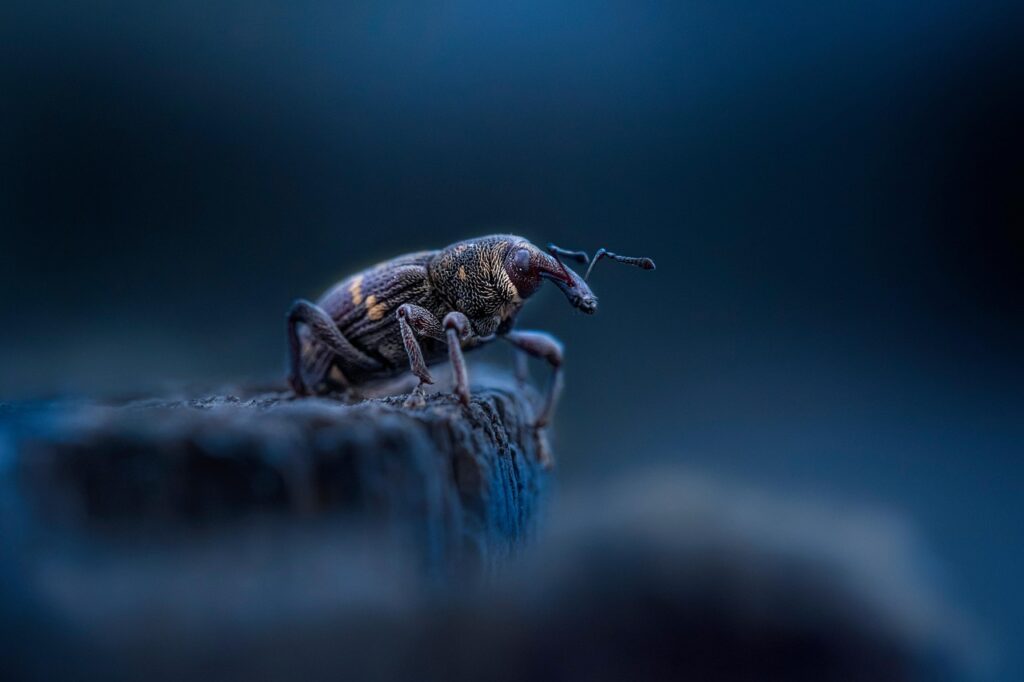
Vine weevils can affect container-grown rhododendrons where these beetles occur. Adults leave irregular notches along leaf edges and are usually active after dark. Their larvae feed on roots, making the hidden stage potentially more serious than the visible leaf damage.
Among rhododendron bonsai pests, root-feeding larvae warrant particular attention because the tree depends on a restricted root system. Vine weevil larvae are creamy-white, curved and legless, with brown heads. However, leaf notches alone do not prove that larvae are present.
Inspect after dark for adults and remove confirmed beetles where practical. Suitable biological controls may be available for larvae, but their effectiveness depends on the organism, substrate conditions and application instructions. Use local guidance rather than copying overseas treatment calendars. Caterpillars and other chewing visitors should likewise be identified before removal.
Build Pest Checks into Your Bonsai Routine
Managing rhododendron bonsai pests is easier when inspection becomes part of regular care. A short check while watering can reveal changes before substantial damage develops.
Use this simple routine:
- Inspect fresh shoots, branch junctions and leaf undersides.
- Check new plants separately before placing them beside established bonsai.
- Look for live pests alongside damage, honeydew or droppings.
- Record what you find and recheck after any intervention.
- Choose treatments labelled for the identified pest and suitable ornamental plants.
- Follow application directions and protect visiting pollinators.
Avoid treating every blemish as an active infestation. If a spray is needed, check plant sensitivity and follow any label instructions for testing a small area first. Your goal is to manage rhododendron bonsai pests while preserving the foliage, roots and developing branches that make your miniature tree special.