
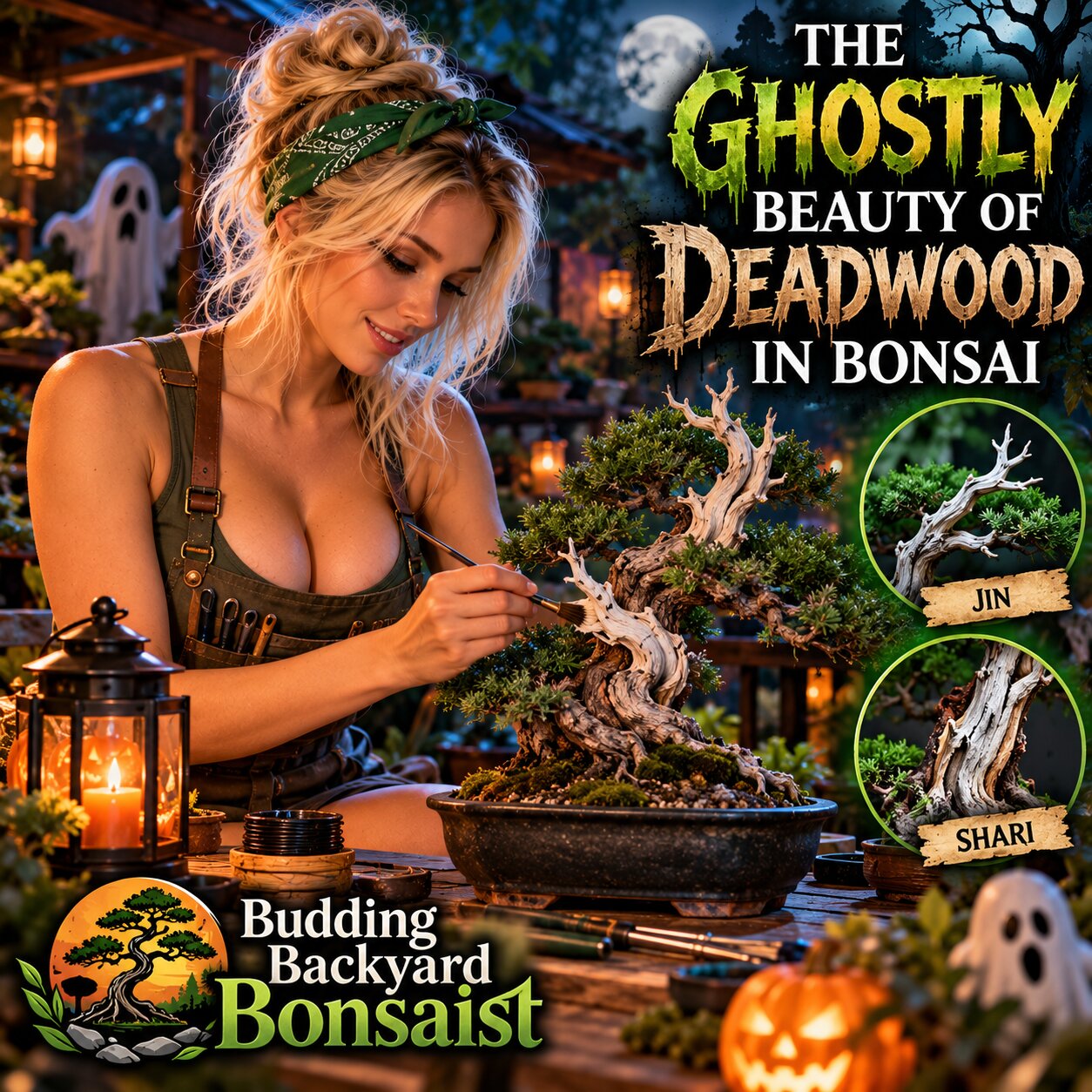
Bonsai enthusiasts often celebrate lush foliage, delicate branching and vibrant seasonal colours. However, some of the most dramatic bonsai designs incorporate something that initially appears undesirable: deadwood. Weathered branches and exposed sections of lifeless trunk can transform a miniature tree into a powerful representation of age, survival and natural hardship.
Two traditional techniques, known as jin and shari, allow bonsai artists to recreate the appearance of trees that have endured difficult environmental conditions. With Halloween approaching, these ghostly features offer an especially interesting perspective on bonsai aesthetics.
Understanding Jin and Shari


Jin refers to dead branches or branch remnants that have been deliberately preserved as part of a bonsai design. These features can resemble branches damaged by storms, lightning, drought or other natural events.
Shari describes exposed deadwood along the trunk of a living tree. This technique creates a striking contrast between living tissue and weathered wood, suggesting that the tree has survived significant hardship.
Both techniques are particularly associated with species such as junipers, which can develop dramatic deadwood features in their natural environments.
Creating the Appearance of Ancient Trees
Deadwood techniques help communicate the passage of time. A relatively young bonsai can appear considerably older when its design incorporates carefully positioned weathered branches and exposed trunk sections.
However, convincing deadwood requires thoughtful placement. Randomly stripping bark or removing branches rarely produces a natural appearance. Bonsai artists study how trees respond to environmental damage before attempting to recreate those effects.
The surrounding foliage also plays an important role. Healthy green growth contrasts beautifully with pale deadwood, emphasising the tree’s continued survival despite its apparent injuries.
Caring for Bonsai Deadwood
Deadwood requires appropriate maintenance to preserve its appearance and structural integrity. Some enthusiasts use lime sulphur treatments to help protect and whiten suitable deadwood, although application methods vary between species and growing conditions.
Care must be taken to avoid damaging living tissue, and chemical treatments should only be applied with appropriate safety precautions. Not every bonsai species responds well to extensive deadwood work, particularly those whose exposed wood deteriorates quickly.
Beginners should therefore research their chosen species before attempting jin or shari techniques.
Beauty Beyond Living Branches
The beauty of bonsai lies in its ability to capture the character of mature trees within a miniature landscape. Deadwood adds another dimension by telling stories of adversity, endurance and survival.
Although jin and shari can give bonsai a ghostly appearance, their purpose extends far beyond Halloween aesthetics. They celebrate the remarkable resilience of trees and the beauty that can emerge from natural hardship.