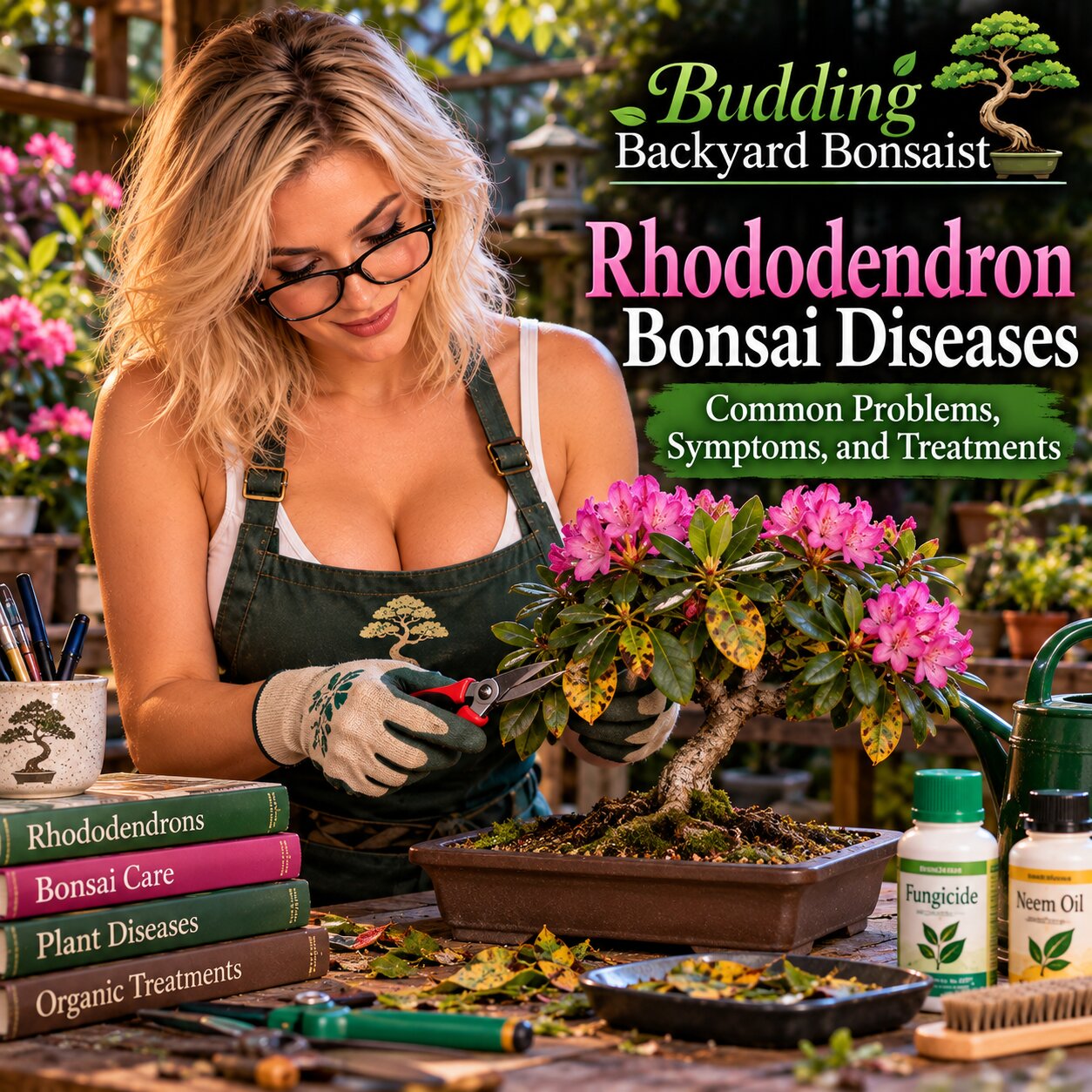
Rhododendrons are popular ornamental plants admired for their attractive foliage and spectacular flowers. When cultivated as bonsai, they offer enthusiasts an opportunity to create miniature landscapes featuring delicate blooms and carefully shaped branches. However, maintaining healthy rhododendron bonsai requires attention to several diseases that can affect their leaves, roots, and overall vitality.
Because bonsai grow in relatively small containers, problems involving moisture, drainage, and root health can develop quickly. Recognising early symptoms and understanding the conditions that encourage disease can help growers protect their trees before serious damage occurs.
Why Rhododendron Bonsai Can Develop Diseases

Rhododendrons generally prefer acidic, well-draining growing media that retain sufficient moisture without becoming waterlogged. Their fine root systems can be sensitive to poor aeration, excessive heat, and unsuitable soil conditions.
When grown as bonsai, these requirements become particularly important because the limited growing medium offers less protection against rapid changes in moisture and temperature.
Fungal pathogens and fungus-like organisms may take advantage of weakened plants or favourable environmental conditions. Prolonged leaf wetness, poor airflow, contaminated growing media, and excessive watering can increase the likelihood of certain diseases.
However, not every brown leaf or wilting branch indicates rhododendron bonsai diseases. Nutrient deficiencies, sun damage, drought stress, and unsuitable soil pH can produce similar symptoms.
Five Rhododendron Bonsai Diseases to Watch For
Several rhododendron bonsai diseases can affect rhododendrons, although their frequency and severity vary according to local conditions and the species or cultivar being grown:
- Phytophthora root rot: Often associated with poorly drained conditions, this disease can cause root deterioration, wilting, and progressive branch dieback.
- Fungal leaf spot diseases: Various fungi can produce brown, reddish, or dark lesions on leaves, sometimes causing premature leaf loss.
- Powdery mildew: Certain fungi create pale or powdery growth on susceptible foliage, occasionally accompanied by discolouration or distortion.
- Botrytis blight: This fungal disease can damage flowers and tender plant tissues, particularly during humid conditions.
- Rhododendron bud blast: Associated with fungal infection, this condition can cause flower buds to turn brown and fail to open.
Accurate identification is important because different diseases require different management approaches. Symptoms alone may not always reveal the responsible organism.
Recognising and Managing Phytophthora Root Rot
Phytophthora root rot is among the more serious rhododendron bonsai diseases that can affect rhododendrons. Although commonly described alongside fungal diseases, Phytophthora organisms belong to a separate group known as oomycetes.
Infected plants may develop dull foliage, wilting, yellowing leaves, and progressive dieback. These symptoms can resemble drought stress even when the growing medium remains wet.
Root examination may reveal darkened, deteriorating tissues rather than healthy, firm roots. However, diagnosis can be difficult because other conditions, including prolonged waterlogging without infection, may cause similar damage.

Prevention is especially important. Growers should use suitable acidic bonsai media, ensure containers drain effectively, and avoid leaving pots standing in water.
Severely affected plants may be difficult to recover from rhododendron bonsai diseases. Suspected infections should be isolated, and professional diagnostic advice may be necessary before attempting treatment. Reusing contaminated growing media or inadequately cleaned containers can increase the risk of spreading certain pathogens.
Treating Leaf Spots and Powdery Mildew
Leaf spot diseases often appear as small discoloured areas that gradually enlarge or develop darker margins. Some affected leaves may yellow or fall prematurely, particularly when infection becomes extensive.
Removing badly affected fallen leaves and improving airflow can help reduce conditions favourable to certain pathogens. Watering methods that minimise unnecessary leaf wetness may also be beneficial.
Powdery mildew can appear as pale or powdery fungal growth, although symptoms differ between rhododendron varieties and may include leaf discolouration without conspicuous white patches.
Management usually begins with improving growing conditions and removing severely affected material where appropriate. Chemical treatments should only be considered after identifying the problem and confirming that a product is registered for the intended use.
South African growers should follow local product labels and avoid applying unsuitable treatments to sensitive foliage infected with horrid rhododendron bonsai diseases.
Protecting Flowers and Developing Buds
Rhododendrons are particularly valued for their flowers, making diseases affecting blooms especially disappointing.
Botrytis blight can cause spotting, browning, and deterioration of flowers, particularly during prolonged damp weather. Removing spent or infected flowers promptly may reduce the amount of affected material remaining around the plant.
Bud blast can cause developing flower buds to brown and fail to open. The condition has been associated with fungal pathogens and, in some circumstances, insect activity. However, failed buds may also result from environmental stress, so careful diagnosis is necessary.
Maintaining good airflow, avoiding prolonged moisture around flowers, and monitoring developing buds can help growers identify problems early.
Preventing Disease Through Better Bonsai Care
Healthy growing conditions provide the foundation for disease prevention. Rhododendron bonsai generally benefit from appropriate light exposure, protection against extreme heat, and growing media that support both moisture retention and root aeration.
Watering should respond to the condition of the growing medium rather than following a rigid daily schedule. During warm South African weather, shallow bonsai containers may dry rapidly, while cooler or wetter conditions can reduce water requirements.
Clean pruning tools, suitable potting materials, and careful inspection of newly acquired plants can further reduce disease risks.
Growers should also monitor soil acidity, as rhododendrons require conditions that allow their roots to absorb essential nutrients effectively.
Keeping Your Rhododendron Bonsai Healthy
Rhododendron diseases can be frustrating, particularly when they threaten a tree that has taken years to develop. Fortunately, attentive care and early recognition of unusual symptoms can reduce the likelihood of serious damage.
The most important lesson is to investigate the underlying cause rather than immediately applying treatments. A struggling rhododendron may need improved drainage, adjusted watering, better environmental conditions, or targeted disease management.
A healthy rhododendron bonsai begins with healthy roots, suitable growing conditions, and a grower who knows when something isn’t quite right.