
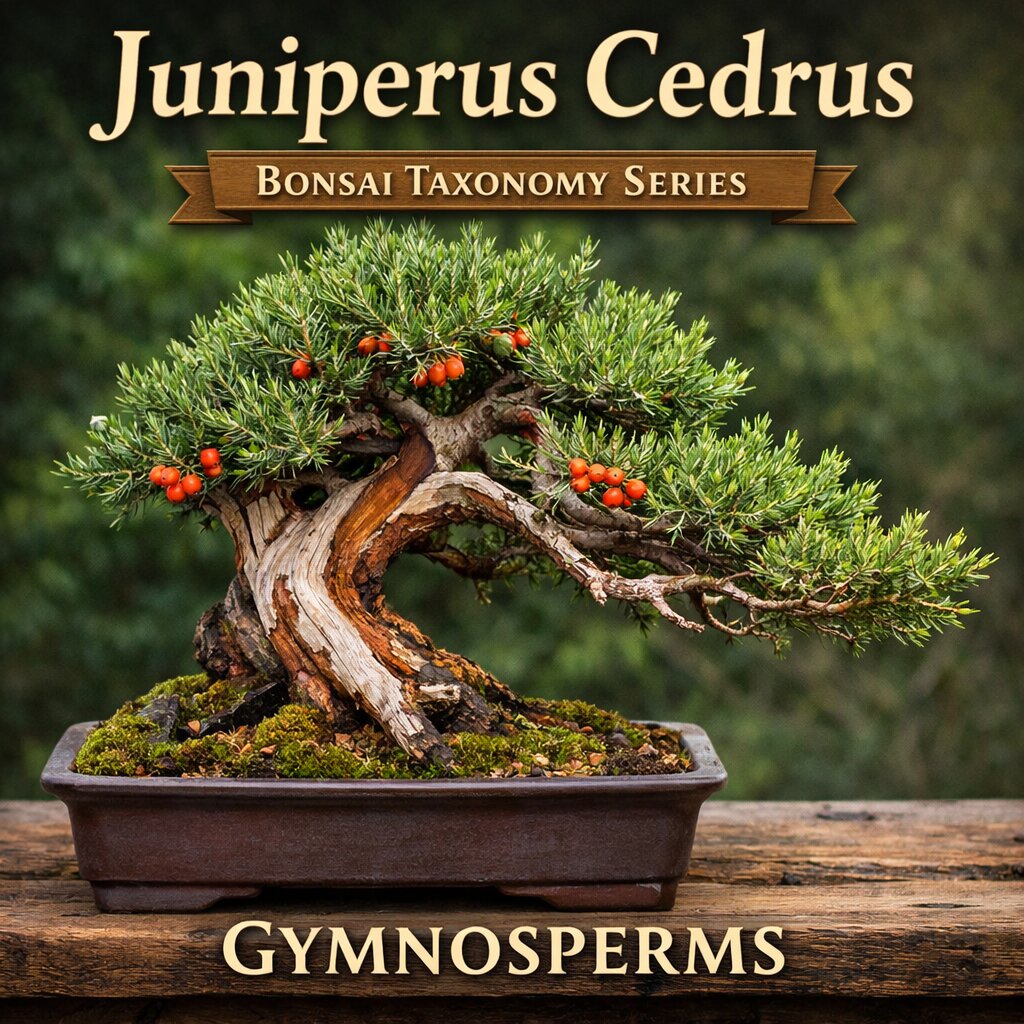
Juniperus cedrus is one of the most distinctive and geographically isolated members of the genus Juniperus. Commonly known as the Canary Islands juniper or cedro Canario, this high-altitude conifer is endemic to the western Canary Islands and Madeira, where it survives in fragmented mountain populations. Classified within Juniperus sect. Juniperus and Juniperus subsect. Oxycedrus, it shares close evolutionary ties with Mediterranean and Macaronesian junipers while maintaining unique ecological adaptations.
This species is particularly significant from a taxonomic perspective. Its morphology, cone structure, foliage characteristics, and phytochemical profile distinguish it clearly from its close relatives such as Juniperus oxycedrus and Juniperus brevifolia. At the same time, its isolated island distribution has contributed to subtle divergence patterns that continue to interest botanists and conservationists.
Beyond taxonomy, Juniperus cedrus carries ecological and cultural importance. Historically valued for its durable, aromatic timber, it was heavily exploited and is now classified as Endangered. Today, it represents both a conservation priority and an important reference species within the Oxycedrus lineage. In this guide, we explore its classification, morphology, reproductive biology, ecological adaptations, and its place within the broader evolutionary framework of the genus Juniperus.
Table of Contents
Taxonomy
– Kingdom: Plantae (Plant Kingdom)
— Clade: Embryophytes (Land Plants)
— Clade: Polysporangiophytes (Multiple Sporangia)
—- Clade: Tracheophytes (Vascular Plants)
—– Superdivision: Spermatophytes (Seed Plants)
—— Clade: Gymnospermae (Naked Seeds)
——- Division: Pinophyta (Conifers)
——– Class: Pinopsida (Living Conifers)
——— Subclass: Cupressidae (Evergreen Conifers)
———- Order: Cupressales (Cypress)
———– Family: Cupressaceae (Cypress)
———— Subfamily: Cupressoideae (Cypress)
————- Genus: Juniperus (Juniper)
————– Section: Juniperus (Common Junipers)
————— Subsection: Oxycedrus (Mediterranean Junipers)
—————- Species: Juniperus cedrus (Canary Islands Juniper)
What is Juniperus cedrus?
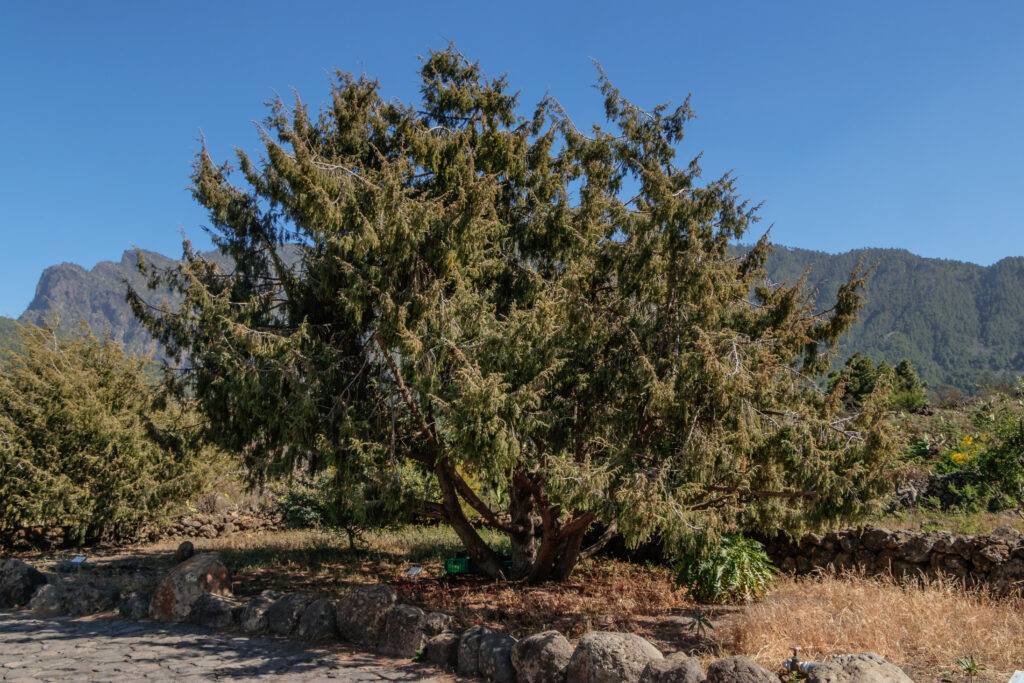
Juniperus cedrus is an endangered evergreen conifer species native to the high mountain regions of the Canary Islands and Madeira. Commonly known as the Canary Islands juniper or cedro Canario, it is a member of the cypress family (Cupressaceae) and belongs to Juniperus sect. Juniperus, Juniperus subsect. Oxycedrus. It is closely related to Mediterranean species such as Juniperus oxycedrus and the Azorean Juniperus brevifolia.
Unlike many lowland junipers, Juniperus cedrus is primarily a high-altitude species, occurring between approximately 500 and 2,400 metres above sea level. It inhabits dry volcanic slopes, exposed ridgelines, and transitional zones near laurel forests. Its ability to tolerate strong winds, intense sunlight, and nutrient-poor soils makes it highly specialised to Macaronesian mountain ecosystems.
Botanically, it is typically a large shrub or small tree, though historical records indicate it once reached much greater heights before widespread exploitation. The species is easily recognised by its needle-like leaves arranged in whorls of three and its orange-red, berry-like seed cones. These cones play a vital ecological role, serving as a food source for birds that disperse the seeds across fragmented landscapes.
Today, Juniperus cedrus is regarded as a relict species, representing an important evolutionary lineage within the western Mediterranean and Macaronesian junipers. Its restricted distribution and historical overharvesting have made it a key subject in conservation biology, island biogeography, and conifer taxonomy.
Taxonomic Classification of Juniperus cedrus
Juniperus cedrus belongs to the genus Juniperus within the family Cupressaceae, one of the most widespread and evolutionarily diverse conifer families in the Northern Hemisphere. Within the genus, it is placed in Juniperus sect. Juniperus and more specifically in Juniperus subsect. Oxycedrus, a group characterised by needle-like leaves arranged in whorls of three and berry-like seed cones.
Its placement in the Oxycedrus lineage reflects strong morphological similarities with Juniperus oxycedrus, the Mediterranean prickly juniper. Both species share rigid, sharp, linear needles with distinct stomatal banding and similar cone structures. However, Juniperus cedrus diverges in cone size, colour development, ecological niche, and certain phytochemical properties, supporting its recognition as a distinct species rather than a regional variant.
Taxonomically, Juniperus cedrus forms part of a Macaronesian juniper group that includes Juniperus brevifolia of the Azores and the Madeiran subspecies often treated as J. cedrus subsp. maderensis. These island taxa provide an interesting case study in allopatric speciation, where geographic isolation across Atlantic archipelagos has driven subtle but consistent evolutionary divergence.
Modern phylogenetic analyses, including chemical profiling of essential oils and molecular studies, reinforce its classification within the Oxycedrus complex while confirming its genetic distinctiveness. Its essential oil composition, notably the presence of thujopsene in significant concentrations within the heartwood, further supports taxonomic separation from its Mediterranean relatives.
Overall, the classification of Juniperus cedrus illustrates how morphological, ecological, and biochemical evidence combine in conifer taxonomy. It stands as a clear example of island-driven divergence within a broader Mediterranean lineage, maintaining both ancestral characteristics and regionally adapted traits.
Botanical Description and Diagnostic Identifying Characteristics
Accurate identification of Juniperus cedrus relies on a combination of foliage structure, cone morphology, bark texture, and overall growth form. As a member of Juniperus subsect. Oxycedrus, it shares several traits with related species, yet possesses distinctive characteristics that allow it to be separated from Juniperus oxycedrus and other Mediterranean junipers.
In the wild, especially at higher elevations in the Canary Islands and Madeira, environmental stress can alter size and crown shape. Therefore, diagnostic identification is best based on structural features rather than overall stature alone.
Overall Growth Form and Crown Structure
Juniperus cedrus typically develops as a large shrub or small tree, usually reaching between 5 and 20 metres in height. Historical accounts suggest that much taller specimens once existed before widespread exploitation, but today large individuals are rare and often confined to inaccessible cliffs.
The trunk is generally straight, with branching occurring higher up in more mature specimens. Younger plants may appear compact and dense, while older trees develop a more open, irregular crown. Wind exposure at high altitudes often produces sculpted, asymmetrical forms shaped by persistent mountain conditions.
Bark Characteristics
The bark of Juniperus cedrus is one of its most recognisable features. It is orange-brown to reddish-brown in colour and peels in coarse vertical strips or fibrous bands as the tree matures.
This fibrous, shredding bark distinguishes it from some related species with greyer or less intensely coloured bark. In older trees, the trunk can appear deeply textured, contributing to its rugged, ancient appearance in natural mountain habitats.
Leaf Arrangement and Needle Structure
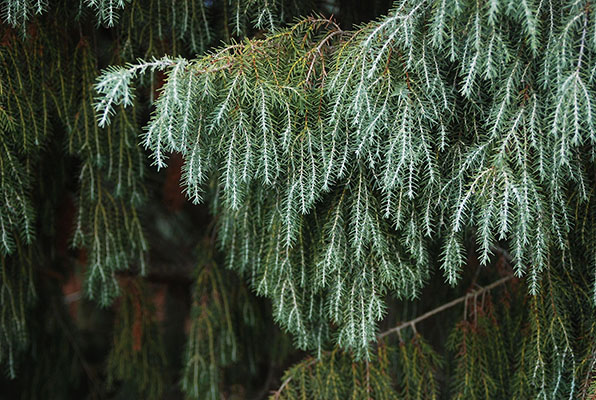
The foliage consists of rigid, needle-like leaves arranged in whorls of three, a defining characteristic of species within the Oxycedrus group. The needles are typically 8–23 mm long and about 1–2 mm wide.
Each needle displays a distinctive double white stomatal band on the inner surface, separated by a narrow green midrib. This split banding pattern is a key diagnostic feature. The outer surface remains green to glaucous-green, giving the foliage a slightly bluish cast in certain light conditions.
Compared to Juniperus oxycedrus, the needles of Juniperus cedrus are often somewhat broader and may appear slightly less sharply pungent, though still rigid and pointed.
Cone Morphology and Colour Development
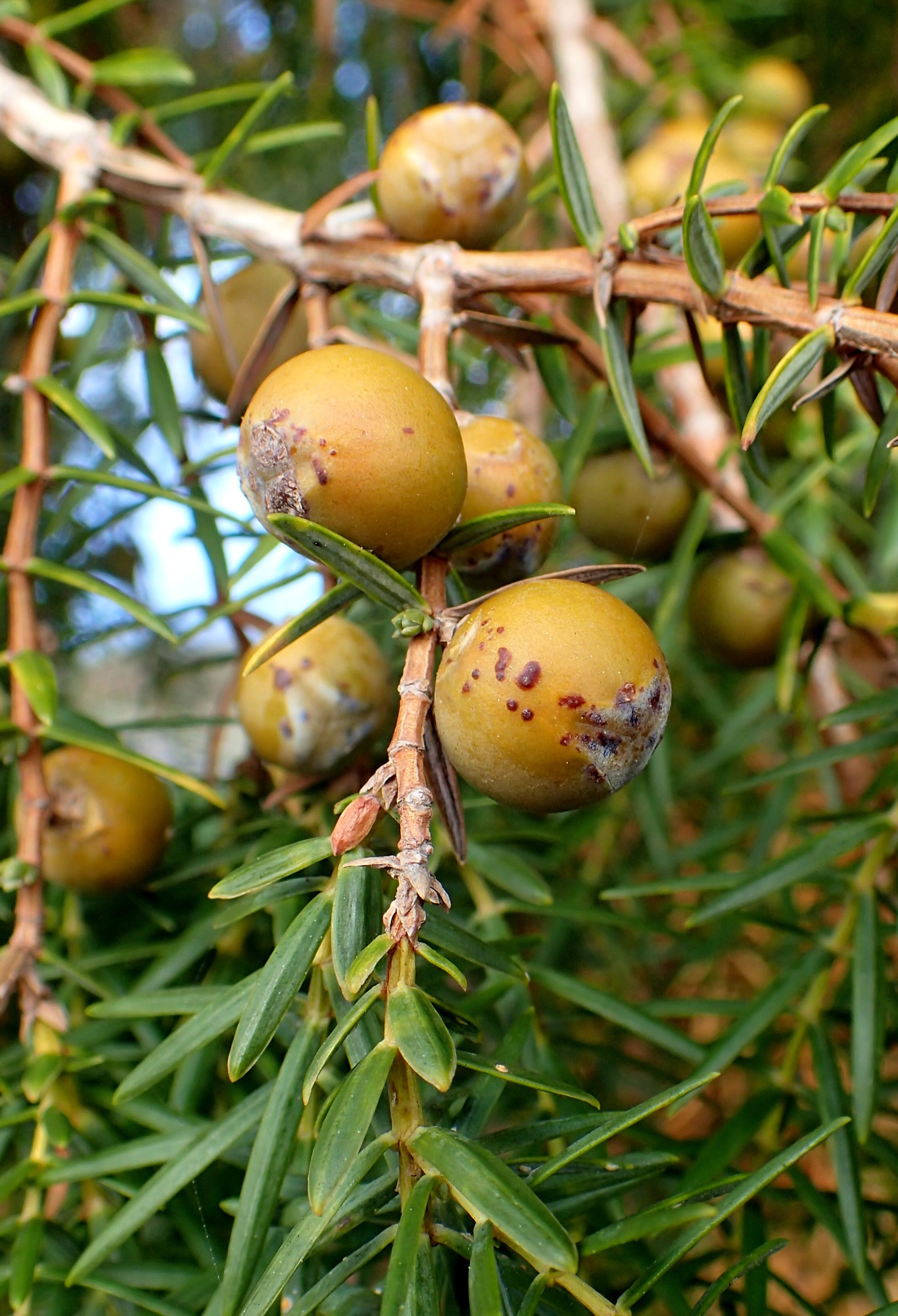
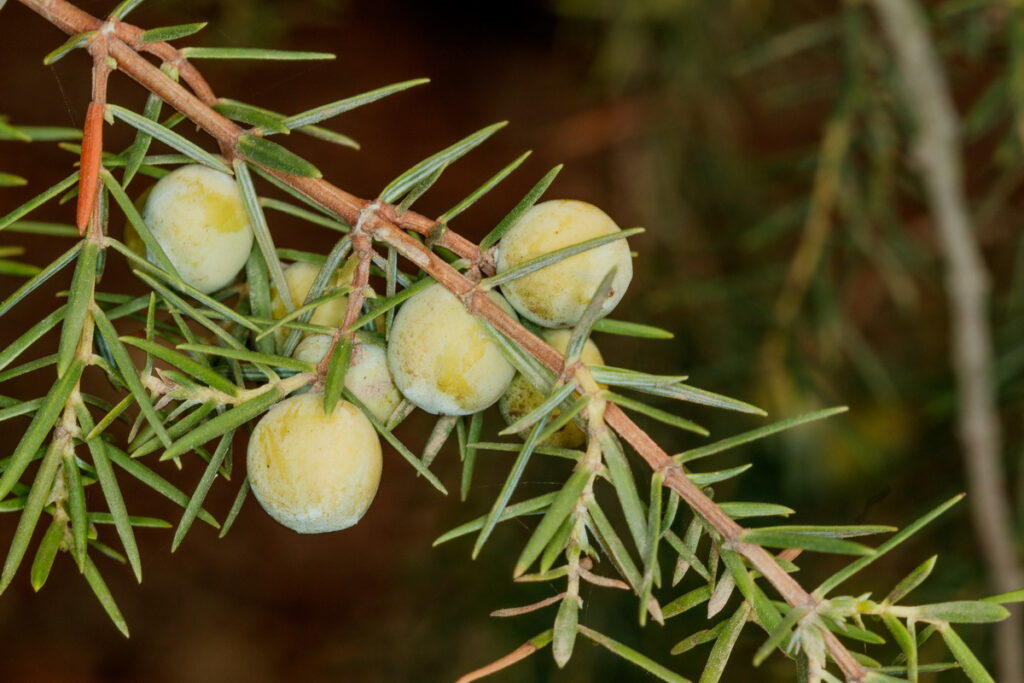
The female seed cones are berry-like, spherical, and measure approximately 8–15 mm in diameter. They begin green and mature over approximately 18 months to a distinctive orange-red colour, often with a subtle pinkish or waxy bloom.
Each cone consists of six fused scales arranged in two whorls of three. The three larger scales each contain a single seed. This structure is typical of the subsection but the mature orange-red colouring is particularly characteristic of Juniperus cedrus.
Male cones are much smaller, yellowish in colour, and measure around 2–3 mm in length. They release pollen in late winter to early spring, typically between February and March, after which they fall quickly.
Together, the combination of orange-brown peeling bark, whorled needle leaves with double white stomatal bands, and orange-red mature cones provides a reliable set of diagnostic identifying characteristics for Juniperus cedrus.
Growth Habit, Size Variation, and Longevity
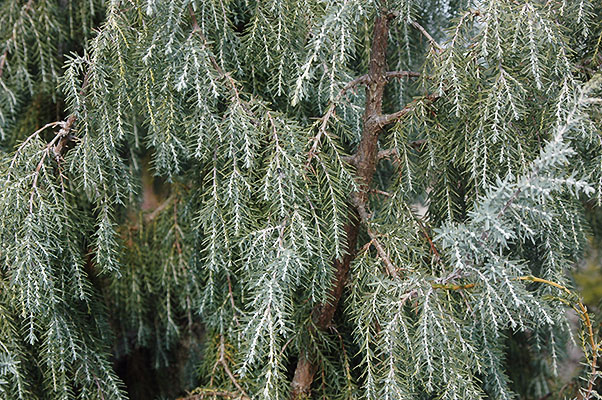
The growth habit of Juniperus cedrus reflects its adaptation to exposed, high-altitude island environments. Unlike lowland junipers that may form dense woodland stands, this species often grows in scattered, isolated individuals or small fragmented populations. Environmental pressure, historic exploitation, and limited regeneration have all influenced its present-day structure and stature.
Understanding the growth dynamics of Juniperus cedrus requires examining both its natural form and the ecological constraints that shape its development across elevation gradients in the Canary Islands and Madeira.
Natural Growth Form in Mountain Habitats
In favourable conditions, Juniperus cedrus develops into a small to medium-sized tree with a single dominant trunk and a moderately open crown. Mature individuals typically reach heights between 5 and 20 metres, although most surviving wild specimens are now found in the lower end of this range.
At higher elevations, particularly near the timberline, wind exposure and limited soil depth often produce more compact or irregular forms. Persistent trade winds can shape the canopy into asymmetrical or wind-swept silhouettes, a common feature of many Macaronesian highland trees.
In more protected environments, such as transitional zones near laurel forests, the crown may develop more evenly and branching may appear more structured.
Size Variation Across Elevational Range
Size variation in Juniperus cedrus is strongly influenced by altitude, exposure, and soil conditions. The species occurs from approximately 500 to 2,400 metres above sea level, spanning markedly different climatic zones.
At lower elevations, where conditions are slightly milder and soils may be deeper, individuals can achieve greater height and trunk diameter. In contrast, populations at extreme altitudes are often stunted due to cold, drought stress, and shallow volcanic substrates.
Historical accounts suggest that before extensive felling, some specimens may have exceeded 25–30 metres in height. Today, trees over 10 metres are uncommon and are usually confined to inaccessible cliffs where grazing and logging pressures were minimal.
Longevity and Regeneration Patterns
Juniperus cedrus is a long-lived species, typical of many junipers adapted to harsh environments. While precise lifespan data for wild individuals is limited, related species within Juniperus subsect. Oxycedrus can live for several centuries under stable conditions.
Growth is generally slow, particularly in exposed mountain habitats. This slow growth rate, combined with historic overharvesting and grazing by introduced goats, has contributed to limited natural regeneration in some areas.
Regeneration success is highly dependent on bird-mediated seed dispersal and suitable microsites for seedling establishment. In fragmented populations, reduced seedling recruitment can further limit recovery, making longevity an important compensatory trait for population persistence.
Overall, the growth habit and lifespan of Juniperus cedrus reflect a species finely tuned to survival in demanding island mountain ecosystems, yet vulnerable when ecological balance is disrupted.
Foliage Structure, Needle Morphology, and Seasonal Colouration
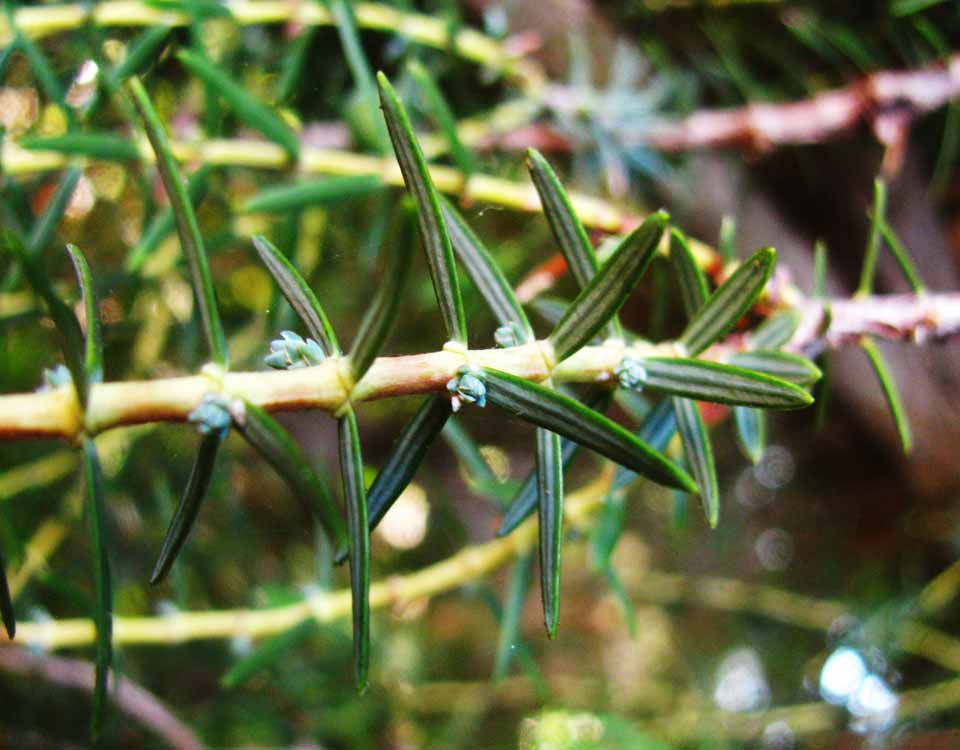
The foliage of Juniperus cedrus is one of its most defining taxonomic features. As a member of Juniperus subsect. Oxycedrus, it retains the characteristic needle-like leaves arranged in whorls of three. These structural traits not only assist in accurate identification but also reflect evolutionary adaptation to high-altitude, drought-prone environments.
Unlike scale-leaved junipers found in other sections of the genus, Juniperus cedrus maintains persistent, rigid needles throughout its life. This foliage type is considered more ancestral within the genus and plays an important role in distinguishing it from other Mediterranean and Macaronesian species.
Needle Arrangement and Structural Features
The leaves of Juniperus cedrus are evergreen, linear, and sharply pointed, arranged in consistent whorls of three around the stem. Each needle typically measures between 8 and 23 millimetres in length and approximately 1–2 millimetres in width.
A key diagnostic feature is the double white stomatal band on the inner surface of the needle. These two pale bands are separated by a narrow green midrib, creating a distinctive split pattern that aids in species identification. The outer surface remains uniformly green to glaucous-green.
The needles are firm and somewhat pungent, though generally slightly less aggressively sharp than those of Juniperus oxycedrus. Their rigidity helps reduce water loss and provides protection against herbivory.
Surface Texture and Physiological Adaptation
The foliage surface is coated with a subtle waxy layer, contributing to its glaucous appearance under certain lighting conditions. This waxy cuticle reduces transpiration and enhances resistance to intense sunlight and drying winds common at higher elevations.
The stomatal banding plays a crucial role in gas exchange while limiting moisture loss. In the exposed volcanic landscapes of the Canary Islands and Madeira, this structural efficiency allows Juniperus cedrus to survive prolonged dry periods.
Compared to related species, the needles may appear slightly broader and more robust, reflecting adaptation to harsher mountain climates rather than Mediterranean coastal conditions.
Seasonal Colour Stability
As an evergreen conifer, Juniperus cedrus does not exhibit dramatic seasonal colour changes. However, subtle tonal shifts can occur depending on environmental stress and altitude.
During periods of drought or extreme exposure, foliage may take on a more bluish or glaucous hue. In cooler or slightly more humid conditions, the green tones may deepen. These variations are environmental responses rather than true seasonal transformations.
The stability of its evergreen foliage ensures year-round photosynthetic activity, a key survival strategy in mountain ecosystems where growing seasons can be variable. This consistent foliage presence also makes the species visually distinctive within its fragmented native habitats.
Together, the whorled needle arrangement, double white stomatal bands, and durable evergreen structure form a reliable identification framework for Juniperus cedrus while highlighting its ecological resilience.
Reproductive Biology, Seed Cones, and Pollination Ecology
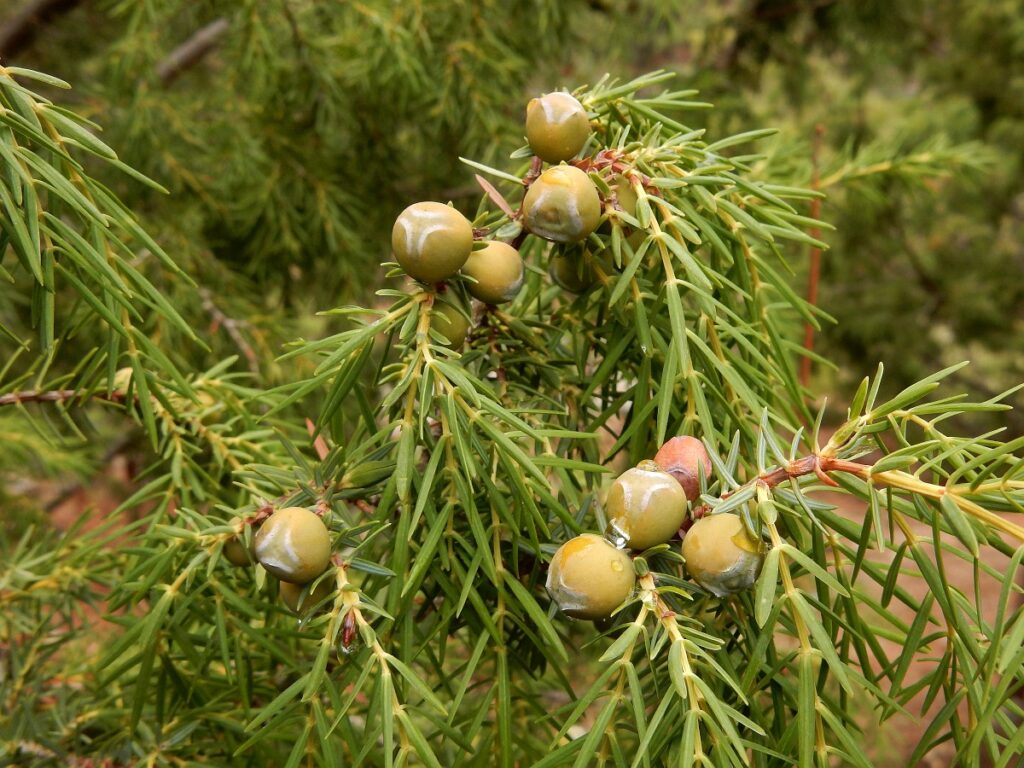
The reproductive biology of Juniperus cedrus reflects both its placement within Juniperus subsect. Oxycedrus and its adaptation to isolated island ecosystems. Like many junipers, it relies on wind pollination and bird-mediated seed dispersal, a combination that allows it to persist across fragmented mountain habitats.
Reproduction in this species is relatively slow and environmentally dependent. Given its endangered status and fragmented populations, understanding its pollination ecology and seed dynamics is essential for conservation and restoration efforts.
Dioecy and Flowering Cycle
Juniperus cedrus is typically dioecious, meaning male and female reproductive structures occur on separate plants. This separation promotes cross-pollination but also makes population density and proximity important factors in successful reproduction.
Male cones are small, yellow to yellow-brown, and measure approximately 2–3 millimetres in length. They release pollen in late winter to early spring, usually between February and March. After shedding pollen, the male cones fall quickly.
Wind carries the pollen to receptive female plants. Because the species often grows in scattered individuals at high altitude, successful fertilisation depends heavily on favourable wind patterns and adequate plant spacing.
Seed Cone Development and Structure
The female cones of Juniperus cedrus are berry-like and spherical, measuring around 8–15 millimetres in diameter. Initially green, they require approximately 18 months to mature, gradually ripening to a distinctive orange-red colour.
Each cone consists of six fused scales arranged in two whorls of three. The three larger scales typically contain one seed each. A slight waxy bloom may develop on mature cones, giving them a pinkish or muted sheen in certain light conditions.
This extended maturation period is characteristic of many junipers and contributes to the species’ relatively slow reproductive turnover. It also means that environmental disturbances during the maturation phase can significantly impact seed production.
Seed Dispersal and Ecological Interactions
Birds play a central role in the reproductive ecology of Juniperus cedrus. The fleshy outer layer of the mature cones attracts frugivorous birds, which consume the cones and later disperse the hard seeds through their droppings.
This bird-mediated dispersal is critical in fragmented island landscapes. It allows seeds to be transported across cliffs, ravines, and volcanic slopes where natural ground-based spread would be limited.
Successful germination depends on suitable microsites with adequate soil depth and moisture. However, historical overgrazing by goats has reduced seedling establishment in some areas by disturbing soil and consuming young plants.
Overall, the reproductive strategy of Juniperus cedrus combines wind pollination with animal-assisted seed dispersal, a system well suited to island mountain ecosystems but vulnerable when ecological balance is disrupted.
Natural Distribution, Altitudinal Range, and Ecological Adaptations
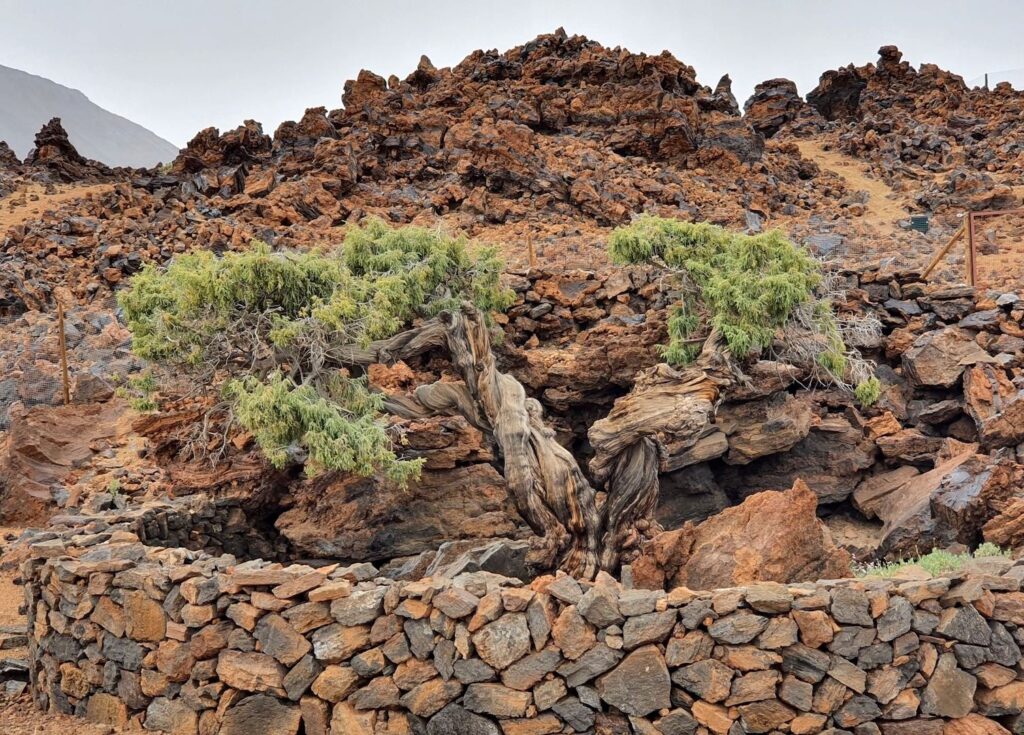
Juniperus cedrus is endemic to the Macaronesian region, specifically the western Canary Islands and Madeira. Its distribution is highly fragmented, with remaining populations concentrated in mountainous interior zones rather than coastal lowlands. This restricted range, combined with historical exploitation, has contributed to its current endangered conservation status.
Unlike many juniper species that occupy broad continental ranges, Juniperus cedrus survives in isolated high-altitude habitats shaped by volcanic geology, strong trade winds, and fluctuating moisture regimes. Its ecological profile reflects long-term adaptation to these demanding island environments.
Geographic Distribution in Macaronesia
Within the Canary Islands, Juniperus cedrus occurs primarily on Tenerife, La Palma, Gran Canaria, and La Gomera. In Madeira, it is represented by populations often treated as Juniperus cedrus subsp. maderensis.
Populations are typically found in remote mountainous areas, frequently within national parks or protected reserves. The species once occupied a broader ecological range, but extensive historical felling for its valuable timber significantly reduced its distribution.
Today, many surviving individuals are confined to cliffs, ravines, and inaccessible slopes where grazing pressure and logging were limited.
Altitudinal Range and Habitat Zones
Juniperus cedrus grows across an altitudinal range of approximately 500 to 2,400 metres above sea level. This broad vertical distribution places it in multiple ecological zones.
At lower elevations, it may occur in transitional woodland areas and semi-arid volcanic slopes. At higher altitudes, particularly near the timberline, it occupies exposed, wind-swept ridges with shallow, well-drained soils.
The species is especially well adapted to alkaline or mineral-rich volcanic substrates. Its tolerance for drought and intense sunlight allows it to persist in dry upland environments where few tree species can survive.
Ecological Adaptations to Mountain Environments
Several structural and physiological traits support the survival of Juniperus cedrus in high-altitude conditions. Its rigid needle leaves reduce water loss and resist desiccation from persistent winds. The waxy cuticle further limits transpiration under intense solar exposure.
The deep-rooting system enables access to moisture in rocky substrates, anchoring the tree securely in unstable volcanic soils. Its slow growth rate, while limiting rapid regeneration, enhances resilience and longevity in nutrient-poor environments.
The species also plays an ecological role within its native habitats. Its cones provide food for birds, supporting seed dispersal and contributing to local biodiversity. In some areas, remnant juniper stands form part of relict forest systems that once covered larger portions of the islands.
Overall, the natural distribution and ecological adaptations of Juniperus cedrus illustrate a species finely tuned to survive in isolated mountain ecosystems, yet vulnerable to environmental disturbance and human impact.
Infraspecific Variation and Relationship to Juniperus oxycedrus and Juniperus brevifolia
Juniperus cedrus occupies a distinctive position within Juniperus subsect. Oxycedrus, forming part of a Macaronesian lineage closely related to Juniperus oxycedrus of the Mediterranean Basin and Juniperus brevifolia of the Azores. Together, these species illustrate a pattern of island and continental divergence within the broader Oxycedrus complex.
Within Juniperus cedrus itself, the primary infraspecific variation concerns the Madeiran populations, often recognised as Juniperus cedrus subsp. maderensis. While morphologically similar to the Canary Islands populations, subtle differences in growth habit, ecological preference, and genetic markers have led some botanists to distinguish the Madeiran taxon at subspecies level. However, taxonomic treatment varies depending on the authority consulted, and it is generally retained within the broader Juniperus cedrus framework.
The relationship between Juniperus cedrus and Juniperus oxycedrus is particularly important taxonomically. Both share whorled needle leaves with double stomatal bands and similar cone structure, confirming their placement within the same subsection. However, Juniperus cedrus typically produces larger, more vividly orange-red mature cones and is ecologically restricted to high-altitude Atlantic islands, whereas Juniperus oxycedrus occupies a broad Mediterranean range from sea level to mid-elevation habitats.
In contrast, Juniperus brevifolia, endemic to the Azores, represents another island-derived relative within the same lineage. It differs in foliage dimensions and overall morphology but shares reproductive and structural traits that support a common evolutionary origin. These three taxa are often discussed together in biogeographical studies examining Macaronesian conifer evolution and the role of geographic isolation in speciation.
Modern phylogenetic studies, incorporating molecular data and phytochemical analysis, support the recognition of Juniperus cedrus as a distinct species rather than a regional variant of Juniperus oxycedrus. Its isolation in the Canary Islands and Madeira, combined with consistent morphological and ecological differentiation, reinforces its taxonomic independence while highlighting its shared ancestry within the Oxycedrus lineage.
Overall, Juniperus cedrus represents a clear example of island-driven divergence within the genus Juniperus, maintaining ancestral characteristics of the subsection while developing adaptations unique to the Macaronesian mountain environment.
Juniperus cedrus in Horticulture, Conservation, and Bonsai Contexts
Today, Juniperus cedrus holds greater ecological and conservation value than commercial importance. Once heavily exploited for its durable, aromatic timber, the species is now fully protected within its native range. Its Endangered status reflects centuries of overharvesting, grazing pressure, and habitat fragmentation. Modern conservation programmes within the Canary Islands and Madeira focus on habitat restoration, controlled grazing, reforestation initiatives, and long-term population monitoring.
In horticulture, Juniperus cedrus remains relatively uncommon compared to other junipers. It is occasionally cultivated in warm temperate regions such as parts of southern Europe, New Zealand, California, and the British Isles. Under favourable conditions, it demonstrates moderate growth rates and strong drought tolerance. However, its requirement for excellent drainage, high light exposure, and mild winters limits its widespread use in colder continental climates.
From a landscape perspective, its rugged form, textured bark, and distinctive orange-red cones provide ornamental appeal. Experimental plantings within the Canary Islands have demonstrated that, in optimal conditions, it can achieve significant height over several decades. Nevertheless, its conservation status means wild collection is strictly prohibited, and responsible propagation from cultivated or authorised sources is essential.
In bonsai contexts, Juniperus cedrus is rare but intriguing. Its needle foliage and peeling bark create strong visual character, particularly for naturalistic or windswept styles that reflect its mountain origins. However, its needle-type leaves and relatively slow growth can present technical challenges compared to more commonly used juniper species. Successful cultivation requires full sun, excellent drainage, and careful root management to prevent stress.
Ultimately, Juniperus cedrus represents more than a horticultural specimen. It is a living remnant of Macaronesian forest history, a taxonomic reference point within Juniperus subsect. Oxycedrus, and a conservation priority in Atlantic island ecosystems. Whether studied for taxonomy, appreciated in cultivation, or protected in its native mountain habitats, it stands as a resilient yet vulnerable species within the broader narrative of island conifer evolution.