
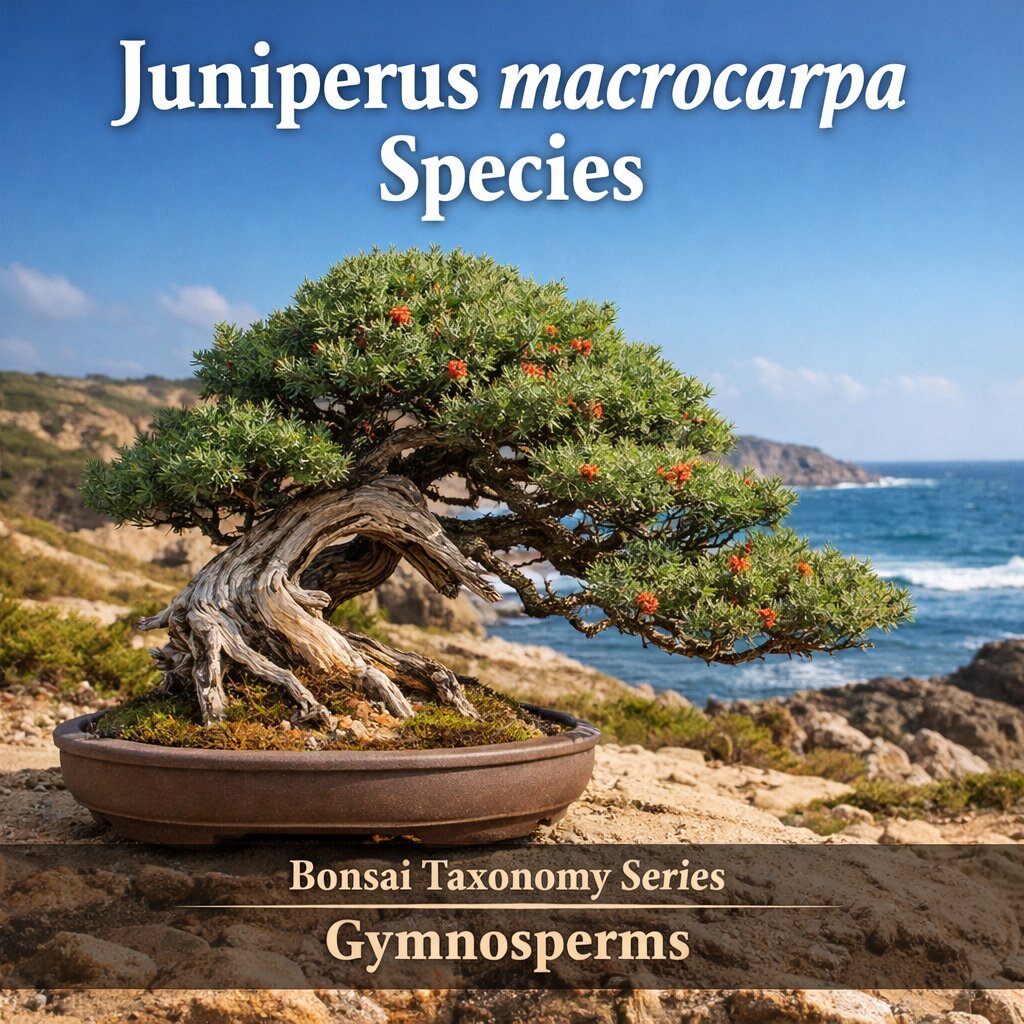
Juniperus macrocarpa, commonly known as the large-fruited juniper or plum juniper, is a distinctive Mediterranean coastal species recognised for its unusually large berry-like cones and robust adaptation to sandy, wind-swept environments. Although historically treated as a subspecies of Juniperus oxycedrus, modern morphological and genetic studies increasingly support its classification as a separate species within Juniperus sect. Juniperus, subsect. Oxycedrus.
This species plays a critical ecological role along Mediterranean dune systems, where it stabilises shifting sands and withstands intense salt spray, drought, and coastal winds. In this taxonomy guide, we explore its classification, identifying characteristics, reproductive biology, habitat range, and its relevance in horticulture and bonsai contexts.
Table of Contents
Taxonomy
– Kingdom: Plantae (Plant Kingdom)
— Clade: Embryophytes (Land Plants)
— Clade: Polysporangiophytes (Multiple Sporangia)
—- Clade: Tracheophytes (Vascular Plants)
—– Superdivision: Spermatophytes (Seed Plants)
—— Clade: Gymnospermae (Naked Seeds)
——- Division: Pinophyta (Conifers)
——– Class: Pinopsida (Living Conifers)
——— Subclass: Cupressidae (Evergreen Conifers)
———- Order: Cupressales (Cypress)
———– Family: Cupressaceae (Cypress)
———— Subfamily: Cupressoideae (Cypress)
————- Genus: Juniperus (Juniper)
————– Section: Juniperus (Common Junipers)
————— Subsection: Oxycedrus (Mediterranean Junipers)
—————- Species: Juniperus macrocarpa (Large-Berry Juniper)
What is Juniperus macrocarpa?
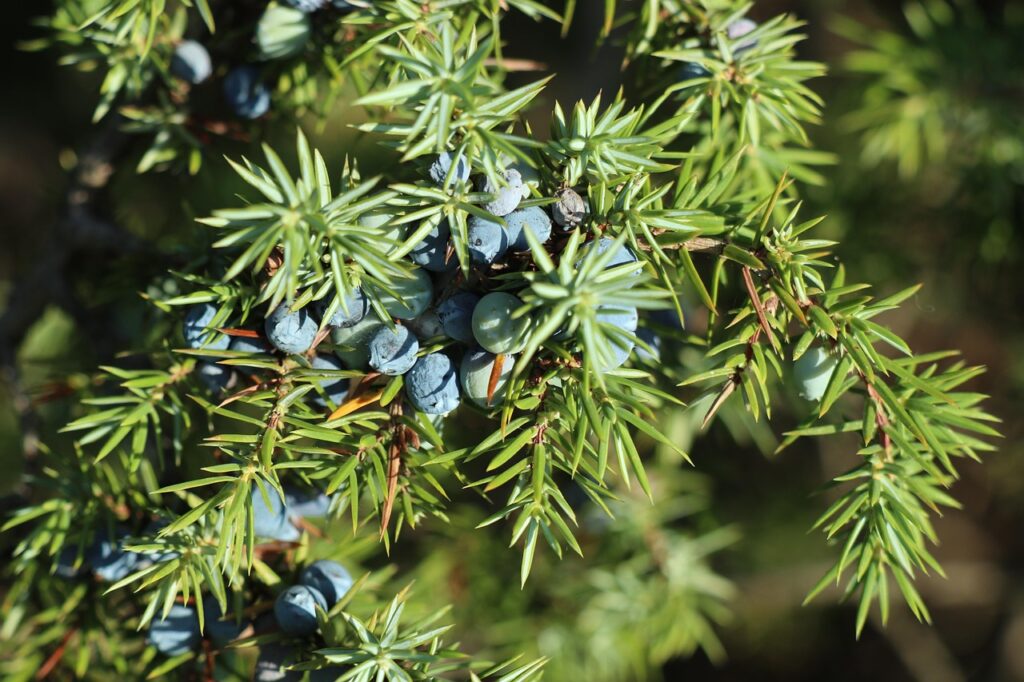
Juniperus macrocarpa is a Mediterranean coastal juniper species distinguished by its large, fleshy seed cones and broad, stiff needle leaves. Commonly known as the large-fruited juniper or plum juniper, it is an evergreen conifer adapted to sandy dunes, rocky sea cliffs, and exposed maritime environments. Its resilience to salt spray, drought, and strong coastal winds makes it one of the most specialised dune-stabilising junipers in the northern Mediterranean basin.
Taxonomically, Juniperus macrocarpa belongs to Juniperus sect. Juniperus, subsect. Oxycedrus, a group that includes the prickly junipers. While it was historically classified as a subspecies of Juniperus oxycedrus, modern genetic and morphological research supports its recognition as a distinct species. Its combination of exceptionally large cones, broader leaves, and specific coastal habitat preference clearly separates it from closely related taxa within the section.
Taxonomic Classification of Juniperus macrocarpa
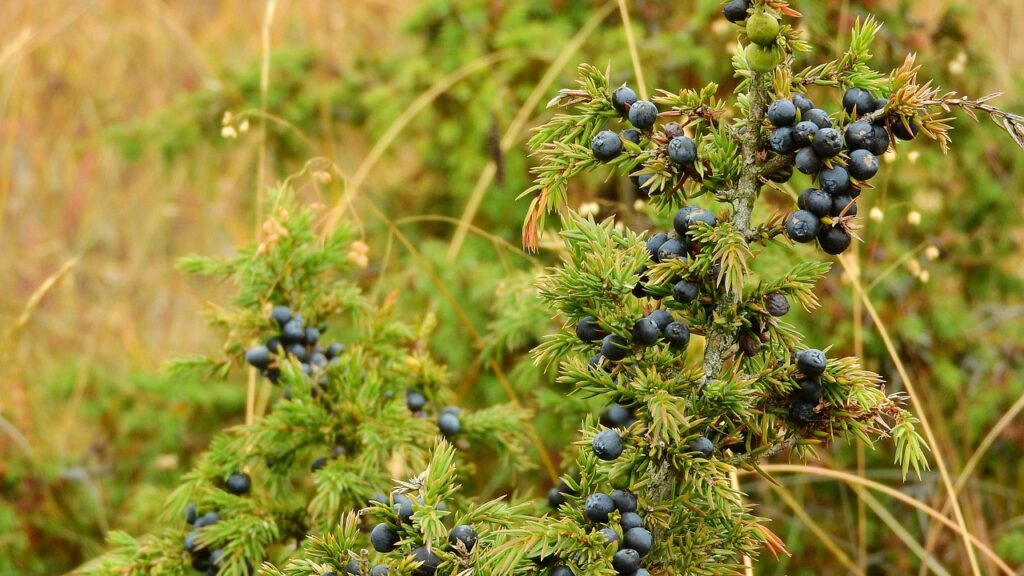
Juniperus macrocarpa is placed within the conifer division and belongs to the cypress family, a large and ecologically diverse group of evergreen trees and shrubs adapted to a wide range of climates. Within the genus Juniperus, it falls under Juniperus sect. Juniperus, subsect. Oxycedrus, a subsection characterised by sharp, needle-like leaves arranged in whorls of three and relatively large berry-like seed cones.
Historically, this species was often treated as Juniperus oxycedrus subsp. macrocarpa due to similarities in foliage and overall growth habit. However, consistent morphological differences, particularly its larger cones and broader leaves, along with modern genetic studies, support its recognition as a distinct species. Current botanical consensus increasingly separates Juniperus macrocarpa from J. oxycedrus, reinforcing its independent taxonomic status within the Oxycedrus group.
Botanical Description and Diagnostic Identifying Characteristics
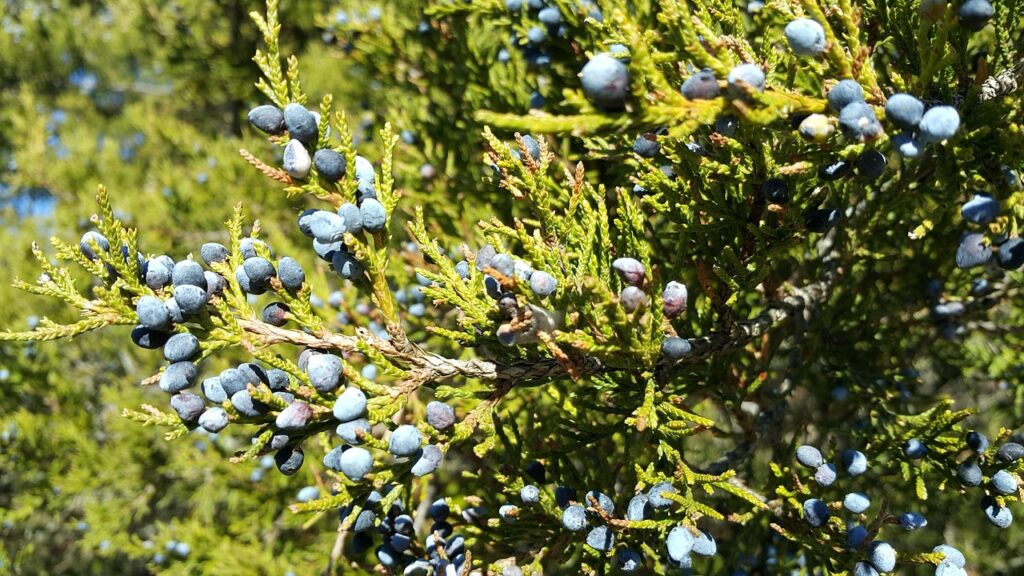
Juniperus macrocarpa is a robust coastal juniper with several clearly defined traits that distinguish it from other members of the Oxycedrus group. Its morphology reflects adaptation to exposed maritime conditions, including salt-laden winds, sandy substrates, and prolonged drought. The combination of growth form, foliage structure, and notably large seed cones makes this species relatively easy to identify in its natural habitat.
Below are the primary diagnostic features used in field identification and botanical assessment.
Growth Form and Structure
Juniperus macrocarpa typically grows as a spreading evergreen shrub between 2 and 5 metres tall. In favourable conditions, particularly where competition is limited, and soil depth is greater, it may develop into a small tree reaching up to 14 metres in height. The branching habit is often low and wide, forming dense, wind-shaped crowns in exposed dune systems.
Older specimens may display a more upright central leader, though coastal individuals frequently exhibit irregular, sculpted forms due to persistent wind exposure. This prostrate-to-spreading structure is one of the species’ key adaptations for stabilising sand dunes.
Foliage and Needle Morphology
The leaves are stiff, needle-like, and arranged in whorls of three, typical of the Oxycedrus subsection. Each leaf measures approximately 12 to 20 millimetres in length and 2 to 3 millimetres in width, making them broader than those of closely related species such as Juniperus oxycedrus.
A defining feature is the double white stomatal band on the inner surface of the needle, separated by a distinct green midrib. This contrast is visible upon close inspection and assists in species identification. The foliage is typically medium to dark green and retains colour year-round.
Seed Cones (Berry-like Cones)
The seed cones are the most distinctive diagnostic characteristic of Juniperus macrocarpa. They are spherical and significantly larger than those of many related junipers, measuring approximately 12 to 23 millimetres in diameter.
Initially green, the cones ripen over 18 to 24 months to an orange-red or purplish-red colour, often with a pinkish or glaucous waxy coating. Each cone consists of six fused scales arranged in two whorls, with three of the scales typically containing a single seed. Their size and colouration are key traits separating this species from Juniperus oxycedrus.
Pollen Cones and Dioecious Nature
Juniperus macrocarpa is dioecious, meaning male and female cones occur on separate plants. The pollen cones are small, yellow, and approximately 2 to 3 millimetres long. They shed pollen in late winter and fall shortly after dispersal.
The separation of sexes requires proximity of male and female individuals for successful seed production. Pollination is wind-driven, consistent with other conifers in the family Cupressaceae.
Bark and Mature Characteristics
The bark is reddish-brown and tends to exfoliate in thin longitudinal strips as the plant matures. On older branches and trunks, this peeling texture becomes more pronounced, contributing to its rugged coastal appearance.
In mature individuals, the combination of exfoliating bark, dense needle clusters, and prominent large cones provides a reliable visual profile for identification in Mediterranean dune and cliff environments.
Growth Habit, Size Variation, and Longevity
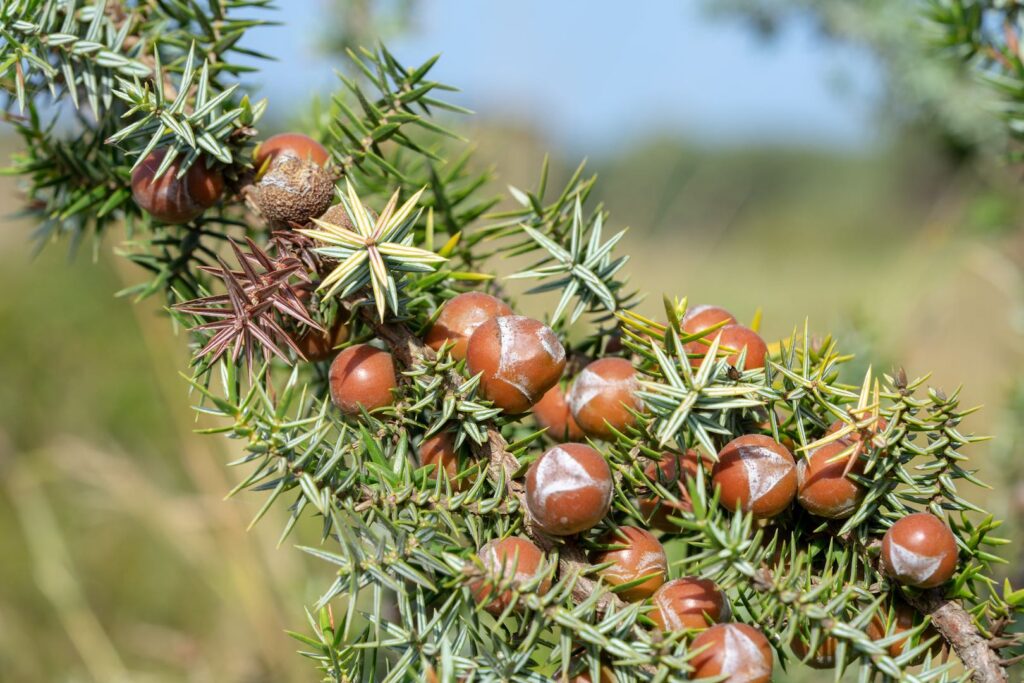
Juniperus macrocarpa exhibits a growth pattern strongly shaped by its coastal environment. Wind exposure, sandy substrates, salt spray, and limited soil depth all influence its structural form. As a result, individuals can vary significantly in appearance depending on location and environmental pressure.
Despite these variations, the species maintains a recognisable architectural framework typical of junipers in the Oxycedrus group. Its resilience and slow-to-moderate growth rate contribute to a long lifespan, particularly in stable dune systems.
Coastal Growth Form and Wind Shaping
In exposed dune habitats, Juniperus macrocarpa often develops as a low, spreading shrub. Persistent maritime winds sculpt the canopy into flattened or asymmetrical forms, with branches extending laterally rather than vertically. This prostrate tendency reduces wind resistance and helps anchor shifting sands.
On sea cliffs and sheltered paleodunes, growth may be more upright. In these locations, the species can form a dense, rounded crown with layered branching. Even in these less exposed sites, its structure remains compact and well-branched rather than tall and columnar.
Size Range and Structural Variation
Most specimens grow between 2 and 5 metres in height, forming broad shrubs with substantial horizontal spread. However, in deeper soils and less wind-stressed environments, Juniperus macrocarpa can occasionally reach heights of up to 14 metres, developing into a small tree with a defined trunk.
Trunk diameter and branching density vary with age and habitat conditions. Coastal individuals often prioritise horizontal expansion for stability, while inland or protected populations may allocate more growth to vertical development. This adaptability explains the species’ visual diversity across its range.
Root System and Dune Stabilisation
A defining ecological characteristic of Juniperus macrocarpa is its extensive root system. The plant develops deep anchoring roots combined with wide lateral roots that bind sand and prevent erosion. This structural adaptation is essential in unstable dune environments where soil movement is constant.
The root architecture not only stabilises the plant itself but also contributes to broader ecosystem stability. In Mediterranean dune systems, this species functions as a structural keystone, supporting vegetation succession and protecting coastal landscapes from degradation.
Growth Rate and Longevity
Juniperus macrocarpa grows at a moderate rate under favourable conditions but slows considerably in harsh, nutrient-poor coastal soils. This conservative growth strategy enhances survival in drought-prone and saline environments.
As with many junipers, longevity can be significant. While exact age records vary, mature individuals may persist for several decades and potentially longer in stable conditions. Their durability, combined with resistance to salt and drought stress, makes them one of the more enduring shrub species in Mediterranean coastal ecosystems.
Foliage Structure, Needle Morphology, and Seasonal Colouration
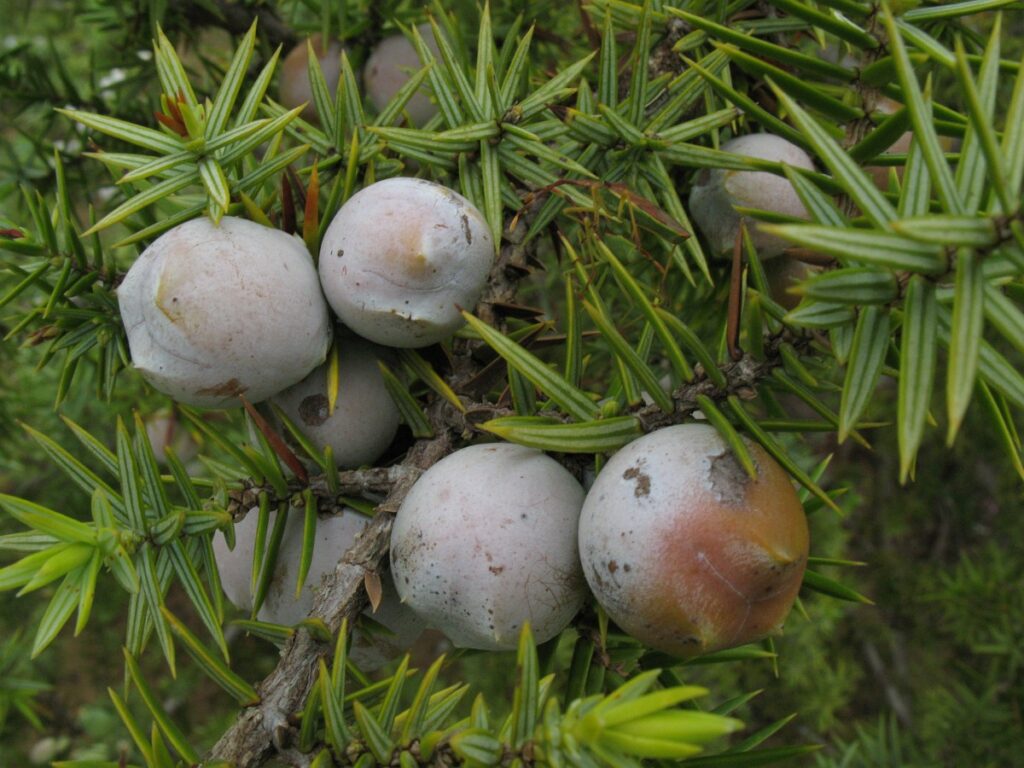
The foliage of Juniperus macrocarpa is one of its most important diagnostic features and a key reason it stands apart within the Oxycedrus group. Adapted to intense sunlight, salt spray, and drought conditions, its needles are structurally robust and physiologically efficient. The combination of size, colour, and stomatal banding provides reliable identification markers in the field.
Unlike scale-leaved junipers found in other sections of the genus, this species retains sharp, needle-like juvenile foliage throughout its life. This trait aligns it clearly with Juniperus sect. Juniperus and contributes to its distinctive texture and appearance.
Needle Arrangement and Dimensions
The leaves are arranged in whorls of three around the stem, a defining characteristic of the subsection Oxycedrus. Each needle measures approximately 12 to 20 millimetres in length and 2 to 3 millimetres in width. Compared to closely related taxa, the needles are relatively broad and stout, giving the plant a slightly heavier visual texture.
The needles are rigid and sharply pointed, providing natural protection against browsing animals. Their thickness and firmness also reduce moisture loss, an important adaptation in arid coastal habitats.
Stomatal Bands and Surface Characteristics
A prominent identifying feature of Juniperus macrocarpa is the presence of a double white stomatal band on the inner surface of each needle. These pale bands are separated by a narrow green midrib, creating a clear visual contrast when viewed closely.
The stomatal bands play an important physiological role in gas exchange and water regulation. In harsh maritime climates, efficient stomatal control helps the plant conserve moisture while maintaining photosynthetic function under high light intensity.
Seasonal Colouration and Environmental Response
Juniperus macrocarpa typically maintains a consistent green colour throughout the year, reflecting its evergreen nature. In full sun and nutrient-poor sandy soils, the foliage may appear slightly grey-green due to surface wax and light reflection.
During extreme drought or winter stress, subtle tonal shifts may occur, with foliage developing slightly muted or bronzed hues. However, it does not exhibit dramatic seasonal colour change. Its relatively stable year-round pigmentation supports continuous photosynthesis in Mediterranean climates where winters remain mild and growing seasons are extended.
Reproductive Biology, Seed Cones, and Pollination Ecology
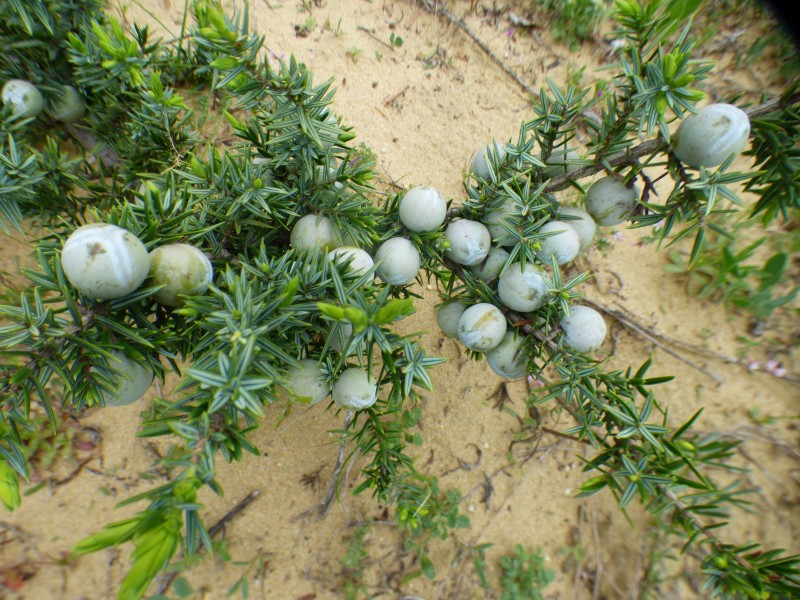
The reproductive system of Juniperus macrocarpa reflects both its conifer lineage and its specialised coastal adaptation. As with many junipers, it relies on wind pollination and bird-assisted seed dispersal, forming part of a broader Mediterranean ecological network. Its reproductive cycle is relatively slow compared to many flowering plants, but this gradual development contributes to high seed viability and resilience.
The species is dioecious, meaning male and female reproductive structures occur on separate plants. This separation promotes genetic diversity but requires sufficient population density for successful fertilisation.
Dioecious Structure and Pollen Production
Male plants produce small, yellow pollen cones measuring approximately 2 to 3 millimetres in length. These cones typically develop in late winter and release pollen shortly thereafter. Wind carries the pollen grains to nearby female plants, making proximity essential for effective reproduction.
Because pollination occurs before the peak growing season, Juniperus macrocarpa ensures fertilisation early in the annual cycle. The pollen cones fall soon after shedding, conserving plant resources for vegetative growth and seed development.
Seed Cone Development and Maturation
The seed cones, often referred to as berries, are the most distinctive reproductive feature of this species. They are spherical and comparatively large, generally measuring between 12 and 23 millimetres in diameter. Initially green, they require approximately 18 to 24 months to mature fully.
As they ripen, the cones turn orange-red to purplish-red and often develop a pinkish or glaucous waxy coating. Each cone is formed from six fused scales arranged in two whorls. Typically, three of these scales contain a single seed. The extended maturation period allows the fleshy outer layer to develop fully, increasing attractiveness to dispersal agents.
Seed Dispersal and Ecological Role
Birds play a primary role in seed dispersal. When they consume the fleshy cones, the seeds pass through the digestive system and are later deposited elsewhere. This process helps spread the species across dune systems and coastal habitats while improving germination rates through natural scarification.
In coastal ecosystems, this dispersal mechanism supports genetic exchange between populations and contributes to dune stabilisation. By spreading seeds across shifting sands and rocky substrates, Juniperus macrocarpa maintains its ecological presence in dynamic maritime environments.
Natural Distribution, Coastal Habitat Range, and Ecological Adaptations
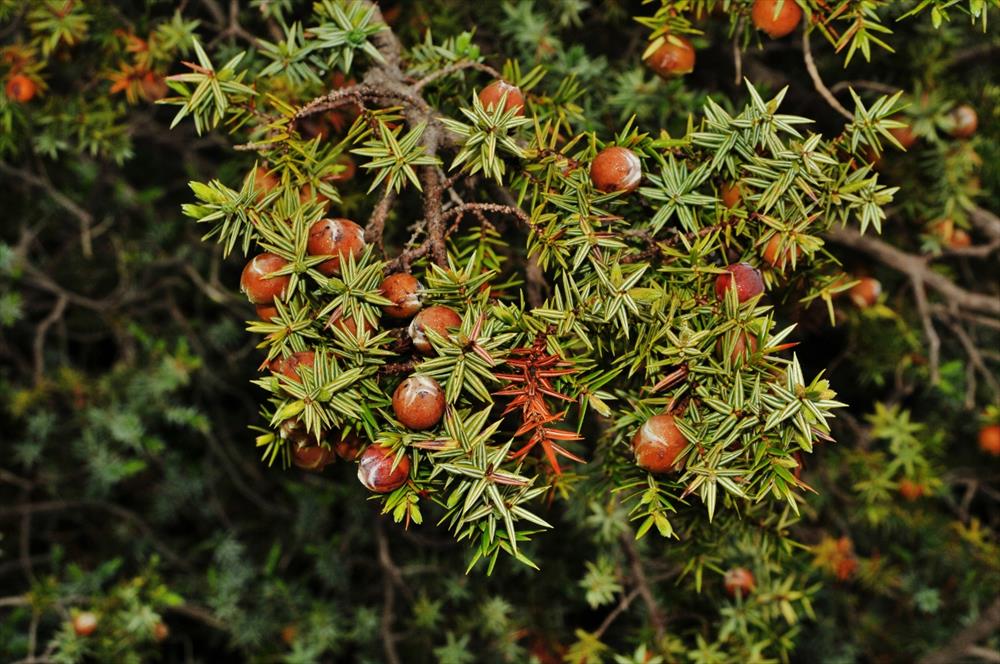
Juniperus macrocarpa is a distinctly Mediterranean species with a distribution closely tied to coastal dune and maritime ecosystems. Its natural range stretches across the northern Mediterranean basin, from southwestern Spain eastward through southern France, Italy, Greece, and into western Turkey and Cyprus. Isolated occurrences have also been recorded along parts of the Atlantic-influenced Portuguese coast.
Unlike many junipers that occupy mountainous or inland dry regions, this species is strongly associated with coastal environments. Its presence is typically limited to low elevations, rarely exceeding approximately 75 metres above sea level. This narrow altitudinal band reflects its ecological specialisation rather than limited adaptability.
Coastal Sand Dunes and Paleodune Systems
Juniperus macrocarpa thrives on coastal sand dunes and fossilised paleodunes where soils are sandy, well-drained, and nutrient-poor. These substrates are often unstable and subject to constant reshaping by wind. The plant’s extensive root system allows it to anchor effectively in loose sand while reducing erosion.
In many Mediterranean dune systems, it functions as a stabilising species. Its dense branching slows wind movement at ground level, encouraging sand accumulation and enabling other plant species to establish. This role makes it an important component of coastal vegetation succession.
Tolerance to Salt, Wind, and Drought
One of the defining ecological traits of Juniperus macrocarpa is its high tolerance to salt spray. Maritime winds deposit saline particles on foliage and soil surfaces, conditions that many inland species cannot withstand. The thick, wax-coated needles and efficient water regulation mechanisms help mitigate salt stress.
The species is also highly drought-resistant. Coastal Mediterranean climates are characterised by long, dry summers and irregular rainfall. Its needle structure, stomatal regulation, and deep root system allow it to survive extended dry periods with minimal water availability.
Cliff Habitats and Rocky Maritime Slopes
Beyond dune systems, Juniperus macrocarpa can also occur on rocky sea cliffs and coastal slopes. In these habitats, soil depth is limited and exposure to wind is intense. Growth forms here may be more compact or wind-sculpted, reflecting mechanical stress from persistent coastal conditions.
These cliff populations demonstrate the species’ adaptability within its maritime niche. Although its overall distribution is geographically broad across the Mediterranean basin, its ecological preference remains strongly coastal, distinguishing it from related junipers that occupy inland scrublands or mountainous terrain.
Infraspecific Variation and Relationship to Juniperus oxycedrus
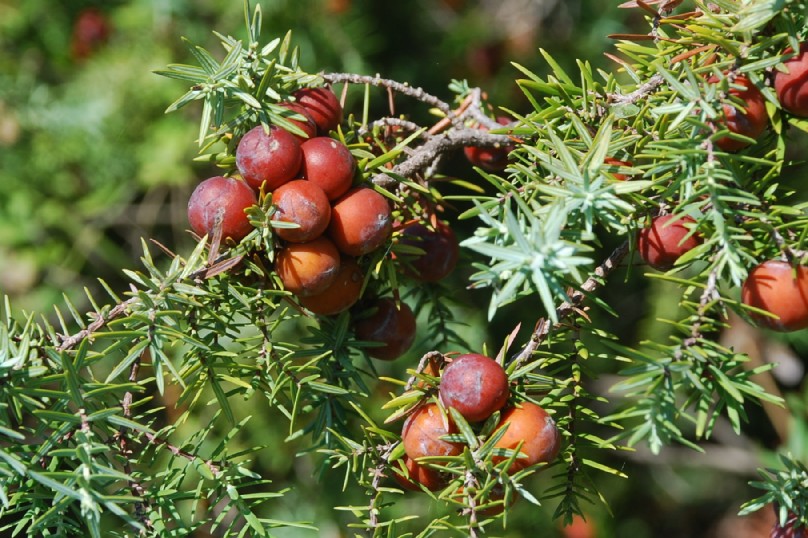
Juniperus macrocarpa has long been taxonomically linked to Juniperus oxycedrus due to similarities in needle arrangement and overall structural form. For many decades, it was commonly classified as Juniperus oxycedrus subsp. macrocarpa, reflecting the belief that it represented a coastal variant of the prickly juniper complex. However, continued morphological study and more recent genetic research have increasingly supported its recognition as a distinct species.
Within its own range, Juniperus macrocarpa shows relatively limited infraspecific variation. Differences observed across populations are typically linked to environmental factors such as wind exposure, soil depth, and dune mobility rather than clear genetic divergence into subspecies or varieties.
Morphological Distinctions from Juniperus oxycedrus
The most significant differences between Juniperus macrocarpa and Juniperus oxycedrus lie in cone size, leaf breadth, and ecological preference. Juniperus macrocarpa produces noticeably larger seed cones, often exceeding those of J. oxycedrus in both diameter and fleshy development. Its needles are also broader and slightly more robust, contributing to a heavier-textured appearance.
Ecologically, the distinction is even clearer. Juniperus macrocarpa is primarily restricted to coastal dunes and maritime habitats, while Juniperus oxycedrus occupies a much wider inland range across Mediterranean scrublands, rocky slopes, and upland regions. This habitat segregation supports their separation as independent taxa.
Genetic Evidence and Taxonomic Status
Modern molecular studies examining chloroplast DNA and nuclear markers have demonstrated genetic differentiation between Juniperus macrocarpa and Juniperus oxycedrus. Although they belong to the same subsection Oxycedrus, the genetic divergence is sufficient to justify species-level recognition in most contemporary classifications.
Today, botanical consensus increasingly treats Juniperus macrocarpa as a valid species rather than a subspecies. This distinction reflects both measurable genetic separation and consistent morphological traits that remain stable across its distribution.
Juniperus macrocarpa in Horticulture and Bonsai Contexts
Juniperus macrocarpa is highly valued in Mediterranean-style landscaping due to its sculptural form, drought tolerance, and resistance to salt spray. Its natural adaptation to sandy soils and harsh coastal exposure makes it an excellent choice for seaside gardens, xeriscaping projects, and erosion control planting. The combination of dense branching, evergreen foliage, and striking large cones adds both structural and seasonal interest in ornamental settings.
In horticulture, it performs best in well-drained soils with full sun exposure. Overwatering and poorly drained substrates can quickly lead to root stress, as the species is naturally adapted to lean, sandy environments. When given appropriate conditions, it demonstrates strong resilience and relatively low maintenance requirements.
From a bonsai perspective, Juniperus macrocarpa offers unique aesthetic potential, particularly for coastal or windswept styles. Its natural prostrate growth habit and ability to withstand shaping align well with informal upright, slanting, and windswept bonsai forms. The relatively broad needles and robust branching create a rugged appearance that complements driftwood features and coastal-themed compositions.
However, its needle size and vigorous apical growth require careful pruning to maintain refinement. As with many junipers in the Oxycedrus group, patience is essential when developing fine ramification. With disciplined wiring and controlled feeding, it can produce striking bonsai specimens that reflect its natural maritime character.
Within the broader Juniperus taxonomy series, Juniperus macrocarpa stands out as a coastal specialist. Its combination of ecological importance, distinctive morphology, and horticultural resilience secures its place as both a botanically significant species and a compelling candidate for dedicated bonsai cultivation.