
Rhododendron ferrugineum, commonly known as the Alpine Rose, is one of the most iconic high-altitude shrubs in Europe and a defining species within the Rhododendron genus. Found across the Alps, Pyrenees, and other mountainous regions, this evergreen plant thrives where few others can survive, making it a fascinating subject for both botanical study and bonsai enthusiasts.
As the type species of the genus, Rhododendron ferrugineum plays a key role in understanding the classification and evolution of rhododendrons. It belongs to the Rhododendron (Subgenus), specifically within Rhododendron sect. Rhododendron and Rhododendron subsect. Rhododendron, highlighting its importance in the broader taxonomy of the Ericaceae family.
Beyond its scientific relevance, Rhododendron ferrugineum is admired for its vibrant pinkish-red blooms, compact growth habit, and remarkable resilience in harsh alpine environments. These traits not only make it visually striking in the wild but also highly desirable for bonsai cultivation, especially for growers interested in cold-climate species with strong character and history.
Table of Contents
Taxonomy
– Kingdom: Plantae (Plant Kingdom)
— Clade: Embryophytes (Land Plants)
— Clade: Polysporangiophytes (Multiple Sporangia)
—- Clade: Tracheophytes (Vascular Plants)
—– Superdivision: Spermatophytes (Seed Plants)
—— Clade: Angiospermae (Flowering Plants)
——- Division: Eudicots (True Dicotyledons)
——– Subdivision: Core Eudicots
——— Class: Superasterids (Advanced Flowering Plants)
———- Subclass: Asterids (Unified-Flowering Plants)
———– Order: Ericales (Heath and Tea)
———— Family: Ericaceae (Heath)
————- Subfamily: Ericoideae (Heath)
————– Tribe: Rhodoreae (Rhododendron)
————— Genus: Rhododendron
————— Subgenus: Rhododendron (Lepidote Rhododendrons)
—————- Section: Rhododendron (Lepidote Rhododendrons)
—————– Subsection: Rhododendron (True Rhododendrons)
—————— Species: Rhododendron ferrugineum (Alpine Rose)
What is Rhododendron ferrugineum?
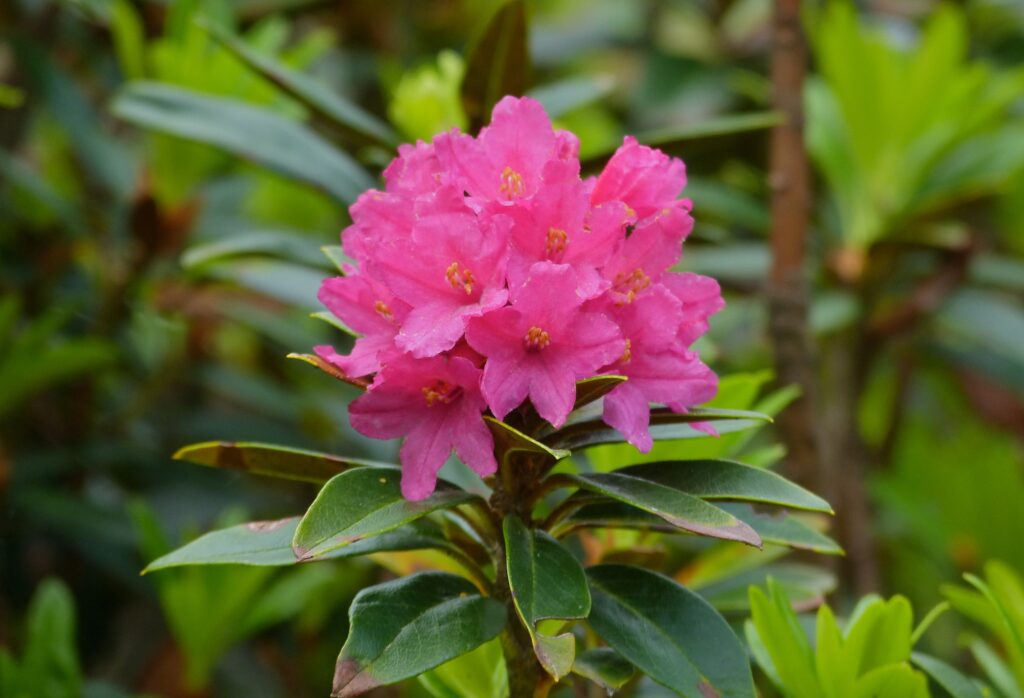
Rhododendron ferrugineum, commonly known as the Alpine Rose, is a hardy evergreen shrub native to the mountainous regions of Europe. It is most commonly found growing just above the tree line in areas such as the Alps, Pyrenees, Jura, and northern Apennines, where it thrives in cold, acidic, and nutrient-poor soils.
This species is particularly significant because Rhododendron ferrugineum is the type species of the Rhododendron genus, meaning it plays a central role in defining the characteristics and classification of the entire group. It belongs to the Rhododendron (Subgenus), within Rhododendron sect. Rhododendron and Rhododendron subsect. Rhododendron, placing it among the core representatives of its family, Ericaceae.
Rhododendron ferrugineum is easily recognised by its compact, bushy growth and clusters of pink to deep red, bell-shaped flowers that bloom in summer. One of its most distinctive features is the rust-coloured underside of its leaves, which gives the species its name. Adapted to harsh alpine conditions, the Alpine Rose is both resilient and long-lived, making it an important species in both natural ecosystems and botanical study.
Taxonomic classification of Rhododendron ferrugineum
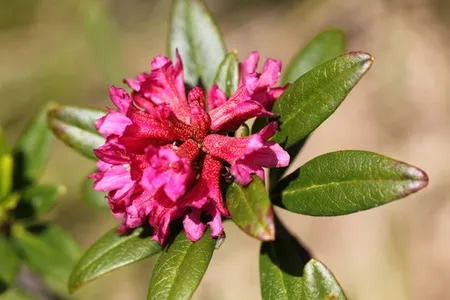
Rhododendron ferrugineum is a well-defined species within the Ericaceae family and holds particular importance as the type species of the Rhododendron genus. Its classification places it among the core representatives of true rhododendrons, helping define the structure and taxonomy of the group.
Within the broader hierarchy, Rhododendron ferrugineum belongs to the Rhododendron (Subgenus), specifically within Rhododendron sect. Rhododendron and Rhododendron subsect. Rhododendron. These groupings include evergreen species that typically share similar floral structures, growth habits, and adaptations to cooler climates.
As the type species, Rhododendron ferrugineum serves as a reference point for defining the genus Rhododendron. Its characteristics, including evergreen foliage, bell-shaped flowers, and adaptation to acidic soils, are foundational traits used in the classification of related species.
Botanical description and identifying characteristics
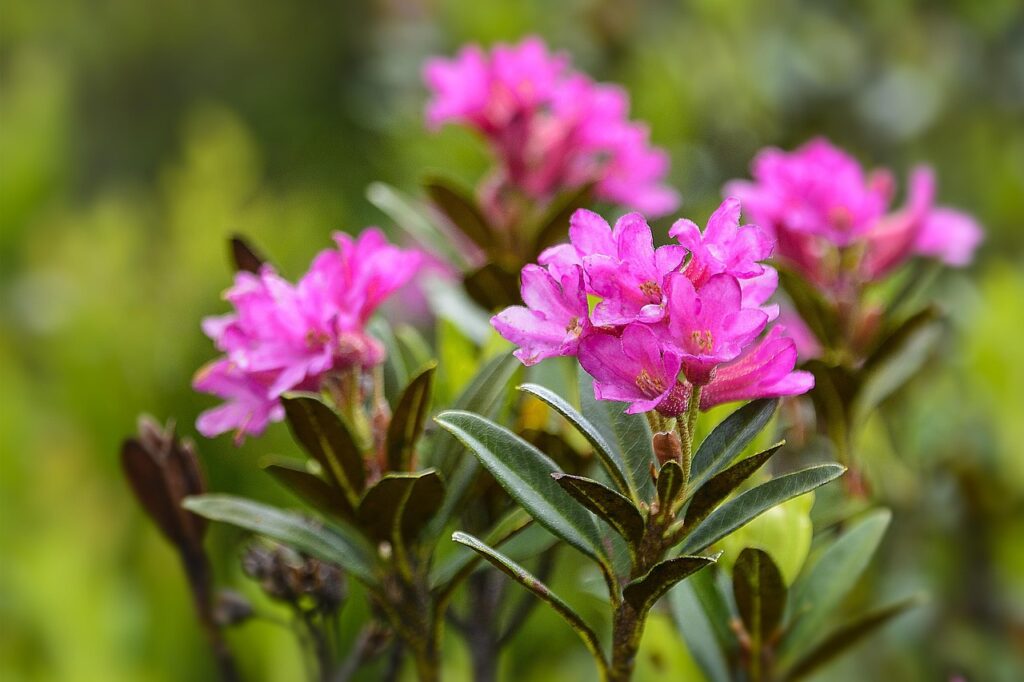
Rhododendron ferrugineum is a compact evergreen shrub with distinctive features that make it relatively easy to identify in both wild alpine environments and cultivated settings. Adapted to harsh mountain conditions, this species combines resilience with ornamental appeal, displaying vibrant blooms and unique foliage traits that set it apart from closely related rhododendrons.
Overall plant structure
Rhododendron ferrugineum typically grows as a dense, low to medium-sized shrub, reaching heights of up to 1.5 metres. It forms a rounded, mounding shape, often spreading wider than it grows tall, especially in exposed alpine conditions where wind and snow shape its growth.
The branching structure is woody and compact, helping the plant withstand strong winds and heavy snowfall. Older specimens may develop a slightly gnarled appearance, adding character and making them particularly attractive for bonsai cultivation.
Leaf characteristics and texture
The leaves of Rhododendron ferrugineum are small, leathery, and elongated, with a smooth, dark green upper surface. They are arranged alternately along the stems and maintain their colour throughout the year, contributing to the plant’s evergreen nature.
One of the most distinctive identifying features is found on the underside of the leaves. These surfaces are covered in rust-brown scales or spots, which give the species its name “ferrugineum,” meaning rust-coloured. This characteristic is a key diagnostic feature when distinguishing it from similar species.
Flower structure and colour
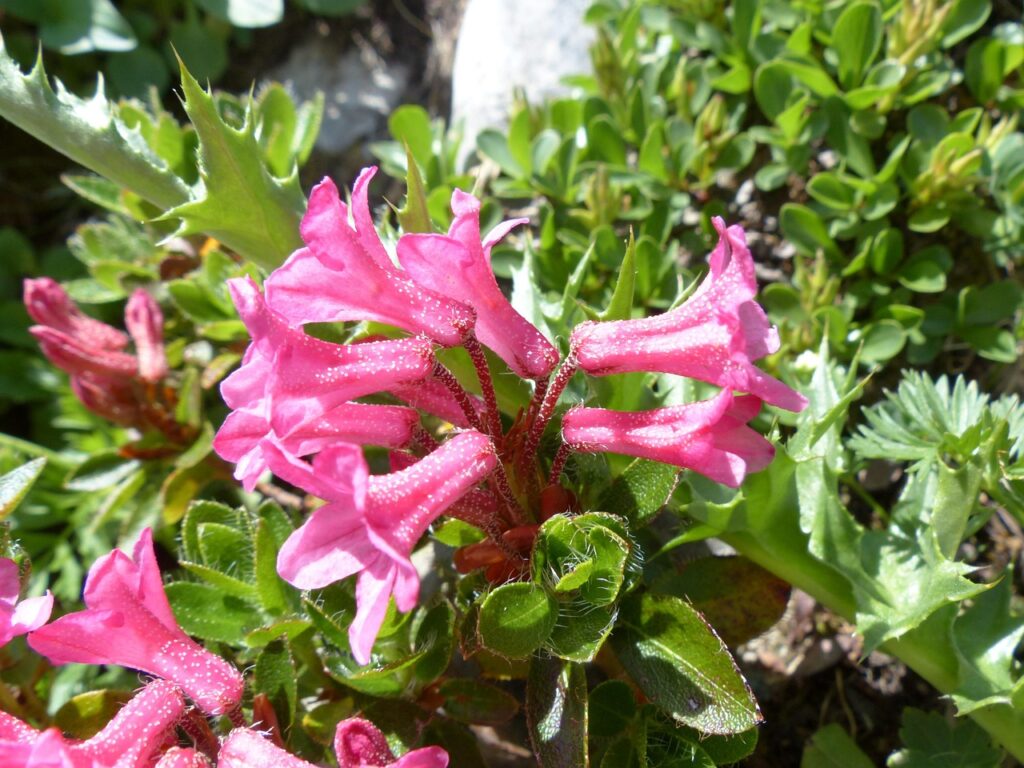
Rhododendron ferrugineum produces clusters of bell-shaped flowers that range in colour from pink to deep reddish tones. These blooms typically appear in early to mid-summer, creating striking displays across alpine landscapes.
The flowers grow in terminal clusters at the ends of branches, often forming dense groups that enhance their visual impact. Each flower has a delicate, slightly flared shape, contributing to the plant’s ornamental value.
Key identification features
Several traits help reliably identify Rhododendron ferrugineum in the field or in cultivation:
- Rust-coloured scales on the underside of leaves
- Compact, evergreen shrub form
- Pink to red bell-shaped flowers in clustered arrangements
- Preference for acidic soils and alpine environments
These combined characteristics make Rhododendron ferrugineum one of the most recognisable and well-defined species within the Rhododendron genus.
Growth habit, size variation, and longevity
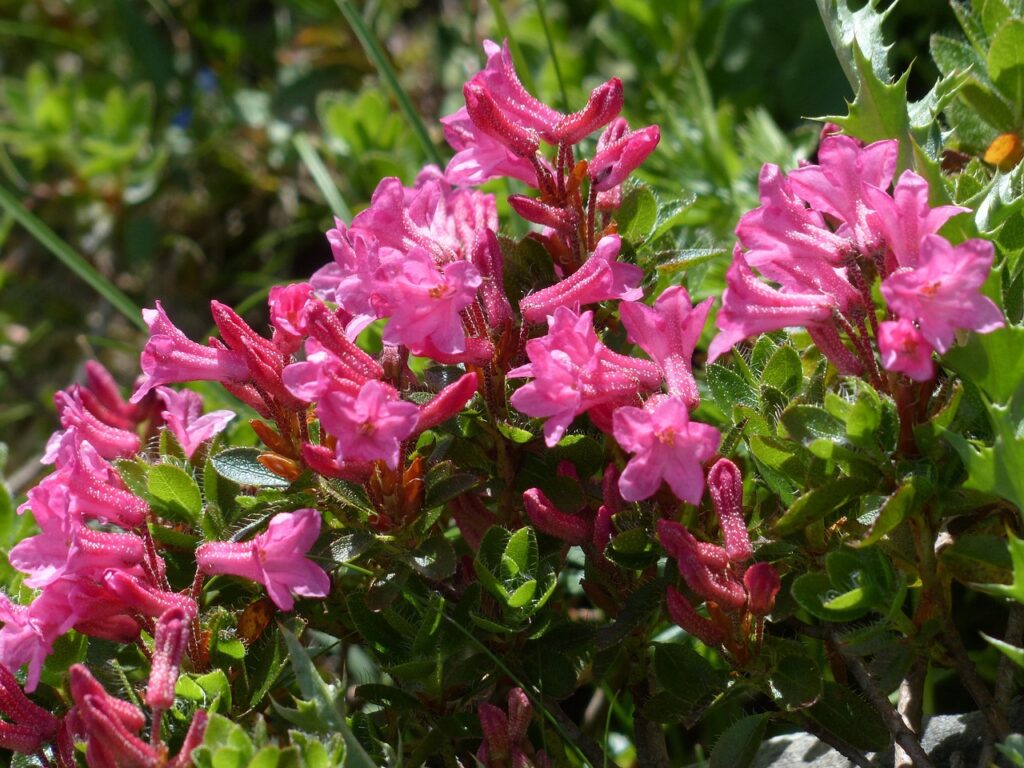
Rhododendron ferrugineum exhibits a growth pattern shaped by its harsh alpine environment. Its form, size, and lifespan are all influenced by altitude, climate, and soil conditions, resulting in a species that is both adaptable and remarkably long-lived.
Growth habit in natural environments
In the wild, Rhododendron ferrugineum typically grows as a dense, low-lying shrub with a rounded or spreading habit. At higher altitudes, exposure to wind, snow, and cold temperatures often keeps the plant compact and close to the ground.
This growth form helps protect it from environmental stress. Snow cover in winter acts as insulation, while the plant’s tight structure reduces moisture loss and physical damage. In more sheltered areas, it may grow slightly taller and more upright, though it still maintains a bushy appearance.
Size variation across conditions
The size of Rhododendron ferrugineum can vary depending on its growing conditions. In favourable environments with adequate moisture and protection, it can reach heights of up to 1.5 metres, with a similar spread.
In more exposed or nutrient-poor locations, the plant often remains much smaller, sometimes forming low mats or compact clusters. This variation is a direct response to environmental pressures, allowing the species to survive across a range of alpine settings.
For bonsai cultivation, this natural tendency toward compact growth makes Rhododendron ferrugineum particularly suitable for smaller forms and controlled shaping.
Longevity and lifespan
Rhododendron ferrugineum is known for its impressive longevity. In stable environments, individual plants can live for several decades, with some specimens believed to exceed 300 years in age.
This long lifespan is supported by its slow growth rate and ability to withstand extreme conditions. Over time, older plants may develop thicker, woody stems and a more rugged appearance, reflecting their adaptation to alpine climates.
The combination of resilience, adaptability, and longevity makes Rhododendron ferrugineum not only a key species in its natural habitat but also a valuable subject for long-term cultivation and study.
Leaf structure and rust-coloured underside features
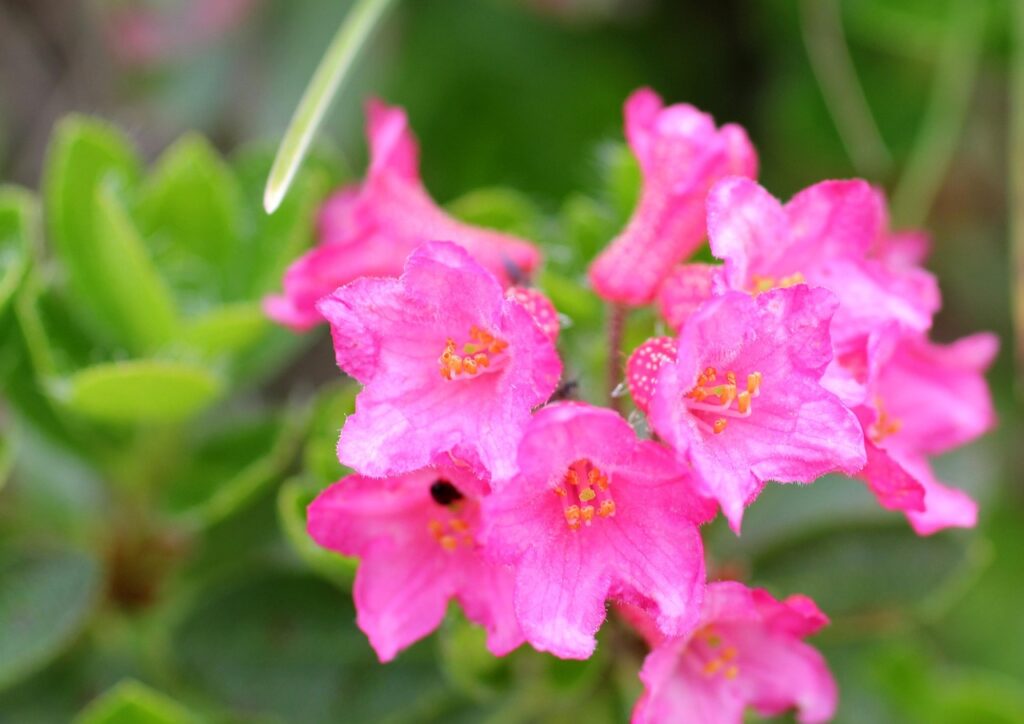
Rhododendron ferrugineum is especially well known for its distinctive foliage, which provides one of the most reliable ways to identify the species. Its leaves are adapted to withstand cold, wind, and intense sunlight at high altitudes, combining durability with a unique visual signature.
Leaf shape and arrangement
The leaves of Rhododendron ferrugineum are narrow, elongated, and slightly leathery in texture. They are typically lance-shaped with smooth edges and a gently pointed tip, giving the plant a refined and structured appearance.
Leaves are arranged alternately along the stems and tend to cluster toward the ends of branches. This arrangement creates a dense canopy that helps protect inner growth from environmental exposure.
Surface texture and colouration
On the upper side, the leaves display a deep green colour with a smooth, slightly glossy finish. This surface helps maximise light absorption while also providing some resistance to moisture loss.
The leathery texture is an important adaptation, allowing the plant to retain water and resist damage from cold winds and strong sunlight. These features are common among alpine species that must endure fluctuating and often harsh conditions.
Rust-coloured underside characteristics
The most distinctive feature of Rhododendron ferrugineum lies on the underside of its leaves. Here, the surface is covered in fine, rust-coloured scales or speckling, which gives the species its name.
These ferruginous markings are not just decorative. They are believed to play a role in protecting the leaf from excessive moisture loss and possibly from fungal or environmental stress. This feature is a key diagnostic trait used to distinguish it from similar species, particularly Rhododendron hirsutum, which lacks this rust-coloured underside.
Seasonal consistency and durability
Unlike deciduous species, Rhododendron ferrugineum retains its leaves throughout the year. This evergreen habit ensures that it can continue photosynthesis whenever conditions allow, even in colder months.
The durability of the leaves means they can persist through snow cover and freezing temperatures without significant damage. Over time, older leaves may darken or toughen further, but they generally remain intact and functional for extended periods.
Flowering behaviour and reproductive biology
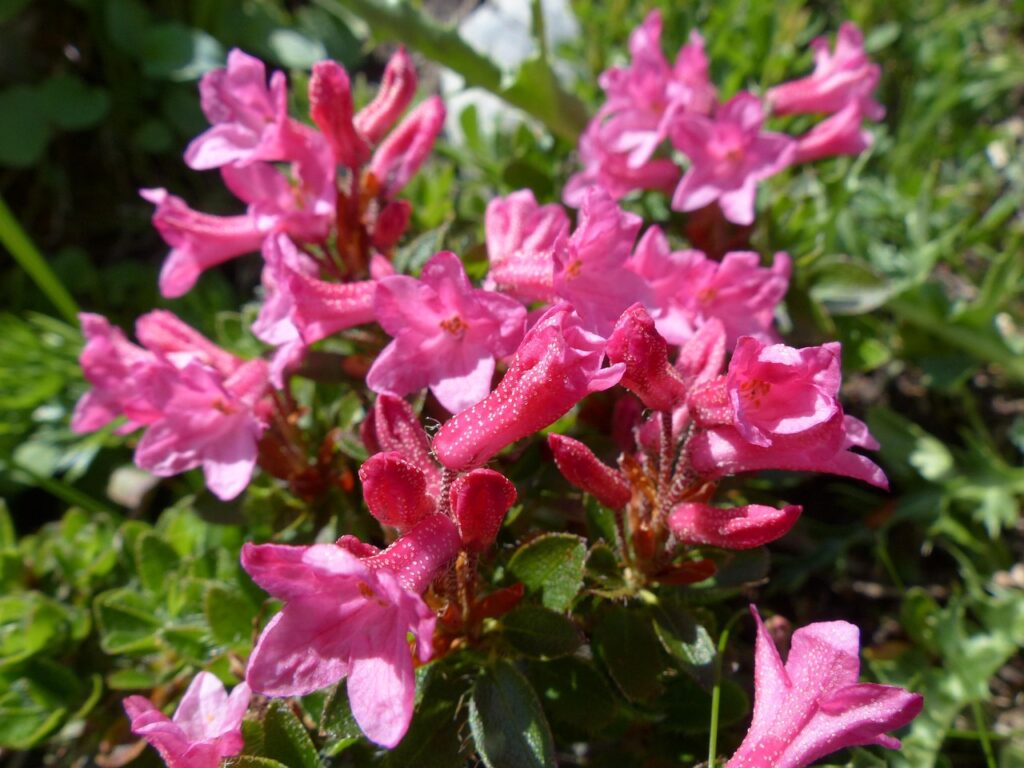
Rhododendron ferrugineum produces striking seasonal blooms that play an essential role in its reproduction and ecological interactions. Its flowering cycle is closely linked to alpine climate conditions, with timing and success influenced by temperature, altitude, and snowmelt patterns.
Flowering season and timing
Flowering typically occurs in early to mid-summer, often between June and August, depending on altitude and local climate. At higher elevations, blooming may be delayed due to prolonged snow cover and colder conditions.
The timing is critical, as Rhododendron ferrugineum must complete its reproductive cycle within a relatively short growing season. Once conditions are favourable, the plant rapidly produces flowers to maximise pollination opportunities.
Flower structure and arrangement
The flowers are bell-shaped and grouped in dense terminal clusters at the ends of branches. Each cluster may contain several individual blooms, creating a vivid display of pink to deep red hues.
Individual flowers have a slightly flared opening and delicate petals, designed to attract pollinators while protecting reproductive structures. The clustered arrangement enhances visibility and increases the likelihood of successful pollination in open alpine landscapes.
Pollination mechanisms
Pollination is primarily carried out by insects, including bees and other alpine pollinators that are active during the short summer season. The bright coloration and nectar production help attract these pollinators.
The plant relies on cross-pollination to maintain genetic diversity. Its positioning in exposed environments, combined with clustered flowering, makes it easier for pollinators to move between plants.
Seed development and dispersal
After successful pollination, Rhododendron ferrugineum develops small seed capsules that mature over time. These capsules eventually open to release fine seeds, which are dispersed by wind.
Wind dispersal allows the species to spread across rocky slopes and alpine meadows, although successful germination depends on suitable soil conditions and moisture availability.
Reproductive resilience
Despite the challenges of alpine environments, Rhododendron ferrugineum demonstrates strong reproductive resilience. Its ability to synchronise flowering with favourable conditions and efficiently disperse seeds ensures its continued presence across its natural range.
This adaptability contributes to its stability as a species and its classification as one of the more resilient members of the Rhododendron genus.
Natural distribution, alpine habitat range, and ecological role
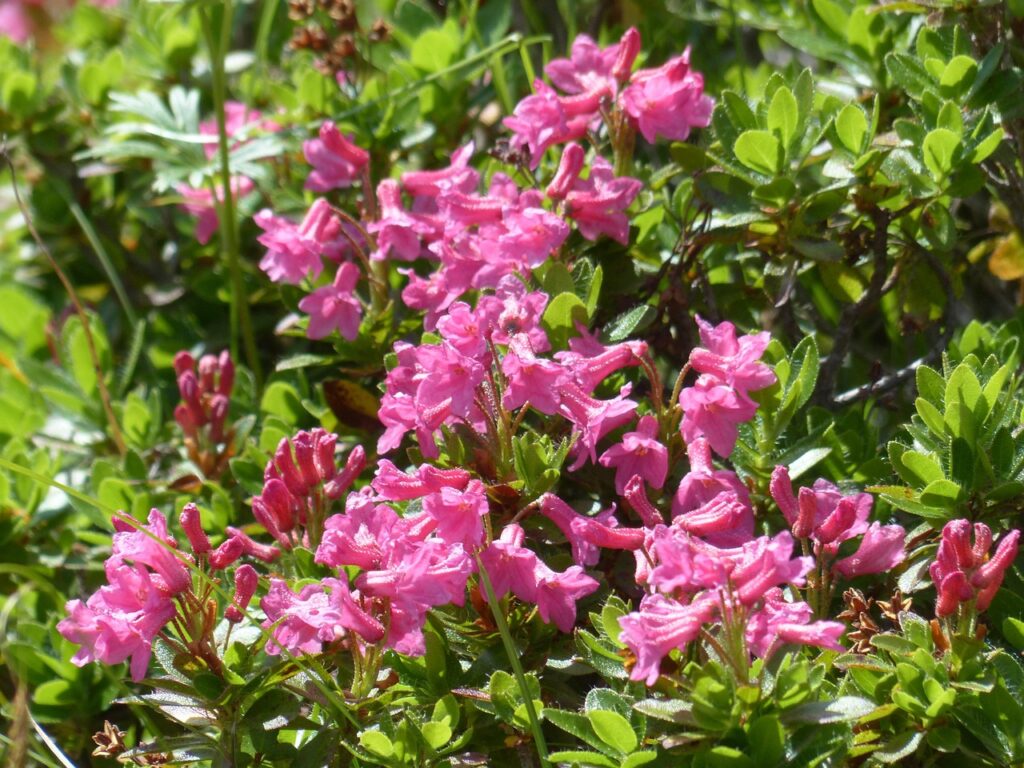
Rhododendron ferrugineum is a characteristic species of Europe’s high mountain regions, where it forms part of the distinctive vegetation found just above the tree line. Its distribution and ecological role are closely tied to the unique conditions of alpine environments, including cold temperatures, strong winds, and nutrient-poor soils.
Geographic distribution
This species is native to several major European mountain ranges, including the Alps, Pyrenees, Jura, and parts of the northern Apennines. Within these regions, Rhododendron ferrugineum is widely distributed, often forming dense stands across suitable habitats.
Its presence is strongly linked to areas with acidic soils, which are typically derived from siliceous rock. This preference limits its distribution to specific zones within mountain systems, where soil chemistry supports its growth.
Alpine habitat range
Rhododendron ferrugineum is most commonly found at elevations just above the tree line, extending into sub-alpine and alpine zones. It thrives on rocky slopes, open meadows, and mountain ridges where competition from larger plants is reduced.
The species is well adapted to these environments, tolerating extreme cold, heavy snowfall, and intense sunlight. Snow cover during winter plays an important protective role, insulating the plant from harsh winds and temperature fluctuations.
Soil and environmental preferences
The plant requires acidic, well-draining soils rich in organic matter. It does not tolerate lime-rich or alkaline conditions, which is one of the key differences between it and closely related species such as Rhododendron hirsutum.
Moisture availability is also important. While it can withstand cold conditions, Rhododendron ferrugineum relies on consistent moisture from snowmelt and rainfall during the growing season.
Ecological role in alpine ecosystems
Rhododendron ferrugineum plays an important role in alpine ecosystems. Its dense growth helps stabilise soil on slopes, reducing erosion in areas prone to runoff and harsh weather.
The plant also provides shelter and habitat for small animals and insects, while its flowers serve as a food source for pollinators during the limited alpine summer. In areas where it dominates, it contributes significantly to the structure and biodiversity of the local plant community.
Interaction with related species
In regions where soil conditions vary, Rhododendron ferrugineum may grow near related species such as Rhododendron hirsutum. Where their habitats overlap, hybrid forms like Rhododendron × intermedium can occur, showing characteristics of both parent species.
These interactions highlight the ecological flexibility of Rhododendron ferrugineum and its role in maintaining genetic diversity within alpine plant populations.
Infraspecific variation and hybridisation with related species
Rhododendron ferrugineum is considered a relatively stable and well-defined species, but like many alpine plants, it shows subtle variation across its range and can hybridise with closely related species under the right conditions. These variations and interactions are important for understanding its adaptability and evolutionary relationships within the Rhododendron genus.
Infraspecific variation
Unlike some widespread species, Rhododendron ferrugineum has limited formally recognised subspecies or varieties. However, natural populations may display minor differences depending on altitude, climate, and soil conditions.
These variations are typically subtle and may include:
- Differences in plant height and compactness based on exposure and elevation
- Slight variation in leaf size and thickness depending on moisture availability
- Changes in flower intensity, ranging from lighter pink to deeper red tones
- Growth form adjustments, from low mat-like shrubs to more upright structures
These traits reflect environmental adaptation rather than distinct taxonomic divisions, reinforcing the species’ consistency across its native range.
Hybridisation with related species
Hybridisation occurs where Rhododendron ferrugineum overlaps with closely related species, most notably Rhododendron hirsutum. This typically happens in areas where soil conditions transition between acidic and more alkaline environments.
The most well-known hybrid is:
- Rhododendron × intermedium
- A natural hybrid between Rhododendron ferrugineum and Rhododendron hirsutum
- Displays intermediate traits, including partial rust colouring on leaf undersides and slight hairiness on leaf edges
- Often found in zones with mixed soil chemistry
Ecological and taxonomic significance
Hybridisation highlights the flexibility of Rhododendron ferrugineum in adapting to changing environmental conditions. It also contributes to genetic diversity within alpine ecosystems.
From a taxonomic perspective, these hybrids can sometimes make identification more complex, especially in regions where both parent species coexist. However, the presence of intermediate traits often provides clear clues to their hybrid origin.
Overall, while Rhododendron ferrugineum remains a distinct and recognisable species, its ability to vary slightly and hybridise with relatives demonstrates its resilience and ecological adaptability.
Rhododendron ferrugineum in horticulture and bonsai contexts
Rhododendron ferrugineum holds a unique position in horticulture, valued for its resilience, compact growth, and striking seasonal flowering. Its natural adaptation to cold, mountainous environments makes it particularly suitable for growers seeking hardy species that can tolerate low temperatures and challenging conditions. In garden settings, it is often used in alpine or rock gardens, where its preference for acidic, well-draining soil can be carefully maintained.
In bonsai cultivation, Rhododendron ferrugineum offers a distinctive character that reflects its rugged alpine origins. Its naturally compact form, slow growth rate, and dense branching structure make it well-suited to smaller bonsai styles. Over time, it can develop a mature, weathered appearance that mirrors specimens found in the wild, adding to its aesthetic appeal.
Successful cultivation requires attention to its specific needs, particularly its demand for acidic soil, consistent moisture, and protection from excessive heat. While it is highly cold-tolerant, it does not respond well to prolonged drought or alkaline conditions, making proper care essential for long-term health.
As both a horticultural plant and a bonsai subject, Rhododendron ferrugineum stands out for its combination of beauty, durability, and botanical significance. Its connection to alpine ecosystems and its role as a defining species within the Rhododendron genus further enhance its value for enthusiasts and collectors alike.