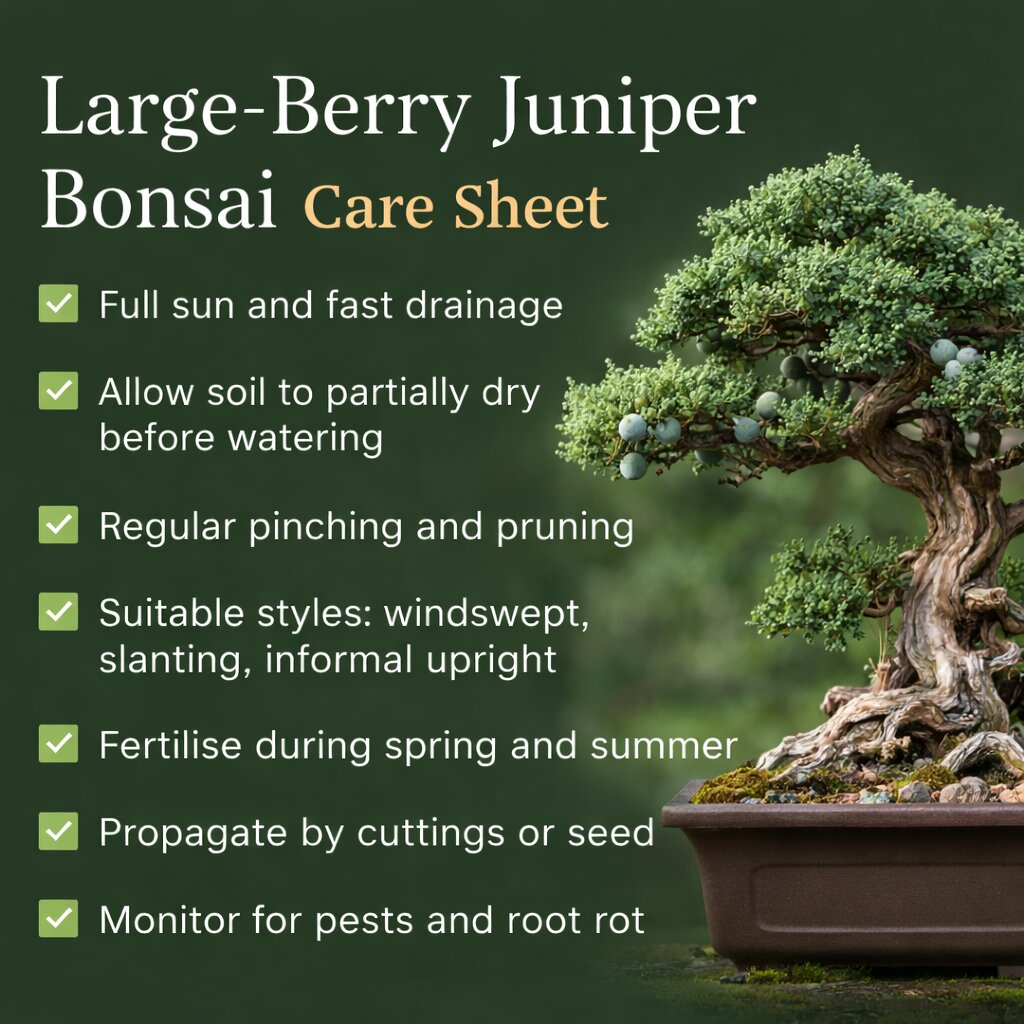
The large-berry juniper bonsai is a striking and resilient species valued for its textured foliage, rugged bark, and distinctive oversized berry cones that give it its common name. Native to coastal and Mediterranean climates, this juniper adapts well to bonsai cultivation, offering both structural strength and elegant movement when trained correctly.
What makes the large-berry juniper bonsai particularly appealing is its balance between toughness and refinement. It tolerates pruning, wiring, and shaping well, yet still rewards careful attention with dense growth and seasonal interest. Its natural growth habit lends itself beautifully to traditional bonsai styles, especially those that highlight age, endurance, and coastal character.
In this care sheet, we explore how to cultivate, shape, and maintain a healthy large-berry juniper bonsai so that it thrives for years to come.
Table of Contents
TL:DR Quick Large-Berry Juniper Bonsai Care Overview
The large-berry juniper bonsai is a hardy, sun-loving conifer that rewards patience with rugged character and strong structure. Native to warm coastal regions, it thrives in bright light, well-draining soil, and consistent but moderate watering. Its tolerance to pruning and shaping makes it an excellent candidate for both intermediate and experienced bonsai growers.
Below is a quick-reference table covering the essential care requirements to keep your large-berry juniper bonsai healthy and thriving.
| Care aspect | Large-Berry Juniper Bonsai |
|---|---|
| Scientific name | Juniperus macrocarpa |
| Common name | Large-Berry Juniper |
| Bonsai type | Evergreen conifer |
| Light | Full sun. Requires strong direct light for compact growth. |
| Watering | Water thoroughly, then allow partial drying. Avoid waterlogged soil. |
| Soil | Fast-draining mix (akadama, pumice, lava rock). Slight alkaline tolerance. |
| Fertiliser | Balanced feed during spring and summer. Reduce in winter. |
| Pruning | Regular pinching and structural pruning during active growth. |
| Wiring | Wire in spring or early autumn. Monitor for bark marking. |
| Difficulty | Moderate. Suitable for growers with some experience. |
| Rarity | Less common in cultivation outside Mediterranean regions. |
| Climate sensitivity | Prefers warm coastal climates. Protect roots from severe frost. |
| Growth habit | Low-spreading, dense branching with strong lateral movement. |
Large-Berry Juniper Bonsai Care Guide
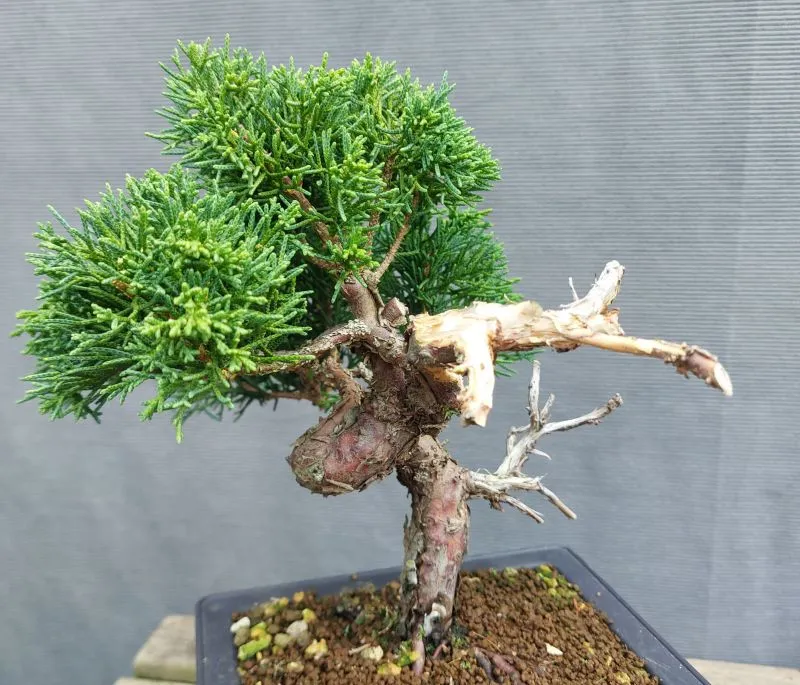
The large-berry juniper bonsai is a rugged Mediterranean species valued for its strong lateral growth, dense evergreen foliage, and distinctive oversized berry cones. Naturally adapted to coastal environments with sandy soils, wind exposure, and intense sunlight, it brings resilience and character into bonsai cultivation.
When grown correctly, this juniper develops compact foliage pads, textured bark, and a grounded silhouette that reflects age and endurance. Understanding its natural habitat is essential to mastering its care. The guidelines below will help you cultivate a healthy, balanced, and long-lived large-berry juniper bonsai.
Light
The large-berry juniper bonsai requires full sun to maintain compact foliage and strong structure. Ideally, it should receive at least six hours of direct sunlight daily. Strong light encourages tighter growth and prevents leggy, weak shoots.
In extremely hot inland climates, light afternoon shade can prevent excessive stress, but this species should never be kept indoors long-term. Poor light quickly leads to thinning pads and reduced vitality.
Watering
Water deeply and thoroughly, ensuring the entire root mass is saturated. After watering, allow the top layer of soil to begin drying before watering again. This species dislikes constantly wet roots.
Because it originates from coastal, well-draining soils, the large-berry juniper bonsai tolerates slight dryness better than prolonged saturation. Overwatering is one of the most common causes of decline.
Pruning
Maintenance pruning should be performed during active growth in spring and early summer. Trim back elongated shoots to preserve pad structure and encourage denser branching.
Avoid cutting back into bare, old wood unless performing structural work, as regeneration from completely dormant wood is unreliable. Always leave some green growth to maintain health.
Shaping
This species naturally grows in a low, spreading form. When shaping, work with its horizontal tendencies rather than forcing strict vertical movement.
Develop primary branch structure first, then refine foliage pads gradually. Controlled shaping over several seasons produces a far more convincing mature form than aggressive early styling.
Soil
Excellent drainage is essential. A bonsai mix composed of akadama, pumice, and lava rock provides proper aeration and moisture balance.
In wetter climates, increasing the pumice and lava components improves airflow around the roots. Heavy, organic soils that retain moisture should be avoided.
Repotting
Repot every two to three years in early spring, just before active growth begins. Mature trees may require repotting less frequently if the soil structure remains stable.
Root pruning should be moderate rather than severe. Removing too much root mass at once can stress the tree, especially older specimens.
Wiring
Wiring is best carried out in spring or early autumn. Younger branches are flexible, but older wood becomes stiff and can crack if bent too aggressively.
Monitor wired branches regularly, as juniper bark marks easily. Remove or adjust wire before it begins to bite into the bark.
Fertiliser
Apply a balanced fertiliser during the growing season, particularly from spring through summer. This supports foliage density and root development.
Reduce feeding in autumn and avoid fertilising during winter dormancy. Excess nitrogen can lead to overly vigorous growth that disrupts refined pad structure.
Propagation
Semi-hardwood cuttings taken in late summer root reliably when placed in a well-draining medium with consistent humidity.
Seed propagation is possible but significantly slower. Female plants produce the characteristic large berry cones once mature and properly pollinated.
Seasonal Care
In spring, begin light feeding and monitor new growth. Summer requires careful watering management, especially during heatwaves.
Autumn is ideal for wiring adjustments and minor structural corrections. In winter, protect the root system from severe frost, particularly when grown in shallow containers.
Pests
Spider mites may appear in hot, dry conditions. Regular inspection and proper airflow help reduce infestations.
Scale insects can attach to woody stems and should be removed early before spreading.
Diseases
Root rot is the primary risk, usually caused by poor drainage or overwatering. Ensuring proper soil structure prevents most issues.
Fungal problems may arise in stagnant, humid conditions. Adequate spacing and airflow significantly reduce disease occurrence.
How to Identify a Large-Berry Juniper Bonsai
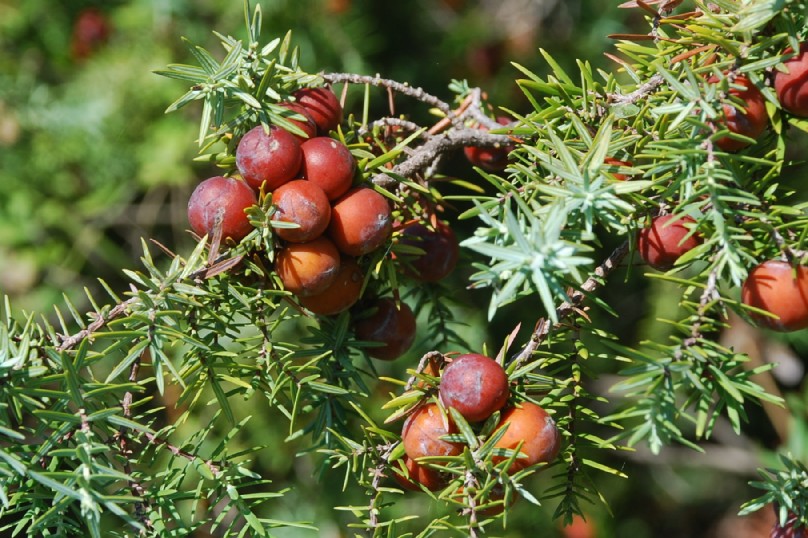
The large-berry juniper bonsai is most commonly associated with Juniperus macrocarpa, a Mediterranean coastal species known for its spreading growth habit and unusually large berry cones. While it shares similarities with other junipers, several key identifying characteristics help distinguish it from related species.
Careful observation of foliage type, berry size, bark texture, and seasonal colour shifts will confirm identification.
Leaf Identification
The large-berry juniper bonsai typically displays two types of foliage depending on age and growth stage.
Juvenile foliage appears as sharp, needle-like leaves arranged in whorls of three. These needles are stiff, pointed, and often bluish-green to grey-green in colour.
Mature foliage becomes scale-like and closely pressed to the stems. The scales are thicker and slightly fleshy compared to many other juniper species, giving the foliage a dense, textured appearance. The colour ranges from deep green to silvery-green depending on light exposure and season.
Flower Gallery
Junipers do not produce traditional flowers. Instead, they produce small reproductive cones.
Male cones are small, yellowish to tan, and appear at the tips of branchlets. These release pollen in late winter to early spring.
Female cones are green when immature and gradually develop into the species’ characteristic berry-like cones. Because this species is typically dioecious, male and female cones appear on separate plants.
Fruit Identification
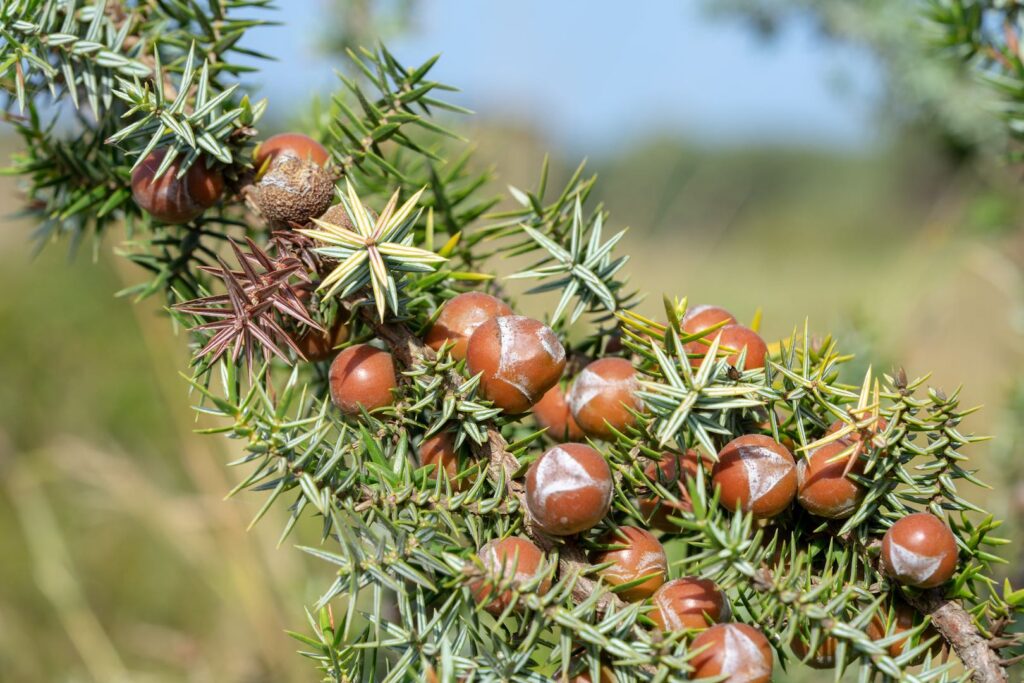
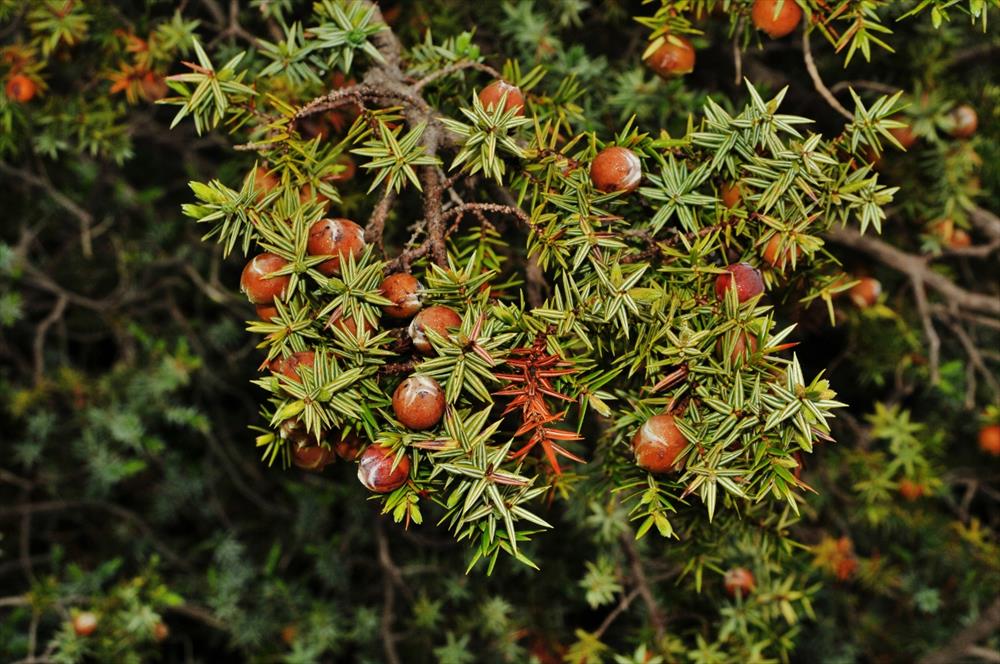
The defining feature of the large-berry juniper bonsai is its oversized cones.
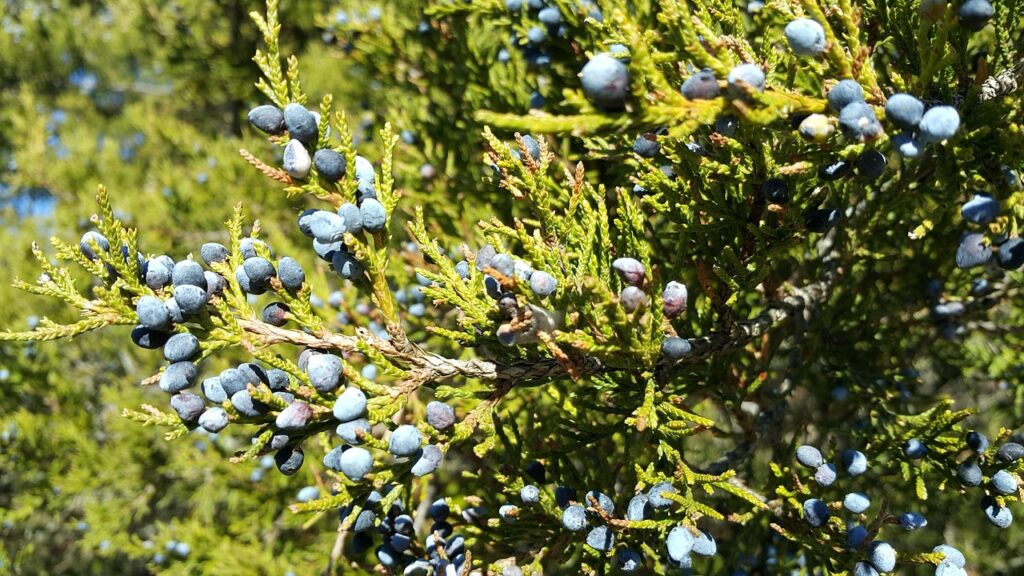
The “berries” are actually fleshy seed cones that mature from green to bluish-purple with a pale, powdery bloom. Compared to many other juniper species, these cones are noticeably larger and more rounded.
Mature cones can take up to two years to fully ripen. Well-developed female bonsai specimens with good pollination will produce these distinctive fruits.
Seeds and Pods
Inside each fleshy cone are one to several hard seeds.
The seeds are woody and require stratification for germination in natural conditions. Propagation from seed is possible but slow, which is why cuttings are more commonly used in bonsai cultivation.
The fleshy outer layer serves as protection and, in the wild, assists with dispersal through wildlife consumption.
Bark Textures
Young large-berry juniper bonsai trees have relatively smooth, reddish-brown bark.
As the tree matures, the bark becomes fibrous and begins to peel in thin vertical strips. This peeling texture adds age and character to older bonsai specimens.
The contrast between aged bark and dense foliage pads is one of the species’ most attractive features in bonsai styling.
Seasonal Changes
This species remains evergreen throughout the year.
In cooler seasons, foliage may take on a slightly darker or more silvery tone. During active growth in spring and early summer, new growth appears brighter and softer in texture.
Berry development follows a multi-year cycle, so at any given time you may observe cones at different stages of maturity.
Correct identification ensures appropriate care, and recognising these distinguishing traits will help you confidently confirm whether your bonsai is truly a large-berry juniper. 🌿
Bonsai Styles Suited to Large-Berry Juniper Bonsai
The large-berry juniper bonsai naturally grows in coastal, wind-exposed environments, often forming low-spreading, horizontal structures shaped by sea air and shifting sands. Because of this, its growth habit strongly influences which bonsai styles suit it best.
Rather than forcing rigid upright forms, the most convincing designs work with its natural lateral movement, rugged character, and dense evergreen foliage.
Informal Upright (Moyogi)
The informal upright style works well when the trunk has natural curves and subtle movement.
Large-berry juniper develops flexible young growth that can be shaped gradually into flowing trunk lines. The key is to maintain balanced pad distribution while preserving negative space between branches.
Avoid overly tight vertical compression. This species benefits from slightly broader pad spacing to reflect its coastal origin.
Windswept (Fukinagashi)
This is one of the most natural and expressive styles for the large-berry juniper bonsai.
Given its Mediterranean coastal heritage, a windswept design mirrors how the species grows in exposed shoreline conditions. Branches can be trained in one primary direction, creating visual tension and dynamic flow.
The dense foliage and strong lateral branching support dramatic movement without looking artificial.
Slanting (Shakan)
The slanting style suits specimens with naturally angled trunks or those grown from cuttings that developed off-centre movement.
This style emphasises resilience and environmental adaptation. With careful wiring and gradual shaping, the trunk line can create a sense of motion while maintaining stability at the root base.
A slightly exposed nebari enhances this style.
Semi-Cascade (Han-Kengai)
While full cascade is less common, semi-cascade can be effective for specimens grown in deeper containers.
The natural spreading habit of the large-berry juniper allows branches to extend outward and downward convincingly. Semi-cascade styling works best when the tree has strong trunk movement and compact foliage pads near the pot’s rim.
Naturalistic Coastal Style
This species particularly shines in a naturalistic approach.
Rather than strictly adhering to classical Japanese forms, a coastal-inspired design emphasises rugged bark, subtle asymmetry, and broad, horizontal pad layering. This reflects its origin in sandy dunes and rocky shorelines.
The large berry cones, when present, enhance the authenticity of this style.
Symbolism and Cultural Significance
The large-berry juniper bonsai carries layered symbolism rooted in both its botanical resilience and its broader cultural associations within Mediterranean landscapes.
Juniper species have long been regarded as symbols of endurance and protection. Growing naturally in harsh coastal environments, the large-berry juniper survives strong winds, salt exposure, poor soils, and intense sunlight. This ecological toughness has made juniper a traditional emblem of resilience, adaptability, and quiet strength.
In many Mediterranean cultures, juniper was historically associated with purification and safeguarding. Branches were sometimes burned or placed near homes as a symbolic barrier against misfortune. While such traditions vary regionally, the underlying theme remains consistent: juniper represents protection and stability.
Within bonsai culture, the large-berry juniper bonsai embodies patience and controlled strength. Its slow structural development, fibrous peeling bark, and long-lived evergreen foliage reflect longevity and perseverance. When styled in windswept or coastal forms, it also symbolises harmony with natural forces rather than resistance to them.
The presence of its oversized berry cones adds another layer of meaning. In botanical symbolism, fruit-bearing conifers often represent continuity and renewal. Even in difficult conditions, life persists and reproduces.
As a bonsai, the large-berry juniper stands as a quiet reminder that growth does not require comfort. It requires balance, endurance, and the willingness to adapt to the environment.
Companion Plants and Wildlife Attraction
The large-berry juniper bonsai originates from Mediterranean coastal ecosystems where sandy soils, strong sun, and good airflow dominate. Companion planting should reflect those same environmental preferences.
When selecting moss, flowers, or herbs to pair with this species, prioritise drought tolerance, shallow root systems, and plants that will not compete aggressively within a bonsai container.
Moss
Because the large-berry juniper prefers well-draining soil, moss should be applied selectively rather than covering the entire surface.
Good options include:
Bryum argenteum (Silver Moss) – Tolerates bright light and moderate dryness better than many moss species. Ideal for partial surface coverage.
Hypnum cupressiforme (Cypress-leaved Plait Moss) – Works well in slightly shaded sections of the soil surface and complements the texture of juniper bark.
Avoid dense, moisture-retaining moss layers that trap water around the trunk base, as this can increase fungal risk.
Flowers
Small, shallow-rooted flowering plants that tolerate sun and lean soil conditions pair best with large-berry juniper bonsai.
Suitable examples include:
Delosperma cooperi (Ice Plant) – A low-growing succulent groundcover that thrives in sun and dry soil.
Armeria maritima (Sea Thrift) – A coastal species with compact growth and pink blooms that complements Mediterranean styling.
Erigeron karvinskianus (Mexican Fleabane) – Light, daisy-like flowers that suit naturalistic coastal compositions.
These flowers enhance visual interest without overwhelming the tree.
Herbs
Mediterranean herbs make particularly fitting companions due to shared climate preferences.
Thymus serpyllum (Creeping Thyme) – Low-growing, aromatic, and drought tolerant.
Origanum vulgare (Oregano) – Compact forms work well in larger training pots.
Helichrysum italicum (Curry Plant) – Silvery foliage echoes the tones found in juniper foliage.
Herbs should be used sparingly and ideally in companion pots rather than directly in shallow bonsai containers to prevent root competition.
Wildlife Attraction
In outdoor settings, the large-berry juniper bonsai supports several forms of wildlife. Its berry cones attract birds such as thrushes and small seed-eating species, which feed on the fleshy cones once mature.
The dense evergreen foliage provides shelter for small insects and beneficial predators such as ladybirds and lacewings. Bees may visit nearby flowering companion plants, while the juniper itself offers structural refuge rather than nectar resources.
Proper airflow and monitoring are essential, as encouraging wildlife should never compromise plant health.
Care Summary and Practical Notes
The large-berry juniper bonsai thrives when its natural coastal origins are respected. Full sun, sharp drainage, controlled watering, and steady seasonal maintenance form the foundation of its health.
This is not a species that tolerates excess moisture or indoor conditions. It performs best outdoors, where airflow strengthens foliage and sunlight maintains compact growth. Overwatering remains the most common cause of decline, while poor light quickly reduces pad density and structure.
Styling should work with its natural lateral movement rather than against it. The tree rewards patient shaping over time, gradual wiring adjustments, and consistent but moderate pruning. Its fibrous bark and distinctive oversized cones add maturity and character as the specimen ages.
For growers seeking a resilient, expressive conifer with Mediterranean character, the large-berry juniper bonsai offers both strength and refinement. When cultivated with balance and observation, it develops into a tree that reflects endurance, adaptability, and quiet permanence. 🌿