

Rhododendron malayanum is one of the most distinctive members of the tropical Vireya rhododendrons, admired for its unusual copper-scaled foliage and elegant pendulous flowers. Native to the mountainous regions of Southeast Asia, this evergreen species has adapted to life in humid cloud forests, where it often grows as an epiphyte on trees or as a terrestrial shrub in well-drained organic soils. Its combination of attractive foliage, colourful blooms, and specialised growth habits has made it a sought-after species among collectors of tropical rhododendrons.
Unlike the cold-hardy rhododendrons commonly grown in temperate gardens, Rhododendron malayanum thrives in warm, moist environments with excellent drainage and high humidity. Its classification within the Vireya group places it among some of the most fascinating tropical rhododendrons in the world, many of which have evolved unique adaptations for survival in rainforest ecosystems. Understanding the taxonomy, morphology, habitat requirements, and horticultural value of Rhododendron malayanum provides valuable insight into this remarkable species and its place within the broader Rhododendron genus.
Table of Contents
Taxonomy
– Kingdom: Plantae (Plant Kingdom)
— Clade: Embryophytes (Land Plants)
— Clade: Polysporangiophytes (Multiple Sporangia)
—- Clade: Tracheophytes (Vascular Plants)
—– Superdivision: Spermatophytes (Seed Plants)
—— Clade: Angiospermae (Flowering Plants)
——- Division: Eudicots (True Dicotyledons)
——– Subdivision: Core Eudicots
——— Class: Superasterids (Advanced Flowering Plants)
———- Subclass: Asterids (Unified-Flowering Plants)
———– Order: Ericales (Heath and Tea)
———— Family: Ericaceae (Heath)
————- Subfamily: Ericoideae (Heath)
————– Tribe: Rhodoreae (Rhododendron)
————— Genus: Rhododendron
————— Subgenus: Rhododendron (Lepidote Rhododendrons)
—————- Section: Vireya (Tropical Rhododendrons)
—————– Subsection: Malayovireya (Dark-Centred Double-Scale Vireya Rhododendrons)
—————–- Species: Rhododendron Malayanum (Malayanum Rhododendron)
What Is Rhododendron Malayanum?

Rhododendron malayanum is a species of tropical rhododendron belonging to the Vireya group, a collection of rhododendrons primarily found throughout Southeast Asia and the Pacific region. It is classified within Rhododendron subgenus Rhododendron, section Vireya, and subsection Malayovireya. The species is particularly recognised for its narrow, tubular flowers and the distinctive copper-brown scales that densely cover the undersides of its leaves.
This evergreen shrub is native to tropical and subtropical mountain forests, where it has evolved to thrive in environments characterised by high humidity, frequent rainfall, and excellent drainage. Unlike many rhododendrons that grow in cooler temperate climates, Rhododendron malayanum is adapted to warm conditions and often grows as an epiphyte, anchoring itself to tree branches rather than rooting directly in the ground.
The species exhibits considerable variation across its natural range, especially in flower colour. Blooms may appear in shades of pink, purple, reddish-purple, cream, or greenish-white depending on location and local environmental conditions. The flowers are usually borne in clusters and hang gracefully from the ends of branches, creating a striking display when the plant is in bloom.
Because of its attractive foliage, unusual floral characteristics, and tropical growth requirements, Rhododendron malayanum is highly regarded among Vireya enthusiasts and specialist collectors. It represents an excellent example of the diversity found within tropical rhododendrons and showcases the remarkable adaptations these plants have developed to survive in rainforest ecosystems.
Taxonomic Classification Of Rhododendron Malayanum

Rhododendron malayanum belongs to one of the most diverse and widespread groups of tropical rhododendrons. Its placement within the Vireya section reflects its adaptation to warm, humid environments and its tendency to grow in mountainous rainforest habitats throughout Southeast Asia. The species was first formally described by botanists studying the rich rhododendron diversity of the Malesian region and remains an important representative of the tropical Vireya rhododendrons.
The section Vireya contains hundreds of tropical rhododendron species distributed across Southeast Asia, New Guinea, Australia, and numerous Pacific islands. These species differ significantly from the familiar temperate rhododendrons of Europe and North America, having evolved specialised adaptations for tropical cloud forests and montane environments.
Within subsection Malayovireya, Rhododendron malayanum shares characteristics with several related species native to the Malesian biogeographical region. These include the presence of specialised foliar scales known as lepidote scales, epiphytic growth tendencies, and flowers adapted to pollination by birds and insects. Its distinctive copper-brown leaf scales and pendulous tubular blooms help distinguish it from many of its close relatives while reinforcing its place within this unique tropical lineage.
Botanical Description And Distinguishing Characteristics

Rhododendron malayanum is a highly distinctive tropical rhododendron known for its elegant growth habit, scaly foliage, and pendulous flowers. As a member of the lepidote rhododendrons, it possesses specialised scales on its leaves and young stems that help distinguish it from many other species within the genus. These adaptations allow the plant to thrive in humid montane forests where moisture levels, sunlight exposure, and air circulation can vary significantly.
The species is particularly valued among Vireya collectors because of its unusual combination of ornamental foliage and colourful blooms. While flower colour can vary across its extensive natural range, the characteristic copper-brown scales beneath the leaves remain one of the most reliable identifying features.
Growth Form And Branch Structure
Rhododendron malayanum typically develops as a spreading evergreen shrub with a somewhat open and irregular branching habit. In cultivation, most specimens remain between 1 and 2 metres in height, although plants growing under ideal natural conditions may become considerably larger.
The branches are slender and often arching, allowing the plant to spread outward as it matures. Young stems are usually covered with fine scales that provide additional protection against moisture loss and environmental stress. This relaxed growth habit contributes to the species’ attractive appearance when grown in tropical gardens or specialised collections.
Distinctive Lepidote Foliage
One of the defining characteristics of Rhododendron malayanum is its foliage. The leaves are generally narrow to lance-shaped, with a glossy green upper surface that contrasts sharply with the densely scaled underside.
These scales, known as lepidote scales, are typically copper-brown to rusty brown in colour and often form an almost solid covering beneath the leaf. This feature gives the species a unique appearance and serves as an important diagnostic characteristic used by botanists and collectors to identify the plant.
The foliage remains evergreen throughout the year, providing ornamental interest even when the plant is not flowering.
Floral Structure And Visual Appeal
The flowers of Rhododendron malayanum are among its most attractive features. They are usually narrowly tubular and pendulous, hanging gracefully from the ends of branches in small clusters.
Colour variations occur throughout the species’ range, with blooms appearing in shades of pink, purple, reddish-purple, cream, or greenish-white. The elongated floral tubes are often adapted to specialised pollinators that can access nectar deep within the flower.
When in bloom, the contrast between the colourful flowers and the dark green foliage creates a striking display that has made Rhododendron malayanum a favourite among enthusiasts of tropical rhododendrons.
Growth Habit, Epiphytic Lifestyle, And Mature Size
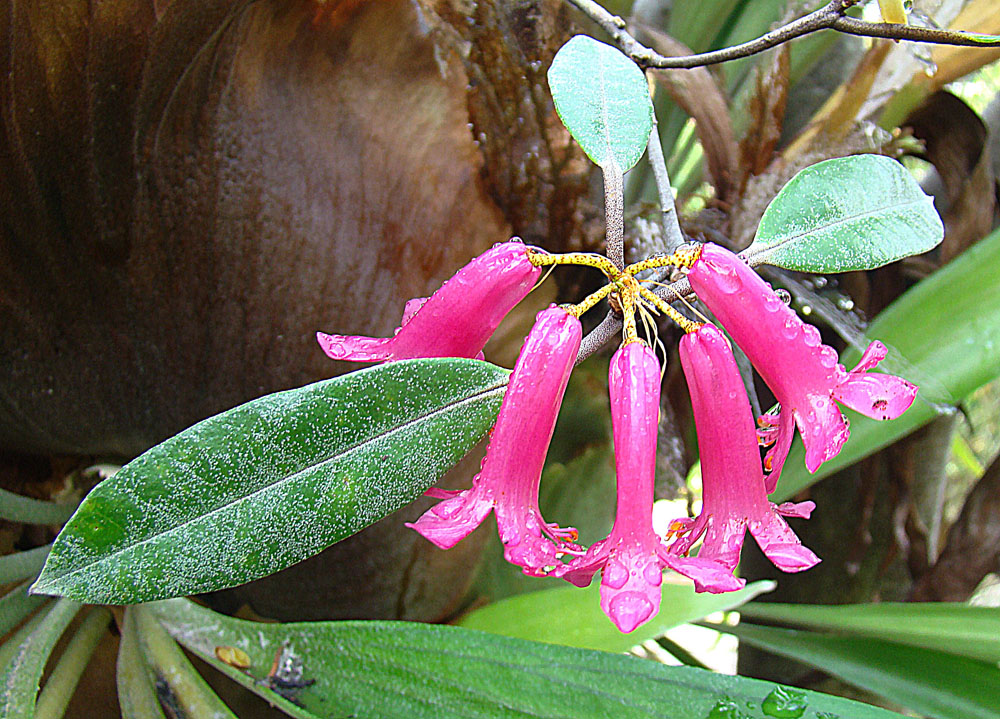
Rhododendron malayanum is a tropical evergreen shrub that has evolved to thrive in the humid mountain forests of Southeast Asia. Unlike many garden rhododendrons that grow exclusively in soil, this species demonstrates remarkable flexibility in its growth habits. It can establish itself as both a terrestrial shrub and an epiphyte, allowing it to occupy a wide range of ecological niches within its native habitat.
Its ability to grow on trees, rocky outcrops, and forest floors has contributed to its widespread distribution across the Malesian region. These adaptations enable the plant to take advantage of available light, moisture, and organic matter in environments where competition for resources can be intense.
A Natural Epiphyte Of Tropical Forests
One of the most fascinating characteristics of Rhododendron malayanum is its epiphytic lifestyle. In many parts of its natural range, the species grows attached to tree trunks and branches rather than rooting directly in the ground.
As an epiphyte, it does not draw nutrients from its host tree. Instead, it absorbs moisture and nutrients from rainwater, decaying organic matter, mosses, and accumulated debris surrounding its root system. This growth strategy allows the plant to reach brighter locations within the forest canopy while avoiding competition from larger ground-dwelling vegetation.
The species’ roots are adapted to excellent drainage and constant air circulation, conditions that are essential for healthy growth both in nature and cultivation.
Adaptations For Humid Montane Environments
The growth form of Rhododendron malayanum reflects its adaptation to cloud forests and montane rainforest ecosystems. These environments experience frequent mist, high humidity, moderate temperatures, and abundant rainfall throughout the year.
Its open branching structure improves airflow around the foliage and flowers, helping to reduce fungal issues in persistently damp conditions. The leathery leaves and protective scales further assist the plant in managing moisture while shielding it from environmental stress.
These adaptations make the species particularly well-suited to tropical greenhouse cultivation and shaded outdoor growing conditions in suitable climates.
Mature Size And Growth Characteristics
In cultivation, Rhododendron malayanum generally develops into a compact to medium-sized shrub ranging from 1 to 2 metres in height and width. Growth rates are typically moderate when the plant is provided with appropriate warmth, humidity, and well-draining growing media.
In the wild, however, specimens can become significantly larger. Mature plants growing under ideal conditions have been recorded reaching heights of up to 5 metres, especially when supported by surrounding vegetation within dense rainforest environments.
The combination of its spreading habit, attractive foliage, and graceful flowering displays allows Rhododendron malayanum to become a striking specimen plant, whether grown in specialised Vireya collections, tropical gardens, or carefully maintained bonsai-style displays.
Leaf Structure, Copper-Brown Scales, And Environmental Adaptations

The foliage of Rhododendron malayanum is one of the species’ most distinctive and easily recognisable features. While its flowers often attract immediate attention, the leaves provide some of the most important clues for identification and reveal a range of specialised adaptations that allow the plant to thrive in tropical montane environments. The combination of evergreen foliage, protective scales, and moisture-management adaptations reflects millions of years of evolution within the challenging conditions of Southeast Asian cloud forests.
These unique characteristics not only contribute to the plant’s ornamental appeal but also play a vital role in its survival as both a terrestrial and epiphytic species.
Leaf Shape And Evergreen Characteristics
Rhododendron malayanum produces narrow, elongated leaves that range from lanceolate to narrowly elliptical in shape. The leaf blades are typically leathery and somewhat rigid, providing durability in environments exposed to frequent rainfall, shifting temperatures, and occasional periods of reduced moisture availability.
The upper leaf surface is generally dark green and glossy, helping maximise light absorption beneath the forest canopy. As an evergreen species, the plant retains its foliage throughout the year, allowing it to continue photosynthesis whenever environmental conditions are favourable.
This persistent foliage enables the species to maintain steady growth in tropical climates where seasonal dormancy is largely absent.
The Signature Copper-Brown Lepidote Scales
Perhaps the most distinctive feature of Rhododendron malayanum is the dense covering of copper-brown scales found on the undersides of its leaves. These specialised structures, known as lepidote scales, are characteristic of many species within the Vireya group but are particularly prominent in this species.
The scales often form such a dense layer that the lower leaf surface appears almost entirely coppery or rusty brown in colour. This striking contrast with the glossy green upper surface creates a highly ornamental appearance even when the plant is not in flower.
Botanists frequently use the colour, density, and arrangement of these scales as important identification characteristics when distinguishing closely related Vireya species.
Adaptations For Moisture And Environmental Protection
The copper-brown scales serve several important ecological functions. They help regulate moisture loss by creating a protective barrier that reduces excessive transpiration while still allowing gas exchange. This adaptation is especially valuable for epiphytic plants that may experience rapid fluctuations in moisture availability despite living in humid environments.
The scales may also provide protection against intense sunlight, heavy rainfall, and fungal pathogens commonly encountered in tropical forests. By reflecting excess light and helping to manage surface moisture, they contribute to the plant’s overall resilience.
Combined with the leathery leaf texture and evergreen growth habit, these adaptations allow Rhododendron malayanum to flourish in the misty, high-humidity forests where it naturally occurs. The result is a species whose foliage is not only beautiful but also highly specialised for survival in one of the world’s most diverse ecosystems.
Flower Characteristics, Colour Forms, And Pollination Strategies
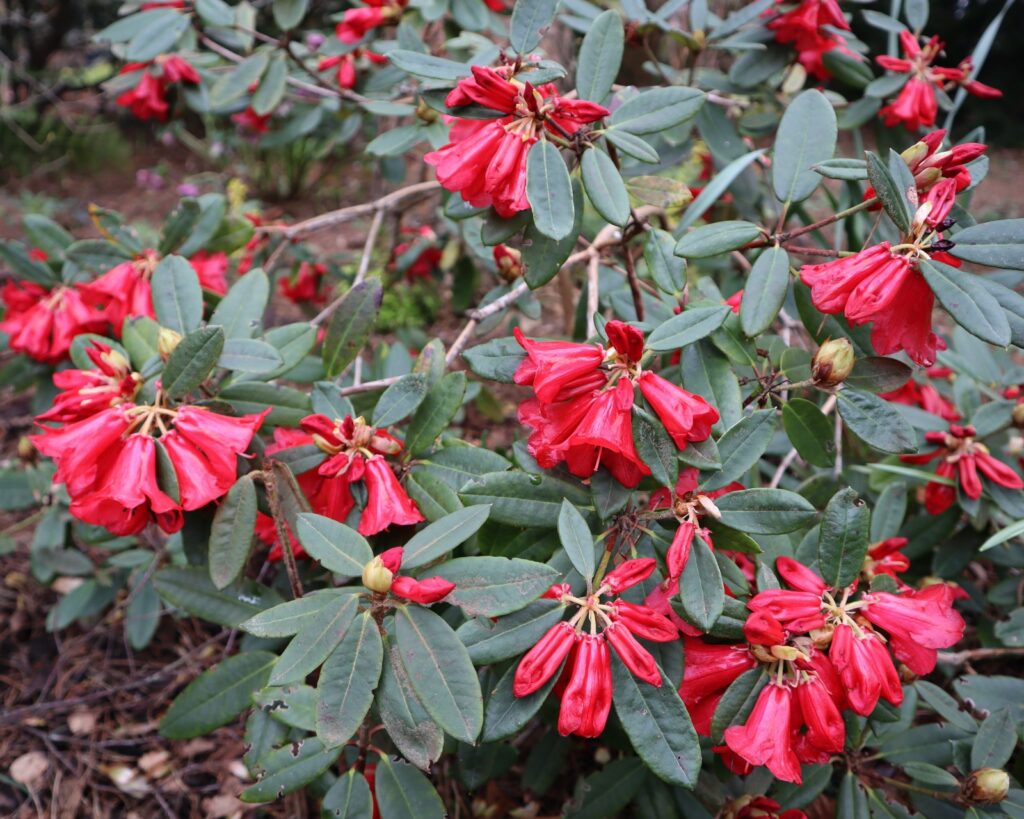
The flowers of Rhododendron malayanum are among the species’ most attractive and distinctive features. Their elegant tubular shape, pendulous presentation, and diverse colour forms make them highly desirable among collectors of tropical rhododendrons. While the foliage provides year-round interest, the flowering season transforms the plant into a spectacular display of colour that stands out within the dense vegetation of its native rainforest habitat.
The species exhibits considerable variation across its natural range, with flower colour and size often influenced by local environmental conditions and geographic isolation. This diversity has contributed to its popularity among Vireya enthusiasts and horticultural collectors.
Distinctive Tubular And Pendulous Blooms
Rhododendron malayanum produces elongated, narrowly tubular flowers that typically hang downward from the ends of branches. The pendulous nature of the blooms gives the plant a graceful appearance and helps distinguish it from many other rhododendron species that display more upright flower clusters.
The flowers are generally arranged in small terminal clusters, creating a colourful display above the foliage. Individual blooms can be relatively long and slender, with the floral tube gradually widening towards the mouth before opening into short lobes.
This specialised floral structure reflects the evolutionary relationship between the species and its natural pollinators.
Remarkable Variation In Flower Colour
One of the most fascinating aspects of Rhododendron malayanum is the diversity of flower colours observed throughout its distribution range. Depending on location and genetic variation, blooms may appear in shades of:
- Pink
- Rose-pink
- Purple
- Reddish-purple
- Cream
- Greenish-white
- Pale yellow-green
Some populations may also exhibit subtle colour shifts as flowers mature. This variation has made the species particularly valuable for breeding programmes involving tropical Vireya rhododendrons, where unique flower colours and forms are highly sought after.
The colourful blooms contrast beautifully with the dark green foliage and copper-brown leaf scales, creating one of the species’ most appealing ornamental features.
Adaptations For Pollination
The flower structure of Rhododendron malayanum suggests adaptation to specialised pollinators capable of accessing nectar located deep within the tubular corolla. In its native habitat, pollination is believed to be carried out primarily by nectar-feeding birds and large insects that can reach the reproductive structures within the flower.
The pendulous orientation may help protect pollen and nectar from heavy tropical rainfall while also positioning the blooms for efficient access by visiting pollinators. Bright floral colours further enhance visibility within the shaded forest environment, attracting pollinating species from a distance.
Through these adaptations, Rhododendron malayanum has developed an effective reproductive strategy that supports its survival across a wide range of tropical mountain ecosystems. Its flowers not only contribute significantly to its horticultural value but also play a vital role in maintaining ecological relationships within Southeast Asian rainforest habitats.
Native Distribution, Montane Forest Habitat, And Ecological Importance
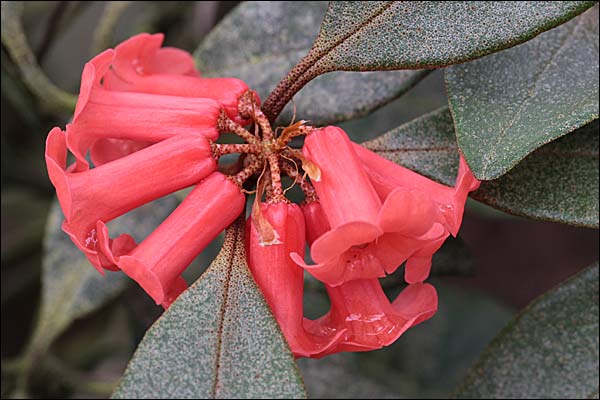
Rhododendron malayanum is widely distributed throughout the tropical regions of Southeast Asia, where it inhabits some of the most biologically diverse mountain ecosystems on Earth. Its natural range extends across much of the Malesian floristic region, making it one of the more widespread members of the Vireya rhododendrons. The species has successfully adapted to a variety of humid forest environments, allowing it to occupy both terrestrial and epiphytic niches across a broad geographic area.
Its presence in these ecosystems highlights the remarkable diversity of tropical rhododendrons and their importance within rainforest habitats that support countless plant and animal species.
Distribution Across Southeast Asia
The natural range of Rhododendron malayanum includes numerous countries and island groups throughout Southeast Asia. It has been recorded in:
- Peninsular Malaysia
- Southern Thailand
- Sumatra
- Java
- Borneo
- Sulawesi
- The Maluku Islands
- The Philippines
Across this vast distribution, populations may exhibit variations in flower colour, growth habit, and leaf characteristics. These regional differences reflect adaptation to local environmental conditions and contribute to the species’ overall genetic diversity.
The widespread occurrence of Rhododendron malayanum demonstrates its ability to thrive across a range of tropical mountain environments while maintaining the core characteristics that define the species.
Life In Montane And Cloud Forest Ecosystems
Most populations of Rhododendron malayanum occur in montane forests, cloud forests, and high-rainfall upland regions. These habitats are characterised by cool to mild temperatures, persistent humidity, frequent mist, and well-drained organic substrates.
The species is commonly found growing on moss-covered tree branches, fallen logs, rocky slopes, and forest floors rich in decomposing organic material. In cloud forests, moisture from fog and low-lying clouds often provides a consistent water source even when rainfall is limited.
These environments create ideal conditions for epiphytic and lepidote rhododendrons, allowing them to flourish alongside orchids, ferns, mosses, and other specialised rainforest plants.
Ecological Role Within The Forest
As a flowering shrub, Rhododendron malayanum contributes to the ecological health of tropical montane forests by supporting pollinator populations and enhancing plant diversity. Its nectar-rich flowers provide a food source for birds and insects that play important roles in pollination networks throughout the forest ecosystem.
Epiphytic specimens also contribute to the complex structure of rainforest canopies, creating microhabitats that retain moisture and support smaller organisms. By growing on tree branches and among mosses, the species becomes part of a larger ecological community that helps maintain biodiversity.
Like many tropical mountain plants, Rhododendron malayanum can also serve as an indicator of ecosystem health. Because it depends on stable humidity levels and relatively undisturbed habitats, declining populations may signal environmental pressures such as deforestation, habitat fragmentation, or climate change.
Its continued survival within Southeast Asia’s montane forests highlights the importance of conserving these unique ecosystems and the extraordinary plant diversity they support.
Cultivation Requirements, Growing Conditions, And Propagation

Cultivating Rhododendron malayanum can be highly rewarding for enthusiasts of tropical rhododendrons, but the species requires conditions that closely resemble its native rainforest habitat. Unlike many temperate rhododendrons, this Vireya species thrives in warm, humid environments with excellent air circulation and rapid drainage. When provided with suitable growing conditions, it can produce healthy foliage and impressive floral displays throughout the year.
Because of its epiphytic tendencies and specialised root system, successful cultivation depends on avoiding heavy soils and maintaining a careful balance between moisture retention and drainage.
Light, Temperature, And Humidity Requirements
Rhododendron malayanum performs best in bright, filtered light similar to the conditions found beneath a tropical forest canopy. It appreciates morning sunlight but should be protected from prolonged exposure to intense afternoon sun, which can scorch leaves and stress the plant.
Ideal growing temperatures generally range between 15°C and 28°C. The species does not tolerate frost and should be protected from cold conditions below 10°C whenever possible. In cooler regions, greenhouse cultivation is often necessary to maintain suitable temperatures throughout the year.
High humidity is essential for long-term health. Relative humidity levels above 60% are preferred, with many growers aiming for 70% to 80% humidity to replicate natural cloud forest conditions.
Growing Media And Watering Practices
As an epiphytic species, Rhododendron malayanum requires a growing medium that provides excellent drainage and abundant airflow around the roots. Traditional garden soil is generally unsuitable.
Successful growers often use coarse mixes containing materials such as:
- Pine bark
- Orchid bark
- Tree fern fibre
- Perlite
- Coarse peat moss
- Coconut husk chips
These materials help retain sufficient moisture while preventing waterlogging, which can quickly lead to root rot.
Watering should keep the growing medium consistently moist but never saturated. The roots should not be allowed to dry out completely, yet prolonged wet conditions should also be avoided. Good drainage remains one of the most important factors in successful cultivation.
Propagation Methods
Rhododendron malayanum can be propagated through both seed and cuttings, although each method presents different challenges.
Seed propagation is commonly used by collectors and conservation programmes. Fresh seed should be sown on a sterile, well-draining medium and maintained in warm, humid conditions. Germination can be relatively quick when moisture and temperature requirements are met.
Vegetative propagation through semi-hardwood cuttings is often preferred when growers wish to preserve the characteristics of a particular plant or flower colour form. Cuttings are typically taken from healthy growth and placed in a humid propagation environment with bottom heat and rooting hormone.
While propagation can require patience, successful plants reward growers with one of the most distinctive and beautiful species within the tropical Vireya rhododendrons. With proper care, Rhododendron malayanum can thrive for many years in specialised collections, conservatories, and suitable tropical gardens.
Rhododendron Malayanum In Horticulture, Conservation, And Bonsai Cultivation
Rhododendron malayanum holds a special place among collectors of tropical rhododendrons due to its distinctive copper-scaled foliage, elegant pendulous flowers, and adaptability to warm, humid growing conditions. Within horticulture, it is highly valued as both a specimen plant and a parent species in Vireya breeding programmes, where its attractive floral forms and ornamental foliage contribute desirable characteristics to new hybrids. Its unique appearance ensures it remains a favourite among enthusiasts seeking unusual and visually striking plants for conservatories, shade gardens, and specialised collections.
Like many tropical montane species, Rhododendron malayanum faces potential challenges from habitat loss, deforestation, and environmental change across parts of its natural range. The preservation of Southeast Asia’s cloud forests and mountain ecosystems remains essential for protecting not only this species but also the countless plants and animals that share its habitat. Botanical gardens, specialist growers, and conservation organisations play an important role in maintaining cultivated populations that help preserve valuable genetic diversity for future generations.
Although not commonly associated with traditional bonsai compared to species such as pines, junipers, or azaleas, Rhododendron malayanum possesses several characteristics that make it suitable for bonsai experimentation. Its naturally branching growth habit, evergreen foliage, and ability to thrive in container culture allow skilled growers to develop attractive miniature specimens over time. Care must be taken to maintain the warm temperatures, humidity, and excellent drainage the species requires, as it is far less tolerant of neglect than many conventional bonsai subjects.
For collectors interested in tropical rhododendrons, Rhododendron malayanum represents an exceptional species that combines botanical interest, horticultural beauty, and conservation significance. Whether admired for its remarkable foliage, colourful flowers, ecological adaptations, or bonsai potential, it remains one of the most fascinating members of the Vireya rhododendrons and a worthy addition to any serious tropical plant collection.