
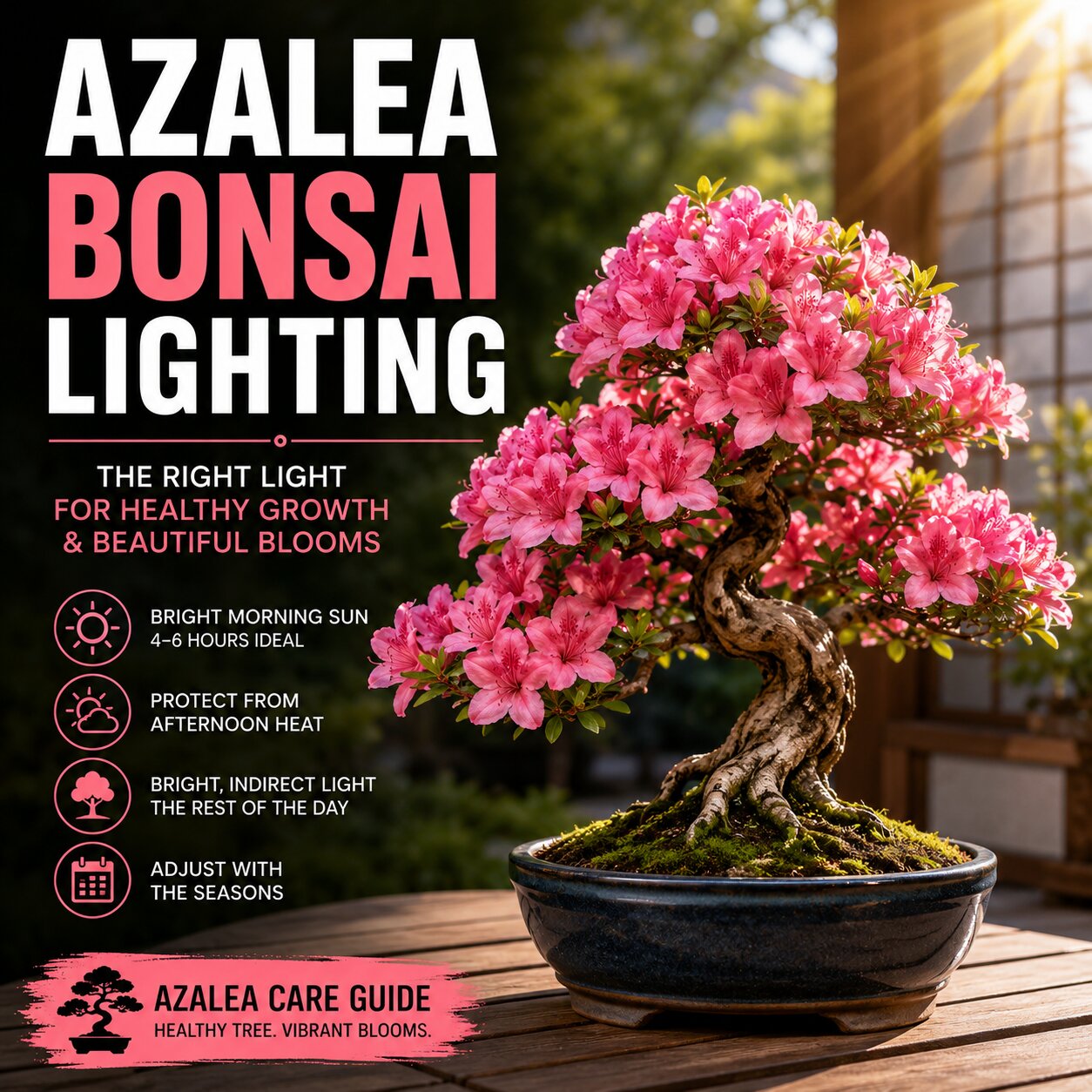
Providing the correct Azalea bonsai lighting is one of the most important aspects of keeping these beautiful flowering trees healthy throughout the year. Light influences everything from leaf production and flowering to overall vigour and branch development. Too little light can weaken the tree, while excessive direct sunlight may damage foliage and dry the soil far too quickly.
Understanding the lighting requirements of an Azalea bonsai allows growers to create an environment where the tree can thrive. By balancing sunlight, shade and seasonal changes, you can encourage strong growth and enjoy spectacular floral displays year after year.
Understanding The Natural Lighting Needs Of Azaleas
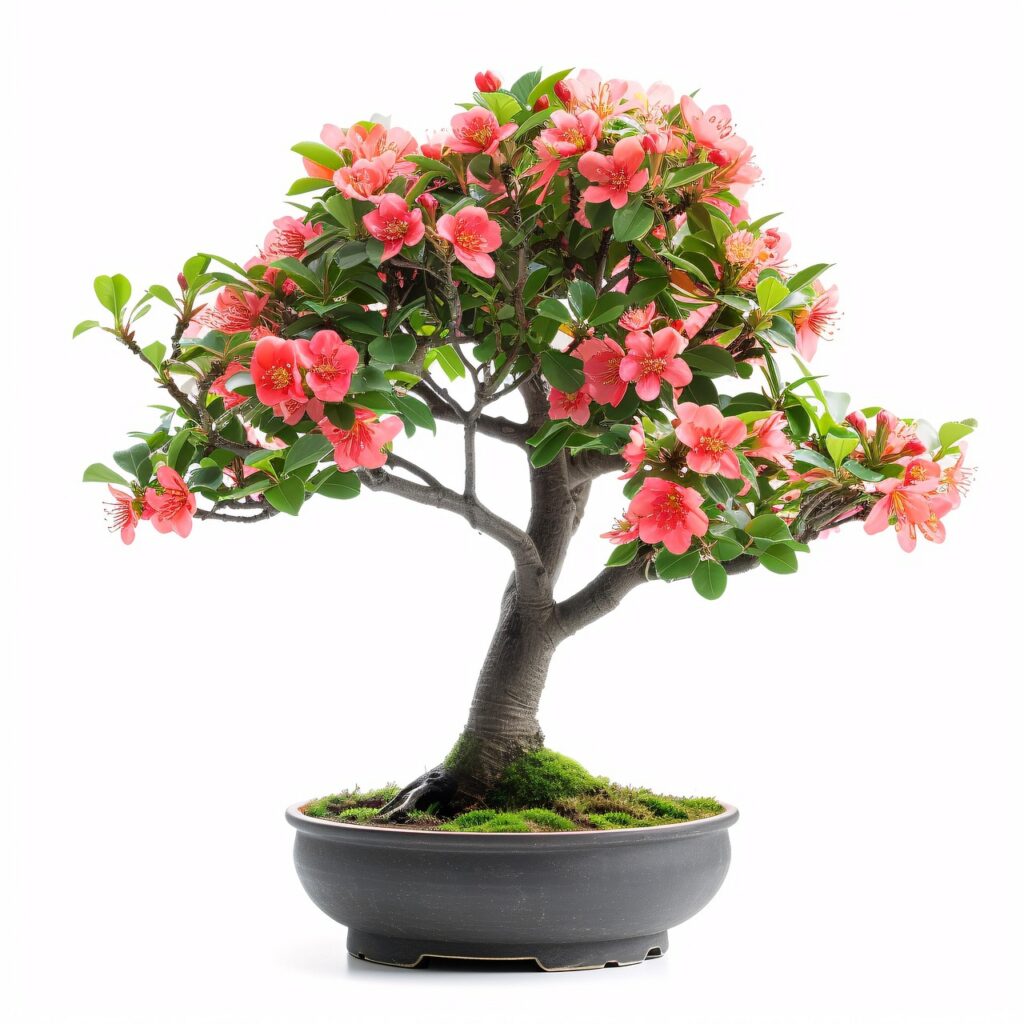
Azaleas naturally grow beneath the filtered canopy of larger trees, where they receive bright conditions without constant exposure to intense midday sunlight. Replicating these conditions is the foundation of proper Azalea bonsai lighting.
Morning Azalea bonsai lighting is generally ideal, providing enough energy for photosynthesis while avoiding the harsher afternoon rays that can stress delicate foliage and flowers.
Bright, indirect light throughout the remainder of the day helps maintain healthy leaves while reducing the risk of overheating during warmer months.
Providing consistent lighting conditions also reduces unnecessary stress, allowing the tree to focus its energy on healthy root development and flower production.
Seasonal Azalea Bonsai Lighting Requirements
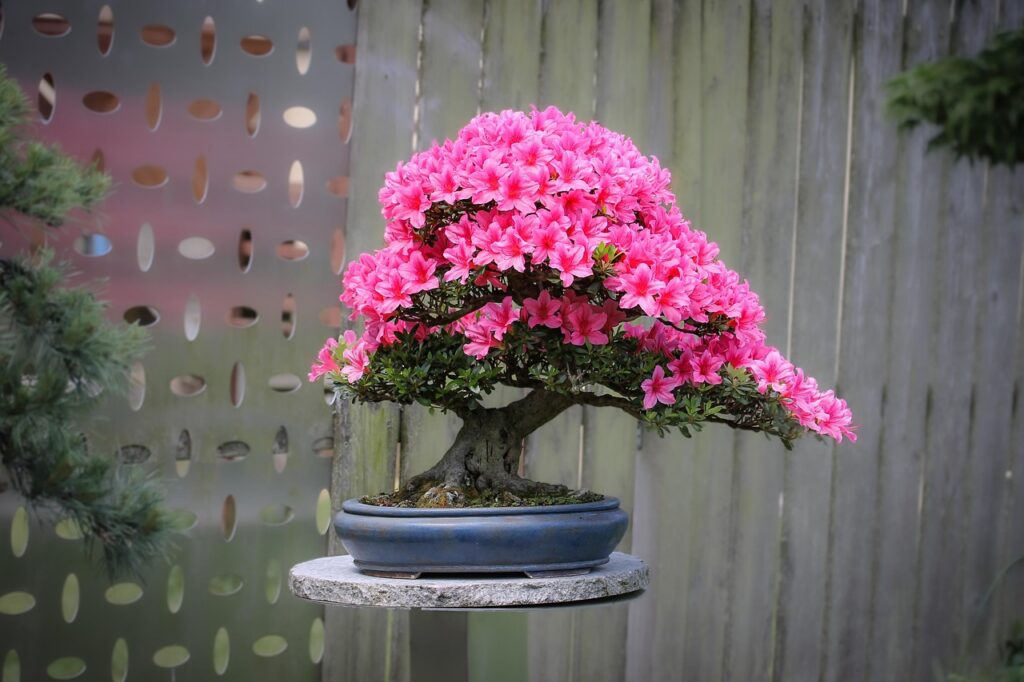
The amount and intensity of sunlight your Azalea or Rhododendron bonsai receives should change with the seasons. During spring and autumn, Azaleas generally tolerate more direct sunlight because temperatures remain relatively mild.
Summer often requires additional protection during the hottest part of the afternoon. Dappled shade or a location receiving morning sun followed by afternoon shade usually provides excellent growing conditions.
Winter lighting remains important even when growth slows. Outdoor Azalea bonsai should continue receiving natural daylight while being protected from severe frost where necessary.
Indoor growing is generally discouraged for extended periods, as most homes cannot provide the consistent light intensity required for long-term health.
Helpful lighting recommendations include:
- Provide four to six hours of gentle morning sunlight.
- Protect from harsh afternoon summer sun.
- Choose bright, well-ventilated growing locations.
- Rotate the bonsai occasionally for even growth.
- Avoid keeping the tree indoors permanently.
Recognising Lighting Problems
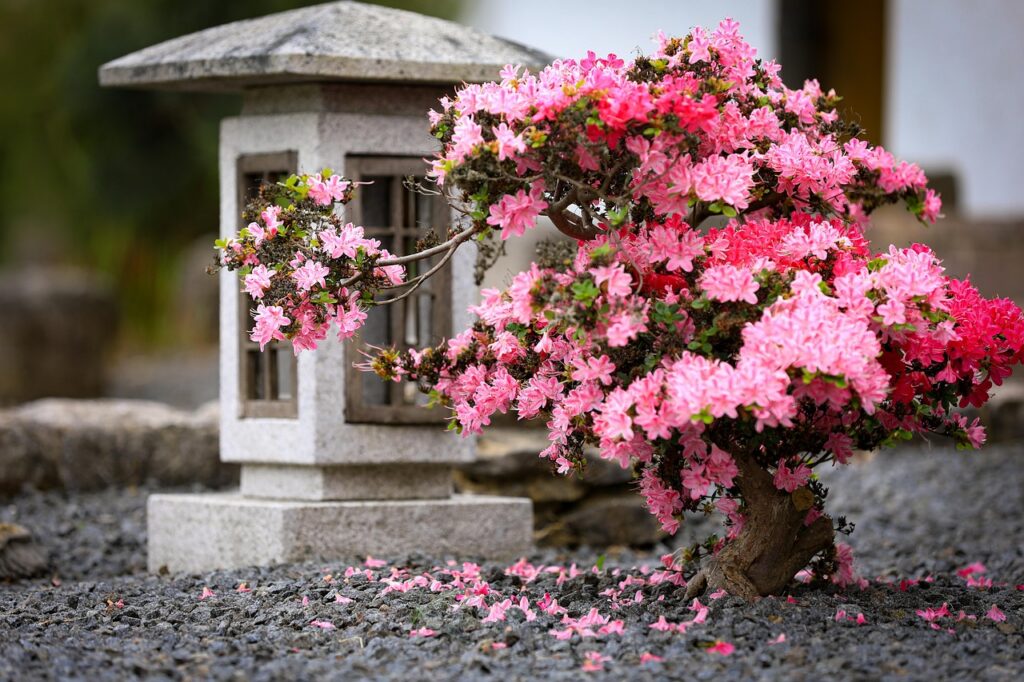
Improper Azalea bonsai lighting often reveals itself through visible changes in the tree’s appearance. Insufficient light typically results in elongated shoots, pale leaves, fewer flower buds and slower overall growth.
Excessive sunlight presents different symptoms. Leaf scorch, dry edges, faded foliage and rapidly drying soil usually indicate the tree is receiving more direct sunlight than it can comfortably tolerate.
Monitoring the bonsai regularly allows growers to make gradual adjustments before these issues become severe. Because weather conditions change throughout the year, lighting requirements should be reviewed frequently rather than treated as a fixed routine.
Observing how your Azalea responds remains one of the best ways to fine-tune its growing environment.
Creating The Ideal Lighting Environment
Successful Azalea bonsai lighting is not about maximising sunlight but providing the right quality of light throughout the growing season. Bright mornings, filtered afternoon light and good air circulation create conditions that closely resemble the tree’s natural habitat.
Combining proper lighting with suitable watering, humidity, soil and fertilisation produces healthier foliage, stronger branches and more abundant flowering. Small seasonal adjustments can make a significant difference over the lifetime of the bonsai.
By understanding how light influences every stage of growth, bonsai enthusiasts can confidently provide an environment that supports both the health and beauty of their Azalea bonsai for many years to come.