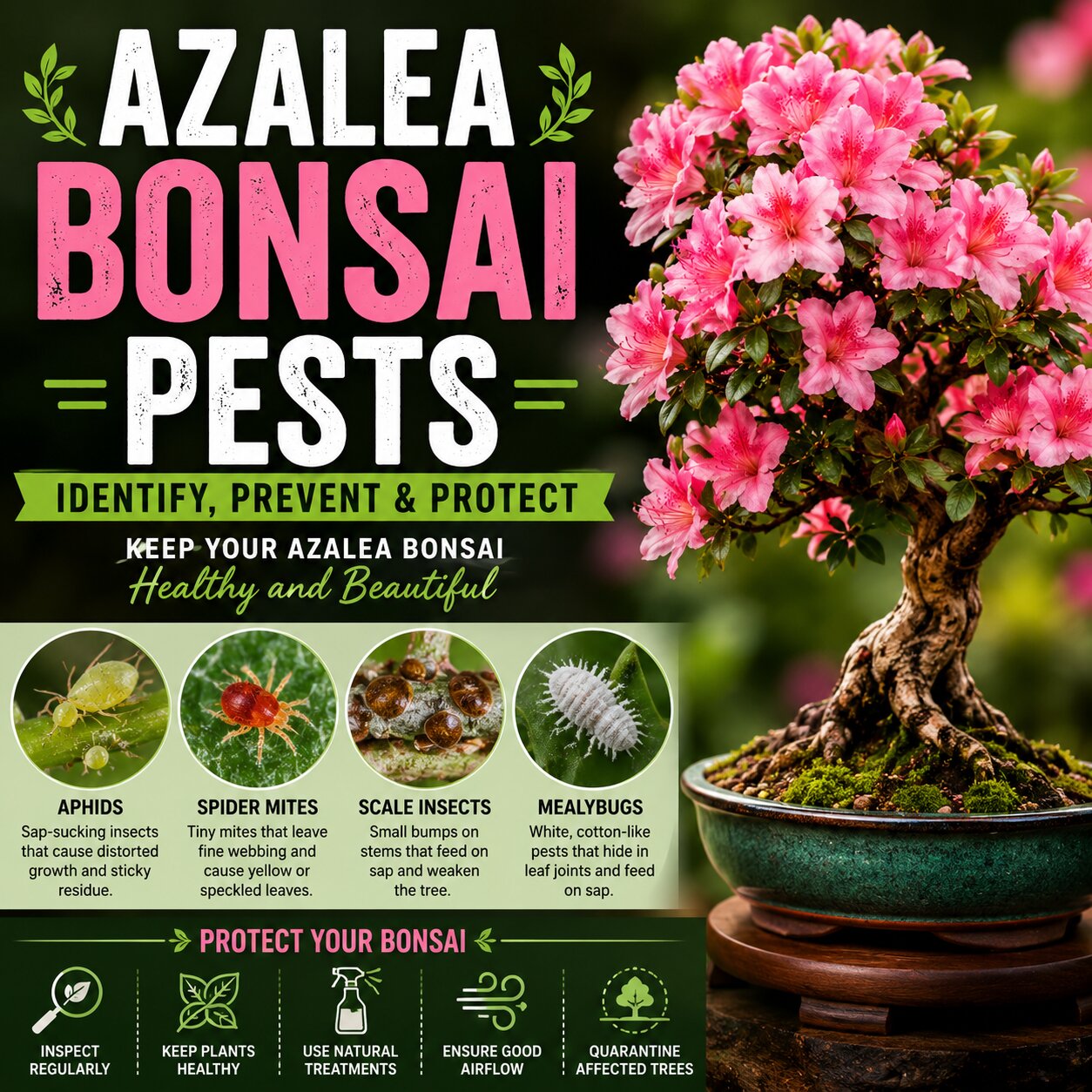
Azalea bonsai pests can quickly damage the health and beauty of these stunning flowering trees if left untreated. While healthy azaleas are generally resilient, they can still attract insects and mites that feed on leaves, stems, roots, or flowers. The good news is that most infestations can be controlled when identified early.
Knowing what to look for is the first step towards keeping your azalea bonsai thriving throughout the year.
Common Azalea Bonsai Pests
Several pests are known to target azalea bonsai, each leaving different signs of damage.
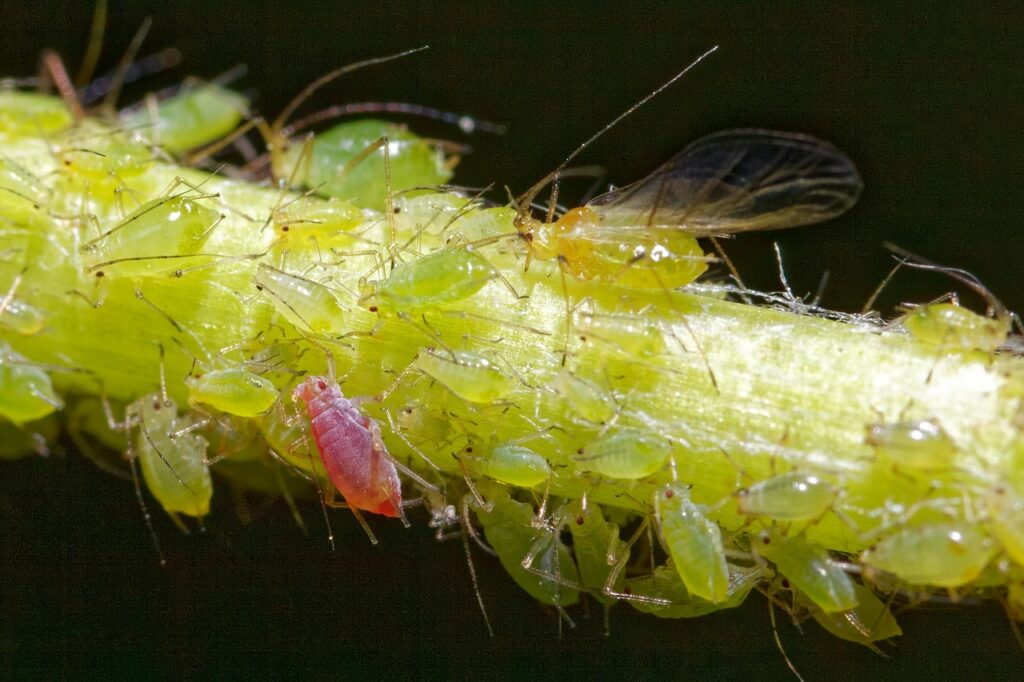
Aphids are among the most common. These tiny insects gather on new shoots and flower buds, sucking sap from the plant and causing distorted growth.
Spider mites are another frequent problem, particularly during hot, dry weather. They leave fine webbing beneath leaves while causing yellow or speckled foliage.
Scale insects attach themselves to stems and branches, appearing as small brown or white bumps. They feed slowly but can weaken the tree over time if ignored.
Mealybugs hide in leaf joints and branch intersections, producing a white cotton-like substance while feeding on plant sap.
Signs Your Bonsai May Have Pests
Regular inspections make pest control much easier.
Check the undersides of leaves, new shoots, flower buds, and branches every week during the growing season.
Common warning signs include:
- Sticky residue on leaves
- Yellow or spotted foliage
- Curled or distorted leaves
- Fine webbing
- White cotton-like clusters
- Small bumps attached to stems
- Reduced flowering
- Weak new growth
Catching problems early usually prevents major infestations.
Managing Azalea Bonsai Pests Naturally
Many azalea bonsai pests can be managed without harsh chemicals.
Start by isolating affected trees to prevent pests spreading to other bonsai.
A gentle spray of water can remove aphids from young growth, while pruning heavily infested branches may eliminate larger colonies.
Neem oil is widely used to control aphids, spider mites, scale insects, and mealybugs while being relatively gentle on the tree when used according to instructions.
Maintaining good airflow, avoiding overcrowding, and keeping your bonsai healthy through proper watering and fertilising also reduces the likelihood of pest outbreaks.
- Inspect your bonsai weekly.
- Check underneath leaves and along stems.
- Remove pests before infestations spread.
- Encourage healthy growing conditions.
- Use appropriate bonsai-safe treatments.
- Quarantine affected trees when necessary.
Healthy Trees Are the Best Defence
The best way to minimise azalea bonsai pests is by maintaining a healthy, vigorous tree. Proper watering, balanced fertilisation, good air circulation, and regular inspections all help prevent insects from becoming serious problems.
By understanding the common pests that affect azalea bonsai and responding quickly to the first signs of infestation, you can protect your tree’s health and continue enjoying its spectacular blooms for many seasons to come.