
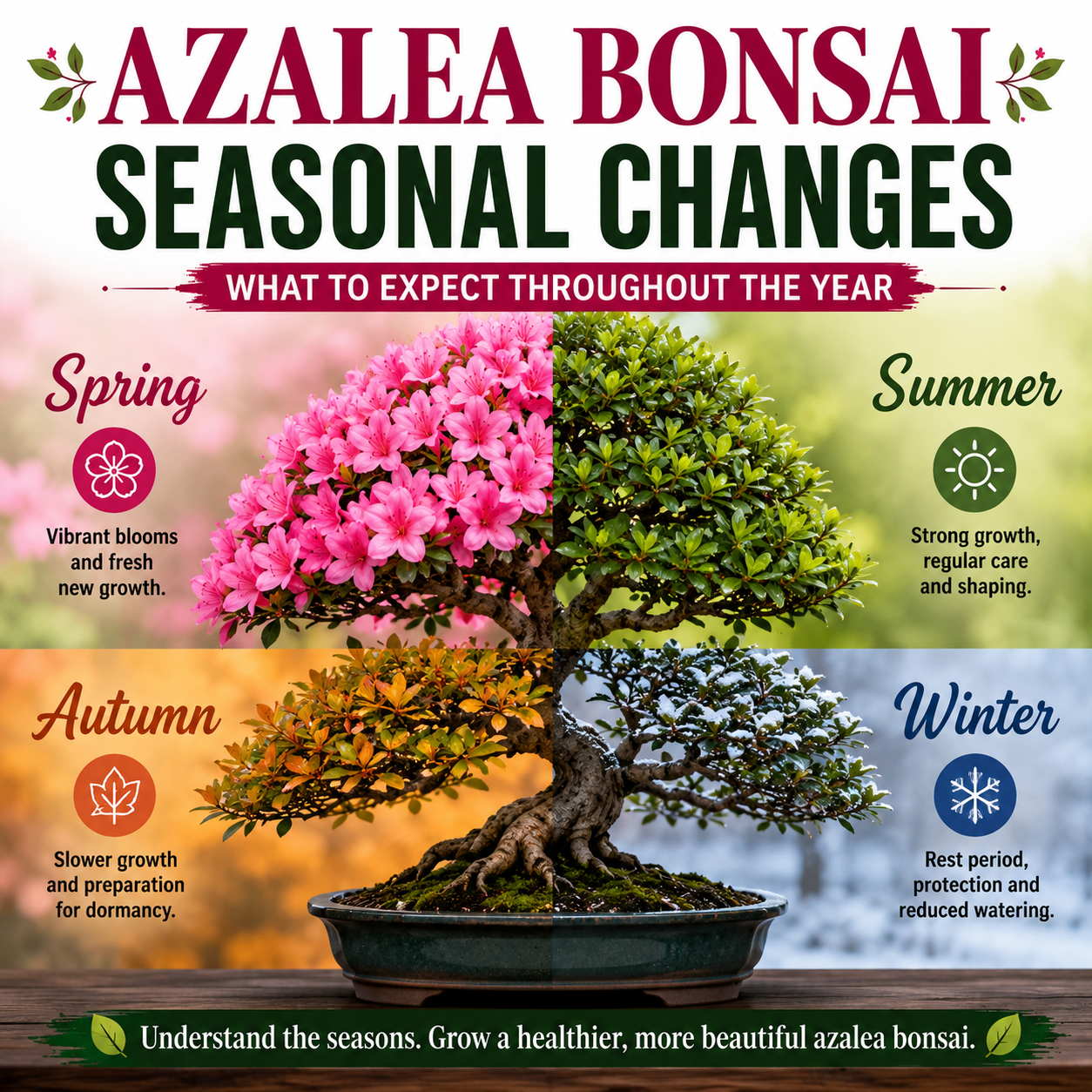
Understanding azalea bonsai seasonal changes is one of the keys to growing a healthy and beautiful bonsai. Throughout the year, your tree will experience periods of vigorous growth, stunning flowering, slower development, and dormancy. Learning to recognise these natural cycles allows you to provide the right care at the right time.
Many beginners are surprised by how much azalea bonsai seasonal changes influence watering, fertilising, pruning, and overall maintenance. Rather than following the same routine every month, successful growers adapt their care to match the tree’s natural rhythm.
Spring Brings Growth and Spectacular Flowers
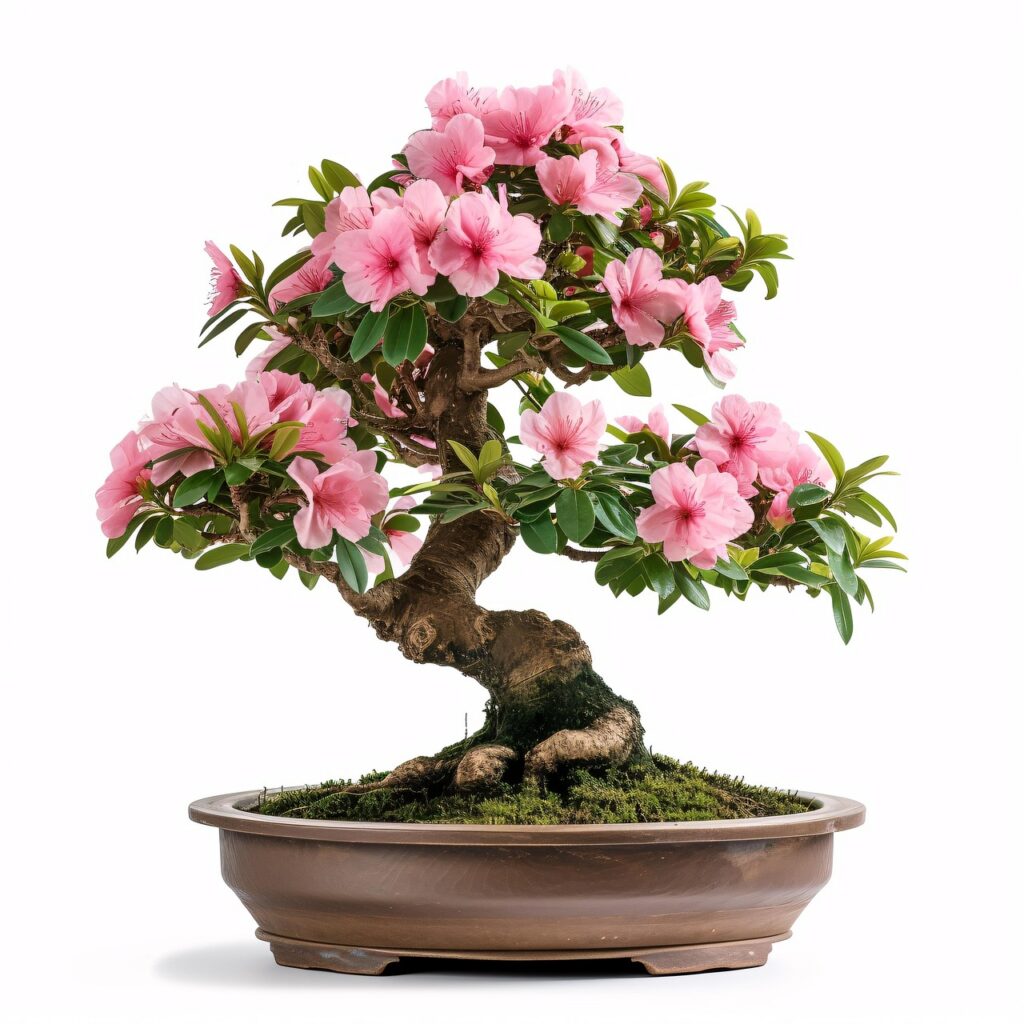
Among all azalea bonsai seasonal changes, spring is undoubtedly the most exciting. Dormant buds begin to swell before producing fresh foliage and the colourful blooms that make azalea bonsai so popular.
During this period, your bonsai requires consistent watering, good sunlight, and careful monitoring. Flower production uses a significant amount of energy, making healthy roots and proper nutrition especially important before blooming begins.
Once the flowers fade, remove spent blooms to encourage the tree to direct its energy towards producing healthy shoots and branches. This stage of azalea bonsai seasonal changes is also an ideal opportunity to assess the overall health of your tree before carrying out any structural pruning.
Spring growth lays the foundation for the rest of the year, making it one of the most important periods in the annual bonsai cycle.
Summer Encourages Strong Development
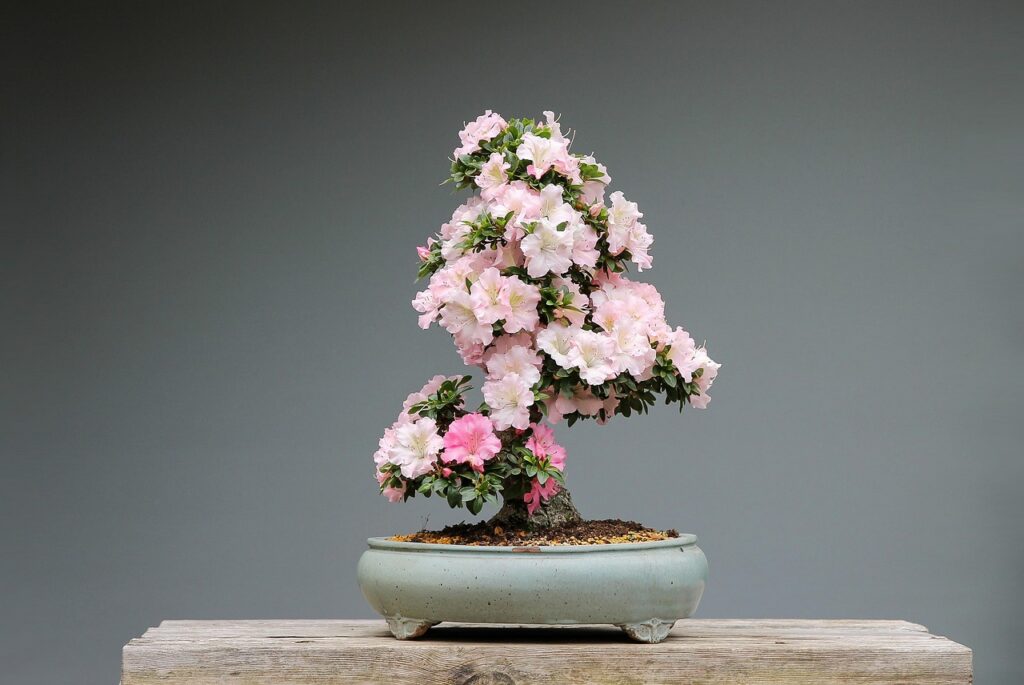
As azalea bonsai seasonal changes move into summer, the focus shifts from flowering to vigorous vegetative growth. New shoots extend, foliage thickens, and branches continue to mature.
Higher temperatures mean your azalea bonsai will generally require more frequent watering. The soil should remain consistently moist but never become waterlogged, as azaleas dislike sitting in saturated conditions.
Summer is also an excellent time for light maintenance pruning to preserve your bonsai’s shape. Healthy foliage allows the tree to store energy that will support flowering during the following spring.
Regular inspections are important because pests such as aphids, lace bugs, and spider mites are often more active during warm weather.
Seasonal Care Checklist
Following azalea bonsai seasonal changes becomes much easier when you understand each season’s priorities.
- Spring: Encourage healthy flowering, remove spent blooms, and assess the tree after flowering.
- Summer: Maintain watering, trim vigorous shoots, and monitor for pests.
- Autumn: Reduce fertilising, slow maintenance activities, and prepare for dormancy.
- Winter: Protect from severe frost, reduce watering, and allow the tree to rest naturally.
Keeping your maintenance aligned with azalea bonsai seasonal changes helps reduce stress while encouraging stronger growth throughout the year.
Autumn and Winter Prepare the Tree for the Future
As temperatures cool, azalea bonsai seasonal changes become more subtle. Growth slows naturally as the tree begins storing energy for the following flowering season.
Autumn is the ideal time to gradually reduce fertiliser applications while continuing to monitor soil moisture. Cooler weather usually means less frequent watering, although the soil should never dry out completely.
Winter provides an important resting period. Although many evergreen azaleas retain their leaves, growth slows considerably during this season. Protect your bonsai from severe frost while ensuring it still receives adequate light and good airflow.
Respecting these quieter azalea bonsai seasonal changes allows the tree to conserve energy and emerge stronger when spring arrives.
Appreciating the Beauty of Every Season
One of the greatest rewards of growing an azalea bonsai is witnessing the remarkable azalea bonsai seasonal changes that occur throughout the year. Every season offers something different, from vibrant spring blossoms and lush summer foliage to the gentle preparation of autumn and the peaceful rest of winter.
Rather than seeing these seasonal transitions as obstacles, embrace them as part of your bonsai’s natural life cycle. Understanding azalea bonsai seasonal changes allows you to anticipate your tree’s needs and provide the care it deserves.
By learning to work with azalea bonsai seasonal changes instead of against them, you will enjoy a healthier bonsai, stronger flowering, and many years of beautiful seasonal displays in your collection.