Many bonsai enthusiasts and gardeners use the terms “azalea” and “rhododendron” as though they describe completely different plants. In reality, every azalea belongs to the Rhododendron genus, but not every rhododendron is an azalea. Understanding this relationship can help you choose the right species for your garden or bonsai collection and care for it more effectively.
Whether you are buying your first bonsai or identifying a flowering shrub, knowing the difference between Rhododendron and Azalea can prevent confusion and improve your growing success.
Understanding the Rhododendron Genus
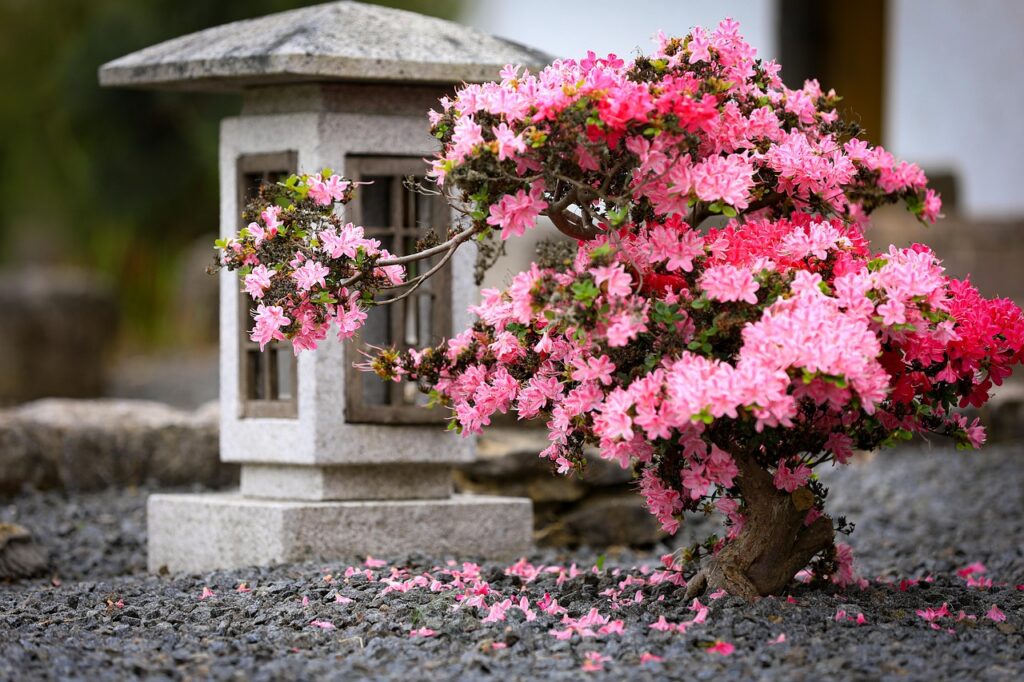
The genus Rhododendron contains more than 1,000 recognised species and thousands of cultivated varieties. These plants are native to many parts of Asia, Europe, and North America and range from small ground covers to large shrubs and even trees.
Within this large genus are two groups commonly known as azaleas. Although botanically they are rhododendrons, they have several characteristics that distinguish them from their larger relatives.
This is why garden centres often label plants as either rhododendrons or azaleas, even though they belong to the same genus.
The Main Differences Between Rhododendrons and Azaleas
Although closely related, there are several easy ways to tell the difference between Rhododendron and Azalea.
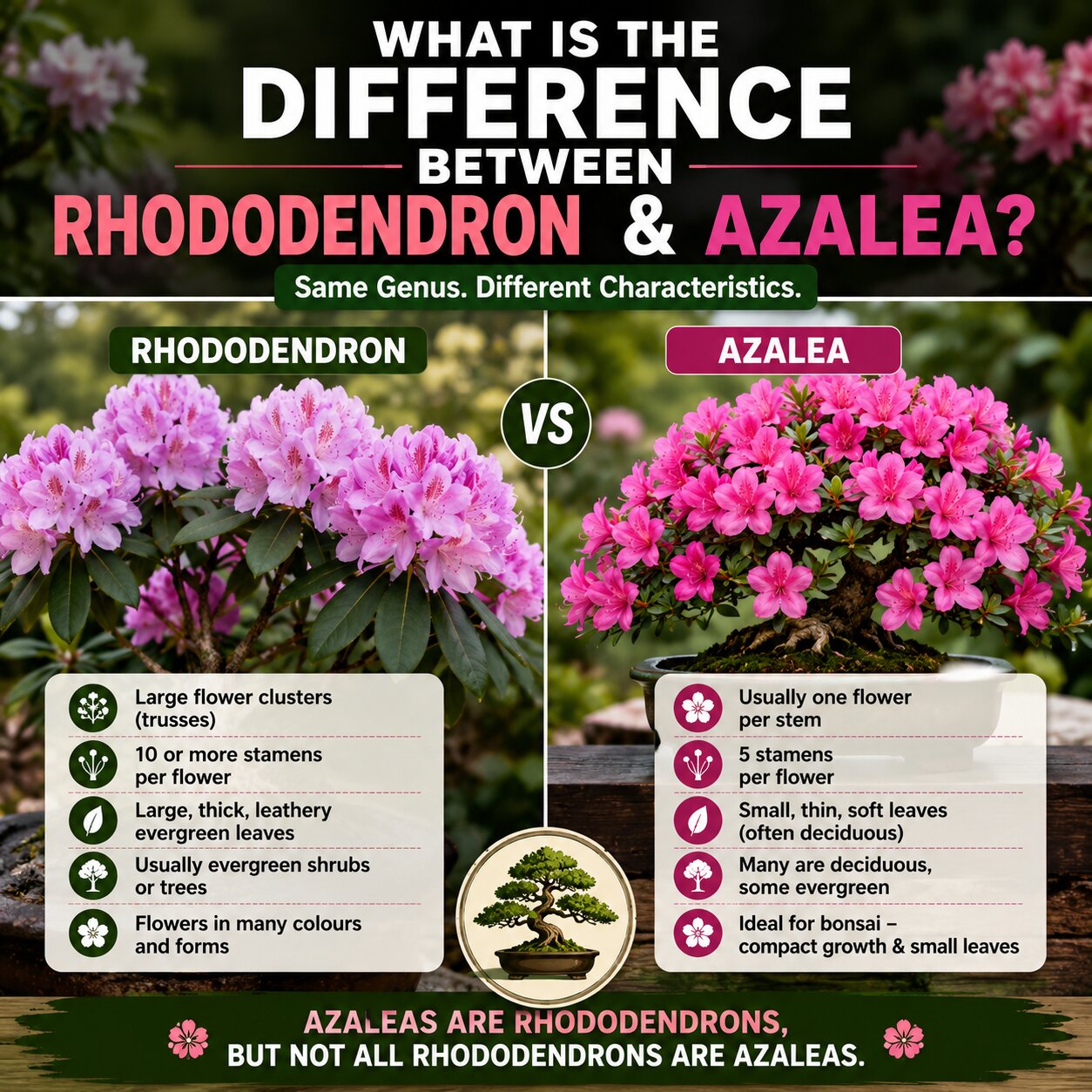
- Azaleas usually have one flower per stem, while rhododendrons often produce large flower clusters.
- Azalea flowers generally have five stamens, whereas rhododendrons usually have ten or more.
- Azalea leaves are typically smaller, thinner, and softer.
- Rhododendrons often have larger, thicker, leathery leaves.
- Many azaleas are deciduous, while most rhododendrons remain evergreen throughout the year.
These characteristics make identification much easier, particularly during the flowering season.
Which Is Better for Bonsai?
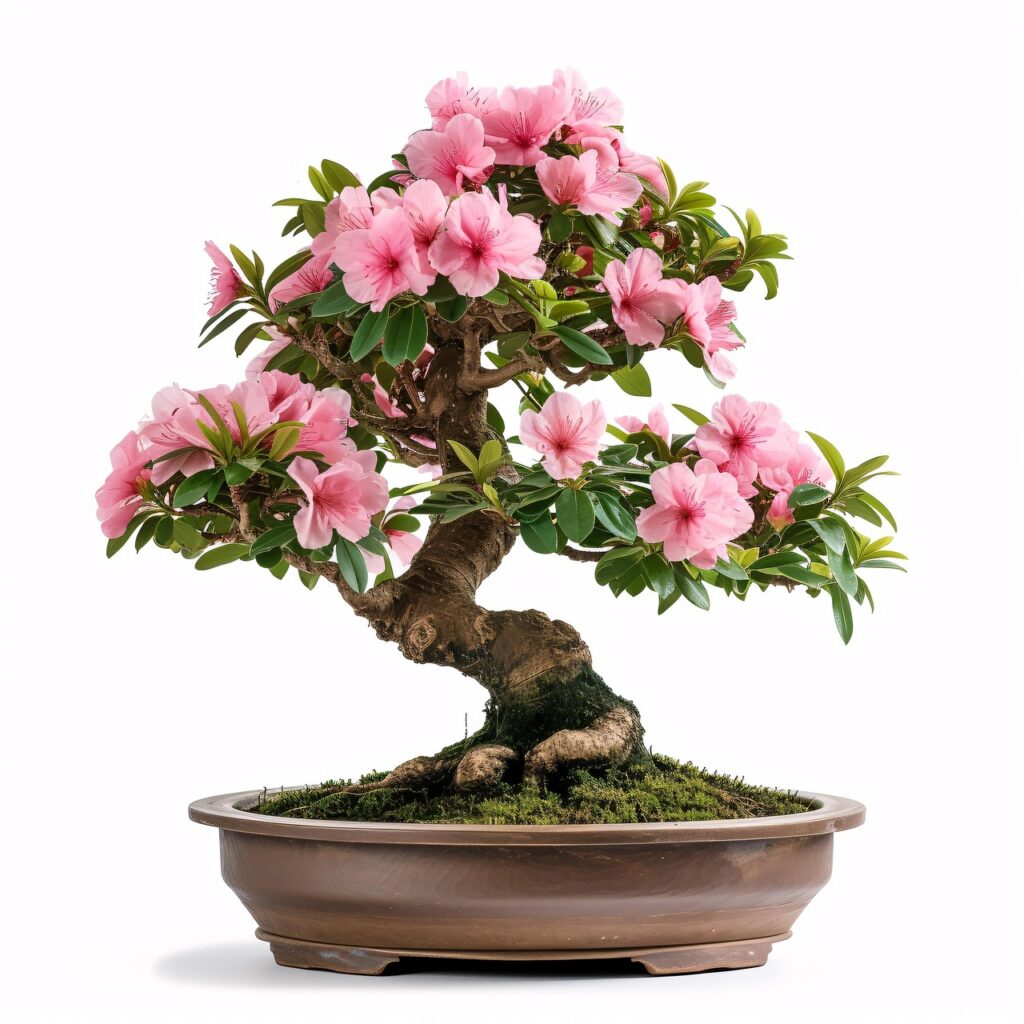
When comparing Rhododendron and Azalea for bonsai, azaleas are by far the preferred choice.
Species such as Satsuki and Kurume Azaleas naturally develop fine branching, smaller leaves, and spectacular spring flowers that are ideal for miniature tree cultivation. They also respond well to pruning and shaping techniques.
Most large-leaf rhododendrons are less suitable because their leaves and flowers can be disproportionately large for bonsai design. Their growth habits also make it more difficult to create convincing miniature trees.
For this reason, when people refer to “azalea bonsai,” they almost always mean one of the specialised azalea species rather than the broader rhododendron group.
Growing Requirements
Both groups enjoy similar growing conditions, making them relatively easy to care for if their basic needs are met.
They generally prefer acidic, well-draining soil that retains moisture without becoming waterlogged. They also benefit from partial sunlight, especially in hotter climates where intense afternoon sun can scorch the leaves.
Consistent watering is essential, but good drainage is equally important to prevent root problems. Regular feeding with fertiliser designed for acid-loving plants encourages healthy foliage and abundant flowering.
Despite these shared preferences, individual species may have slightly different cold tolerance and watering requirements.
Choosing the Right Plant
If your goal is a colourful flowering bonsai, an azalea is usually the best option. Their compact growth and beautiful blooms have made them one of the world’s most popular flowering bonsai trees.
If you want a larger ornamental shrub with dramatic flower displays in the garden, many rhododendron species offer spectacular landscape value. Some varieties produce enormous flower trusses that create breathtaking displays each spring.
Choosing between Rhododendron and Azalea ultimately depends on your available space, gardening goals, and preferred style of cultivation.
Understanding the Family Connection
The relationship between Rhododendron and Azalea often causes confusion because the common names suggest they are separate types of plants. Botanically, however, azaleas simply represent specialised groups within the much larger Rhododendron genus.
By understanding their similarities and differences, gardeners and bonsai enthusiasts can make more informed decisions when selecting, identifying, and caring for these beautiful flowering plants.
If you’re trying to identify your own bonsai, explore our azalea species guides to learn how to recognise different varieties and choose the best care techniques for your tree.