
At first glance, azaleas and rhododendrons appear remarkably similar. In fact, many people are surprised to learn that azaleas are actually part of the Rhododendron genus. This close relationship often causes confusion among bonsai enthusiasts, especially when purchasing young trees or plants that are not in bloom.
Fortunately, there are several characteristics that can help you determine whether your bonsai is an azalea or another type of rhododendron. Understanding these differences will also help you provide the correct care throughout the year.
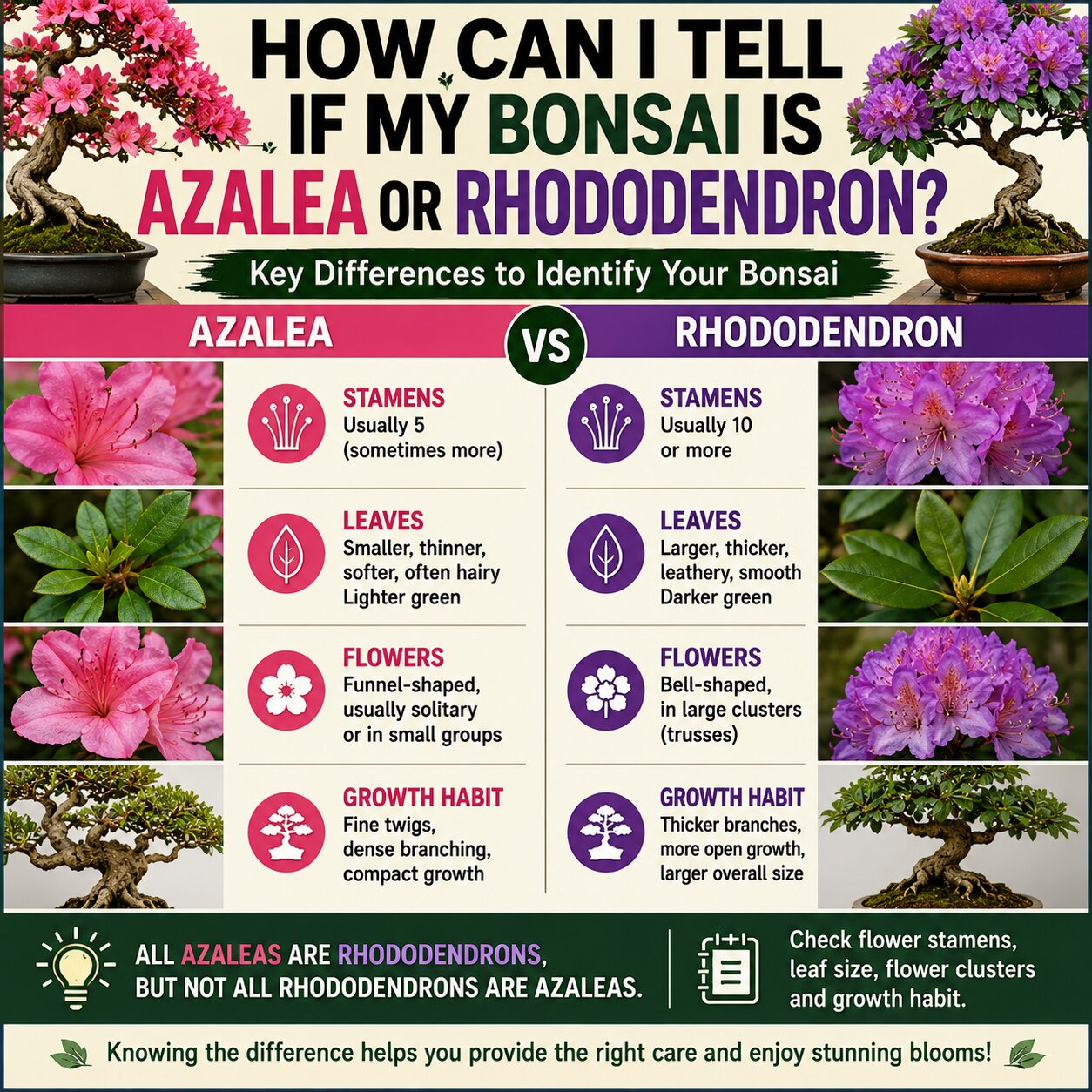
Look at the Number of Stamens
One of the easiest botanical differences appears inside the flowers.
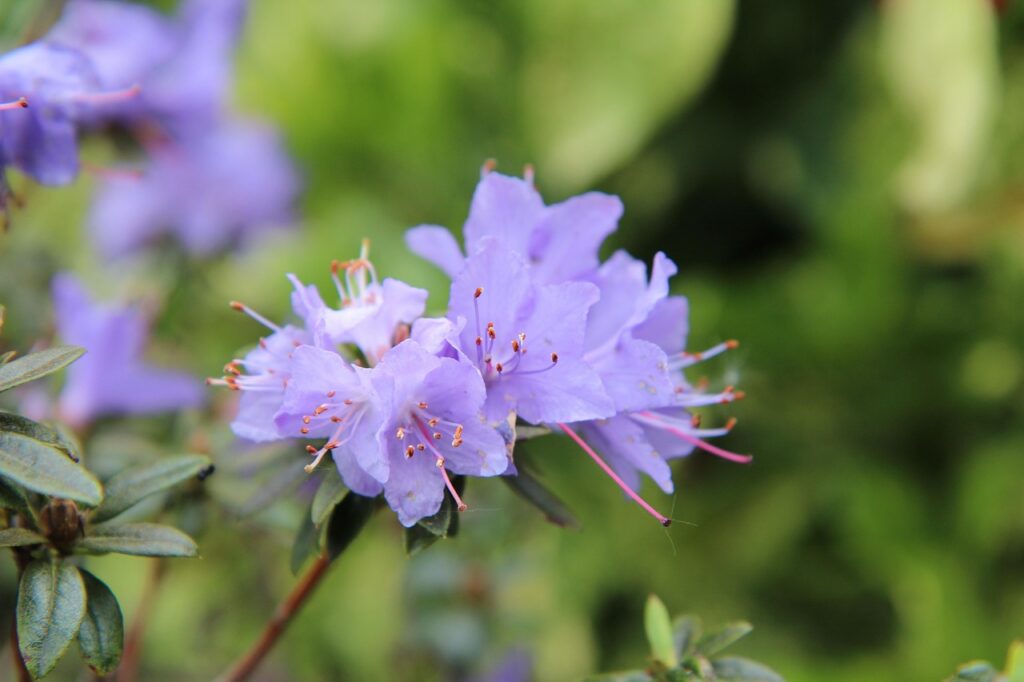
Most azalea flowers have five stamens, although some varieties may have more.
Most rhododendrons have ten or more stamens, making their flowers appear fuller in the centre.
While this requires your bonsai to be flowering, it is one of the most reliable identification methods.
Examine the Leaves
The leaves provide another useful clue, even outside the flowering season.
Azalea bonsai typically have:
- Smaller, thinner leaves
- Softer foliage, often with fine hairs
- A lighter green appearance
- Delicate branching
Rhododendrons usually produce:
- Larger, thicker leaves
- Smooth or leathery textures
- Darker green foliage
- Broader overall growth
Although there are exceptions, leaf size is often enough to narrow down the identification.
Observe the Flowers
The blooms themselves often reveal the answer.
Azalea flowers are generally funnel-shaped and cover the tree with masses of colourful blossoms. Individual flowers tend to stand out clearly, creating the spectacular floral displays that make azalea bonsai so popular.
Many rhododendrons produce flowers in rounded clusters known as trusses, where numerous blooms emerge together from a single point.
If your bonsai produces clusters instead of individually spaced flowers, it is more likely to be a rhododendron.
Consider the Growth Habit
Growth patterns can also provide valuable clues.
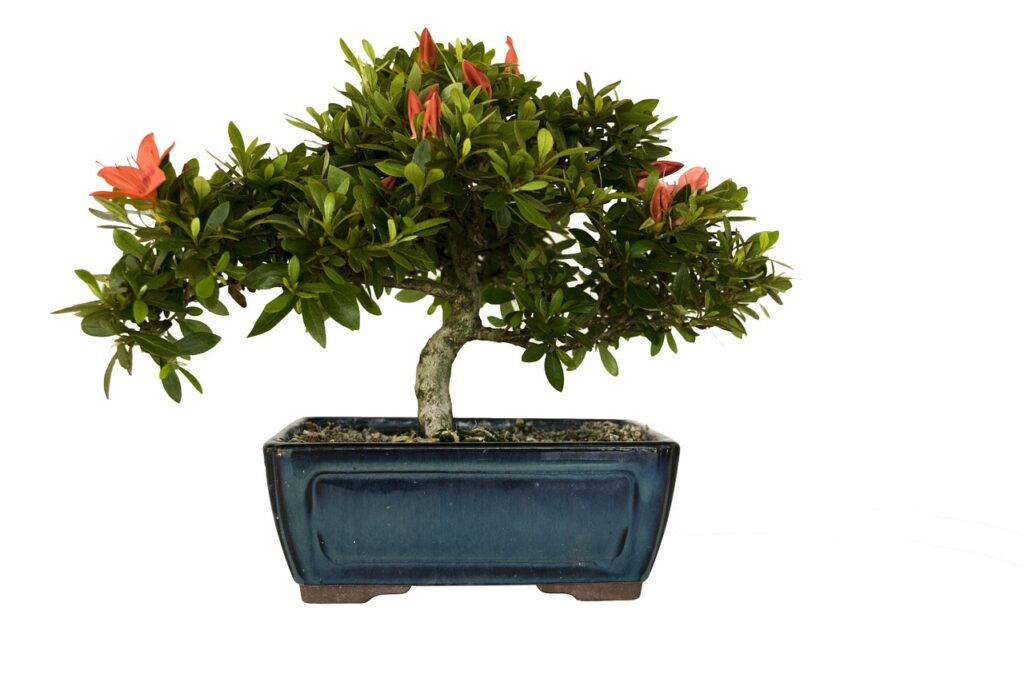
Azalea bonsai naturally develop fine twigs and dense branching, making them excellent candidates for detailed bonsai styling.
Many rhododendrons develop thicker branches and larger leaves, making them better suited to medium or larger bonsai designs where their natural proportions remain balanced.
Observing the overall structure of the tree over several growing seasons can help confirm its identity.
Check the Original Plant Label
If your bonsai was purchased from a reputable nursery, the original label may identify the species or cultivar.
Popular bonsai varieties such as Satsuki and Kurume are both azaleas and are among the most commonly used flowering bonsai worldwide.
If no label exists, comparing your tree’s flowers and leaves with reputable horticultural references can often help identify the species.
Understanding the Relationship
Perhaps the most important fact to remember is that every azalea belongs to the Rhododendron genus, but not every rhododendron is an azalea. This is why the names are often used interchangeably, even though they describe different groups of plants.
For bonsai enthusiasts, identifying the correct type allows you to better understand flowering habits, pruning techniques, and seasonal care requirements. Whether your bonsai is an azalea or another rhododendron, both offer beautiful flowers and rewarding cultivation experiences.
By observing the leaves, flowers, stamens, and overall growth habit, you can confidently determine which member of the rhododendron family is growing on your bench and provide the specialised care it deserves.