
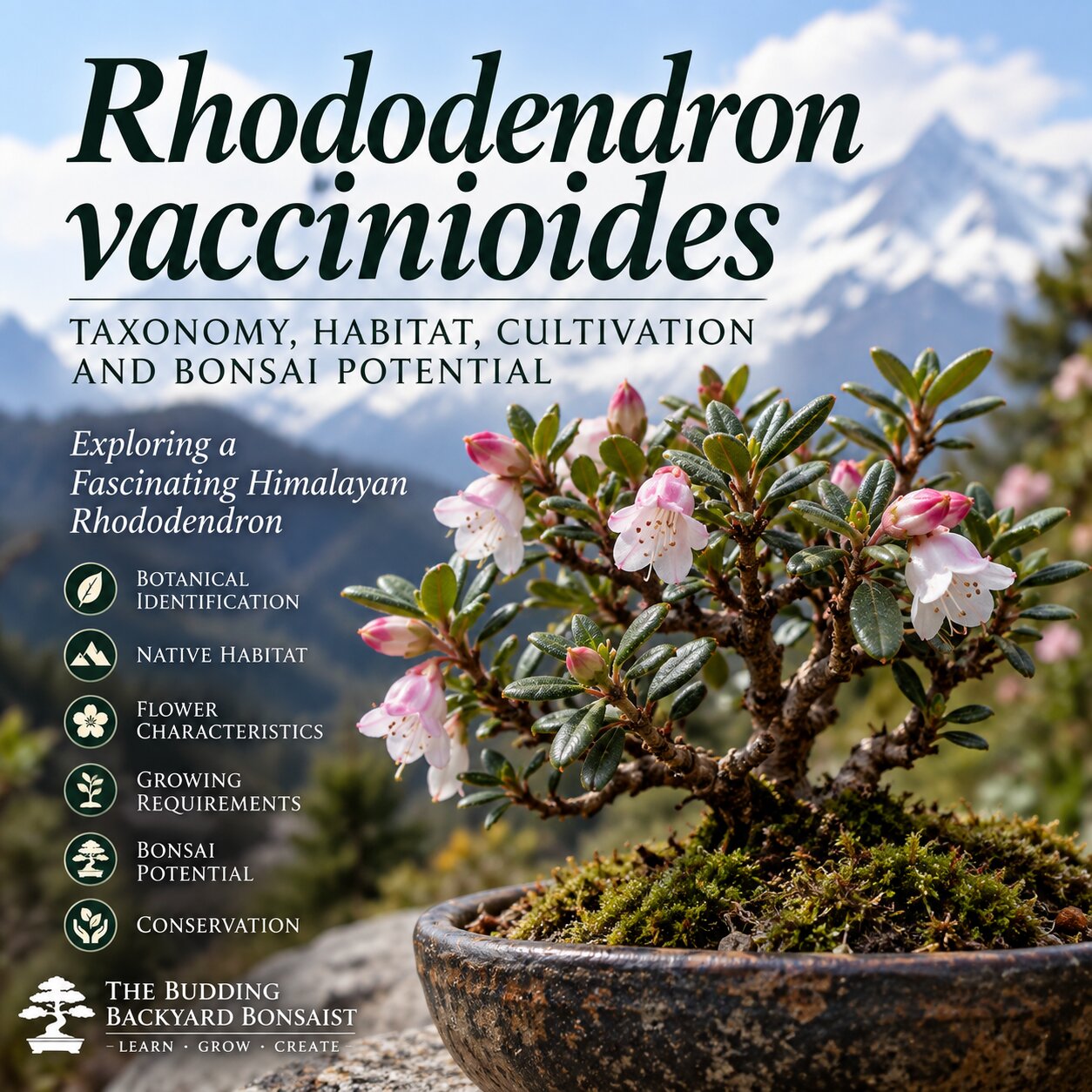
Rhododendron vaccinioides is a fascinating member of the extensive Rhododendron genus, belonging to a group of plants adapted to distinctive montane environments. Classified within the family Ericaceae and section Pseudovireya, this species provides another opportunity to explore the remarkable botanical diversity found among rhododendrons beyond the varieties commonly encountered in gardens and bonsai collections.
Understanding Rhododendron vaccinioides begins with its taxonomy, but classification represents only part of its botanical story. Its growth habit, foliage, flowers, natural distribution and environmental adaptations all provide valuable clues about how the species survives within its native habitat. These characteristics can also help growers understand how its requirements may differ from those of more familiar rhododendrons and azaleas.
For bonsai enthusiasts, studying species such as Rhododendron vaccinioides is particularly useful when assessing their potential for container cultivation. Leaf proportions, branching behaviour, growth response and environmental requirements all influence whether a species can realistically be developed and maintained as bonsai.
In this Rhododendron Vaccinioides Species Taxonomy Guide, we will examine its botanical classification from kingdom to species before exploring its identifying features, foliage, flowers, habitat, cultivation requirements and variations. We will also consider its place in horticulture and conservation, along with what its natural characteristics may mean for anyone interested in cultivating Rhododendron vaccinioides as bonsai.
Table of Contents
Taxonomy
– Kingdom: Plantae (Plant Kingdom)
— Clade: Embryophytes (Land Plants)
— Clade: Polysporangiophytes (Multiple Sporangia)
—- Clade: Tracheophytes (Vascular Plants)
—– Superdivision: Spermatophytes (Seed Plants)
—— Clade: Angiospermae (Flowering Plants)
——- Division: Eudicots (True Dicotyledons)
——– Subdivision: Core Eudicots
——— Class: Superasterids (Advanced Flowering Plants)
———- Subclass: Asterids (Unified-Flowering Plants)
———– Order: Ericales (Heath and Tea)
———— Family: Ericaceae (Heath)
————- Subfamily: Ericoideae (Heath)
————– Tribe: Rhodoreae (Rhododendron)
————— Genus: Rhododendron
————— Subgenus: Rhododendron (Lepidote Rhododendrons)
—————- Section: Pseudovireya (Tail-Seeded Montane Rhododendrons)
—————–- Species: Rhododendron Vaccinioides (Vaccinioides Rhododendron)
What Is Rhododendron Vaccinioides?
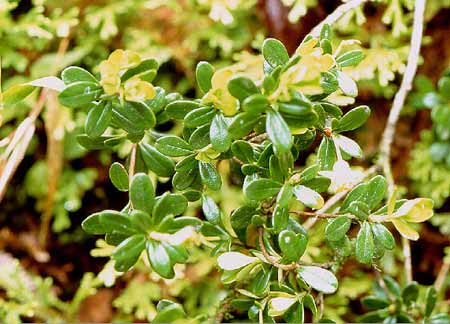
Rhododendron vaccinioides is a flowering plant species belonging to the heath family, Ericaceae, and the enormous Rhododendron genus. Within the genus, it is classified in subgenus Rhododendron and section Pseudovireya, placing it among the lepidote rhododendrons characterised by small scales on parts of their foliage and other plant structures.
The species name vaccinioides essentially means “resembling Vaccinium”, the genus containing blueberries and related plants. This name reflects similarities in appearance to members of Vaccinium, particularly aspects of its relatively small foliage and overall growth form. Such botanical names can provide useful clues when distinguishing less familiar rhododendron species in the wild or cultivation.
Unlike the large ornamental rhododendrons commonly seen in temperate gardens, Rhododendron vaccinioides represents one of the more specialised members of the genus. Its natural characteristics are influenced by the environmental conditions in which it evolved, particularly the montane habitats associated with members of section Pseudovireya. These adaptations affect its growth, foliage, flowering behaviour and cultivation requirements.
For bonsai enthusiasts, Rhododendron vaccinioides is especially interesting because naturally smaller botanical features can potentially lend themselves to miniature tree presentation. However, suitability for bonsai involves considerably more than small leaves. Understanding the species’ root requirements, branching response, climate preferences and tolerance of pruning is essential before attempting long-term bonsai cultivation.
As we move through this taxonomy guide, these characteristics will help us build a clearer picture of what makes Rhododendron vaccinioides distinctive within the broader Rhododendron genus.
Taxonomic Classification Of Rhododendron Vaccinioides
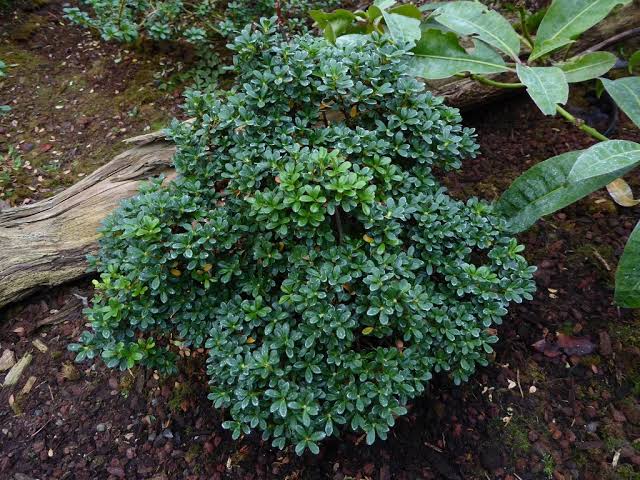
The taxonomic position of Rhododendron vaccinioides places it within the Ericaceae, or heath family, alongside other acid-loving plants such as heathers, blueberries and numerous rhododendron species. Rather than repeating the complete classification listed above, it is useful to focus on the levels that help explain where this particular species sits within the enormous Rhododendron genus.
Rhododendron vaccinioides belongs to subgenus Rhododendron, a major group commonly associated with the lepidote rhododendrons. Lepidote species possess tiny scale-like structures, particularly on their leaves and other surfaces. These scales are an important botanical characteristic and help distinguish members of this group from the elepidote, or non-scaled, rhododendrons.
More specifically, the species belongs to section Pseudovireya. This placement is particularly important when studying Rhododendron vaccinioides, as Pseudovireya represents a distinctive group of rhododendrons associated primarily with montane environments in parts of Asia. Their evolutionary history and environmental adaptations distinguish them from many of the familiar temperate rhododendrons cultivated in gardens.
At species level, Rhododendron vaccinioides represents its own distinct botanical taxon within this lineage. Its classification reflects shared characteristics with related species while recognising the combination of morphological features that separates it from them.
For bonsai growers, understanding this classification has practical value. Closely related rhododendrons can sometimes provide useful clues regarding preferred soil acidity, moisture, temperature and cultivation techniques. Taxonomy therefore does more than provide a scientific name: it creates a framework for understanding how Rhododendron vaccinioides relates to other plants and why it possesses the characteristics examined throughout this guide.
Botanical Identification, Growth Habit, And Distinguishing Features
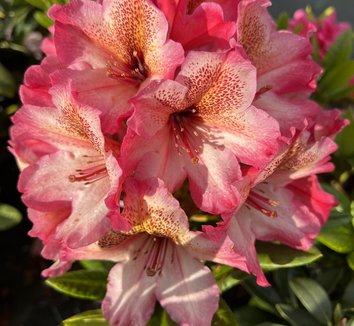
Correctly identifying Rhododendron vaccinioides requires looking at several botanical characteristics together rather than relying on a single feature. Its relatively small foliage, woody growth, lepidote characteristics and flowers all contribute to its appearance, while its natural growth habit reflects adaptation to the environments in which it occurs.
The species can appear considerably different from the large, broad-leaved rhododendrons familiar to many gardeners. Its more compact botanical features are part of what makes Rhododendron vaccinioides particularly interesting from both a taxonomic and potential bonsai perspective.
General Growth Habit
Rhododendron vaccinioides develops as a woody evergreen shrub rather than the substantial tree-like form achieved by some members of the genus. Its growth tends to produce multiple stems and branches, creating a naturally shrubby structure suited to its montane environment.
Growth conditions can influence the plant’s eventual form. Exposure, available moisture, soil conditions and competition from surrounding vegetation may all affect its height, density and branching pattern.
For bonsai cultivation, this woody, branching habit provides an interesting starting point. A naturally compact species can potentially be developed into convincing miniature forms, although successful styling still depends on how readily established branches respond to pruning and training.
Lepidote Characteristics
One of the important identifying characteristics of Rhododendron vaccinioides comes from its placement among the lepidote rhododendrons.
The term lepidote refers to tiny scale-like structures found on plant surfaces, particularly the leaves. These structures can be extremely useful when botanists distinguish between different groups within Rhododendron.
They may not always be obvious without close inspection, meaning casual identification based entirely on the overall appearance of the plant can be unreliable. Examining foliage carefully provides much more useful taxonomic information.
Compact Foliage And Vaccinium-Like Appearance
The name vaccinioides draws attention to one of the species’ notable visual characteristics: its resemblance to plants belonging to the genus Vaccinium.
Its relatively small leaves contribute significantly to this appearance. Rather than producing the large, dramatic foliage associated with many ornamental rhododendrons, Rhododendron vaccinioides presents a finer scale.
This characteristic also attracts attention from a bonsai perspective. Smaller leaves are desirable because they can remain visually proportional to a miniature trunk and canopy. Naturally compact foliage reduces the need to create the illusion of scale using oversized leaves.
Woody Stems And Branch Development
As the plant matures, its stems become woody and support increasingly developed branching. This distinguishes established specimens from soft-stemmed plants and allows Rhododendron vaccinioides to maintain persistent above-ground structure from one growing season to another.
Branch development is especially important when assessing any species for bonsai. The ability to establish primary branches followed by progressively finer secondary growth determines how effectively a convincing miniature canopy can eventually be created.
However, naturally occurring branch structure should not automatically be interpreted as evidence that the species tolerates aggressive bonsai techniques. Cultivated specimens should be observed carefully to determine how well they respond to repeated pruning.
Distinguishing Rhododendron Vaccinioides From Similar Species
Identification can become difficult when several related rhododendron species occur within similar environments. Rhododendron vaccinioides should therefore be identified through a combination of foliage, scales, flowers, growth form and geographic distribution rather than one characteristic alone.
Its Vaccinium-like foliage provides a useful initial clue, while its lepidote surfaces help place it within the appropriate rhododendron grouping. Floral characteristics provide additional evidence when the plant is in bloom.
For reliable botanical identification, these features should always be considered together. As we examine the leaves and flowers of Rhododendron vaccinioides more closely in the following sections, the characteristics separating this species from its relatives become considerably clearer.
Leaf Morphology, Stem Structure, And Seasonal Growth
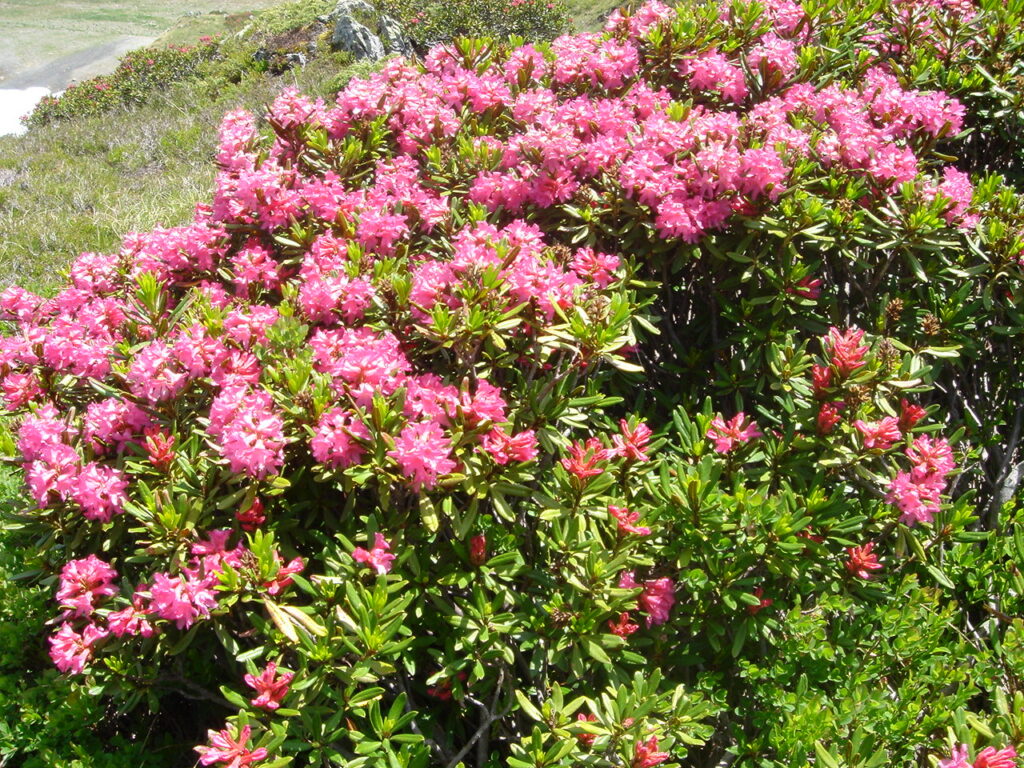
The foliage and stems of Rhododendron vaccinioides provide some of the most useful characteristics for understanding the species outside its flowering period. Its relatively small leaves contribute to the Vaccinium-like appearance reflected in its botanical name, while its woody stems support a compact shrubby growth habit.
For bonsai enthusiasts, these characteristics deserve particular attention. Leaf size, internode length, branching behaviour and seasonal growth patterns all influence how successfully a species can eventually create the proportions expected from a miniature tree.
Leaf Shape And Size
The leaves of Rhododendron vaccinioides are relatively small, particularly when compared with the broad foliage associated with many larger ornamental rhododendrons. They are simple leaves arranged along the stems and contribute to the plant’s fine-textured appearance.
Their form is one reason the species received the epithet vaccinioides, meaning resembling Vaccinium. Blueberries and their relatives often possess similarly modest foliage on fine woody growth.
Natural leaf size is particularly relevant to bonsai cultivation. Smaller foliage can help maintain convincing proportions without depending heavily on leaf-reduction techniques.
Leaf Surface And Lepidote Scales
As a member of subgenus Rhododendron, Rhododendron vaccinioides possesses the scale-like structures associated with lepidote rhododendrons.
These tiny scales are useful diagnostic characteristics when examining the foliage closely. Their presence helps botanists distinguish lepidote species from the elepidote rhododendrons, which lack these characteristic scales.
Leaf surfaces can therefore reveal considerably more taxonomic information than may initially be apparent. When attempting to identify an unfamiliar specimen, examining the underside and surface of mature foliage can complement observations of leaf shape and arrangement.
Stem And Branch Structure
Young growth begins relatively slender before gradually becoming woody as stems mature. Older stems provide the permanent framework from which new shoots, leaves and flowers develop.
The branching structure of Rhododendron vaccinioides contributes to its shrubby form. New shoots extend the existing framework, while environmental conditions influence how dense or open the resulting plant becomes.
In bonsai cultivation, growers would need to manage this growth selectively. Allowing some shoots to extend can strengthen particular branches or sections of the trunk, while carefully timed pruning may encourage a more compact structure.
New Growth Through The Growing Season
Like other evergreen woody plants, Rhododendron vaccinioides does not replace its entire canopy every year. Instead, new growth adds to foliage retained from previous seasons while older leaves are gradually shed.
Periods of active growth are influenced by temperature, moisture and the environmental rhythms of its native habitat. New shoots are generally softer and more vulnerable than established woody growth.
This distinction is important in cultivation. Heavy manipulation of tender new shoots can damage developing growth, while allowing new foliage to mature gives the plant an opportunity to replenish energy before substantial pruning is considered.
Evergreen Foliage And Seasonal Changes
Rhododendron vaccinioides is evergreen, meaning it retains foliage rather than becoming completely bare during a regular dormant season. Evergreen does not, however, mean that individual leaves remain permanently attached.
Older foliage is eventually replaced as the plant continues growing. Some leaf loss can therefore be part of normal renewal rather than an immediate indication of poor health.
Environmental stress can cause additional changes. Excessive heat, unsuitable moisture levels, root problems or abrupt changes in exposure may affect foliage condition. Growers should consequently evaluate the entire plant and its recent growing conditions rather than diagnosing problems from an isolated leaf.
Why Its Foliage Matters For Bonsai
The naturally fine foliage of Rhododendron vaccinioides is one of its most intriguing characteristics for bonsai enthusiasts.
A successful bonsai needs visual balance between its trunk, branches and leaves. Species producing exceptionally large foliage can be challenging to represent convincingly at smaller sizes, whereas naturally small-leaved plants already possess an advantage.
The combination of evergreen foliage, woody stems and relatively compact growth therefore gives Rhododendron vaccinioides interesting theoretical potential for bonsai cultivation.
Its leaves are only one part of that equation, however. The flowers provide another major component of its identity, and their form, timing and ecological purpose deserve separate attention.
Flower Characteristics, Blooming Behaviour, And Pollination
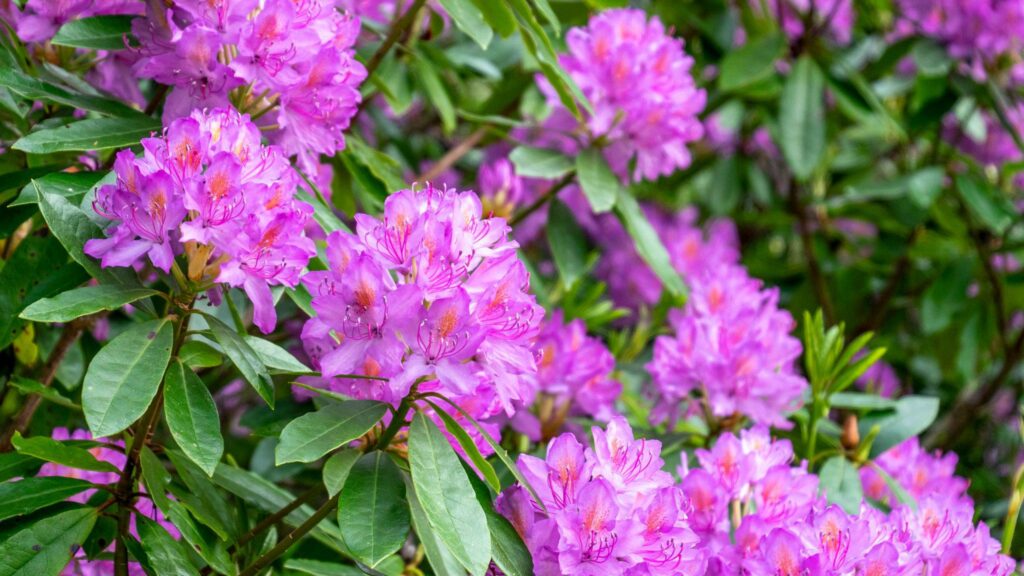
The flowers of Rhododendron vaccinioides are an important part of the species’ botanical identity. As with many rhododendrons, flowering provides some of the most useful characteristics for identification, particularly when comparing closely related species that may otherwise share similar foliage and growth habits.
For bonsai cultivation, flowering also has considerable ornamental importance. The challenge is to maintain a healthy plant capable of producing blooms while preserving the proportions and structure of the miniature composition.
Flower Shape And Appearance
Rhododendron vaccinioides produces relatively small flowers suited to the finer proportions of the plant. The blooms have the fused-petal structure characteristic of Rhododendron, forming a tubular to somewhat bell-shaped or funnel-like corolla.
The flowers emerge from the woody growth and create a noticeable contrast against the plant’s small evergreen leaves. Their size and arrangement contribute to the more delicate appearance of the species compared with the large flower clusters associated with many popular garden rhododendrons.
Floral characteristics can vary somewhat according to environmental conditions and individual plants, making careful observation important when using flowers for identification.
Flower Colour And Visual Characteristics
The blooms of Rhododendron vaccinioides are generally described within pale pinkish to whitish tones, although colour intensity can differ between individual specimens and growing conditions.
Subtle differences in colour may also become more noticeable as flowers mature. Newly opened blooms can appear different from flowers approaching the end of their lifespan, particularly as pigmentation fades.
For identification purposes, flower colour should therefore be considered alongside corolla form, foliage, scales and other botanical characteristics rather than being used by itself.
Flowering Season And Bloom Development
The precise flowering period of Rhododendron vaccinioides is influenced by its local climate and elevation. Plants growing within their natural range respond to seasonal changes in temperature, rainfall and available light rather than following a universal calendar.
Flower buds develop before opening when environmental conditions become favourable. In cultivation, flowering time may shift depending on local climate, particularly when plants are grown far outside the conditions of their native habitat.
This makes observing the individual plant particularly valuable. Recording when buds appear, when flowers open and how long flowering lasts can help growers understand its seasonal rhythm over successive years.
Pollination Ecology
Like other flowering rhododendrons, Rhododendron vaccinioides depends on the transfer of pollen between flowers for successful sexual reproduction. Its flowers provide visual and structural signals that help attract suitable pollinators within its natural environment.
Insects are important pollinators across the Rhododendron genus, although the exact pollinator relationships can vary considerably between species and habitats. Flower shape, colour, scent and nectar availability can all influence which animals visit the blooms.
Successful pollination ultimately allows the plant to produce seeds, maintaining genetic diversity and enabling new individuals to establish where environmental conditions permit.
Flowering And Bonsai Cultivation
Flowering can become one of the most rewarding features when Rhododendron vaccinioides is cultivated as bonsai, but growers need to balance flower production with vegetative development.
Pruning at the wrong stage of the growth cycle may remove developing flower buds. A grower primarily interested in establishing trunk and branch structure may deliberately prioritise vegetative growth during the early years, while a more mature bonsai can increasingly be managed with flowering in mind.
Allowing a weakened plant to produce excessive flowers can also consume resources that could otherwise support recovery and growth. Plant health should always take priority over obtaining the maximum possible display.
Once established, however, the combination of small evergreen foliage, woody branching and delicate flowers could give Rhododendron vaccinioides considerable ornamental appeal as bonsai. Understanding when and how it flowers is therefore an important part of learning how to cultivate the species successfully.
Natural Distribution, Native Habitat, And Ecological Adaptations
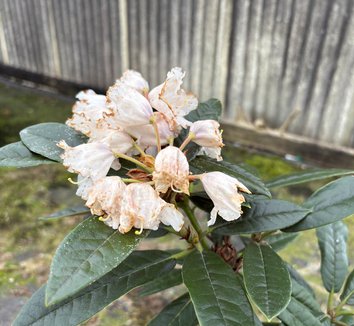
The natural environment of Rhododendron vaccinioides provides important clues about the conditions the species requires for healthy growth. Rather than being a plant of hot lowland forests, it is associated with high-elevation environments in the Himalayas, where cooler temperatures, exposed terrain and distinctive mountain ecosystems influence its development.
Understanding these conditions is particularly important for cultivation. A plant’s natural habitat does not provide an exact recipe for growing it in a container, but it does reveal the environmental pressures to which the species has adapted over generations.
Natural Geographic Distribution
Rhododendron vaccinioides is native to the Himalayan region of Asia, with records particularly associated with the eastern Himalayas, including areas such as Bhutan and neighbouring parts of the region.
Its distribution places it among the specialised rhododendrons capable of surviving at substantial elevations. Mountain geography creates isolated habitats with considerable differences in temperature, rainfall, exposure and vegetation over relatively short distances.
These conditions have contributed significantly to the extraordinary diversity found within the Rhododendron genus throughout the Himalayan region.
High-Altitude Mountain Habitat
One of the defining characteristics of the natural habitat of Rhododendron vaccinioides is elevation.
At higher altitudes, plants experience conditions considerably different from those found in protected lowland forests. Temperatures are generally cooler, weather conditions can change rapidly, and plants may be subjected to strong winds and intense exposure.
Growth can consequently remain relatively compact. Harsh environmental conditions often limit excessive extension and favour plants capable of maintaining resilient woody structures close to surrounding vegetation or terrain.
For bonsai enthusiasts, this natural compactness is particularly interesting because it may contribute to the finer proportions associated with the species.
Moisture And Drainage
Mountain environments can receive considerable moisture, but this does not necessarily mean that Rhododendron vaccinioides naturally grows with its roots permanently saturated.
Sloping terrain and porous organic substrates can allow water to move rapidly through the root zone. Plants may therefore experience frequent moisture while still benefiting from good drainage and oxygen around their roots.
This distinction becomes extremely important in container cultivation. Attempting to reproduce a moist mountain environment by simply keeping bonsai soil constantly waterlogged could create root problems.
The objective should instead be consistent moisture combined with effective drainage.
Acidic Growing Conditions
Like many members of the Ericaceae family, Rhododendron vaccinioides is associated with acidic growing conditions.
Mountain soils containing decomposing organic material can provide the low-pH environment favoured by rhododendrons. Their specialised root systems are adapted to these conditions and can struggle when grown in strongly alkaline substrates.
Water quality can consequently become important in cultivation. Even when an appropriate acidic growing medium is initially used, repeated watering with highly alkaline water may gradually alter conditions within a container.
Understanding the species’ natural soil environment therefore helps explain why substrate selection is particularly important when attempting bonsai cultivation.
Adaptation To Cooler Conditions
The high-elevation origins of Rhododendron vaccinioides suggest an important preference for cooler environmental conditions compared with tropical lowland plants.
Temperature management may become particularly challenging when the species is cultivated in warmer climates. Roots contained within shallow bonsai pots can heat considerably faster than roots protected beneath natural mountain soil and vegetation.
Providing appropriate shade during intense heat, maintaining root-zone moisture and protecting containers from excessive temperatures may consequently become important considerations.
However, growers should avoid assuming that cooler automatically means permanently cold. Mountain plants still experience seasonal and daily temperature fluctuations, and their requirements need to be understood within the context of their specific habitat.
Ecological Role Within Mountain Plant Communities
In its natural environment, Rhododendron vaccinioides forms part of a much larger ecological community.
Its flowers provide resources for visiting pollinators, while its woody growth and evergreen foliage contribute to the structure of mountain vegetation. Like surrounding plants, it also participates in nutrient cycling as leaves and organic material eventually return to the soil.
Its roots interact with the complex biological environment below ground, where fungi and microorganisms contribute to nutrient availability and decomposition.
These relationships demonstrate why Rhododendron vaccinioides should not be considered in isolation from its habitat. Its foliage, roots, flowers and compact growth form have developed within an ecosystem where elevation, moisture, temperature and neighbouring organisms continually influence survival.
For bonsai cultivation, understanding these ecological adaptations gives growers a much stronger foundation for determining how to recreate suitable conditions within the considerably more artificial environment of a container.
Cultivation Requirements, Growing Conditions, And Propagation
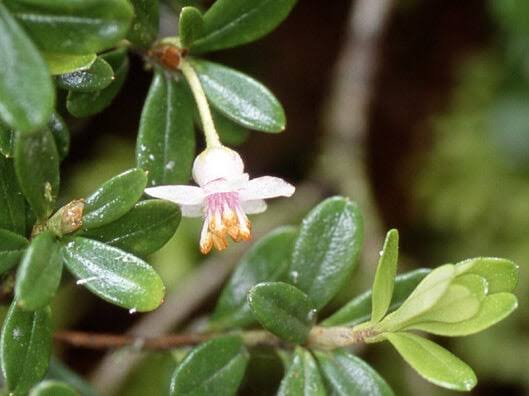
Successfully cultivating Rhododendron vaccinioides requires attention to the environmental conditions associated with its natural mountain habitat. Its preference for acidic substrates, consistent moisture, good drainage and relatively cool conditions should guide cultivation rather than treating it like a conventional garden shrub.
Container cultivation introduces additional challenges because roots have far less protection from temperature and moisture fluctuations. For bonsai growers, establishing a healthy root system should therefore take priority over styling, flowering or rapid structural development.
Soil And Growing Medium
Rhododendron vaccinioides should be grown in an acidic, well-draining medium that retains sufficient moisture without becoming waterlogged.
Like other rhododendrons, it develops relatively fine roots that benefit from an airy substrate. Compacted soil can reduce oxygen around the root system and increase the likelihood of problems when conditions remain excessively wet.
For bonsai cultivation, the growing medium needs to achieve a careful balance between drainage and moisture retention. Suitable acidic components can be combined with structurally stable materials that prevent the substrate from collapsing around the roots.
Light And Position
Bright conditions can support healthy growth, but Rhododendron vaccinioides should be protected from excessive heat and intense sunlight, particularly when cultivated in a shallow container.
Morning sun followed by protection during the hottest portion of the day may provide a useful starting point in warmer climates. Local conditions should always determine the final position.
Too little light can result in weaker growth and reduced flowering, while excessive exposure can place unnecessary stress on foliage and roots.
Bonsai growers should pay particular attention to pot temperature. Even when the foliage appears comfortable, direct sunlight striking a dark or shallow container can cause the root zone to become considerably warmer.
Watering And Humidity
Consistent moisture is important for Rhododendron vaccinioides, but continuously saturated soil should be avoided.
Water thoroughly when required and allow excess water to drain freely from the container. The substrate should not be permitted to remain completely dry for extended periods, particularly during active growth.
Humidity may also help reproduce aspects of the species’ montane environment. However, humidity should be accompanied by appropriate air circulation rather than creating stagnant conditions around the foliage.
Water quality deserves consideration because repeated use of alkaline water can gradually influence substrate pH.
Temperature And Seasonal Protection
The high-altitude origins of Rhododendron vaccinioides make temperature management an important consideration, particularly for growers living in warm regions.
Protection from extreme summer heat may be more important than attempting to maximise sunlight. Shade cloth, sheltered positioning and careful watering can help prevent excessive heat stress.
Container-grown plants may also require protection from severe cold because their roots lack the insulation available to plants growing naturally in the ground.
The objective is not to eliminate seasonal changes but to prevent environmental extremes that exceed what the confined root system can tolerate.
Feeding And Nutrient Management
Rhododendron vaccinioides does not require aggressive fertilisation to remain healthy.
A fertiliser appropriate for acid-loving plants can provide nutrients during periods of active growth. Smaller, regular applications are generally preferable to attempting to force rapid growth with excessive feeding.
Growers should watch the plant rather than following a rigid feeding calendar. Growth rate, foliage colour, flowering and overall vigour provide useful indications of how the plant is responding.
Overfertilisation can damage sensitive roots, particularly when salts accumulate within a bonsai container.
Propagation From Seed
Seed propagation provides one method of producing new Rhododendron vaccinioides plants while maintaining genetic variation within cultivated populations.
The small seeds should generally be handled carefully and provided with an acidic, moisture-retentive but aerated propagation medium. Because the seeds are small, they should not be deeply buried.
Stable humidity and appropriate temperatures can support germination, after which seedlings need careful management while their root systems develop.
Seed-grown plants require patience but can be particularly interesting for bonsai growers who want to develop trunk and branch structure from an early stage.
Propagation From Cuttings
Vegetative propagation through cuttings may also be attempted with suitable material. Unlike seedlings, cuttings produce plants genetically identical to the parent specimen, allowing desirable characteristics to be retained.
Young or partially matured shoots are generally more appropriate for propagation than heavily lignified older branches. Humidity needs to remain sufficiently high to limit moisture loss while roots are developing.
Rooting success can vary considerably, so growers should avoid assuming every cutting will establish successfully.
Where available, propagation knowledge from experienced rhododendron growers can be particularly valuable when working with uncommon species.
Establishing Rhododendron Vaccinioides For Bonsai
A newly acquired or propagated Rhododendron vaccinioides should first be allowed to establish strongly before significant bonsai work begins.
Healthy roots and vigorous growth provide the foundation for everything that follows. Prematurely combining repotting, heavy pruning, wiring and other stressful techniques can weaken a plant before it has adapted to container cultivation.
Once established, growers can gradually begin selecting branches, managing extension growth and developing the desired structure.
Patience is particularly important with uncommon species. Rather than applying techniques simply because they work on familiar azalea bonsai, growers should observe how Rhododendron vaccinioides responds and adapt their methods accordingly. The objective is not merely to keep the plant alive, but to understand its growth well enough to develop a healthy specimen over many years.
Rhododendron Vaccinioides Species Variations And Related Taxa
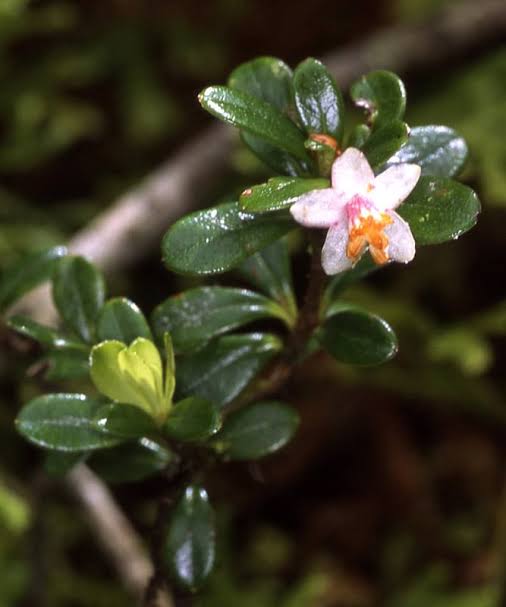
Natural variation within Rhododendron vaccinioides can result in differences between individual plants without necessarily indicating separate botanical varieties. Environmental factors such as elevation, exposure, temperature, moisture and available nutrients can influence foliage size, branching density, shoot extension and overall plant stature.
Specimens growing in exposed mountain environments may remain particularly compact, while plants occupying more sheltered positions can develop more freely. Flower colour, foliage dimensions and general vigour may also vary between individual plants. These characteristics should therefore be considered within the normal variation of the species unless sufficient botanical evidence supports a separate taxonomic classification.
The placement of Rhododendron vaccinioides within section Pseudovireya also connects it with related rhododendrons sharing aspects of morphology and evolutionary history. Similar species may possess small evergreen leaves, lepidote scales, woody shrubby growth and adaptations to montane environments. This resemblance can make identification challenging, particularly when plants are not flowering.
Reliable identification should consequently consider several characteristics together. Leaf shape and size, scale characteristics, flowers, branching habit and geographical origin can all help distinguish Rhododendron vaccinioides from related taxa. A plant’s location or documented provenance may be especially valuable when several similar species occur within neighbouring regions.
Cultivation can introduce additional variation. A specimen receiving regular fertilisation, controlled watering and protection from severe weather may develop larger leaves or longer shoots than a wild plant exposed to harsh mountain conditions. Bonsai techniques such as pruning, restricted root space and controlled feeding can alter its appearance even further.
These cultivated differences should not be mistaken for separate taxonomic forms. Understanding the distinction between natural genetic variation, environmental adaptation and horticultural influence allows growers to appreciate the diversity possible within Rhododendron vaccinioides while maintaining an accurate understanding of its relationship to other members of section Pseudovireya.
Rhododendron Vaccinioides In Horticulture, Conservation, And Bonsai Cultivation
Rhododendron vaccinioides represents the extraordinary diversity found within the Rhododendron genus. Its compact evergreen foliage, woody growth and delicate flowers distinguish it from the large ornamental rhododendrons familiar to many gardeners, while its association with high-altitude Himalayan environments gives the species specialised cultivation requirements.
Within horticulture, Rhododendron vaccinioides is likely to appeal most strongly to collectors interested in botanical rhododendrons and unusual species rather than conventional landscape plants. Successful cultivation depends on understanding its preference for acidic conditions, reliable moisture, effective drainage and protection from excessive heat. Replicating these requirements becomes particularly important when growing the species outside conditions resembling its native habitat.
Conservation adds another reason to appreciate species-level rhododendron cultivation. Mountain ecosystems can be vulnerable to habitat disturbance, changing environmental conditions and other pressures. Maintaining accurately identified plants in responsible botanical and specialist collections can contribute to broader awareness of rhododendron diversity. Growers should favour legally and responsibly propagated material rather than plants removed from wild populations.
For bonsai enthusiasts, Rhododendron vaccinioides presents intriguing possibilities. Its naturally small foliage can provide excellent proportions for miniature compositions, while its woody stems and branching habit offer potential for structural development. The combination of evergreen leaves and seasonal flowers could eventually produce an attractive bonsai with interest throughout much of the year.
However, its suitability should not encourage growers to immediately apply techniques used on familiar azalea bonsai. Rhododendron vaccinioides deserves to be understood on its own terms. Establishing healthy roots, learning its seasonal growth patterns and observing its response to pruning should come before aggressive styling. Rare or uncommon material is particularly valuable, making unnecessary experimentation undesirable.
The greatest appeal of Rhododendron vaccinioides may ultimately lie in this combination of botany and bonsai. Learning its taxonomy reveals where it belongs within Rhododendron, studying its habitat explains many of its adaptations, and careful cultivation allows those natural characteristics to become part of a living miniature composition.
For the Budding Backyard Bonsaist, that journey is what species exploration is all about. Before shaping a plant into the tree we imagine, we first learn what the plant is, where it comes from and how it naturally wants to grow. With patience and appropriate care, Rhododendron vaccinioides offers another fascinating species through which to explore the relationship between taxonomy, horticulture and the art of bonsai.