
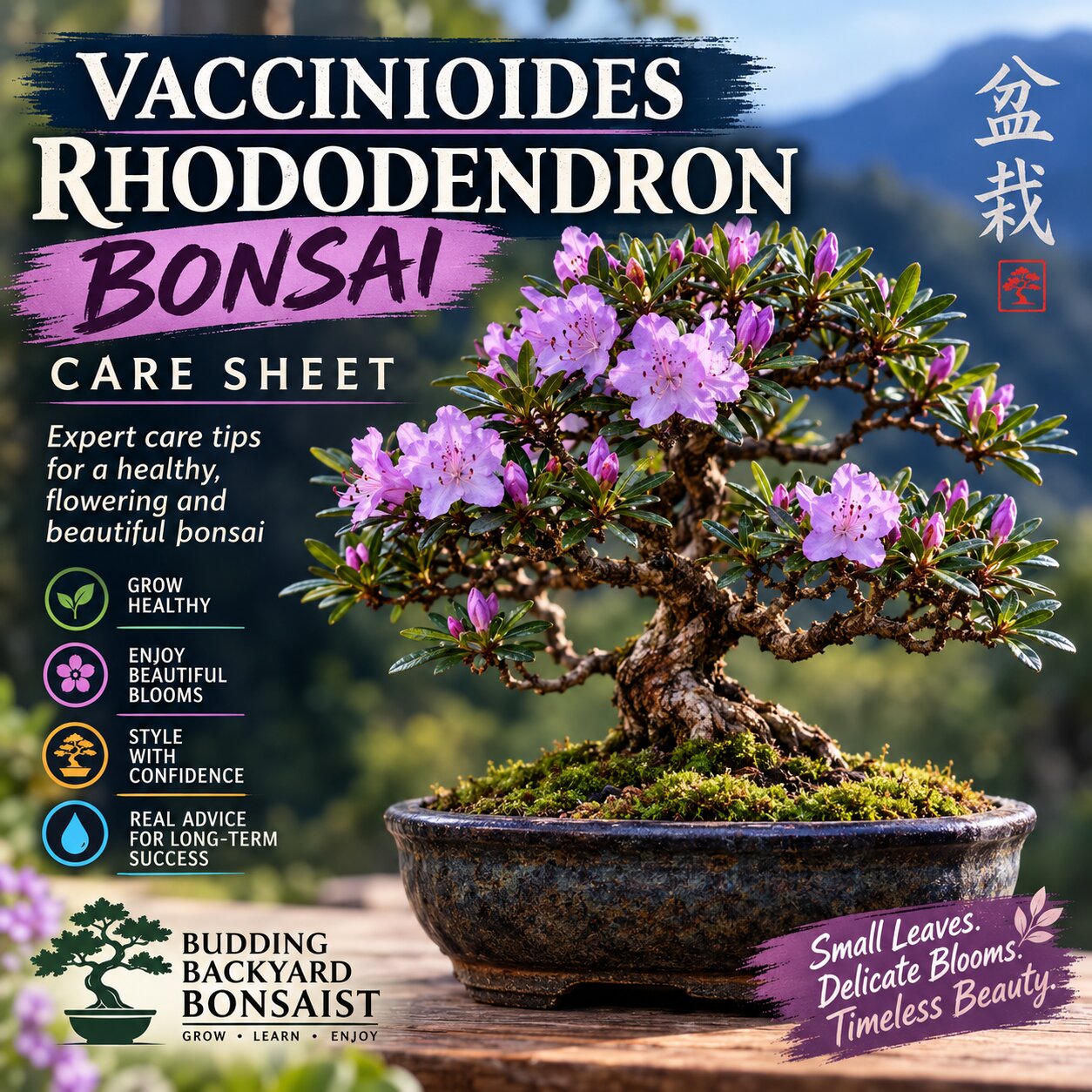
The Vaccinioides Rhododendron bonsai offers enthusiasts an opportunity to work with a distinctive rhododendron species while applying the careful cultivation techniques required to maintain it in miniature form. With its compact foliage, woody growth and attractive natural characteristics, Rhododendron vaccinioides can make an interesting addition to a collection, particularly for growers who enjoy flowering and broadleaf evergreen bonsai.
Like other rhododendrons, however, it has particular requirements that need to be respected. Soil acidity, moisture management, root health, positioning and careful pruning can all influence how successfully the tree adapts to life in a bonsai container. Treating it like a generic garden shrub or using ordinary bonsai soil without considering its natural preferences may lead to problems over time.
This Vaccinioides Rhododendron bonsai care sheet explores the essential aspects of keeping the species healthy while developing its shape and character as a bonsai. We’ll look at suitable growing conditions, watering, soil, feeding, pruning, wiring, repotting, propagation and seasonal care.
Whether you’re considering adding Rhododendron vaccinioides to your collection or already have a young specimen you hope to develop, understanding the species itself is the best place to begin.
Table of Contents
TL;DR: Quick Vaccinioides Rhododendron Bonsai Care Overview
Before diving into the complete care sheet, here is a quick-reference guide for the Vaccinioides Rhododendron bonsai. Rhododendron vaccinioides is an evergreen rhododendron with relatively small foliage and a naturally shrubby growth habit that can lend itself well to bonsai cultivation. Like many rhododendrons, it prefers acidic growing conditions, reliable moisture and protection from environmental extremes. Careful management of its roots, soil and watering is particularly important when growing the species in a shallow bonsai container.
| Care Aspect | Vaccinioides Rhododendron Bonsai |
|---|---|
| Scientific name | Rhododendron vaccinioides |
| Common name | Vaccinioides Rhododendron |
| Bonsai type | Evergreen flowering shrub |
| Light | Bright filtered light to partial sun. Morning sun with afternoon protection is preferable, particularly during hot weather. |
| Watering | Keep the soil consistently moist without allowing it to become waterlogged. Avoid letting the root ball dry out completely. |
| Soil | Acidic, moisture-retentive but free-draining bonsai mix. Kanuma can form an excellent base, supplemented where appropriate with pine bark, pumice or sphagnum. |
| Fertiliser | Use fertiliser suitable for acid-loving plants during active growth. Apply conservatively and adjust feeding around flowering and periods of slower growth. |
| Pruning | Prune and shape primarily after flowering. Remove spent flowers and unwanted growth while encouraging compact branching and ramification. |
| Wiring | Wire young, flexible growth carefully. Mature rhododendron branches can become brittle, making gradual shaping or guy wires preferable for heavier branches. |
| Difficulty | Moderate. Success depends particularly on maintaining acidic conditions, consistent moisture and healthy fine roots. |
| Rarity | Uncommon in bonsai cultivation and more likely to be encountered through specialist rhododendron growers, collectors or specialist nurseries. |
| Climate sensitivity | Protect from intense heat, drying winds and severe temperature extremes. Humid conditions with good airflow are generally beneficial. |
| Growth habit | Evergreen, branching shrub with relatively small leaves and a naturally compact appearance that can be developed into attractive flowering bonsai forms. |
Vaccinioides Rhododendron Bonsai Care Sheet
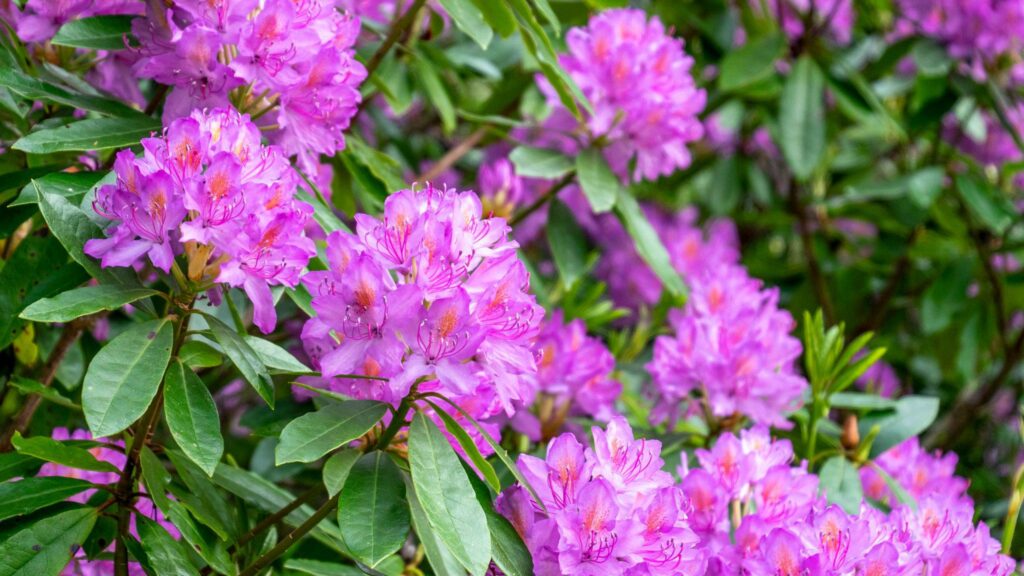
Caring for a Vaccinioides Rhododendron bonsai requires particular attention to moisture, soil acidity, light and root health. Rhododendron vaccinioides naturally favours conditions where its roots can remain cool and consistently moist without sitting in stagnant water. When cultivated as a bonsai, recreating this balance becomes particularly important because the shallow container provides considerably less protection against rapid changes in temperature and moisture.
The Vaccinioides Rhododendron bonsai benefits from bright filtered light, an acidic growing medium and protection from excessive heat and drying winds. Its relatively small evergreen foliage and branching growth can make it an attractive species for bonsai development, although maintaining the correct root environment requires more attention than many forgiving beginner species.
With patient development, careful pruning and appropriate seasonal care, the species can form an attractive compact shrub with the character expected from a mature rhododendron bonsai.
Below is a detailed breakdown of how to care for your Vaccinioides Rhododendron bonsai throughout the year.
Light
A Vaccinioides Rhododendron bonsai generally performs best in bright filtered light or partial sun. Morning sunlight can support healthy growth, while protection during the hottest part of the afternoon reduces the risk of leaf stress and excessive moisture loss.
This becomes especially important during hot summers. A shallow bonsai pot can heat and dry considerably faster than garden soil, so positioning should protect both the foliage and root system from prolonged intense conditions.
Watering
Consistent moisture is one of the most important requirements when growing a Vaccinioides Rhododendron bonsai. The growing medium should remain moist without becoming permanently saturated.
Check the soil regularly rather than relying on a rigid watering schedule. Warm temperatures, wind, pot size and the composition of the growing medium can all change how quickly the bonsai uses water.
Rainwater is particularly useful for rhododendrons where available. In areas with hard or alkaline tap water, repeated watering may gradually interfere with the acidic root conditions these plants prefer.
Pruning
Pruning helps maintain the compact appearance of a Vaccinioides Rhododendron bonsai while encouraging finer branching.
Major pruning is generally best coordinated with the plant’s flowering and active-growth cycle. After flowering, unwanted shoots can be shortened and spent flowers removed so that the plant can redirect energy towards vegetative growth.
Avoid removing too much foliage at once, particularly from a weak or recently repotted specimen.
Shaping
The naturally shrubby growth of Rhododendron vaccinioides can be used to create a bonsai that feels convincing without requiring excessively dramatic styling.
Rather than forcing the tree into an unnatural form, gradually select branches that contribute to the intended structure and remove growth that creates congestion or disrupts the design.
Repeated selective pruning over several growing seasons can help establish better branch definition and a more mature appearance.
Soil
Acidic soil is essential for a healthy Vaccinioides Rhododendron bonsai.
Kanuma is commonly associated with rhododendron and azalea bonsai because it provides an acidic, porous growing environment. Depending on local conditions and availability, growers may combine it with suitable materials such as fine pine bark, pumice or sphagnum.
The final mixture should retain enough moisture for the fine roots while allowing excess water to drain freely. Heavy garden soil and strongly alkaline growing media should be avoided.
Repotting
A Vaccinioides Rhododendron bonsai may require repotting every two to three years, although the actual interval should be determined by root development, drainage and the condition of the growing medium.
Younger, vigorous plants may fill their containers more rapidly than mature specimens.
When repotting, avoid unnecessarily aggressive root pruning. Rhododendrons develop dense networks of fine roots, and retaining a healthy proportion of these roots can help the plant recover.
Fresh acidic bonsai soil should be introduced while ensuring that drainage remains effective.
Wiring
Young branches can be wired when additional shaping is required, but rhododendron wood can become brittle as branches mature.
Apply wire carefully and monitor it frequently during periods of active growth. Wire left in place for too long may mark the bark.
For thicker or less flexible branches, gradual techniques such as guy wires may provide greater control while reducing the risk of sudden breakage.
Fertiliser
Feeding should support steady growth without overwhelming the sensitive root system.
A fertiliser formulated for acid-loving plants can be applied during periods of active growth. Moderate feeding is preferable to repeatedly applying excessive concentrations in an attempt to accelerate development.
Feeding should also reflect the plant’s seasonal cycle. Reduce fertilisation when growth slows and avoid heavily feeding a stressed, recently repotted or unhealthy bonsai.
Propagation
Cuttings provide one potential method of propagating Rhododendron vaccinioides. Suitable young or semi-hardwood growth can be prepared and placed into an acidic propagation medium that provides both moisture and aeration.
Maintaining humidity can help prevent cuttings from drying while roots develop.
Air layering may also be considered when suitable established branches are available. This technique can be particularly useful for bonsai growers because it potentially produces material with a thicker starting trunk than conventional cuttings.
Seasonal Care
Seasonal adjustments are important because the requirements of a Vaccinioides Rhododendron bonsai change throughout the year.
During active growth, monitor watering closely and provide appropriate feeding. Warmer periods may require additional protection from intense afternoon sunlight and drying conditions.
As growth slows, fertilisation can be reduced accordingly. Continue checking moisture throughout cooler periods, as the soil should not be allowed to dry completely simply because the tree is growing more slowly.
Protect the bonsai from severe temperature extremes and pay particular attention to the root system, which is more exposed in a shallow container.
Pests
Regular inspection can help identify pests before they develop into serious infestations.
Rhododendrons may be affected by pests such as aphids, spider mites, scale insects, mealybugs and other sap-feeding insects. Check new shoots, leaf undersides and branch junctions when inspecting the bonsai.
Minor infestations may often be managed through physical removal or suitable horticultural treatments. Always ensure that any treatment selected is appropriate for rhododendrons and follow its instructions carefully.
Diseases
Root problems represent one of the greatest risks when cultivating a Vaccinioides Rhododendron bonsai.
Constantly saturated soil reduces oxygen around the roots and can encourage root deterioration and disease. Good drainage combined with consistent—but not excessive—watering provides the best foundation for prevention.
Fungal leaf problems can also develop where foliage remains wet for extended periods and airflow is poor. Providing good ventilation, removing affected material and avoiding unnecessary wetting of the foliage can help reduce these problems.
Ultimately, maintaining a healthy Vaccinioides Rhododendron bonsai depends on balance: acidic soil, dependable moisture, good drainage, suitable light and careful seasonal maintenance all work together to support the tree.
How To Identify A Vaccinioides Rhododendron Bonsai
Correctly identifying a Vaccinioides Rhododendron bonsai is important when determining the growing conditions and care required by the species. Rhododendron vaccinioides shares characteristics with numerous other rhododendrons, so identification should consider several features rather than relying on foliage or flowers alone.
The species is an evergreen shrub with relatively small leaves, an attractive branching habit and delicate flowers. These characteristics can also make it interesting for bonsai cultivation, where naturally smaller foliage is particularly desirable.
By examining the leaves, flowers, fruit, seeds and bark together, growers can develop a better understanding of whether their bonsai is Rhododendron vaccinioides.
Leaf Identification
The foliage is one of the most useful characteristics when identifying a Vaccinioides Rhododendron bonsai. The species develops relatively small evergreen leaves that contribute to its naturally compact appearance.
Leaves are generally elliptic to oblong or somewhat oval in form and occur along the slender shoots. Their smaller proportions can create convincing scale when the plant is developed as a bonsai, reducing the need to rely heavily on leaf-size reduction techniques.
Healthy foliage should retain an attractive green appearance, although colour and condition can vary according to light, nutrition, temperature and growing conditions.
When attempting an identification, compare several mature leaves rather than relying on one unusually large or small specimen.
Flower Gallery
Flowers provide another valuable clue when identifying Rhododendron vaccinioides.
The species produces relatively small rhododendron flowers rather than the enormous displays associated with some ornamental hybrids. Their more delicate appearance complements the plant’s smaller foliage and branching structure.
Flower colour and appearance should be assessed alongside foliage and growth characteristics rather than used as the sole method of identification. Closely related rhododendrons can produce similar-looking flowers, and environmental conditions may also influence their appearance.
For bonsai enthusiasts, flowering provides an excellent opportunity to photograph the tree and compare its characteristics with reliable botanical references.
Fruit Identification
Following successful pollination, a Vaccinioides Rhododendron bonsai can produce the dry capsules characteristic of rhododendrons.
These develop from fertilised flowers and mature gradually before eventually opening to release the seeds contained inside.
Fruit is particularly useful for botanical identification because its structure provides another characteristic that can be compared alongside leaves and flowers.
From a bonsai-development perspective, however, allowing large numbers of seed capsules to mature isn’t always desirable. Growers primarily interested in vegetative development may remove spent flowers before substantial seed development so the plant can redirect resources elsewhere.
Seeds And Pods
The mature capsules contain numerous small seeds adapted for dispersal away from the parent plant.
Because the seeds are tiny, collecting and germinating them requires more care than simply planting a conventional large seed into bonsai soil. An appropriately acidic, fine-textured propagation medium and controlled moisture conditions can help support germination.
Seed-grown plants also require considerable patience before developing into useful bonsai material.
For growers primarily interested in reproducing a particular specimen, vegetative propagation through cuttings or other suitable methods may therefore be more practical.
Bark Textures
Young growth on a Vaccinioides Rhododendron bonsai tends to have relatively smooth bark, while older stems gradually develop greater texture and woody character.
Unlike bonsai species celebrated for dramatically fissured or peeling bark, the appeal of Rhododendron vaccinioides lies more in the relationship between its compact foliage, branching, flowers and increasingly mature trunk.
Age can nevertheless make an important visual difference.
As branches thicken and the trunk develops, subtle changes in bark texture can help transform a young shrub-like plant into a more convincing bonsai specimen.
When identifying an unknown rhododendron, bark should therefore be treated as one piece of the puzzle. Combining its characteristics with the leaves, flowers, fruit and overall growth habit provides a considerably more reliable approach to identifying a Vaccinioides Rhododendron bonsai.
Bonsai Styles Suited To Vaccinioides Rhododendron Bonsai
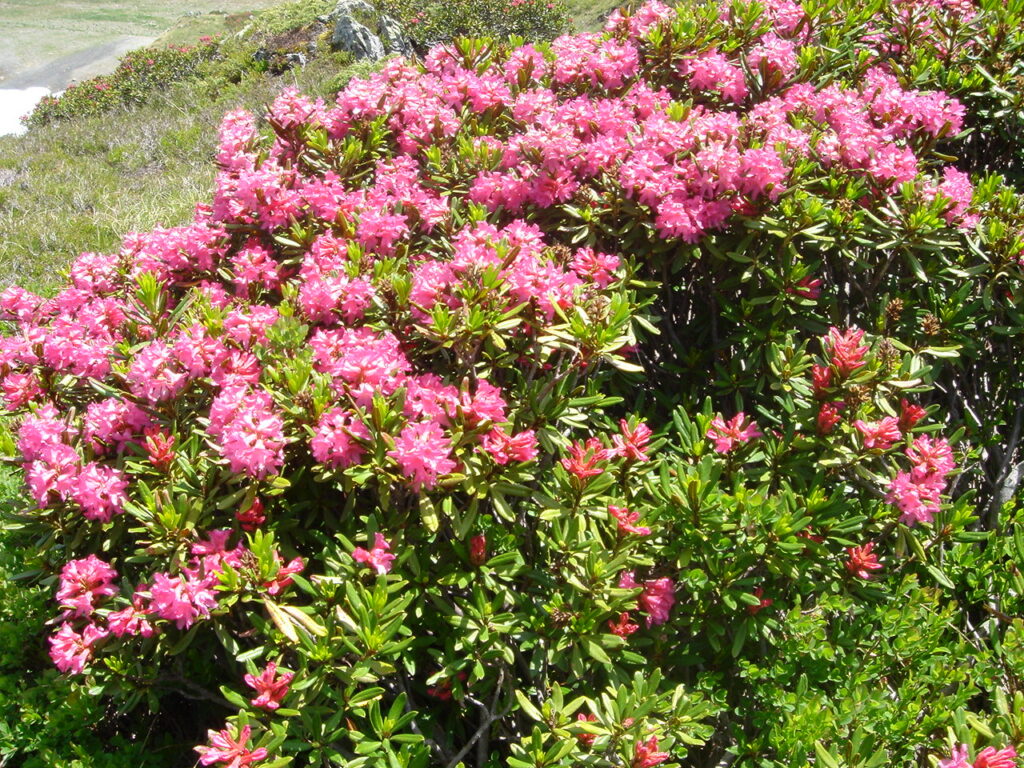
Choosing an appropriate style for a Vaccinioides Rhododendron bonsai means working with the species’ natural growth habit rather than forcing it into a form better suited to a pine or juniper. Rhododendron vaccinioides develops as an evergreen shrub with relatively small foliage and branching growth, characteristics that can translate effectively into several traditional bonsai styles.
Rhododendron branches can also become brittle as they mature. For this reason, gradual development through selective pruning is often preferable to attempting severe bends on established wood.
The best style will ultimately depend on the individual specimen’s trunk movement, branch placement and existing structure.
Informal Upright
The informal upright or Moyogi style is one of the most practical choices for a Vaccinioides Rhododendron bonsai.
Rather than growing perfectly straight, the trunk develops gentle movement while gradually tapering towards the apex. Branches emerge at different levels to create a balanced but natural appearance.
This approach works particularly well with rhododendrons because it accommodates their naturally branching, shrubby growth. Selective pruning can gradually establish defined branch structures without sacrificing the softer character of the species.
Slanting
The Shakan, or slanting style, can provide a Vaccinioides Rhododendron bonsai with a stronger sense of movement.
In this design, the trunk grows away from the vertical while the roots and branch structure visually balance the composition. The finished tree can suggest a plant shaped by wind, uneven terrain or competition for light.
A specimen that already has natural trunk movement in one direction may be particularly suitable for this style.
Multi-Trunk
The natural shrubby growth of Rhododendron vaccinioides makes multi-trunk designs particularly interesting.
Rather than removing every secondary trunk to create a conventional single-tree structure, growers can retain selected stems and develop them as part of a unified composition.
The trunks should differ in height and thickness to avoid an artificial appearance. One should normally establish visual dominance while the others support the overall design.
Clump Style
A Kabudachi, or clump-style bonsai, can take advantage of multiple stems emerging from a shared root system.
This style can create the impression of a small group of trees growing together while remaining biologically connected.
Vaccinioides Rhododendron’s natural tendency towards shrub-like branching makes this a potentially convincing approach. Careful thinning is important, however, as excessive foliage and crossing branches can quickly make the composition appear congested.
Semi-Cascade
A Han-kengai, or semi-cascade, may suit specimens with naturally low or descending growth.
In this style, the trunk or major branch travels downwards but generally doesn’t extend substantially below the base of the container.
Because mature rhododendron branches can be brittle, creating a semi-cascade is considerably easier when suitable movement already exists in younger material. Trying to force an established upright specimen into a dramatic downward curve can result in damaged branches.
Flowering Bonsai Style
Although not a formal Japanese bonsai classification in the same sense as Moyogi or Shakan, a Vaccinioides Rhododendron bonsai can also be developed specifically to emphasise its flowering display.
In this approach, styling decisions balance traditional bonsai structure with the need to retain sufficient flowering growth.
Branches are positioned to create space between flowering areas, allowing blooms to remain visually distinct rather than forming one crowded mass.
Pruning timing becomes particularly important because removing developing flower buds can significantly reduce the following display.
Choosing The Right Style
There is no single correct style for every Vaccinioides Rhododendron bonsai.
Before making major changes, examine the trunk from several viewing angles and consider where the strongest roots, branches and natural movements already occur. These existing characteristics will often suggest the most convincing design.
Informal upright, slanting, multi-trunk, clump and selected semi-cascade forms can all work effectively when matched with appropriate material.
The goal should be to develop the natural qualities of Rhododendron vaccinioides into a balanced miniature composition rather than forcing the plant to conform to a predetermined shape.
Symbolism And Cultural Significance
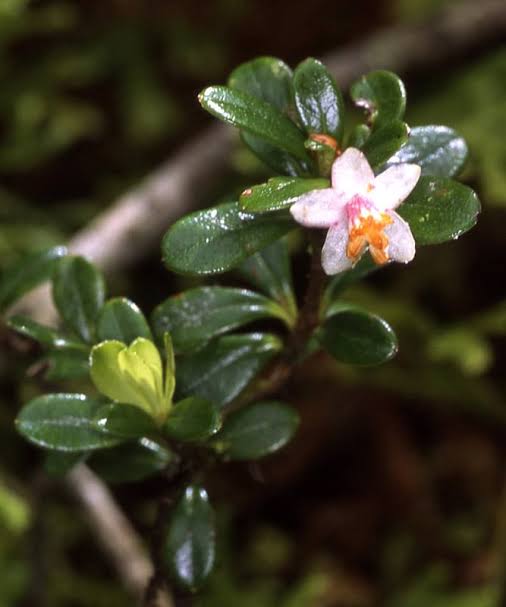
Rhododendrons have acquired symbolic meanings across different cultures, with their abundant flowers, evergreen foliage, and ability to grow in challenging environments contributing to associations ranging from beauty and resilience to caution and danger. While Rhododendron vaccinioides does not have the same extensive documented cultural symbolism as some better-known rhododendron and azalea species, a Vaccinioides Rhododendron bonsai can still draw upon the broader symbolism of the genus and the traditions surrounding bonsai.
Combining rhododendron characteristics with bonsai cultivation creates a tree that can represent patience, endurance, natural beauty, and the careful relationship between a grower and a living plant.
Rhododendron Symbolism
Rhododendrons are most commonly associated with beauty, elegance, abundance, and appreciation because of their spectacular seasonal flowers.
However, the genus has also acquired associations with caution. Many rhododendron species contain toxic compounds, creating an interesting contrast between their attractive appearance and potentially harmful properties.
Symbolically, this can give rhododendrons a deeper meaning: beauty deserves respect, and appearances do not always reveal everything beneath the surface.
For a bonsai grower, this combination of beauty and caution can make a rhododendron particularly interesting as a symbolic tree.
Resilience And Mountain Environments
Many rhododendrons are associated with mountainous and forested landscapes, where species have adapted to challenging environmental conditions.
This ability to survive in demanding habitats can create associations with resilience, endurance, and adaptation.
When represented as a bonsai, these qualities become even more pronounced. The plant must adapt to life within a restricted container while continuing to develop roots, branches, foliage, and flowers.
A mature Vaccinioides Rhododendron bonsai can therefore serve as a quiet representation of persistence through changing conditions.
Evergreen Foliage And Continuity
The evergreen nature of Rhododendron vaccinioides can also contribute to its symbolism.
Evergreen plants frequently represent continuity, endurance, longevity, and life continuing through changing seasons. While flowers provide a spectacular temporary display, the foliage remains after the blooms have disappeared.
This contrast can be particularly meaningful in bonsai.
Flowering becomes a temporary celebration, while the evergreen structure represents the longer journey of the tree.
Bonsai Symbolism
Bonsai itself carries strong associations with patience, balance, harmony, discipline, and respect for nature.
A bonsai cannot be rushed into maturity. Its character develops through repeated cycles of growth, pruning, recovery, and refinement.
Cultivating a Vaccinioides Rhododendron bonsai consequently combines the symbolism of the rhododendron with the philosophy associated with bonsai cultivation.
The resulting tree can represent the idea that beauty develops gradually through patience and attentive care.
Flowering And Renewal
The appearance of flowers after months of ordinary vegetative growth provides another layer of meaning.
Flowering can symbolise renewal, achievement, transformation, and the temporary nature of beauty. The blooms eventually fade, but the tree remains and begins preparing for another cycle.
For bonsai enthusiasts, this can serve as a reminder that the value of cultivating a tree isn’t limited to the moment when it looks its most spectacular.
Every season contributes to its development.
Personal Meaning In A Bonsai Collection
Not every bonsai requires a traditional or historically documented symbolic meaning.
Over years of cultivation, individual trees often acquire personal significance through the experiences associated with caring for them. A tree propagated from a cutting, received as a gift, rescued from poor condition, or maintained through difficult circumstances may eventually represent something entirely unique to its grower.
A Vaccinioides Rhododendron bonsai can therefore carry both the broader symbolism associated with rhododendrons and whatever meaning develops through the owner’s relationship with the tree.
Its combination of evergreen foliage, delicate flowers, resilience, and gradual development makes it a fitting symbol of patience, endurance, renewal, and beauty cultivated over time.
Companion Plants And Wildlife Attraction
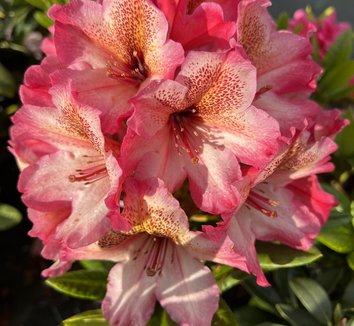
Selecting suitable companion plants for a Vaccinioides Rhododendron bonsai can enhance both its presentation and the surrounding growing environment. Because Rhododendron vaccinioides prefers acidic conditions, reliable moisture and protection from excessive heat, companion plants should ideally tolerate similar conditions.
Companion planting doesn’t necessarily mean placing additional plants directly inside the bonsai container. In many cases, nearby pots or a carefully arranged display provide a better option because they prevent competing root systems from interfering with the bonsai.
Encouraging beneficial wildlife around the growing area can also support biodiversity, pollination and natural pest control. Together, these elements can create a display inspired by the cool, vegetation-rich environments associated with rhododendrons.
Moss
Moss is one of the most natural-looking companions for a Vaccinioides Rhododendron bonsai. It can soften the appearance of the soil surface and help create the impression of an established miniature landscape.
Suitable mosses may include:
- Hypnum cupressiforme (Cypress-leaved Plait Moss)
- Leucobryum glaucum (Pincushion Moss)
- Dicranum scoparium (Broom Moss)
- Thuidium delicatulum (Fern Moss)
Moss can help reduce rapid surface moisture loss, but it should not become so dense that growers can no longer assess soil moisture or drainage effectively.
Flowers
Small flowering plants grown around the display can complement the seasonal blooms of a Vaccinioides Rhododendron bonsai without competing visually with the main specimen.
Potential companions include:
- Primula vulgaris (Primrose)
- Viola odorata (Sweet Violet)
- Cyclamen hederifolium (Hardy Cyclamen)
- Anemone nemorosa (Wood Anemone)
These species can contribute to a woodland-inspired arrangement, particularly when cultivated separately around the bonsai.
Consider flowering periods when planning the display. Companion plants blooming at different times can provide seasonal interest before or after the rhododendron itself flowers.
Herbs
Low-growing herbs can introduce additional foliage textures and fragrances around a bonsai display.
Potential options include:
- Mentha requienii (Corsican Mint)
- Galium odoratum (Sweet Woodruff)
- Thymus serpyllum (Creeping Thyme)
- Origanum vulgare ‘Compactum’ (Compact Oregano)
However, not every herb prefers exactly the same conditions as Rhododendron vaccinioides. Creeping thyme, for example, generally favours sunnier and somewhat drier conditions.
For this reason, herbs are usually better grown in their own containers and positioned around the bonsai according to their individual requirements.
Wildlife Attraction (Bees, Butterflies, And Beneficial Insects)
A flowering Vaccinioides Rhododendron bonsai can form part of a broader garden environment that supports pollinating and beneficial insects.
Nearby flowering plants can provide additional sources of nectar and pollen. Useful plants for a wildlife-friendly growing area may include:
- Lavandula angustifolia (Lavender) – popular with bees and butterflies
- Borago officinalis (Borage) – provides nectar for numerous pollinators
- Achillea millefolium (Yarrow) – attracts pollinators and beneficial insects
- Foeniculum vulgare (Fennel) – flowers can attract predatory and pollinating insects
- Cosmos bipinnatus (Cosmos) – attracts bees, butterflies and other visiting insects
These plants have different growing requirements from the rhododendron and should generally be planted elsewhere in the garden or maintained in separate containers rather than sharing its bonsai pot.
By combining suitable companion planting with a wildlife-friendly garden, a Vaccinioides Rhododendron bonsai can become the centrepiece of a broader display that celebrates both bonsai cultivation and biodiversity.
Care Summary And Practical Notes
The Vaccinioides Rhododendron bonsai can be a rewarding choice for growers interested in unusual evergreen and flowering bonsai. Its relatively small foliage, branching growth and delicate flowers provide plenty of potential for developing a refined miniature specimen.
Successful Vaccinioides Rhododendron bonsai cultivation depends heavily on maintaining the correct root environment. An acidic, free-draining growing medium should retain enough moisture to prevent the fine roots from drying while allowing excess water to escape. Bright filtered light, protection from extreme heat and attentive watering can further support healthy development.
Pruning should work with the species’ natural growth habit, while wiring should be approached cautiously as older rhododendron branches can become brittle. Feeding with an appropriate fertiliser for acid-loving plants during active growth can support foliage, root development and flowering without overwhelming the plant.
Regular observation remains one of the most important aspects of care. Changes in foliage colour, moisture levels, drainage or pest activity can provide early warnings that growing conditions need adjustment.
Most importantly, a Vaccinioides Rhododendron bonsai should be developed gradually. Rather than forcing dramatic changes in a short period, growers can use repeated cycles of growth, pruning and refinement to establish its character.
With suitable soil, consistent moisture, appropriate light and patient development, Vaccinioides Rhododendron bonsai has the potential to become an unusual and attractive addition to a bonsai collection, offering evergreen interest alongside the anticipation of its seasonal flowers.